

Cichlids are one of the most diverse and captivating groups of freshwater fish, with over 1,600 known species and countless color varieties. Ranging from peaceful dwarf species to bold, territorial giants, cichlids offer something for every aquarist—from beginners to advanced hobbyists. Native to regions across Africa, South America, and parts of Asia, each type of cichlid brings its own personality, behavior, and beauty to the aquarium.
In this guide, we’ll explore 25 unique types of cichlid fish, covering their distinct appearances, temperaments, diets, and habitat needs. Whether you’re setting up a planted tank or a rocky African rift lake biotope, this list will help you discover which cichlids are best for your aquatic setup.
1. Oscar
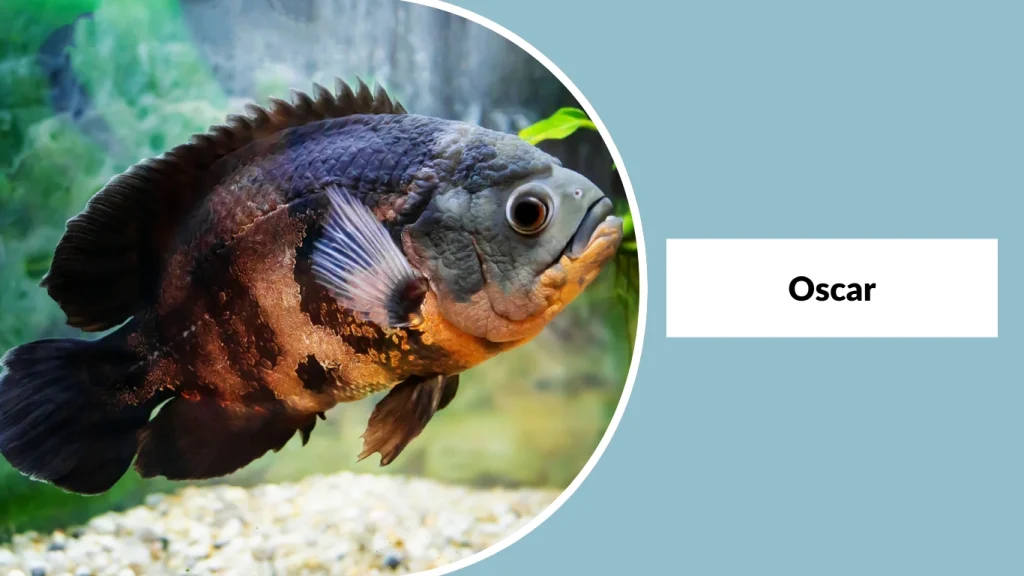
Oscars are one of the most popular and intelligent types of cichlid fish. Known for their striking patterns, bold personalities, and ability to recognize their owners, Oscars are a favorite among experienced aquarists. They require large tanks, a strong filtration system, and thoughtful tankmate selection due to their territorial behavior.
Identification
- Thick, oval-shaped body
- Color variations include tiger (black and orange), albino, red, and lemon
- Prominent eyes and large mouth
- Typically grow 10–12 inches in aquariums
- Rounded fins and strong tail
- Known to change color slightly with mood or environment
Behavior and Temperament
Oscars are highly intelligent, often displaying interactive behavior like begging for food or following fingers. However, they are territorial and can be aggressive, especially during breeding or when cramped.
Diet
They are carnivorous and enjoy a varied diet including cichlid pellets, earthworms, insects, frozen shrimp, and occasional feeder fish. Overfeeding can cause obesity and water quality issues.
Habitat
Best kept in a large tank (minimum 75 gallons for one adult), with sandy substrate, driftwood, and sturdy decorations. Filtration must be powerful to handle their waste output. They prefer warm water (74–81°F) and slightly acidic to neutral pH (6.5–7.5). Avoid housing with small or fragile fish.
2. Angelfish
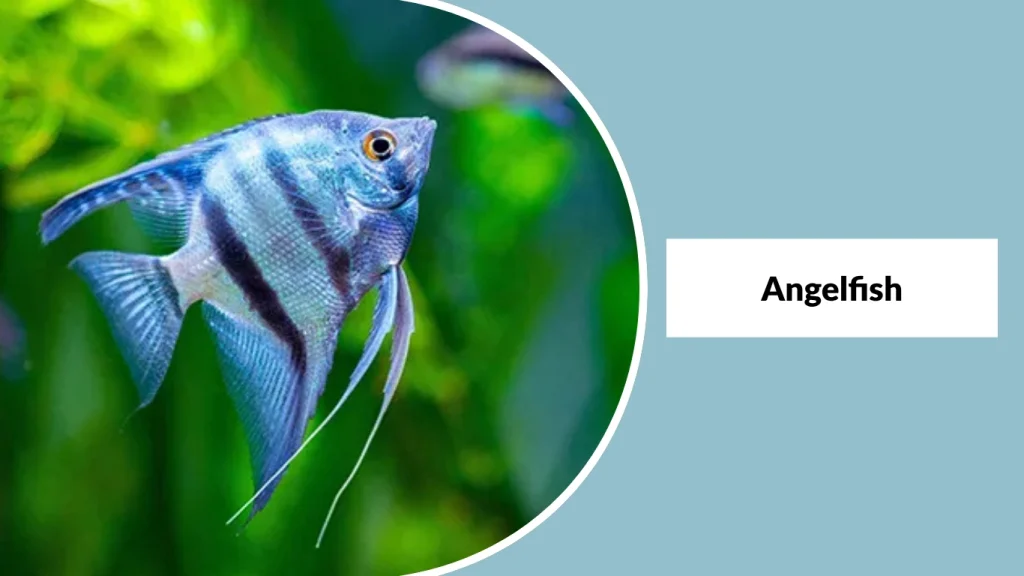
Angelfish are among the most elegant members of the cichlid family, known for their tall, triangular bodies and graceful fins. Native to the Amazon Basin, they are popular in community aquariums and come in a wide variety of color patterns. Despite their peaceful appearance, they can become territorial, especially when breeding.
Identification
- Laterally compressed, tall, triangular body
- Long, flowing dorsal and anal fins
- Colors include silver, marble, koi, black, and veil varieties
- Vertical dark stripes common in wild types
- Grow up to 6 inches in length and 8–10 inches in height including fins
- Pointed snout and distinctive trailing ventral fins
Behavior and Temperament
Angelfish are generally peaceful but can be territorial with one another or during spawning. They are best kept in groups of 4–6 with similar-sized tank mates. Avoid fin-nipping species.
Diet
They are omnivores and accept flakes, pellets, and live or frozen foods like brine shrimp and bloodworms. A varied diet helps maintain color and vitality.
Habitat
Ideal in tall aquariums (at least 30 gallons) with soft, slightly acidic water (pH 6.5–7.0) and temperatures around 76–82°F. Provide plenty of vertical swimming space and soft plants or driftwood for cover. Stable water quality is essential for health and breeding success.
3. Discus
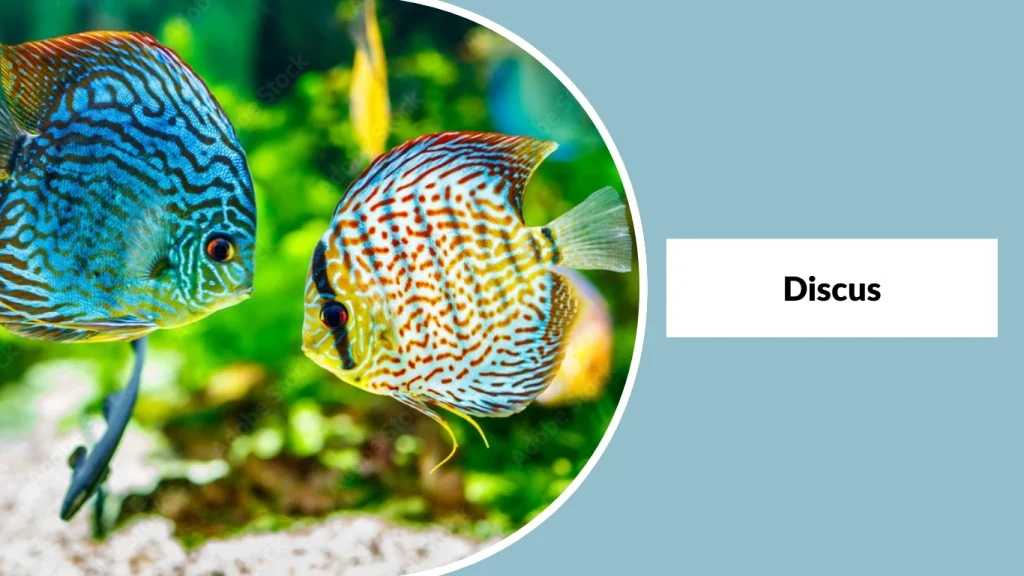
Discus are often considered the “kings” of freshwater aquariums due to their vivid colors, round bodies, and peaceful demeanor. Native to the Amazon River, they are highly prized by aquarists but require very specific water conditions and attentive care, making them more suitable for experienced fish keepers.
Identification
- Rounded, disc-shaped body
- Tall, graceful dorsal and anal fins
- Bright colors including blue, red, green, and turquoise with intricate patterns
- Eyes often red or orange
- Can grow up to 8 inches in diameter
- Smooth scales and subtle vertical barring (especially in wild types)
Behavior and Temperament
Discus are peaceful, schooling fish best kept in groups of 5 or more. They are shy and can become stressed by sudden changes or aggressive tank mates. When comfortable, they display social behaviors and pair off during breeding.
Diet
They require a high-protein diet: beef heart, frozen bloodworms, brine shrimp, and specialized discus pellets. Feed small amounts multiple times a day and remove uneaten food to maintain water quality.
Habitat
Discus need pristine water conditions: soft (1–4 dGH), slightly acidic (pH 6.0–6.5), and warm (82–86°F). A minimum of 55 gallons is needed for a group, with smooth decorations, driftwood, and live plants. Gentle filtration and frequent water changes are critical for health and coloration.
4. Convict Cichlid

Convict Cichlids are hardy, aggressive, and highly adaptable fish, making them a common choice for beginners and breeding enthusiasts. Named for their bold black vertical stripes, these Central American cichlids are small but feisty and often dominate tanks much larger than their size would suggest.
Identification
- Stocky, oval-shaped body
- Distinct black vertical bars on a gray or blue-gray background
- Males are larger with longer fins and sometimes a nuchal hump
- Females are smaller and often have orange coloration on the belly
- Typically grow 4–6 inches in length
Behavior and Temperament
Highly territorial, especially when breeding. Convicts are aggressive toward tank mates and often pair off for life. Best kept in species-only tanks or with robust fish that can hold their own.
Diet
Omnivorous: they eat flakes, pellets, vegetables, worms, and live or frozen foods. They are enthusiastic eaters and require a varied diet to stay healthy and maintain color.
Habitat
Ideal in a 30-gallon tank or larger for a pair. Use rocks, caves, and hiding spots to create territories. Water should be kept between 74–80°F with a pH of 6.5–8.0. Regular maintenance is essential due to their messy breeding behavior.
5. Firemouth Cichlid
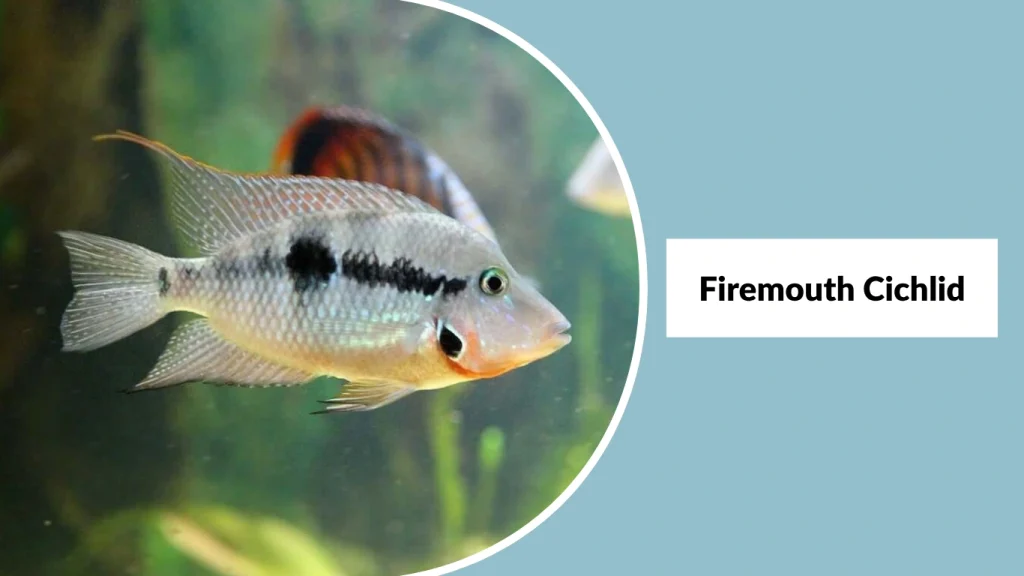
Firemouth Cichlids are medium-sized, semi-aggressive cichlids native to Central America. They are named for the vivid red or orange coloration on their throats and undersides, which becomes more intense when threatened or courting a mate.
Identification
- Streamlined body with pointed snout
- Vibrant red to orange coloration on the underside and throat
- Gray to bluish body with subtle metallic sheen
- Long, flowing fins with hints of red or blue
- Can reach 5–7 inches in length
Behavior and Temperament
Generally peaceful when not breeding, but highly territorial during spawning. They flare their gills and throat to appear larger, especially toward intruders. Best housed with similarly sized cichlids or fast-swimming species.
Diet
Omnivorous: will eat pellets, flakes, insects, crustaceans, and plant matter. A varied diet brings out their colors and supports breeding.
Habitat
Requires at least a 30–40 gallon tank with hiding spots and open swimming space. They enjoy sandy substrate and driftwood. Maintain temperature between 75–80°F with a pH of 6.5–8.0. Avoid housing with overly aggressive or very timid fish.
6. Jack Dempsey
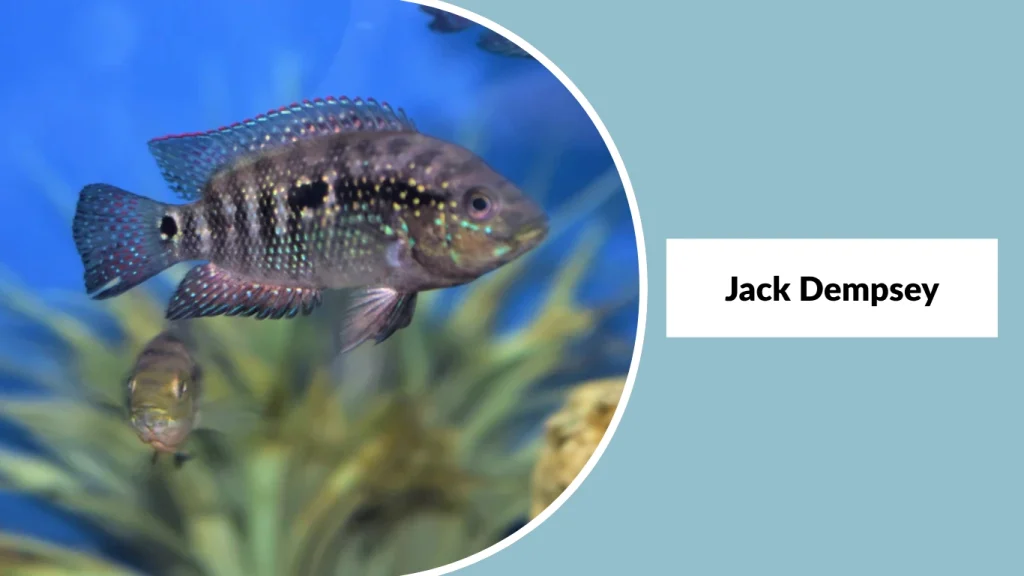
Jack Dempsey Cichlids are known for their bold personality and intense coloration. Named after the famous boxer for their aggressive nature, they are native to Central America and are a favorite among aquarists who enjoy keeping assertive, eye-catching fish.
Identification
- Oval, stocky body with iridescent blue, green, and gold speckles
- Dark base color, usually gray, brown, or black
- Males are larger, more colorful, and may develop long fin extensions
- Females are smaller with less vivid colors
- Can grow up to 10–12 inches in captivity
Behavior and Temperament
Highly territorial and aggressive, especially during breeding. Jack Dempseys are best kept with other large, assertive cichlids or in species-only setups. They are intelligent and recognize their keepers.
Diet
Carnivorous and opportunistic: feed them cichlid pellets, bloodworms, earthworms, shrimp, and the occasional feeder fish (if disease-free). Avoid overfeeding, as they’re prone to obesity.
Habitat
Minimum 55-gallon tank for one adult. Use a sandy or fine gravel substrate with plenty of hiding spaces using rocks and driftwood. Water temperature should be 75–80°F with a pH between 6.5 and 8.0. Provide strong filtration due to high waste production.
7. Electric Yellow (Yellow Lab)
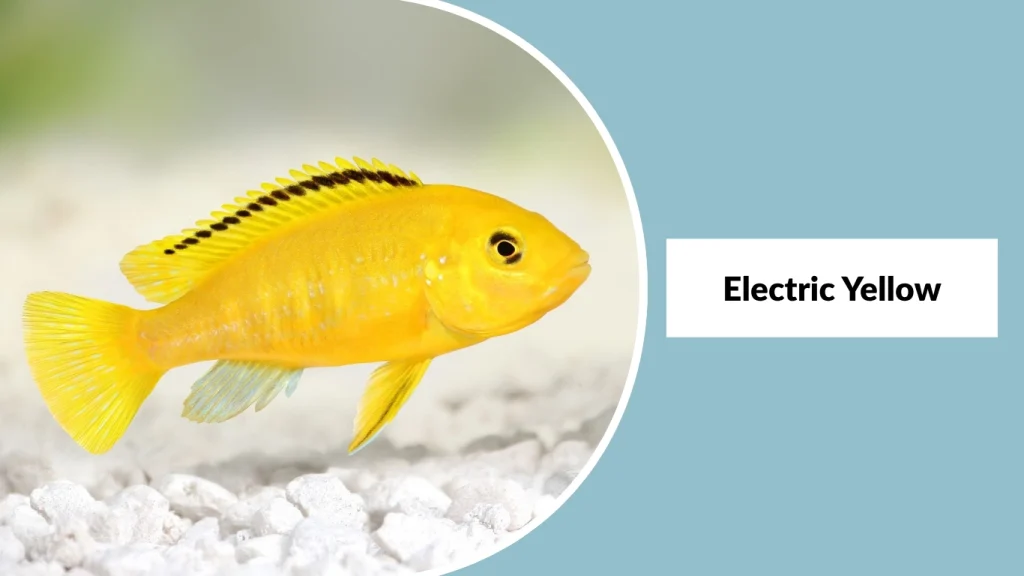
Electric Yellow Cichlids, also known as Yellow Labs or Labidochromis caeruleus, are one of the most peaceful and visually striking African cichlids from Lake Malawi. Their vibrant yellow color and manageable temperament make them a favorite for mixed Mbuna tanks.
Identification
- Bright, lemon-yellow body
- Black-tipped dorsal and anal fins (especially on males)
- Slender, elongated body shape
- Females are slightly duller but similar in size and form
- Usually grow up to 4–5 inches
Behavior and Temperament
More peaceful than most Mbuna species. Can be kept in groups and do well in community setups with other moderately aggressive cichlids. Males may become territorial when breeding.
Diet
Omnivorous with a preference for herbivorous foods: provide spirulina flakes, algae wafers, and cichlid pellets. Avoid protein-heavy diets to prevent bloating and digestive issues.
Habitat
Best kept in a 30–40 gallon tank or larger, decorated with plenty of rock caves and hiding spaces. They prefer a pH of 7.5–8.5 and temperature of 76–82°F. Regular water changes are essential to maintain their vibrant color and health.
8. Electric Blue Acara

Electric Blue Acara is a hybrid cichlid known for its dazzling, metallic blue coloration and peaceful temperament. Unlike many aggressive cichlids, this South American variety is calm and compatible with a wide range of tank mates, making it ideal for both beginner and experienced hobbyists.
Identification
- Bright, electric blue scales with shimmering highlights
- Oval body with slightly elongated fins
- Red or orange hints on dorsal and tail fins
- Grows up to 6–8 inches
- Rounded head and expressive eyes
Behavior and Temperament
Electric Blue Acaras are among the most peaceful cichlids. They are social, calm, and can coexist with non-aggressive species. They may become mildly territorial during breeding but rarely cause harm.
Diet
They are omnivores: offer high-quality pellets, flakes, frozen foods (like bloodworms), and occasional greens. A balanced diet enhances their vivid coloration.
Habitat
A 30–40 gallon tank is suitable for a pair. Provide soft substrate, driftwood, and live or artificial plants. Ideal water conditions include 72–80°F temperature and a pH of 6.5–7.5. Use gentle filtration and keep water quality high for best health and color.
9. Green Terror

Green Terror Cichlids are bold, strikingly colored fish native to South America. Their brilliant blue-green body, metallic sheen, and contrasting orange-edged fins make them a showpiece. However, their aggressive behavior makes them best suited for experienced aquarists.
Identification
- Vibrant metallic green-blue body
- Bright orange or white trim on dorsal and caudal fins
- Stocky, deep body with broad head
- Males may develop a pronounced nuchal hump
- Can grow up to 8–12 inches in captivity
Behavior and Temperament
Highly territorial and aggressive, especially during mating. They are best kept with other large, tough cichlids or in species-only tanks. May recognize and interact with their owners.
Diet
Carnivorous: feed with high-protein pellets, shrimp, earthworms, and frozen foods. Occasionally include veggies to aid digestion. Avoid overfeeding to maintain water quality.
Habitat
Minimum 55–75 gallons for a single adult. Use sand or fine gravel substrate with large rocks and hiding places. Water should be warm (72–82°F) with a pH of 6.5–7.5. Strong filtration is essential due to their size and waste production.
10. African Peacock Cichlid
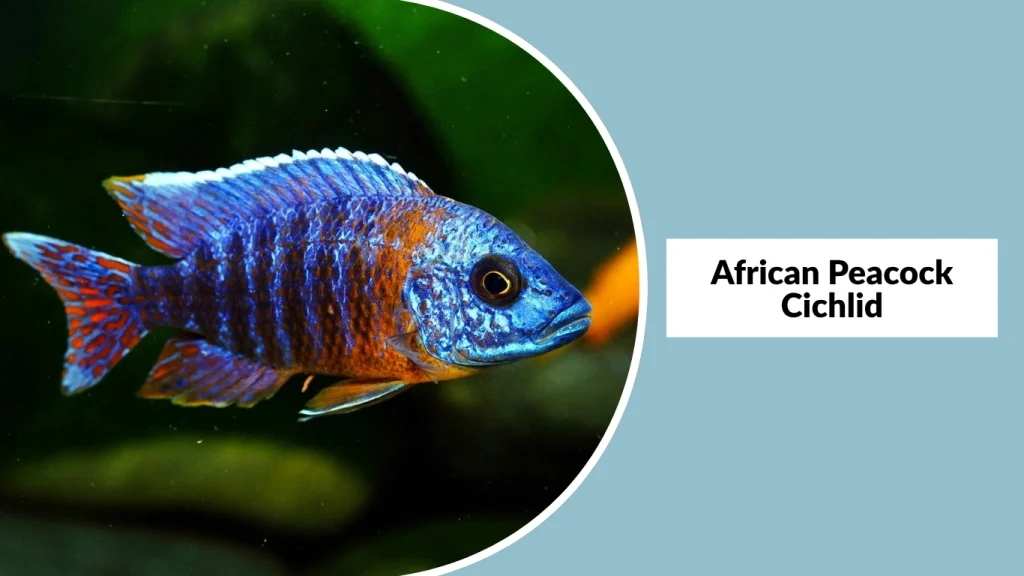
Peacock Cichlids are a group of vibrantly colored cichlids native to Lake Malawi in Africa. Known for their stunning metallic blues, reds, yellows, and oranges, they are among the most popular African cichlids kept in freshwater aquariums.
Identification
- Slender, torpedo-shaped body
- Males display brilliant colors—red, blue, yellow, orange (females are duller)
- Rounded fins with subtle color highlights
- Average size is 4–6 inches
- Smooth scales with a metallic sheen
Behavior and Temperament
Relatively peaceful compared to other Lake Malawi cichlids. Males can be territorial but are less aggressive overall. Best kept in harems (1 male to 3–4 females) to reduce stress and aggression.
Diet
Omnivorous with a leaning toward carnivorous: feed high-quality cichlid pellets, spirulina flakes, brine shrimp, and krill. Avoid excessive protein to prevent bloat.
Habitat
Minimum 55-gallon tank with sandy substrate and rock caves. They prefer alkaline water (pH 7.5–8.5) and temperatures between 76–82°F. Provide open swimming space and strong filtration for clean, oxygen-rich water.
11. Frontosa
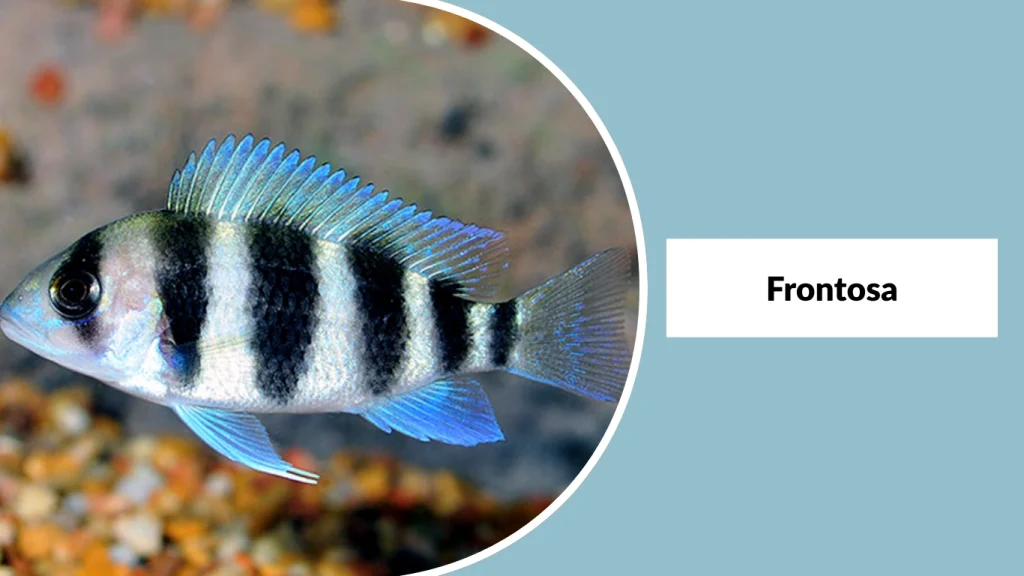
Frontosa Cichlids are majestic deep-water fish from Lake Tanganyika in Africa. They are known for their slow, calm movements and the large nuchal hump that develops on mature males. These fish are long-lived and grow quite large, making them suitable for large tanks only.
Identification
- Large, bulky body with pronounced forehead (nuchal hump)
- Light blue or white body with 5–7 vertical black stripes
- Long flowing fins, especially dorsal and tail
- Males can grow up to 12–14 inches
- Females are slightly smaller with a less prominent hump
Behavior and Temperament
Frontosas are peaceful but predatory. They are best kept with similarly sized Tanganyikan cichlids. Avoid small fish, which may be seen as food. They are slow swimmers and not overly aggressive unless breeding.
Diet
Carnivorous: offer a diet of sinking pellets, krill, shrimp, and earthworms. Avoid feeder fish due to parasite risk. Feed in low-light or early morning, mimicking their natural behavior.
Habitat
Requires a tank of at least 100 gallons for a small group. Use sand or fine gravel, rock caves, and subdued lighting. Ideal water parameters are 74–80°F, pH 7.8–9.0, and hard, alkaline water. Strong filtration and low stress are essential for long-term health.
12. Red Devil Cichlid
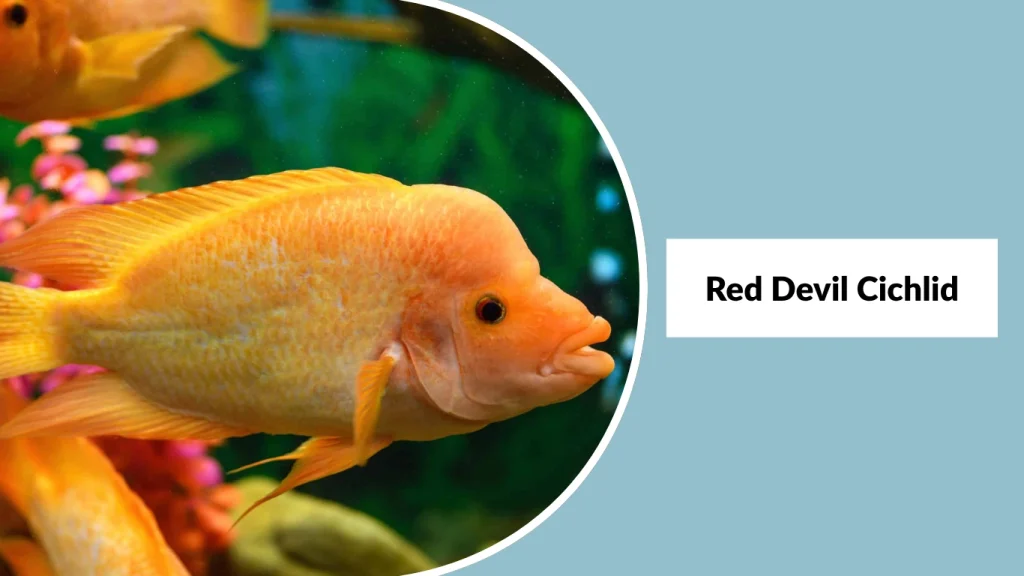
Red Devil Cichlids are large, aggressive, and full of personality. Native to Central America (mainly Nicaragua), they are named for their fiery red to orange coloration and feisty nature. Known for interacting with owners, they are best suited for solo tanks or very experienced cichlid keepers.
Identification
- Thick, muscular body with pointed dorsal and anal fins
- Colors range from bright red, orange, and white to pale pink
- Males often develop a pronounced nuchal hump
- Strong jaw with noticeable lips (some have thick, rubbery lips)
- Can grow up to 12–15 inches
Behavior and Temperament
Highly aggressive and territorial, especially in adulthood. They often rearrange tank décor and may bite fingers. Best kept alone or with very large, similarly aggressive tank mates in a massive aquarium.
Diet
Omnivorous with a strong carnivorous preference: feed cichlid sticks, shrimp, worms, and high-quality pellets. They also accept occasional vegetables like spinach or peas.
Habitat
Minimum 75–100 gallon tank for a single adult. Provide heavy rocks and large driftwood for cover (though they may move it). Use strong filtration to manage high bio-load. Ideal water conditions: 74–80°F, pH 6.5–7.5.
13. Midas Cichlid

Midas Cichlids are closely related to Red Devils and often confused with them. Native to Central America, Midas are bold, intelligent, and capable of forming strong bonds with their keepers. They’re powerful fish requiring a large, secure setup due to their aggression and size.
Identification
- Stocky, oval body with a sloping forehead
- Color ranges from white, yellow, orange to red (often with blotches or marbling)
- Males develop a large nuchal hump and longer fins
- Strong jaw with thick lips
- Grows up to 12–14 inches
Behavior and Temperament
Extremely territorial and dominant. Midas Cichlids often destroy tank décor and attack tank mates. They’re better kept solo unless paired in a very large tank with careful supervision.
Diet
Omnivorous: eat pellets, krill, worms, insects, and leafy greens. A high-protein diet enhances growth and color, but should be balanced to avoid digestive problems.
Habitat
Requires at least a 100-gallon tank. Use strong heaters, secure décor, and powerful filtration. They thrive in warm (75–82°F), neutral pH (6.8–7.5), and clean water. Tank lids should be tight—Midas are known jumpers and decorators.
14. Blue Ram (German Blue Ram)
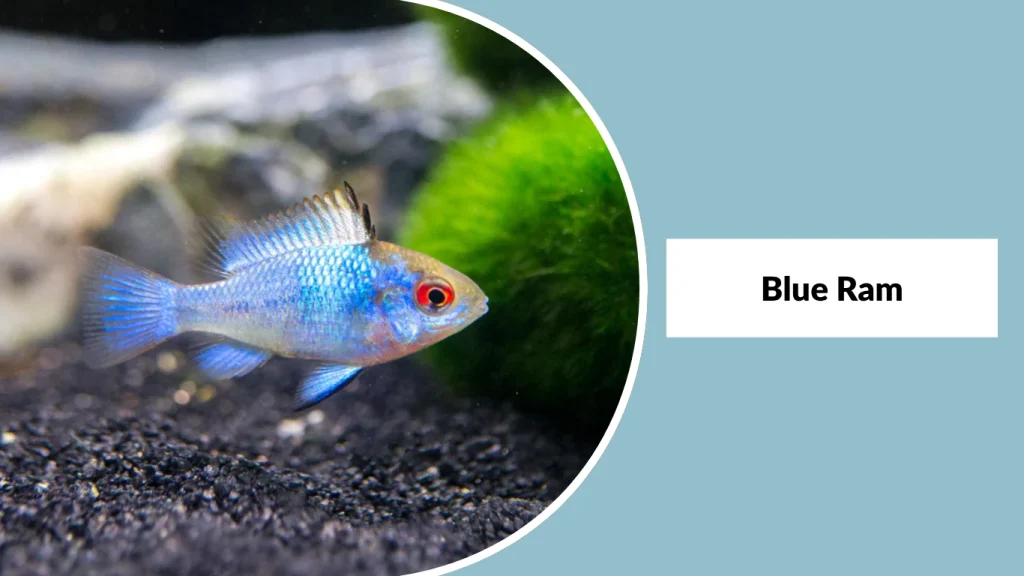
The German Blue Ram is a small, vibrant South American dwarf cichlid, loved for its peaceful nature and electric blue coloration. Native to the Orinoco River basin, this species is ideal for planted tanks and community aquariums with gentle companions.
Identification
- Oval, compact body with brilliant blue iridescence
- Distinct black spot on the mid-body and near the eye
- Yellow-gold face with blue speckles extending over the body
- Red eyes and slightly pointed dorsal fin
- Typically grows 2–3 inches in length
Behavior and Temperament
Blue Rams are peaceful and shy, especially in new environments. They do well in pairs or small groups and thrive with non-aggressive fish. During spawning, they may defend their territory briefly.
Diet
Omnivorous: feed high-quality micro pellets, brine shrimp, daphnia, and bloodworms. Supplement with spirulina flakes or gel food to promote coloration and health.
Habitat
Best kept in a 20-gallon tank or larger. Use fine substrate, live plants, and driftwood for cover. Ideal water parameters: soft, slightly acidic water (pH 5.5–7.0), temperature 78–85°F. Pristine water quality and stable conditions are crucial.
15. Bolivian Ram
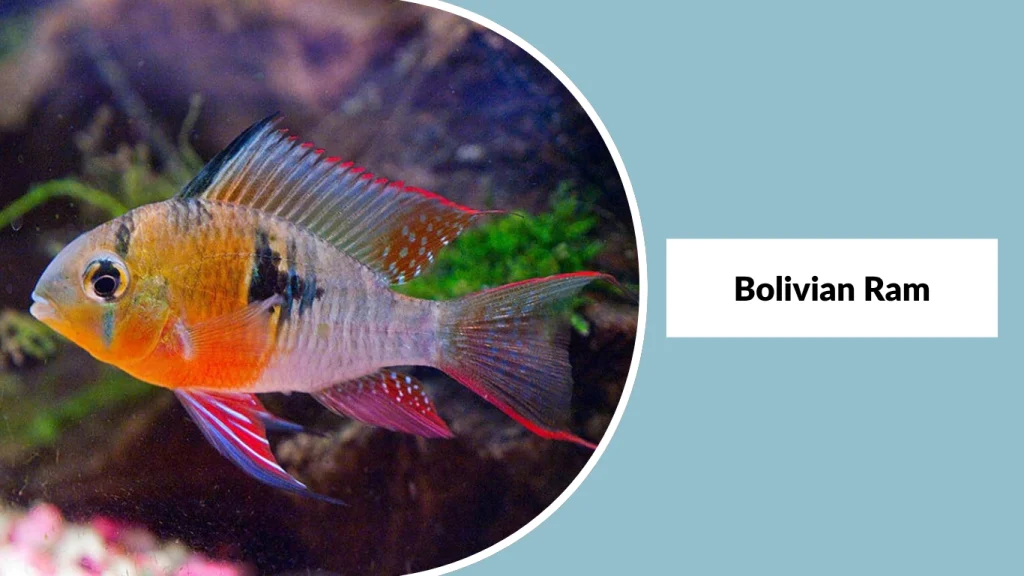
The Bolivian Ram is a close relative of the Blue Ram but is hardier and slightly larger. Native to the Amazon tributaries in Bolivia and Brazil, they are peaceful, easy to care for, and show subtle yet beautiful coloration, making them perfect for beginner aquarists.
Identification
- Elongated oval body with soft gray, yellow, and tan tones
- Dark horizontal stripe across the body and a black facial mask
- Fins are edged in orange or red, especially in males
- Slightly longer dorsal fin in males
- Grows up to 3–3.5 inches
Behavior and Temperament
Calm, social, and non-aggressive. Bolivian Rams do well in peaceful community tanks and prefer to be kept in pairs or small groups. They may form monogamous pairs and show light territorial behavior during breeding.
Diet
Omnivorous: accept flakes, micro pellets, frozen foods (like brine shrimp), and vegetable-based options. A balanced diet keeps them active and colorful.
Habitat
A 30-gallon tank or more is ideal, with soft substrate, plants, and rock caves. They prefer slightly acidic to neutral water (pH 6.0–7.5) and temperatures around 74–78°F. Keep water clean with regular changes and moderate flow.
16. Kribensis
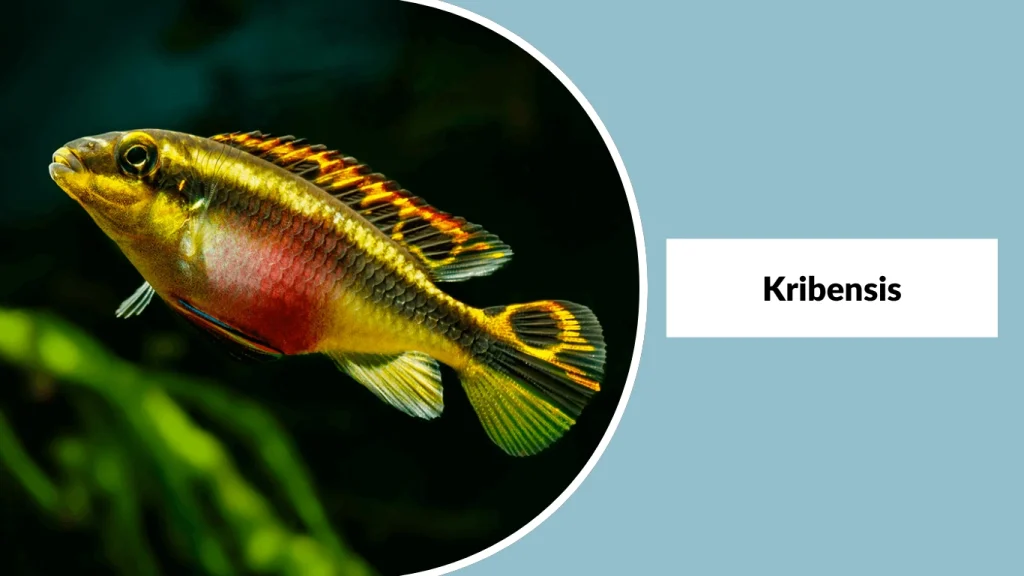
Kribensis, also known as Pelvicachromis pulcher or Rainbow Krib, is a colorful West African dwarf cichlid known for its ease of care and peaceful disposition. These cichlids are especially popular for their vibrant breeding colors and excellent parenting behavior.
Identification
- Small, torpedo-shaped body
- Iridescent coloration: olive back, yellow or cream belly, and vivid red or purple belly (especially in females)
- Males have pointed dorsal and anal fins; females are rounder and more colorful
- Black horizontal stripe across the body
- Grows up to 3–4 inches
Behavior and Temperament
Peaceful but may become territorial when breeding. They do well in community tanks with similarly sized, calm species. Kribensis form monogamous pairs and are attentive parents, often guarding their fry aggressively.
Diet
Omnivorous: eats high-quality flakes, pellets, frozen foods, and vegetables. Blanched spinach, spirulina, and bloodworms help enhance color and health.
Habitat
Best kept in a 20–30 gallon tank with caves for spawning and fine substrate. Live plants and driftwood provide cover. Water should be soft to moderately hard (pH 6.5–7.5) with temperatures of 75–80°F. Regular water changes promote spawning behavior.
17. Apistogramma
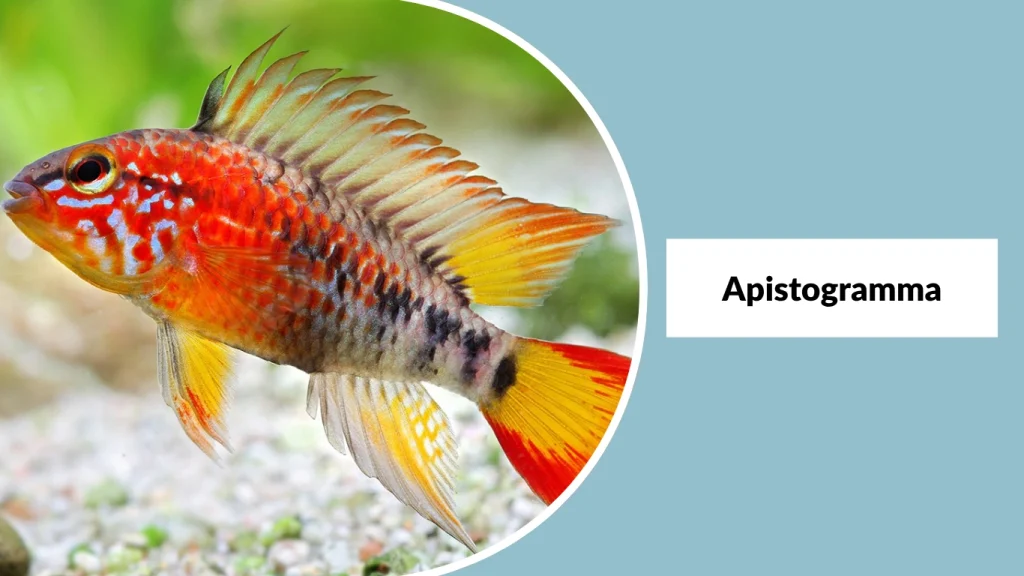
Apistogramma is a diverse genus of small, colorful South American dwarf cichlids with over 90 described species. Popular in aquascaped tanks, Apistos are admired for their unique body shapes, vibrant colors, and complex social behaviors.
Identification
- Slender, elongated body
- Males are larger with elongated fins and brighter coloration
- Species vary in pattern—common types include Apistogramma cacatuoides, agassizii, and borellii
- Females are smaller, usually yellow or tan with subtle markings
- Grows up to 2.5–3.5 inches
Behavior and Temperament
Relatively peaceful but territorial during breeding. Best kept in harems (1 male to 2–3 females) or bonded pairs. They display complex social and courtship behaviors and do well in heavily planted tanks.
Diet
Carnivorous: thrive on small live and frozen foods like daphnia, bloodworms, and brine shrimp. Will also accept high-quality micro pellets and flakes.
Habitat
Minimum 20–30 gallons with sand substrate, leaf litter, caves, and dense planting. Require soft, acidic water (pH 5.5–7.0) and temperatures of 75–82°F. Excellent water quality and stable conditions are essential for long-term success and breeding.
18. Malawi Mbuna

Mbuna are a group of rock-dwelling cichlids from Lake Malawi in Africa, known for their bright coloration and high energy. “Mbuna” means “rockfish” in the local Tonga language, and these fish thrive in rocky, territorial environments.
Identification
- Stocky, torpedo-shaped body
- Bright solid or striped colors: yellow, blue, red, orange, and black
- Males often more colorful; females may appear duller
- Short fins compared to peacocks or haps
- Average size is 4–6 inches
Behavior and Temperament
Highly aggressive and territorial. Males stake out caves or rocks and defend them fiercely. Best kept in large groups to diffuse aggression and with plenty of hiding spots. Avoid mixing with delicate or slow fish.
Diet
Primarily herbivorous: feed spirulina flakes, algae wafers, and veggie-based pellets. Avoid too much protein, which can cause Malawi bloat—a common and dangerous condition.
Habitat
Minimum 55-gallon tank with rock piles and caves. Sand or fine gravel substrate is preferred. Keep pH between 7.8–8.6 and temperatures at 76–82°F. Use strong filtration to handle their waste and maintain water clarity.
19. Severum
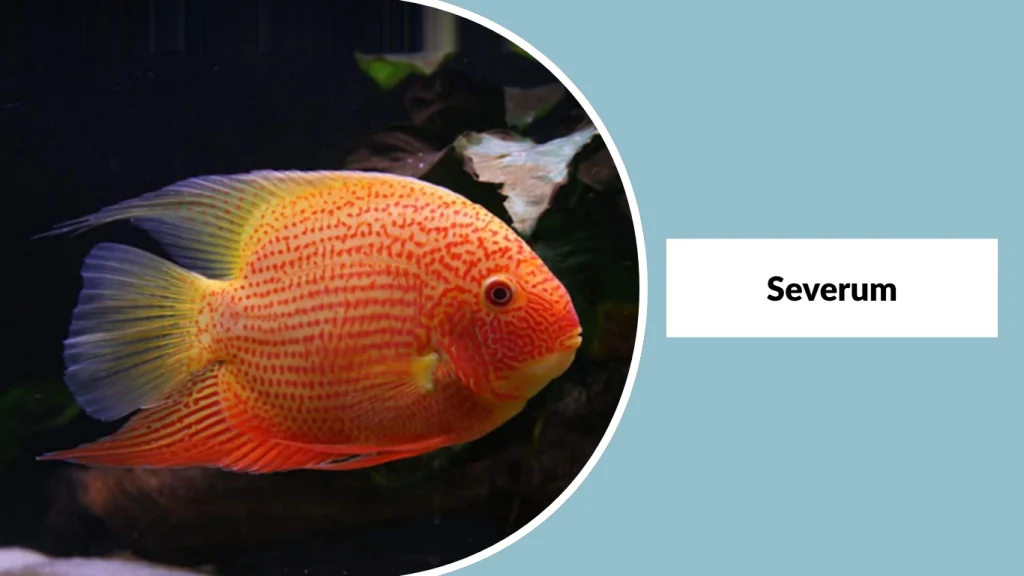
Severum Cichlids are large, calm, and intelligent fish from South America, sometimes referred to as “poor man’s discus” due to their round bodies and coloration. They are peaceful for their size and make great additions to semi-aggressive community setups.
Identification
- Disc-shaped, deep body
- Colors include green, gold, turquoise, and red-shoulder varieties
- Juveniles may have vertical bars that fade with age
- Large expressive eyes and rounded fins
- Typically grows 6–8 inches, sometimes up to 10 inches
Behavior and Temperament
Generally peaceful but may show mild territorial behavior during breeding. They get along with other similarly sized, non-aggressive fish and can even form bonds with their owners.
Diet
Omnivorous: eat cichlid pellets, vegetables (like peas, spinach), and occasional protein such as bloodworms or shrimp. Avoid fatty or low-quality foods.
Habitat
Minimum 55-gallon tank with soft substrate and driftwood or plants for cover. Water should be slightly acidic to neutral (pH 6.0–7.5) with a temperature of 75–82°F. Provide open swimming space and gentle flow. Regular maintenance is important to prevent health issues.
20. Keyhole Cichlid
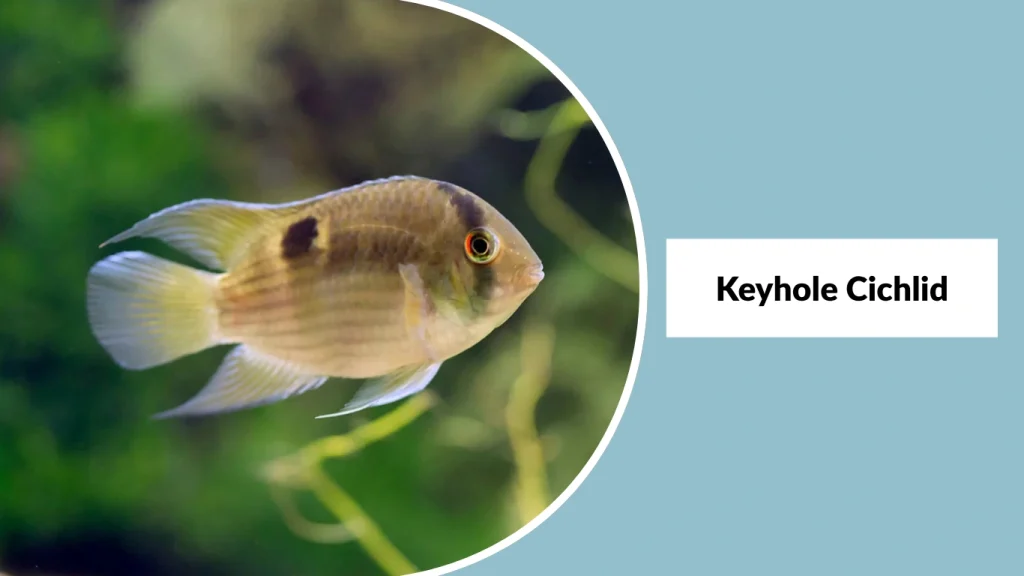
Keyhole Cichlids are peaceful, shy South American cichlids named for the keyhole-shaped black mark on their sides. Their calm demeanor and tolerance for community environments make them an excellent choice for beginner aquarists.
Identification
- Oval, laterally compressed body
- Pale yellow to tan base color
- Distinct black vertical stripe across the eye and a keyhole-shaped blotch on the side
- Fins are translucent with subtle yellow or orange tint
- Typically grows 4–5 inches
Behavior and Temperament
Exceptionally peaceful and reserved. Keyholes are best kept in peaceful community tanks or with other gentle cichlids. They are timid and prefer hiding spots, especially when stressed or during breeding.
Diet
Omnivorous: accept flakes, pellets, and frozen foods like brine shrimp and bloodworms. Supplement with vegetable matter for balanced nutrition.
Habitat
A 30-gallon tank with low lighting, soft substrate, and plenty of hiding spaces is ideal. Use driftwood, caves, and live plants. Maintain water at 74–78°F, pH 6.0–7.5, and soft to moderate hardness. Keep stress levels low with stable, clean water.
21. Texas Cichlid
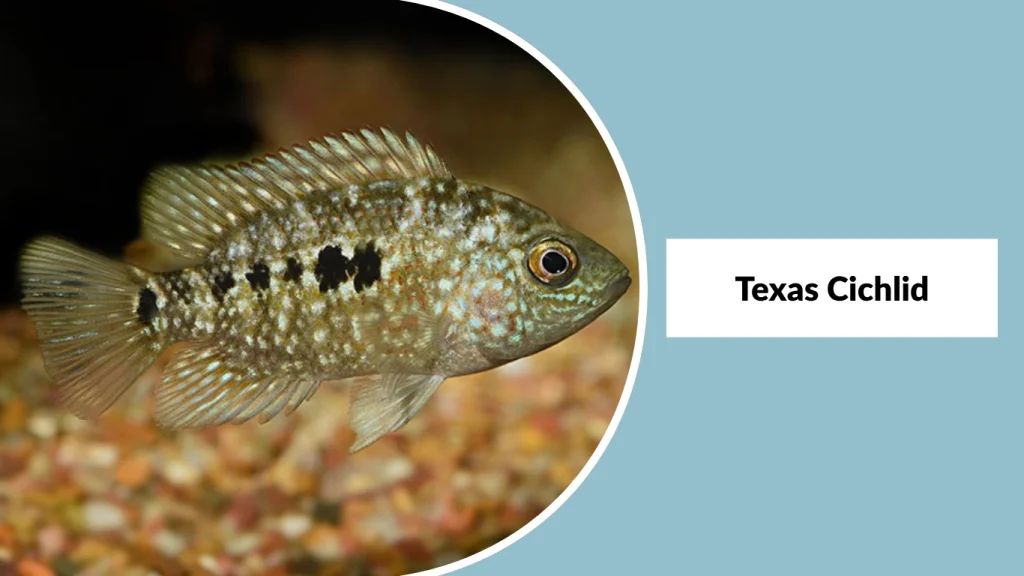
The Texas Cichlid (Herichthys cyanoguttatus) is the only cichlid species native to the United States, specifically the rivers of Texas and northern Mexico. It’s large, bold, and highly territorial, making it better suited to experienced cichlid keepers.
Identification
- Large, oval body with pearly blue or green spots on a dark background
- May have black vertical bars or blotches depending on mood or breeding status
- Red eyes and long flowing fins in mature males
- Can grow 10–12 inches or more
Behavior and Temperament
Highly aggressive, especially when breeding. Texas Cichlids are best housed alone or with other large, robust cichlids in a very large aquarium. They are territorial and will bully smaller tank mates.
Diet
Omnivorous with carnivorous tendencies: provide high-quality pellets, insects, crustaceans, earthworms, and occasional vegetables like zucchini or peas.
Habitat
Requires a tank of 75–100 gallons with large rocks, caves, and open space. They stir up substrate, so use sand or smooth gravel. Water temperature should be 72–80°F with pH 6.5–8.0. Strong filtration and regular maintenance are essential due to their messy feeding and waste production.
22. Uaru

Uaru Cichlids (Uaru amphiacanthoides), often referred to as “Triangle Cichlids,” are intelligent and social South American cichlids from the Amazon River Basin. Known for their unique shape and strong pair-bonding behavior, they’re often kept by aquarists seeking peaceful, interactive cichlids.
Identification
- Oval to triangular body with a rounded head
- Olive-gray base color with a prominent black oval patch mid-body
- Juveniles have white bodies with black blotches
- Adults may show red-orange tinges around the face
- Can grow up to 10–12 inches
Behavior and Temperament
Uarus are peaceful, shy, and highly intelligent. They form strong bonds with mates and owners. Though docile, they may defend territory during breeding. Best housed in pairs or small groups.
Diet
Primarily herbivorous: offer spirulina flakes, algae-based pellets, and blanched vegetables (zucchini, spinach). They also accept occasional protein like brine shrimp but should not be fed heavy meat-based diets.
Habitat
Require a tank of at least 75 gallons with driftwood, leaf litter, and soft substrate. Water should be soft and acidic (pH 5.5–7.0) with temperatures around 80–84°F. They are sensitive to water conditions, so excellent filtration and regular maintenance are a must.
23. Bumblebee Cichlid
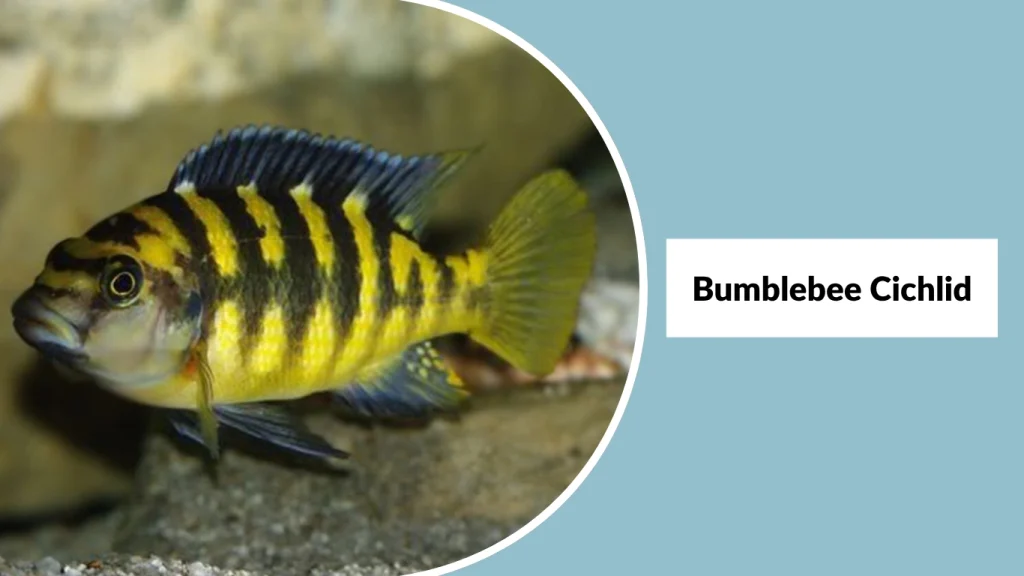
The Bumblebee Cichlid (Pseudotropheus crabro), also known as Hornet Cichlid, is a striking Mbuna species from Lake Malawi. Named for its yellow and black striped pattern, it’s known for both its beauty and bold temperament.
Identification
- Stocky body with alternating black and yellow vertical bands
- May darken to solid brown or black when stressed or during spawning
- Rounded fins with yellow highlights
- Can grow up to 5–6 inches
Behavior and Temperament
Highly territorial and aggressive, especially toward other bottom dwellers or similarly colored fish. Works best in species-only Mbuna setups or large cichlid tanks with lots of hiding places.
Diet
Omnivorous but leans toward carnivorous: feed high-quality cichlid pellets, krill, mysis shrimp, and occasional algae-based foods. Avoid feeding excessive animal protein to prevent digestive issues.
Habitat
Needs a 55+ gallon tank with rocky structures, caves, and hiding spots. Prefers alkaline water (pH 7.8–8.6) and a temperature range of 76–82°F. Use strong filtration and maintain stable water conditions to prevent aggression from escalating.
24. Jewel Cichlid

Jewel Cichlids (Hemichromis spp.) are brilliantly colored cichlids from West Africa, named for their sparkling, jewel-like spots. Despite their beauty, they are highly territorial and can be aggressive, especially during breeding.
Identification
- Slender, oval-shaped body
- Bright red to orange body covered in iridescent blue-green spots
- Dark vertical bars may appear during stress or mating
- Males are typically more vibrant and slightly larger
- Grows up to 5–6 inches
Behavior and Temperament
Extremely aggressive when spawning and territorial in confined spaces. Best kept in a species-only tank or with other large, robust African cichlids. They can form strong pair bonds and are fierce fry protectors.
Diet
Omnivorous: feed a varied diet of high-quality pellets, insects, bloodworms, brine shrimp, and some vegetable matter to enhance color and health.
Habitat
Provide a 40+ gallon tank with hiding places such as rocks, driftwood, and clay pots. Use sand or fine gravel substrate. Water should be kept at 75–82°F with a pH of 6.5–7.5. Strong filtration is needed due to their messy breeding behavior and aggression.
25. Red Zebra Cichlid
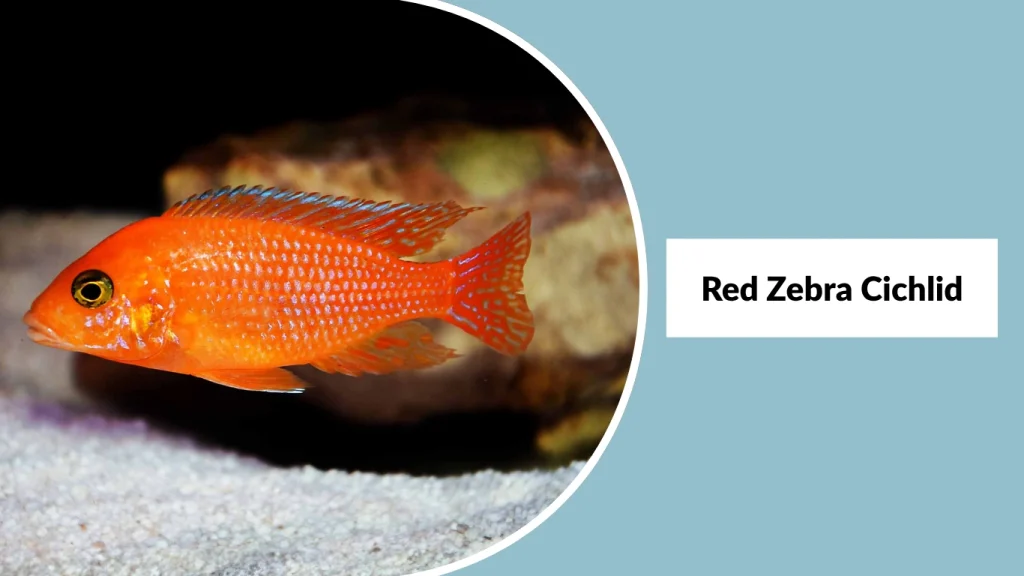
Red Zebra Cichlids (Maylandia estherae) are vibrant, energetic Mbuna cichlids from Lake Malawi. Despite the name, their colors vary from deep orange to pale blue depending on the morph and gender, making them a stunning addition to African cichlid tanks.
Identification
- Thick, muscular body with blunt head
- Males are usually pale blue; females are bright orange-red
- Some color morphs may be white, pink, or have faint vertical barring
- Grow up to 5 inches in length
Behavior and Temperament
Typical Mbuna aggression—territorial and bold, especially during breeding. Best kept in a tank with other similarly tempered Lake Malawi cichlids. Maintain a high female-to-male ratio to reduce conflict.
Diet
Herbivorous: feed spirulina flakes, algae wafers, and veggie-rich cichlid pellets. Avoid high-protein or meaty foods to prevent Malawi bloat.
Habitat
Needs a 55-gallon or larger tank with plenty of rocks and caves for territory. Keep pH between 7.8–8.6 and temperature between 76–82°F. Strong filtration and weekly water changes will support vibrant color and stable behavior.