



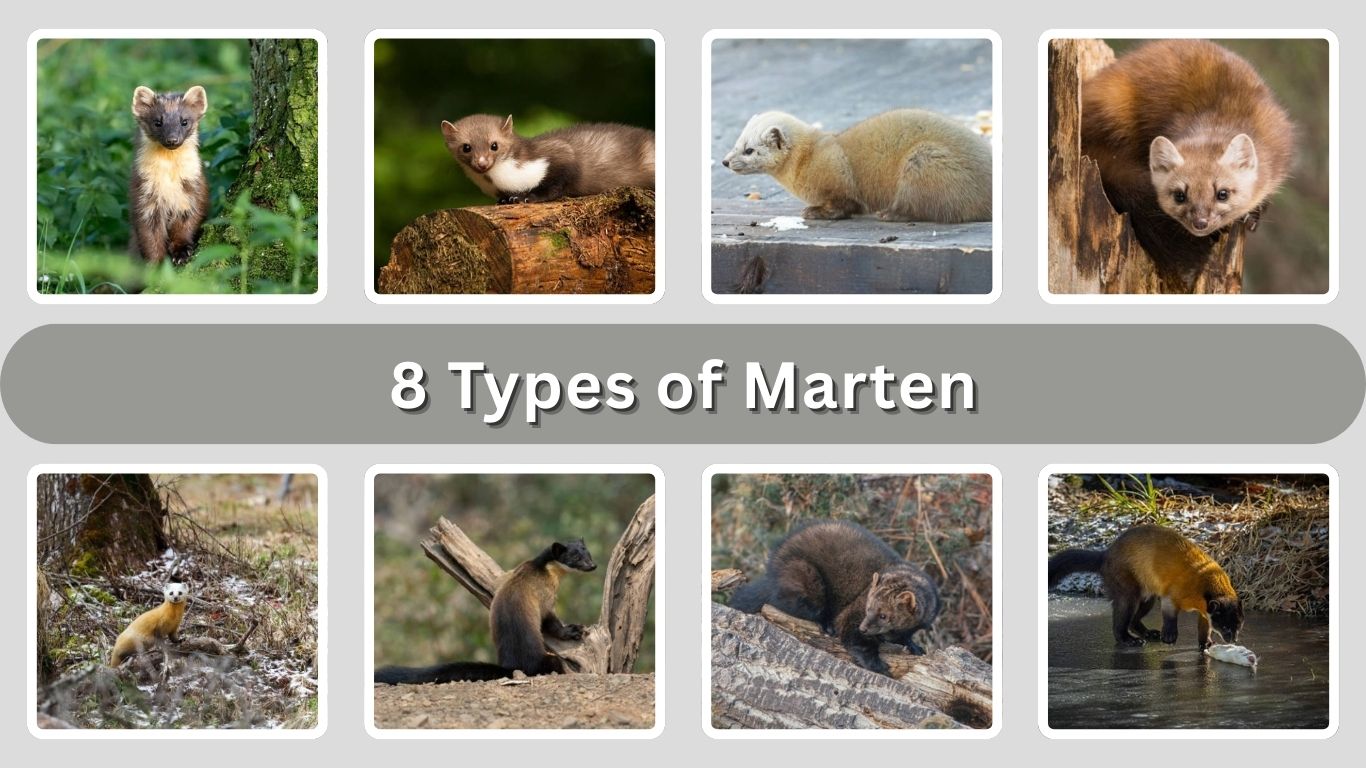
Martens are agile, tree-loving mammals belonging to the weasel family and are found across forests of Europe, Asia, and North America. Known for their slender bodies, bushy tails, and sharp hunting skills, these animals play an important role in maintaining balanced ecosystems. From the cold taiga of Siberia to the tropical forests of South Asia, different marten species have adapted to a wide range of habitats, diets, and lifestyles, making them one of the most fascinating members of the mustelid family.
1. Pine Marten (Martes martes)

The pine marten is a slender, tree-loving carnivore found mainly in European forests. It is known for its long bushy tail, rich brown fur, and agile climbing ability. This species spends much of its life in woodland canopies, where it hunts small animals and shelters in hollow trees, making it a true forest specialist.
Identification
- Slender, cat-sized body with a long, fluffy tail
- Soft brown to dark chocolate fur
- Creamy-yellow throat and chest patch (“bib”)
- Pointed face with small rounded ears
- Sharp, curved claws adapted for climbing
- Body length around 45–55 cm, excluding tail
Habitat
Pine martens primarily inhabit mature woodlands, including deciduous, coniferous, and mixed forests. They prefer areas with dense tree cover, fallen logs, and natural cavities that provide shelter and nesting sites. Old-growth forests are especially important because hollow trees offer safe resting and breeding spaces.
Although strongly associated with forests, pine martens can also live in rocky areas and well-connected woodland corridors. In some regions, they are slowly returning to areas near farmland and forest edges as conservation efforts improve habitat quality.
Behavior
Pine martens are mostly nocturnal and crepuscular, meaning they are most active at night and during dawn or dusk. They are excellent climbers and spend much of their time in trees, where they hunt, rest, and escape predators. Each marten maintains a territory marked with scent glands.
They are generally solitary animals, except during the breeding season or when females are raising kits. Pine martens are curious and intelligent, often investigating new objects in their environment and using complex routes through the canopy.
Diet and Lifespan
The pine marten is an opportunistic omnivore. Its diet includes small mammals like mice and squirrels, birds and their eggs, insects, and seasonal fruits such as berries and apples. This flexible feeding habit allows it to survive in different forest conditions throughout the year.
In the wild, pine martens typically live around 8 to 10 years, though some individuals may survive longer in protected habitats. Their lifespan depends heavily on food availability, habitat quality, and threats such as habitat loss or road accidents.
2. Beech Marten (Stone Marten) (Martes foina)
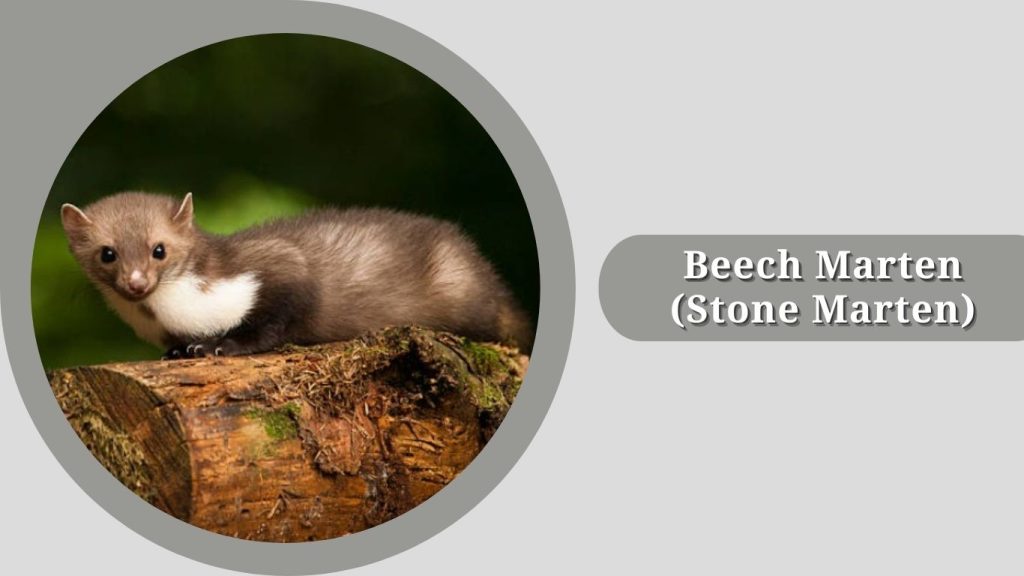
The beech marten, also known as the stone marten, is a highly adaptable member of the marten family found across Europe and parts of Central Asia. Unlike many martens, it is comfortable living close to human settlements. It is easily recognized by its pale throat patch and its habit of exploring barns, attics, and rocky areas.
Identification
- Slender body with relatively short legs
- Grayish-brown to dark brown fur
- Bright white or pale cream throat and chest patch, often forked
- Pink nose, unlike the darker-nosed pine marten
- Long, bushy tail
- Body length around 40–54 cm, excluding tail
Habitat
Beech martens inhabit a wide range of environments, including rocky hillsides, open woodlands, farmland edges, and even towns and villages. They frequently use stone walls, abandoned buildings, barns, and attics as shelter, which is why they are often seen near human dwellings.
They are less dependent on dense forests than pine martens. This flexibility allows them to thrive in fragmented landscapes where forests, fields, and settlements meet, making them one of the most widespread martens in Europe.
Behavior
Beech martens are mostly nocturnal and highly territorial. They are agile climbers but spend more time on the ground than pine martens. Their curiosity and boldness often bring them into contact with people, especially when searching for food or nesting sites.
They are solitary animals, meeting mainly during the breeding season. Beech martens communicate using scent marking, vocal sounds, and body posture. They are known for their intelligence and problem-solving ability, especially when accessing food in human environments.
Diet and Lifespan
The beech marten has a very varied diet. It feeds on small mammals, birds, eggs, insects, fruits, and human-related food sources such as leftovers or poultry. Fruits can make up a significant part of its diet during summer and autumn.
In the wild, beech martens usually live about 6 to 10 years. Survival depends on habitat safety, road traffic, human conflict, and food availability, with urban martens often facing higher risks.
3. Sable (Martes zibellina)
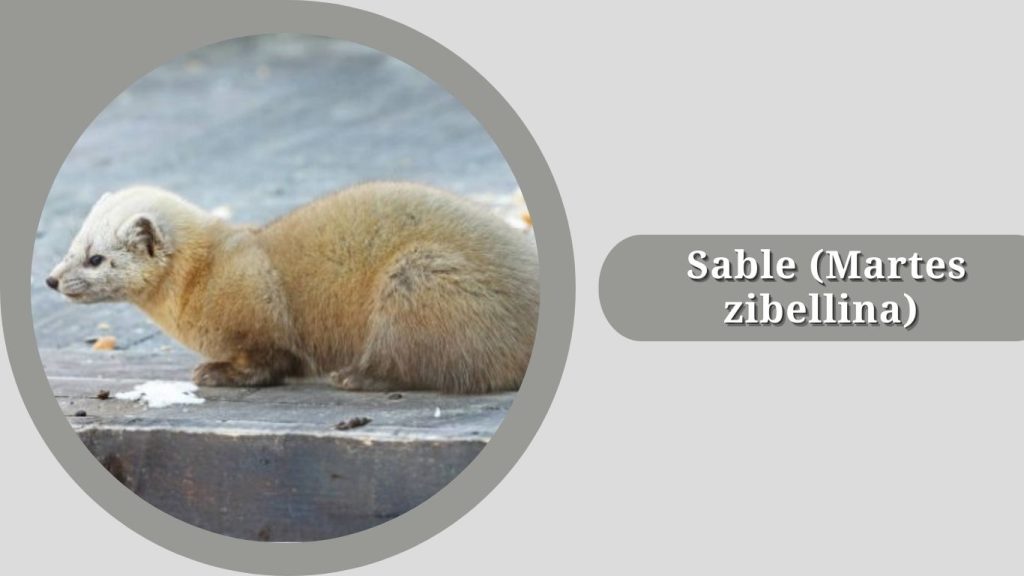
The sable is a forest-dwelling marten species famous for its extremely soft, dense fur and its long history in the Eurasian fur trade. Native to the vast taiga forests of Russia and parts of northern Asia, the sable is well adapted to cold climates and deep woodland environments.
Identification
- Medium-sized, slender body with short legs
- Very dense, silky fur ranging from light brown to deep chocolate
- Pale yellow to orange throat patch
- Rounded ears and a pointed snout
- Long, bushy tail used for balance and warmth
- Body length around 35–56 cm, excluding tail
Habitat
Sables mainly inhabit boreal forests, especially dense taiga composed of spruce, pine, larch, and cedar. They prefer remote woodland areas with thick undergrowth, fallen logs, and rocky crevices that provide shelter and hunting grounds.
They are strongly associated with cold, northern forests and rarely move into open farmland or human settlements. Old forests with complex ground cover are essential for sable populations because they support both prey animals and safe den sites.
Behavior
Sables are mostly active during early morning and evening but may also hunt at night. They are agile climbers but often forage on the forest floor, weaving through fallen branches and snow-covered vegetation.
They are solitary and territorial, using scent glands to mark their home ranges. Sables are known for their alertness and speed, capable of pursuing prey through dense forest and deep snow with remarkable agility.
Diet and Lifespan
The sable is an omnivore with a strong preference for animal prey. It commonly eats voles, mice, squirrels, birds, eggs, and insects, while also consuming berries, pine nuts, and other forest fruits when available.
In the wild, sables typically live around 8 to 12 years. In protected habitats with low hunting pressure, some individuals may live longer, but harsh winters and food shortages often limit lifespan.
4. American Marten (Martes americana)
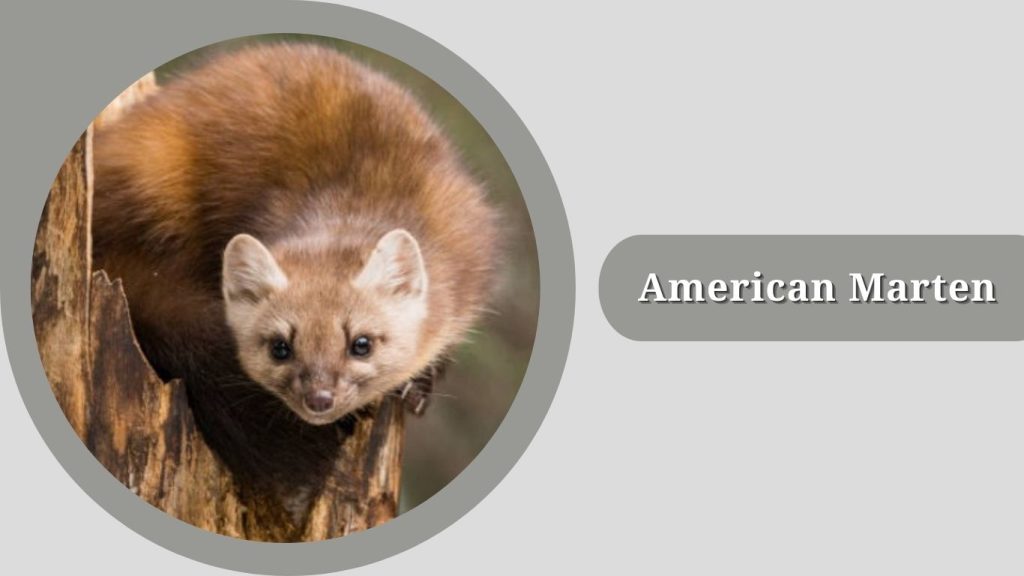
The American marten is a small, agile carnivore native to North America, especially the forested regions of Canada, Alaska, and the northern United States. It is closely associated with cold, mature forests and is considered an important indicator of healthy woodland ecosystems.
Identification
- Slender body with short legs and a long, bushy tail
- Fur color ranges from light brown to dark chocolate
- Creamy to orange throat and chest patch
- Large, rounded ears and sharp facial features
- Thick winter coat adapted to cold climates
- Body length around 40–55 cm, excluding tail
Habitat
American martens prefer dense coniferous and mixed forests with complex ground structure. Fallen logs, deep snow, and thick undergrowth provide protection from predators and create ideal hunting conditions.
They are especially common in boreal forests but also occur in mountainous woodlands. Martens depend on continuous forest cover, as fragmented habitats reduce shelter availability and prey diversity.
Behavior
American martens are mostly crepuscular and nocturnal. They are skilled climbers and swift runners, able to move easily through trees and across snow. Their wide, fur-covered paws help them travel over soft winter surfaces.
They are solitary and maintain territories marked with scent glands. Although usually secretive, they can be active during daylight in undisturbed areas.
Diet and Lifespan
The American marten feeds on voles, mice, squirrels, birds, insects, and carrion. Seasonal fruits and berries are also eaten, especially in summer and fall. Their diet shifts with prey availability, helping them survive harsh winters.
In the wild, American martens generally live about 7 to 10 years. Survival depends on forest quality, trapping pressure, and food supply.
5. Japanese Marten (Martes melampus)
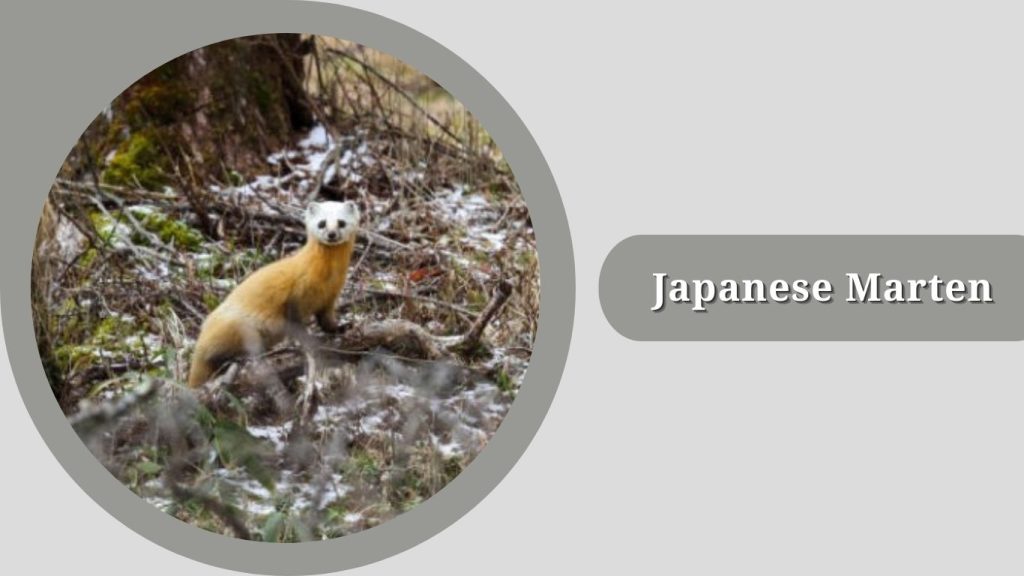
The Japanese marten is a colorful and agile species native to the forested regions of Japan and parts of the Korean Peninsula. It is well adapted to both mountainous forests and lowland woodlands, and is known for its striking golden-brown coloration and strong climbing ability.
Identification
- Slender body with relatively long legs
- Fur ranges from golden yellow to dark brown
- Pale cream to yellowish throat and chest patch
- Long, bushy tail often darker than the body
- Pointed face with rounded ears
- Body length around 45–55 cm, excluding tail
Habitat
Japanese martens live in a variety of forest types, including deciduous, coniferous, and mixed woodlands. They are especially common in mountainous regions where old trees, dense vegetation, and rocky shelters provide ideal living conditions.
They can also survive near agricultural land and forest edges, showing more flexibility than some northern martens. Hollow trees, underground burrows, and rocky crevices are commonly used for resting and breeding.
Behavior
Japanese martens are mostly nocturnal but may be active during the day in quiet areas. They are excellent climbers and spend much of their time moving through trees, though they also hunt on the ground.
They are solitary and territorial animals. Individuals mark their home ranges with scent glands and vocal calls. During the breeding season, males travel widely in search of females.
Diet and Lifespan
The Japanese marten is an omnivore that eats rodents, birds, insects, frogs, and a wide variety of fruits. In some regions, fruit and plant matter can make up a large part of its diet, especially in warmer months.
In the wild, Japanese martens usually live around 8 to 12 years. Their lifespan is influenced by habitat quality, road mortality, and human disturbance.
6. Nilgiri Marten (Martes gwatkinsii)
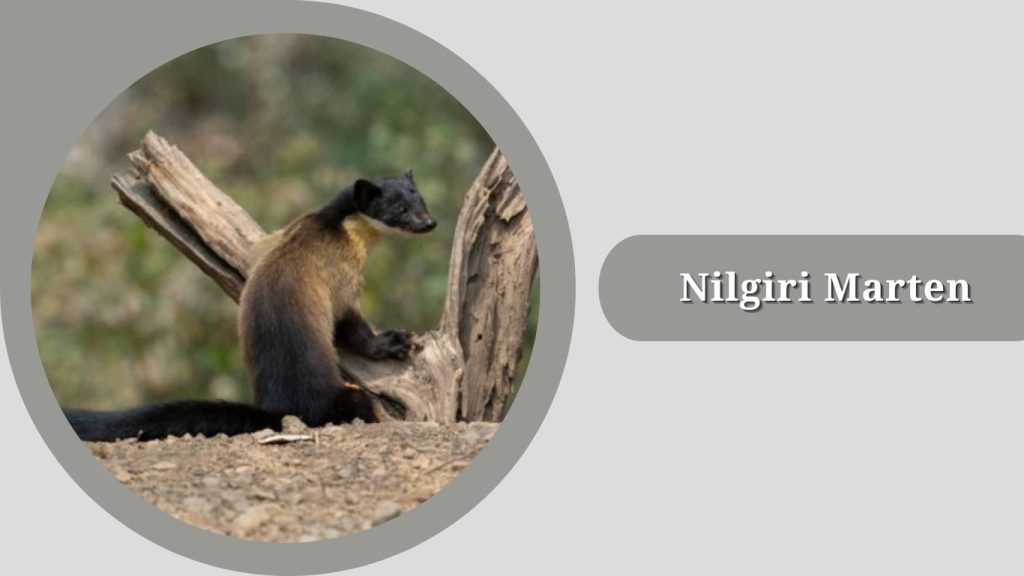
The Nilgiri marten is a rare and little-known species found only in the Western Ghats mountain range of southern India. It is the only marten native to India and is strongly associated with high-elevation evergreen and shola forests. Because of its limited range and secretive nature, it is considered one of the most elusive martens in the world.
Identification
- Slender body with relatively long limbs
- Dark brown to blackish fur on the back
- Bright yellow to orange throat and chest patch
- Long, bushy tail often darker toward the tip
- Short, rounded ears and pointed muzzle
- Body length around 45–55 cm, excluding tail
Habitat
Nilgiri martens live mainly in high-altitude tropical evergreen forests, shola–grassland mosaics, and dense montane woodlands. They prefer cool, moist environments with thick canopy cover, fallen logs, and rocky crevices.
Most records come from elevations above 1,000 meters. Habitat fragmentation is a major threat, as this species depends on continuous forest to find food, shelter, and breeding sites.
Behavior
Nilgiri martens are believed to be mostly diurnal, which is unusual for martens, though some activity occurs at dawn and dusk. They are skilled climbers and are often seen moving through the forest canopy.
They are solitary and shy animals, rarely observed in the wild. Very little is known about their social structure, but they are thought to be territorial, using scent marking like other martens.
Diet and Lifespan
The Nilgiri marten is an omnivore. It feeds on small mammals, birds, reptiles, insects, and a wide range of forest fruits. Fruit may form a significant part of its diet, especially in evergreen forests.
Exact lifespan data is limited, but it is estimated that Nilgiri martens live around 8 to 10 years in the wild. Survival is closely linked to forest protection and prey availability.
7. Fisher (Pekania pennanti)
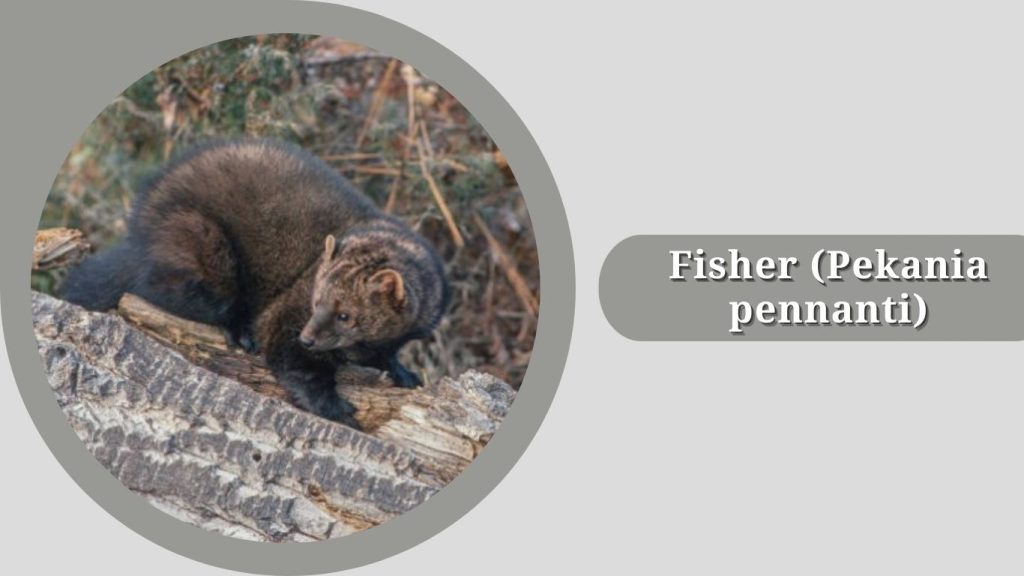
The fisher is one of the largest members of the marten family and is native to the forests of North America. Despite its name, it does not eat fish regularly. Instead, it is a powerful forest predator known for its strength, agility, and rare ability to hunt porcupines, a prey avoided by most carnivores.
Identification
- Long, muscular body with short, strong legs
- Dark brown to nearly black fur, often glossy
- Bushy tail making up nearly one-third of its length
- Rounded ears set low on the head
- Pointed face with strong jaws
- Body length around 75–120 cm, including tail
Habitat
Fishers inhabit dense coniferous and mixed forests, especially those with old trees, hollow logs, and thick canopy cover. They rely heavily on complex forest structures for hunting and denning.
They are commonly found in Canada and the northern United States, particularly in remote or well-protected forests. Habitat loss and fragmentation have historically reduced fisher populations, though reintroduction programs have helped in some regions.
Behavior
Fishers are mainly crepuscular and nocturnal but may also be active during the day. They are fast, agile climbers yet spend much time hunting on the ground.
They are solitary and strongly territorial. Fishers communicate using scent markings and vocalizations. They are fearless hunters, capable of taking prey nearly their own size.
Diet and Lifespan
Fishers eat a wide variety of animals, including rodents, rabbits, birds, insects, and carrion. They are famous for hunting porcupines by repeatedly attacking the face and flipping them onto their backs.
In the wild, fishers usually live around 7 to 10 years. Lifespan depends on forest quality, trapping pressure, and food supply.
8. Yellow-throated Marten (Martes flavigula)
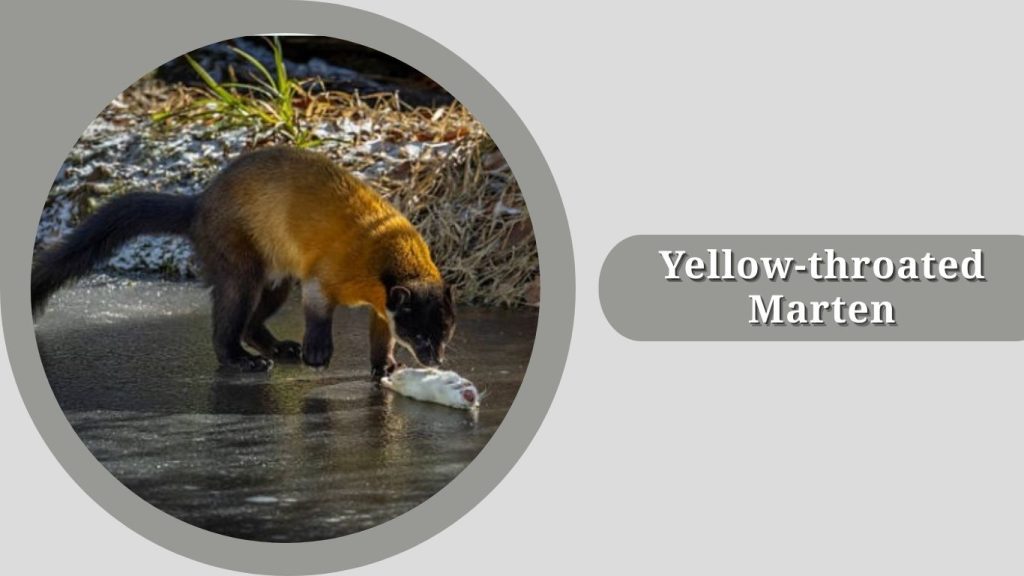
The yellow-throated marten is one of the most colorful and wide-ranging marten species, found across South and Southeast Asia, China, and parts of Russia. It is more social and more active during the day than many other martens, making it one of the easier species to observe in the wild.
Identification
- Slender but powerful body with long legs
- Striking coloration with a yellow or golden throat and chest
- Dark brown to black back, legs, and tail
- Pale face with contrasting darker markings
- Long, bushy tail used for balance
- Body length around 50–70 cm, excluding tail
Habitat
Yellow-throated martens inhabit a wide variety of environments, including tropical forests, temperate woodlands, mountain forests, and even open rocky areas. They are comfortable in both lowland jungles and high-altitude forests.
They often use tree hollows, rock crevices, and abandoned burrows for shelter. Their adaptability allows them to live across a huge geographic range, from the Himalayas to Southeast Asian rainforests.
Behavior
Unlike many martens, yellow-throated martens are frequently active during the day. They are fast runners and excellent climbers, often traveling long distances in search of food.
They may hunt alone or in pairs and are known for bold, aggressive behavior when confronting predators or competing carnivores. Loud calls and strong scent markings are used to communicate.
Diet and Lifespan
Yellow-throated martens are omnivores with a strong predatory side. They eat rodents, birds, reptiles, insects, and also large amounts of fruit and honey when available.
In the wild, they usually live about 8 to 12 years. Their wide diet and adaptable nature help them survive in many different habitats.
FAQs
What is a marten?
A marten is a small to medium-sized carnivorous mammal belonging to the weasel family (Mustelidae). Martens are known for their slender bodies, bushy tails, sharp claws, and excellent climbing ability. They mainly live in forests and are skilled hunters of small animals, insects, and fruits.
Where do martens usually live?
Martens are mostly found in forested regions across Europe, Asia, and North America. Depending on the species, they may live in boreal forests, mountain woodlands, tropical forests, or mixed habitats. Most martens prefer areas with dense trees, fallen logs, and natural shelters.
Are martens dangerous to humans?
Martens are generally shy and avoid people. They are not dangerous to humans unless threatened or cornered. In rare cases, martens living near settlements may damage poultry, insulation, or food stores, but direct attacks on humans are extremely uncommon.
What do martens eat in the wild?
Martens are omnivores. They feed on small mammals, birds, eggs, insects, reptiles, and carrion. Many species also eat fruits, berries, and nuts, especially in warmer months. Their flexible diet helps them survive in different seasons and environments.
How long do martens live?
Most martens live between 7 and 12 years in the wild, depending on species and habitat conditions. Their lifespan is influenced by food availability, forest quality, predators, disease, and human-related threats such as habitat loss and road accidents.