




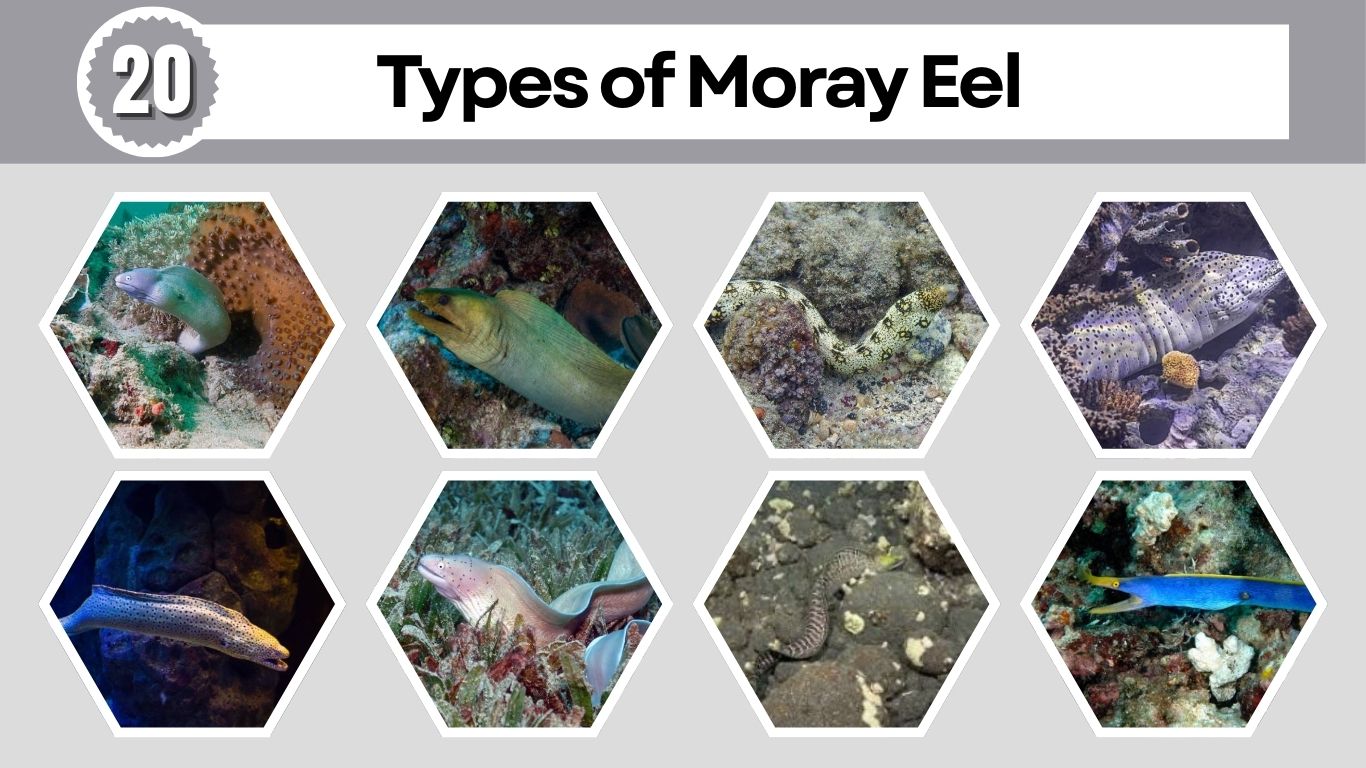
Moray eels are fascinating, snake-like fish found in warm oceans around the world, especially around coral reefs and rocky coastlines. Known for their wide mouths, sharp teeth, and secretive behavior, they play an important role as predators in marine ecosystems. With more than 200 recognized species, morays come in many colors, patterns, and sizes—from tiny dwarf species to massive giants. In this guide, you’ll discover 20 remarkable types of moray eels and what makes each unique.
1. Giant Moray (Gymnothorax javanicus)
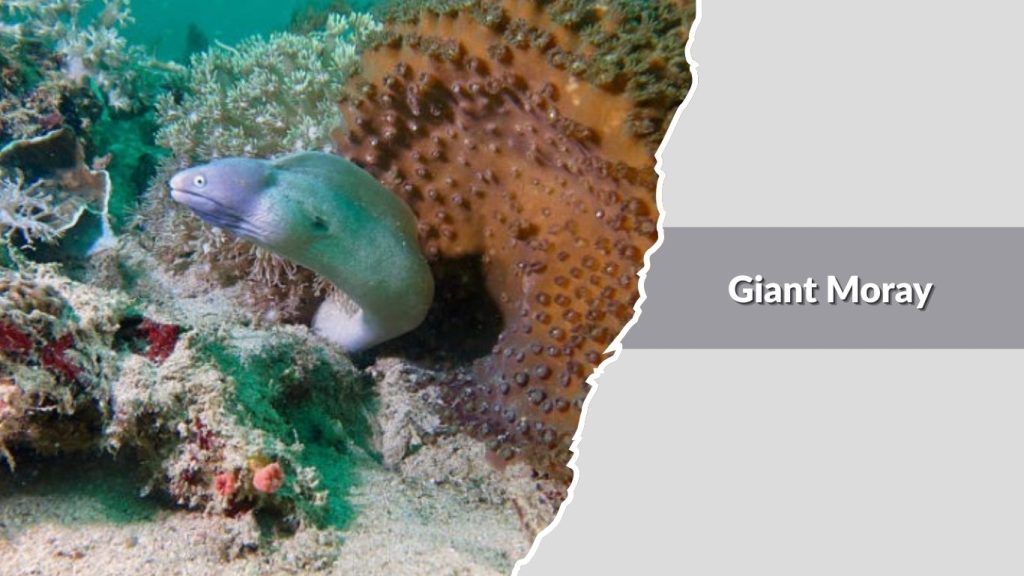
The giant moray is the largest species of moray eel in the world and one of the most powerful reef predators. It is commonly found in tropical Indo-Pacific waters, where it lives inside coral reefs, rocky crevices, and underwater caves. Known for its thick body and intimidating appearance, the giant moray plays an important role in controlling reef fish populations.
Identification
- Very large, thick-bodied eel with a blunt head
- Mottled brown, yellow, and dark spotted pattern
- Large mouth with strong, visible teeth
- Can exceed 3 meters (10 feet) in length
- Leathery, scaleless skin with irregular markings
Habitat and Distribution
Giant morays live mainly in the Indo-Pacific region, including the Red Sea, East Africa, Japan, Australia, and many Pacific islands. They prefer coral reefs and rocky slopes, where they hide in deep crevices during the day and patrol reef edges at night.
Behavior and Temperament
This species is mostly nocturnal and highly territorial. During the day, it often rests with its head sticking out of a hole, opening and closing its mouth to breathe. Although usually shy, it can become aggressive if threatened or provoked.
Diet and Feeding Habits
Giant morays are carnivorous predators that feed on fish, octopus, cuttlefish, and crustaceans. They use powerful jaws and a second set of pharyngeal jaws to pull prey into their throat, making them extremely effective hunters.
Size and Lifespan
The giant moray is the largest moray eel, commonly reaching 2 to 2.5 meters, with some individuals growing even longer. While exact lifespan data is limited, they are believed to live several decades in the wild under stable reef conditions.
Reproduction and Life Cycle
Giant morays reproduce by releasing eggs and sperm into open water. The larvae drift as transparent leptocephalus forms before settling on reefs and transforming into juvenile eels. They grow slowly and become more solitary with age.
2. Green Moray (Gymnothorax funebris)
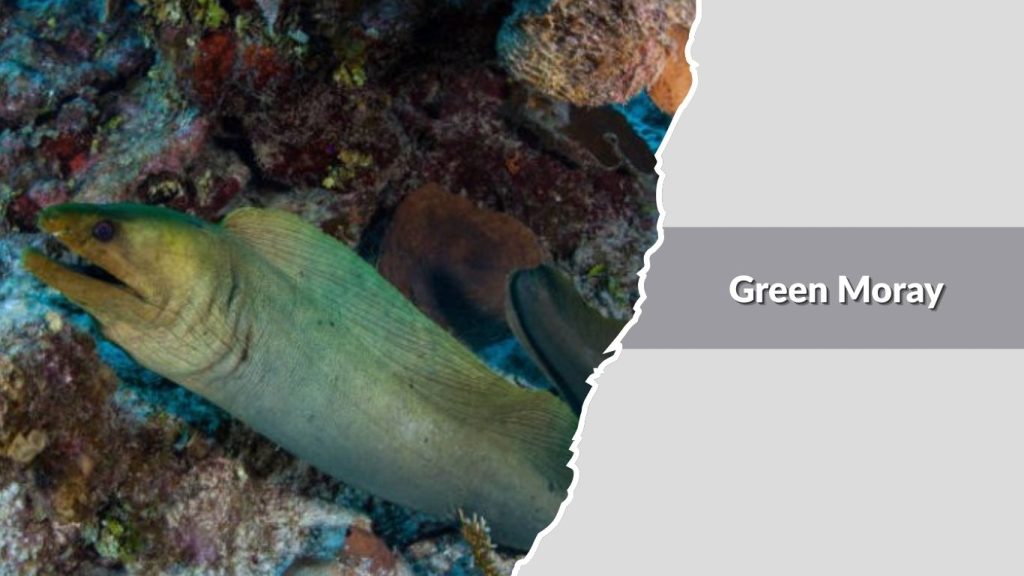
The green moray is one of the most recognizable moray eels, famous for its bright green appearance and bold personality. It is commonly found in the warm waters of the western Atlantic, where it lives among coral reefs, rocky shores, and mangrove areas. Despite its intense color, the green moray often blends well into algae-covered rocks and reef structures.
Identification
- Long, muscular body with thick neck region
- Bright green to yellow-green coloration
- Large head with wide jaws and sharp teeth
- Can reach up to 2.5 meters (8 feet) long
- Skin covered in protective mucus giving a glossy look
Habitat and Distribution
Green morays range from Florida and the Gulf of Mexico through the Caribbean and down to Brazil. They inhabit shallow reefs, rocky crevices, and sometimes shipwrecks, usually hiding during the day and becoming more active at night.
Behavior and Temperament
This species is territorial and often seen with its mouth open, which helps pump water over its gills. While generally not aggressive, green morays may bite if disturbed, especially when divers place hands too close to their hiding spots.
Diet and Feeding Habits
Green morays mainly feed on fish, crabs, shrimp, and octopus. They rely heavily on their sense of smell to locate prey and can launch sudden, powerful strikes from their hiding places.
Size and Lifespan
Green morays are among the largest Atlantic morays, commonly growing between 1.5 and 2.3 meters. In the wild, they are thought to live over 20 years under favorable reef conditions.
Reproduction and Life Cycle
They reproduce through external fertilization, releasing eggs into the water column. The larvae drift as transparent leptocephali before settling and transforming into juvenile morays that move into reef habitats.
3. Zebra Moray (Gymnomuraena zebra)
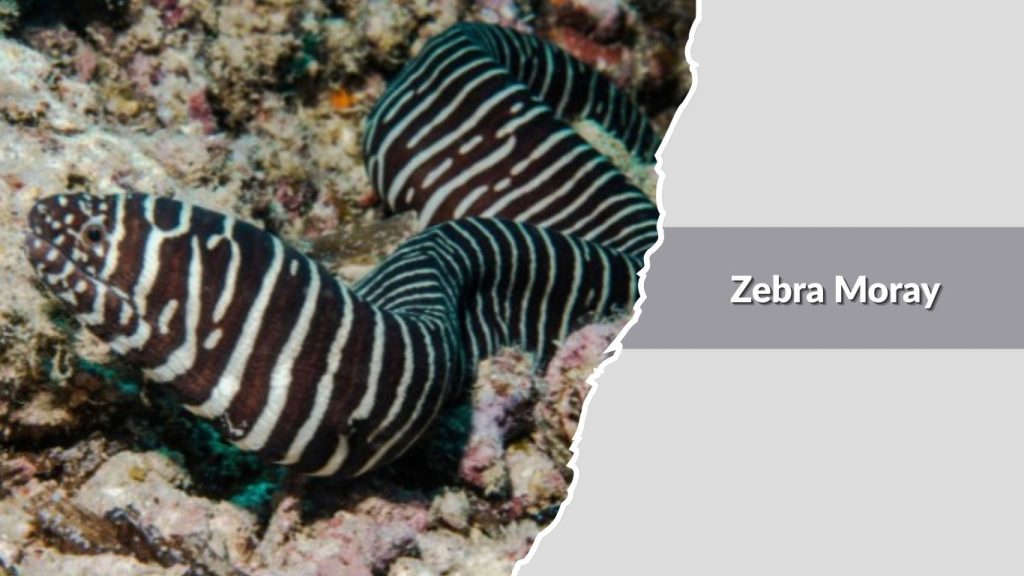
The zebra moray is a striking and popular moray eel known for its bold black-and-white banded pattern. Unlike many aggressive morays, this species is relatively calm and is often seen resting openly on coral reefs. It is native to the Indo-Pacific region and is especially common in shallow lagoons and reef flats.
Identification
- Thick, heavy-bodied eel with rounded snout
- Distinct black-and-white or dark brown-and-cream banding
- Blunt teeth adapted for crushing shells
- Typically grows up to 1.5 meters (5 feet)
- Smooth, scaleless skin with high-contrast pattern
Habitat and Distribution
Zebra morays live throughout the Indo-Pacific, including the Red Sea, East Africa, Hawaii, Japan, and Australia. They favor coral reefs, shallow lagoons, and rocky reef slopes, where they shelter in holes and crevices.
Behavior and Temperament
This species is mostly nocturnal but is often visible during the day. It is considered less aggressive than many other morays and rarely bites unless harassed. Zebra morays spend long periods resting and slowly exploring the reef.
Diet and Feeding Habits
Zebra morays feed mainly on hard-shelled prey such as crabs, sea urchins, mollusks, and shrimp. Their rounded, crushing teeth are specialized for breaking shells rather than grabbing fish.
Size and Lifespan
Most zebra morays reach between 1.2 and 1.5 meters in length. In suitable reef environments, they may live for several decades, although exact lifespan data in the wild is limited.
Reproduction and Life Cycle
They reproduce by spawning in open water. After hatching, larvae drift as leptocephalus forms before settling onto reefs and slowly developing into juvenile zebra morays.
4. Snowflake Moray (Echidna nebulosa)
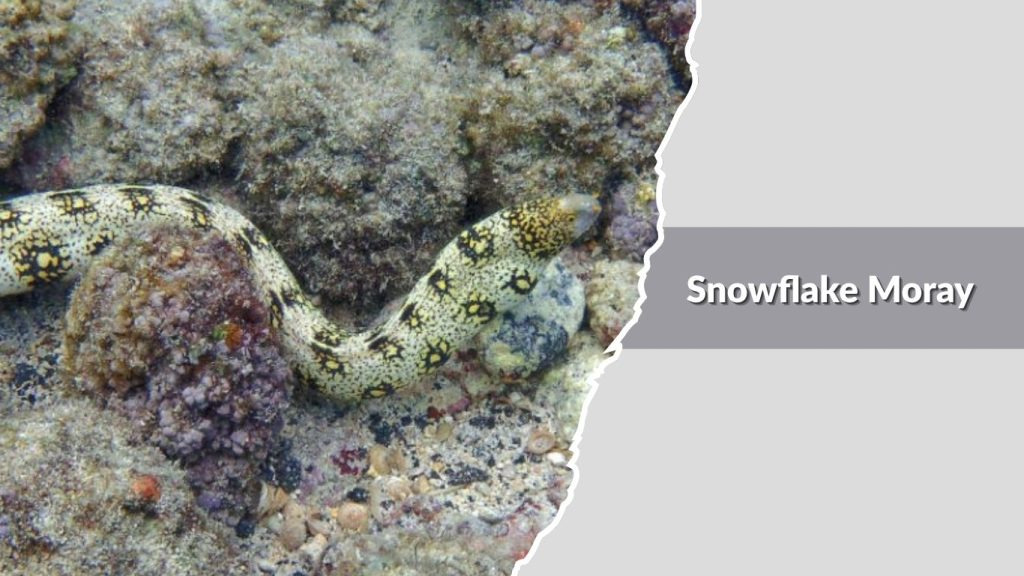
The snowflake moray is one of the most recognizable and commonly encountered moray eels, known for its pale body covered in irregular dark spots that resemble snowflakes. It is widespread across the Indo-Pacific and is often seen in shallow reefs, tide pools, and rocky lagoons. This species is also popular in marine aquariums because of its hardy nature.
Identification
- Cream to light yellow body with dark, irregular blotches
- Thick head with blunt snout and small eyes
- Rounded, pebble-like teeth for crushing prey
- Grows up to about 1 meter (3.3 feet) long
- Muscular body with leathery, scaleless skin
Habitat and Distribution
Snowflake morays are found throughout the Indo-Pacific, including the Red Sea, East Africa, Japan, Australia, and many Pacific islands. They prefer shallow reefs, rocky crevices, and lagoon areas, often hiding in holes during the day.
Behavior and Temperament
This species is mostly nocturnal and relatively hardy. Snowflake morays are less aggressive than fish-eating morays but will defend themselves if disturbed. They are known to explore their surroundings and can even survive short periods out of water.
Diet and Feeding Habits
Snowflake morays mainly eat crustaceans such as crabs, shrimp, and lobsters, as well as sea urchins and mollusks. Their crushing teeth are well adapted for breaking hard shells rather than catching fish.
Size and Lifespan
Most snowflake morays reach lengths of 60 to 100 cm. With good conditions, they may live 15 to 20 years or longer, especially in protected reef environments.
Reproduction and Life Cycle
They reproduce by releasing eggs into the open ocean. The larvae drift for long periods before settling into reef habitats, where they slowly develop into juvenile eels.
5. Dragon Moray (Enchelycore pardalis)
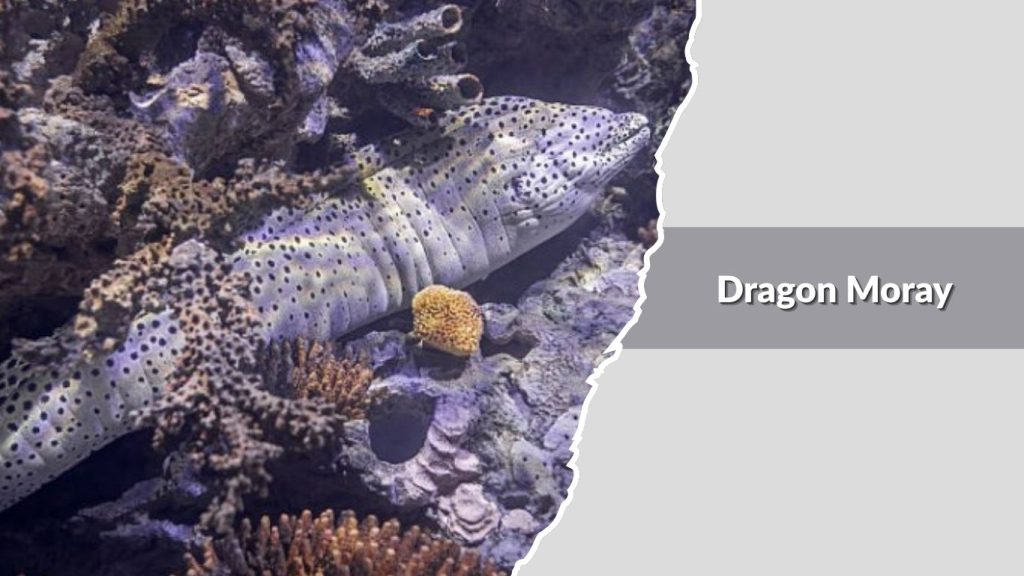
The dragon moray is one of the most visually dramatic moray eels, famous for its bright orange body, bold black markings, and permanently open mouth that gives it a fierce, dragon-like appearance. It inhabits tropical Indo-Pacific reefs, where it hides among rocky crevices and coral heads. Because of its striking look, it is considered one of the most exotic moray species.
Identification
- Bright orange to reddish body with dark, irregular spots
- Long, curved teeth that protrude even when the mouth is closed
- Elongated snout and constantly open mouth appearance
- Grows up to about 1 meter (3.3 feet)
- High-contrast coloration unlike most other morays
Habitat and Distribution
Dragon morays are found in the Indo-Pacific, including the Red Sea, East Africa, Japan, and the central Pacific islands. They prefer deep reef slopes, caves, and rocky coral structures, usually staying hidden during daylight hours.
Behavior and Temperament
This species is shy and reclusive, spending most of its time inside holes with only the head exposed. It is mainly nocturnal and becomes active at night to hunt. Although intimidating in appearance, it is not typically aggressive unless provoked.
Diet and Feeding Habits
Dragon morays are carnivorous predators that feed mostly on small fish, shrimp, and other crustaceans. Their long, curved teeth help them grip slippery prey, while their pharyngeal jaws pull food deeper into the throat.
Size and Lifespan
Most dragon morays grow between 60 and 100 cm in length. While exact lifespan records are rare, they are believed to live well over a decade in stable reef environments.
Reproduction and Life Cycle
They reproduce through external spawning. Fertilized eggs hatch into transparent larvae that drift with ocean currents before settling and transforming into juvenile dragon morays.
6. Honeycomb Moray (Gymnothorax favagineus)
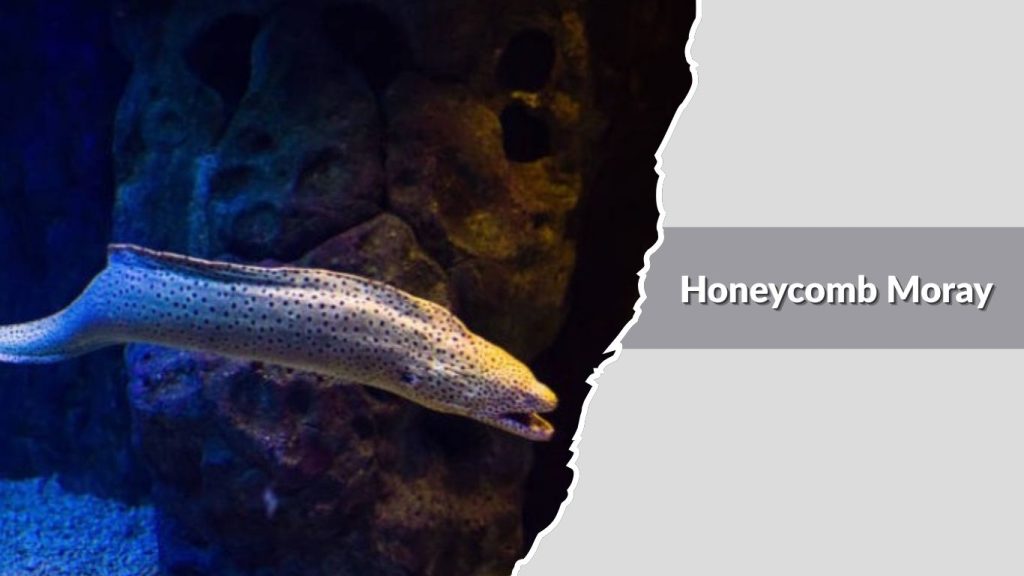
The honeycomb moray, also called the laced moray, is a large and beautifully patterned species known for its white body covered with bold black polygon-shaped spots. It is one of the biggest moray eels of the Indo-Pacific and is often seen with its head protruding from reef caves. Its striking pattern makes it easily recognizable to divers.
Identification
- White to pale body covered in black honeycomb-like spots
- Thick, muscular body with large head
- Strong jaws with sharp, visible teeth
- Can grow up to 3 meters (10 feet)
- Smooth, leathery skin with high-contrast pattern
Habitat and Distribution
Honeycomb morays are found throughout the Indo-Pacific, from the Red Sea and East Africa to Japan, Australia, and Polynesia. They prefer coral reefs, outer reef slopes, and rocky caves, often occupying deep crevices during the day.
Behavior and Temperament
This species is mostly nocturnal and highly territorial. During the day, it is commonly seen resting in holes with its mouth open for breathing. Although usually calm, large individuals can become aggressive if cornered or disturbed.
Diet and Feeding Habits
Honeycomb morays feed mainly on fish, octopus, and crustaceans. They are powerful ambush predators that strike quickly from hiding, using strong jaws and pharyngeal teeth to secure prey.
Size and Lifespan
They are among the largest morays, often reaching 2–2.5 meters, with exceptional individuals growing even larger. In healthy reef systems, they may live several decades.
Reproduction and Life Cycle
Like other morays, they spawn in open water. The larvae drift as leptocephali before settling on reefs and gradually developing into juvenile eels.
7. Fimbriated Moray (Gymnothorax fimbriatus)
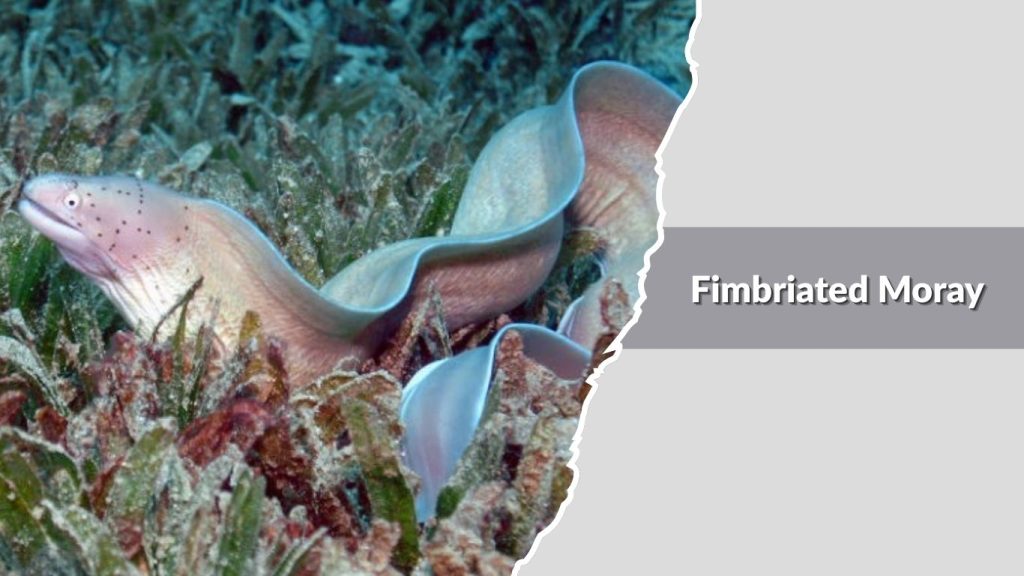
The fimbriated moray is a beautifully patterned Indo-Pacific species known for its dark body covered with irregular pale blotches and a distinctive fringed appearance around the mouth. It is commonly seen on coral reefs and rocky slopes, where it hides in crevices during the day and hunts at night.
Identification
- Dark brown to black body with pale yellow or cream blotches
- Slightly fringed lips giving a “frayed” mouth edge
- Slender but muscular body shape
- Sharp, pointed teeth for gripping prey
- Usually grows up to about 1 meter (3.3 feet)
Habitat and Distribution
Fimbriated morays are found throughout the Indo-Pacific, including the Red Sea, East Africa, Southeast Asia, Japan, and Australia. They inhabit coral reefs, rocky bottoms, and lagoon areas, preferring sheltered crevices and holes.
Behavior and Temperament
This species is mainly nocturnal and reclusive. During the day, only its head is often visible from its shelter. It is not considered highly aggressive but will bite if harassed or handled.
Diet and Feeding Habits
Fimbriated morays feed mostly on small fish, crabs, shrimp, and octopus. They are ambush predators that rely on sudden strikes and a strong sense of smell to capture prey.
Size and Lifespan
Most individuals reach lengths between 60 and 100 cm. In the wild, they are believed to live for many years, though exact lifespan estimates are limited.
Reproduction and Life Cycle
They reproduce through open-water spawning. The larvae drift with currents before settling and transforming into juvenile morays that take up life in reef crevices.
8. Yellowhead Moray (Gymnothorax nudivomer)
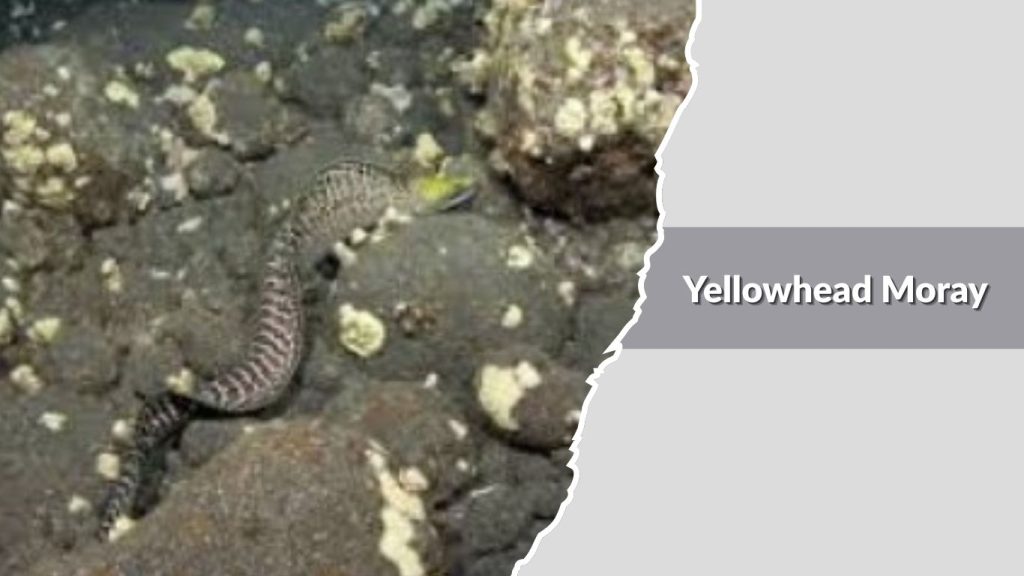
The yellowhead moray is a large and striking moray eel known for its dark body covered in bright yellow spots and a noticeably yellow face. It is a common Indo-Pacific reef species and is often seen resting in reef holes with only its colorful head exposed.
Identification
- Dark brown to black body with vivid yellow spots
- Distinct bright yellow head and facial area
- Large mouth with strong, sharp teeth
- Thick, muscular body
- Can grow up to about 2 meters (6.5 feet)
Habitat and Distribution
Yellowhead morays are found widely across the Indo-Pacific, from the Red Sea and East Africa to Hawaii and French Polynesia. They prefer coral reefs, rocky slopes, and reef drop-offs, usually hiding in caves and crevices.
Behavior and Temperament
This species is mostly nocturnal and territorial. During the day, it typically remains hidden, exposing only its head. Although generally not aggressive, it can deliver a strong defensive bite if threatened.
Diet and Feeding Habits
Yellowhead morays primarily eat fish, octopus, and crustaceans. They are ambush predators, striking rapidly from hiding places and pulling prey back into their shelter.
Size and Lifespan
They are among the larger morays, commonly growing between 1.5 and 2 meters. Under natural reef conditions, they may live for several decades.
Reproduction and Life Cycle
Reproduction occurs through external fertilization. Eggs hatch into drifting larvae that eventually settle and develop into juvenile morays.
9. Ribbon Moray (Rhinomuraena quaesita)
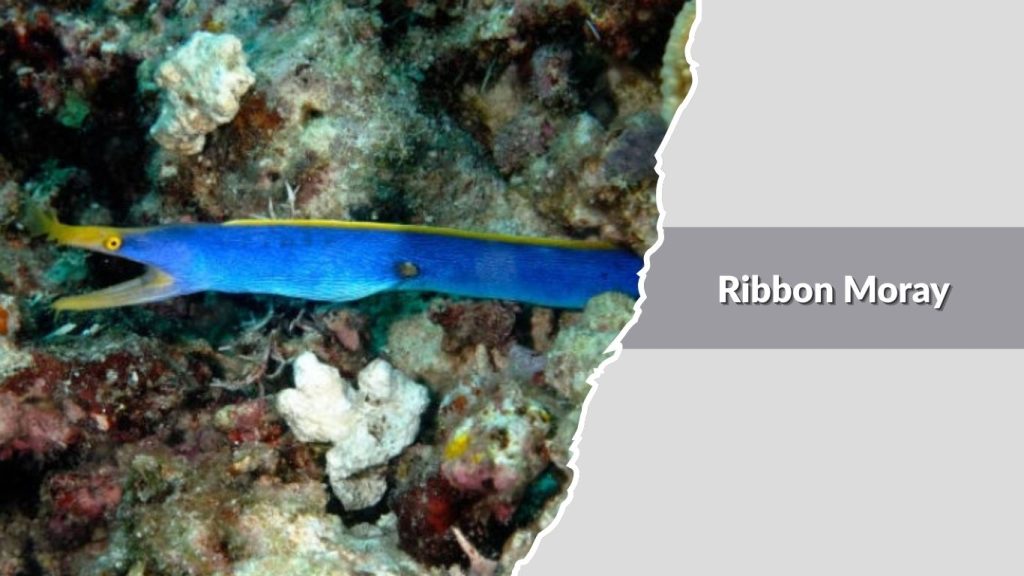
The ribbon moray is one of the most unusual-looking moray eels, known for its long ribbon-like body, high dorsal fin, and striking color changes throughout its life. It is native to the Indo-Pacific and is often seen in sandy lagoons and reef flats, where it lives in burrows with only its head exposed.
Identification
- Long, slender, ribbon-like body with tall dorsal fin
- Elongated snout with flared nostrils
- Color changes from black (juvenile) to blue (male) to yellow (female)
- Usually grows up to about 1 meter (3 feet)
- Narrow head with small, sharp teeth
Habitat and Distribution
Ribbon morays are found across the Indo-Pacific, including the Red Sea, East Africa, Japan, Australia, and the South Pacific islands. They prefer sandy bottoms near reefs, lagoons, and sheltered coastal areas where they can build burrows.
Behavior and Temperament
This species is diurnal compared to many other morays and is often seen swaying in the current outside its burrow. It is generally shy and retreats quickly when disturbed.
Diet and Feeding Habits
Ribbon morays mainly feed on small fish and crustaceans. They hunt by sensing movement in the water and striking quickly from their burrows to capture passing prey.
Size and Lifespan
Most ribbon morays reach lengths between 60 and 100 cm. Their exact lifespan is not well documented, but they are believed to live many years in stable reef environments.
Reproduction and Life Cycle
Ribbon morays are sequential hermaphrodites, starting life as males and later changing into females. They reproduce by releasing eggs into open water, where larvae drift before settling.
10. Spotted Moray (Gymnothorax moringa)
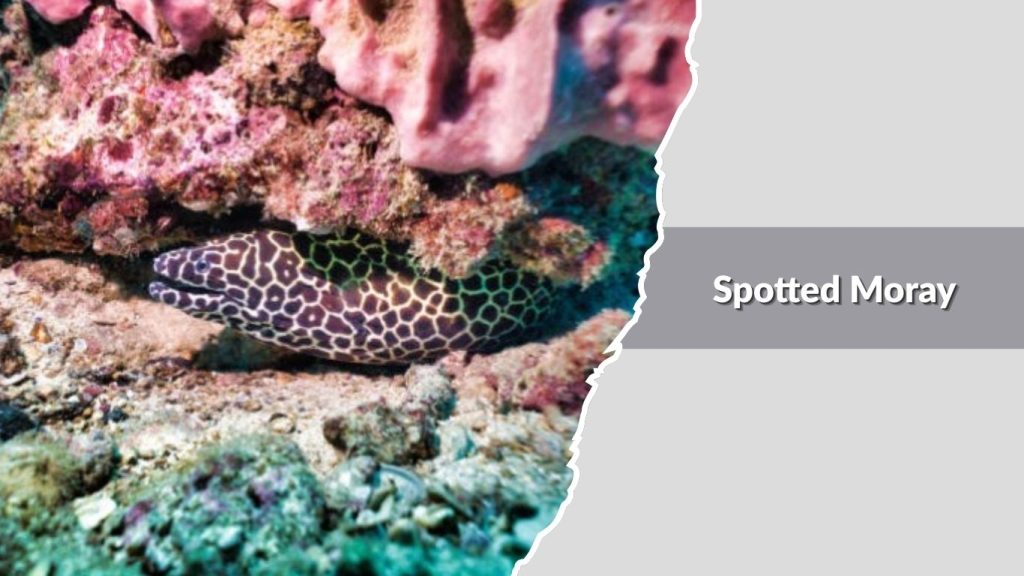
The spotted moray, also known as the spotted green moray, is a large Atlantic species recognized by its dark body covered in numerous small yellow or pale spots. It is commonly found in coral reefs and rocky coastlines, where it hides in crevices during the day and hunts at night.
Identification
- Dark brown to black body with many small yellow or light spots
- Thick head with wide jaws and strong teeth
- Muscular, heavy-bodied build
- Smooth, scaleless skin with glossy appearance
- Can grow up to about 2 meters (6.5 feet)
Habitat and Distribution
Spotted morays live in the western Atlantic, including Florida, the Gulf of Mexico, the Caribbean Sea, and coastal Brazil. They inhabit coral reefs, rocky bottoms, and reef ledges, often occupying deep holes.
Behavior and Temperament
This species is nocturnal and territorial. During daylight hours, it usually remains hidden, exposing only its head. While generally non-aggressive, it can deliver a powerful bite if provoked or cornered.
Diet and Feeding Habits
Spotted morays feed mainly on fish, octopus, squid, and crustaceans. They are ambush predators, striking quickly from hiding and using their strong jaws to subdue prey.
Size and Lifespan
Most individuals range between 1.2 and 2 meters in length. In natural reef environments, they may live several decades.
Reproduction and Life Cycle
They reproduce through open-water spawning. Eggs hatch into transparent larvae that drift with currents before settling onto reefs.
11. California Moray (Gymnothorax mordax)
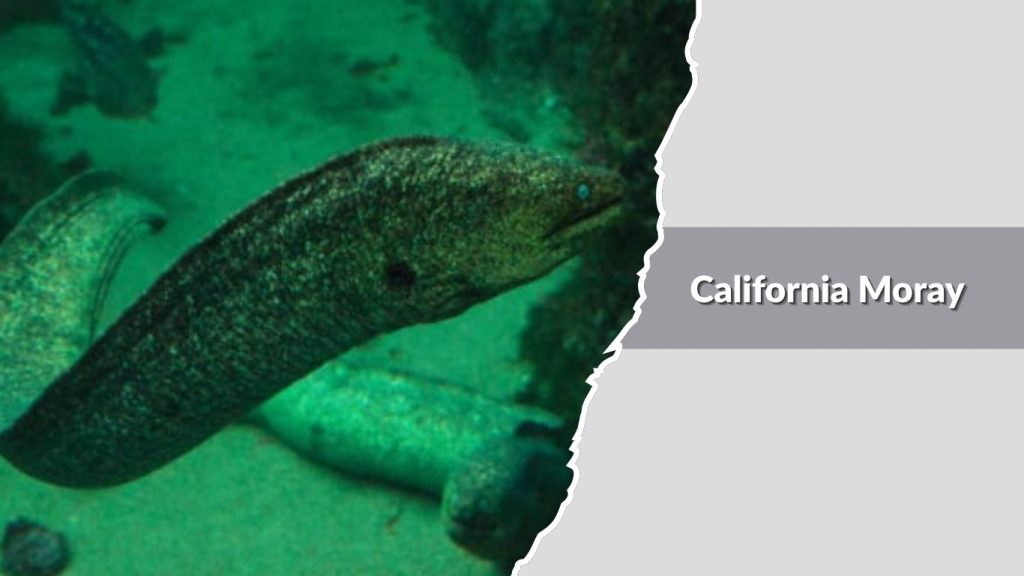
The California moray is the only true moray eel commonly found along the Pacific coast of North America. It is a thick-bodied, dark-colored species that lives in rocky reefs and kelp forests. This moray is well adapted to cooler waters compared to most tropical morays.
Identification
- Dark brown to black body with occasional lighter mottling
- Thick, muscular build with blunt head
- Strong jaws with sharp, pointed teeth
- Small eyes and wide mouth
- Grows up to about 1.5 meters (5 feet)
Habitat and Distribution
California morays are found from central California down to Baja California, Mexico. They inhabit rocky reefs, crevices, and kelp forest areas, usually at depths where they can hide in holes and under ledges.
Behavior and Temperament
This species is nocturnal and secretive. During the day, it remains hidden in rock cavities, emerging at night to hunt. It is generally shy but may bite if threatened or handled.
Diet and Feeding Habits
California morays feed on fish, crabs, octopus, squid, and sea urchins. They use ambush tactics, striking rapidly from hiding spots.
Size and Lifespan
They commonly reach lengths of 1 to 1.5 meters. In the wild, they are believed to live for many years, possibly decades, under suitable conditions.
Reproduction and Life Cycle
They reproduce through external spawning. The larvae drift in the plankton before settling into rocky habitats and transforming into juvenile eels.
12. Mediterranean Moray (Muraena helena)
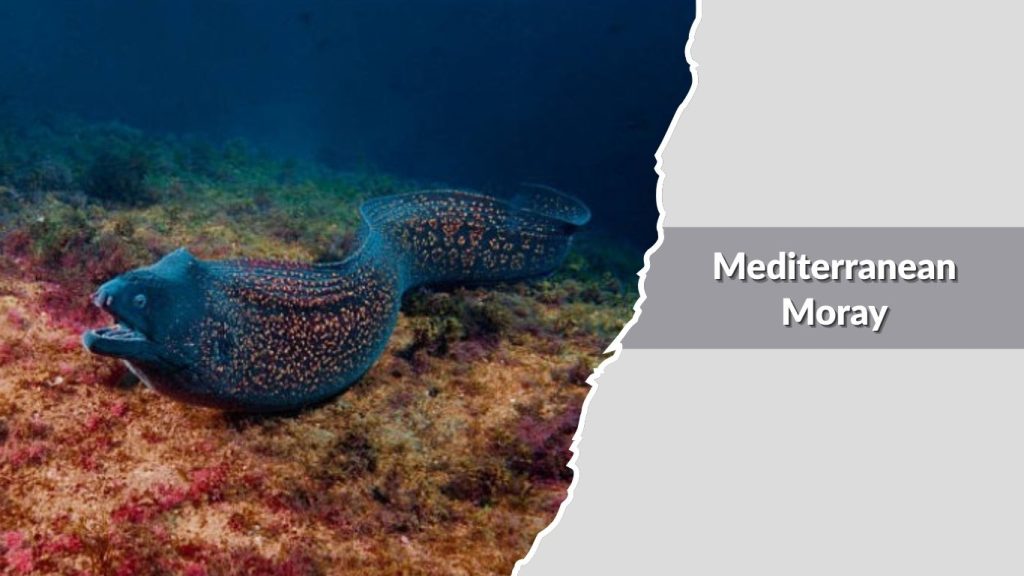
The Mediterranean moray is one of the best-known moray species in Europe and the Mediterranean region. It has a thick, snake-like body with a mottled pattern that blends well with rocky reefs. This eel has been known since ancient times and was even kept by the Romans in seawater pools.
Identification
- Dark brown body with yellowish or gold mottling
- Long, muscular body with blunt snout
- Strong jaws lined with sharp teeth
- Small eyes and wide mouth
- Grows up to about 1.5 meters (5 feet)
Habitat and Distribution
Mediterranean morays are found in the Mediterranean Sea and parts of the eastern Atlantic Ocean. They prefer rocky coastlines, reef slopes, and underwater caves, often at shallow to moderate depths.
Behavior and Temperament
This species is nocturnal and territorial. During the day, it usually hides deep in crevices with only its head showing. While generally secretive, it can become aggressive if provoked.
Diet and Feeding Habits
Mediterranean morays feed mainly on fish, octopus, cuttlefish, and crustaceans. They hunt at night, using their sense of smell to locate prey.
Size and Lifespan
Most individuals grow between 1 and 1.3 meters, though larger specimens are known. They may live for several decades in natural habitats.
Reproduction and Life Cycle
They reproduce by spawning in open water. Larvae drift before settling along rocky coasts and gradually developing into juvenile morays.
13. Goldentail Moray (Gymnothorax miliaris)
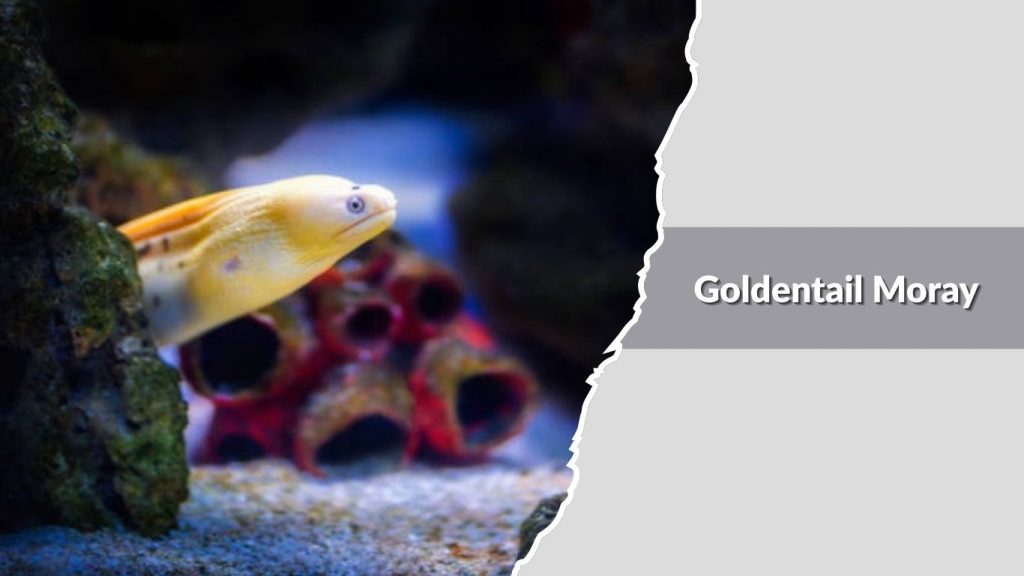
The goldentail moray is a colorful Atlantic species recognized by its golden-yellow tail and dark body sprinkled with bright yellow spots. It is a smaller moray compared to giants like the green moray, but it is very active and commonly seen on coral reefs and rocky shorelines.
Identification
- Dark brown to black body covered in yellow spots
- Bright yellow to golden tail fin
- Slender but muscular body shape
- Pointed snout with sharp teeth
- Usually grows up to about 70 cm (2.3 feet)
Habitat and Distribution
Goldentail morays are found in the western Atlantic, including Florida, the Caribbean, the Gulf of Mexico, and coastal Brazil. They inhabit shallow coral reefs, rocky ledges, and reef flats.
Behavior and Temperament
This species is more active during the day than many other morays and is often seen swimming between reef crevices. It is curious but generally non-aggressive unless provoked.
Diet and Feeding Habits
Goldentail morays feed mainly on small fish, crabs, shrimp, and other crustaceans. They hunt both by ambush and by actively searching through reef holes.
Size and Lifespan
Most goldentail morays range between 40 and 70 cm. Their lifespan is not well documented, but they are believed to live many years in stable reef systems.
Reproduction and Life Cycle
They spawn in open water, releasing eggs that hatch into drifting larvae before settling into reef habitats.
14. Banded Moray (Echidna polyzona)
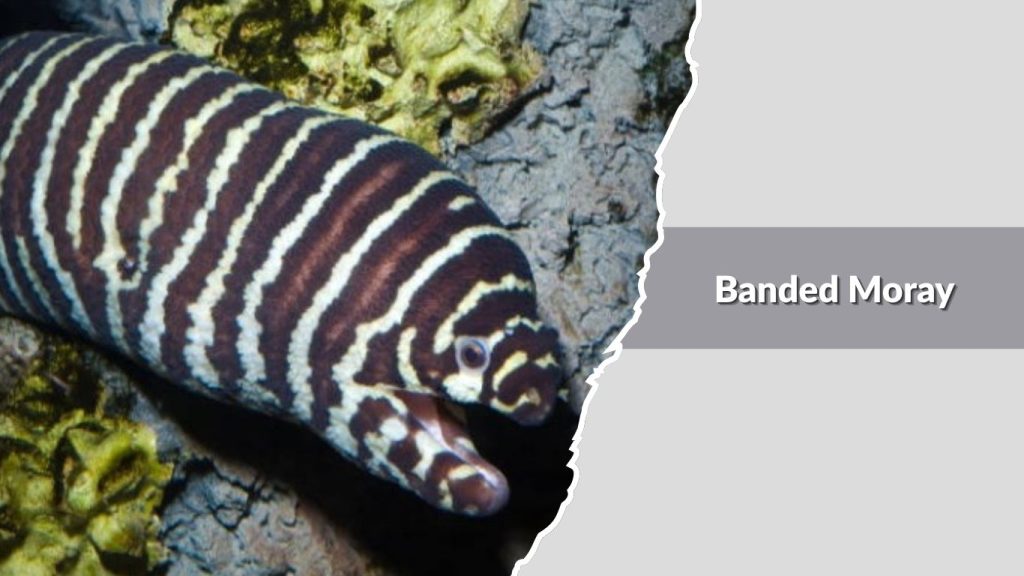
The banded moray is a striking Indo-Pacific species known for its bold alternating light and dark bands across the body. It is a relatively small, thick-bodied moray that spends most of its time hidden in reef crevices. Because of its manageable size and calm nature, it is sometimes kept in marine aquariums.
Identification
- Distinct alternating brown and cream bands
- Thick, short-bodied appearance compared to many morays
- Blunt snout with rounded, crushing teeth
- Small eyes set high on the head
- Usually grows up to about 80 cm (2.6 feet)
Habitat and Distribution
Banded morays are found in the Indo-Pacific region, including the Red Sea, East Africa, Southeast Asia, and Australia. They inhabit coral reefs, rocky bottoms, and shallow lagoons.
Behavior and Temperament
This species is mostly nocturnal and secretive. During the day, it remains hidden with only its head exposed. It is generally mild-tempered but may bite if harassed.
Diet and Feeding Habits
Banded morays primarily feed on crustaceans, mollusks, and sea urchins. Their rounded teeth are adapted for crushing shells rather than catching fish.
Size and Lifespan
Most individuals reach between 50 and 80 cm in length. In suitable reef conditions, they may live well over a decade.
Reproduction and Life Cycle
They reproduce through open-water spawning. Larvae drift with currents before settling and slowly transforming into juvenile morays.
15. Leopard Moray (Gymnothorax favagineus – juvenile form commonly called “leopard moray”)

The leopard moray is a name often used for juvenile honeycomb morays because of their dense, leopard-like spotting. These young morays are especially striking and are frequently seen on shallow reefs before moving to deeper habitats as they grow larger.
Identification
- Pale body covered in dense black leopard-like spots
- Slender build in juveniles, becoming thicker with age
- Rounded snout with sharp teeth
- High-contrast spotted pattern
- Juveniles usually under 1 meter in length
Habitat and Distribution
Leopard morays occur throughout the Indo-Pacific, following the same range as honeycomb morays. Juveniles are often found in shallow coral reefs, reef flats, and protected lagoons.
Behavior and Temperament
They are mostly nocturnal and secretive, hiding in reef holes during the day. Young individuals are generally shy and retreat quickly when disturbed.
Diet and Feeding Habits
Leopard morays feed on small fish, shrimp, crabs, and other reef invertebrates. As they grow, their diet expands to include larger prey.
Size and Lifespan
Juveniles start small but eventually grow into very large honeycomb morays, sometimes exceeding 2 meters as adults. Their full lifespan likely spans several decades.
Reproduction and Life Cycle
They reproduce as adult honeycomb morays through open-water spawning. The larvae drift before settling and developing into spotted juveniles.
16. Dwarf Golden Moray (Gymnothorax melatremus)

The dwarf golden moray is a small, colorful species known for its bright yellow body and contrasting dark eyes. It is one of the smallest moray eels in the world and is highly valued by divers and aquarium enthusiasts for its compact size and vibrant appearance.
Identification
- Bright yellow to golden body color
- Distinct dark eye ring giving a masked look
- Slender, short-bodied moray
- Small head with fine, sharp teeth
- Rarely exceeds 30 cm (12 inches)
Habitat and Distribution
Dwarf golden morays are found across the Indo-Pacific, including the Red Sea, East Africa, Southeast Asia, and the central Pacific. They inhabit coral reefs, rubble zones, and shallow lagoons.
Behavior and Temperament
This species is secretive and usually remains hidden deep in rock holes. It is mostly nocturnal and emerges at night to hunt small prey. It is not aggressive and poses little threat to humans.
Diet and Feeding Habits
Dwarf golden morays feed on tiny crustaceans, small fish, and marine worms. They rely on stealth and quick strikes rather than strength.
Size and Lifespan
They are among the smallest morays, usually between 20 and 30 cm long. Their exact lifespan is unknown, but they likely live many years under stable reef conditions.
Reproduction and Life Cycle
They reproduce by releasing eggs into the open water. Larvae drift before settling into reef habitats and slowly maturing into adults.
17. Purplemouth Moray (Gymnothorax vicinus)
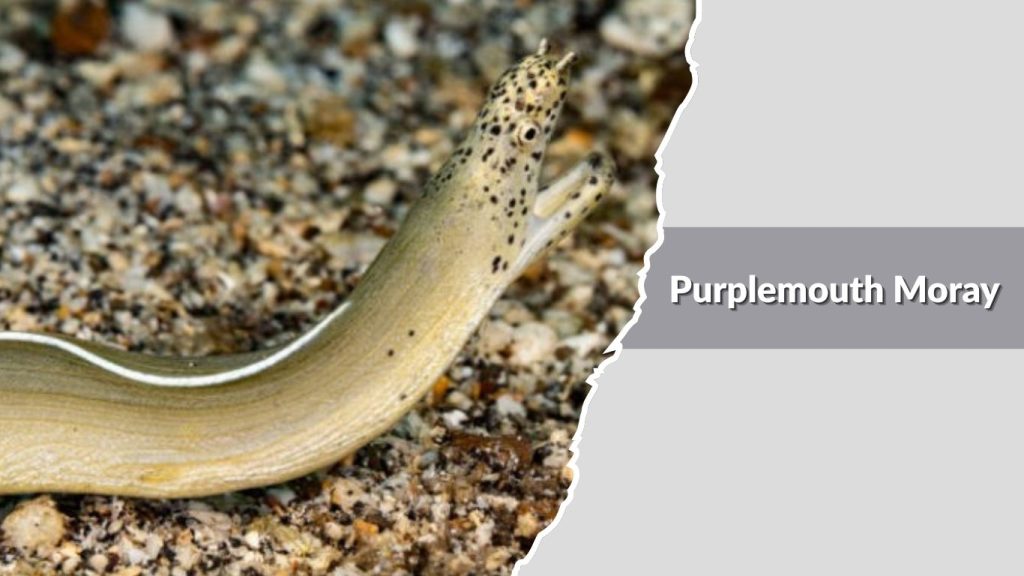
The purplemouth moray is an Atlantic species named for the distinctive purple coloring inside its mouth. It has a dark body covered with small pale spots and is commonly found in rocky reefs and coral habitats. This moray is often seen peering out from crevices with its mouth open, showing its colorful interior.
Identification
- Dark brown to black body with small pale or yellowish spots
- Noticeable purple coloration inside the mouth
- Thick head with strong jaws
- Smooth, scaleless skin
- Can grow up to about 1.5 meters (5 feet)
Habitat and Distribution
Purplemouth morays live in the western Atlantic, including Florida, the Gulf of Mexico, the Caribbean Sea, and parts of South America. They inhabit coral reefs, rocky slopes, and underwater ledges.
Behavior and Temperament
This species is nocturnal and territorial. During the day, it hides in reef holes, becoming active at night. It is generally shy but may defend itself if threatened.
Diet and Feeding Habits
Purplemouth morays feed mainly on fish, crabs, shrimp, octopus, and squid. They are ambush predators that strike rapidly from shelter.
Size and Lifespan
They commonly grow between 1 and 1.5 meters. Their lifespan is not precisely known but is believed to extend for many years in the wild.
Reproduction and Life Cycle
They reproduce by open-water spawning. Eggs hatch into transparent larvae that drift before settling into reef habitats.
18. Tiger Moray (Gymnothorax tigrinus)
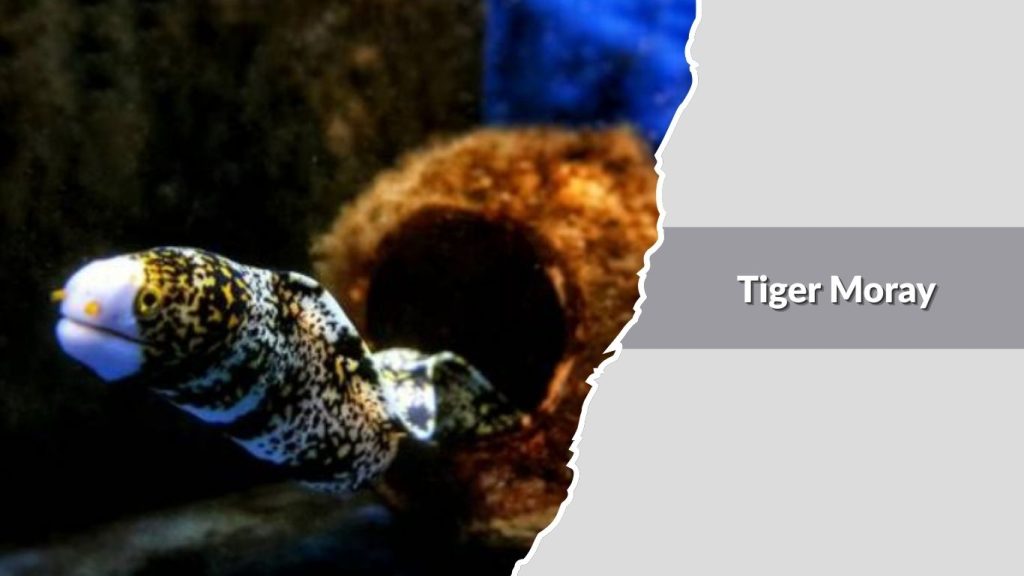
The tiger moray is a striking species known for its tiger-like dark bands and spots over a lighter body. It is a reef-dwelling moray found in tropical Indo-Pacific waters, where it lives in rocky crevices and coral caves.
Identification
- Light brown to yellowish body with dark tiger-like bands or blotches
- Thick, muscular build
- Broad head with strong jaws and sharp teeth
- Smooth, leathery skin
- Can reach about 1.5 meters (5 feet)
Habitat and Distribution
Tiger morays are found in the Indo-Pacific region, including the Red Sea, East Africa, Southeast Asia, and the western Pacific islands. They inhabit coral reefs, rocky slopes, and reef caves.
Behavior and Temperament
This species is nocturnal and reclusive. During the day, it hides deep inside crevices with only the head visible. It is not typically aggressive but may bite defensively.
Diet and Feeding Habits
Tiger morays feed on fish, octopus, squid, and crustaceans. They are ambush predators that rely on surprise attacks from their hiding spots.
Size and Lifespan
Most individuals grow between 1 and 1.5 meters. In healthy reef ecosystems, they may live for several decades.
Reproduction and Life Cycle
They reproduce through open-water spawning. The larvae drift with ocean currents before settling and developing into juvenile eels.
19. Starry Moray (Echidna nebulosa – commonly called “starry moray” variant)
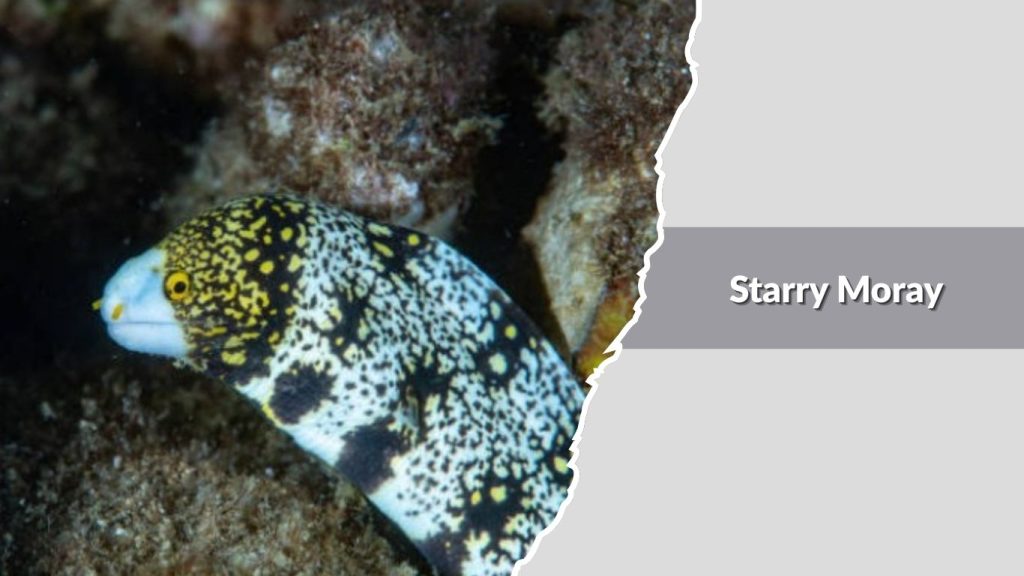
The starry moray is a name often used for heavily spotted forms of the snowflake moray, giving it a star-like appearance. These morays are popular among divers and aquarium keepers due to their decorative pattern and manageable size. They are widely distributed across tropical Indo-Pacific reefs.
Identification
- Dark body covered with numerous small white or yellow star-like spots
- Thick head with blunt snout
- Rounded, crushing teeth
- Muscular but relatively short body
- Usually grows up to about 1 meter (3.3 feet)
Habitat and Distribution
Starry morays are found across the Indo-Pacific, living in coral reefs, rocky lagoons, and shallow reef flats. They hide in reef holes and under rocks during daylight hours.
Behavior and Temperament
They are mostly nocturnal and spend the day resting in crevices. Compared to fish-eating morays, they are relatively calm and less aggressive.
Diet and Feeding Habits
Starry morays primarily eat crustaceans, sea urchins, and mollusks. Their rounded teeth are designed for crushing shells rather than seizing fish.
Size and Lifespan
Most individuals range between 60 and 100 cm. They may live 15–20 years or longer under good reef conditions.
Reproduction and Life Cycle
They spawn in open water, producing drifting larvae that later settle and develop into juvenile morays.
20. Whitemouth Moray (Gymnothorax meleagris)
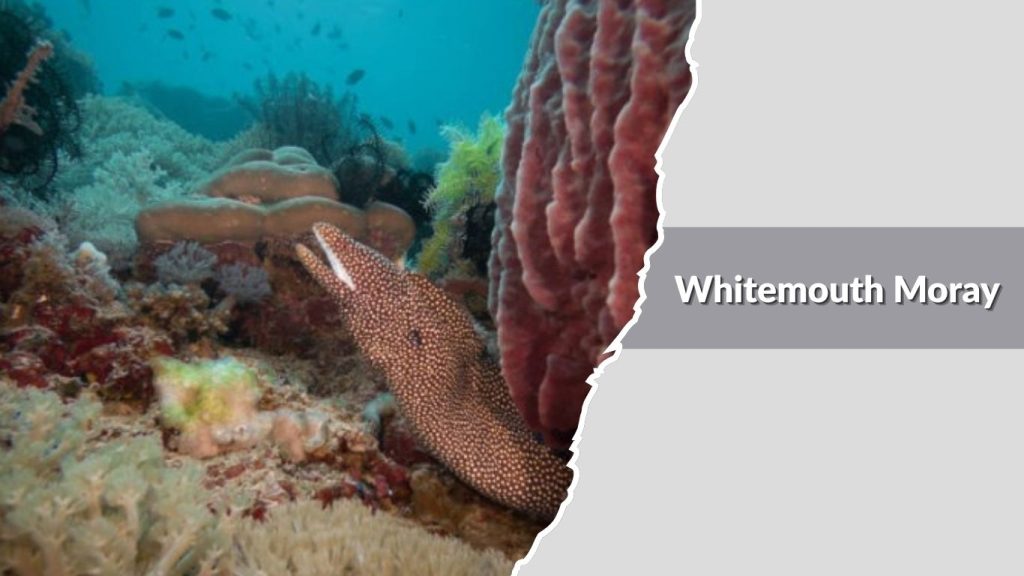
The whitemouth moray is a beautifully patterned Indo-Pacific species known for its dark body covered with white spots and the pale coloration around its mouth. It is a common reef moray often seen with its head protruding from coral holes, giving divers a clear view of its spotted pattern.
Identification
- Dark brown to black body with many white or pale spots
- Distinct pale or whitish area around the mouth
- Thick, muscular body
- Strong jaws with sharp teeth
- Can grow up to about 1.5 meters (5 feet)
Habitat and Distribution
Whitemouth morays are found widely across the Indo-Pacific, including the Red Sea, East Africa, Southeast Asia, Japan, Australia, and the Pacific islands. They inhabit coral reefs, reef slopes, and rocky caves.
Behavior and Temperament
This species is mostly nocturnal and territorial. During the day, it usually hides in crevices with only its head visible. It is generally non-aggressive but will defend itself if threatened.
Diet and Feeding Habits
Whitemouth morays feed mainly on fish, octopus, squid, and crustaceans. They are ambush predators that strike quickly from reef shelters.
Size and Lifespan
Most individuals grow between 1 and 1.5 meters. In natural reef systems, they may live several decades.
Reproduction and Life Cycle
They reproduce by releasing eggs into open water. The larvae drift before settling and transforming into juvenile morays.
FAQs
Are moray eels dangerous to humans?
Moray eels are not naturally aggressive toward humans and rarely attack without provocation. Most bites happen when divers put their hands into holes or attempt to feed them. Their sharp teeth and strong jaws can cause serious wounds, so they should always be observed from a safe distance.
Where do moray eels usually live?
Moray eels mainly live in tropical and subtropical oceans around the world. They are most commonly found in coral reefs, rocky coastlines, and reef caves, where they hide in crevices during the day and hunt at night for fish and invertebrates.
What do moray eels eat in the wild?
Moray eels are carnivorous predators. Depending on the species, they feed on fish, octopus, squid, shrimp, crabs, and sea urchins. Some morays specialize in crushing hard-shelled prey, while others are adapted to catching fast-moving fish.
How big can moray eels grow?
Moray eel size varies widely by species. Small morays may reach only 25 to 30 centimeters, while the largest species, such as the giant moray and honeycomb moray, can exceed 3 meters in length and become extremely thick and powerful.
Can moray eels be kept as pets?
Some smaller moray species are kept in large marine aquariums, but they require specialized care, secure tanks, and appropriate diets. Large morays are not suitable for home aquariums because they need massive enclosures and can be aggressive toward tank mates.