




Opossums are diverse marsupials known for their adaptability, nocturnal habits, and unique traits such as prehensile tails and protective pouches. Found primarily in the Americas, they occupy a variety of habitats ranging from dense tropical rainforests to temperate woodlands and even urban areas.
This guide explores 23 types of opossums, highlighting their distinctive physical features, geographic ranges, diets, and behaviors. From the widely recognized Virginia Opossum to lesser-known species like the Black-shouldered Opossum and the Water Opossum, these creatures play vital roles in their ecosystems by controlling insect populations, dispersing seeds, and serving as prey for larger predators. Understanding the diversity among opossum species sheds light on their ecological importance and conservation needs.
1. Virginia Opossum (Didelphis virginiana)
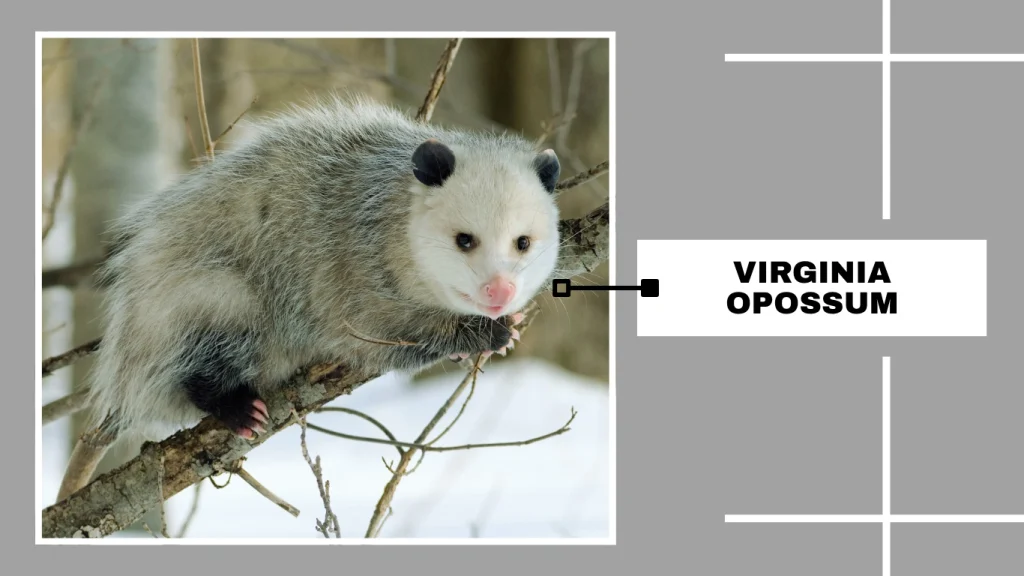
The Virginia Opossum is the only marsupial found naturally in North America and is well-known for its adaptability and distinctive behavior.
Identification
- Size: Body length 13–37 inches (including tail)
- Weight: 4–14 pounds
- Color: Grayish-white fur with a white face and pink, hairless tail
- Features: Pointed snout, sharp teeth, opposable thumbs on hind feet
Habitat and Range
Found throughout the United States, southern Canada, and parts of Mexico. Occupies forests, farmlands, urban areas, and wetlands.
Diet and Feeding Habits
Omnivorous and opportunistic—feeds on fruits, insects, small animals, carrion, garbage, and pet food. Often forages at night.
Behavior and Traits
Nocturnal and solitary. Famous for “playing dead” (thanatosis) when threatened. Excellent climbers and swimmers. Plays a key role in controlling insect and rodent populations. Adaptable to diverse environments including cities and suburbs.
2. Common Opossum (Didelphis marsupialis)
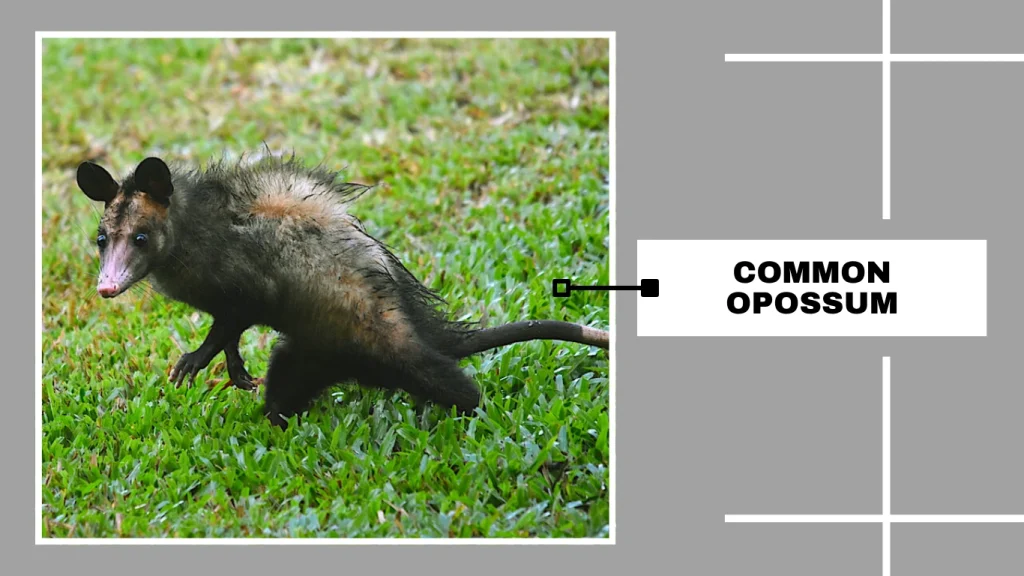
The Common Opossum, also known as the Black-eared Opossum, is a widely distributed marsupial native to Central and South America.
Identification
- Size: Body length 12–18 inches (excluding tail)
- Weight: 3–9 pounds
- Color: Gray to black fur with distinct black patches around the ears
- Features: Long prehensile tail, pointed snout, and sharp teeth
Habitat and Range
Found from southern Mexico through Central America to northern South America. Inhabits forests, savannas, and disturbed areas including agricultural land.
Diet and Feeding Habits
Omnivorous—eats fruits, insects, small vertebrates, eggs, and carrion. Forages mostly at night.
Behavior and Traits
Nocturnal and solitary. Good climbers using their prehensile tail for balance. Known to play dead as a defense mechanism. Important seed dispersers and pest controllers in their ecosystems.
3. Gray Four-eyed Opossum (Philander opossum)

The Gray Four-eyed Opossum is named for the distinctive light spots above its eyes that look like extra eyes.
Identification
- Size: Body length 10–14 inches
- Weight: 1.5–3.5 pounds
- Color: Gray to brown fur with white spots above each eye
- Features: Long, prehensile tail and rounded ears
Habitat and Range
Widespread in Central and South America, inhabiting tropical rainforests, dry forests, and secondary growth areas.
Diet and Feeding Habits
Omnivorous—feeds on fruits, insects, small vertebrates, and bird eggs. Nocturnal forager with varied diet.
Behavior and Traits
Solitary and nocturnal. Excellent climber and swimmer. Plays a vital role in seed dispersal and insect population control.
4. White-eared Opossum (Didelphis albiventris)
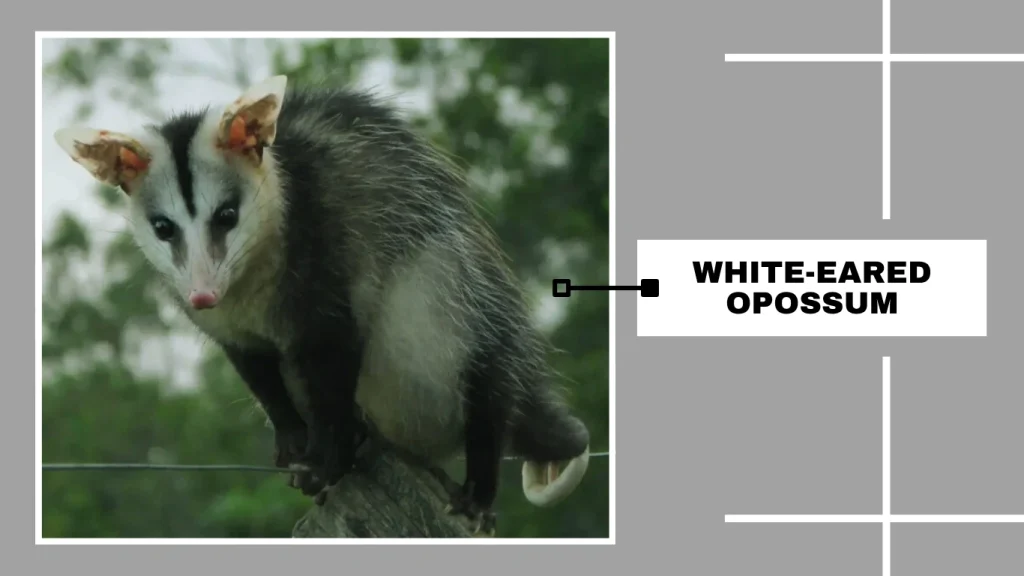
The White-eared Opossum is a medium-sized marsupial distinguished by its white facial markings and large, expressive ears.
Identification
- Size: Body length 12–20 inches (excluding tail)
- Weight: 4–9 pounds
- Color: Grayish fur with a white face and prominent white patches on the ears
- Features: Prehensile tail, sharp claws, and pointed snout
Habitat and Range
Found throughout southern Brazil, Paraguay, Uruguay, Argentina, and Bolivia. Prefers forests, grasslands, and agricultural areas.
Diet and Feeding Habits
Omnivorous diet including fruits, insects, small mammals, eggs, and carrion. Nocturnal and opportunistic feeder.
Behavior and Traits
Solitary and primarily active at night. Uses “playing dead” behavior when threatened. Important for ecosystem health through pest control and seed dispersal. Adaptable to human-altered environments.
5. Mexican Mouse Opossum (Marmosa mexicana)

The Mexican Mouse Opossum is a small, agile marsupial native to Central America, known for its mouse-like size and quick movements.
Identification
- Size: Body length 3–5 inches (excluding tail)
- Weight: 1–2 ounces
- Color: Soft gray to brown fur with lighter underparts
- Features: Long prehensile tail, large eyes, and rounded ears
Habitat and Range
Found in southern Mexico, Belize, Guatemala, and parts of Honduras and Nicaragua. Inhabits tropical forests, especially dense understory and thickets.
Diet and Feeding Habits
Insectivorous and omnivorous—feeds on insects, spiders, small fruits, and nectar. Nocturnal forager.
Behavior and Traits
Arboreal and highly agile. Solitary and secretive. Plays an important role in controlling insect populations and pollinating plants through nectar feeding.
6. Woolly Opossum (Caluromys derbianus)

The Woolly Opossum is a medium-sized marsupial with thick, woolly fur, adapted for life in tropical forests of Central and South America.
Identification
- Size: Body length 9–13 inches (excluding tail)
- Weight: 7–12 ounces
- Color: Brown to grayish fur with a lighter underside and a bushy tail
- Features: Long prehensile tail, rounded ears, and a pointed snout
Habitat and Range
Found in tropical rainforests from southern Mexico through Central America to northern South America. Prefers dense, humid forests.
Diet and Feeding Habits
Omnivorous—feeds on fruits, nectar, insects, and small vertebrates. Nocturnal and arboreal.
Behavior and Traits
Arboreal and solitary. Known for its woolly fur which provides insulation in cooler mountain forests. Important for seed dispersal and pollination.
7. Dusky Opossum (Caluromys philander)

The Dusky Opossum is a small, nocturnal marsupial with a dark, silky coat found in parts of Central and South America.
Identification
- Size: Body length 7–11 inches (excluding tail)
- Weight: 5–9 ounces
- Color: Dark brown to blackish fur with a pale face
- Features: Long prehensile tail and sharp claws
Habitat and Range
Inhabits tropical and subtropical forests in Central America, including Costa Rica and Panama, extending into northern South America.
Diet and Feeding Habits
Omnivorous—eats fruits, insects, small animals, and nectar. Active mostly at night.
Behavior and Traits
Arboreal and agile climber. Solitary and elusive. Plays a role in forest ecology through seed dispersal and insect population control.
8. Black-shouldered Opossum (Caluromysiops irrupta)
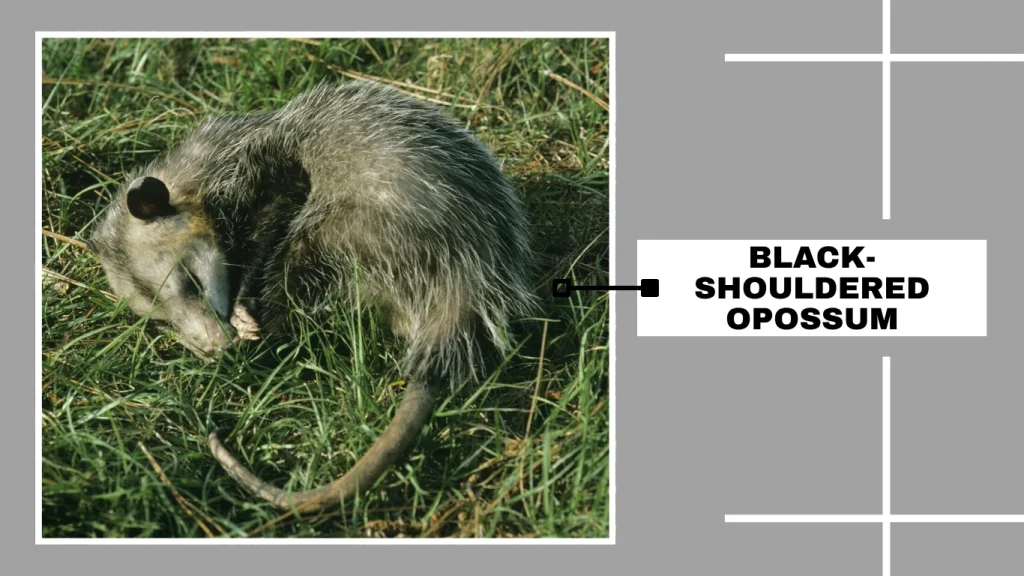
The Black-shouldered Opossum is a rarely seen, small marsupial known for the distinctive black markings on its shoulders.
Identification
- Size: Body length approximately 8–10 inches (excluding tail)
- Weight: Around 6–10 ounces
- Color: Light brown or gray fur with prominent black patches on shoulders
- Features: Long prehensile tail, large eyes, and pointed snout
Habitat and Range
Found in the lowland tropical rainforests of the western Amazon Basin, including parts of Brazil and Peru.
Diet and Feeding Habits
Primarily frugivorous and insectivorous—feeds on fruits, insects, and small invertebrates. Nocturnal and arboreal.
Behavior and Traits
Solitary and elusive. Its ecology and behavior are poorly studied due to its secretive nature and remote habitat.
9. Bare-tailed Woolly Opossum (Caluromys philander)

The Bare-tailed Woolly Opossum is a distinctive species with a furred body but a hairless, scaled tail used for gripping branches.
Identification
- Size: Body length 9–12 inches (excluding tail)
- Weight: 7–12 ounces
- Color: Grayish-brown fur with a white or cream underside
- Features: Long, naked, prehensile tail with scales for climbing
Habitat and Range
Inhabits tropical rainforests of Central and South America, including Brazil, Colombia, and Panama.
Diet and Feeding Habits
Omnivorous—eats fruits, nectar, insects, and small vertebrates. Active at night and highly arboreal.
Behavior and Traits
Excellent climber using its tail for balance and grip. Plays a role in seed dispersal and pollination within its ecosystem.
10. Big-eared Opossum (Cynomys macrourus)

The Big-eared Opossum is named for its notably large ears, which aid in acute hearing and thermoregulation.
Identification
- Size: Body length 9–14 inches (excluding tail)
- Weight: 7–14 ounces
- Color: Gray to brown fur with lighter underparts
- Features: Very large, rounded ears and a long prehensile tail
Habitat and Range
Found in the savannas, grasslands, and dry forests of Brazil, Paraguay, and Bolivia.
Diet and Feeding Habits
Omnivorous diet including insects, fruits, small vertebrates, and carrion. Nocturnal and ground foraging.
Behavior and Traits
Solitary and primarily terrestrial. Uses large ears to detect prey and predators. Important for controlling insect populations and seed dispersal.
11. Robinson’s Mouse Opossum (Marmosa robinsoni)

Robinson’s Mouse Opossum is a small, nocturnal marsupial native to parts of Central and South America.
Identification
- Size: Body length 3.5–5 inches (excluding tail)
- Weight: 1–2 ounces
- Color: Grayish-brown fur with lighter underparts
- Features: Large eyes, rounded ears, and a prehensile tail
Habitat and Range
Found in Panama, Colombia, Venezuela, and nearby regions. Prefers tropical rainforests and dense understory.
Diet and Feeding Habits
Omnivorous—feeds on insects, small fruits, nectar, and spiders. Active at night and agile climber.
Behavior and Traits
Solitary and elusive. Plays an important role in controlling insect populations and seed dispersal. Often nests in tree cavities or dense foliage.
12. Water Opossum (Yapok) (Chironectes minimus)

The Water Opossum, also known as the Yapok, is unique among marsupials for being semi-aquatic and adapted to life in and around water.
Identification
- Size: Body length 9–14 inches (excluding tail)
- Weight: 7–12 ounces
- Color: Grayish-brown fur, dense and water-repellent
- Features: Webbed hind feet, prehensile tail, and a pouch that closes underwater
Habitat and Range
Found near streams, rivers, and wetlands throughout Central and South America, from Mexico to northern Argentina.
Diet and Feeding Habits
Feeds on fish, crustaceans, insects, and amphibians. Hunts primarily at night using swimming and diving skills.
Behavior and Traits
Nocturnal and solitary. The only marsupial with webbed feet and a waterproof pouch, allowing it to carry young while swimming. Plays a unique ecological role in aquatic habitats.
13. Mexican Opossum (Marmosa mexicana)
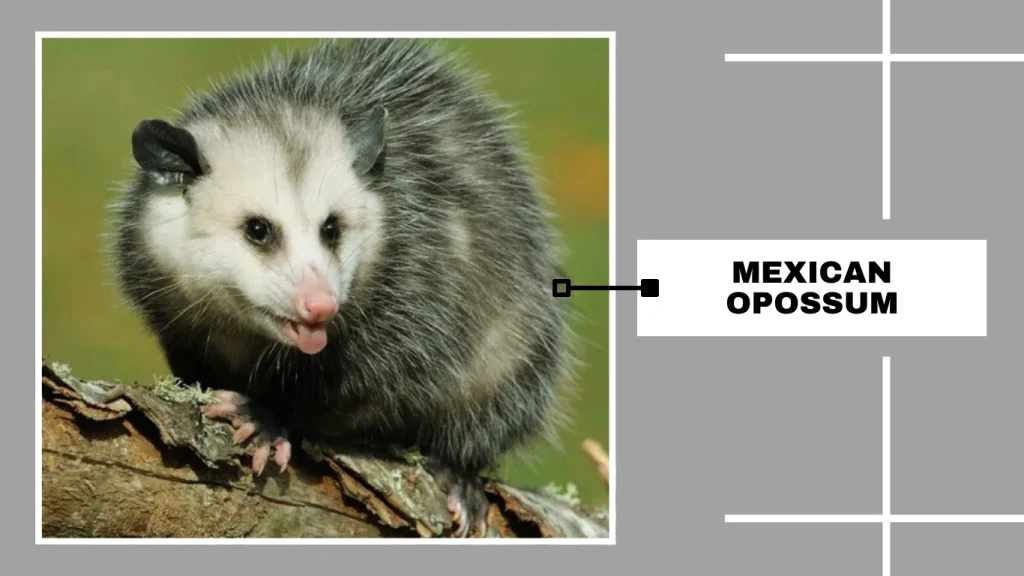
The Mexican Opossum is a small, arboreal marsupial native to southern Mexico and parts of Central America.
Identification
- Size: Body length 3–5 inches (excluding tail)
- Weight: 1–2 ounces
- Color: Brown to gray fur with lighter underparts
- Features: Large eyes, rounded ears, and a long, prehensile tail
Habitat and Range
Found in tropical and subtropical forests of southern Mexico, Belize, Guatemala, and Honduras.
Diet and Feeding Habits
Omnivorous—feeds on insects, small fruits, nectar, and spiders. Nocturnal and active in the forest canopy.
Behavior and Traits
Agile climber and solitary. Plays a role in pollination and insect control. Prefers dense forest habitats with abundant foliage.
14. Brazilian Common Opossum (Didelphis marsupialis marsupialis)

The Brazilian Common Opossum is a subspecies of the common opossum found widely in Brazil and other parts of South America.
Identification
- Size: Body length 12–18 inches (excluding tail)
- Weight: 4–9 pounds
- Color: Grayish fur with black markings around ears and face
- Features: Prehensile tail, pointed snout, and sharp claws
Habitat and Range
Inhabits forests, savannas, and urban areas throughout Brazil and neighboring countries. Highly adaptable to various environments.
Diet and Feeding Habits
Omnivorous diet including fruits, insects, small vertebrates, eggs, and carrion. Nocturnal and opportunistic feeder.
Behavior and Traits
Solitary and nocturnal. Known for “playing dead” when threatened. Important in seed dispersal and pest control.
15. Brazilian Gracile Opossum (Gracilinanus microtarsus)

The Brazilian Gracile Opossum is a small, delicate marsupial with slender limbs and a long tail.
Identification
- Size: Body length 3–5 inches (excluding tail)
- Weight: 1–2 ounces
- Color: Light brown to gray fur with white underparts
- Features: Long prehensile tail and large eyes
Habitat and Range
Found mainly in Brazil’s Atlantic Forest and Cerrado regions. Prefers dense understory and low shrubs.
Diet and Feeding Habits
Feeds on insects, small fruits, nectar, and spiders. Nocturnal and arboreal.
Behavior and Traits
Solitary and agile climber. Plays an important role in controlling insect populations and pollinating plants. Sensitive to habitat loss and fragmentation.
16. Brown-eared Opossum (Didelphis aurita)

The Brown-eared Opossum is a medium-sized marsupial found primarily in southeastern Brazil, Argentina, and Paraguay.
Identification
- Size: Body length 12–17 inches (excluding tail)
- Weight: 4–9 pounds
- Color: Grayish to brown fur with distinctive brown patches on the ears
- Features: Long prehensile tail and sharp claws
Habitat and Range
Inhabits Atlantic forests and other woodland areas in South America. Prefers dense vegetation and forest edges.
Diet and Feeding Habits
Omnivorous—feeds on fruits, insects, small vertebrates, and carrion. Nocturnal and forages mostly on the ground and in low trees.
Behavior and Traits
Solitary and elusive. Plays a role in seed dispersal and pest control. Adaptable to secondary forests but sensitive to extensive habitat destruction.
17. Black-eared Opossum (Didelphis marsupialis)
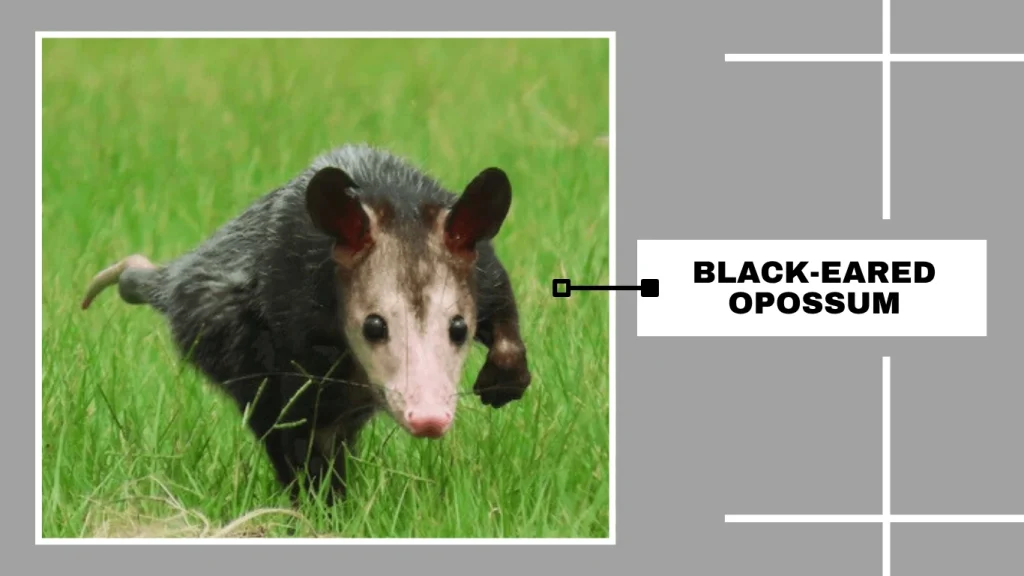
The Black-eared Opossum is a widespread and adaptable species found throughout Central and South America.
Identification
- Size: Body length 12–18 inches (excluding tail)
- Weight: 4–9 pounds
- Color: Grayish coat with black ears and facial markings
- Features: Prehensile tail, pointed snout, and strong climbing abilities
Habitat and Range
Found in tropical and subtropical forests, savannas, and human-altered landscapes from Mexico to northern Argentina.
Diet and Feeding Habits
Omnivorous—eats fruits, insects, small animals, eggs, and carrion. Nocturnal and highly opportunistic.
Behavior and Traits
Solitary and nocturnal. Known for “playing dead” to avoid predators. Important for controlling insect populations and dispersing seeds.
18. Andean White-eared Opossum (Didelphis pernigra)

The Andean White-eared Opossum is a medium-sized marsupial native to the Andean regions of South America.
Identification
- Size: Body length 12–17 inches (excluding tail)
- Weight: 4–8 pounds
- Color: Grayish fur with prominent white patches around the ears
- Features: Long prehensile tail, sharp claws, and pointed snout
Habitat and Range
Inhabits montane forests and cloud forests of Colombia, Ecuador, Peru, and Bolivia.
Diet and Feeding Habits
Omnivorous diet including fruits, insects, small vertebrates, and carrion. Mostly nocturnal and arboreal.
Behavior and Traits
Solitary and secretive. Plays a role in seed dispersal and insect control in mountainous ecosystems. Prefers dense forest cover.
19. Southeastern Four-eyed Opossum (Philander frenatus)

The Southeastern Four-eyed Opossum is recognized for its distinctive white spots above the eyes that resemble “four eyes.”
Identification
- Size: Body length 10–13 inches
- Weight: 2–5 pounds
- Color: Gray to brown fur with white spots above each eye
- Features: Long prehensile tail, rounded ears, and large eyes
Habitat and Range
Found in southeastern Brazil, Paraguay, Uruguay, and northeastern Argentina. Prefers subtropical forests, woodlands, and savannas.
Diet and Feeding Habits
Omnivorous—feeds on fruits, insects, small animals, and eggs. Nocturnal and arboreal.
Behavior and Traits
Solitary and agile climber. Important in seed dispersal and controlling insect populations. Adapts well to disturbed habitats.
20. Mountain Opossum (Marmosa andersoni)

The Mountain Opossum is a small, elusive marsupial found in high-altitude forests of South America.
Identification
- Size: Body length 3–5 inches (excluding tail)
- Weight: 1–2 ounces
- Color: Brownish-gray fur with lighter underparts
- Features: Large eyes, rounded ears, and a long prehensile tail
Habitat and Range
Inhabits montane and cloud forests in Colombia, Ecuador, and Venezuela, typically at elevations above 1,500 meters.
Diet and Feeding Habits
Feeds on insects, small fruits, and nectar. Nocturnal and arboreal forager.
Behavior and Traits
Solitary and secretive. Plays a role in insect control and pollination. Sensitive to habitat disturbance and deforestation.
21. Grayish Mouse Opossum (Tlacuatzin canescens)
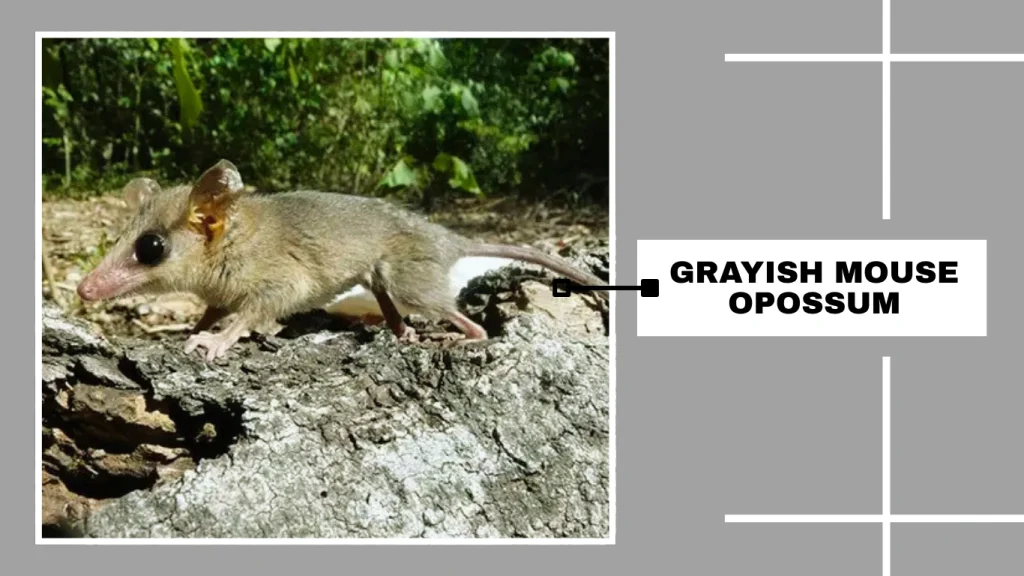
The Grayish Mouse Opossum is a small, nocturnal marsupial native to Mexico and parts of Central America.
Identification
- Size: Body length 3–5 inches (excluding tail)
- Weight: 1–2 ounces
- Color: Grayish-brown fur with paler underparts
- Features: Long prehensile tail, large eyes, and rounded ears
Habitat and Range
Found in dry forests, scrublands, and tropical deciduous forests from Mexico to Honduras.
Diet and Feeding Habits
Omnivorous—feeds on insects, fruits, nectar, and small vertebrates. Active mostly at night.
Behavior and Traits
Arboreal and solitary. Plays a role in seed dispersal and insect population control. Adapted to seasonal changes in habitat.
22. Brazilian Mouse Opossum (Tlacuatzin canescens)

The Brazilian Mouse Opossum is a small marsupial native to the forests of Brazil, known for its adaptability to various habitats.
Identification
- Size: Body length 3–5 inches (excluding tail)
- Weight: 1–2 ounces
- Color: Gray to brown fur with lighter underparts
- Features: Long, prehensile tail and large eyes
Habitat and Range
Inhabits tropical rainforests, secondary forests, and woodland areas in Brazil and surrounding countries.
Diet and Feeding Habits
Omnivorous—feeds on insects, fruits, and small vertebrates. Nocturnal and arboreal.
Behavior and Traits
Solitary and agile climber. Plays an important role in controlling insects and dispersing seeds. Sensitive to habitat fragmentation.
23. Northern Bare-tailed Woolly Opossum (Caluromys lanatus)

The Northern Bare-tailed Woolly Opossum is a rare marsupial distinguished by its partially hairless tail.
Identification
- Size: Body length 9–13 inches (excluding tail)
- Weight: 6–10 ounces
- Color: Grayish to brown fur with a pale underside
- Features: Partially bare, scaled tail used for climbing
Habitat and Range
Found in northern South America, including parts of Colombia, Venezuela, and Ecuador. Prefers tropical and subtropical forests.
Diet and Feeding Habits
Omnivorous—feeds on fruits, insects, nectar, and small vertebrates. Nocturnal and arboreal.
Behavior and Traits
Excellent climber using its unique tail for grip. Plays a vital role in seed dispersal and insect control in forest ecosystems.