




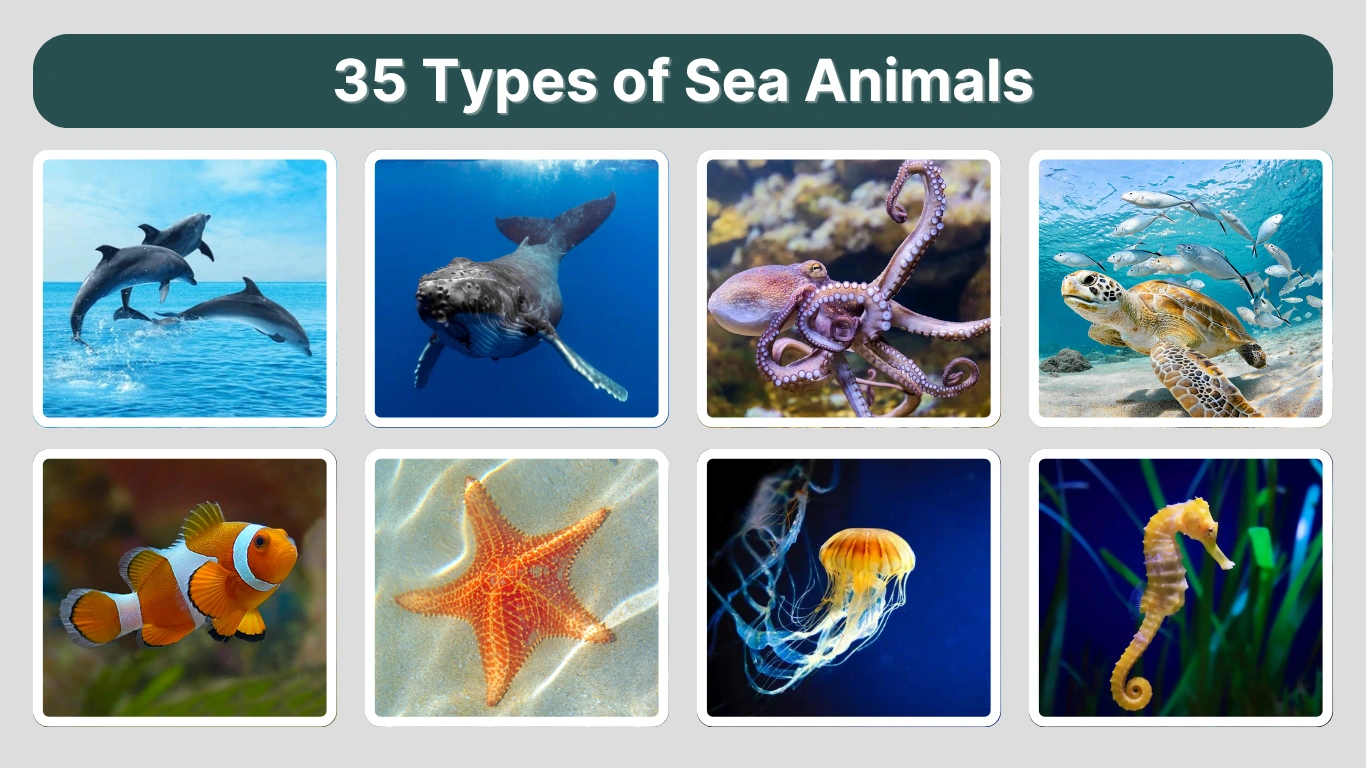
The ocean is home to an astonishing variety of sea animals, ranging from gentle giants like the blue whale to tiny, glowing creatures like lanternfish. These marine species play vital roles in their ecosystems, showcasing diverse adaptations, appearances, and behaviors. In this list, you’ll discover 35 fascinating types of sea animals—each with unique traits that highlight the wonder and complexity of life beneath the waves. Whether you’re a marine enthusiast or just curious about ocean wildlife, this guide offers a snapshot of some of the most captivating creatures living in the sea.
1. Dolphin
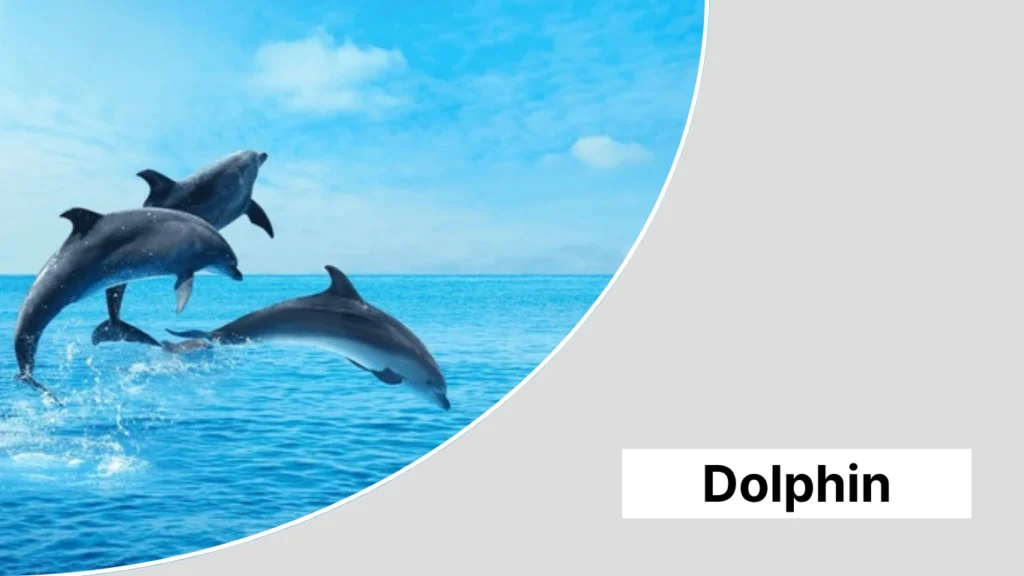
Dolphins are highly intelligent marine mammals known for their playful behavior, curved dorsal fins, and friendly interactions with humans. Found in oceans around the world, they are social creatures that travel in pods and use echolocation to hunt and communicate.
Identification
- Color: Gray, with lighter undersides
- Size: 6 to 13 feet long, depending on species
- Fins: Prominent dorsal fin and elongated pectoral fins
- Snout: Long, beak-like snout
- Teeth: Up to 100 conical teeth
- Sound: Communicate using clicks and whistles
Habitat and Distribution
Dolphins inhabit both coastal and deeper ocean waters, preferring warm and temperate seas. Some species also live in river systems.
Behavior and Diet
Dolphins are social, playful, and often seen leaping from the water. They hunt in groups and feed on fish, squid, and crustaceans.
Breeding and Lifespan
Female dolphins give birth to a single calf after a gestation of 10–17 months. Dolphins can live between 20 to 60 years depending on the species.
2. Whale
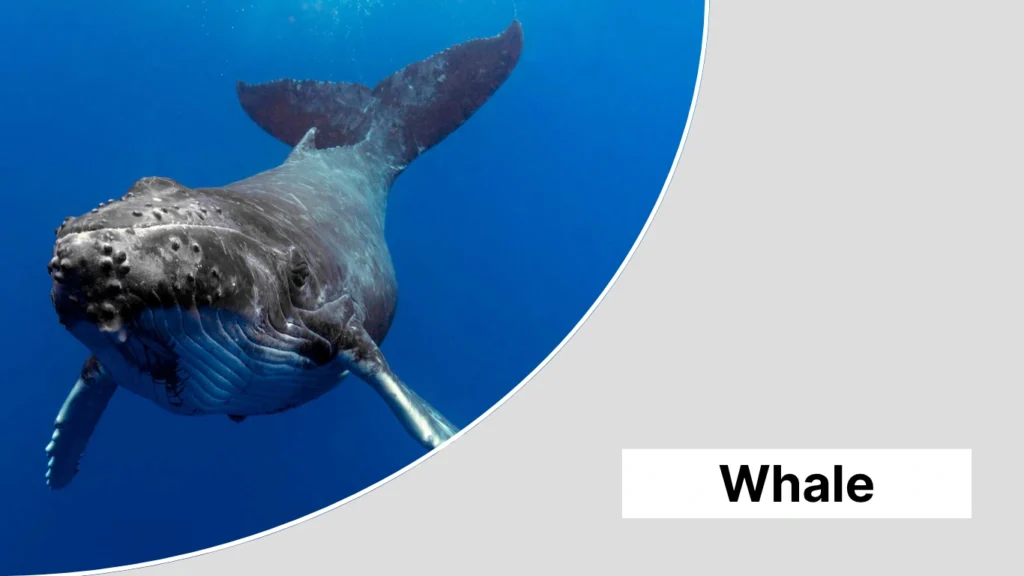
Whales are the largest animals on Earth, known for their majestic size, deep vocalizations, and migratory behavior. These marine mammals range from the small dwarf sperm whale to the enormous blue whale and play a crucial role in ocean ecosystems.
Identification
- Color: Varies by species; often gray, blue-gray, or black
- Size: 10 to 100 feet long
- Blowhole: One or two on top of the head
- Body Shape: Streamlined and robust
- Tail: Horizontal flukes used for propulsion
- Sound: Deep, far-reaching vocalizations for communication
Habitat and Distribution
Whales are found in all the world’s oceans, from polar to tropical waters. Some species migrate thousands of miles between feeding and breeding grounds.
Behavior and Diet
Depending on the species, whales may be filter-feeders (baleen whales) consuming krill and plankton, or active hunters (toothed whales) feeding on fish and squid.
Breeding and Lifespan
Whales give birth to live young and nurture them with milk. Lifespan varies widely, from 30 to over 100 years.
3. Octopus
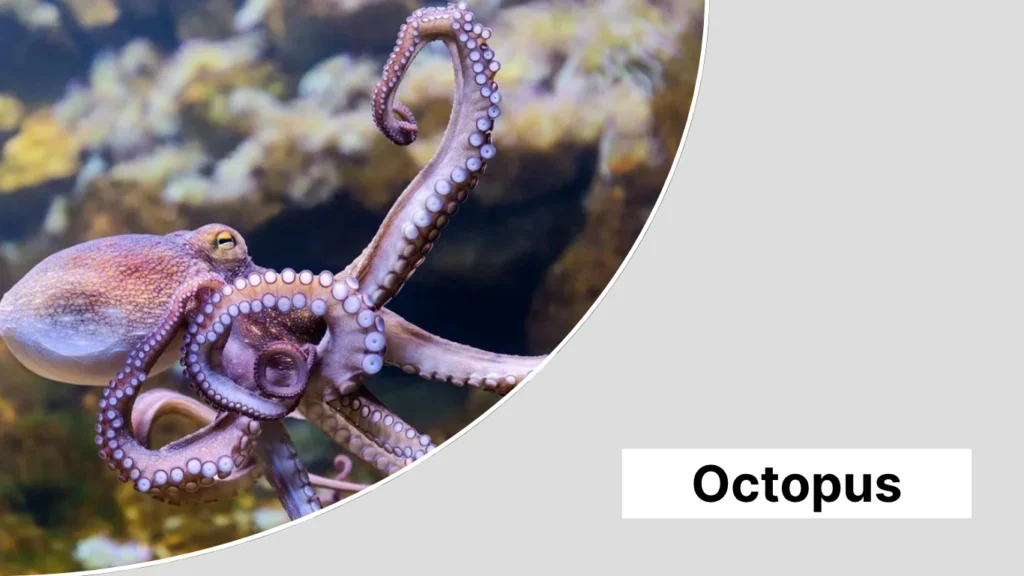
Octopuses are fascinating, soft-bodied mollusks known for their intelligence, flexibility, and eight powerful arms. They can camouflage themselves instantly and escape predators by ejecting ink.
Identification
- Color: Can change color using chromatophores
- Arms: Eight with suction cups
- Body: Soft, bulbous head with no bones
- Eyes: Large and highly developed
- Mouth: Beak-like structure beneath the body
Habitat and Distribution
Octopuses inhabit all oceans, often hiding in rocky crevices, coral reefs, and the seafloor. Some live in shallow waters, others in the deep sea.
Behavior and Diet
Octopuses are solitary hunters, feeding on crabs, clams, and fish. They use tools, open jars, and display problem-solving skills.
Breeding and Lifespan
Most octopuses die shortly after reproduction. Lifespans range from 1 to 5 years depending on species.
4. Shark
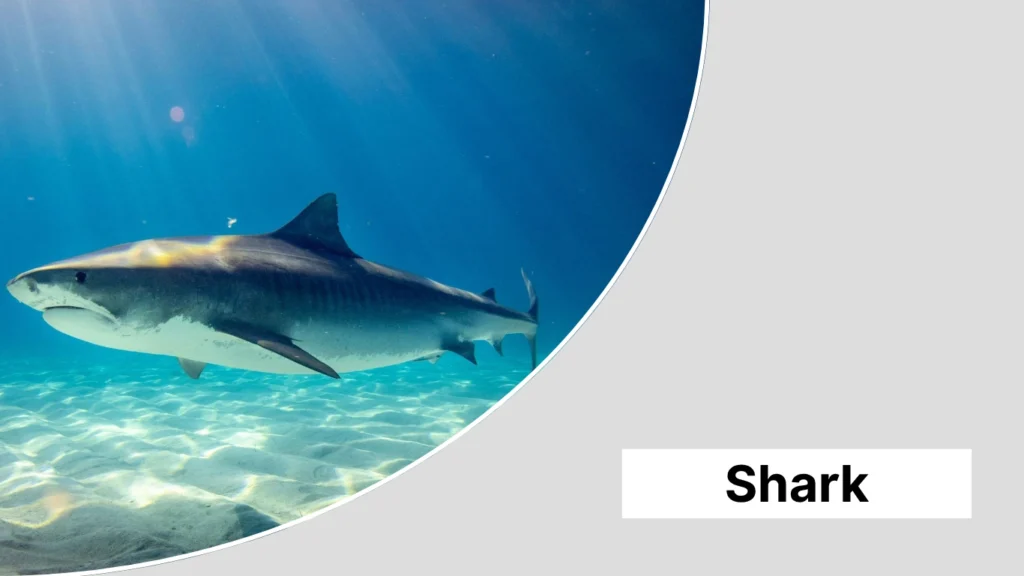
Sharks are powerful predators and ancient fish species, with a lineage dating back over 400 million years. They are known for their keen senses, streamlined bodies, and a critical role in maintaining ocean balance.
Identification
- Color: Gray, blue, brown, or patterned depending on species
- Body Shape: Streamlined, torpedo-like
- Fins: Prominent dorsal fin, pectoral fins, and caudal fin
- Teeth: Multiple rows of sharp, replaceable teeth
- Skin: Covered in tiny, tooth-like scales (dermal denticles)
Habitat and Distribution
Sharks live in every ocean, from shallow coastal waters to deep sea trenches. Some species are also found in freshwater rivers.
Behavior and Diet
Sharks are apex predators and vary by species in diet—ranging from plankton to fish, seals, or even other sharks. They often hunt alone but may gather for feeding.
Breeding and Lifespan
Sharks reproduce in different ways: laying eggs, live birth, or ovoviviparity. Some species can live over 70 years.
5. Sea Turtle
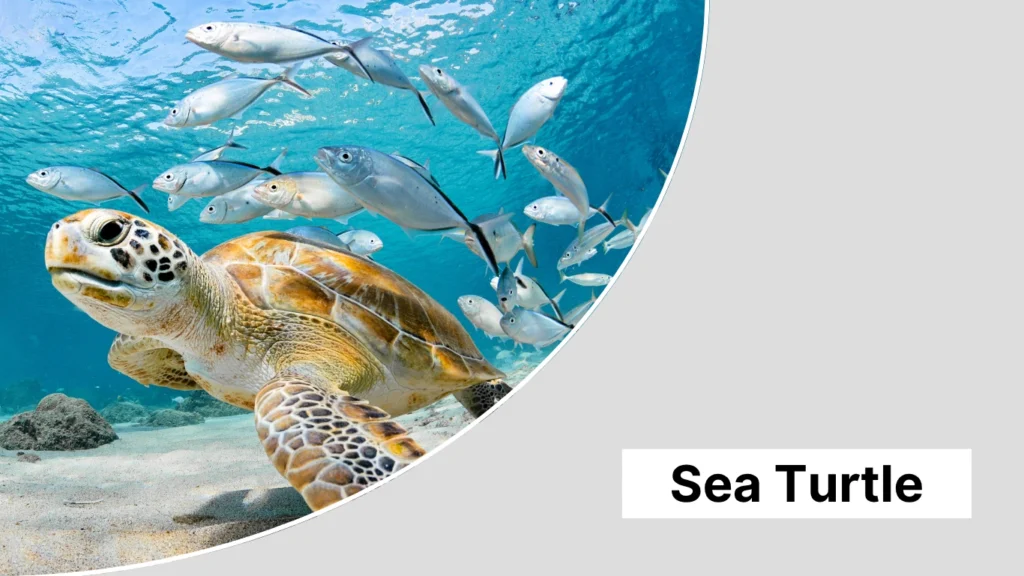
Sea turtles are ancient marine reptiles known for their distinctive shells and long-distance migrations. They return to the same beach where they were born to lay eggs, making them symbols of navigation and endurance.
Identification
- Shell: Hard, streamlined carapace
- Limbs: Flipper-like for swimming
- Beak: Sharp, no teeth
- Size: Varies by species; up to 7 feet long
- Color: Green, brown, or gray with mottled patterns
Habitat and Distribution
Sea turtles are found in warm and temperate oceans worldwide. They inhabit coastal waters, coral reefs, and open seas.
Behavior and Diet
Their diet varies: green turtles eat mostly seagrass, while loggerheads consume crustaceans. They often migrate thousands of miles between feeding and nesting grounds.
Breeding and Lifespan
Females come ashore to nest and lay eggs in the sand. Sea turtles can live 50 to 100 years, though many hatchlings don’t survive to adulthood.
6. Clownfish

Clownfish are small, brightly colored reef fish best known for their symbiotic relationship with sea anemones. Their orange and white stripes and friendly behavior have made them iconic marine creatures.
Identification
- Color: Bright orange with white bands outlined in black
- Size: Typically 3 to 4 inches long
- Fins: Rounded fins with smooth edges
- Body Shape: Small and oval-shaped
- Movement: Quick, darting swimming motion
Habitat and Distribution
Clownfish are found in warm shallow waters of the Pacific and Indian Oceans, particularly in coral reefs and sheltered lagoons.
Behavior and Diet
They live in sea anemones for protection, gaining immunity to the anemone’s sting. They feed on algae, plankton, and small invertebrates.
Breeding and Lifespan
Clownfish lay eggs on flat surfaces near anemones. Males care for the eggs. Lifespan is typically 6 to 10 years in the wild.
7. Starfish
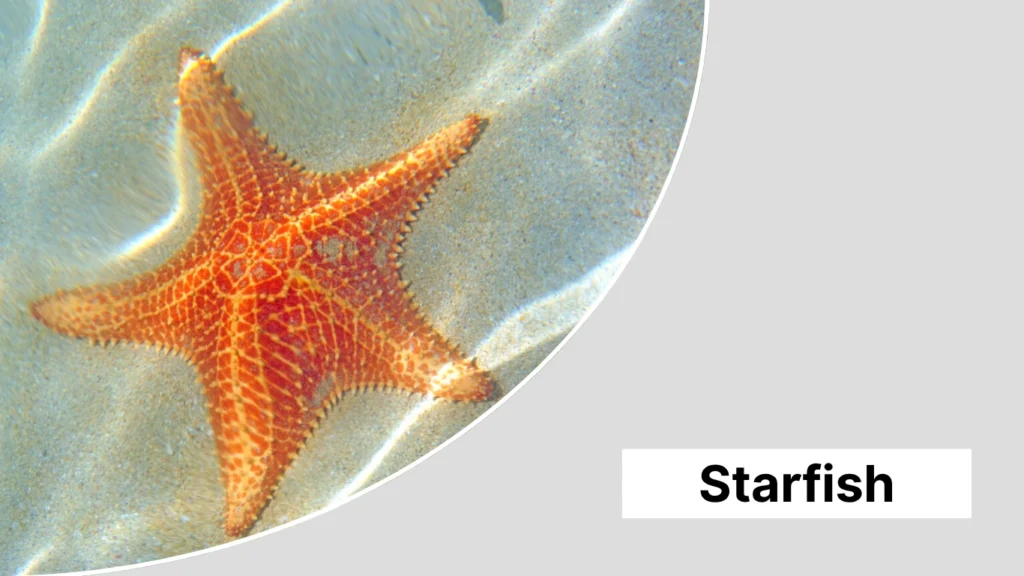
Starfish, or sea stars, are echinoderms recognized by their radial symmetry and unique ability to regenerate lost arms. Despite their name, they are not actually fish.
Identification
- Arms: Usually five, but can range up to 40
- Color: Varies—red, orange, purple, brown
- Texture: Spiny or smooth, with tube feet on the underside
- Size: Ranges from a few inches to over 2 feet in diameter
- Mouth: Located underneath at the center
Habitat and Distribution
Starfish live in oceans worldwide, from tidal pools to deep-sea floors. They are commonly found clinging to rocks or coral.
Behavior and Diet
They are slow-moving and feed on mollusks like clams and oysters by everting their stomachs to digest food externally.
Breeding and Lifespan
Some reproduce sexually by releasing gametes into water, while others regenerate from fragments. Lifespan varies by species—some live over 30 years.
8. Jellyfish
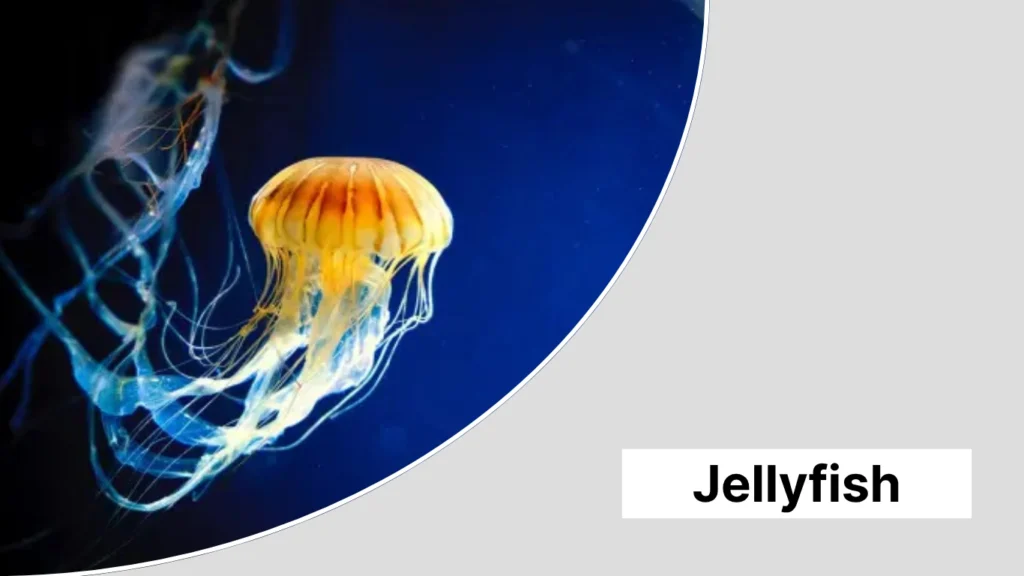
Jellyfish are ancient, gelatinous sea creatures known for their umbrella-shaped bodies and trailing tentacles. They drift with ocean currents and can deliver painful stings through specialized cells.
Identification
- Body: Bell-shaped, translucent
- Tentacles: Long and trailing, with stinging cells (nematocysts)
- Color: Transparent, bluish, pink, or vividly colored
- Movement: Pulsating contractions help them swim
- Size: From a few millimeters to over 6 feet in diameter
Habitat and Distribution
Jellyfish are found in every ocean, from surface waters to deep sea zones. Some species thrive in coastal areas, while others inhabit open oceans.
Behavior and Diet
They are passive drifters, capturing plankton, small fish, and larvae with their tentacles. Some jellyfish glow in the dark through bioluminescence.
Breeding and Lifespan
They have complex life cycles, including polyp and medusa stages. Most live a few days to several months, though deep-sea species may live longer.
9. Squid

Squids are fast-swimming, intelligent cephalopods with long arms and a torpedo-shaped body. They are known for their agility, inking ability, and role in marine food chains.
Identification
- Body Shape: Elongated with a mantle and fins
- Arms: Eight arms and two longer tentacles
- Color: Can change color for camouflage or communication
- Eyes: Large and highly developed
- Ink Sac: Used to release dark ink for defense
Habitat and Distribution
Squids live in oceans worldwide, from shallow coastal areas to the deep sea. Many species are found in temperate and tropical waters.
Behavior and Diet
They are active predators, feeding on fish, crustaceans, and other squids. They use jet propulsion to swim rapidly and escape danger.
Breeding and Lifespan
Squids reproduce by laying large numbers of eggs. Most live short lives—generally less than two years—dying after mating.
10. Seahorse
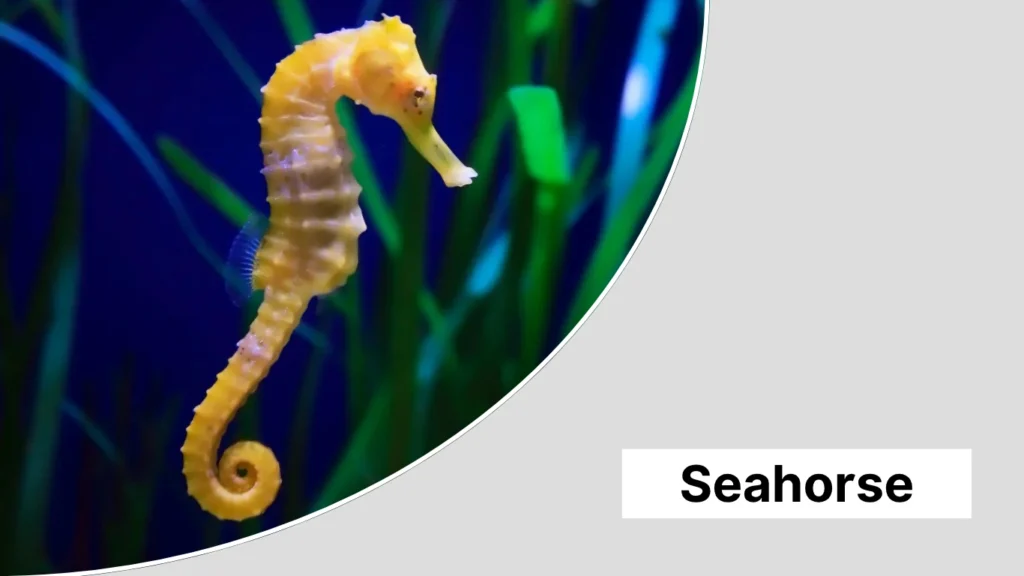
Seahorses are small, upright-swimming fish known for their horse-like heads and curled tails. Unlike most fish, they swim slowly and use their prehensile tails to anchor themselves to seagrass or coral.
Identification
- Shape: Upright body with curved neck and long snout
- Tail: Prehensile, used for gripping objects
- Fins: Small dorsal fin on the back for propulsion
- Color: Can change color for camouflage
- Size: Usually 1 to 14 inches depending on species
Habitat and Distribution
Seahorses are found in shallow coastal waters, seagrass beds, estuaries, and coral reefs, mostly in tropical and temperate seas.
Behavior and Diet
They feed by sucking in small prey like plankton and tiny crustaceans through their snouts. Seahorses are poor swimmers and often remain attached to vegetation.
Breeding and Lifespan
Males carry and birth the young in a brood pouch. Lifespans range from 1 to 5 years depending on species and environment.
11. Sea Lion
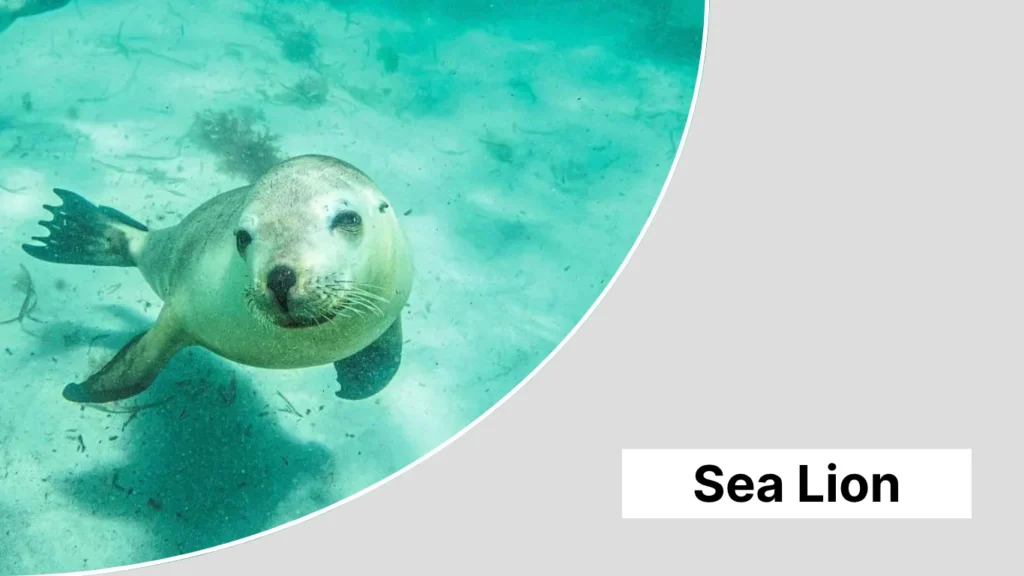
Sea lions are large, social marine mammals recognized for their external ear flaps and strong front flippers. They are agile swimmers and often gather in large colonies on rocky coasts.
Identification
- Body: Streamlined and muscular with short fur
- Fins: Large, paddle-like front flippers
- Head: Rounded with visible ear flaps
- Color: Brown to golden tan
- Size: Males are much larger than females
Habitat and Distribution
Sea lions are found in coastal regions of the Pacific Ocean, particularly around North America, South America, Australia, and Asia.
Behavior and Diet
They feed on fish, squid, and other small marine creatures. Sea lions are social, intelligent, and often seen basking on beaches or performing in marine parks.
Breeding and Lifespan
Males establish harems during breeding season. Pups are born on land and nursed for months. Sea lions can live up to 20–30 years in the wild.
12. Walrus

Walruses are massive marine mammals known for their long tusks, whiskered faces, and thick blubber. They are social animals often seen lounging on ice or beaches in large groups.
Identification
- Tusks: Long, curved ivory tusks present in both sexes
- Color: Pinkish-brown, darkens in cold water
- Size: Up to 11 feet long and over 3,000 pounds
- Skin: Wrinkled, with sparse hair
- Whiskers: Prominent, used for detecting food
Habitat and Distribution
Walruses inhabit Arctic regions, preferring ice-covered waters near the continental shelf. They are commonly found in the Bering and Chukchi Seas.
Behavior and Diet
They use their tusks to haul out on ice and for defense. Walruses primarily feed on bottom-dwelling invertebrates like clams and snails, using suction to extract them from shells.
Breeding and Lifespan
Females give birth to a single calf after a 15–16 month gestation. Walruses can live up to 40 years.
13. Manta Ray

Manta rays are the largest species of rays, known for their enormous, wing-like fins and graceful movements. They are gentle filter-feeders and highly intelligent.
Identification
- Shape: Flat, diamond-shaped body with triangular pectoral fins
- Size: Wingspan can reach up to 23 feet
- Color: Dark back with a white underside
- Mouth: Large, forward-facing, used for filter feeding
- Tail: Shorter and less dangerous than stingrays
Habitat and Distribution
Manta rays are found in warm tropical and subtropical waters, often around coral reefs and open oceans.
Behavior and Diet
They feed on plankton and small fish by swimming with their mouths open. Mantas are known for their acrobatic breaches and solitary or small-group travel.
Breeding and Lifespan
Manta rays give birth to live young, usually one pup at a time. Lifespan can reach up to 40–50 years.
14. Stingray

Stingrays are flat-bodied fish closely related to sharks, known for their long, whip-like tails armed with venomous barbs. They spend much of their time lying on the seafloor, camouflaged in sand.
Identification
- Body Shape: Flat, disc-like with rounded edges
- Color: Sandy brown, gray, or spotted for camouflage
- Tail: Long and thin with one or more venomous barbs
- Eyes: Located on top of the body
- Mouth: Positioned underneath
Habitat and Distribution
Stingrays are found in shallow coastal waters, lagoons, estuaries, and sometimes rivers. They prefer warm, tropical, and temperate regions.
Behavior and Diet
They feed on small fish, crustaceans, and mollusks. Stingrays often bury themselves in sand and ambush prey using electroreception.
Breeding and Lifespan
Most stingrays give birth to live young. Lifespan varies by species, typically 15–25 years in the wild.
15. Moray Eel
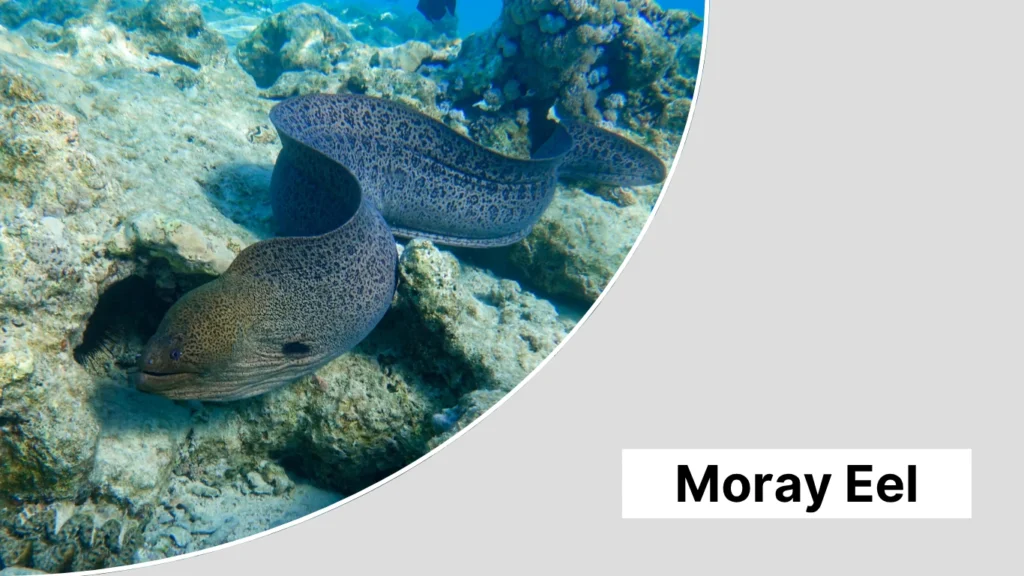
Moray eels are elongated, snake-like fish that dwell in rocky reefs and crevices. Known for their menacing appearance and sharp teeth, they are actually shy and solitary.
Identification
- Body Shape: Long, narrow, and scaleless
- Color: Brown, green, yellow, or speckled
- Jaw: Large mouth with visible sharp teeth
- Skin: Smooth and mucus-covered
- Eyes: Small, with poor vision
Habitat and Distribution
Moray eels inhabit coral reefs, rocky crevices, and coastal waters in tropical and subtropical oceans worldwide.
Behavior and Diet
Nocturnal hunters, they feed on fish, squid, and crustaceans. Moray eels rely on ambush tactics and a second set of jaws (pharyngeal jaws) to capture prey.
Breeding and Lifespan
Morays reproduce by external fertilization. After hatching, larvae drift in plankton before settling. They can live for 10 to 30 years depending on the species.
16. Crab

Crabs are crustaceans with hard exoskeletons, two claws, and a sideways walk. With thousands of species worldwide, they vary in size, color, and habitat—from deep sea to sandy beaches.
Identification
- Body: Short, broad, and covered by a hard shell (carapace)
- Limbs: Ten legs, including two large claws (chelae)
- Movement: Walk sideways due to leg structure
- Color: Varies—red, brown, blue, or mottled
- Eyes: On stalks, allowing wide vision
Habitat and Distribution
Crabs are found globally in oceans, estuaries, and along shorelines. Some species also live in freshwater or on land near coastal areas.
Behavior and Diet
Most crabs are scavengers and omnivores, feeding on algae, detritus, mollusks, and smaller animals. They use their claws to crush, tear, or carry food.
Breeding and Lifespan
Female crabs can carry hundreds of eggs under their abdomen. Lifespan ranges from 1 to 30 years depending on species.
17. Lobster
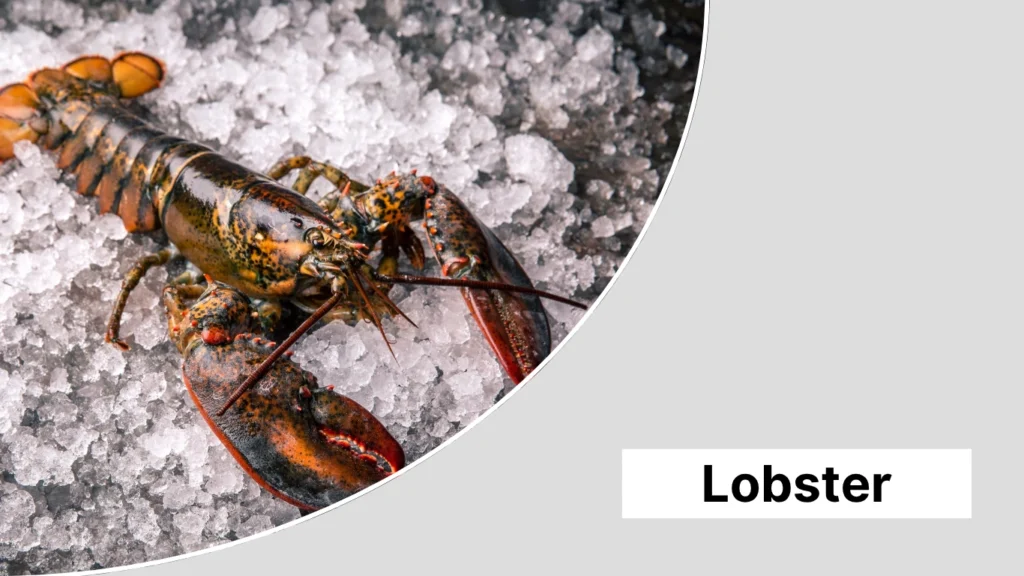
Lobsters are large marine crustaceans with long bodies, muscular tails, and powerful claws. Known for their economic value and strong exoskeleton, they dwell on the ocean floor.
Identification
- Body: Elongated and segmented with a tough shell
- Claws: One larger “crusher” claw and a smaller “cutter” claw
- Color: Typically dark green or blue; turns red when cooked
- Antennae: Long and sensitive
- Tail: Fan-like and strong for rapid backward swimming
Habitat and Distribution
Lobsters live on rocky or muddy ocean floors, often hiding in crevices. Common in the North Atlantic, they are also found in temperate and tropical oceans.
Behavior and Diet
Lobsters are nocturnal, feeding on fish, mollusks, algae, and dead animals. They are solitary and territorial, defending their burrows fiercely.
Breeding and Lifespan
Females carry fertilized eggs under their tail for months before releasing larvae. Lobsters can live 40 to 70 years or more in the wild.
18. Shrimp
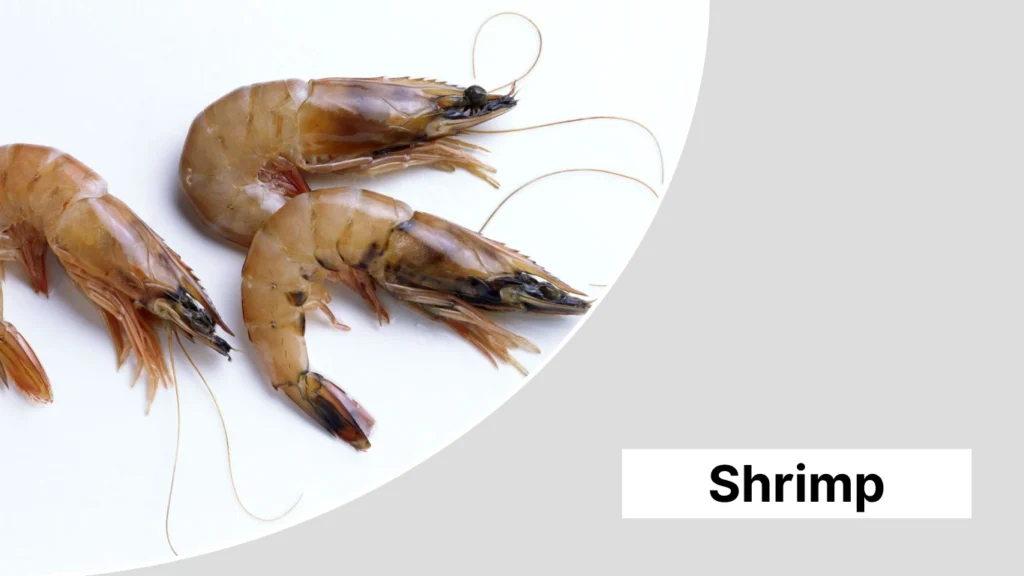
Shrimp are small, slender crustaceans that play a vital role in the marine food chain. They are known for their quick swimming, long antennae, and importance in both ecosystems and seafood cuisine.
Identification
- Body: Segmented and semi-transparent
- Color: Varies—gray, pink, white, or striped
- Antennae: Long and sensitive
- Legs: Ten, including swimmerets under the tail
- Size: Usually 1 to 3 inches, though some species are larger
Habitat and Distribution
Shrimp live in oceans, estuaries, and freshwater bodies worldwide. They inhabit sandy or muddy bottoms and coral reefs, both shallow and deep.
Behavior and Diet
They are omnivorous scavengers, feeding on algae, plankton, detritus, and small animals. Shrimp swim backward quickly when startled by flicking their tails.
Breeding and Lifespan
Females release thousands of eggs into the water. Most shrimp live 1 to 6 years depending on species and habitat.
19. Coral
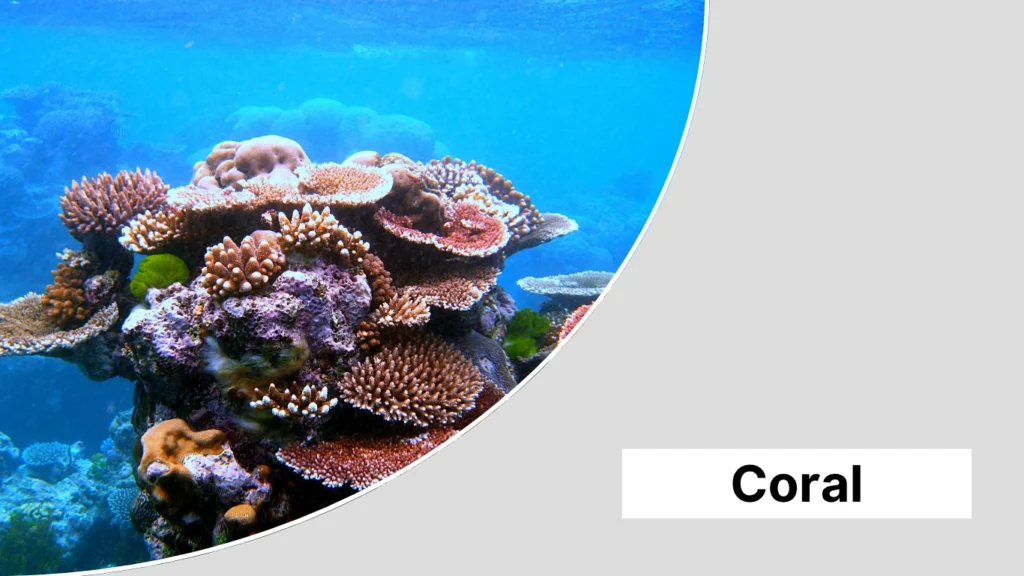
Corals are tiny marine invertebrates that live in colonies and build vast reef structures. Though animal-based, they resemble plants and play a foundational role in reef ecosystems.
Identification
- Structure: Hard skeleton made of calcium carbonate
- Color: Brightly colored due to symbiotic algae (zooxanthellae)
- Shape: Branching, dome-shaped, or fan-like depending on species
- Size: Individual polyps are tiny, but colonies can span miles
- Texture: Rigid and rough to the touch
Habitat and Distribution
Corals are found in warm, shallow tropical oceans, especially in the Indo-Pacific and Caribbean regions, forming coral reefs and atolls.
Behavior and Diet
They feed by capturing plankton with tentacles and through nutrients produced by their symbiotic algae. Corals need sunlight and clear water to thrive.
Breeding and Lifespan
Corals reproduce both sexually and asexually. Some species can live for centuries, with entire reefs developing over thousands of years.
20. Sea Urchin

Sea urchins are small, round marine animals covered in spines. They belong to the echinoderm family and are known for their slow movement and importance in maintaining algae balance on reefs.
Identification
- Shape: Spherical or flattened
- Spines: Long, movable, and sharp
- Color: Black, purple, red, green, or brown
- Mouth: Located underneath, called Aristotle’s lantern
- Size: Typically 1 to 4 inches in diameter
Habitat and Distribution
Sea urchins are found on ocean floors around the world, especially in shallow rocky shores, coral reefs, and seagrass beds.
Behavior and Diet
They graze on algae, seaweed, and detritus using specialized mouthparts. Their spines deter predators, though they are preyed upon by sea otters and starfish.
Breeding and Lifespan
They reproduce by releasing eggs and sperm into the water. Lifespan can range from 4 to 30 years depending on species.
21. Sea Cucumber
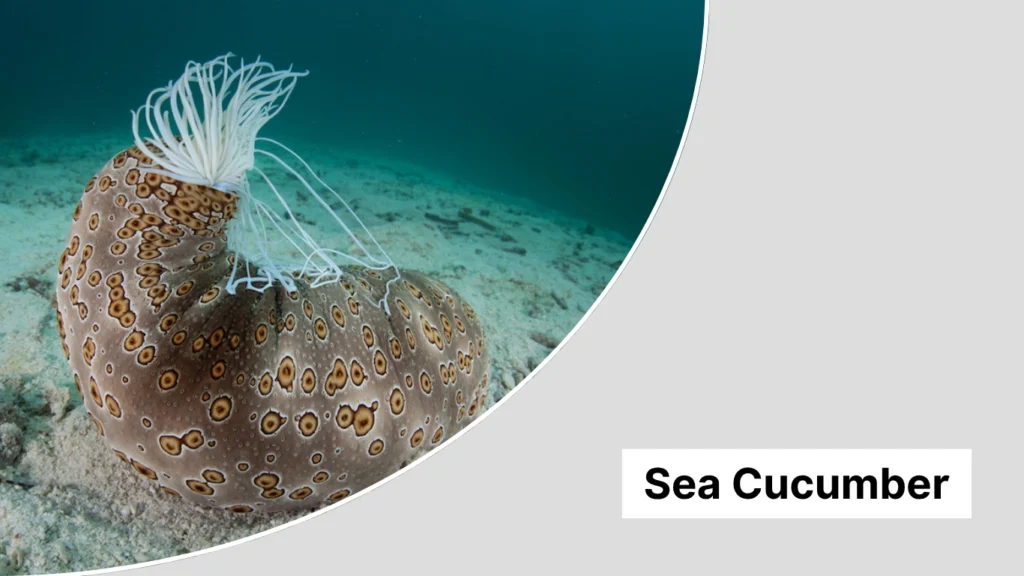
Sea cucumbers are soft-bodied echinoderms with elongated bodies and leathery skin. They play a key role in cleaning the ocean floor by consuming decomposing material.
Identification
- Shape: Cylindrical and worm-like
- Color: Brown, black, red, or green
- Texture: Soft, bumpy, or leathery
- Size: Ranges from a few inches to over 6 feet
- Mouth: Surrounded by tentacles at one end
Habitat and Distribution
Sea cucumbers inhabit ocean floors worldwide, especially in shallow reefs, sandy areas, and deep-sea environments.
Behavior and Diet
They feed on organic matter in sediment, filtering it through their digestive system. Some species eject internal organs as a defense mechanism.
Breeding and Lifespan
Sea cucumbers reproduce sexually by spawning into the water or asexually by splitting. Most live 5 to 10 years, though some deep-sea species live longer.
22. Anglerfish

Anglerfish are deep-sea predators known for their eerie appearance and the bioluminescent lure that dangles from their heads to attract prey in total darkness.
Identification
- Body: Round, large-headed with huge mouths
- Teeth: Long, sharp, and fang-like
- Color: Dark brown to black
- Lure: A glowing appendage (illicium) on the head
- Size: Typically under 12 inches, but can vary
Habitat and Distribution
Anglerfish inhabit the deep ocean, especially the abyssal and bathypelagic zones. Some shallow-water species exist near continental slopes.
Behavior and Diet
They are ambush predators, using their glowing lure to attract fish and crustaceans. Their elastic jaws allow them to swallow prey as large as themselves.
Breeding and Lifespan
In many species, males are tiny and fuse to females for reproduction. Lifespan is not well known but likely ranges from a few to several years.
23. Barracuda

Barracudas are sleek, torpedo-shaped predatory fish known for their speed, sharp teeth, and fearsome appearance. They are aggressive hunters often found near coral reefs and open waters.
Identification
- Body Shape: Long and cylindrical
- Color: Silver with dark bars or spots
- Teeth: Large, pointed, and exposed even when the mouth is closed
- Fins: Small and set far back on the body
- Size: Commonly 2 to 6 feet long
Habitat and Distribution
Barracudas are found in tropical and subtropical oceans worldwide, especially near coral reefs, mangroves, and seagrass beds.
Behavior and Diet
They are fast swimmers and solitary hunters that feed on smaller fish. Barracudas often use surprise attacks, slicing prey with their sharp teeth.
Breeding and Lifespan
They spawn in open water. Juveniles inhabit estuaries before moving to reefs. Average lifespan is around 14 years.
24. Swordfish

Swordfish are large, predatory fish named for their long, flat bills that resemble swords. Known for their speed and strength, they are highly prized in commercial and sport fishing.
Identification
- Bill: Long, flat, sword-like upper jaw
- Body: Streamlined and torpedo-shaped
- Color: Dark gray or bluish on top, lighter below
- Size: Up to 15 feet long and over 1,000 pounds
- Fins: Tall dorsal fin and crescent-shaped tail
Habitat and Distribution
Swordfish inhabit temperate and tropical oceans worldwide, usually in deep offshore waters. They migrate long distances between feeding and spawning areas.
Behavior and Diet
They are fast swimmers that use their “sword” to slash and stun prey like squid and fish. Swordfish are mostly solitary hunters.
Breeding and Lifespan
Females release millions of eggs in warm waters. Swordfish can live around 9 to 15 years in the wild.
25. Tuna
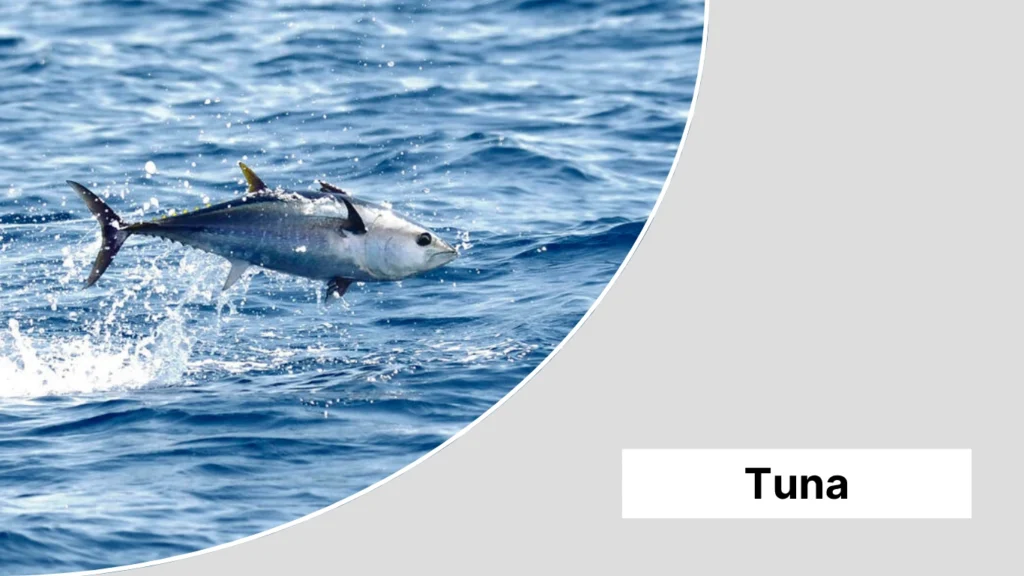
Tuna are fast-swimming, migratory fish known for their powerful build and importance as a global food source. They are a staple of ocean ecosystems and commercial fisheries.
Identification
- Body: Robust and streamlined
- Color: Metallic blue-black above, silvery below
- Fins: Small finlets behind dorsal and anal fins
- Size: Varies widely—some species exceed 10 feet
- Speed: Can swim up to 45 mph
Habitat and Distribution
Tuna are found in warm oceans worldwide. They migrate across vast distances in the Atlantic, Pacific, and Indian Oceans.
Behavior and Diet
They feed on fish, squid, and crustaceans, often in schools. Tuna are endothermic, allowing them to maintain body heat and hunt in cooler waters.
Breeding and Lifespan
Tuna spawn in warm, open seas, releasing millions of eggs. Lifespan ranges from 5 to 25 years depending on the species.
26. Parrotfish
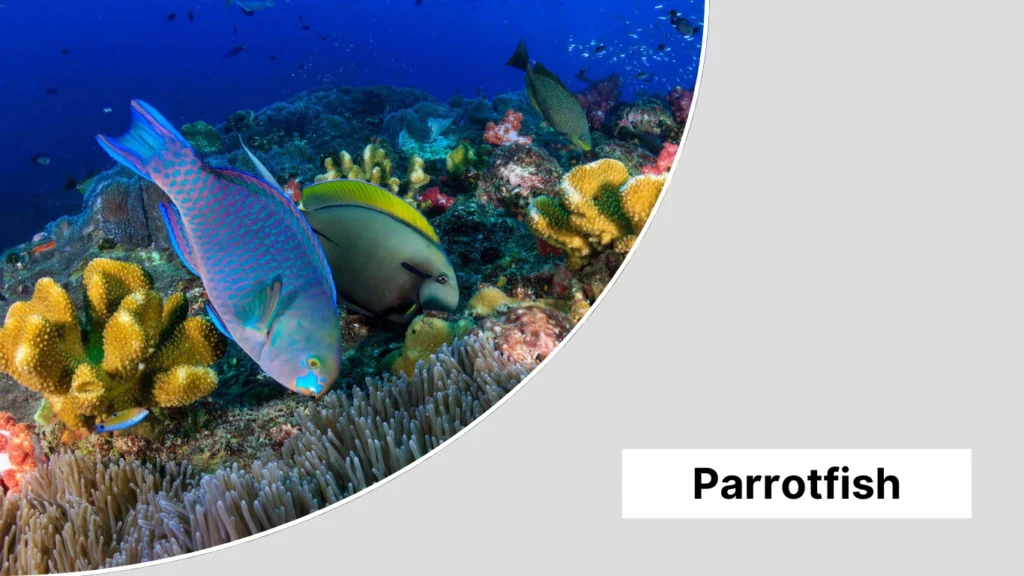
Parrotfish are brightly colored reef fish known for their beak-like teeth used to scrape algae from coral. They play a vital role in reef health by preventing algae overgrowth and producing sand.
Identification
- Color: Vibrant blue, green, pink, and yellow combinations
- Teeth: Fused into a beak-like structure
- Body Shape: Oval and elongated
- Size: Typically 1 to 4 feet long
- Mouth: Strong, able to bite and grind coral
Habitat and Distribution
Parrotfish live in tropical and subtropical reefs around the world, especially in the Caribbean and Indo-Pacific regions.
Behavior and Diet
They feed on algae growing on coral and rocks, helping to keep reefs clean. Their feeding process creates sand, which contributes to white beaches.
Breeding and Lifespan
Parrotfish can change sex during their lives. They lay eggs that hatch in open water. Most live 5 to 7 years, though some species live longer.
27. Pufferfish
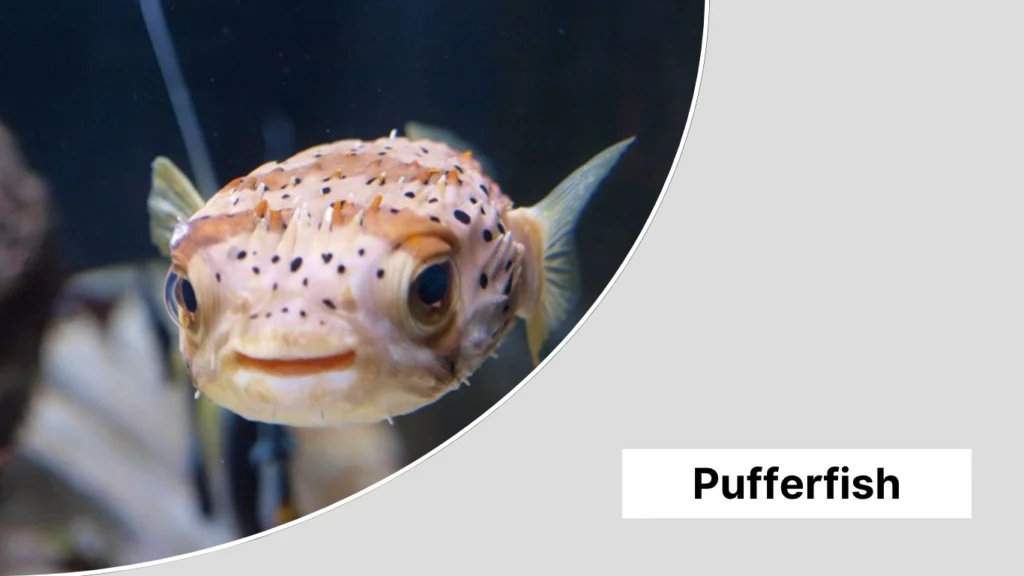
Pufferfish are known for their ability to inflate their bodies like balloons when threatened. Many species are highly toxic, containing a deadly substance called tetrodotoxin.
Identification
- Body Shape: Rounded and expandable
- Skin: Often spiny or rough
- Teeth: Four fused teeth forming a beak
- Color: Varies—some are brightly colored or patterned
- Size: 1 inch to over 2 feet
Habitat and Distribution
Pufferfish live in warm coastal waters, coral reefs, and estuaries in tropical and subtropical regions worldwide.
Behavior and Diet
They feed on algae, invertebrates, and sometimes shellfish, using their strong teeth to crush shells. When threatened, they inflate by swallowing water (or air).
Breeding and Lifespan
Pufferfish lay eggs in the water or on sandy seabeds. Their lifespan varies by species but commonly ranges from 5 to 10 years.
28. Grouper
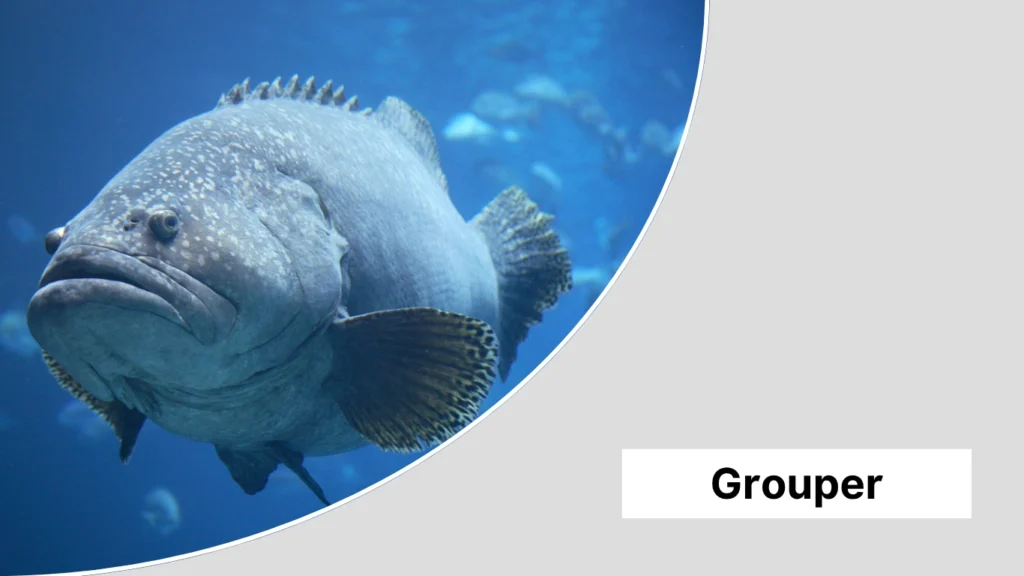
Groupers are large, heavy-bodied reef fish known for their wide mouths and ambush hunting style. They are important both ecologically and commercially in tropical marine environments.
Identification
- Body: Thick and stocky with a large head
- Color: Often mottled or spotted in browns, greens, or grays
- Mouth: Wide, used for suction feeding
- Size: Can grow over 8 feet and weigh several hundred pounds
- Fins: Rounded pectoral and tail fins
Habitat and Distribution
Groupers are found in warm waters worldwide, especially in coral and rocky reef habitats in the Atlantic, Pacific, and Indian Oceans.
Behavior and Diet
They are ambush predators that lurk in caves and crevices, quickly lunging at fish, squid, and crustaceans. Groupers are solitary and territorial.
Breeding and Lifespan
Groupers often change sex during their lives, typically from female to male. Lifespan can reach up to 40 years or more.
29. Beluga Whale

Beluga whales, also called “sea canaries,” are small, white whales known for their vocal communication, flexible necks, and social behavior in Arctic waters.
Identification
- Color: Pure white in adults; gray in calves
- Size: 13 to 20 feet long
- Head: Rounded forehead (melon) and no dorsal fin
- Skin: Smooth and thick for insulation
- Neck: Flexible, allowing head movement
Habitat and Distribution
Belugas inhabit cold Arctic and sub-Arctic regions, often near ice edges, estuaries, and coastal areas.
Behavior and Diet
They eat fish, squid, and crustaceans. Belugas are highly social, traveling in pods and using complex vocalizations to communicate.
Breeding and Lifespan
Females give birth every 3–4 years after a 14-month pregnancy. Belugas can live 40 to 60 years.
30. Blue Whale
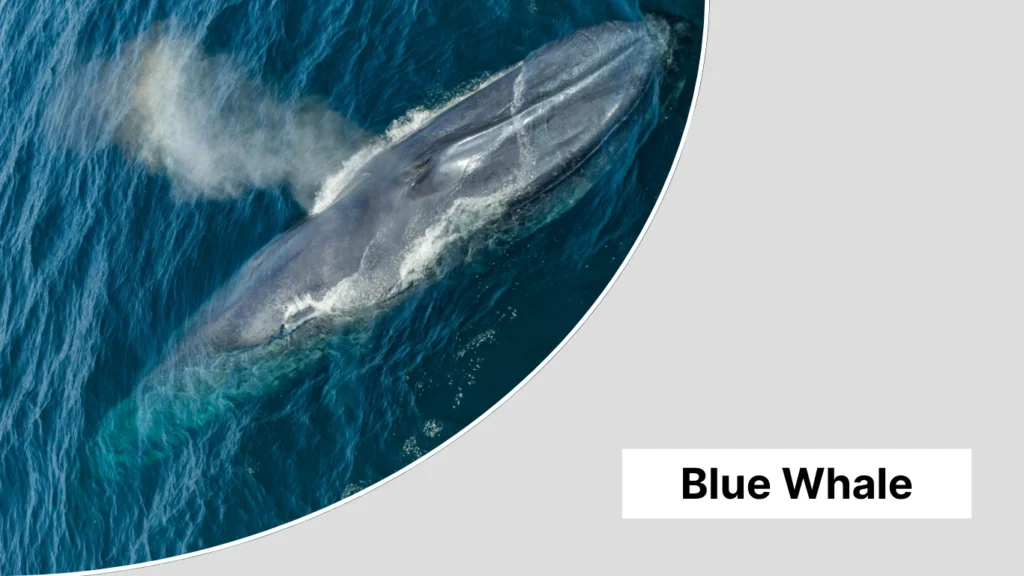
The blue whale is the largest animal ever known to exist on Earth. These gentle giants are filter-feeding baleen whales, capable of reaching enormous sizes and producing thunderous vocalizations.
Identification
- Color: Blue-gray with lighter mottling
- Size: Up to 100 feet long and 200 tons in weight
- Blowhole: Two, producing a tall vertical spout
- Fins: Small dorsal fin and long pectoral fins
- Baleen Plates: Used to filter tiny prey from water
Habitat and Distribution
Blue whales are found in all major oceans except the Arctic. They migrate between polar feeding areas and tropical breeding grounds.
Behavior and Diet
They feed almost exclusively on krill, consuming up to 4 tons per day during feeding season. Blue whales are usually solitary or in pairs.
Breeding and Lifespan
Females give birth to a single calf every 2–3 years. Blue whales can live for 70 to 90 years, sometimes more.
31. Orca (Killer Whale)

Orcas, or killer whales, are highly intelligent and social marine mammals. As apex predators, they use complex hunting strategies and live in tightly bonded pods.
Identification
- Color: Black and white with a tall dorsal fin
- Size: Up to 32 feet long and 6 tons in weight
- Teeth: Sharp and conical for grabbing prey
- Head: Rounded with a white eye patch
- Tail: Strong, used for powerful swimming
Habitat and Distribution
Orcas are found in all oceans, from Arctic ice to tropical seas. They thrive in both coastal and open waters.
Behavior and Diet
Their diet varies—fish, seals, dolphins, even whales. Orcas use echolocation, group coordination, and specialized tactics depending on prey.
Breeding and Lifespan
Calves are born after a 15–18 month gestation. Females can live up to 90 years; males up to 60.
32. Manatee
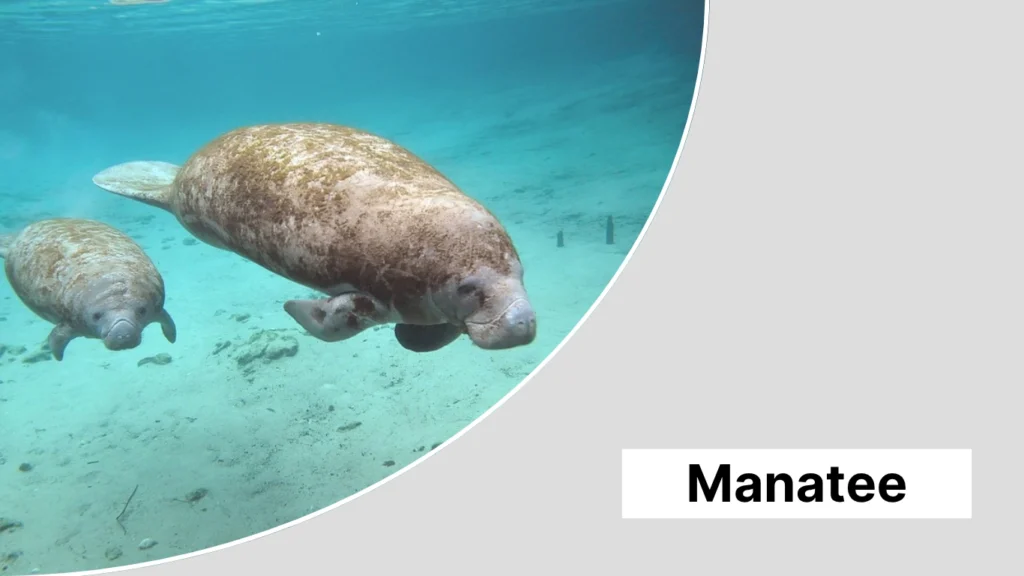
Manatees, often called “sea cows,” are large, slow-moving herbivorous marine mammals. They are gentle creatures that graze on aquatic vegetation and are commonly found in warm, shallow waters.
Identification
- Body: Rounded, paddle-shaped with no visible neck
- Tail: Broad, flat, and paddle-like
- Color: Gray or brown, often with algae on skin
- Size: 9 to 13 feet long, weighing up to 1,300 pounds
- Fins: Forelimbs modified into flippers
Habitat and Distribution
Manatees live in coastal waters, rivers, and estuaries in the southeastern U.S., the Caribbean, Amazon Basin, and West Africa.
Behavior and Diet
They feed on seagrasses and aquatic plants, consuming 10–15% of their body weight daily. Manatees are solitary or travel in small groups.
Breeding and Lifespan
Females give birth to a single calf every 2–5 years. Manatees can live up to 60 years in the wild.
33. Nudibranch
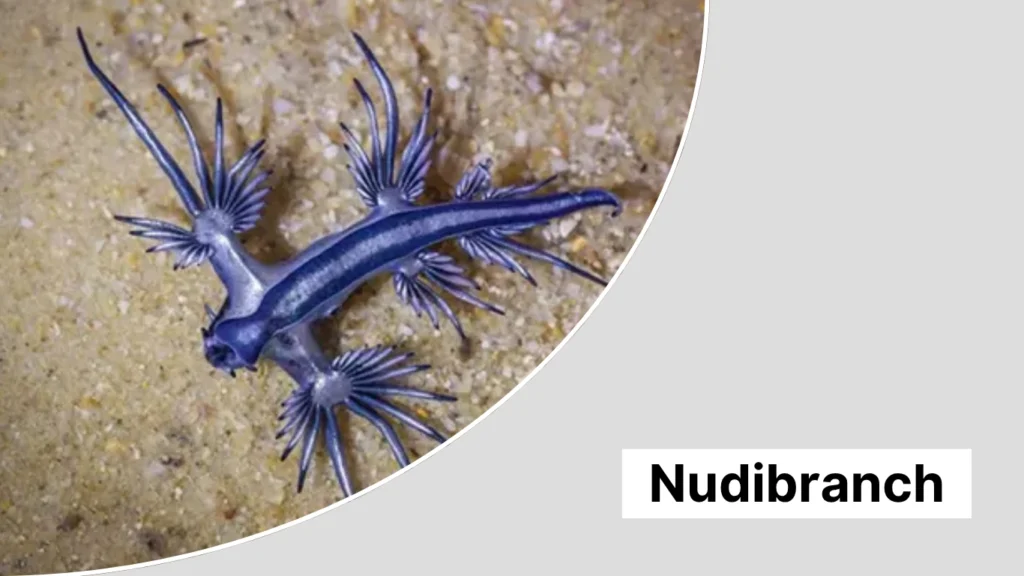
Nudibranchs are colorful sea slugs known for their dazzling patterns and fascinating shapes. These soft-bodied mollusks are found in oceans worldwide, often in coral reefs or rocky seafloors.
Identification
- Body: Soft, flattened, and often ornamented with frilly or horn-like structures
- Color: Extremely diverse—bright neon colors, spots, stripes
- Size: Usually 0.5 to 6 inches long
- Tentacles: Two sensory structures (rhinophores) on the head
- Shell: None (unlike most mollusks)
Habitat and Distribution
Nudibranchs are found globally in marine environments, from shallow coral reefs to deep ocean floors.
Behavior and Diet
They feed on sponges, corals, anemones, and even other nudibranchs. Many absorb toxins or stinging cells from prey for defense.
Breeding and Lifespan
They are hermaphrodites and lay ribbon-like egg masses. Lifespan typically ranges from a few weeks to one year.
34. Hermit Crab
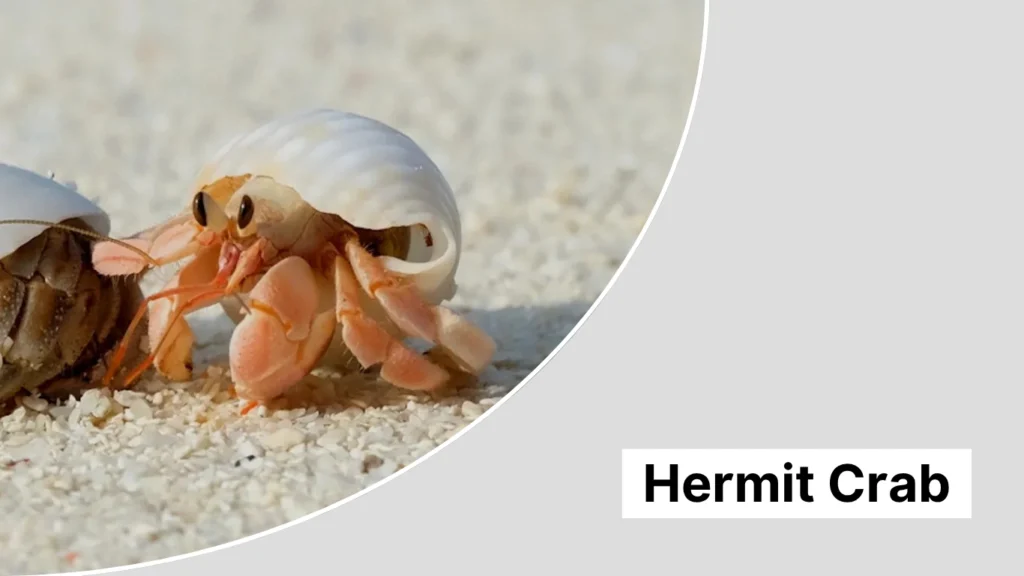
Hermit crabs are crustaceans that protect their soft abdomens by occupying empty snail shells. Unlike true crabs, they must find new shells as they grow, making them unique among marine animals.
Identification
- Body: Soft abdomen protected by a borrowed shell
- Claws: One larger claw used for defense or blocking the shell entrance
- Color: Varies—reddish, brown, or striped
- Legs: Ten legs with the front pair modified into claws
- Size: From less than 1 inch to over 4 inches
Habitat and Distribution
Hermit crabs inhabit shallow waters, intertidal zones, coral reefs, and sandy beaches worldwide. Some species are terrestrial but live near the coast.
Behavior and Diet
They are scavengers, feeding on algae, dead animals, and detritus. Hermit crabs are social and often seen in groups, especially during shell exchanges.
Breeding and Lifespan
Females release eggs into the ocean where they hatch into planktonic larvae. Lifespan ranges from a few years to over 30 years in some species.
35. Lanternfish
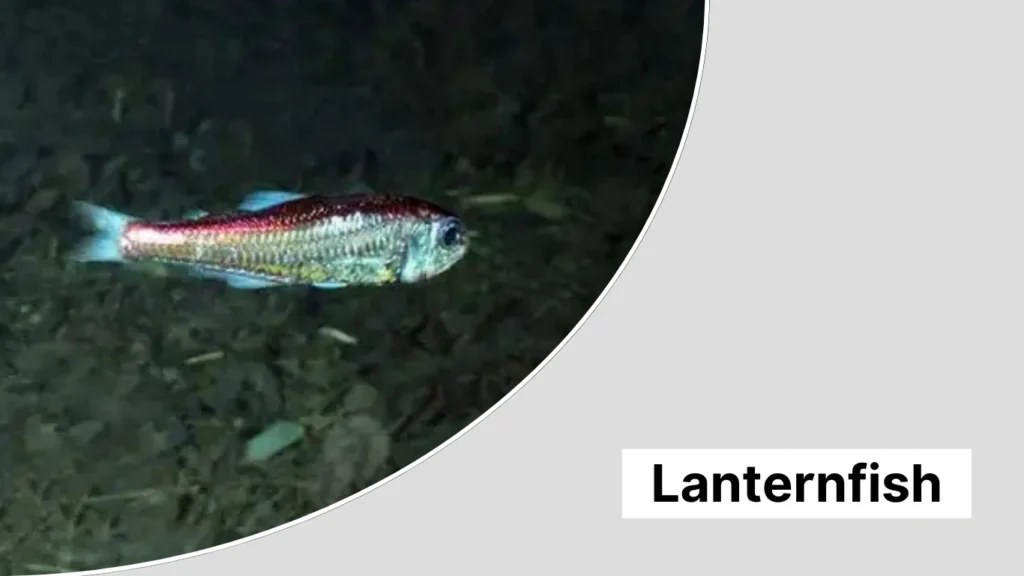
Lanternfish are small, deep-sea fish named for their ability to produce light through bioluminescent organs. They are one of the most abundant vertebrates in the ocean.
Identification
- Body: Slender and laterally compressed
- Color: Silver to dark gray with glowing spots
- Light Organs: Photophores along the body
- Size: Typically 1 to 6 inches long
- Eyes: Large, adapted to dark environments
Habitat and Distribution
Lanternfish live in deep ocean zones worldwide, particularly in the mesopelagic layer (200–1,000 meters deep). They perform daily vertical migrations.
Behavior and Diet
They feed on zooplankton and small invertebrates. Their bioluminescence is used for camouflage, mating, and communication in the dark sea.
Breeding and Lifespan
They spawn in open water, and larvae drift in plankton. Most lanternfish live 1 to 3 years.