





Skunks are small to medium-sized mammals famous for their distinctive black-and-white coloration and powerful defensive spray. Found primarily in the Americas, skunks play important roles as predators of insects and small animals, helping maintain ecological balance. Beyond the common striped skunk, there are various species and relatives, including spotted skunks, hog-nosed skunks, and even stink badgers.
This guide explores 13 different types of skunks, highlighting their unique physical features, natural habitats, diets, and behaviors. Whether it’s the well-known striped skunk or the elusive stink badger of Southeast Asia, each species has fascinating adaptations and survival strategies. Discover the diversity and ecological importance of these remarkable mammals.
1. Striped Skunk (Mephitis mephitis)

The Striped Skunk is the most familiar and widespread skunk species in North America, well-known for its distinctive black-and-white coloration and potent defensive spray.
Identification
- Length: 20–31 inches (including tail)
- Weight: 4–10 pounds
- Color: Black fur with two prominent white stripes running from the head down the back, often merging on the tail
- Tail: Bushy with white fur on top
Habitat and Range
Found throughout much of the United States, southern Canada, and northern Mexico. Prefers a variety of habitats including woodlands, grasslands, suburban areas, and farmlands.
Diet and Feeding Habits
Omnivorous—eats insects, small mammals, birds, eggs, fruits, and vegetation. Forages primarily at night.
Behavior and Traits
Solitary and nocturnal. Uses a highly effective spray from scent glands as a defense against predators. Generally non-aggressive but warns potential threats by stamping feet and raising its tail before spraying. Plays an important role in controlling insect and rodent populations.
2. Spotted Skunk (Spilogale putorius)
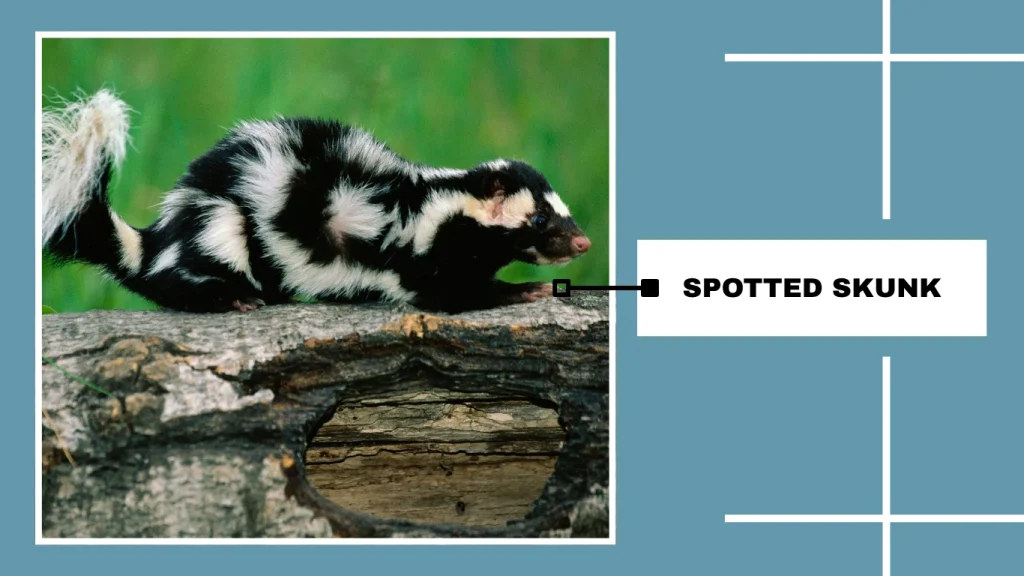
The Spotted Skunk is smaller and more agile than the striped skunk, known for its distinctive spotted or broken stripe pattern and acrobatic defensive behaviors.
Identification
- Length: 14–19 inches (including tail)
- Weight: 1–3 pounds
- Color: Black fur with white spots and broken stripes along the body and tail
- Tail: Bushy with white tip
Habitat and Range
Native to the central and eastern United States and parts of Mexico. Prefers woodlands, grasslands, and farmlands.
Diet and Feeding Habits
Omnivorous—feeds on insects, small mammals, birds, eggs, fruits, and nuts. Primarily nocturnal but may be active at dawn or dusk.
Behavior and Traits
Known for its handstand-like warning display where it raises its hind legs before spraying. More agile climbers than striped skunks and often burrow in hollow logs or abandoned dens. Their spray is strong but less voluminous than that of striped skunks.
3. Hooded Skunk (Mephitis macroura)
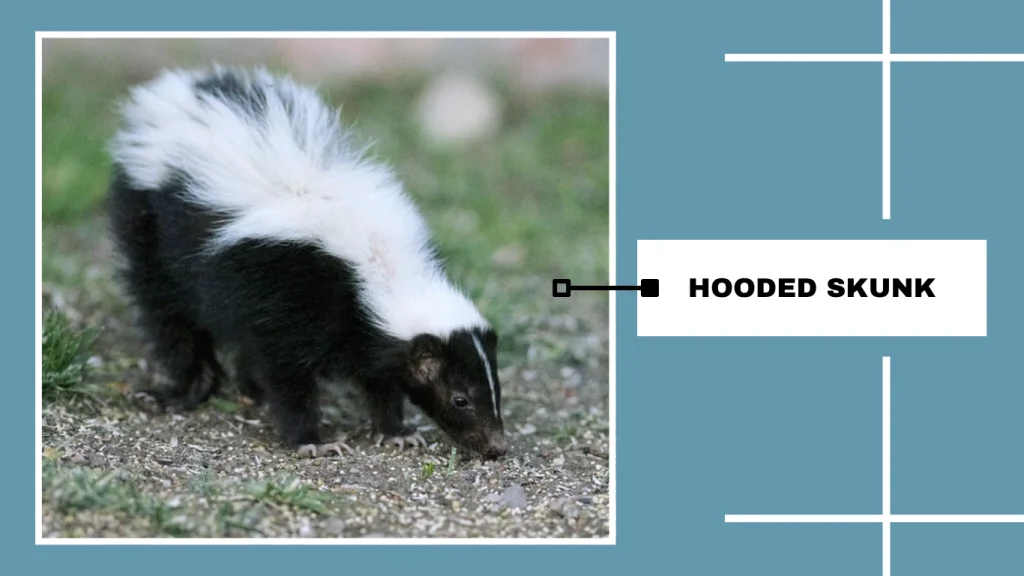
The Hooded Skunk is distinguished by its long, bushy tail and a white “hood” that extends from its head down its back, giving it a unique appearance among skunks.
Identification
- Length: 20–28 inches (including tail)
- Weight: 2.5–5 pounds
- Color: Mostly black with a prominent white hood and white markings on the tail
- Tail: Very long and bushy, often held erect
Habitat and Range
Found primarily in southwestern United States, Mexico, and parts of Central America. Prefers arid and semi-arid habitats like deserts, scrublands, and rocky areas.
Diet and Feeding Habits
Omnivorous—eats insects, small rodents, reptiles, fruits, and vegetation. Forages mostly at night.
Behavior and Traits
Shy and nocturnal. Uses its strong-smelling spray for defense when threatened. Less common and less studied than the striped skunk but important in controlling insect populations in its habitat.
4. Western Spotted Skunk (Spilogale gracilis)
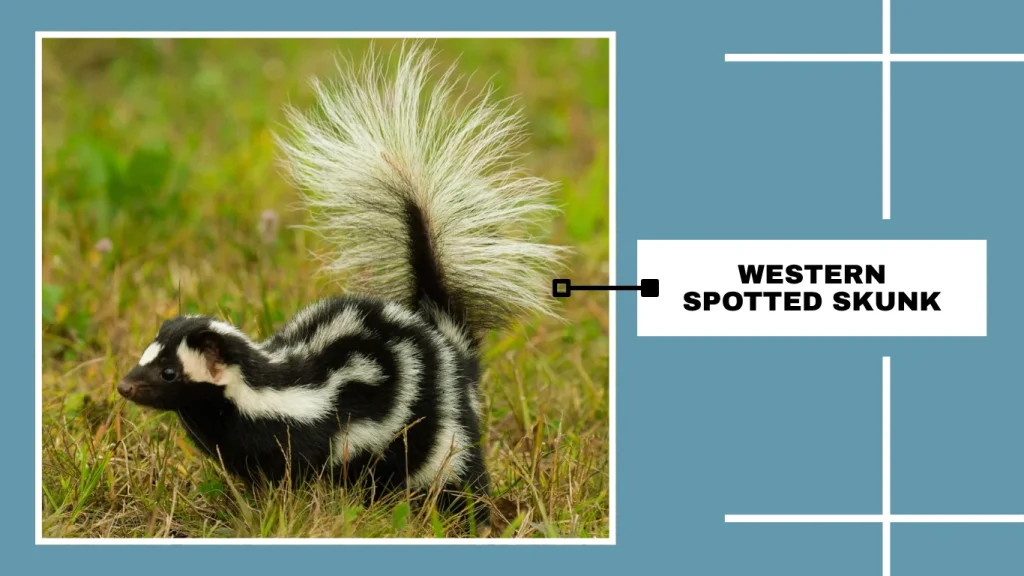
The Western Spotted Skunk is known for its distinctive spotted and striped black-and-white fur pattern and is native to the western regions of North America.
Identification
- Length: 14–18 inches (including tail)
- Weight: 1.5–3 pounds
- Color: Black coat with irregular white spots and broken stripes
- Tail: Bushy with white tip
Habitat and Range
Found from the western United States through parts of Mexico. Prefers open woodlands, grasslands, and rocky areas.
Diet and Feeding Habits
Omnivorous—feeds on insects, small mammals, birds, eggs, fruits, and nuts. Nocturnal and highly active hunters.
Behavior and Traits
Displays acrobatic defensive behaviors like handstands and tail raising before spraying. More agile and smaller than striped skunks, often using burrows or rock crevices for shelter.
5. Eastern Spotted Skunk (Spilogale putorius)

The Eastern Spotted Skunk is closely related to the Western Spotted Skunk but inhabits the eastern parts of North America and is known for its distinctive spotted coat.
Identification
- Length: 14–19 inches (including tail)
- Weight: 1–3 pounds
- Color: Black fur with white spots and broken stripes arranged in a unique pattern
- Tail: Bushy with a white tip
Habitat and Range
Found throughout the eastern United States, preferring forests, farmland edges, and brushy areas.
Diet and Feeding Habits
Omnivorous diet consisting of insects, small mammals, birds, eggs, and fruits. Active mostly at night.
Behavior and Traits
Noted for its energetic and acrobatic defensive display including handstands before spraying. Prefers dense cover and uses burrows or hollow logs for shelter. More elusive and less common than the striped skunk.
6. Hog-nosed Skunk (Conepatus leuconotus)

The Hog-nosed Skunk is a large, robust skunk species known for its distinctive pig-like snout and aggressive defense behavior.
Identification
- Length: 24–34 inches (including tail)
- Weight: 6–15 pounds
- Color: Black body with a broad white stripe extending from head to tail
- Snout: Large, pig-like and highly mobile
- Tail: Bushy with white tip
Habitat and Range
Found in the southwestern United States, Mexico, and Central America. Prefers deserts, grasslands, and scrubby areas.
Diet and Feeding Habits
Omnivorous—feeds on insects, small mammals, reptiles, fruits, and roots. Uses its strong snout to dig for insects and grubs.
Behavior and Traits
Known for being more aggressive and less likely to give warning sprays than other skunks. Uses loud hissing and stomping to intimidate threats before spraying. Good digger and capable swimmer.
7. Western Hog-nosed Skunk (Conepatus mesoleucus)

The Western Hog-nosed Skunk is a medium-sized skunk species with a distinctive white stripe and pig-like nose, native to parts of Mexico and the southwestern United States.
Identification
- Length: 22–30 inches (including tail)
- Weight: 6–12 pounds
- Color: Black with a white stripe that widens over the shoulders and tapers towards the tail
- Snout: Broad and pig-like
- Tail: Bushy, mostly black with some white
Habitat and Range
Found primarily in northern Mexico and extending into Texas and Arizona in the United States. Prefers arid and semi-arid environments such as deserts and scrublands.
Diet and Feeding Habits
Omnivorous, feeding on insects, small vertebrates, fruits, and roots. Uses its strong snout for digging.
Behavior and Traits
Solitary and primarily nocturnal. Uses defensive sprays when threatened and is a strong digger, often making burrows for shelter.
8. Stink Badger (Mydaus javanensis)

The Stink Badger, despite its name, is related to skunks and not true badgers. It is named for its foul-smelling defensive secretions.
Identification
- Length: 14–20 inches
- Weight: 3–6 pounds
- Color: Black fur with two broad white stripes running from head to tail
- Tail: Short and bushy
Habitat and Range
Found on the Indonesian islands of Java and Sumatra. Inhabits forests, grasslands, and scrub areas.
Diet and Feeding Habits
Feeds on insects, small rodents, fruits, and roots. Nocturnal forager.
Behavior and Traits
Solitary and shy. Uses a potent musk spray as a defense mechanism. Primarily ground-dwelling and secretive, rarely seen by humans.
9. Sunda Stink Badger (Mydaus marchei)
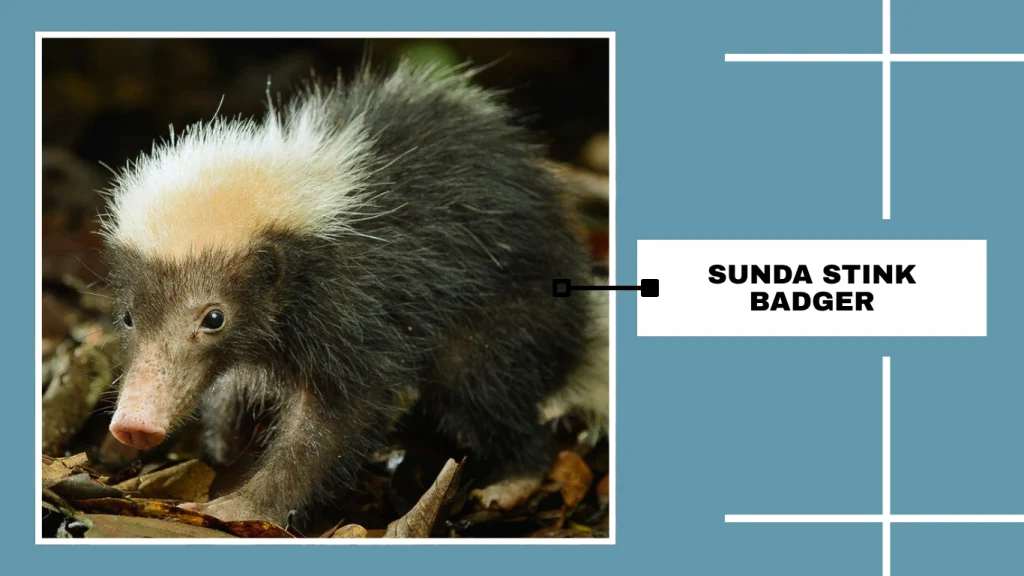
The Sunda Stink Badger is a skunk-relative native to parts of Indonesia, notable for its striking black-and-white coloration and strong odor.
Identification
- Length: 15–18 inches
- Weight: 3–7 pounds
- Color: Black body with distinct white markings on the head and back
- Tail: Short and bushy
Habitat and Range
Found mainly on the islands of Sumatra and Borneo. Prefers tropical forests and hilly areas.
Diet and Feeding Habits
Omnivorous—feeds on insects, small animals, fruits, and roots. Primarily nocturnal.
Behavior and Traits
Uses a strong-smelling musk as a defense. Generally solitary and elusive. Known for digging and burrowing behavior.
10. Greater Hog-nosed Skunk (Conepatus chinga)
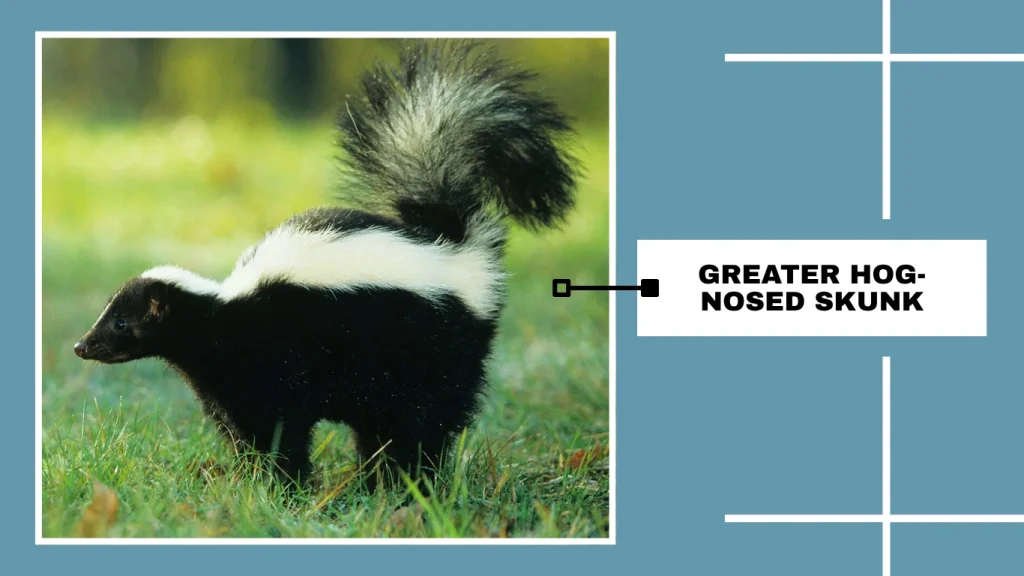
The Greater Hog-nosed Skunk is a large, robust species with a distinctive white stripe and long snout, found in South America.
Identification
- Length: 26–34 inches (including tail)
- Weight: 8–16 pounds
- Color: Black body with a broad white stripe running from the head down the back
- Snout: Large and pig-like
- Tail: Bushy with white and black coloration
Habitat and Range
Found across Argentina, Chile, Uruguay, and parts of Bolivia and Paraguay. Inhabits grasslands, forests, and scrublands.
Diet and Feeding Habits
Omnivorous—feeds on insects, small vertebrates, fruits, and roots. Uses its snout for digging prey.
Behavior and Traits
Known for its strong odor defense. Typically solitary and nocturnal, with burrowing habits for shelter.
11. Patagonian Hog-nosed Skunk (Conepatus humboldtii)

The Patagonian Hog-nosed Skunk is a large skunk species native to the southern regions of South America, particularly Patagonia.
Identification
- Length: 24–33 inches (including tail)
- Weight: 8–15 pounds
- Color: Black body with broad white stripes and a distinctive long, pig-like nose
- Tail: Bushy with mixed black and white fur
Habitat and Range
Inhabits grasslands, shrublands, and open forests in southern Argentina and Chile.
Diet and Feeding Habits
Omnivorous diet including insects, small mammals, fruits, and roots. Uses strong digging skills to locate prey.
Behavior and Traits
Nocturnal and solitary. Uses musk spray for defense and is known for its burrowing behavior.
12. Plains Hog-nosed Skunk (Conepatus semistriatus)

The Plains Hog-nosed Skunk is a medium-sized skunk found in Central and South America, recognizable by its striped body and elongated snout.
Identification
- Length: 20–28 inches (including tail)
- Weight: 7–14 pounds
- Color: Black with a white stripe down the back and a long, pig-like snout
- Tail: Bushy and mostly black with white tips
Habitat and Range
Found in lowland grasslands, savannas, and forests of Central America and northern South America.
Diet and Feeding Habits
Feeds on insects, small vertebrates, fruits, and roots. Uses its nose to dig for food.
Behavior and Traits
Mostly nocturnal and solitary. Employs defensive musk spray when threatened. Often uses burrows or natural shelters.
13. Southern Hog-nosed Skunk (Conepatus chinga)
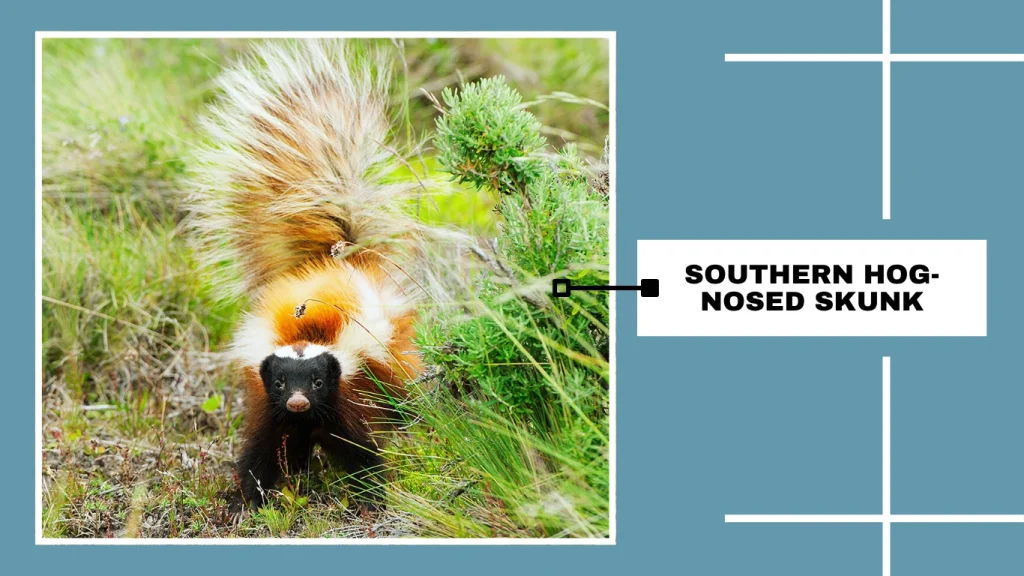
The Southern Hog-nosed Skunk is a large skunk species native to southern South America, closely related to other hog-nosed skunks but distinguished by its range and some physical traits.
Identification
- Length: 26–34 inches (including tail)
- Weight: 8–16 pounds
- Color: Black with a broad white stripe extending from the head down the back
- Snout: Long, broad, and pig-like
- Tail: Bushy with black and white fur
Habitat and Range
Found primarily in Argentina, Chile, Uruguay, and southern Brazil. Prefers open grasslands, scrublands, and forest edges.
Diet and Feeding Habits
Omnivorous diet including insects, small mammals, fruits, and roots. Skilled digger, using its snout to uncover prey.
Behavior and Traits
Nocturnal and solitary. Uses a potent musk spray as a defense mechanism. Often shelters in burrows or rocky crevices.