




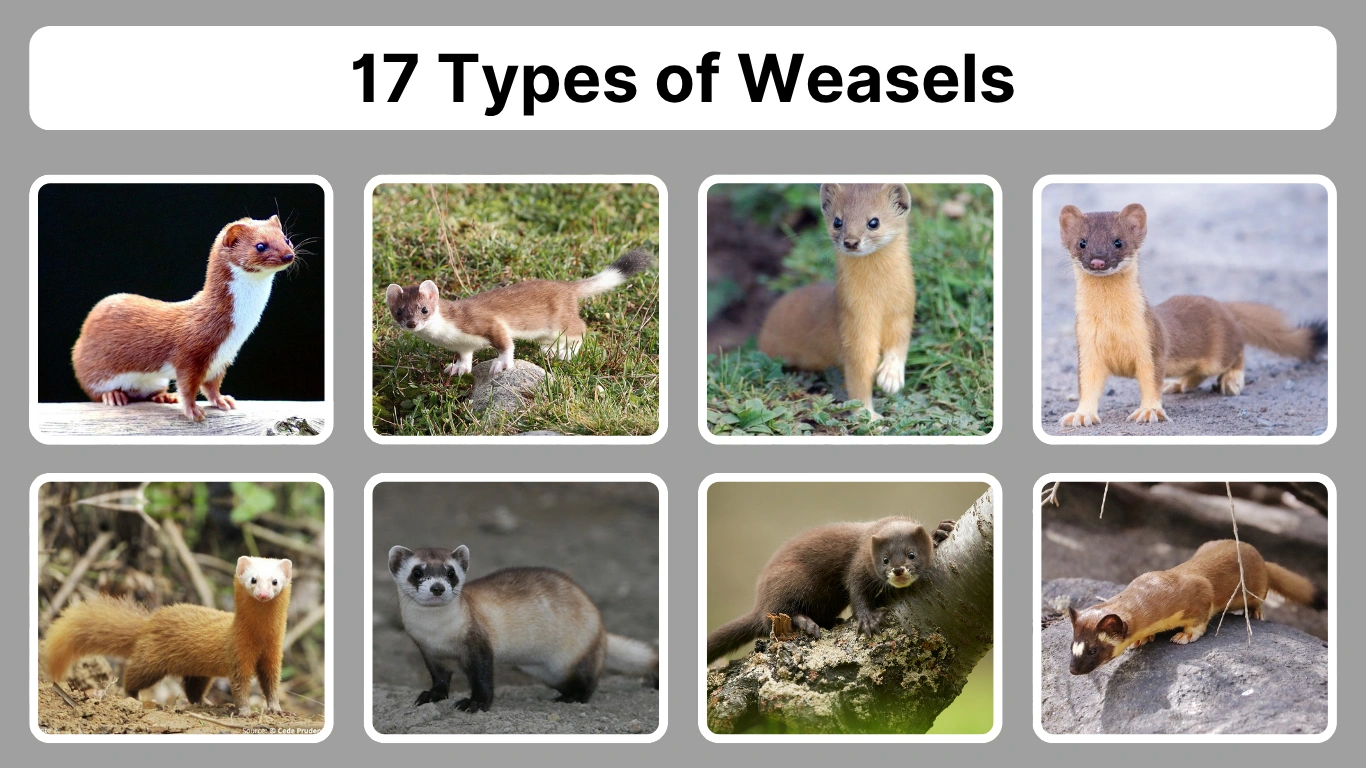
Weasels are small, agile carnivores known for their slender bodies, sharp hunting skills, and adaptability across diverse habitats worldwide. From the tiny Least Weasel—the smallest carnivore on Earth—to rare and elusive species like the Malabar Weasel, these mammals play vital roles in controlling rodent populations and maintaining ecological balance.
This guide covers 17 different types of weasels, highlighting their distinctive features, natural habitats, diets, and behaviors. Whether you’re interested in widespread species like the Long-tailed Weasel or specialized subspecies such as the Taiwanese Weasel, this overview provides a fascinating look at these cunning and resilient hunters.
1. Least Weasel (Mustela nivalis)
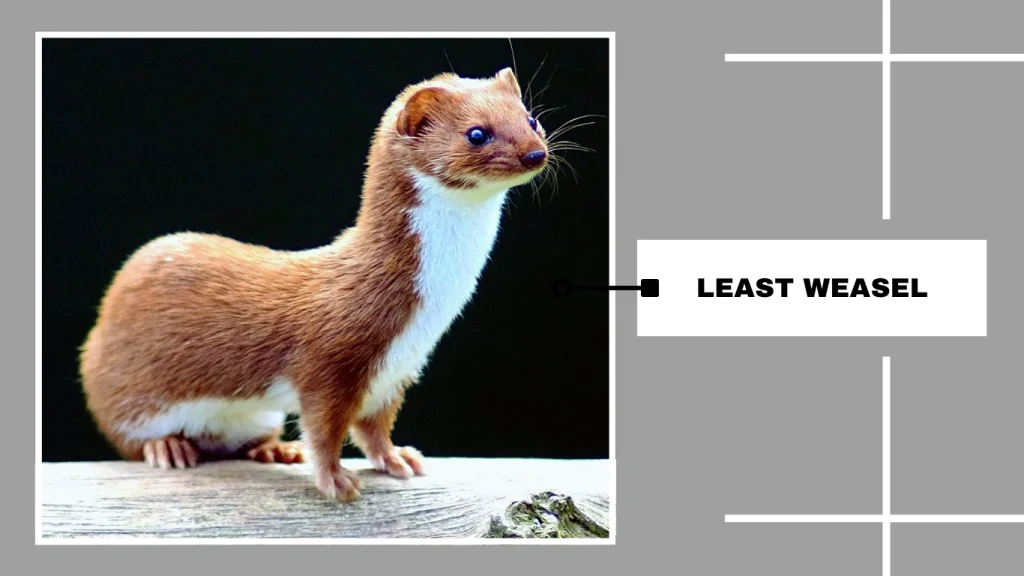
The Least Weasel is the smallest member of the weasel family and one of the tiniest carnivores in the world, known for its slender body and remarkable agility.
Identification
- Length: 4.7–10.2 inches (including tail)
- Weight: 1.7–8.8 ounces
- Color: Brown upper body with a white or cream-colored underside; turns white in winter in colder regions
- Body: Long and slender with short legs and a short tail
Habitat and Range
Found across much of the Northern Hemisphere, including North America, Europe, and Asia. Prefers grasslands, woodlands, farmlands, and sometimes urban edges.
Diet and Feeding Habits
Strict carnivore feeding mainly on small rodents such as mice, voles, and shrews. They are efficient hunters and use their slender bodies to enter rodent burrows.
Behavior and Traits
Highly active and territorial, Least Weasels can be aggressive despite their small size. They do not hibernate and remain active year-round. Known for their high metabolism, they require frequent feeding to sustain energy.
2. Stoat (Ermine) (Mustela erminea)
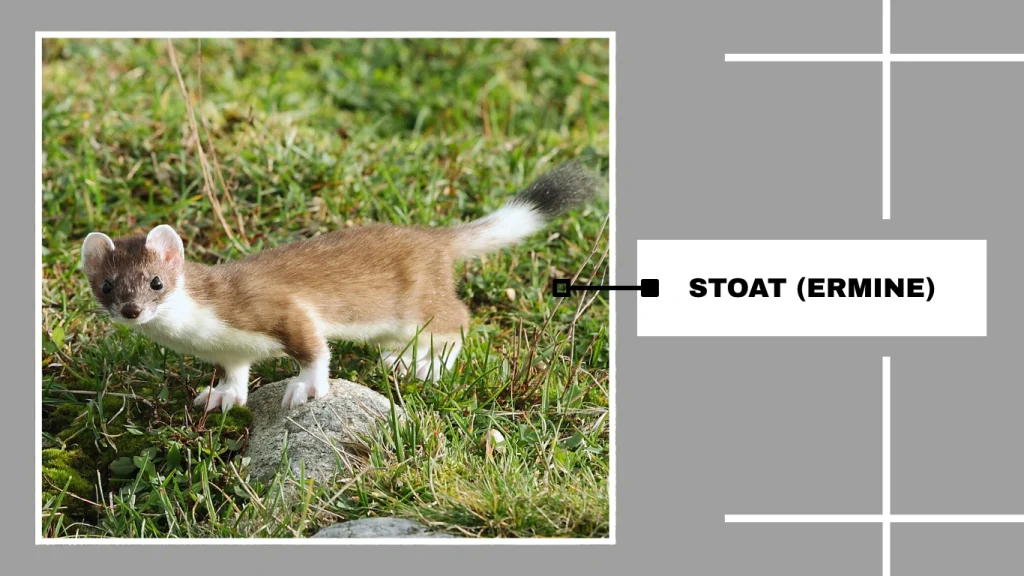
The Stoat, also called the Ermine in its white winter coat, is a small and agile predator closely related to the Least Weasel but larger and with a distinctive black-tipped tail.
Identification
- Length: 7–13 inches (including tail)
- Weight: 6–13 ounces
- Color: Brown upper body with white or cream belly; in colder regions, turns completely white (ermine) during winter except for black tail tip
- Tail: Long with a characteristic black tip
Habitat and Range
Found throughout the Northern Hemisphere, including North America, Europe, and Asia. Occupies forests, grasslands, wetlands, and tundra.
Diet and Feeding Habits
Feeds primarily on small mammals such as rabbits, rodents, and birds. Known for killing prey larger than itself with a quick bite to the neck.
Behavior and Traits
Territorial and solitary, stoats are active hunters with excellent agility. Their seasonal white coat provides camouflage in snow, which helps during winter hunting.
3. Long-tailed Weasel (Neogale frenata)
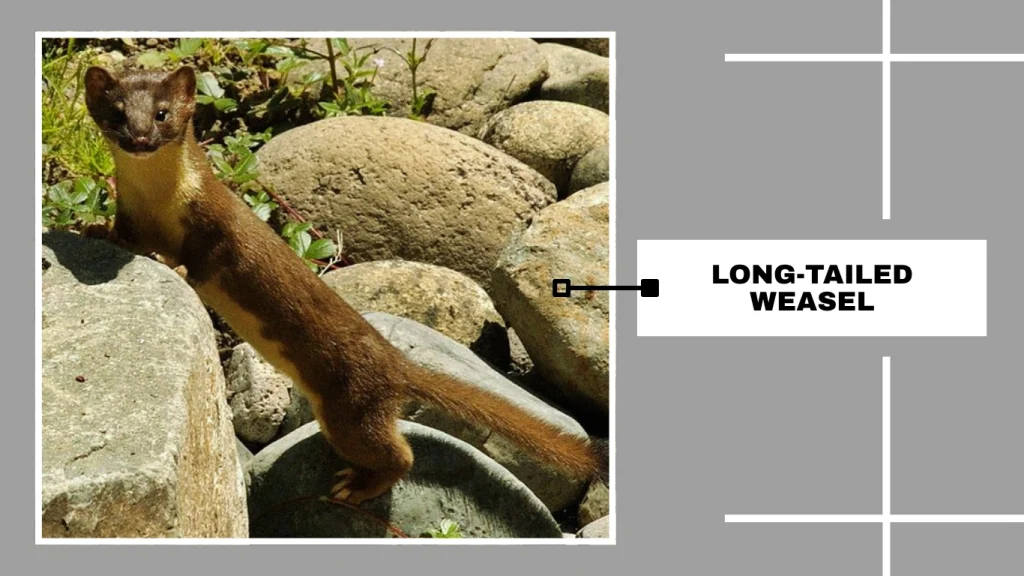
The Long-tailed Weasel is a slender and fast-moving predator named for its unusually long tail, which helps with balance and agility.
Identification
- Length: 10–16 inches (including tail)
- Weight: 4–8 ounces
- Color: Brown upper body with white or pale yellow underparts; tail has a black tip
- Tail: Long, about half the body length, with a black tip
Habitat and Range
Native to North and Central America. Found in diverse habitats including forests, fields, and farmlands.
Diet and Feeding Habits
Carnivorous, feeding mainly on rodents, rabbits, birds, and occasionally amphibians and insects.
Behavior and Traits
Known for its energetic hunting style and ability to follow prey into burrows. It remains active year-round and is capable of climbing trees and swimming.
4. Mountain Weasel (Mustela altaica)
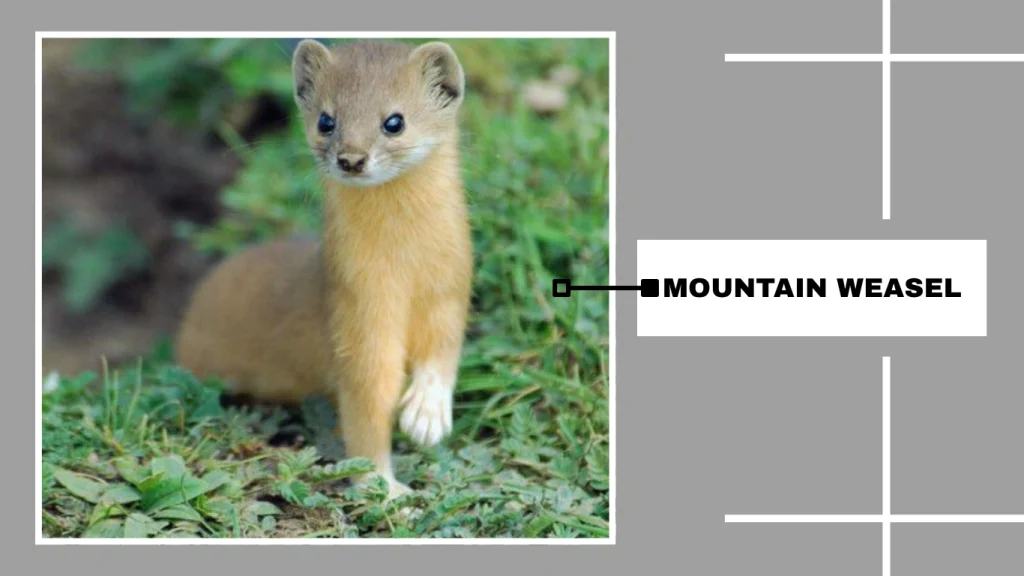
The Mountain Weasel is a small, agile predator adapted to cold mountainous regions, known for its slender body and hunting skills.
Identification
- Length: 9–12 inches (including tail)
- Weight: 6–12 ounces
- Color: Reddish-brown or yellowish-brown back with a pale underside
- Tail: Approximately 3–4 inches long, matching body color
Habitat and Range
Found in mountainous areas of Central and East Asia, including the Himalayas, Mongolia, and parts of Russia. Prefers rocky, alpine, and forested habitats at high elevations.
Diet and Feeding Habits
Primarily feeds on small rodents, birds, and insects. Highly efficient at navigating rugged terrain while hunting.
Behavior and Traits
Mostly solitary and nocturnal. Adapted to cold climates with dense fur. Excellent climbers and swimmers.
5. Japanese Weasel (Mustela itatsi)

The Japanese Weasel is a small carnivore native to Japan, recognized by its reddish-brown fur and active hunting behavior.
Identification
- Length: 10–13 inches (including tail)
- Weight: 6–12 ounces
- Color: Reddish-brown fur with a lighter underside
- Tail: Long, dark brown or blackish
Habitat and Range
Native to the Japanese archipelago, inhabiting forests, grasslands, and cultivated areas.
Diet and Feeding Habits
Feeds on small mammals, birds, reptiles, and insects. Sometimes scavenges carrion.
Behavior and Traits
Diurnal and solitary. Known for agility and curiosity. Plays a role in controlling rodent populations.
6. Yellow-bellied Weasel (Mustela kathiah)
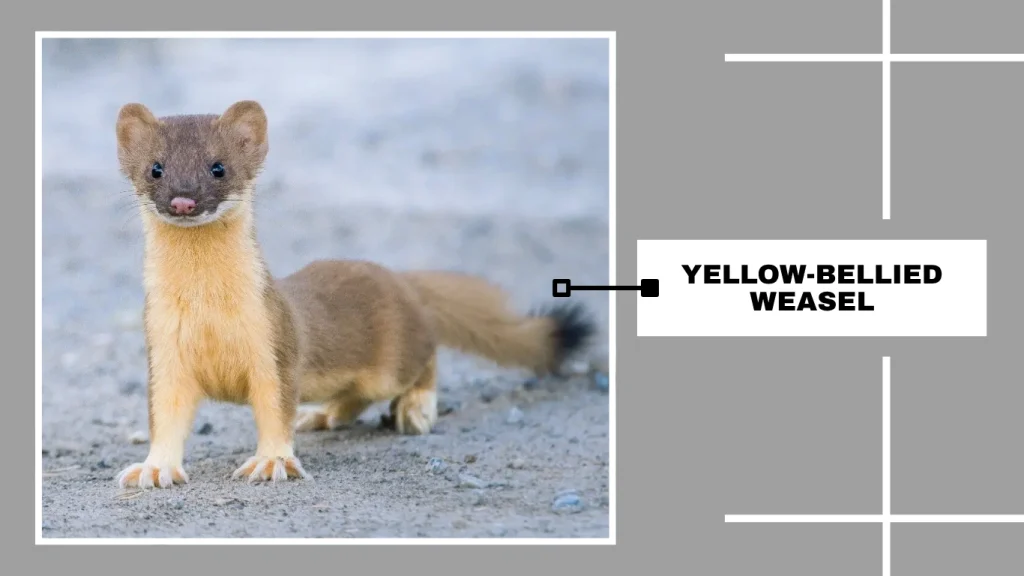
The Yellow-bellied Weasel is a strikingly colored species with a bright yellow to orange underside, found in parts of South and Southeast Asia.
Identification
- Length: 12–15 inches (including tail)
- Weight: 8–15 ounces
- Color: Dark brown to black upper body with a vivid yellow or orange belly
- Tail: Bushy, matching upper body color
Habitat and Range
Found in forests and mountainous regions of northeastern India, Nepal, Bhutan, Myanmar, and northern Thailand.
Diet and Feeding Habits
Feeds primarily on small mammals, birds, and insects. Known for its hunting agility in dense forests.
Behavior and Traits
Solitary and mostly nocturnal. Prefers dense cover and is rarely seen by humans. Plays an important ecological role as a predator of small vertebrates and invertebrates.
7. Malayan Weasel (Mustela nudipes)
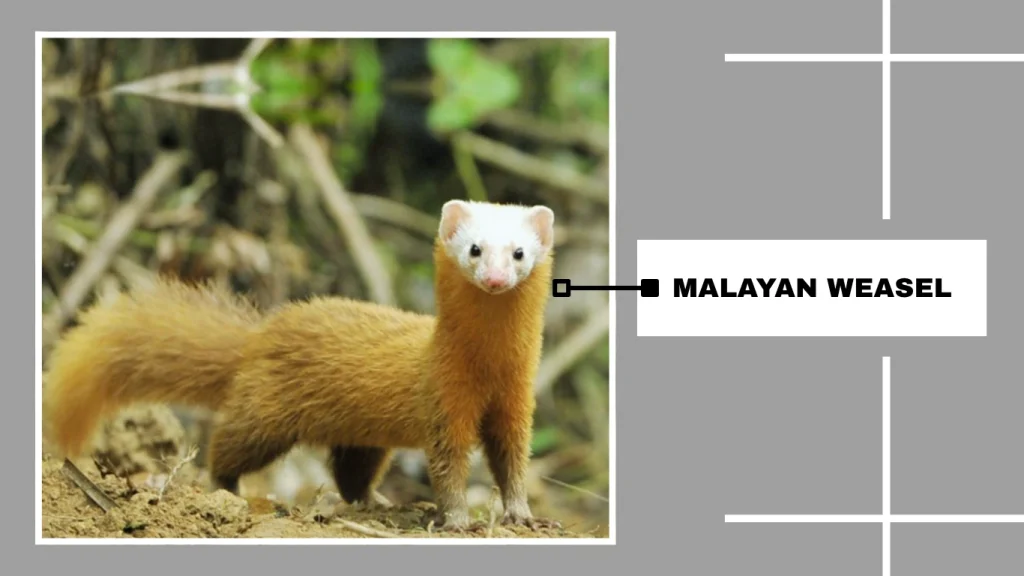
The Malayan Weasel is a small, slender weasel native to Southeast Asia, notable for its relatively short legs and unique fur pattern.
Identification
- Length: 12–15 inches (including tail)
- Weight: 7–12 ounces
- Color: Reddish-brown fur on the upper body with a paler underside
- Tail: Bushy and relatively short compared to body length
Habitat and Range
Occurs in tropical forests and plantations of Malaysia, Indonesia, and Thailand.
Diet and Feeding Habits
Carnivorous—feeds on rodents, birds, reptiles, and insects.
Behavior and Traits
Primarily nocturnal and elusive. Known to be agile and excellent climbers. Often avoids human contact but may forage near agricultural areas.
8. Siberian Weasel (Mustela sibirica)

The Siberian Weasel is a widely distributed and adaptable species known for its reddish-brown fur and slender body.
Identification
- Length: 14–18 inches (including tail)
- Weight: 12–20 ounces
- Color: Reddish-brown back with a pale yellowish or white underside
- Tail: Bushy and nearly the length of the body
Habitat and Range
Found throughout much of northern and eastern Asia, including Siberia, China, Korea, and Mongolia. Prefers forests, shrublands, and river valleys.
Diet and Feeding Habits
Feeds mainly on small mammals such as rodents and hares, but will also eat birds and insects.
Behavior and Traits
Solitary and active hunters. They are agile climbers and swimmers, with a high metabolism requiring frequent feeding.
9. European Mink (Mustela lutreola)

The European Mink is a semi-aquatic species native to Europe, known for its glossy dark fur and rarity due to population decline.
Identification
- Length: 13–18 inches (including tail)
- Weight: 1.5–3.5 pounds
- Color: Dark brown to black with a white patch on the upper lip and chin
- Tail: Thick and about half the body length
Habitat and Range
Lives near freshwater bodies such as rivers, streams, and wetlands across parts of Eastern Europe and Russia. Populations are fragmented and declining.
Diet and Feeding Habits
Carnivorous—feeds on fish, amphibians, small mammals, birds, and insects.
Behavior and Traits
Secretive and territorial. Declined drastically due to habitat loss and competition from the introduced American Mink. Conservation efforts focus on habitat restoration and captive breeding.
10. American Mink (Neogale vison)

The American Mink is a semi-aquatic weasel native to North America and widely introduced elsewhere for fur farming.
Identification
- Length: 15–18 inches (including tail)
- Weight: 1.5–3 pounds
- Color: Dark brown to black with a distinctive white patch on the chin and throat
- Tail: Long and bushy, about one-third of body length
Habitat and Range
Native to much of North America, inhabiting rivers, lakes, wetlands, and coastal areas. Introduced populations exist in Europe, South America, and New Zealand.
Diet and Feeding Habits
Opportunistic carnivore feeding on fish, amphibians, small mammals, birds, and crustaceans.
Behavior and Traits
Highly adaptable and territorial. Known for being fierce hunters and good swimmers. Can impact native wildlife in areas where introduced.
11. Black-footed Ferret (Mustela nigripes)

The Black-footed Ferret is a small carnivore native to North America, known for its slender body and black markings on the feet and face.
Identification
- Length: 18–24 inches (including tail)
- Weight: 1.5–2.5 pounds
- Color: Pale yellowish body with black feet, nose, and eye patches
- Tail: Long and bushy, with a black tip
Habitat and Range
Historically found in grasslands and prairies of the central United States and parts of Canada. Currently exists mainly due to captive breeding and reintroduction programs.
Diet and Feeding Habits
Specializes in preying on prairie dogs, relying heavily on their burrows for shelter and hunting grounds.
Behavior and Traits
Nocturnal and solitary. Once thought extinct in the wild, it has been the focus of intensive conservation efforts with some successful reintroductions. Highly dependent on prairie dog populations for survival.
12. Indonesian Mountain Weasel (Mustela lutreolina)

The Indonesian Mountain Weasel is a rare and little-known species native to the mountainous regions of Indonesia.
Identification
- Length: Approximately 10–14 inches (including tail)
- Weight: Unknown, but similar to other small weasels
- Color: Dark brown upper body with lighter underparts
- Tail: Bushy and proportionate to body length
Habitat and Range
Found in high-altitude forests and mountainous areas of Indonesia, particularly on the islands of Java and Sumatra.
Diet and Feeding Habits
Believed to feed on small mammals, birds, and insects typical of montane forest environments.
Behavior and Traits
Nocturnal and elusive. Very little is known about its behavior or population status due to the remote and rugged habitat.
13. Colombian Weasel (Neogale felipei)

The Colombian Weasel is one of the rarest and least studied members of the weasel family, with a limited range in South America.
Identification
- Length: Approximately 12–14 inches (including tail)
- Weight: Unknown, but small and slender
- Color: Dark brown upper parts with lighter underparts
- Tail: Long and slender
Habitat and Range
Known from limited areas in Colombia and Ecuador, inhabiting montane and cloud forests.
Diet and Feeding Habits
Carnivorous—likely preys on small mammals, birds, and amphibians typical of its habitat.
Behavior and Traits
Extremely rare with few confirmed sightings. Likely nocturnal and secretive, with little detailed information available. Considered vulnerable due to habitat loss.
14. Mexican Long-nosed Weasel (Neogale frenata subspecies)

The Mexican Long-nosed Weasel is a subspecies of the Long-tailed Weasel, recognized for its slender build and extended snout.
Identification
- Length: Approximately 12–16 inches (including tail)
- Weight: Similar to the main species, around 4–8 ounces
- Color: Brown upper body with white or pale yellow underside
- Tail: Long with a black tip
Habitat and Range
Found in Mexico and parts of Central America, primarily in forests, grasslands, and agricultural areas.
Diet and Feeding Habits
Feeds on small rodents, birds, and insects. Adaptable hunter capable of preying on a variety of small animals.
Behavior and Traits
Nocturnal and solitary. Active and agile, often seen near water sources or dense vegetation.
15. Brazilian Weasel (Neogale africana)

The Brazilian Weasel is a small and elusive carnivore native to South America, with limited information available about its habits.
Identification
- Length: Around 10–13 inches (including tail)
- Weight: Approximately 7–12 ounces
- Color: Dark brown to black upper parts with a lighter underbelly
- Tail: Bushy and relatively short
Habitat and Range
Inhabits tropical forests and grasslands in Brazil and neighboring countries.
Diet and Feeding Habits
Likely preys on small mammals, birds, and insects, though specific studies are limited.
Behavior and Traits
Rarely observed, and much of its behavior remains unknown. Presumed to be solitary and nocturnal.
16. Taiwan Weasel (Mustela sibirica subsp.)

The Taiwan Weasel is a subspecies of the Siberian Weasel, endemic to Taiwan and distinguished by its adaptation to the island’s environment.
Identification
- Length: 12–16 inches (including tail)
- Weight: Approximately 10–15 ounces
- Color: Reddish-brown upper body with a lighter, cream-colored underside
- Tail: Bushy and nearly the length of the body
Habitat and Range
Found exclusively in Taiwan’s mountainous forests and woodland areas.
Diet and Feeding Habits
Feeds on small rodents, birds, and insects typical of the region’s forest ecosystems.
Behavior and Traits
Nocturnal and elusive. Plays an important role in controlling rodent populations in its native habitat. Limited information exists due to its restricted range and secretive nature.
17. Malabar Weasel (Mustela subpalmata)
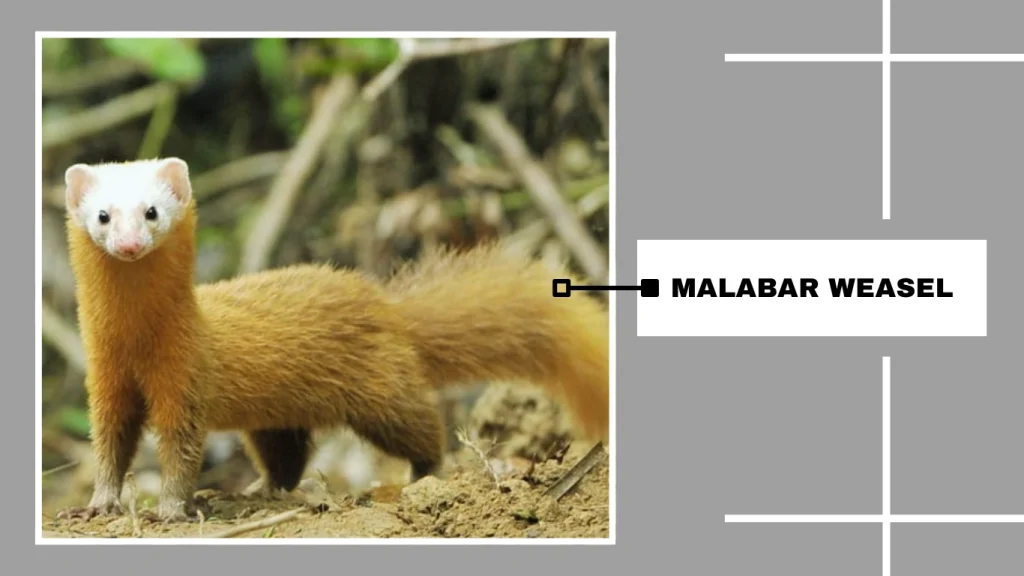
The Malabar Weasel is a rare and little-known species native to the Western Ghats of India, recognized for its unique adaptations to dense forest habitats.
Identification
- Length: Approximately 12–14 inches (including tail)
- Weight: Estimated 8–14 ounces
- Color: Dark brown to black upper parts with a lighter, creamy underside
- Tail: Bushy and relatively long
Habitat and Range
Endemic to the Western Ghats mountain range in southwestern India. Prefers dense tropical forests and remote, undisturbed areas.
Diet and Feeding Habits
Likely preys on small mammals, birds, reptiles, and insects, though detailed studies are lacking.
Behavior and Traits
Nocturnal and solitary. Due to its elusive nature and limited distribution, little is known about its ecology and population status. It is considered rare and possibly threatened by habitat loss.