




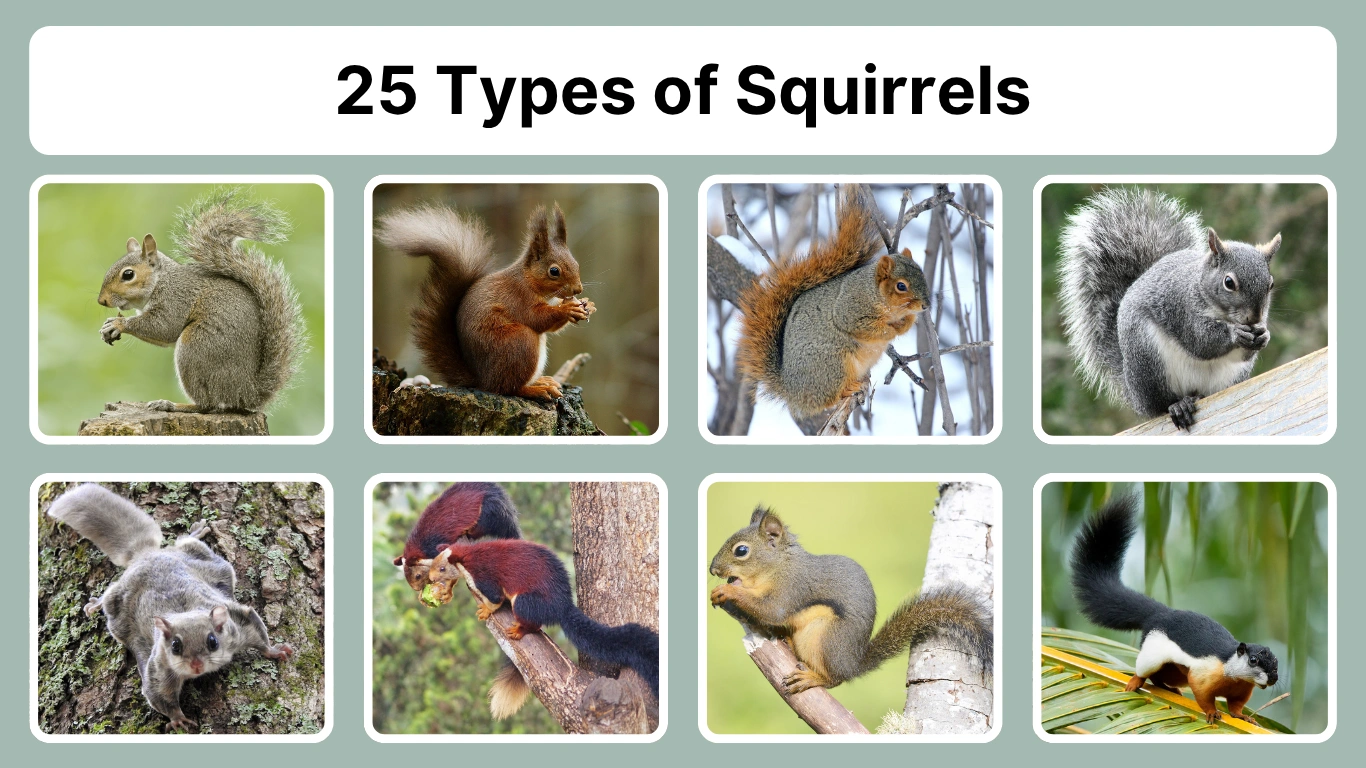
Squirrels are one of the most diverse and fascinating members of the rodent family, found on nearly every continent. From tiny tree dwellers to bold ground burrowers, these agile creatures come in a wide range of sizes, colors, and lifestyles. They live in forests, deserts, cities, and even high in the Himalayas—gliding between trees, digging tunnels, or foraging in backyards.
In this detailed guide, you’ll explore 25 unique types of squirrels from around the world. Each entry highlights their identification traits, habitat preferences, diets, and behaviors—from the common Eastern Gray Squirrel to exotic species like the Indian Giant Squirrel and the elusive Least Pygmy Squirrel. Whether you’re a wildlife enthusiast or simply curious about these bushy-tailed animals, this collection offers an in-depth look at the squirrel kingdom’s richness and variety.
1. Eastern Gray Squirrel
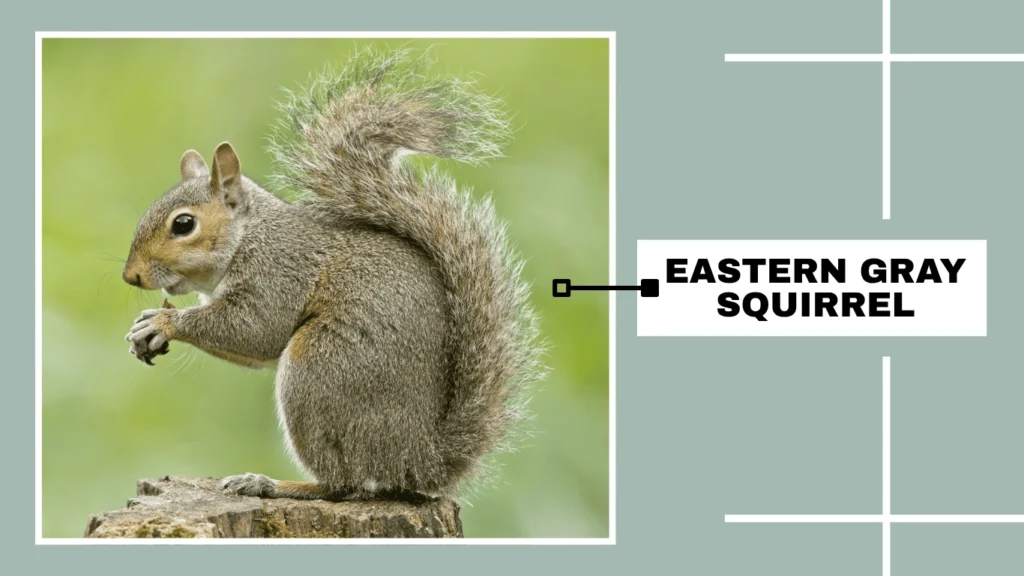
The Eastern Gray Squirrel (Sciurus carolinensis) is one of the most familiar and widespread squirrel species in North America. Known for its adaptability and bold behavior, this squirrel thrives in both urban and forested environments, often seen foraging in parks, backyards, and wooded areas.
Identification
- Size: 9–11 inches in body length (excluding tail)
- Tail Length: 7–10 inches
- Color: Gray fur with a white underside; may have reddish or brownish tints
- Ears: Medium-sized with minimal tufts
- Weight: 400–600 grams
Natural Habitat and Range
Eastern Gray Squirrels are native to eastern and midwestern United States and southern Canada but have also been introduced to parts of Europe and western U.S. They inhabit deciduous and mixed forests, suburban neighborhoods, city parks, and gardens.
Diet and Feeding Habits
They are omnivorous, primarily feeding on nuts, seeds, berries, and buds. They also consume fungi, bird eggs, insects, and occasionally small amphibians. Gray squirrels are known for burying acorns and other food items, helping in forest regeneration through forgotten caches.
Behavior and Activity
Eastern Gray Squirrels are diurnal and active year-round, with peak activity in early morning and late afternoon. They build leafy nests, called dreys, in trees and may also nest in tree hollows. Known for their agility and intelligence, they can leap long distances, solve food puzzles, and adapt quickly to human environments.
2. American Red Squirrel
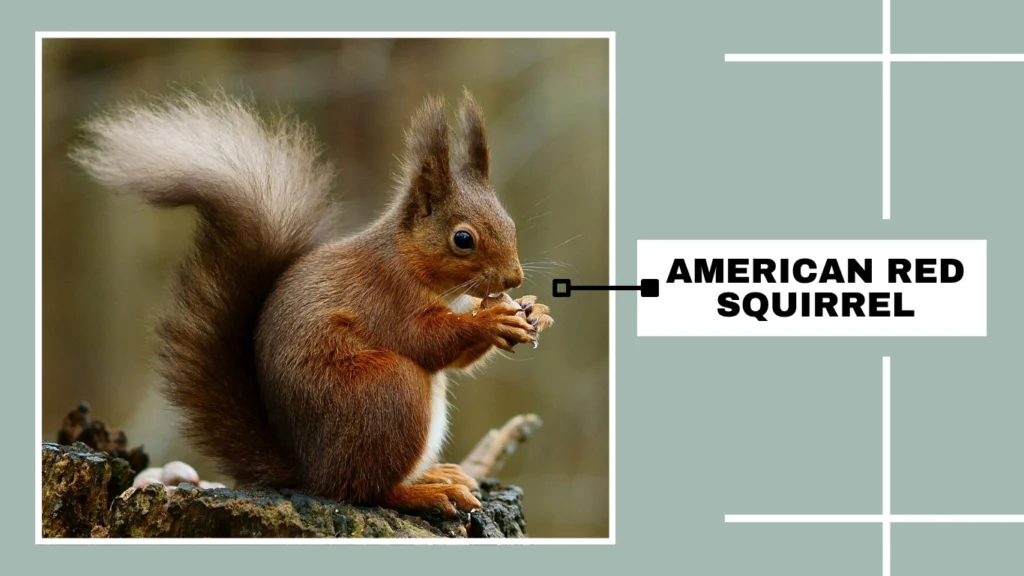
The American Red Squirrel (Tamiasciurus hudsonicus) is a small, territorial tree squirrel found throughout coniferous forests in North America. Known for its fiery temperament and loud chatter, it is often heard before it is seen.
Identification
- Size: 7–9 inches in body length
- Tail Length: 4–6 inches
- Color: Reddish-brown back with a white belly; black line separating the two
- Ears: Small with slight winter tufts
- Weight: 200–250 grams
Natural Habitat and Range
Red squirrels are common in boreal and mixed coniferous forests across Canada, Alaska, and the northern United States. They prefer areas rich in pine, spruce, and fir trees.
Diet and Feeding Habits
Their diet includes pine seeds, nuts, mushrooms, fruits, and tree buds. Red squirrels are known for creating large food caches, called middens, where they store cones and seeds for winter. They also eat bird eggs and occasionally insects.
Behavior and Activity
Highly territorial and vocal, red squirrels defend their food sources aggressively. They are solitary and diurnal, often seen darting along tree branches or leaping across forest floors. Their loud trilling calls serve as alarms and territory warnings.
3. Fox Squirrel
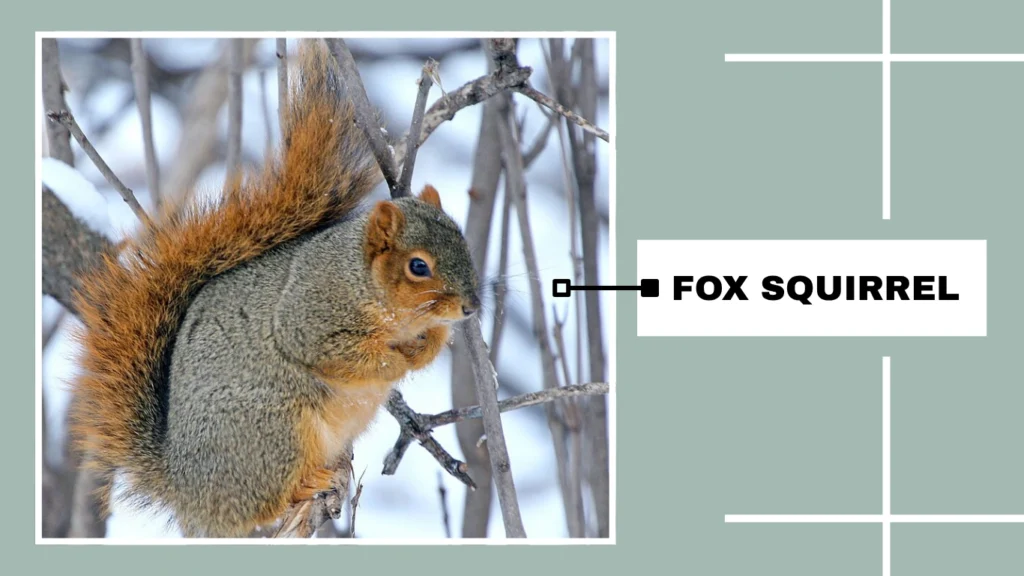
The Fox Squirrel (Sciurus niger) is the largest tree squirrel in North America. Recognized by its rusty fur and bushy tail, this squirrel is a common sight in woodlands and urban areas across the eastern and central U.S.
Identification
- Size: 10–15 inches in body length
- Tail Length: 10–15 inches
- Color: Reddish-brown, gray, or blackish, often with a mix of colors
- Ears: Medium-sized with little to no tuft
- Weight: 500–1,000 grams
Natural Habitat and Range
Fox squirrels prefer open woodlands, oak and hickory forests, and urban areas with scattered trees. Their range includes the eastern and central United States, as well as parts of the West and Mexico due to introductions.
Diet and Feeding Habits
They feed on acorns, hickory nuts, walnuts, fruit, seeds, corn, and fungi. Insects and bird eggs may also be eaten occasionally. Like other tree squirrels, they bury nuts and play a role in forest regeneration.
Behavior and Activity
Fox squirrels are solitary and diurnal. They build large, leafy nests in tree branches or use tree cavities. Despite their size, they are agile climbers and capable of long leaps. In urban settings, they adapt easily to feeders and human activity.
4. Western Gray Squirrel
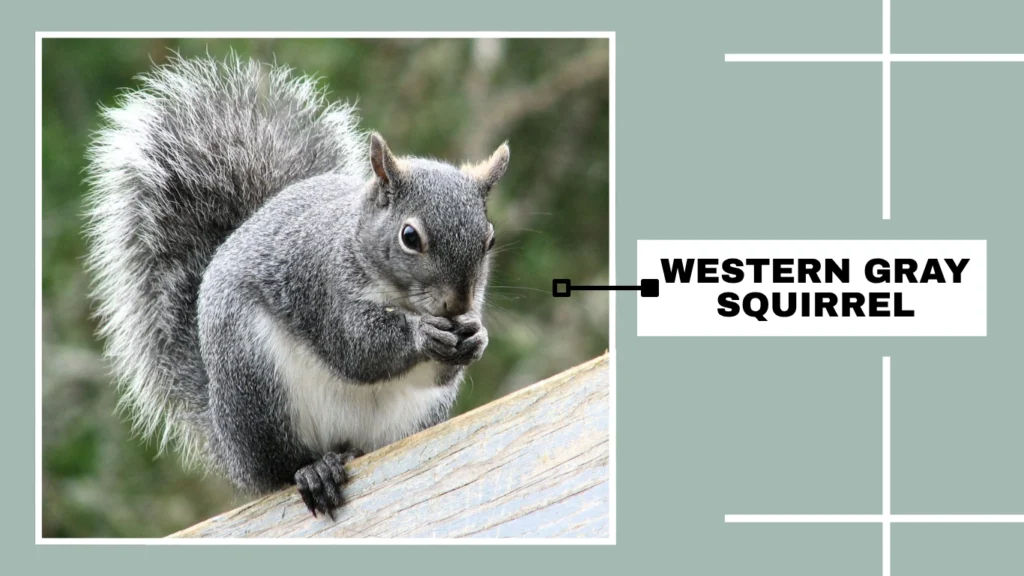
The Western Gray Squirrel (Sciurus griseus) is a large, bushy-tailed tree squirrel native to the western United States. Known for its striking silver-gray coat and shy nature, it is often seen high in the canopy of oak and pine forests.
Identification
- Size: 9–12 inches in body length
- Tail Length: 10–12 inches
- Color: Silvery-gray back with pure white underparts
- Ears: Large and rounded without tufts
- Weight: 450–950 grams
Natural Habitat and Range
Western Gray Squirrels are found in California, Oregon, and parts of Washington, often in oak woodlands, pine forests, and mixed conifer zones. They prefer mature forests with dense canopy cover.
Diet and Feeding Habits
Their diet consists of acorns, pine nuts, fungi, berries, and seeds. They also eat bark and green vegetation when other food is scarce. Like other squirrels, they bury food for later retrieval, helping regenerate forests.
Behavior and Activity
These squirrels are solitary and wary, often avoiding human contact. They are most active during early morning and late afternoon. Western Gray Squirrels build large nests in trees and spend much of their time off the ground. Their slow, graceful movement through the canopy contrasts with the twitchy energy of more common squirrels.
5. Southern Flying Squirrel
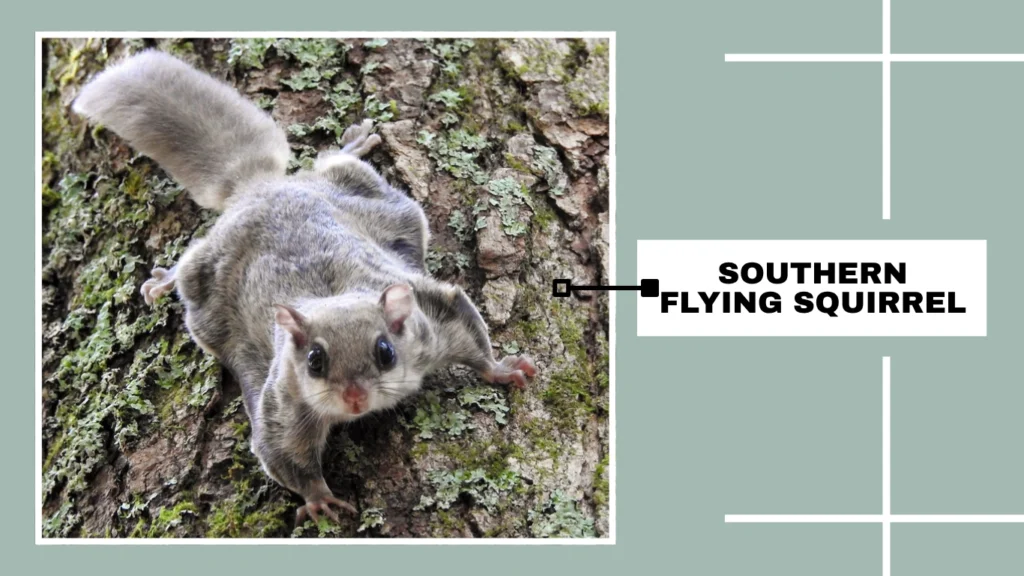
The Southern Flying Squirrel (Glaucomys volans) is a small, nocturnal glider found in eastern North America. Despite its name, it doesn’t fly but glides from tree to tree using a flap of skin called the patagium.
Identification
- Size: 5–6 inches in body length
- Tail Length: 4–5 inches
- Color: Soft grayish-brown fur with white underparts
- Eyes: Large and black, adapted for night vision
- Weight: 50–85 grams
Natural Habitat and Range
These squirrels inhabit deciduous and mixed forests throughout the eastern U.S., parts of southeastern Canada, and Mexico. They prefer wooded areas with mature trees for nesting and gliding.
Diet and Feeding Habits
Southern Flying Squirrels eat nuts, seeds, berries, fungi, insects, and bird eggs. They are known for caching food in tree cavities or bark crevices, especially in preparation for winter.
Behavior and Activity
They are social and often nest in groups, especially in colder months. Active at night, they glide silently from tree to tree using their skin flaps. Their glides can span up to 150 feet. They are rarely seen due to their nocturnal habits but are highly agile and curious animals.
6. Northern Flying Squirrel

The Northern Flying Squirrel (Glaucomys sabrinus) is a nocturnal gliding squirrel found in boreal and coniferous forests across northern North America. It is slightly larger than its southern cousin and plays an important role in forest ecology.
Identification
- Size: 5.5–6.5 inches in body length
- Tail Length: 4.5–5.5 inches
- Color: Light brown to cinnamon upper body with grayish-white underparts
- Eyes: Large and dark for night vision
- Weight: 75–140 grams
Natural Habitat and Range
Northern Flying Squirrels inhabit dense coniferous and mixed forests across Canada, Alaska, and the northern United States, including the Pacific Northwest and Appalachian Mountains. They nest in tree cavities, old woodpecker holes, and leaf nests.
Diet and Feeding Habits
Their diet includes fungi (especially truffles), lichens, seeds, nuts, berries, and occasionally insects and bird eggs. They are one of the few animals that help disperse mycorrhizal fungi, crucial for healthy forest ecosystems.
Behavior and Activity
These squirrels are nocturnal and glide between trees using their patagium. Glides can reach distances of 100–150 feet. They are social in winter and may nest communally to conserve warmth. Silent, fast, and rarely seen, they are important indicators of forest health.
7. Indian Giant Squirrel

The Indian Giant Squirrel (Ratufa indica), also known as the Malabar Giant Squirrel, is a large, vividly colored tree squirrel native to the forests of India. Its striking appearance and acrobatic movements make it one of the most visually stunning squirrels in the world.
Identification
- Size: 10–18 inches in body length
- Tail Length: 14–24 inches
- Color: Multi-colored fur with combinations of deep maroon, beige, rust, and cream
- Ears: Small and rounded with tufts
- Weight: 1.5–2 kilograms
Natural Habitat and Range
This squirrel is found in the tropical and deciduous forests of peninsular India, especially the Western Ghats. It prefers tall, dense canopies where it can move with ease and avoid predators.
Diet and Feeding Habits
The Indian Giant Squirrel feeds on fruits, nuts, seeds, flowers, bark, and insects. It uses its powerful jaw muscles to crack hard shells and often caches food in tree hollows.
Behavior and Activity
It is solitary and diurnal, active mostly in the early morning and late afternoon. Agile and quick, it leaps across large gaps between tree limbs. It rarely descends to the ground and builds large spherical nests of leaves and twigs high in the treetops.
8. Malabar Giant Squirrel
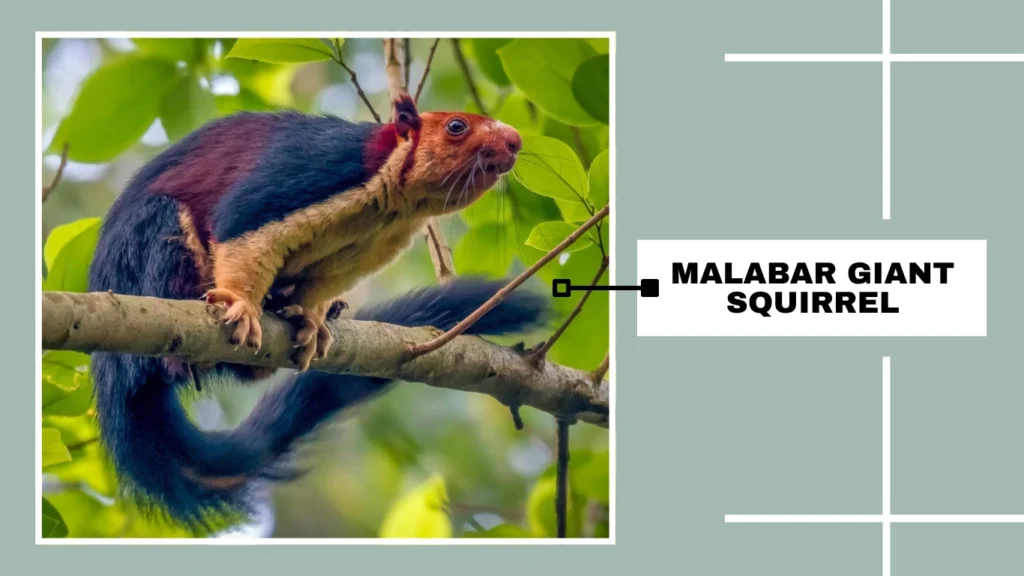
The Malabar Giant Squirrel (Ratufa indica), often used interchangeably with the Indian Giant Squirrel, is actually a distinct subspecies within the same species group. It is known for its vibrant fur and large size, making it one of the most colorful mammals in the world.
Identification
- Size: 10–18 inches in body length
- Tail Length: 16–24 inches
- Color: Rich blends of dark brown, maroon, cream, and black
- Ears: Small with short tufts
- Weight: 1.5–2 kilograms
Natural Habitat and Range
This squirrel is native to the moist deciduous and tropical forests of southern India, particularly in the Western Ghats and surrounding regions. It lives exclusively in treetops, avoiding ground-level threats.
Diet and Feeding Habits
It consumes a wide variety of plant materials including fruits, seeds, flowers, and bark. Occasionally, it may eat insects or bird eggs. It forages mostly in the upper canopy and may store food in tree crevices.
Behavior and Activity
The Malabar Giant Squirrel is solitary, shy, and rarely descends to the ground. It builds large nests of leaves and twigs, often several feet wide. Agile and strong, it can leap over 20 feet between trees and uses its long tail for balance during jumps.
9. Japanese Squirrel

The Japanese Squirrel (Sciurus lis) is an elegant tree squirrel endemic to the islands of Honshu and Shikoku in Japan. It is well-adapted to temperate woodlands and plays a key role in forest regeneration through seed dispersal.
Identification
- Size: 6.5–8 inches in body length
- Tail Length: 5–7 inches
- Color: Grayish-brown or reddish-brown fur with a white underside
- Ears: Prominent with tufts during winter
- Weight: 250–300 grams
Natural Habitat and Range
This squirrel is found in broadleaf and mixed forests in central and northern Japan. It prefers areas with tall trees such as Japanese cedar, oak, and beech.
Diet and Feeding Habits
Its diet includes nuts, seeds, berries, buds, and tree bark. It is especially fond of acorns and Japanese walnuts, which it caches during the autumn for winter use. Occasionally, it may nibble on fungi or tree sap.
Behavior and Activity
The Japanese Squirrel is diurnal and solitary. It builds nests in tree cavities or constructs dreys high in the branches. It is most active during early morning and late afternoon and uses vocalizations to signal threats or claim territory.
10. Eurasian Red Squirrel
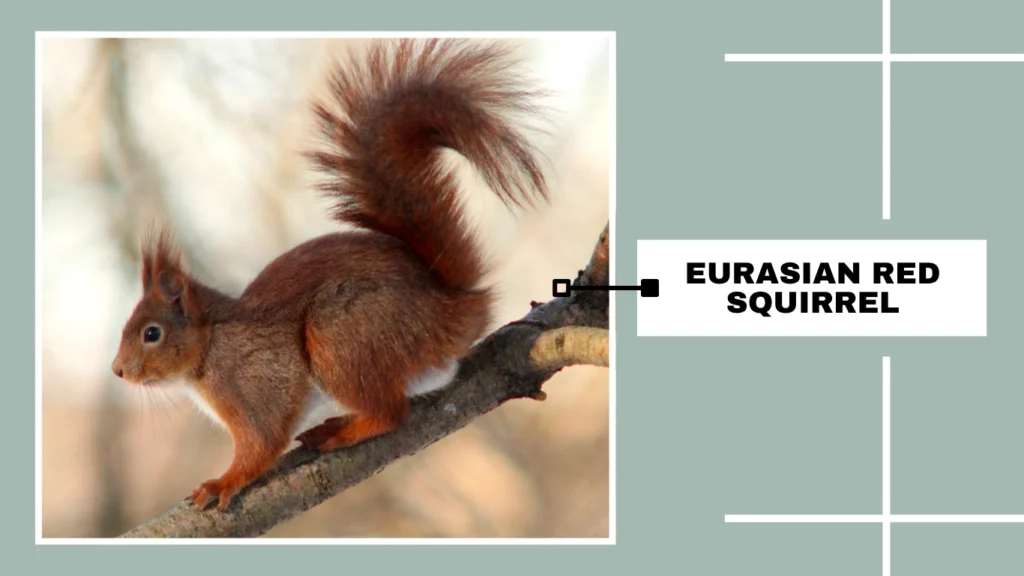
The Eurasian Red Squirrel (Sciurus vulgaris) is a tree-dwelling squirrel native to Europe and parts of Asia. Known for its reddish fur and tufted ears, this species has become a conservation concern in some regions due to competition with the invasive Eastern Gray Squirrel.
Identification
- Size: 7–9 inches in body length
- Tail Length: 6–8 inches
- Color: Reddish-brown to dark brown, with a white or pale belly; ear tufts more prominent in winter
- Ears: Pointed with seasonal tufts
- Weight: 250–350 grams
Natural Habitat and Range
Eurasian Red Squirrels inhabit coniferous, deciduous, and mixed forests throughout Europe and northern Asia. They are particularly dependent on mature woodland with a variety of nut- and cone-producing trees.
Diet and Feeding Habits
They primarily feed on seeds, nuts (especially pine cones and hazelnuts), fungi, fruits, and berries. In times of scarcity, they may consume bird eggs and insects. They often store food underground or in tree crevices for winter use.
Behavior and Activity
These squirrels are solitary and highly territorial. They are active during the day, especially in the early morning and late afternoon. Agile climbers, they move quickly through the tree canopy and build spherical nests called dreys using twigs, leaves, and moss.
11. Douglas Squirrel

The Douglas Squirrel (Tamiasciurus douglasii) is a small, vocal tree squirrel native to the Pacific Northwest of North America. It is known for its energetic behavior and loud, chattering calls that echo through conifer forests.
Identification
- Size: 6.5–8 inches in body length
- Tail Length: 5–6 inches
- Color: Reddish-brown to dark brown with orange underparts and white eye rings
- Ears: Small with occasional seasonal tufts
- Weight: 150–300 grams
Natural Habitat and Range
Douglas Squirrels are found in coniferous and mixed forests from California to British Columbia. They prefer mature stands of pine, fir, and cedar where they can find ample food and nesting sites.
Diet and Feeding Habits
Their diet includes conifer seeds, nuts, acorns, berries, mushrooms, and occasionally bird eggs. They create large cone-scale middens (food storage piles) at the base of trees to store food for winter.
Behavior and Activity
Douglas Squirrels are diurnal and highly territorial. They are known for their loud vocalizations and aggressive defense of their territory. They build nests in tree cavities or create dreys from shredded bark and moss. Agile and curious, they are often seen darting up tree trunks or leaping between branches.
12. Prevost’s Squirrel

Prevost’s Squirrel (Callosciurus prevostii), also known as the Asian Tri-colored Squirrel, is a strikingly colorful species found in Southeast Asia. Its vivid coat and graceful movements make it one of the most visually remarkable squirrels in the world.
Identification
- Size: 7–11 inches in body length
- Tail Length: 10–12 inches
- Color: Black back, white sides, and reddish-orange belly; some regional variation
- Ears: Small and rounded
- Weight: 250–400 grams
Natural Habitat and Range
Prevost’s Squirrel is found in tropical and subtropical forests of Malaysia, Thailand, Borneo, and surrounding islands. It lives primarily in the forest canopy and prefers lowland rainforests and plantations with tall trees.
Diet and Feeding Habits
Its diet consists of fruits, nuts, seeds, buds, and occasionally insects or bird eggs. It is a key seed disperser in its native habitat, helping maintain forest diversity.
Behavior and Activity
This squirrel is diurnal and arboreal, spending most of its time in trees. It is solitary and cautious, moving with great speed and precision. It builds nests in tree hollows or leafy branches and is rarely seen on the ground.
13. African Pygmy Squirrel
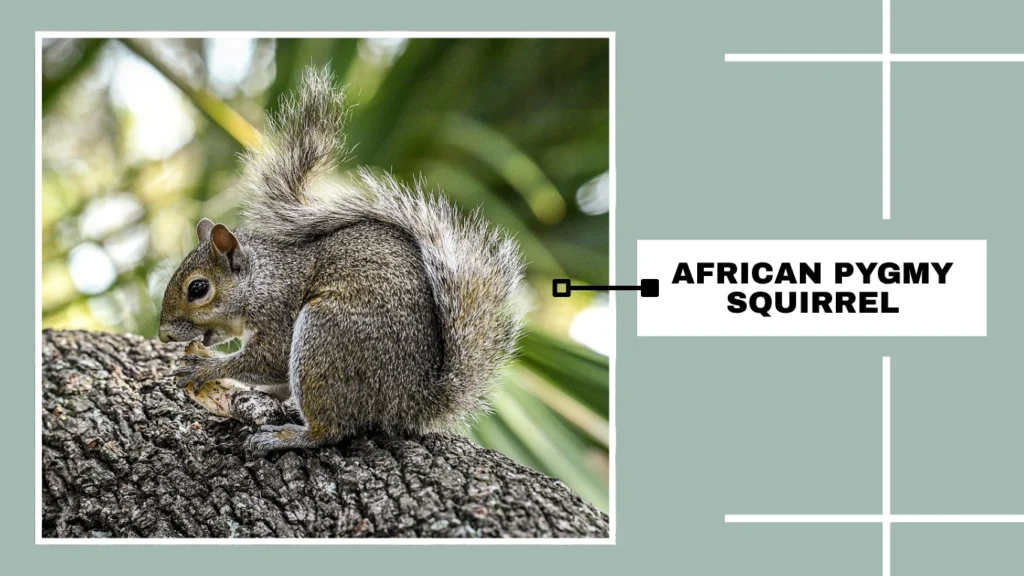
The African Pygmy Squirrel (Myosciurus pumilio) is the smallest known squirrel species in the world. Native to the tropical rainforests of Central Africa, it is secretive and rarely observed in the wild.
Identification
- Size: 2.3–3 inches in body length
- Tail Length: 1.5–2 inches
- Color: Light brown or reddish fur with paler underparts
- Ears: Tiny and rounded
- Weight: 15–20 grams
Natural Habitat and Range
This tiny squirrel is found in the dense, humid forests of Cameroon, Equatorial Guinea, and Gabon. It lives at low to mid canopy levels, usually among vines and moss-covered trees.
Diet and Feeding Habits
The African Pygmy Squirrel feeds on bark, fungi, lichens, and possibly small insects. It scrapes at tree bark with its sharp claws and teeth in search of food. Unlike many other squirrels, it does not appear to store food.
Behavior and Activity
It is diurnal and extremely agile. Its small size allows it to navigate the finest twigs and branches. Often mistaken for a mouse, it uses quick, darting movements to escape threats and blend into its environment. Very little is known about its social structure due to its elusive behavior.
14. Northern Palm Squirrel
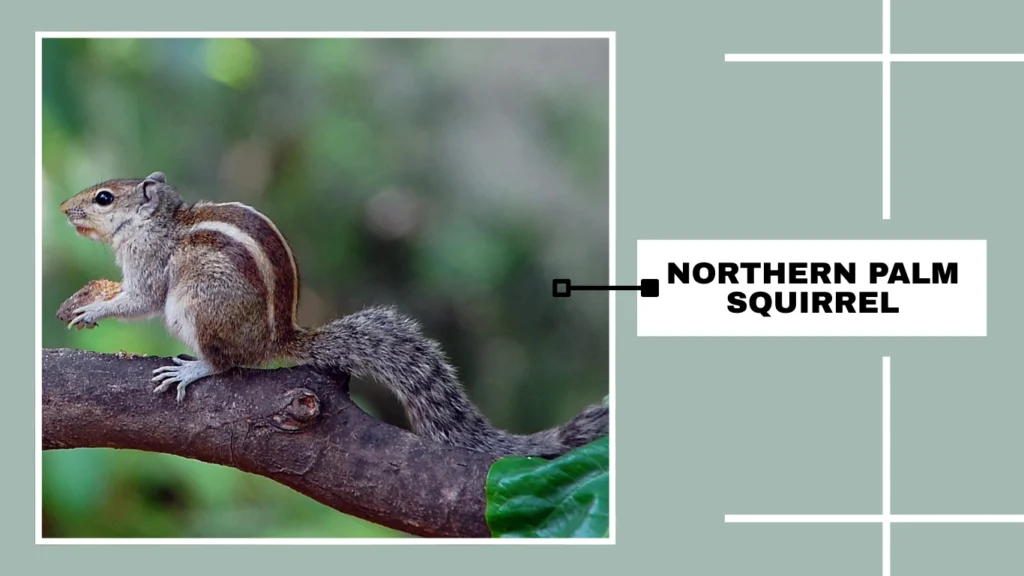
The Northern Palm Squirrel (Funambulus pennantii), also known as the Five-striped Palm Squirrel, is a small, active species native to the Indian subcontinent. It is often seen scurrying along tree trunks and walls in both urban and rural settings.
Identification
- Size: 5–7 inches in body length
- Tail Length: 5–6 inches
- Color: Gray-brown back with five distinct white stripes running from head to tail
- Ears: Short and rounded
- Weight: 100–150 grams
Natural Habitat and Range
This species is widely distributed across India, Nepal, and parts of Pakistan and Bangladesh. It thrives in gardens, forests, farmlands, and cities, adapting well to human presence.
Diet and Feeding Habits
Northern Palm Squirrels feed on fruits, nuts, seeds, grains, and occasionally insects. They are often seen near temples and homes, where they may eat leftover food or offerings.
Behavior and Activity
They are diurnal, very active, and often vocal with sharp chirps and squeaks. These squirrels build nests in tree hollows or roof spaces and are known for their acrobatic movements. They can be seen running along fences, wires, and branches with ease.
15. Persian Squirrel

The Persian Squirrel (Sciurus anomalus), also known as the Caucasian Squirrel, is a medium-sized tree squirrel native to parts of the Middle East. It is less commonly seen than some of its relatives but plays an important role in seed dispersal.
Identification
- Size: 7–9 inches in body length
- Tail Length: 6–8 inches
- Color: Reddish-brown to grayish with a pale or yellowish underside
- Ears: Rounded, with slight tufts in colder seasons
- Weight: 250–400 grams
Natural Habitat and Range
Persian Squirrels are found in Turkey, Iran, Syria, Lebanon, and parts of the Caucasus region. They inhabit mixed deciduous and coniferous forests, especially oak and pine woodlands.
Diet and Feeding Habits
They feed on acorns, walnuts, pine seeds, fruits, and occasionally small insects or bird eggs. They store food in tree hollows or bury it in the ground to retrieve during lean seasons.
Behavior and Activity
Persian Squirrels are diurnal and generally solitary. They are cautious and agile, often staying high in the trees. Nests are built in hollows or made of leaves in dense foliage. While shy around humans, they are curious and observant in natural settings.
16. Belding’s Ground Squirrel

Belding’s Ground Squirrel (Urocitellus beldingi) is a burrowing squirrel species native to the western United States. Often found in mountain meadows and open grassy areas, it is known for its social behavior and seasonal hibernation.
Identification
- Size: 8–11 inches in body length
- Tail Length: 2.5–4 inches
- Color: Grayish-brown back with a reddish or buffy patch on the nose and shoulders
- Tail: Short and bushy with a darker tip
- Weight: 200–400 grams
Natural Habitat and Range
This species inhabits alpine meadows, sagebrush flats, and grassy valleys at high elevations in California, Nevada, Oregon, and Idaho. It prefers moist environments with soft soil for burrowing.
Diet and Feeding Habits
Belding’s Ground Squirrels feed on grasses, seeds, flowers, and insects. They are opportunistic eaters and build up fat reserves in summer to prepare for hibernation.
Behavior and Activity
They are active during the warmer months and enter hibernation in late summer or early fall, often remaining underground for 6–8 months. They live in colonies and communicate with loud chirps to warn of predators. Burrows are used for sleeping, raising young, and escaping threats.
17. Richardson’s Ground Squirrel
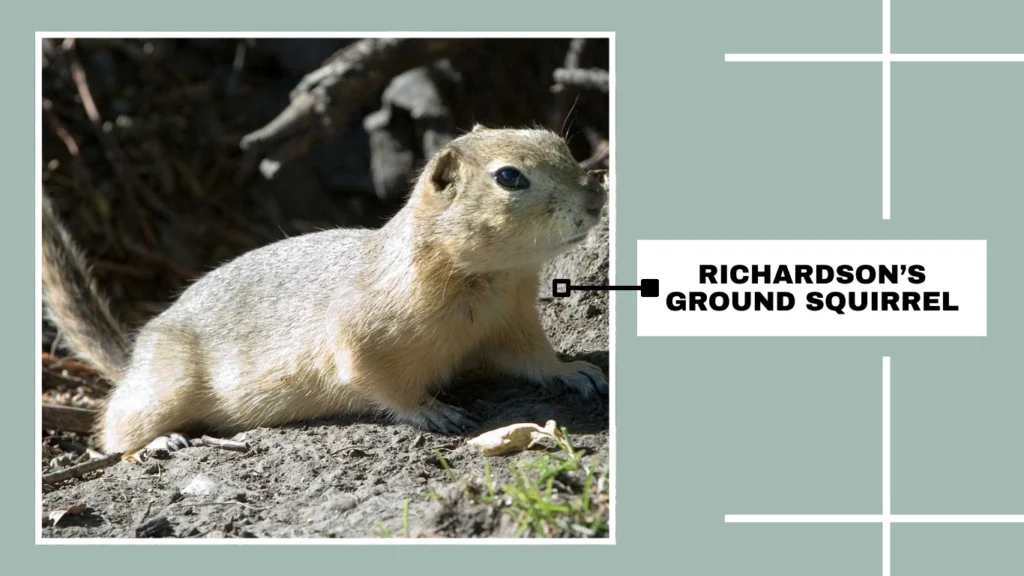
Richardson’s Ground Squirrel (Urocitellus richardsonii) is a prairie-dwelling squirrel native to central North America. Known for its alert posture and whistling calls, it is sometimes mistaken for a prairie dog.
Identification
- Size: 9–11 inches in body length
- Tail Length: 3–4 inches
- Color: Tan to grayish-brown with faint spotting and a pale belly
- Tail: Short and flat with a slightly darker tip
- Weight: 300–500 grams
Natural Habitat and Range
These squirrels are found across the northern Great Plains in the U.S. and Canada, including parts of Montana, North Dakota, Alberta, and Saskatchewan. They prefer open grasslands, farmlands, and roadsides.
Diet and Feeding Habits
They eat grasses, seeds, clover, and cultivated crops. Occasionally, they consume insects and small vertebrates. They can become agricultural pests in some areas due to crop damage and burrowing.
Behavior and Activity
Richardson’s Ground Squirrels are social and live in colonies with interconnected burrows. They are diurnal and hibernate during winter. When alarmed, they stand upright and emit a high-pitched whistle. Their burrow systems include multiple entrances and chambers for food storage and nesting.
18. Thirteen-lined Ground Squirrel

The Thirteen-lined Ground Squirrel (Ictidomys tridecemlineatus) is a small, burrowing rodent named for the distinct pattern of alternating stripes and spots on its back. It is a common species across central North America’s grasslands and prairies.
Identification
- Size: 6–12 inches in body length (including tail)
- Tail Length: 3–5 inches
- Color: Golden-brown to tan with 13 alternating light and dark stripes running the length of its back, some with spots
- Tail: Thin and slightly bushy
- Weight: 100–200 grams
Natural Habitat and Range
This species is found across the Great Plains and Midwest regions of the U.S. and southern Canada. It prefers dry, open habitats such as short-grass prairies, golf courses, and grassy roadsides.
Diet and Feeding Habits
Thirteen-lined Ground Squirrels eat seeds, grasses, fruits, insects, and even small vertebrates. They are opportunistic feeders and consume what is seasonally available. They cache food near their burrows to eat before hibernation.
Behavior and Activity
They are solitary and diurnal, with peak activity during warm daylight hours. Known for their speed and agility, they often freeze when alarmed, then dash to the nearest burrow. They hibernate for over half the year, from late fall to early spring.
19. Cape Ground Squirrel
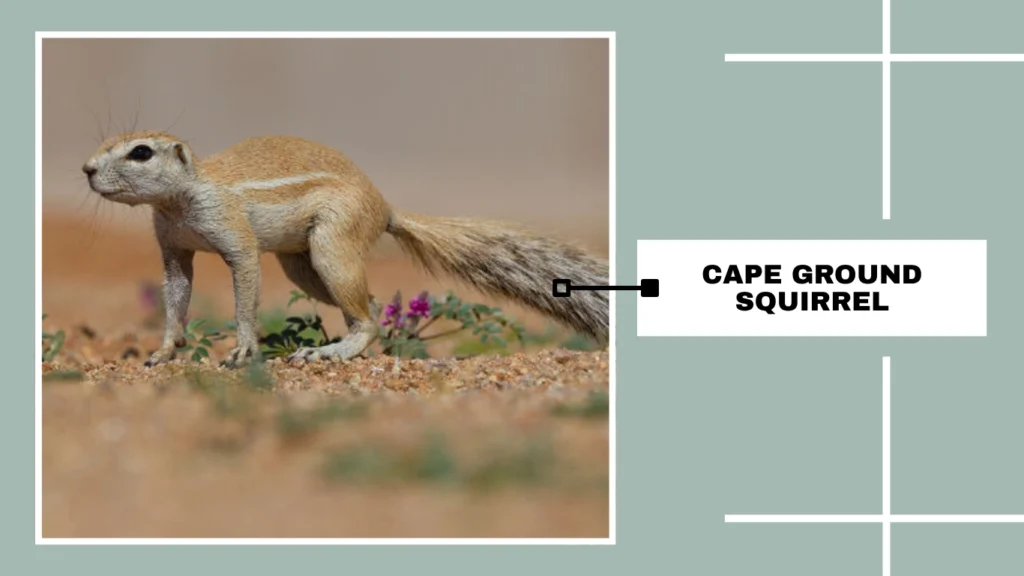
The Cape Ground Squirrel (Xerus inauris) is a highly social and burrowing species found in the dry regions of southern Africa. Its bold white stripes and daytime activity make it easy to observe in its natural habitat.
Identification
- Size: 8–10 inches in body length
- Tail Length: 7–10 inches
- Color: Reddish-brown fur with a white stripe down each side of the body and a bushy tail with white edging
- Tail: Long and flat, often used as a sunshade
- Weight: 450–700 grams
Natural Habitat and Range
Cape Ground Squirrels inhabit arid savannas, deserts, and scrublands of South Africa, Botswana, and Namibia. They dig extensive burrow systems in sandy soils to escape the heat and predators.
Diet and Feeding Habits
They feed on roots, bulbs, grasses, seeds, and occasionally insects. Water is mainly obtained from their food, making them well-suited to arid environments.
Behavior and Activity
These squirrels are diurnal and highly social, living in colonies that share interconnected burrows. They use their tails to shade themselves from the sun and communicate through tail flicking and vocalizations. They do not hibernate, remaining active year-round in their warm climate.
20. Rock Squirrel

The Rock Squirrel (Otospermophilus variegatus) is one of the largest ground squirrels in North America and is commonly found in rocky canyons, desert cliffs, and scrublands. It resembles a tree squirrel but is mostly terrestrial.
Identification
- Size: 10–12 inches in body length
- Tail Length: 7–9 inches
- Color: Grizzled gray and brown back with a lighter belly; bushy tail with black and white speckling
- Ears: Prominent and rounded
- Weight: 450–900 grams
Natural Habitat and Range
Rock Squirrels inhabit rocky outcrops, cliffs, canyons, and desert regions across the southwestern United States and Mexico. They prefer habitats with crevices and ledges for burrow entrances.
Diet and Feeding Habits
They are omnivorous, feeding on seeds, nuts, fruits, insects, eggs, and even small vertebrates. They are known to raid bird nests and are excellent food storers, caching supplies in crevices or burrows.
Behavior and Activity
Rock Squirrels are diurnal and typically live in colonies. They dig extensive burrow systems under rocks and ledges. Though active year-round, some populations may enter torpor or hibernation in colder months. They are highly alert and emit warning calls when predators are nearby.
21. Arizona Gray Squirrel

The Arizona Gray Squirrel (Sciurus arizonensis) is a rare and localized species found in riparian woodlands and mountain canyons in Arizona, New Mexico, and northern Mexico. It is easily confused with the Eastern Gray Squirrel but prefers higher elevation forests.
Identification
- Size: 8–10 inches in body length
- Tail Length: 9–11 inches
- Color: Gray body with a white belly and a full, bushy tail
- Ears: Rounded and often have a slight seasonal tuft
- Weight: 500–700 grams
Natural Habitat and Range
This squirrel lives in riparian zones and mixed deciduous forests at elevations between 1,500 and 2,500 meters. It favors sycamore, walnut, oak, and pine trees, especially near streams.
Diet and Feeding Habits
It feeds on nuts, fruits, seeds, berries, and buds. Walnuts and acorns are staple foods. It sometimes strips bark to get at sap and may raid bird nests for eggs or nestlings.
Behavior and Activity
The Arizona Gray Squirrel is solitary and diurnal, with peak activity in the morning and late afternoon. It nests in large leafy dreys or tree cavities and is shy around humans. It is considered a sensitive species due to habitat fragmentation and competition with introduced squirrels.
22. Albino Eastern Gray Squirrel
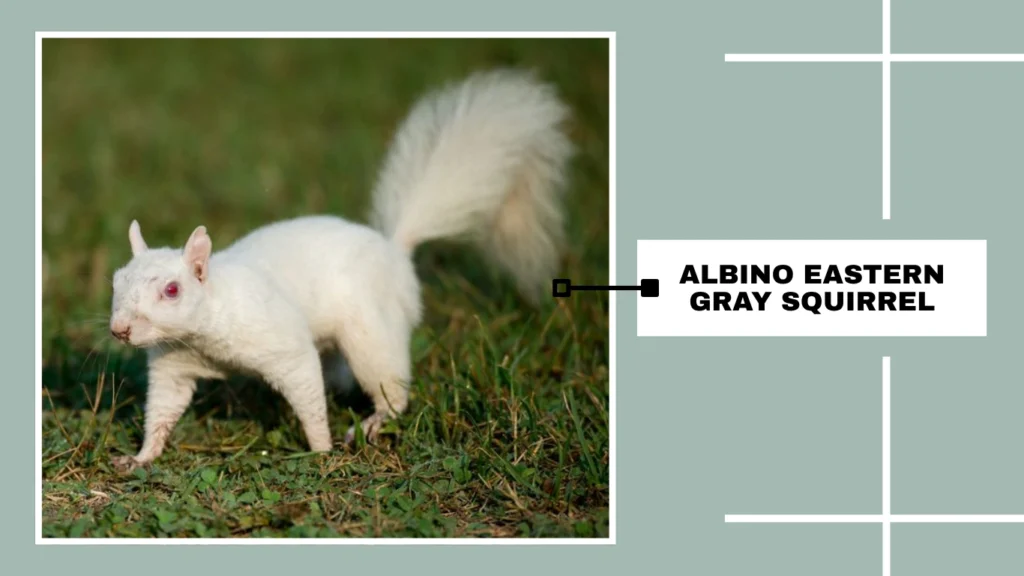
The Albino Eastern Gray Squirrel is a rare genetic variation of the common Eastern Gray Squirrel (Sciurus carolinensis). Unlike the more common leucistic (partially white) squirrels, true albinos have completely white fur and pink or red eyes due to a lack of melanin.
Identification
- Size: 9–11 inches in body length
- Tail Length: 7–10 inches
- Color: Pure white fur with pink or red eyes (true albinism)
- Ears: Medium-sized, no tufting
- Weight: 400–600 grams
Natural Habitat and Range
Albino Gray Squirrels can appear anywhere the standard Eastern Gray Squirrel is found—across eastern and central North America. However, they are very rare and typically exist only in isolated populations or urban parks where predators are fewer.
Diet and Feeding Habits
Their diet is identical to that of normal gray squirrels: nuts, seeds, fruits, buds, insects, and fungi. Like other squirrels, they cache food and are important seed dispersers.
Behavior and Activity
They behave just like typical gray squirrels—diurnal, agile, and solitary outside of the breeding season. However, their white coloration makes them more vulnerable to predators, which is why they are more frequently seen in protected or urban areas.
23. Himalayan Large-eared Flying Squirrel
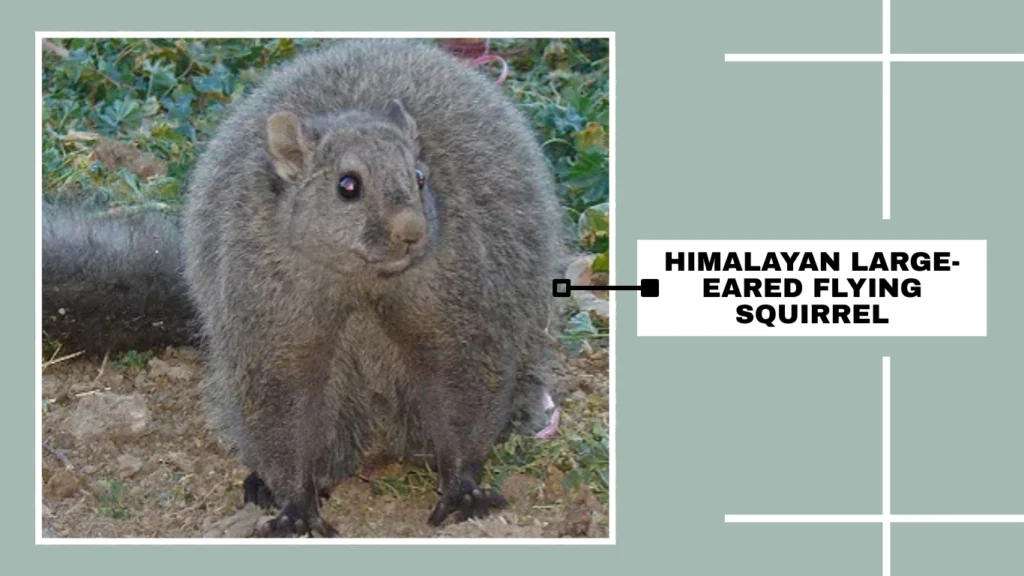
The Himalayan Large-eared Flying Squirrel (Priapomys leonardi) is a rarely seen gliding mammal native to high-altitude forests in parts of the eastern Himalayas. It was once classified under a different genus but was recently recognized as a distinct species.
Identification
- Size: 10–14 inches in body length
- Tail Length: 12–15 inches
- Color: Dark brown to grayish-brown with lighter underparts
- Ears: Very large and rounded, with prominent fur edging
- Weight: Approximately 400–600 grams
Natural Habitat and Range
This squirrel is found in high-altitude coniferous and mixed forests in northern Myanmar, Yunnan (China), and northeastern India. It is extremely elusive and often detected only through gliding movement or camera traps.
Diet and Feeding Habits
Its diet likely consists of fruits, seeds, bark, lichens, and insects, similar to other large flying squirrels. It may forage at night in the canopy and rarely comes to the ground.
Behavior and Activity
Nocturnal and arboreal, this squirrel glides between trees using its patagium. It is believed to be solitary and builds its nest in tree hollows. Due to its secretive nature and inaccessible habitat, very little is known about its detailed behavior.
24. Yellow-throated Marten (Misidentified as Squirrel)
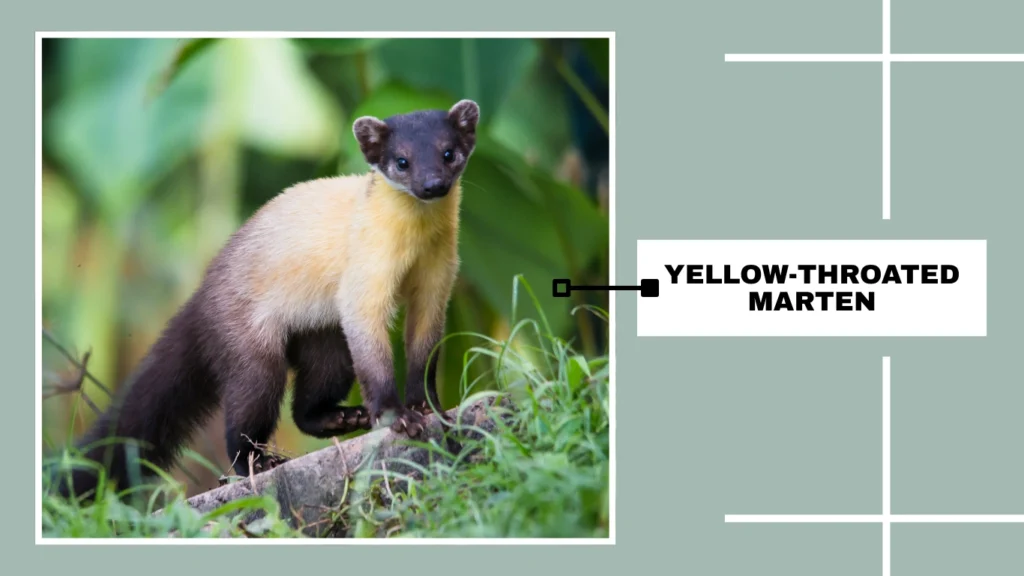
Although not a squirrel, the Yellow-throated Marten (Martes flavigula) is sometimes misidentified as a large squirrel due to its size, agility, and bright coloration when glimpsed in trees. It is a carnivorous mammal of the mustelid family, native to Asia.
Identification
- Size: 18–24 inches in body length
- Tail Length: 15–20 inches
- Color: Yellow-orange throat and chest, black legs, brown back, and a long bushy tail
- Ears: Short and rounded
- Weight: 2–5 kilograms
Natural Habitat and Range
Yellow-throated Martens are found in forests, grasslands, and mountainous areas across the Himalayas, China, Southeast Asia, and parts of Russia. They are strong climbers and often seen high in the trees.
Diet and Feeding Habits
They are omnivores, feeding on small mammals (including actual squirrels), birds, fruits, eggs, and insects. They are opportunistic and bold hunters, even capable of taking down prey larger than themselves.
Behavior and Activity
Active during the day (diurnal), they are fast-moving and often travel in pairs. Their ability to leap between trees and their bright coloring sometimes leads to confusion with unusually large or exotic squirrels.
25. Least Pygmy Squirrel
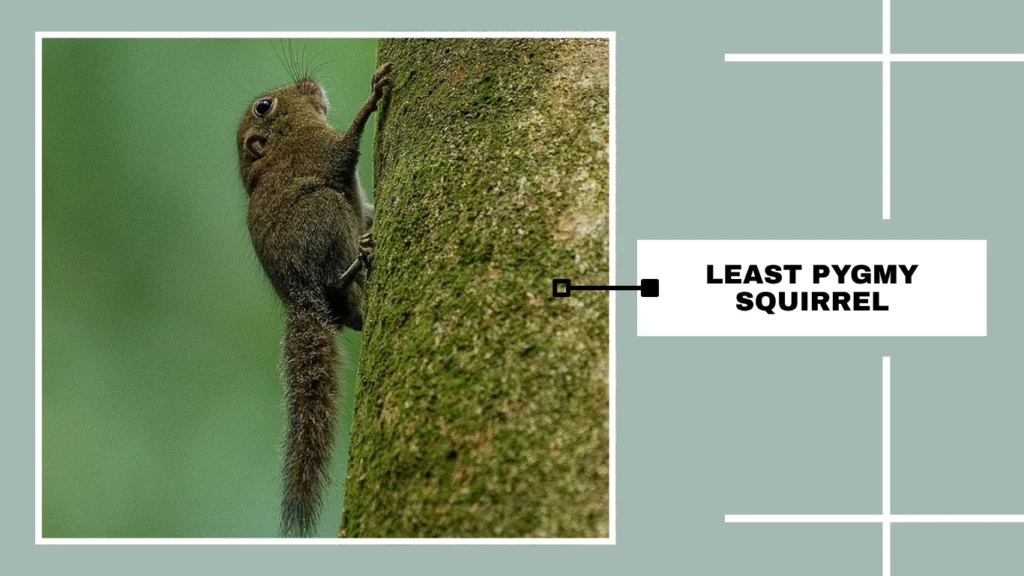
The Least Pygmy Squirrel (Exilisciurus exilis) is the smallest squirrel species in the world. Native to the rainforests of Borneo and parts of Sumatra, this squirrel is elusive and difficult to study due to its size and speed.
Identification
- Size: 2.4–3 inches in body length
- Tail Length: 2–2.5 inches
- Color: Brownish or grayish with faint stripes and a short fluffy tail
- Ears: Tiny and rounded
- Weight: 15–18 grams
Natural Habitat and Range
Found in lowland tropical rainforests, especially dense understory zones of Borneo and Sumatra. It prefers thick vegetation and is mostly observed in forest interiors.
Diet and Feeding Habits
The Least Pygmy Squirrel feeds on tree bark, mosses, fungi, lichens, and tiny insects. It forages by creeping along branches and vines, often unnoticed due to its small size and cryptic coloring.
Behavior and Activity
It is diurnal and solitary, spending most of its time in the lower forest canopy. It moves slowly and methodically compared to larger squirrels. Because of its secretive nature and size, it remains one of the least studied squirrel species in the world.