

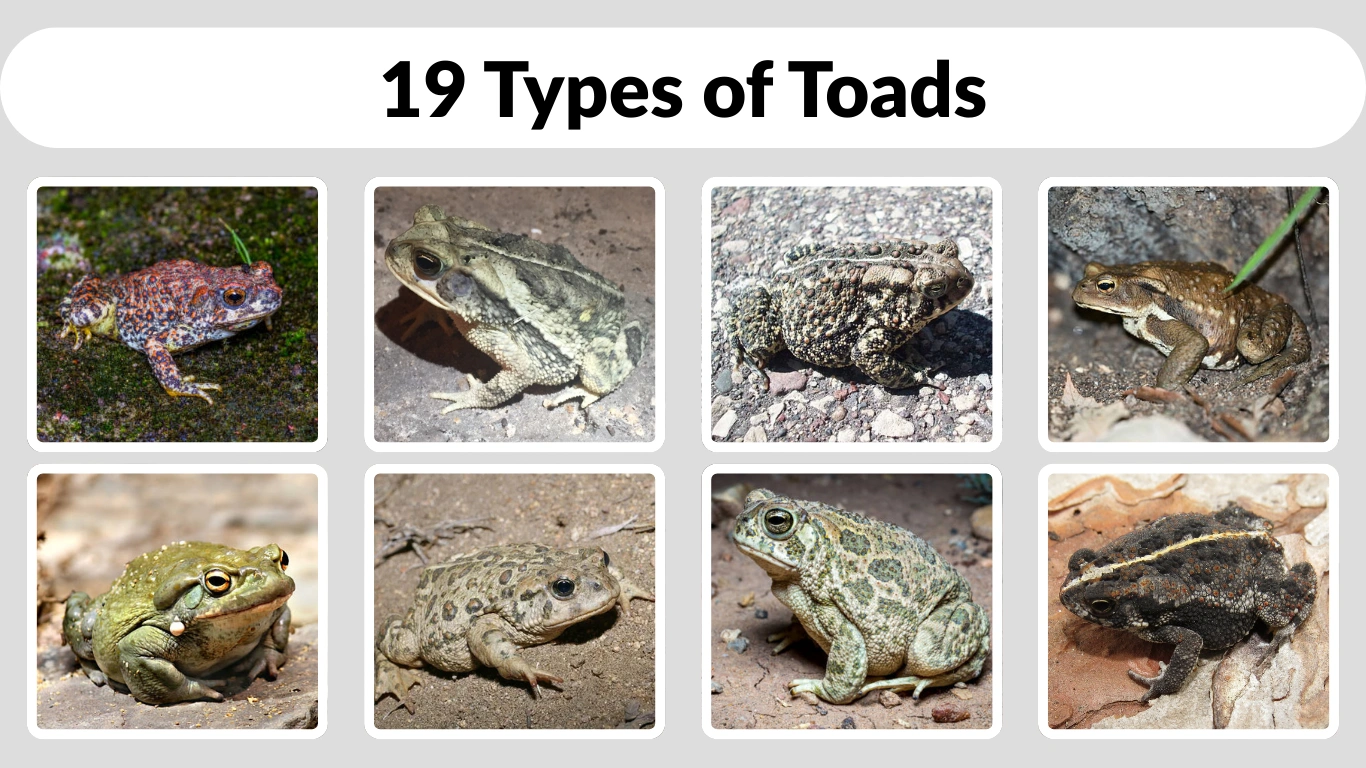
Toads are fascinating amphibians known for their warty skin, calm behavior, and important role in controlling insect populations. Found across deserts, forests, wetlands, and even urban areas, different toad species have adapted to survive in diverse environments. This guide explores 19 types of toads from around the world, highlighting their identification, habitat, behavior, diet, and life cycle in a clear and easy-to-understand format.
1. American Toad

The American Toad is one of the most common and well-known toads in North America. It is highly adaptable and can live in forests, gardens, wetlands, and suburban areas. This toad is especially active at night and is known for its distinctive trilling call during the breeding season.
Identification
- Medium-sized toad with a stout body
- Brown, gray, or olive skin color
- Dry, warty skin with dark blotches
- One or two warts per dark spot
- Cream or yellowish underside with dark speckles
- Large parotid glands behind the eyes
Habitat
American Toads are found across eastern and central North America. They prefer moist environments such as forests, grasslands, riverbanks, and wetlands but often adapt well to human-modified areas like gardens and parks.
Behavior
These toads are mostly nocturnal and spend daytime hours hiding under rocks, logs, or leaf litter. During the breeding season, males produce a long, musical trill to attract females. They hibernate during winter by burrowing underground.
Diet
The American Toad feeds mainly on insects and other small invertebrates. Its diet includes ants, beetles, worms, spiders, slugs, and snails, making it beneficial for controlling garden pests.
Life Cycle
Breeding occurs in spring in shallow freshwater bodies. Females lay long strings of eggs that hatch into tadpoles within a few days. Tadpoles transform into young toads in about 6–10 weeks, reaching maturity in two to three years.
2. Fowler’s Toad

Fowler’s Toad is a small to medium-sized toad commonly found in eastern North America. It is closely related to the American Toad but can be distinguished by its call, skin pattern, and habitat preferences. This species often thrives near sandy soils and open areas.
Identification
- Small to medium-sized body
- Gray, brown, or greenish-gray skin
- Dry, warty appearance
- Three or more warts within each dark spot
- Pale underside, usually unmarked
- Short legs and blunt snout
Habitat
Fowler’s Toad prefers sandy or loose soils and is commonly found near riverbanks, beaches, floodplains, grasslands, and open woodlands. It frequently lives close to freshwater sources but may wander into nearby fields and yards.
Behavior
This toad is primarily nocturnal and becomes active after sunset. During breeding season, males produce a short, nasal “waaa” call. Fowler’s Toad is less tolerant of cold compared to some other species and burrows underground during winter.
Diet
Its diet consists mainly of small insects and invertebrates such as ants, beetles, spiders, crickets, and worms. Fowler’s Toad is an effective natural pest controller in its ecosystem.
Life Cycle
Breeding usually occurs in late spring or early summer. Females lay eggs in long gelatinous strings in shallow water. Tadpoles develop quickly, transforming into juvenile toads within 4–8 weeks, with sexual maturity reached in about two years.
3. Cane Toad
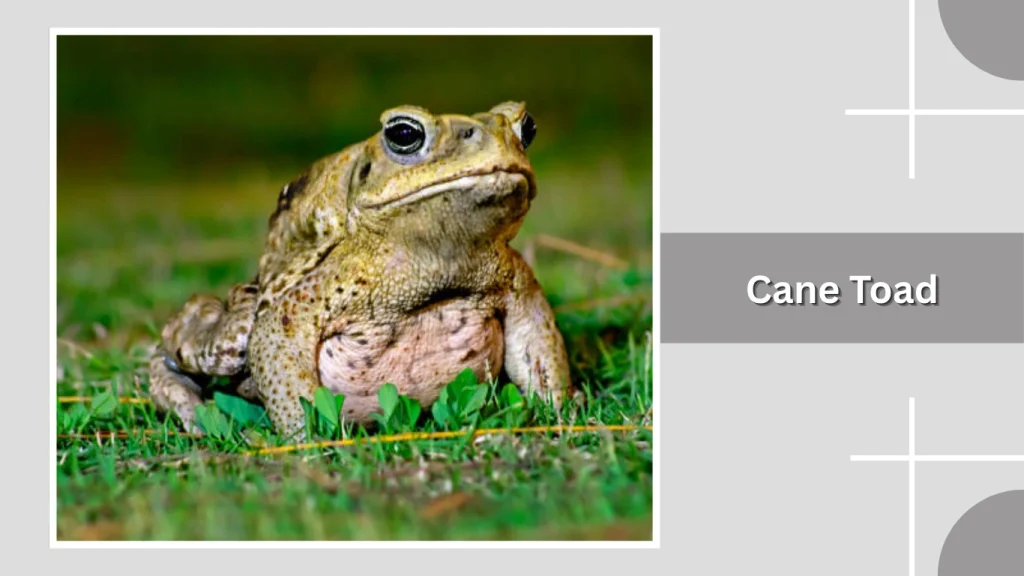
The Cane Toad is a large, highly adaptable toad best known for its invasive populations in many parts of the world. Originally native to Central and South America, it has spread widely due to human introduction and is notable for its toxic skin secretions.
Identification
- Very large and heavy-bodied toad
- Brown, gray, or reddish-brown coloration
- Thick, dry, and warty skin
- Prominent parotoid glands behind the eyes
- Broad head with bony ridges
- Creamy or yellowish underside
Habitat
Cane Toads occupy a wide range of habitats including grasslands, forests, wetlands, agricultural areas, and urban environments. They are commonly found near human settlements and water sources but can survive in relatively dry areas.
Behavior
This species is mostly nocturnal and becomes active after dusk. Cane Toads are aggressive feeders and can outcompete native species. When threatened, they release a milky toxin from their parotid glands, which can be harmful or fatal to predators.
Diet
Cane Toads are opportunistic feeders that consume insects, small reptiles, mammals, other amphibians, and even pet food. Their broad diet contributes to their success as an invasive species.
Life Cycle
Breeding can occur multiple times a year in warm climates. Females lay thousands of eggs in long strings in freshwater. Tadpoles develop rapidly, and young toads reach maturity within one to two years.
4. European Common Toad
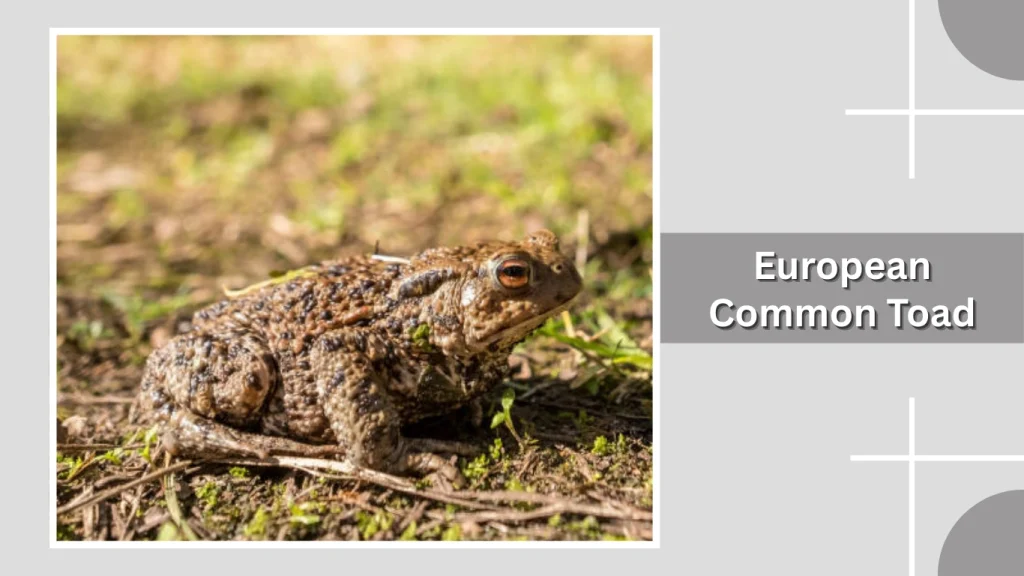
The European Common Toad is a widespread amphibian found across much of Europe. It is known for its slow movement, long lifespan, and strong homing instinct, often returning to the same breeding sites each year.
Identification
- Medium to large-sized toad
- Brown, olive, or grayish skin
- Dry, rough, and warty texture
- Copper or orange-colored eyes with horizontal pupils
- Short legs and a broad body
- Pale underside, usually uniform in color
Habitat
This toad inhabits forests, woodlands, grasslands, gardens, and farmland. Outside the breeding season, it often lives far from water, returning to ponds, lakes, or slow-moving streams only to reproduce.
Behavior
European Common Toads are mostly nocturnal and move slowly compared to frogs. They are well known for mass seasonal migrations to breeding ponds. During winter, they hibernate in burrows, compost piles, or under logs.
Diet
Their diet includes insects, worms, slugs, snails, spiders, and other small invertebrates. They rely on movement to detect prey and play an important role in controlling pest populations.
Life Cycle
Breeding occurs in early spring. Females lay long strings of eggs wrapped around aquatic plants. Tadpoles hatch within weeks and transform into toadlets by summer. These toads can live for several decades in the wild.
5. Asian Common Toad

The Asian Common Toad is a widespread and adaptable species found across South and Southeast Asia. It commonly lives close to human settlements and is easily recognized by its hardy nature and tolerance of varied environments.
Identification
- Medium to large-sized toad
- Brown, gray, or yellowish-brown skin
- Dry, warty surface with dark patches
- Prominent parotoid glands
- Short limbs and broad head
- Whitish or pale underside
Habitat
This toad occupies a wide range of habitats including forests, grasslands, wetlands, agricultural fields, and urban areas. It is often seen near houses, gardens, drains, and roadside puddles, especially during the rainy season.
Behavior
Asian Common Toads are primarily nocturnal and remain hidden during the day. They are slow-moving but highly resilient. When threatened, they can secrete toxins from their skin to deter predators.
Diet
Their diet consists mainly of insects and other small invertebrates such as ants, beetles, termites, worms, and spiders. They are beneficial in controlling agricultural and household pests.
Life Cycle
Breeding usually occurs during the monsoon season. Females lay long chains of eggs in standing or slow-moving water. Tadpoles develop quickly, transforming into juvenile toads within several weeks.
6. Colorado River Toad
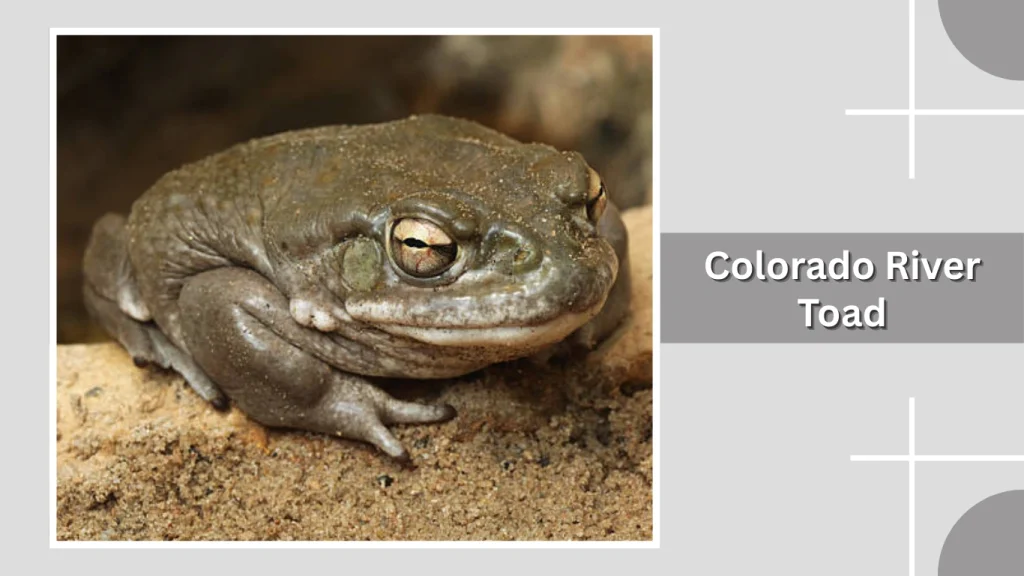
The Colorado River Toad is a large, distinctive species native to the southwestern United States and northern Mexico. It is best known for its smooth skin, powerful build, and potent toxins produced by its skin glands.
Identification
- Large, heavy-bodied toad
- Smooth, leathery skin compared to most toads
- Olive green or dark brown coloration
- Very large parotid glands behind the eyes
- Creamy white underside
- Broad head with rounded snout
Habitat
This species is commonly found in deserts, semi-arid regions, grasslands, and scrublands near permanent or seasonal water sources. It often shelters in rodent burrows or underground retreats to escape extreme heat.
Behavior
Colorado River Toads are mostly nocturnal and emerge during warm, rainy nights. They spend much of the year underground and become active mainly during the monsoon season. When threatened, they secrete strong toxins as a defense mechanism.
Diet
Their diet includes insects, spiders, small mammals, reptiles, and other amphibians. They are opportunistic feeders and rely on ambush tactics to catch prey.
Life Cycle
Breeding occurs during summer rains. Females lay eggs in shallow pools, ponds, or slow-moving water. Tadpoles develop rapidly, completing metamorphosis in several weeks, with juveniles growing quickly in favorable conditions.
7. Great Plains Toad
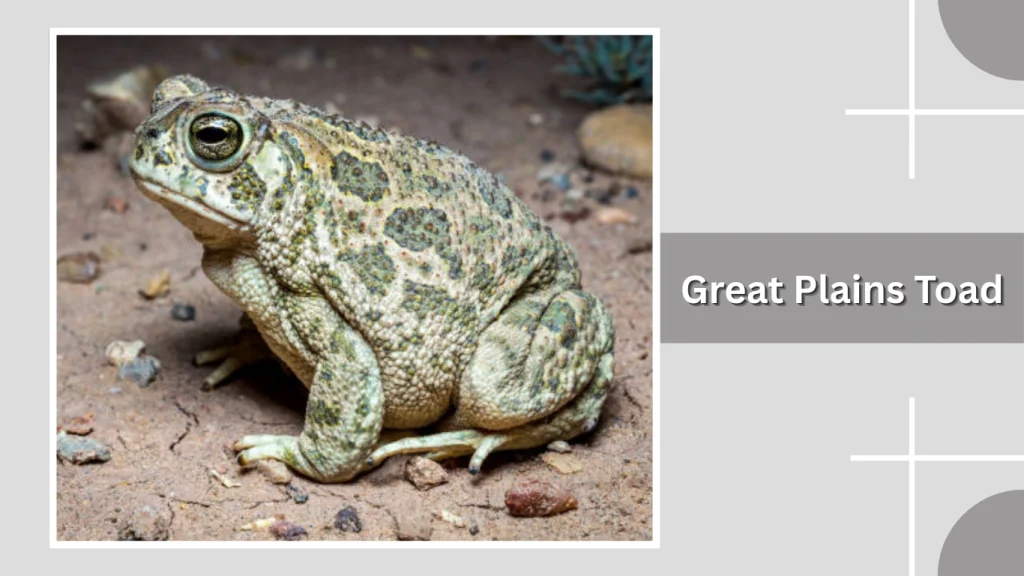
The Great Plains Toad is a distinctive North American species known for its bold markings and preference for open, arid landscapes. It is especially active after heavy rains and has a loud, musical call during breeding season.
Identification
- Medium to large-sized toad
- Light brown or tan background color
- Large, dark-edged blotches on the back
- Each blotch contains several small warts
- White or cream-colored underside
- Prominent cranial ridges
Habitat
This toad inhabits grasslands, prairies, deserts, and semi-arid regions with sandy or loose soil. It often lives near temporary pools, ditches, or flooded fields that form after rainfall.
Behavior
Great Plains Toads are mostly nocturnal and spend much of their time buried underground. They emerge in large numbers after rains to feed and breed. Males produce a loud, trilling call that can be heard from long distances.
Diet
Their diet consists mainly of insects such as beetles, ants, crickets, grasshoppers, and spiders. They forage actively on the ground at night.
Life Cycle
Breeding occurs quickly after heavy rains. Females lay eggs in temporary pools, where tadpoles develop rapidly to avoid drying conditions. Metamorphosis can occur in as little as 2–4 weeks under ideal conditions.
8. Oak Toad
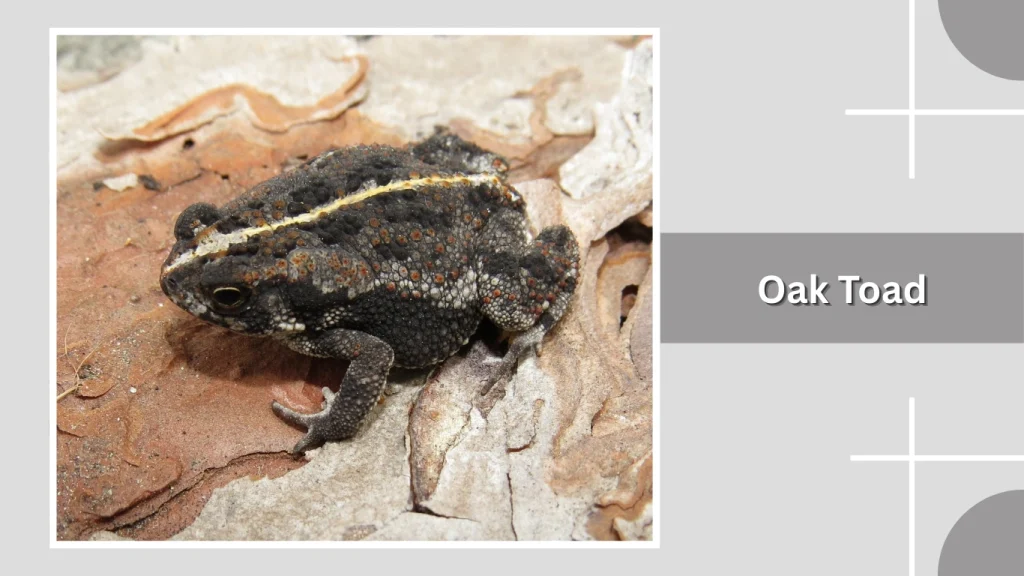
The Oak Toad is the smallest toad species in North America and is easily recognized by the light stripe running down its back. Despite its tiny size, it is a hardy amphibian adapted to warm, sandy environments.
Identification
- Very small body size
- Dark brown or black coloration
- Distinct light yellow or white stripe along the back
- Dry, warty skin
- Small parotoid glands
- Pale or grayish underside
Habitat
Oak Toads are commonly found in sandy pine forests, oak scrub, savannas, and coastal plains. They prefer shallow freshwater pools, ditches, and temporary ponds for breeding, especially in warm and humid regions.
Behavior
These toads are mostly diurnal, which is unusual among toads. They are active during the day, especially after rain. When temperatures rise, they burrow into sand or hide under leaf litter to avoid dehydration.
Diet
Their diet includes tiny insects and invertebrates such as ants, mites, small beetles, and spiders. Due to their size, they focus on very small prey.
Life Cycle
Breeding occurs during warm, rainy months. Females lay eggs in shallow, temporary pools. Tadpoles develop quickly, often transforming into toadlets within 3–4 weeks.
9. Western Toad
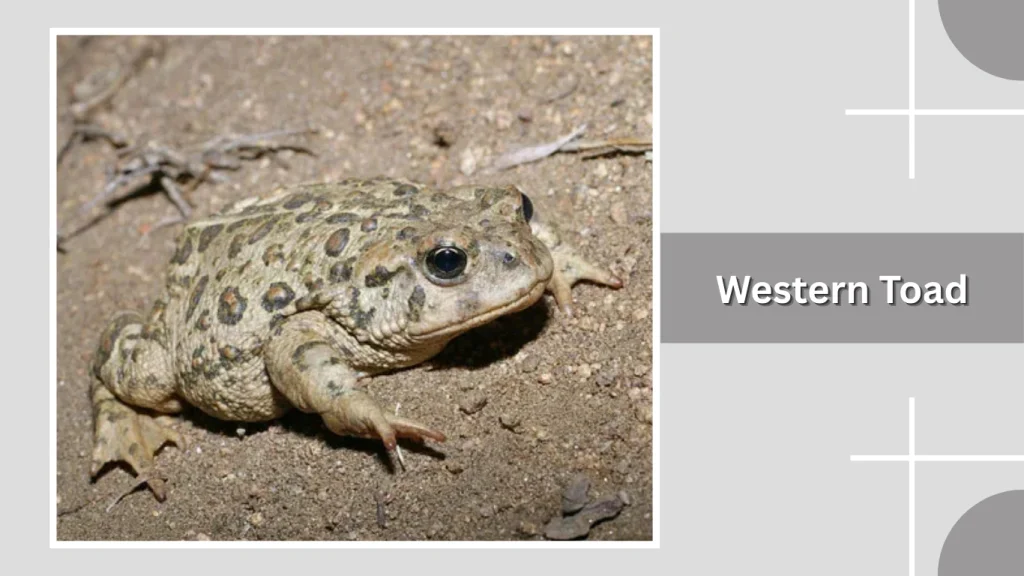
The Western Toad is a widespread species found across western North America. It is known for its distinctive light-colored dorsal stripe and its ability to survive in a wide range of environments, from forests to alpine regions.
Identification
- Medium to large-sized toad
- Brown, gray, or olive skin color
- Prominent pale stripe running down the back
- Dry, warty skin texture
- Oval parotoid glands
- Pale underside with minimal markings
Habitat
This toad occupies diverse habitats including forests, grasslands, wetlands, meadows, and mountainous areas. It is often found near lakes, ponds, slow-moving streams, and marshes, especially during the breeding season.
Behavior
Western Toads are mostly nocturnal but may be active during cooler daytime conditions. They often migrate to breeding sites in large numbers. During winter, they hibernate underground or in natural shelters to survive cold temperatures.
Diet
Their diet consists mainly of insects and other invertebrates such as ants, beetles, flies, spiders, and worms. They forage slowly, relying on movement to detect prey.
Life Cycle
Breeding takes place in spring or early summer. Females lay long strings of eggs in shallow water. Tadpoles may form large schools and transform into juvenile toads by late summer.
10. Sonoran Desert Toad
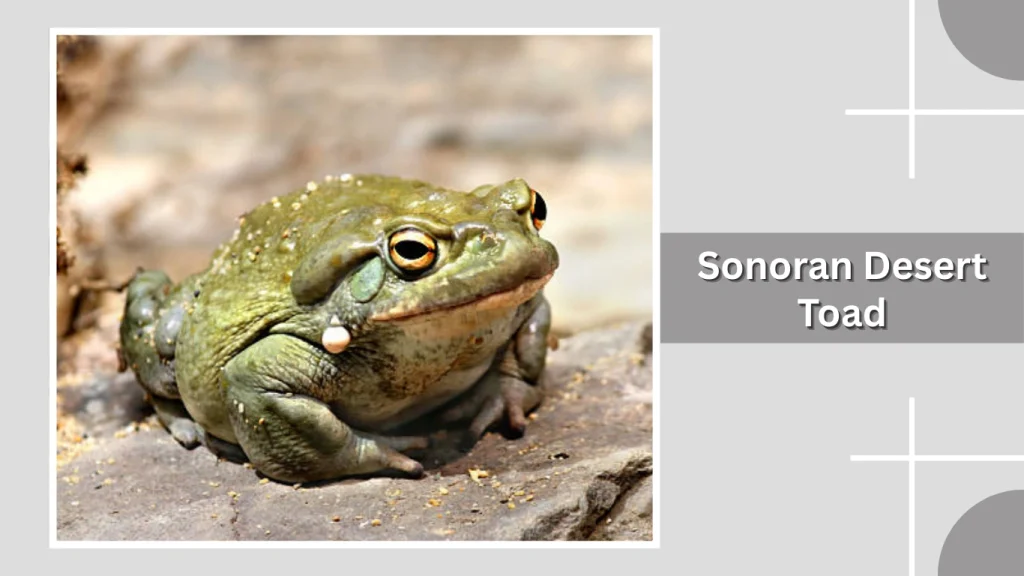
The Sonoran Desert Toad is one of the largest toads in North America and is famous for its powerful toxins. It is native to arid regions but depends heavily on seasonal rains for activity and breeding.
Identification
- Very large, thick-bodied toad
- Smooth, leathery skin
- Olive green to dark brown coloration
- Extremely large parotoid glands
- Creamy white or pale gray underside
- Broad head with rounded features
Habitat
This species lives in deserts, semi-deserts, grasslands, and scrub areas near rivers, canals, and temporary rain pools. It spends much of the year underground to avoid extreme heat and dryness.
Behavior
Sonoran Desert Toads are mostly nocturnal and emerge during warm, rainy nights. They are generally solitary and slow-moving. When threatened, they excrete potent toxins from their skin glands as a defense.
Diet
Their diet includes insects, spiders, small mammals, reptiles, and other amphibians. They are opportunistic ambush predators that feed on almost anything they can overpower.
Life Cycle
Breeding occurs during summer monsoon rains. Females lay thousands of eggs in shallow pools or slow-moving water. Tadpoles grow rapidly, completing metamorphosis in a few weeks under favorable conditions.
11. Green Toad
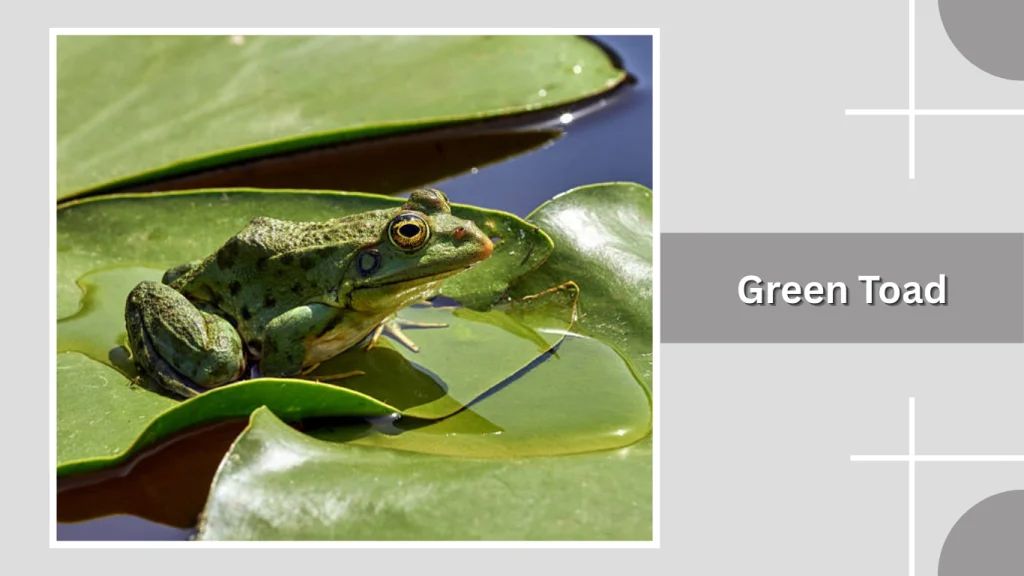
The Green Toad is a distinctive species known for its bright green blotches and wide distribution across Europe, North Africa, and parts of Asia. It is highly adaptable and often found in dry or disturbed habitats where other amphibians are scarce.
Identification
- Medium-sized toad
- Light gray, white, or cream background color
- Bright green or olive blotches on the back
- Dry, warty skin texture
- Prominent parotoid glands
- Pale underside with few markings
Habitat
Green Toads inhabit steppes, grasslands, semi-deserts, agricultural fields, and urban areas. They often breed in temporary pools, ditches, or shallow ponds and can tolerate higher salinity levels than many other toads.
Behavior
These toads are mostly nocturnal and are very tolerant of dry conditions. They are active during warm nights and hide under stones or in burrows during the day. Males produce a loud, trilling call during the breeding season.
Diet
Their diet includes insects, ants, beetles, flies, spiders, and other small invertebrates. They actively forage on the ground and are effective pest controllers.
Life Cycle
Breeding occurs in spring or early summer. Females lay eggs in long strings in shallow water. Tadpoles develop relatively quickly, with metamorphosis usually completed within two months.
12. Natterjack Toad
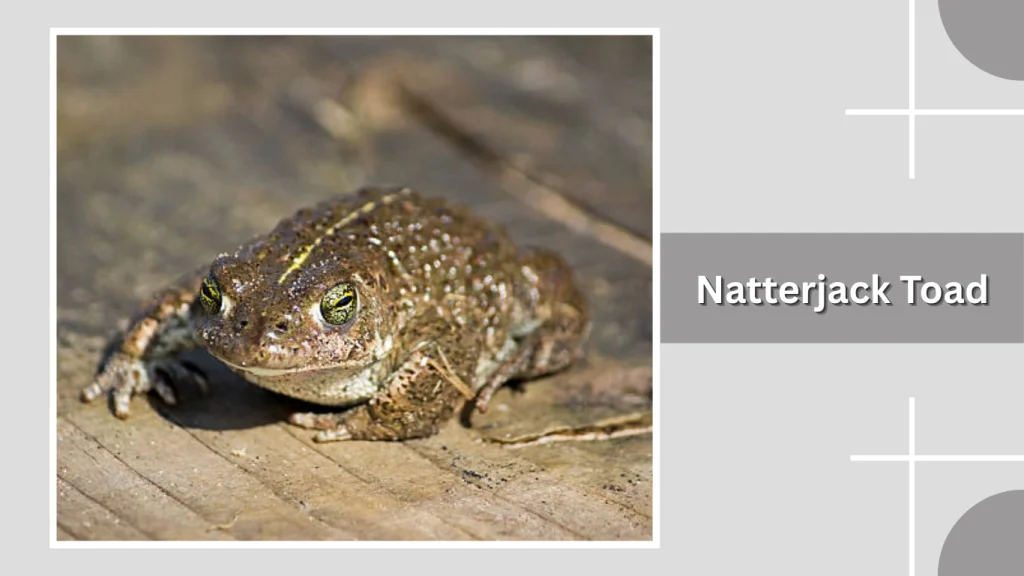
The Natterjack Toad is a rare and fast-moving species known for its distinctive yellow stripe and loud breeding call. It is mainly found in parts of Europe and prefers open, sandy landscapes with shallow water bodies.
Identification
- Medium-sized toad
- Pale brown, gray, or olive coloration
- Bright yellow stripe along the center of the back
- Dry, warty skin
- Short legs compared to frogs
- Pale underside
Habitat
Natterjack Toads inhabit coastal dunes, heathlands, sandy grasslands, and open countryside. They rely on shallow, warm, temporary pools for breeding, which reduces competition from other amphibians.
Behavior
Unlike most toads, Natterjack Toads are capable of running rather than hopping. They are mostly nocturnal and are known for the very loud, rasping call of breeding males, which can be heard over long distances.
Diet
Their diet consists of insects and small invertebrates such as beetles, ants, spiders, and flies. They forage actively at night across open ground.
Life Cycle
Breeding takes place in late spring or early summer. Females lay eggs in short strings in shallow pools. Tadpoles grow quickly, often completing metamorphosis within 6–8 weeks.
13. African Common Toad
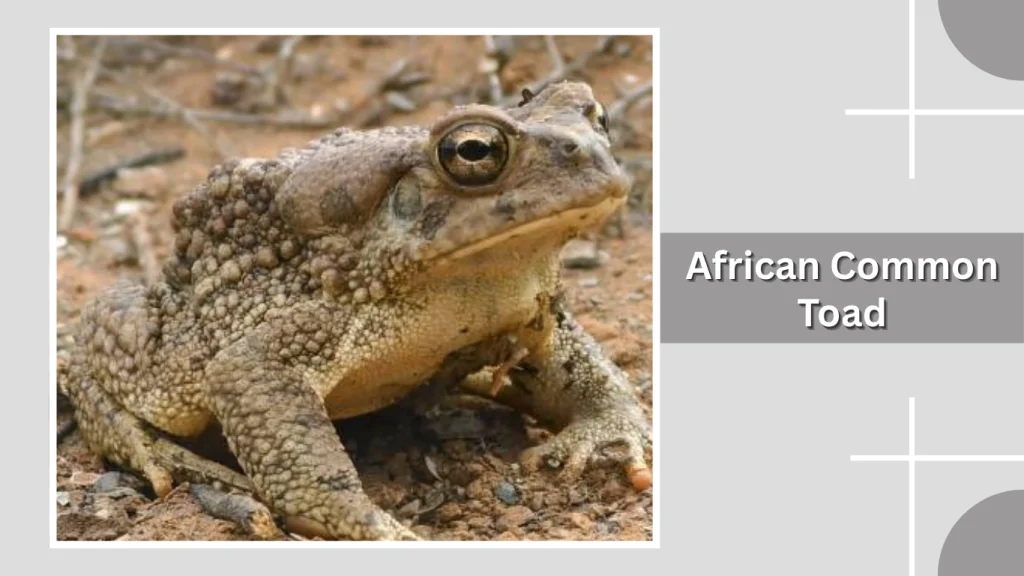
The African Common Toad is a widespread and adaptable species found throughout much of sub-Saharan Africa. It is commonly seen around human settlements and plays an important role in controlling insect populations.
Identification
- Medium to large-sized toad
- Brown, gray, or olive coloration
- Dry, rough, and warty skin
- Large parotid glands behind the eyes
- Broad head and short limbs
- Pale underside, sometimes mottled
Habitat
This toad inhabits forests, savannas, grasslands, wetlands, farmland, and urban areas. It often shelters under rocks, logs, or debris and breeds in ponds, puddles, and slow-moving water bodies.
Behavior
African Common Toads are mostly nocturnal and become active after sunset. They are tolerant of human activity and often gather near lights to feed on insects. When threatened, they secrete toxins as a defense.
Diet
Their diet includes ants, beetles, termites, flies, spiders, worms, and other small invertebrates. They are opportunistic feeders and adapt easily to available food sources.
Life Cycle
Breeding usually occurs during the rainy season. Females lay long strings of eggs in freshwater. Tadpoles develop over several weeks before transforming into juvenile toads.
14. Japanese Common Toad
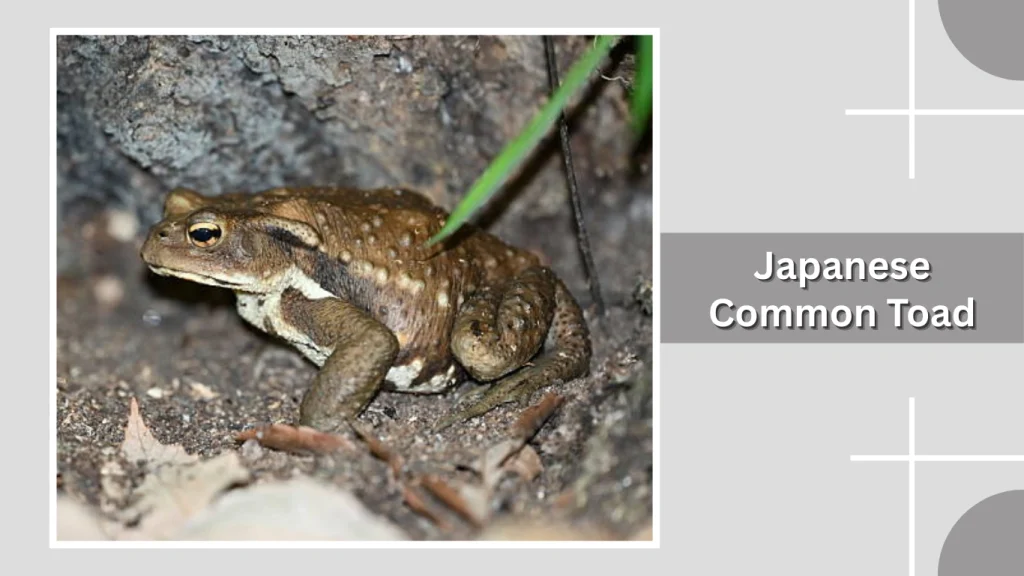
The Japanese Common Toad is a native species of Japan, commonly found in rural and semi-urban environments. It is a hardy toad that adapts well to seasonal changes and human-altered landscapes.
Identification
- Medium to large-sized toad
- Brown, dark gray, or olive skin color
- Rough, warty skin texture
- Prominent parotoid glands
- Broad head with short limbs
- Pale or yellowish underside
Habitat
This species inhabits forests, grasslands, agricultural areas, gardens, and riverbanks. During the breeding season, it moves to ponds, rice paddies, and slow-moving streams.
Behavior
Japanese Common Toads are mostly nocturnal and remain hidden during the day. They are known for strong site fidelity, often returning to the same breeding locations each year. In colder months, they hibernate underground.
Diet
Their diet consists of insects, worms, spiders, snails, and other small invertebrates. They forage slowly at night and rely on movement to detect prey.
Life Cycle
Breeding occurs in early spring. Females lay long strings of eggs in freshwater bodies. Tadpoles hatch within days and complete metamorphosis by early summer.
15. Yosemite Toad
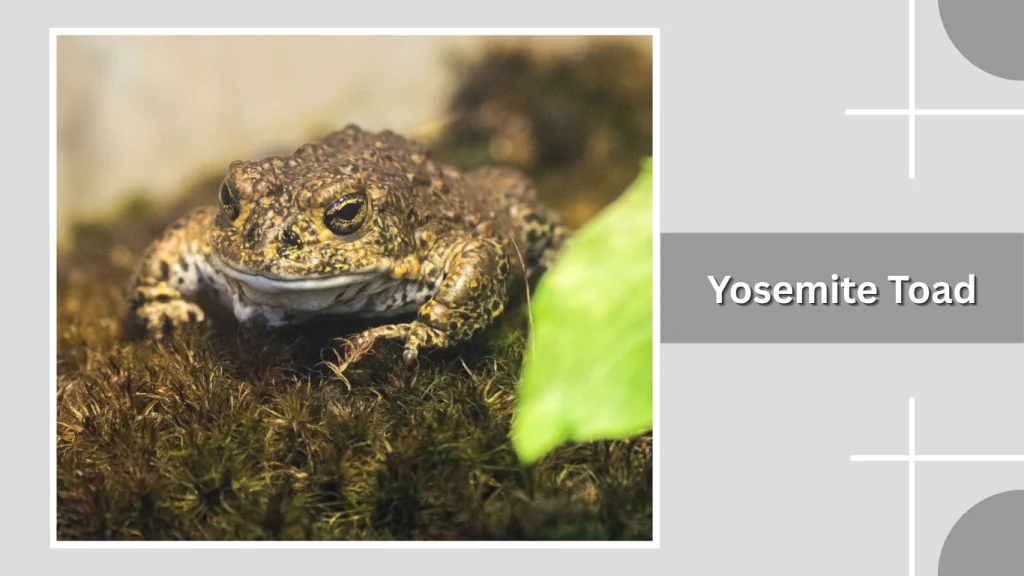
The Yosemite Toad is a rare and high-elevation species native to California’s Sierra Nevada mountains. It is well adapted to cold climates and short breeding seasons, making it one of the most specialized toads in North America.
Identification
- Medium-sized toad
- Brown to olive skin with black blotches
- Smooth to slightly warty skin
- Distinct light line along the back in some individuals
- Cream or pale yellow underside
- Rounded parotid glands
Habitat
Yosemite Toads live in alpine and subalpine meadows, wetlands, and grassy valleys near shallow pools and streams. They are typically found at high elevations where snow persists for much of the year.
Behavior
This species is diurnal during the short summer season, taking advantage of warm daylight hours. It spends most of the year underground in hibernation due to long, harsh winters.
Diet
Their diet includes insects, spiders, ants, beetles, and other small invertebrates found in mountain meadows. They feed actively during the brief summer period.
Life Cycle
Breeding occurs shortly after snowmelt. Females lay eggs in shallow pools warmed by the sun. Tadpoles develop quickly, often transforming into toadlets before the onset of cold weather.
16. Wyoming Toad
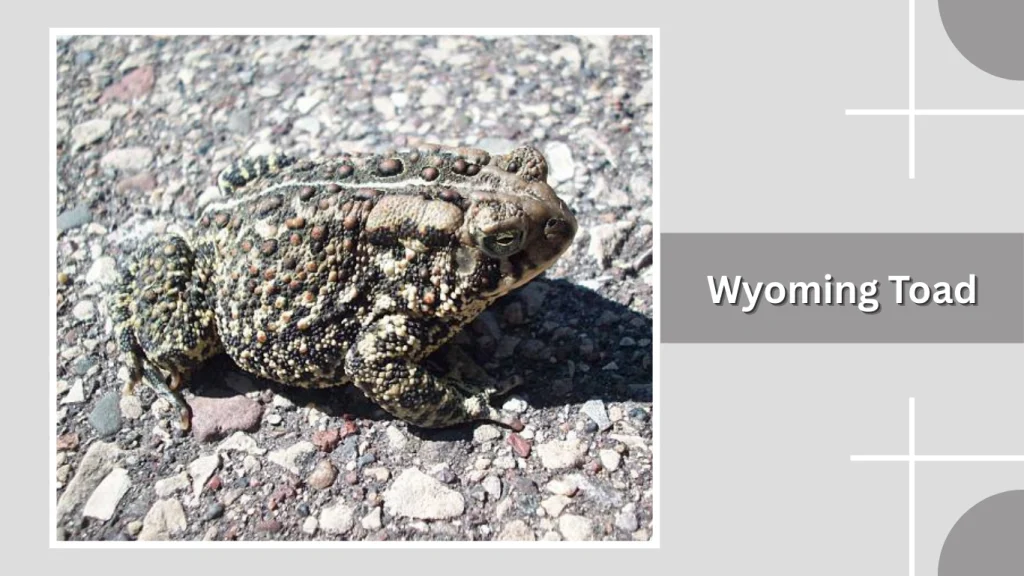
The Wyoming Toad is one of the rarest toad species in the world and is native to a very small area in the United States. Due to habitat loss and disease, it is considered critically endangered and survives mainly through conservation efforts.
Identification
- Medium-sized toad
- Brown or gray skin with dark blotches
- Dry, warty skin texture
- Distinct cranial ridges
- Pale underside with minimal markings
- Oval-shaped parotoid glands
Habitat
This toad is restricted to wetlands, floodplains, and marshy grasslands in Wyoming. It relies on shallow ponds and slow-moving water for breeding and spends much of its life in moist terrestrial habitats nearby.
Behavior
Wyoming Toads are mostly nocturnal and secretive. They are active during warmer months and hibernate underground during winter. Due to their rarity, much of their behavior has been studied through conservation programs.
Diet
Their diet consists mainly of insects and other small invertebrates such as beetles, ants, spiders, and flies. They forage at night along wetland edges.
Life Cycle
Breeding occurs in late spring or early summer. Females lay long strings of eggs in shallow water. Tadpoles develop over several weeks, transforming into juvenile toads before autumn.
17. Gulf Coast Toad
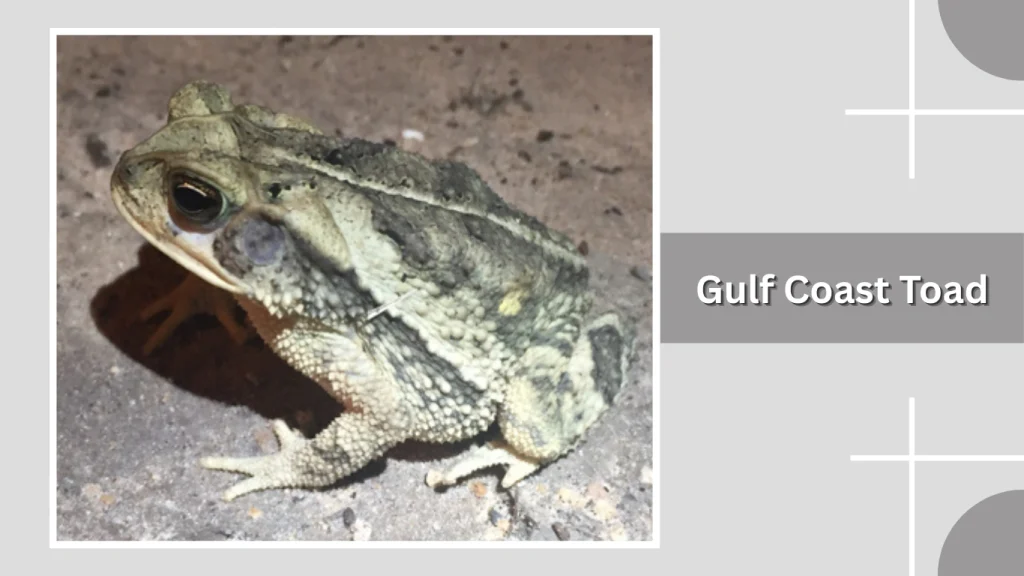
The Gulf Coast Toad is a common species found in the southern United States, especially near coastal regions. It is well adapted to warm climates and is frequently seen in suburban areas.
Identification
- Medium-sized toad
- Brown, gray, or olive coloration
- Dark spots with multiple warts inside each spot
- Prominent cranial ridges
- Oval parotoid glands
- Light-colored underside
Habitat
This toad inhabits coastal plains, grasslands, forests, wetlands, and urban environments. It often breeds in temporary pools, roadside ditches, ponds, and slow-moving water bodies.
Behavior
Gulf Coast Toads are mostly nocturnal and become active after rain. They are tolerant of human presence and are commonly found around buildings and garden lights feeding on insects.
Diet
Their diet includes ants, beetles, roaches, spiders, worms, and other small invertebrates. They are opportunistic feeders and help control insect populations.
Life Cycle
Breeding usually occurs during warm months following heavy rainfall. Females lay long strings of eggs in shallow water. Tadpoles develop quickly, completing metamorphosis in a few weeks.
18. Red-spotted Toad
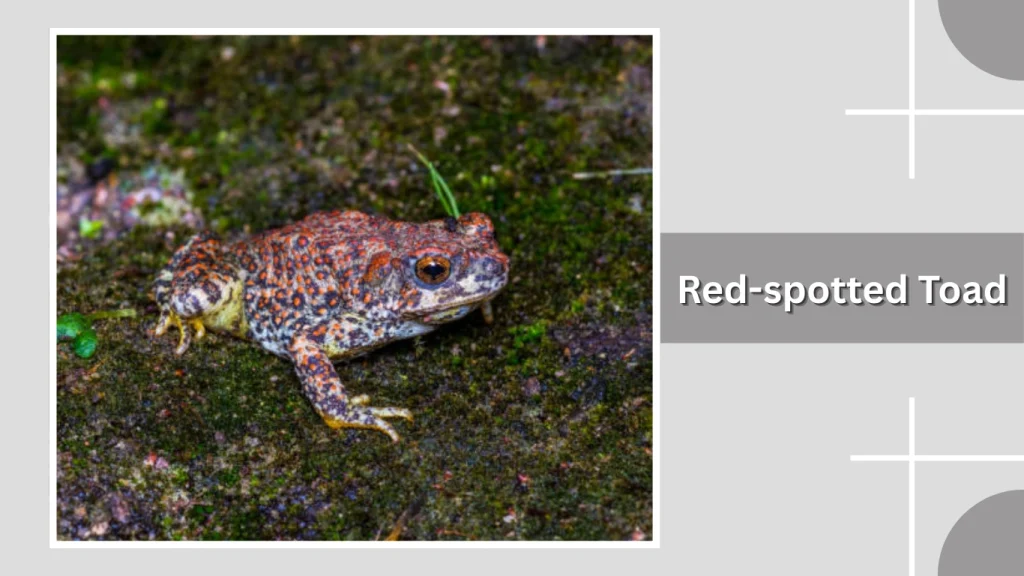
The Red-spotted Toad is a small, desert-adapted species recognized by its scattered reddish or orange spots. It is well suited to arid environments and relies on seasonal rains for activity and reproduction.
Identification
- Small to medium-sized toad
- Gray, tan, or olive skin color
- Distinct red or orange spots on the back
- Smooth to lightly warty skin
- Small parotoid glands
- Pale underside
Habitat
This species inhabits deserts, rocky canyons, scrublands, and arid grasslands. It is commonly found near temporary rain pools, washes, and seasonal streams in the southwestern United States and Mexico.
Behavior
Red-spotted Toads are mostly nocturnal and emerge during warm, rainy nights. They spend much of their time hiding under rocks or in crevices. When disturbed, they may remain still rather than attempting to flee.
Diet
Their diet consists mainly of insects and other small invertebrates such as ants, beetles, spiders, and termites. They forage close to the ground at night.
Life Cycle
Breeding occurs after summer rains. Females lay eggs in shallow, temporary pools. Tadpoles develop rapidly, often completing metamorphosis within a few weeks to avoid drying conditions.
19. Texas Toad
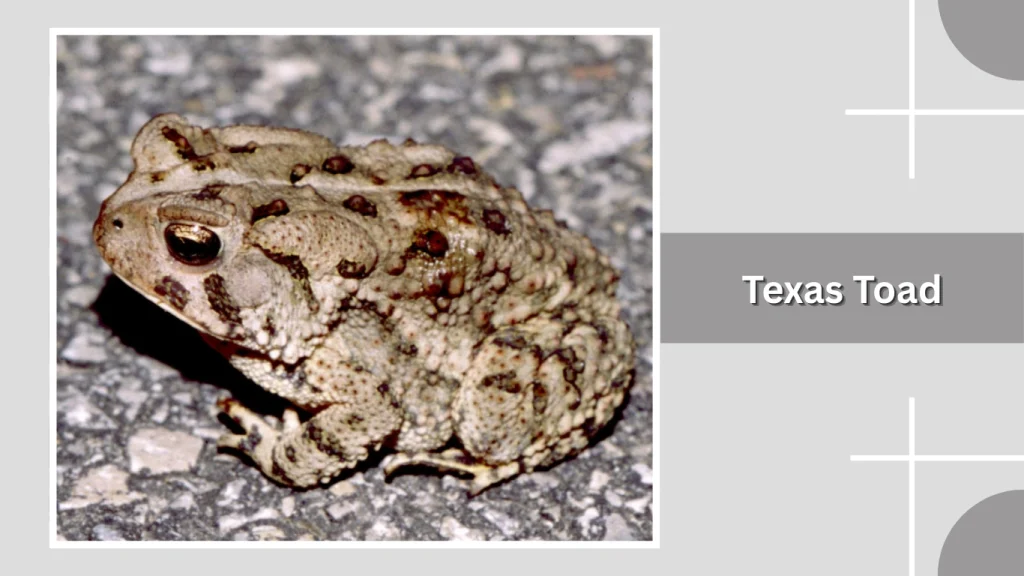
The Texas Toad is a medium-sized species native to the south-central United States. It is well adapted to dry climates and is commonly encountered in open landscapes, especially after seasonal rains.
Identification
- Medium-sized toad
- Gray, brown, or tan coloration
- Dark blotches with several small warts
- Prominent cranial ridges
- Oval parotid glands
- Pale or whitish underside
Habitat
Texas Toads inhabit grasslands, prairies, semi-arid regions, agricultural fields, and open woodlands. They are often found near temporary ponds, roadside ditches, and rain-filled depressions used for breeding.
Behavior
These toads are mostly nocturnal and become active after rainfall. During dry periods, they remain buried underground to retain moisture. Males produce a short, high-pitched call during the breeding season.
Diet
Their diet includes ants, beetles, crickets, grasshoppers, spiders, and other small invertebrates. They forage on the ground and are effective natural pest controllers.
Life Cycle
Breeding occurs during late spring and summer following heavy rains. Females lay long strings of eggs in shallow water. Tadpoles develop quickly, completing metamorphosis within several weeks.
FAQs
What is the difference between a toad and a frog?
Toads generally have dry, warty skin, shorter legs, and a more robust body, while frogs have smooth, moist skin and longer legs for jumping. Toads usually live farther from water except during breeding, whereas frogs stay close to water sources most of the time.
Are toads poisonous to humans?
Toads produce mild toxins from glands behind their eyes as a defense against predators. These toxins are usually not dangerous to humans if touched, but they can cause irritation if they enter the eyes, mouth, or open wounds. Washing hands after handling is recommended.
What do toads eat in the wild?
Toads mainly eat insects and small invertebrates such as ants, beetles, worms, spiders, and slugs. Some larger toads may also eat small reptiles or amphibians. Their diet makes them very helpful for natural pest control in gardens and farms.
Where do toads live most commonly?
Toads live in a wide variety of habitats including forests, grasslands, deserts, wetlands, and urban areas. Most species prefer moist shelters and return to ponds, pools, or slow-moving water only during the breeding season.
How long do toads usually live?
The lifespan of a toad varies by species. Many wild toads live between 5 and 10 years, while some larger species, such as the European Common Toad, can live for several decades under favorable conditions.