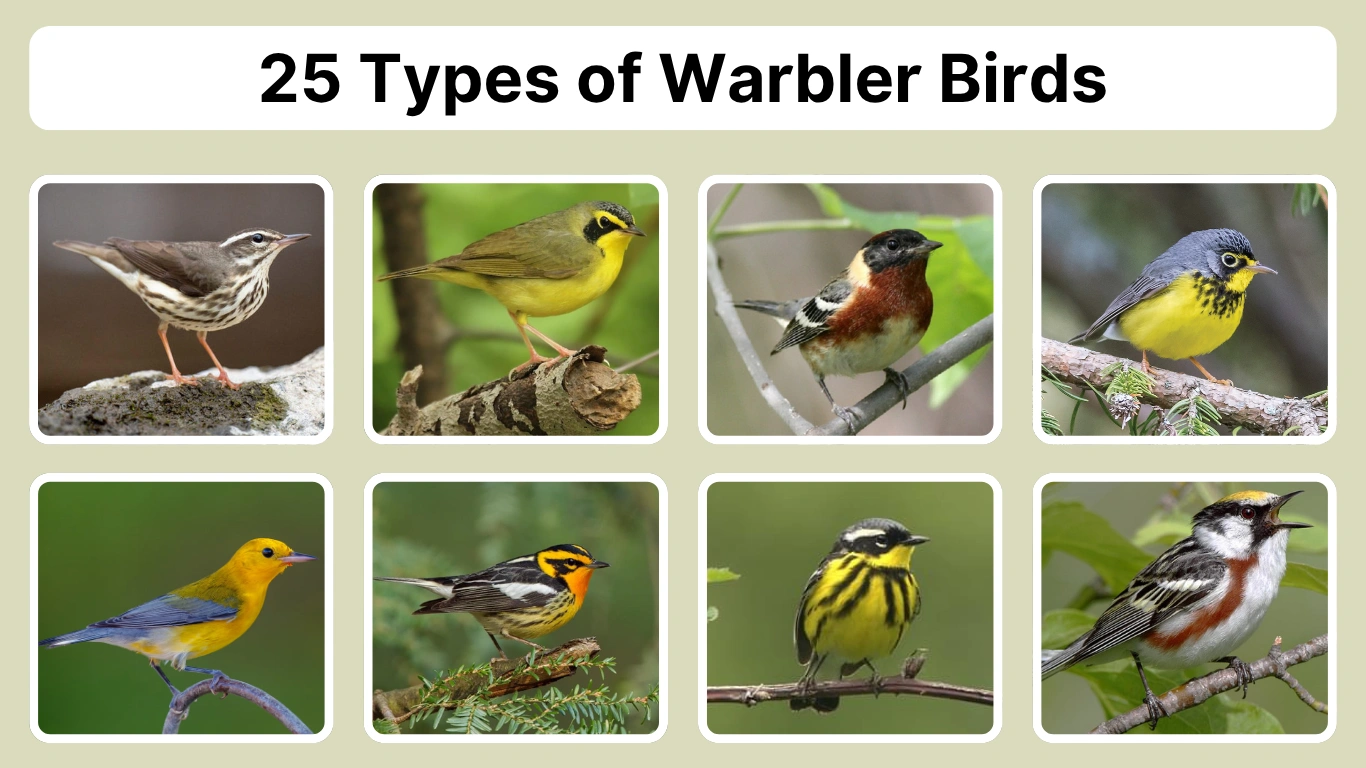
Warblers are some of the most colorful and energetic birds in North America, captivating birdwatchers with their vibrant plumage, melodic songs, and quick movements through forests and fields. Though small in size, warblers come in a remarkable variety of colors, behaviors, and habitat preferences—making them a fascinating group to study and observe.
In this guide, you’ll explore 25 types of warbler birds, each with detailed identification features, behavioral traits, nesting habits, and migratory patterns. From the glowing yellow of the Prothonotary Warbler to the streaked elegance of the Black-and-white Warbler, this collection highlights the beauty and diversity of these feathered travelers.
1. Yellow Warbler

The Yellow Warbler is one of the most widespread and easily recognized warblers in North America. Its vibrant yellow plumage and cheerful song make it a favorite among birdwatchers and nature enthusiasts. Commonly found in thickets and wetlands during spring and summer, this little bird plays an important role in insect control.
Identification
- Coloration: Bright lemon-yellow overall
- Streaks: Reddish streaks on the breast (especially males)
- Size: 4.7–5.1 inches (12–13 cm) in length
- Wingspan: 6.3–7.9 inches (16–20 cm)
- Weight: Around 0.3–0.4 ounces (9–11 grams)
- Bill: Slender and pointed
- Legs: Pale to dark brown
- Eye Ring: Faint, often indistinct
- Habitat: Wetlands, riparian woodlands, and shrubby thickets
Behavior and Diet
Yellow Warblers are active foragers, flitting among foliage in search of caterpillars, midges, and other small insects. They rarely visit feeders but may be seen gleaning insects from leaves or hovering briefly to catch prey.
Nesting and Reproduction
Females build cup-shaped nests in shrubs or small trees, typically laying 3 to 5 speckled eggs. Yellow Warblers are known for their resilience against brood parasites like the Brown-headed Cowbird—sometimes building new nest layers over parasitized clutches.
Range and Migration
This species breeds across most of North America and migrates to Central and northern South America for the winter. They are among the earliest warblers to return in spring.
2. Black-and-white Warbler

The Black-and-white Warbler stands out among warblers due to its striking zebra-striped plumage and tree-creeping behavior, much like a nuthatch. It is a common sight in wooded areas during migration and breeding seasons, often seen moving methodically along branches and trunks in search of insects.
Identification
- Coloration: Bold black and white streaks across the body
- Wing Pattern: Two white wing bars
- Size: 4.3–5.1 inches (11–13 cm)
- Wingspan: 7.1–8.7 inches (18–22 cm)
- Weight: 0.3–0.5 ounces (8–15 grams)
- Bill: Slightly curved, adapted for bark probing
- Legs: Grayish
- Eye Stripe: Prominent black line through the eye
- Habitat: Deciduous and mixed forests, especially during migration
Behavior and Diet
This species forages by creeping along tree trunks and large branches, probing bark for insects and spiders. Its nuthatch-like behavior sets it apart from most other warblers.
Nesting and Reproduction
The female builds a ground nest, well-hidden among leaf litter and roots. She lays 4 to 6 eggs, which she incubates for about 10–12 days. Both parents help feed the young after hatching.
Range and Migration
Breeds across much of eastern North America and winters in the southern U.S., Mexico, Central America, and the Caribbean. Some individuals migrate as far south as northern South America.
3. American Redstart

The American Redstart is an energetic and colorful warbler, easily recognized by its vivid black-and-orange (or yellow in females) plumage and constantly fanned tail. This flashy bird is often seen darting through trees and shrubs as it forages for insects.
Identification
- Male Coloration: Black with bright orange patches on wings, tail, and sides
- Female Coloration: Gray or olive with yellow patches
- Size: 4.3–5.1 inches (11–13 cm)
- Wingspan: 6.3–7.5 inches (16–19 cm)
- Weight: 0.2–0.3 ounces (6–9 grams)
- Bill: Thin and slightly flattened
- Tail: Frequently fanned and fluttered
- Habitat: Open woodlands, forest edges, and thickets
Behavior and Diet
Redstarts actively flit and flutter through foliage, flashing their tail patches to startle insects. Their primary diet consists of flies, caterpillars, moths, and spiders, occasionally catching prey in midair.
Nesting and Reproduction
Females build cup-shaped nests in shrubs or small trees. Clutch size is usually 3 to 5 eggs. Only the female incubates the eggs, while the male helps defend the territory and feed the young once hatched.
Range and Migration
Breeds across much of North America east of the Rockies and winters in Central America, the Caribbean, and northern South America. Their migration pattern includes a broad range of habitats during transit.
4. Common Yellowthroat
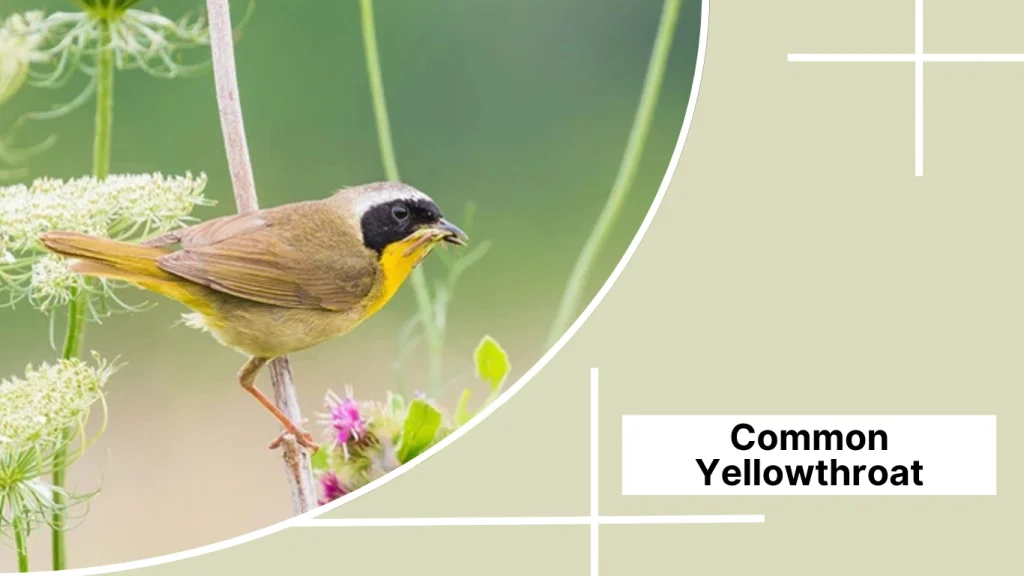
The Common Yellowthroat is a widespread and easily recognizable warbler, often found skulking in dense vegetation near wetlands. Males are especially distinctive with their black facial mask, earning them the nickname “masked bandit.”
Identification
- Male Coloration: Bright yellow throat and breast, black mask with white border
- Female Coloration: Olive above, yellow below, lacks black mask
- Size: 4.3–5.1 inches (11–13 cm)
- Wingspan: 5.9–7.5 inches (15–19 cm)
- Weight: 0.3–0.4 ounces (8–10 grams)
- Bill: Short and slightly curved
- Legs: Pale pink or light brown
- Eye Ring: Faint or absent
- Habitat: Marshes, wet fields, brushy areas with dense cover
Behavior and Diet
These birds forage low in vegetation, hopping among reeds and bushes. Their diet consists mainly of insects, spiders, and other small invertebrates.
Nesting and Reproduction
Nests are built low to the ground or near water in thick vegetation. Females lay 3 to 5 eggs, and both parents share in feeding duties after hatching. Common Yellowthroats are frequent victims of brood parasitism by cowbirds.
Range and Migration
Breeds throughout most of North America and migrates to the southern U.S., Mexico, Central America, and the Caribbean for winter.
5. Wilson’s Warbler

Wilson’s Warbler is a small, active warbler known for its bright yellow coloring and distinctive black cap on males. It prefers shrubby, damp habitats and is often seen flicking its wings while foraging.
Identification
- Male Coloration: Bright yellow with solid black crown
- Female Coloration: Yellow overall, with faint or no cap
- Size: 4.3–5.1 inches (11–13 cm)
- Wingspan: 5.5–6.7 inches (14–17 cm)
- Weight: 0.2–0.3 ounces (6–10 grams)
- Bill: Thin and pointed
- Legs: Pale pink to dark brown
- Eye Ring: Often faint or absent
- Habitat: Willow thickets, riparian shrubs, wet woodlands
Behavior and Diet
Wilson’s Warblers forage actively among low vegetation, often flicking their wings or tails. Their diet consists mostly of small insects, including flies, beetles, and caterpillars.
Nesting and Reproduction
They build nests on or near the ground, concealed in grass or low shrubs. Females lay 3 to 6 eggs, which they incubate alone. Males help feed the young after hatching.
Range and Migration
Breeds in Canada, Alaska, and parts of the northern U.S., then migrates through the U.S. to wintering grounds in Mexico and Central America.
6. Chestnut-sided Warbler
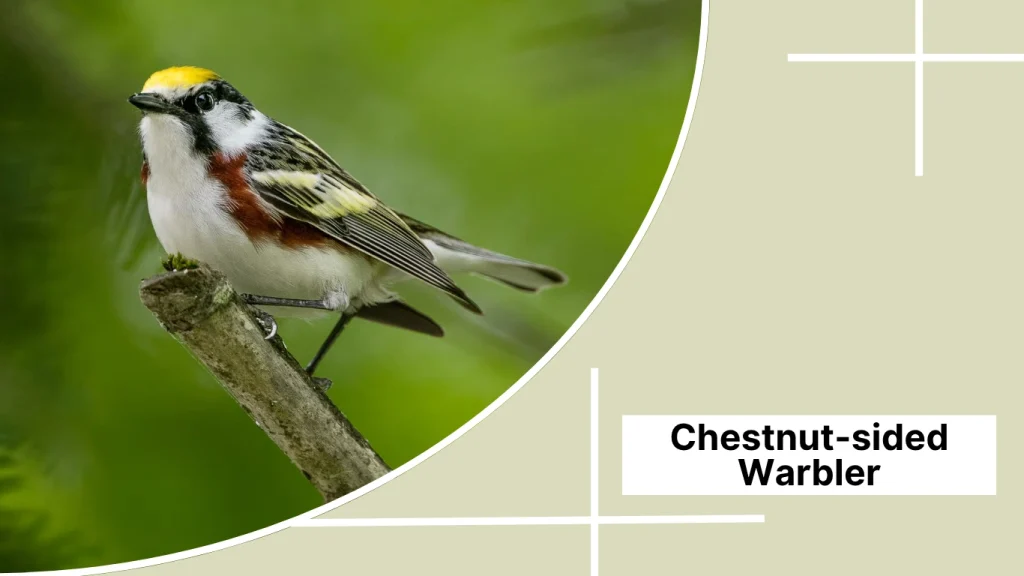
The Chestnut-sided Warbler is a colorful and energetic warbler species that prefers shrubby second-growth habitats. Males are particularly striking during the breeding season, making them a favorite among birders.
Identification
- Male Coloration: Bright yellow crown, white underparts with bold chestnut flanks, black-streaked back
- Female Coloration: Similar but duller, with less pronounced chestnut coloring
- Size: 4.7–5.1 inches (12–13 cm)
- Wingspan: 7.5–8.3 inches (19–21 cm)
- Weight: 0.3–0.4 ounces (9–12 grams)
- Bill: Fine and sharply pointed
- Legs: Grayish
- Eye Ring: Faint, sometimes incomplete
- Habitat: Brushy fields, regenerating forests, edges of woodlands
Behavior and Diet
Chestnut-sided Warblers forage actively in shrubs and small trees, often moving quickly and acrobatically through branches. Their diet includes caterpillars, beetles, and other insects, along with small spiders.
Nesting and Reproduction
Females build small, cup-shaped nests in low shrubs. A typical clutch includes 3 to 5 eggs, which the female incubates for about 11 days. Both parents feed the chicks after hatching. They often raise two broods per season.
Range and Migration
Breeds across eastern and central North America. Winters in Central America, particularly in coffee plantations and tropical forest edges.
7. Magnolia Warbler
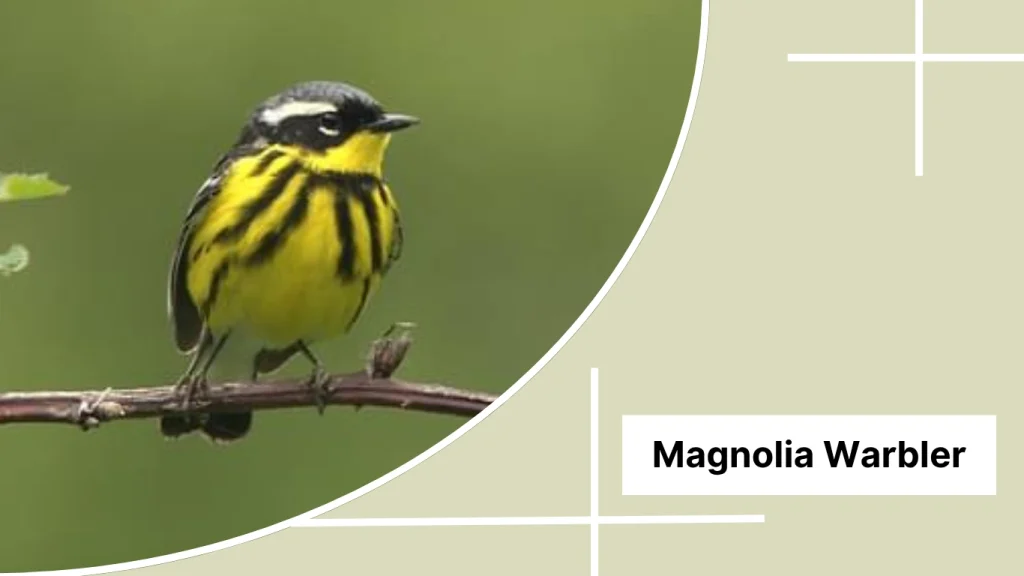
Magnolia Warblers are striking warblers with bold black, white, and yellow markings. Despite their name, they are not specifically associated with magnolia trees and were named from the tree where one was first observed.
Identification
- Male Coloration: Black mask, yellow underparts with bold black streaking, white wing bars
- Female Coloration: Similar but less intense and lacks strong black mask
- Size: 4.3–5.1 inches (11–13 cm)
- Wingspan: 6.3–7.9 inches (16–20 cm)
- Weight: 0.2–0.5 ounces (6–15 grams)
- Bill: Slender and pointed
- Tail: Black with white base, often fanned in display
- Habitat: Breeds in coniferous forests; migrates through various forest types
Behavior and Diet
Forages actively in the middle to lower canopy, gleaning insects from foliage. Feeds on caterpillars, moths, flies, and beetles, sometimes catching prey in short flights.
Nesting and Reproduction
Nests are built low in dense conifers, typically constructed by the female. She lays 3 to 5 eggs and incubates them for about 12 days. Both parents feed the young.
Range and Migration
Breeds in boreal forests of Canada and the northeastern U.S., and winters in the Caribbean, Mexico, and Central America. Known for its widespread presence during migration throughout eastern North America.
8. Black-throated Blue Warbler
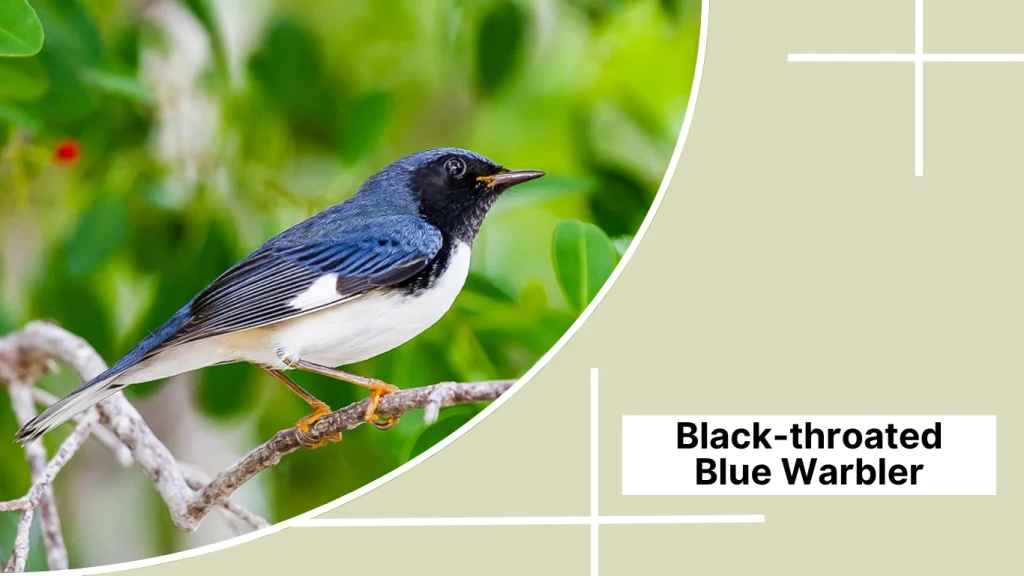
The Black-throated Blue Warbler is a small, handsome species with striking sexual dimorphism. Males are a brilliant blue and black, while females are plain olive—so different they were once thought to be separate species.
Identification
- Male Coloration: Deep blue upperparts, black throat and face, white belly, small white wing patch
- Female Coloration: Olive-brown overall, pale underparts, bold white eyebrow, faint wing patch
- Size: 4.3–5.1 inches (11–13 cm)
- Wingspan: 7.5–7.9 inches (19–20 cm)
- Weight: 0.3–0.4 ounces (8–11 grams)
- Bill: Short and sharp
- Legs: Dark gray to black
- Habitat: Mixed hardwood forests, especially with dense understory
Behavior and Diet
These warblers forage in low to mid-level foliage, often searching the undersides of leaves for insects. Their diet consists mainly of caterpillars, moths, and other invertebrates.
Nesting and Reproduction
The female builds a neat, cup-shaped nest low in shrubs. She lays 3 to 5 eggs and incubates them for 12 to 13 days. Males help feed the nestlings and are aggressive defenders of their territory.
Range and Migration
Breeds in the northeastern U.S. and southeastern Canada. Winters in the Caribbean, especially in the Greater Antilles and parts of Central America.
9. Black-throated Green Warbler

The Black-throated Green Warbler is known for its yellow face, black throat (in males), and buzzy, persistent song. It occupies coniferous and mixed forests during the breeding season.
Identification
- Male Coloration: Yellow face, olive back, black throat and upper chest, white underparts with black streaks
- Female Coloration: Duller with less black; some may have no black on the throat
- Size: 4.3–5.1 inches (11–13 cm)
- Wingspan: 6.7–7.9 inches (17–20 cm)
- Weight: 0.3–0.4 ounces (8–11 grams)
- Bill: Fine and pointed
- Legs: Black
- Habitat: Spruce, hemlock, and mixed forests
Behavior and Diet
Forages by creeping along branches and hanging from twigs. Eats small insects, larvae, and spiders. Occasionally hovers while gleaning prey from foliage.
Nesting and Reproduction
Builds open cup nests high in conifer trees. Females lay 3 to 5 eggs and incubate for about 12 days. Both parents feed the young.
Range and Migration
Breeds across eastern Canada and the northeastern U.S. Migrates to Central America and the northern coast of South America for the winter. Found frequently in mixed-species flocks during migration.
10. Blackburnian Warbler

The Blackburnian Warbler is one of the most visually stunning warblers, especially the males during breeding season, with a fiery orange throat that glows in the canopy. It prefers tall coniferous forests and can be challenging to spot due to its high-foraging habits.
Identification
- Male Coloration: Bright orange throat, black cap and back, white wing patches
- Female Coloration: Pale yellow-orange throat, duller overall with similar pattern
- Size: 4.3–5.1 inches (11–13 cm)
- Wingspan: 7.9–9.1 inches (20–23 cm)
- Weight: 0.3–0.4 ounces (8–12 grams)
- Bill: Short, slender, and pointed
- Legs: Dark gray
- Habitat: Mature conifer and mixed forests, especially spruce
Behavior and Diet
Feeds high in the canopy, gleaning insects from needles and branches. Prefers caterpillars and tree-feeding insects, sometimes hovering to catch prey.
Nesting and Reproduction
Nests are placed high in conifer trees, often on horizontal branches. Females lay 3 to 5 eggs and handle incubation. Both parents assist in feeding the chicks after hatching.
Range and Migration
Breeds in northeastern North America and southern Canada. Winters in montane forests of northern South America, including Colombia and Ecuador.
11. Palm Warbler
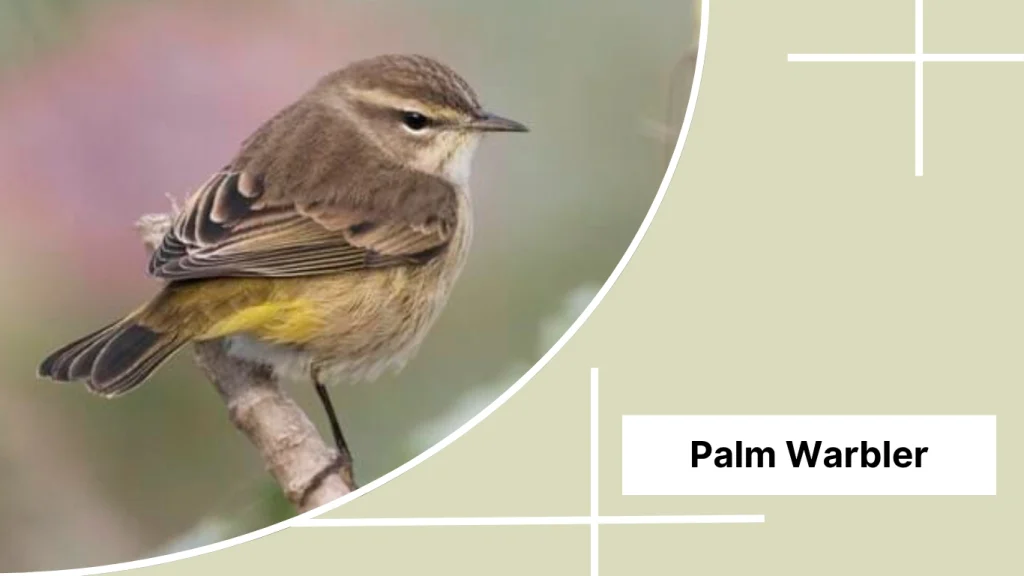
Unlike most warblers, Palm Warblers often feed on the ground and are easily identified by their constant tail-bobbing. Their migratory behavior and open-country preferences make them common sights in fields and coastal habitats during migration.
Identification
- Eastern Birds: Bright yellow underparts with reddish cap and streaks
- Western Birds: Duller, with paler yellow and less streaking
- Size: 4.7–5.5 inches (12–14 cm)
- Wingspan: 7.9–8.3 inches (20–21 cm)
- Weight: 0.3–0.4 ounces (8–14 grams)
- Bill: Thin and slightly decurved
- Legs: Long and dark
- Habitat: Tundra and boreal bogs (breeding); open fields, beaches, and scrub (migration/winter)
Behavior and Diet
Palm Warblers wag their tails constantly while foraging on the ground. Their diet consists mainly of insects and spiders, supplemented by berries in fall and winter.
Nesting and Reproduction
Nests are built on or near the ground in mossy tundra or bogs. Females lay 4 to 5 eggs and incubate them for about 12 days. Both parents help care for the chicks.
Range and Migration
Breeds in boreal regions of Canada and migrates to the southeastern U.S., Caribbean, and parts of Central America for winter. Common during spring and fall in the eastern U.S.
12. Pine Warbler

The Pine Warbler is a relatively plain but charming warbler that prefers pine-dominated forests. It is one of the few warblers in North America that regularly eats seeds and may visit feeders during winter.
Identification
- Male Coloration: Olive-yellow upperparts, bright yellow throat and breast, white belly and wing bars
- Female Coloration: Duller with more grayish or olive tones
- Size: 5.1–5.5 inches (13–14 cm)
- Wingspan: 7.5–9.1 inches (19–23 cm)
- Weight: 0.3–0.5 ounces (9–15 grams)
- Bill: Stout and slightly conical
- Legs: Gray
- Habitat: Pine forests, mixed woodlands with pines
Behavior and Diet
Forages in pine trees, moving slowly compared to other warblers. Diet includes insects, spiders, berries, and seeds—especially pine seeds and sunflower seeds in winter.
Nesting and Reproduction
Builds nests high in pine trees. Females lay 3 to 5 eggs, incubating them for about 12 days. Males help feed the chicks after hatching.
Range and Migration
Found year-round in the southeastern U.S., with northern populations migrating to the southern U.S. and the Caribbean for winter. One of the earliest warblers to return north in spring.
13. Prairie Warbler

Despite its name, the Prairie Warbler does not inhabit true prairies but instead favors shrubby fields, regenerating forests, and pine barrens. It is a small, bright yellow bird known for its sweet, rising song.
Identification
- Male Coloration: Bright yellow with black streaks on sides, olive back with chestnut patch
- Female Coloration: Duller yellow with fainter markings
- Size: 4.3–4.7 inches (11–12 cm)
- Wingspan: 6.7–7.5 inches (17–19 cm)
- Weight: 0.2–0.3 ounces (6–9 grams)
- Bill: Slender and pointed
- Legs: Pinkish to gray
- Habitat: Shrubby fields, forest edges, pine barrens, and early successional habitats
Behavior and Diet
Forages actively in low shrubs and trees. Eats insects, caterpillars, and spiders, often gleaning from leaves or making short flights to catch prey.
Nesting and Reproduction
Nests are placed low in dense shrubs. Females lay 3 to 5 eggs and incubate for about 12 days. Pairs may raise two broods per season.
Range and Migration
Breeds in the southeastern and eastern U.S., especially in early successional habitats. Winters in the Caribbean, particularly the Bahamas and Greater Antilles.
14. Prothonotary Warbler

The Prothonotary Warbler is a brilliant yellow songbird that prefers wooded swamps and wet forests in the southeastern United States. Unlike most warblers, it nests in cavities and is often seen near water.
Identification
- Male Coloration: Bright golden-yellow head and chest, blue-gray wings, olive back
- Female Coloration: Similar but slightly duller
- Size: 5.1–5.5 inches (13–14 cm)
- Wingspan: 8.7–9.1 inches (22–23 cm)
- Weight: 0.4–0.5 ounces (13–15 grams)
- Bill: Straight and pointed
- Legs: Black
- Habitat: Flooded bottomlands, wooded swamps, cypress forests
Behavior and Diet
Feeds primarily by gleaning insects and spiders from leaves and bark. Occasionally forages over water and takes aquatic insects and snails.
Nesting and Reproduction
Nests in natural cavities or nest boxes, often over water. The male selects and defends the site; the female builds the nest and lays 3 to 7 eggs. Both parents feed the young.
Range and Migration
Breeds in the southeastern U.S. and parts of the Midwest. Winters in mangroves and lowland tropical forests of Central and northern South America.
15. Ovenbird

The Ovenbird is a ground-dwelling warbler known for its loud “teacher-teacher-teacher” song and its domed nest that resembles a Dutch oven, which gives the species its name.
Identification
- Coloration: Olive-brown above, white below with bold black streaks on chest and sides
- Crown: Orange stripe bordered by black on the head
- Size: 4.3–5.5 inches (11–14 cm)
- Wingspan: 7.5–10.2 inches (19–26 cm)
- Weight: 0.6–1.0 ounces (16–28 grams)
- Bill: Straight and pointed
- Legs: Pinkish
- Habitat: Mature deciduous and mixed forests with leaf litter
Behavior and Diet
Forages on the forest floor, flipping leaves to find ants, beetles, and caterpillars. Walks rather than hops and is more secretive than many warblers.
Nesting and Reproduction
Builds a domed nest with a side entrance on the ground, camouflaged with leaves and moss. The female lays 3 to 6 eggs and incubates alone. Both parents feed the young.
Range and Migration
Breeds in mature forests across eastern and central North America. Winters in the Caribbean, Mexico, and Central America, often in similar forest habitats.
16. Northern Parula
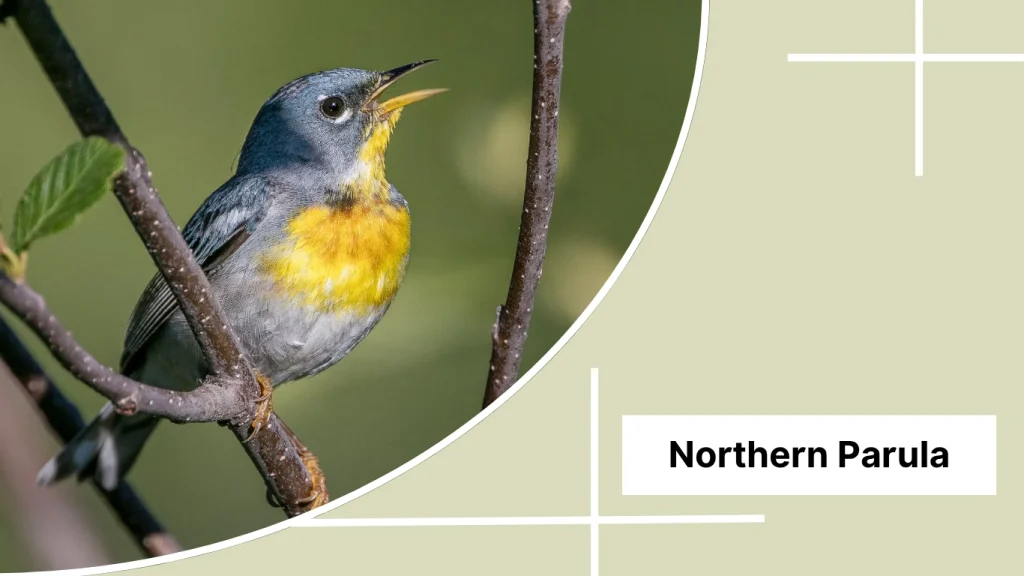
The Northern Parula is a small, colorful warbler often found high in the canopy of moist forests draped with Spanish moss or old man’s beard lichen. Its buzzy, ascending trill is a signature sound of spring in the eastern U.S.
Identification
- Male Coloration: Blue-gray upperparts, greenish back patch, yellow throat and chest with a chestnut and black band across the breast
- Female Coloration: Duller with less distinct breast bands
- Size: 4.3–4.7 inches (11–12 cm)
- Wingspan: 6.3–7.1 inches (16–18 cm)
- Weight: 0.2–0.3 ounces (6–9 grams)
- Bill: Thin and pointed
- Legs: Yellowish to pinkish
- Habitat: Moist deciduous or mixed forests, especially with hanging epiphytes or lichen
Behavior and Diet
Forages actively in the upper canopy, picking insects and spiders from leaves and twigs. Sometimes hovers to reach prey or sips nectar from flowers.
Nesting and Reproduction
Constructs nests inside hanging moss or lichen clusters. Females lay 3 to 7 eggs, which they incubate for about 12 days. Both parents feed the young.
Range and Migration
Breeds in eastern North America and winters in the Caribbean and Central America. Often one of the earliest warblers to return in spring.
17. Nashville Warbler

The Nashville Warbler is a small, active warbler known for its bright yellow underside and subtle facial markings. Despite its name, it does not breed near Nashville but was first discovered there during migration.
Identification
- Male Coloration: Gray head, white eye ring, olive back, yellow underparts
- Female Coloration: Similar but duller overall
- Size: 4.3–5.1 inches (11–13 cm)
- Wingspan: 6.7–7.9 inches (17–20 cm)
- Weight: 0.2–0.4 ounces (7–11 grams)
- Bill: Fine and pointed
- Legs: Dark
- Habitat: Shrubby second-growth forests, regenerating clearcuts, and mixed woodland edges
Behavior and Diet
Gleans insects, caterpillars, and spiders from leaves and twigs. Forages low to mid-level in vegetation and sometimes joins mixed-species flocks during migration.
Nesting and Reproduction
Builds a domed ground nest hidden among dense vegetation. Females lay 4 to 5 eggs and incubate alone. Both parents feed the young after hatching.
Range and Migration
Breeds in Canada, the northern U.S., and high elevations in the western U.S. Winters in Mexico and Central America, passing through the U.S. during spring and fall migration.
18. Cape May Warbler

The Cape May Warbler is a striking and colorful warbler that specializes in feeding on spruce budworms. It was named after Cape May, New Jersey, where it was first recorded.
Identification
- Male Coloration: Yellow underparts with black streaks, chestnut cheek patch, dark cap, white wing patch
- Female Coloration: Duller, with olive upperparts and faint cheek patch
- Size: 4.7–5.1 inches (12–13 cm)
- Wingspan: 7.9–8.7 inches (20–22 cm)
- Weight: 0.4–0.5 ounces (10–13 grams)
- Bill: Slightly curved, adapted for feeding on nectar and insects
- Legs: Dark gray
- Habitat: Boreal spruce forests
Behavior and Diet
Feeds mainly in the upper canopy, searching for caterpillars, especially spruce budworms. Also drinks nectar and fruit juices, using a specially adapted curled tongue.
Nesting and Reproduction
Nests are placed high in spruce trees. Females lay 4 to 9 eggs and incubate them for about 12 days. Males assist with feeding the chicks.
Range and Migration
Breeds in the boreal forest of Canada and winters in the Caribbean and parts of Central America. Often found in gardens and flowering trees during migration.
19. Bay-breasted Warbler

The Bay-breasted Warbler is a richly colored bird that shows strong seasonal variation. It is one of the most forest-dependent warblers and feeds heavily on spruce budworms during breeding season.
Identification
- Male Breeding Plumage: Chestnut crown and flanks, black face, creamy nape, buffy underparts
- Female and Nonbreeding: Olive-gray back, yellowish flanks, faint streaks
- Size: 5.1–5.5 inches (13–14 cm)
- Wingspan: 8.7–9.1 inches (22–23 cm)
- Weight: 0.4–0.5 ounces (11–13 grams)
- Bill: Stout and pointed
- Legs: Dark gray to black
- Habitat: Boreal conifer forests, especially spruce
Behavior and Diet
Feeds high in the canopy, eating insects such as budworms and beetles. During migration, supplements diet with berries and nectar.
Nesting and Reproduction
Nests are built high in conifers. Females lay 4 to 7 eggs, incubating them alone. Both parents care for the nestlings after they hatch.
Range and Migration
Breeds in Canada’s boreal zone and migrates to northern South America for winter. One of the later warblers to arrive in spring and migrate in fall.
20. Canada Warbler
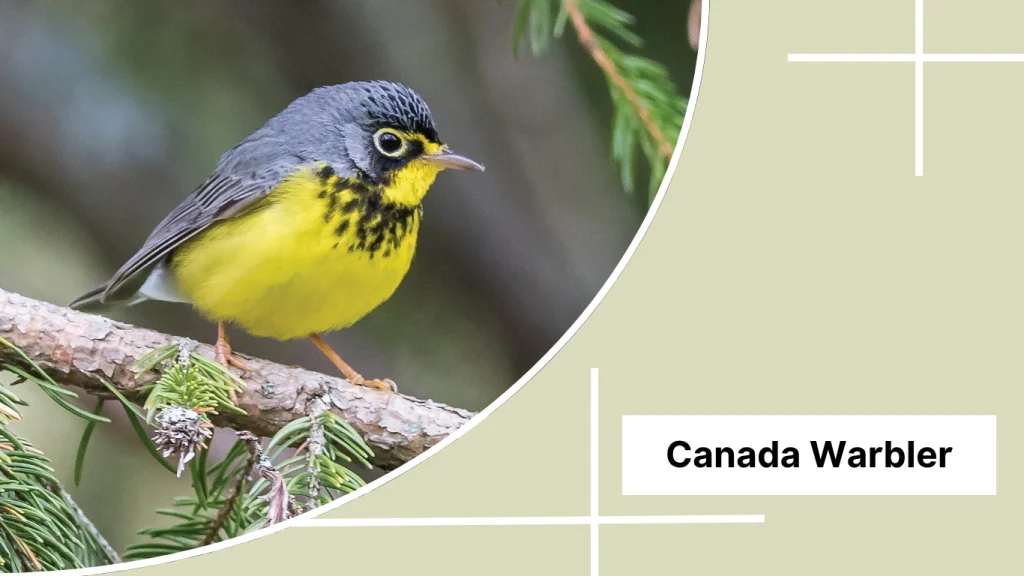
The Canada Warbler is a striking, energetic species often referred to as the “necklaced warbler” due to the distinctive black streaks on its chest. Despite its name, this bird spends only a short time in Canada, breeding before quickly returning to South America.
Identification
- Male Coloration: Bright yellow underparts with a bold black necklace, bluish-gray back, white eye ring
- Female Coloration: Similar but duller, with a thinner and less defined necklace
- Size: 4.7–5.9 inches (12–15 cm)
- Wingspan: 7.5–8.7 inches (19–22 cm)
- Weight: 0.3–0.5 ounces (9–13 grams)
- Bill: Thin and pointed
- Legs: Pinkish
- Habitat: Moist deciduous forests with dense undergrowth
Behavior and Diet
Active and agile, it forages low in dense vegetation, often flashing its tail and darting for insects. Eats ants, beetles, caterpillars, and spiders.
Nesting and Reproduction
Nests are built near or on the ground, well-concealed in moss or root tangles. Females lay 4 to 5 eggs and handle incubation alone. Males assist with feeding the fledglings.
Range and Migration
Breeds in southeastern Canada and parts of the northeastern U.S. Winters in the northern Andes of South America. One of the last warblers to arrive in spring and one of the first to leave in fall.
21. Tennessee Warbler
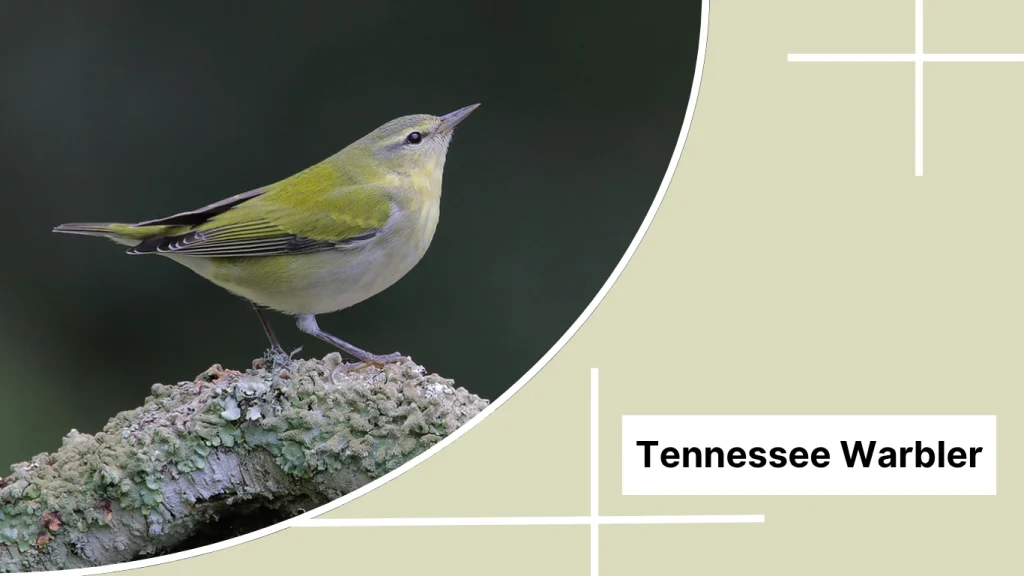
The Tennessee Warbler is a plain-looking but vocal warbler with a rapid, high-pitched song. Despite its name, it does not breed in Tennessee—it was first collected there during migration.
Identification
- Breeding Males: Olive-green back, grayish head, white underparts
- Females and Nonbreeding: Yellowish underparts, olive back, no distinct facial markings
- Size: 4.3–4.7 inches (11–12 cm)
- Wingspan: 7.1–7.9 inches (18–20 cm)
- Weight: 0.3–0.4 ounces (7–10 grams)
- Bill: Slender and sharp
- Legs: Dark gray
- Habitat: Boreal forests dominated by spruce
Behavior and Diet
Feeds mostly in mid to upper canopy. Eats caterpillars, especially spruce budworms, as well as leafhoppers and spiders. During migration and winter, feeds on nectar and fruits.
Nesting and Reproduction
Ground nester. Females construct well-hidden nests among moss or grasses. A clutch usually contains 4 to 6 eggs. The female incubates, and both parents feed the young.
Range and Migration
Breeds in the boreal forests of Canada. Migrates through the central and eastern U.S. and winters in Central America and northern South America. A common and widespread migrant.
22. Orange-crowned Warbler

The Orange-crowned Warbler is a subtle and often overlooked species with muted plumage, but it’s one of the earliest warblers to arrive in spring. The orange crown for which it’s named is usually hidden and only occasionally visible.
Identification
- Coloration: Olive-green upperparts, yellowish underparts, faint grayish eye line, faint streaking
- Crown: Small orange patch (often concealed)
- Size: 4.3–5.5 inches (11–14 cm)
- Wingspan: 7.1–7.9 inches (18–20 cm)
- Weight: 0.3–0.4 ounces (8–11 grams)
- Bill: Fine and pointed
- Legs: Dark gray to black
- Habitat: Scrubby woods, willow thickets, forest edges, and brushy slopes
Behavior and Diet
Actively forages in low shrubs and mid-level branches. Eats caterpillars, beetles, and other insects, as well as nectar and berries. Often flicks its tail and moves quickly.
Nesting and Reproduction
Nests are built on or near the ground in dense vegetation. Females lay 3 to 6 eggs and handle incubation alone. Both parents feed the hatchlings.
Range and Migration
Breeds in boreal forests and mountainous areas of western North America. Winters in the southern U.S., Mexico, and Central America. Can be found across much of the U.S. during migration.
23. Worm-eating Warbler

The Worm-eating Warbler is a quiet, ground-foraging species that prefers steep forested slopes and dense understory. Despite its name, it doesn’t specialize in worms but eats a variety of insects.
Identification
- Coloration: Olive-brown above, buff underparts
- Head Markings: Distinct black crown stripes on a buffy head
- Size: 4.7–5.1 inches (12–13 cm)
- Wingspan: 8.3 inches (21 cm)
- Weight: 0.4–0.5 ounces (11–14 grams)
- Bill: Straight and pointed
- Legs: Pale pink
- Habitat: Steep, mature deciduous forests with thick understory
Behavior and Diet
Forages low or on the ground, flipping leaves to find insects, spiders, and larvae. Moves slowly and deliberately, often in shady areas.
Nesting and Reproduction
Builds its nest on the ground, hidden under leaves or in a root mass. The female lays 4 to 5 eggs and handles incubation. Both parents feed the young after hatching.
Range and Migration
Breeds in the southeastern and Appalachian regions of the U.S. Migrates to Central America and the Caribbean for winter. Prefers undisturbed forest habitats.
24. Kentucky Warbler

The Kentucky Warbler is a robust, ground-loving warbler with a bold black facial pattern and bright yellow throat. Although it’s more often heard than seen due to its preference for dense underbrush, its loud rolling song carries through eastern forests in spring.
Identification
- Male Coloration: Bright yellow underparts, olive-green back, black crown and cheek borders, yellow spectacles
- Female Coloration: Similar but with less extensive black on the head
- Size: 5.1–5.3 inches (13–13.5 cm)
- Wingspan: 7.5–8.3 inches (19–21 cm)
- Weight: 0.5–0.6 ounces (13–17 grams)
- Bill: Thick and slightly downcurved
- Legs: Pinkish
- Habitat: Moist deciduous forests with dense understory
Behavior and Diet
Primarily forages on or near the ground, flipping leaves in search of beetles, ants, caterpillars, and spiders. Moves deliberately through dense vegetation and rarely ventures high into trees.
Nesting and Reproduction
Nests are built on the ground or low in shrubbery, usually concealed in thick vegetation. Females lay 4 to 6 eggs and incubate them for about 12 days. Both parents feed the young.
Range and Migration
Breeds in the southeastern and central U.S. Migrates through eastern Mexico and winters in Central America. Migration is nocturnal and often rapid.
25. Louisiana Waterthrush
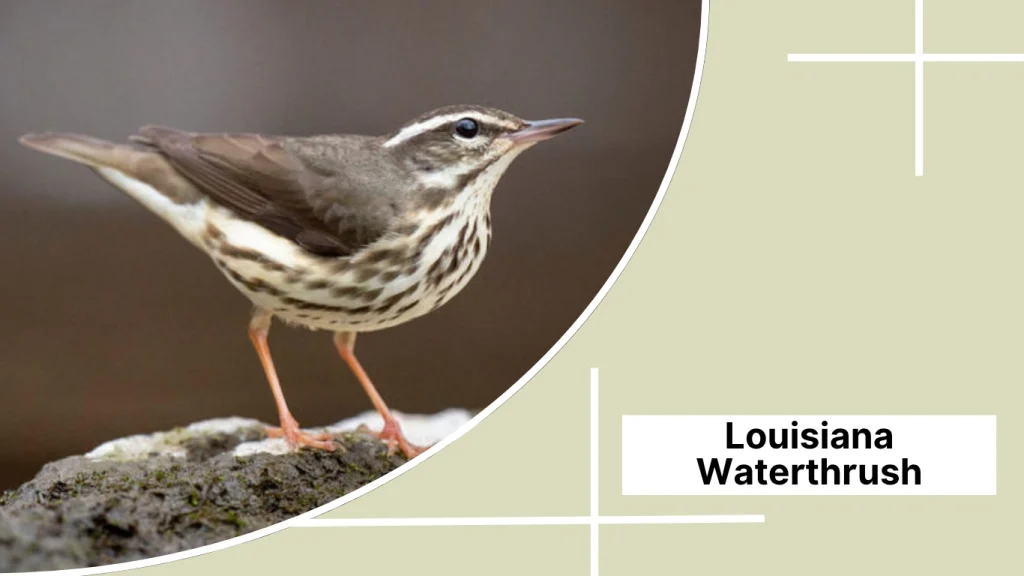
Though not a true thrush, the Louisiana Waterthrush behaves more like one than a typical warbler. It walks rather than hops and frequents fast-moving streams, where its clear, whistling song echoes in hilly woodlands.
Identification
- Coloration: Brown upperparts, pale underparts with bold brown streaking, white eyebrow line (supercilium) that flares behind the eye
- Size: 5.9–6.1 inches (15–15.5 cm)
- Wingspan: 8.7–9.4 inches (22–24 cm)
- Weight: 0.7–0.9 ounces (20–25 grams)
- Bill: Long and strong
- Legs: Pink to flesh-colored
- Habitat: Shaded, fast-flowing woodland streams and ravines
Behavior and Diet
Constantly bobs its tail as it walks along stream edges. Eats aquatic insects, larvae, and occasionally small crustaceans and snails.
Nesting and Reproduction
Nests are built in banks or root tangles near water. Females lay 4 to 6 eggs and incubate them for about 12 days. Both parents feed the young.
Range and Migration
Breeds in the eastern U.S., especially near forested streams. Winters in the Caribbean, Central America, and northern South America. One of the earliest warblers to return in spring.