





Swallows are graceful, aerial insectivores found across the globe, recognized for their streamlined bodies, long pointed wings, and incredible agility in flight. These birds thrive in open habitats—over fields, lakes, rivers, and sometimes even urban areas—where they dart and glide to catch insects midair. While they share many traits, each species has its own unique coloration, size, nesting behavior, and geographic range.
In this guide, we’ll explore 20 common types of swallows from around the world, starting with the most widely recognized and detailing each bird’s identifying features, habits, and habitats. Whether you’re a birdwatcher, a nature enthusiast, or simply curious, this list offers an in-depth look at the remarkable diversity within the swallow family.
1. Barn Swallow

The Barn Swallow is the most widespread and familiar swallow species across the globe. Known for its graceful flight, deeply forked tail, and melodic twittering, this elegant bird is a welcome sight in rural and urban areas alike. Barn Swallows often build their mud nests on barns, bridges, and buildings, showing a unique adaptability to human environments.
Identification
- Common Name: Barn Swallow
- Scientific Name: Hirundo rustica
- Size: 6.5 to 7.5 inches (16.5 to 19 cm) in length
- Wingspan: 11.5 to 12.5 inches (29 to 32 cm)
- Weight: 0.6 to 0.7 ounces (17 to 20 grams)
- Coloration: Glossy blue-black upperparts, rufous forehead and throat, and creamy underside
- Tail: Long and deeply forked with white spots on outer feathers
- Bill: Small, short, and black
- Eyes: Dark brown to black
- Habitat: Open country, farmland, fields, and near water; frequently nests in barns and under eaves
- Call: Bright, cheerful twittering and chirps
- Migration: Long-distance migrant—breeds in North America and winters in Central and South America
Behavior and Feeding
Barn Swallows are aerial insectivores, capturing flying insects midair with exceptional agility. They often fly low over fields, ponds, and meadows in search of food. Their sociable nature is evident during migration and nesting, often gathering in large flocks.
Nesting Habits
They build cup-shaped nests out of mud and plant fibers, usually attached to human structures like barns and bridges. Both male and female participate in nest building and rearing of the chicks. The nest site is often reused in following seasons.
Global Range
Barn Swallows are found across North America, Europe, Asia, and parts of Africa. They are one of the most widely distributed bird species and are considered symbols of spring and renewal in many cultures.
2. Tree Swallow
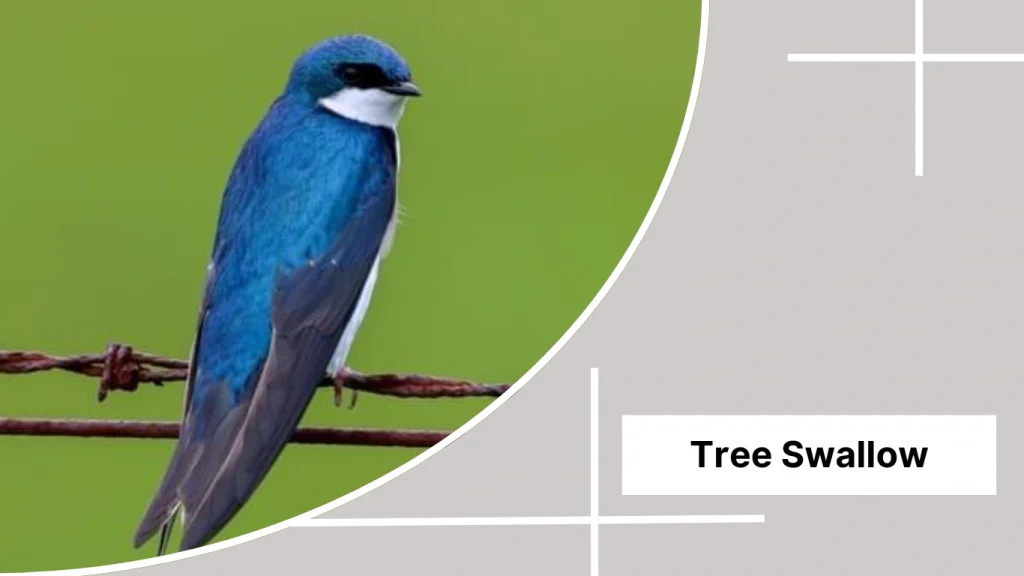
The Tree Swallow is a sleek, iridescent blue songbird native to North America. It is known for its aerial acrobatics, glossy plumage, and early spring migration. This species often nests in tree cavities or man-made nest boxes near wetlands and open meadows.
Identification
- Common Name: Tree Swallow
- Scientific Name: Tachycineta bicolor
- Size: 5.5 to 6 inches (14 to 15 cm)
- Wingspan: 11.5 to 13 inches (29 to 33 cm)
- Weight: 0.6 to 0.9 ounces (17 to 25 grams)
- Coloration: Iridescent blue-green back and head, white underparts
- Tail: Slightly forked
- Bill: Short and black
- Eyes: Black
- Habitat: Open fields, wetlands, and lakeshores; nests in cavities and boxes
- Call: Liquid, gurgling chirps
- Migration: Migrates to southern U.S., Central America, and the Caribbean during winter
Behavior and Feeding
Tree Swallows are swift flyers that catch flying insects in midair. They also consume berries, especially bayberries, during migration or in cooler weather when insects are scarce. They’re known for forming large flocks outside of the breeding season.
Nesting Habits
These swallows use natural tree cavities or artificial nest boxes. Females line the nests with feathers, and both parents feed the young. They readily use conservation-provided nest sites near wetlands.
Global Range
Tree Swallows are native to North America, ranging from Alaska to Mexico during breeding season and wintering in the southern U.S. to Central America.
3. Cliff Swallow
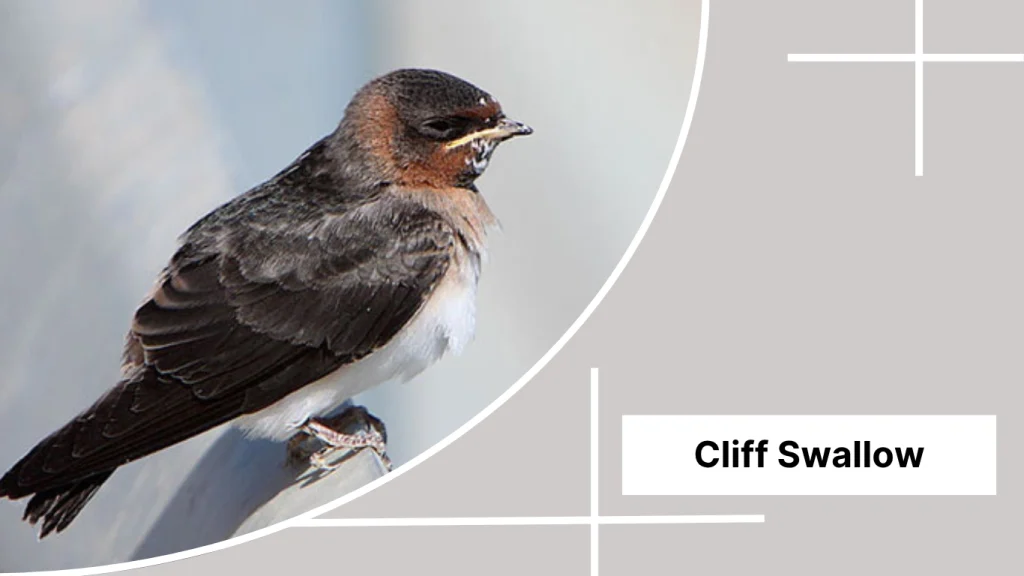
The Cliff Swallow is a colonial and highly social bird famous for building gourd-shaped mud nests in clusters under bridges and cliff overhangs. These swallows are swift, compact flyers and are often seen darting around in groups catching insects on the wing.
Identification
- Common Name: Cliff Swallow
- Scientific Name: Petrochelidon pyrrhonota
- Size: 5 to 6 inches (13 to 15 cm)
- Wingspan: 11 to 11.8 inches (28 to 30 cm)
- Weight: 0.7 to 1.0 ounces (20 to 28 grams)
- Coloration: Pale orange-rust rump, dark blue back, white forehead, and cinnamon-colored throat
- Tail: Short and squared (notched, not deeply forked)
- Bill: Short and broad
- Eyes: Dark brown
- Habitat: Open areas near cliffs, canyons, riverbanks, and buildings
- Call: Soft “churr” and rattling notes
- Migration: Long-distance migrant; winters in South America
Behavior and Feeding
Cliff Swallows forage in flocks, scooping up flying insects in open areas, often over water or fields. They communicate with each other through calls and visual cues, especially in large nesting colonies.
Nesting Habits
They build mud nests with a narrow entrance tube, clustered in large colonies. Both sexes contribute to nest building, incubation, and chick feeding. Colonies can contain hundreds of nests.
Global Range
Widespread across North America during the breeding season, they migrate to southern South America for the winter, making one of the longest migration journeys among North American swallows.
4. Bank Swallow
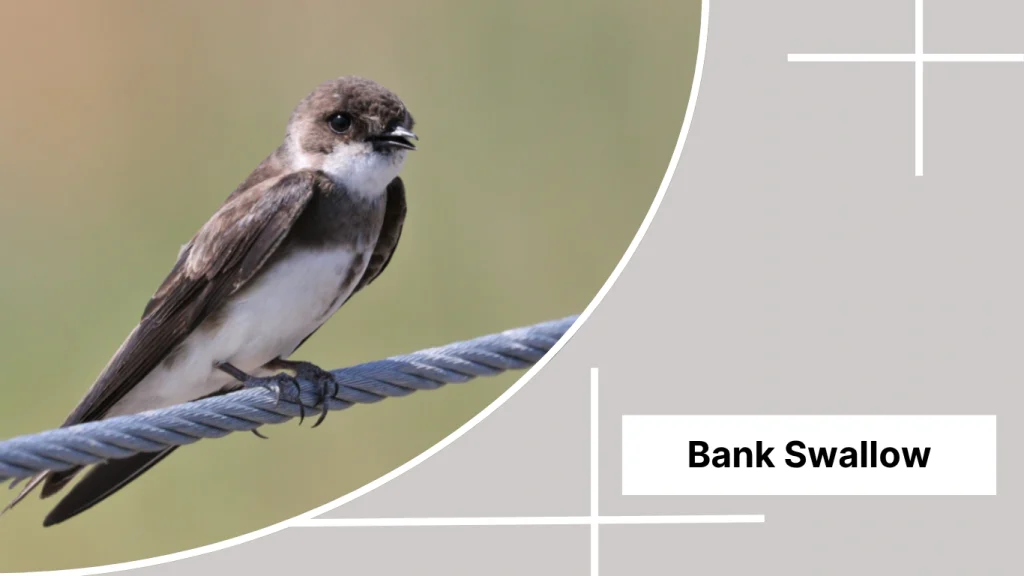
The Bank Swallow is a small, slender swallow with swift flight and pale brown plumage. It nests colonially in sandy or earthen banks, often near water. This species is also known as the Sand Martin in Europe and Asia.
Identification
- Common Name: Bank Swallow
- Scientific Name: Riparia riparia
- Size: 4.7 to 5.1 inches (12 to 13 cm)
- Wingspan: 10.6 to 11.8 inches (27 to 30 cm)
- Weight: 0.4 to 0.6 ounces (10 to 16 grams)
- Coloration: Brown upperparts with a distinct brown breast band; white underparts
- Tail: Slightly forked
- Bill: Small and black
- Eyes: Dark
- Habitat: Riverbanks, sand cliffs, gravel pits, and lakeshores
- Call: Harsh, buzzy “brrrt” or “bzzzt”
- Migration: Long-distance migrant; winters in South America and Africa
Behavior and Feeding
Bank Swallows are agile fliers that feed exclusively on flying insects over open areas and water. They are highly social and often forage in flocks.
Nesting Habits
They dig horizontal tunnels into vertical banks of soil or sand to build nests at the end. Colonies can contain dozens to hundreds of burrows.
Global Range
Found across North America, Europe, and Asia during breeding season; migrates to Central and South America, Africa, and southern Asia for winter.
5. Purple Martin
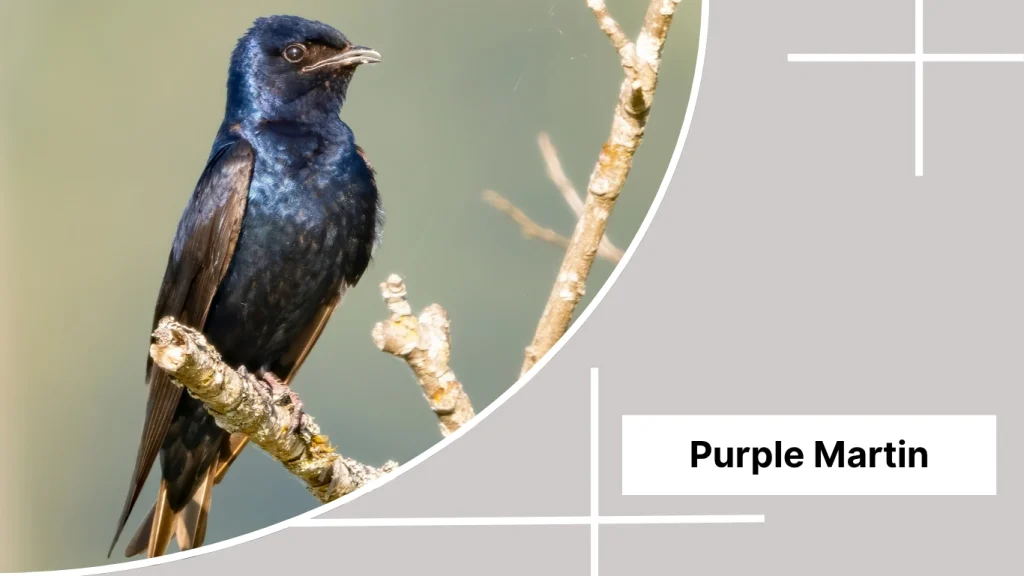
The Purple Martin is the largest swallow in North America and is renowned for its glossy, dark plumage and graceful, gliding flight. These birds are highly dependent on human-provided housing in eastern populations.
Identification
- Common Name: Purple Martin
- Scientific Name: Progne subis
- Size: 7.5 to 8.5 inches (19 to 22 cm)
- Wingspan: 15 to 16 inches (38 to 41 cm)
- Weight: 1.6 to 2.1 ounces (45 to 60 grams)
- Coloration: Adult males are entirely glossy purple-black; females are duller with lighter bellies
- Tail: Moderately forked
- Bill: Short and slightly hooked
- Eyes: Black
- Habitat: Open areas near water, human settlements; often nests in man-made houses or gourds
- Call: Rich, bubbly warbles and gurgles
- Migration: Winters in South America, especially Brazil
Behavior and Feeding
Purple Martins hunt flying insects, often high in the sky. They are sociable birds and nest in large colonies, often returning to the same nesting sites yearly.
Nesting Habits
Eastern populations rely almost entirely on nest boxes and artificial gourd houses provided by humans. Western populations use natural cavities. Nests are made of twigs, leaves, and mud.
Global Range
Breeds across North America and migrates to the Amazon Basin for winter. Their reliance on human structures in the east has made conservation efforts vital.
6. Northern Rough-winged Swallow
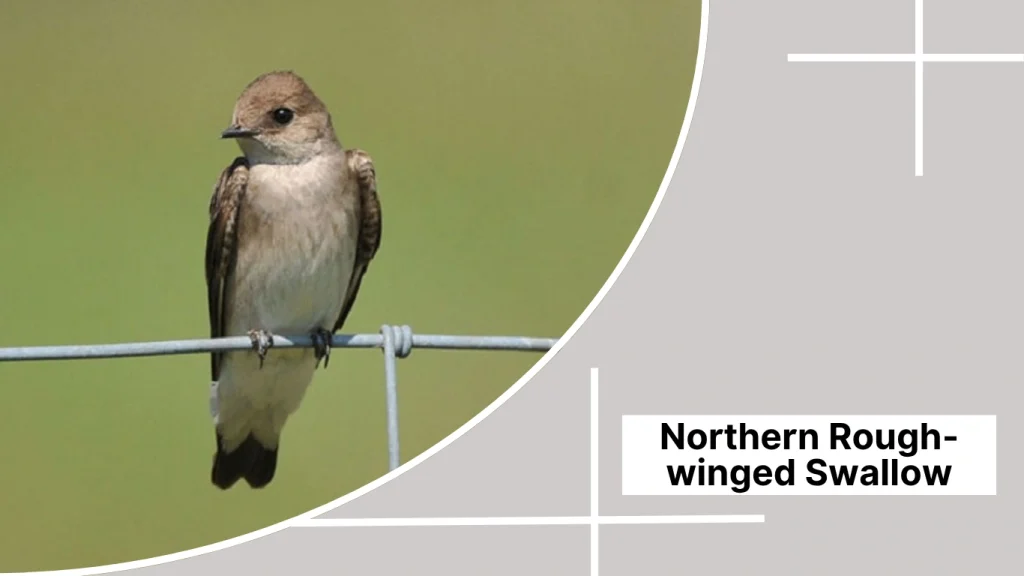
The Northern Rough-winged Swallow is a quiet and inconspicuous species named for the tiny hooks on the outer edge of its wing feathers. It prefers open areas near water and is often seen gliding low over streams and ponds as it hunts for insects.
Identification
- Common Name: Northern Rough-winged Swallow
- Scientific Name: Stelgidopteryx serripennis
- Size: 4.7 to 5.9 inches (12 to 15 cm)
- Wingspan: 11 to 11.8 inches (28 to 30 cm)
- Weight: 0.4 to 0.6 ounces (11 to 18 grams)
- Coloration: Uniform brown upperparts, slightly paler throat and underparts
- Tail: Slightly forked
- Bill: Short and black
- Eyes: Dark brown to black
- Habitat: Riverbanks, lakeshores, gravel pits, and even drainage pipes and bridges
- Call: Low, dry “brrt” or soft buzzing notes
- Migration: Winters in Central America and northern South America
Behavior and Feeding
This species forages alone or in loose flocks, flying low and smoothly to catch flying insects. It is less vocal and social than many other swallows, often nesting and foraging with minimal noise.
Nesting Habits
Northern Rough-winged Swallows nest in burrows or crevices in vertical banks, pipes, and artificial cavities. They do not build the burrow themselves but instead reuse old holes or natural cavities. Nesting materials include grass, twigs, and feathers.
Global Range
Widespread across North America in the breeding season and migrates to Central and northern South America for winter.
7. Southern Rough-winged Swallow
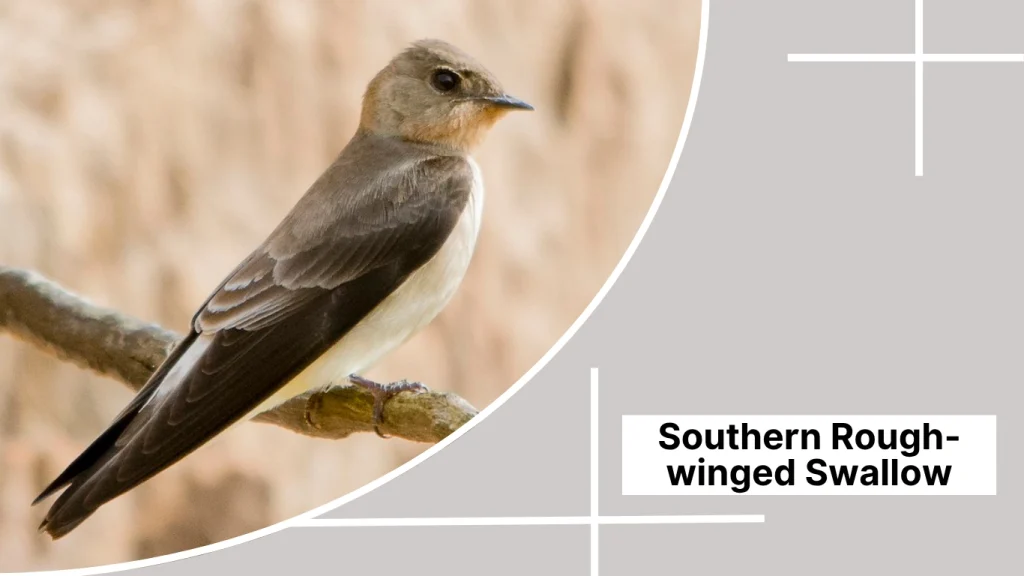
The Southern Rough-winged Swallow closely resembles its northern counterpart but is found primarily in Central and South America. It is a year-round resident in many areas and often nests in riverbanks and artificial structures near water.
Identification
- Common Name: Southern Rough-winged Swallow
- Scientific Name: Stelgidopteryx ruficollis
- Size: 5.1 to 5.5 inches (13 to 14 cm)
- Wingspan: Approximately 11 inches (28 cm)
- Weight: Around 0.6 ounces (17 grams)
- Coloration: Brownish upperparts, buffy to rufous underparts, with a washed-orange throat
- Tail: Slightly forked and rounded
- Bill: Small and dark
- Eyes: Black
- Habitat: Riverbanks, pastures, gardens, and towns near open water
- Call: Soft “chip-chip” or raspy calls
- Migration: Mostly non-migratory; some regional movements
Behavior and Feeding
These birds are often seen flying low over rivers, fields, and roads while catching insects. They tend to be solitary or found in small groups, less colonial than other swallows.
Nesting Habits
They excavate or reuse burrows in soil banks, often in roadside cuts or near water. Nests are built from grasses, rootlets, and feathers, lined into the cavity.
Global Range
Resident from southern Mexico through Central America and into much of South America, including Brazil, Argentina, and the Andes foothills.
8. Mangrove Swallow
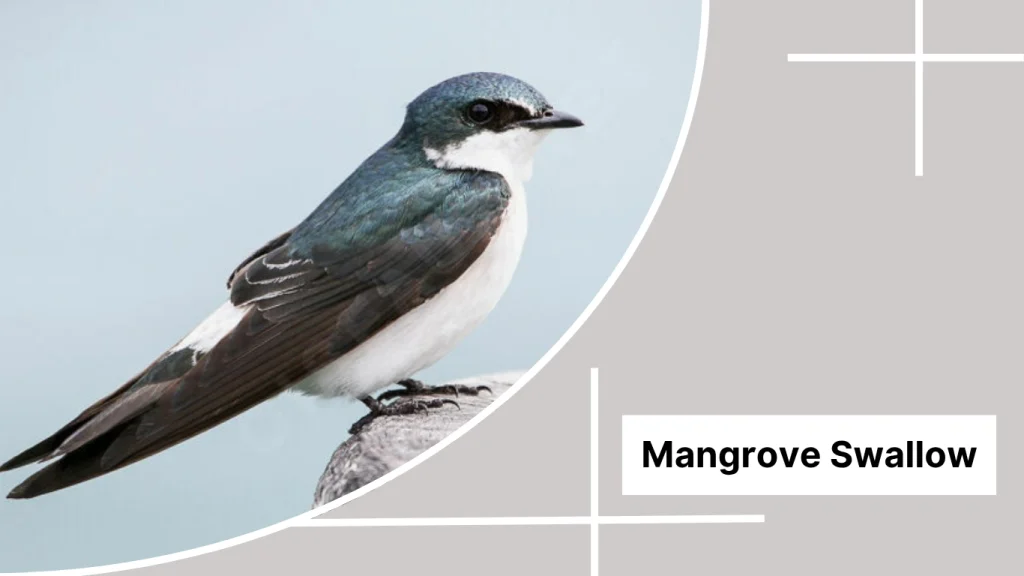
The Mangrove Swallow is a striking and compact species commonly found along coastal waterways in Central America. With its metallic green upperparts and distinctive white rump, it stands out among other swallows that share its habitat.
Identification
- Common Name: Mangrove Swallow
- Scientific Name: Tachycineta albilinea
- Size: 4.7 to 5.1 inches (12 to 13 cm)
- Wingspan: Approximately 11 inches (28 cm)
- Weight: 0.5 to 0.6 ounces (14 to 17 grams)
- Coloration: Shiny greenish-blue back, bright white underparts, and a white rump patch
- Tail: Slightly forked
- Bill: Short, black, and pointed
- Eyes: Dark
- Habitat: Mangroves, estuaries, coastal lagoons, riversides, and lakes
- Call: Soft, twittering calls often given in flight
- Migration: Largely resident; some local movements
Behavior and Feeding
Mangrove Swallows are agile fliers and feed mostly on insects caught over water or open areas near shorelines. They frequently perch on branches overhanging water and are often observed in pairs or small family groups.
Nesting Habits
They nest in natural or artificial cavities, including holes in dead trees, bank crevices, and even PVC pipes or nest boxes near water. Nests are lined with feathers and soft materials.
Global Range
Found along the coastal regions of Mexico, Central America, and northern South America. It is a non-migratory species within its warm tropical range.
9. Cave Swallow
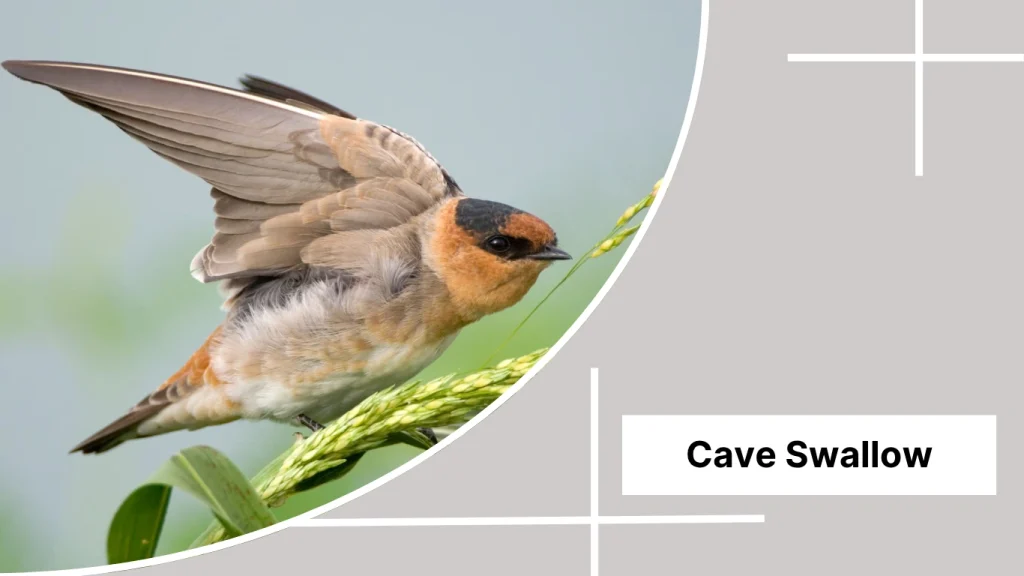
The Cave Swallow is a medium-sized swallow native to the southern United States, Mexico, and parts of Central America. It is easily identified by its square tail, pale rump, and chestnut-colored forehead and throat.
Identification
- Common Name: Cave Swallow
- Scientific Name: Petrochelidon fulva
- Size: 5.1 to 5.5 inches (13 to 14 cm)
- Wingspan: 11 to 12 inches (28 to 30 cm)
- Weight: 0.7 to 0.8 ounces (20 to 22 grams)
- Coloration: Pale underparts, rusty forehead and throat, dark blue upperparts, and pale rump
- Tail: Squared or slightly notched
- Bill: Short and broad
- Eyes: Brown
- Habitat: Limestone caves, sinkholes, highway underpasses, and culverts
- Call: Series of soft “churr” and twittering notes
- Migration: Migratory in U.S. and Mexico; winters in Central America and northern South America
Behavior and Feeding
Cave Swallows forage in open areas near their nesting sites, feeding on flying insects. They often fly in loose flocks, especially near dusk or dawn, and may mix with other swallow species.
Nesting Habits
They build mud nests in colonies, usually attached to ceilings of caves or artificial structures. The nests resemble half-bowls with open fronts and are often reused each year.
Global Range
Primarily found in the southwestern U.S., Mexico, the Caribbean, and Central America. They have adapted well to man-made structures, expanding their range northward in recent years.
10. Pacific Swallow

The Pacific Swallow is a small, fast-flying swallow commonly seen across Southeast Asia and many Pacific islands. Known for its agility and adaptability, it thrives in both rural and urban settings and often nests on buildings, bridges, and cliffs.
Identification
- Common Name: Pacific Swallow
- Scientific Name: Hirundo tahitica
- Size: 5.1 to 5.5 inches (13 to 14 cm)
- Wingspan: About 11 inches (28 cm)
- Weight: 0.4 to 0.6 ounces (11 to 16 grams)
- Coloration: Metallic blue-black upperparts, reddish forehead and throat, pale buff underparts
- Tail: Short and slightly forked
- Bill: Short and black
- Eyes: Dark brown
- Habitat: Open countryside, villages, coastlines, and urban areas
- Call: Soft, twittering notes and occasional sharp chirps
- Migration: Generally resident, with some local seasonal movements
Behavior and Feeding
Pacific Swallows hunt small flying insects over open areas, especially water bodies and rice paddies. They are often seen perching on wires or roof edges and are active throughout the day.
Nesting Habits
They build mud nests under eaves, bridges, cliffs, and other sheltered spots. The nest is usually a half-cup lined with grass and feathers. Pairs may reuse old nests or renovate them for new clutches.
Global Range
Widespread across Southeast Asia, Indonesia, the Philippines, New Guinea, and many Pacific islands including Fiji, Samoa, and Tahiti.
11. Welcome Swallow
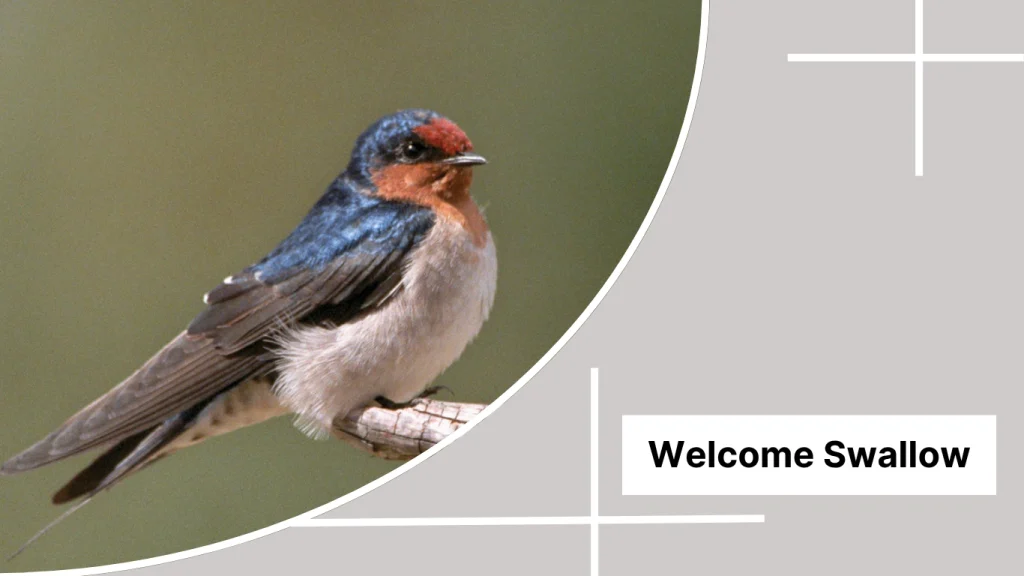
The Welcome Swallow is a graceful and colorful swallow found throughout Australia and parts of New Zealand. Its name reflects its status as a herald of spring and its friendly presence around human dwellings.
Identification
- Common Name: Welcome Swallow
- Scientific Name: Hirundo neoxena
- Size: 5.5 to 6 inches (14 to 15 cm)
- Wingspan: 11 to 12 inches (28 to 31 cm)
- Weight: 0.5 to 0.6 ounces (13 to 17 grams)
- Coloration: Shiny steel-blue back, cinnamon-red forehead and throat, pale underparts
- Tail: Long and deeply forked with white tail spots
- Bill: Small and black
- Eyes: Dark
- Habitat: Open fields, wetlands, farmland, and near buildings or bridges
- Call: Continuous twittering and chirping while in flight
- Migration: Mostly sedentary, some seasonal movements in southern regions
Behavior and Feeding
These swallows feed on insects caught in flight, often over water or open fields. They are agile and acrobatic, with quick swooping patterns and frequent perching near nests.
Nesting Habits
They build neat mud cup nests under roofs, ledges, and bridges. The nest is reinforced with feathers, grasses, and animal hair. They often nest in close proximity to humans and will return to the same location year after year.
Global Range
Widespread throughout Australia and Tasmania, and also found in parts of New Zealand, New Guinea, and nearby islands. Adaptable to both natural and urban landscapes.
12. Wire-tailed Swallow
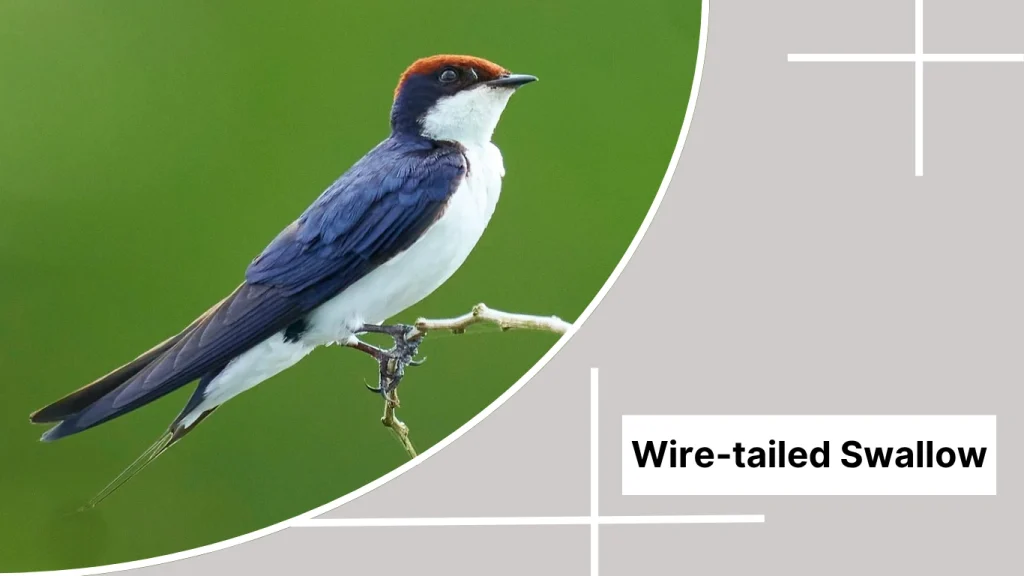
The Wire-tailed Swallow is a striking and elegant species known for its long, filament-like outer tail feathers. It is typically seen near water and open habitats across Africa and South Asia, often perched on wires, fences, and railings.
Identification
- Common Name: Wire-tailed Swallow
- Scientific Name: Hirundo smithii
- Size: 6 to 6.7 inches (15 to 17 cm), including tail filaments
- Wingspan: Approximately 11 inches (28 cm)
- Weight: 0.5 to 0.6 ounces (14 to 17 grams)
- Coloration: Glossy blue upperparts, bright chestnut crown and forehead, pure white underparts
- Tail: Short with two thin, wire-like outer feathers extending beyond the tail
- Bill: Short, black, and slightly curved
- Eyes: Dark
- Habitat: Open countryside, wetlands, rivers, lakes, and often near human structures
- Call: High-pitched, twittering calls; often given in flight
- Migration: Mostly resident with minor local movements
Behavior and Feeding
Wire-tailed Swallows forage close to the ground or water surface, snatching up flying insects. They are frequently seen alone or in pairs, rarely forming large flocks. Perching behavior is common, especially on wires near water.
Nesting Habits
They construct neat, cup-shaped mud nests on vertical surfaces such as bridges, culverts, and walls. Nests are lined with feathers and sometimes reused. Unlike colonial swallows, they prefer nesting in solitude or scattered pairs.
Global Range
Found across Sub-Saharan Africa and parts of South Asia, including India, Pakistan, and Sri Lanka. The African and Asian populations are sometimes considered separate subspecies.
13. Red-rumped Swallow

The Red-rumped Swallow is a graceful and quiet swallow known for its reddish rump and dark underparts. It prefers open landscapes and hilly regions and often builds its nests on cliffs, buildings, and temples.
Identification
- Common Name: Red-rumped Swallow
- Scientific Name: Cecropis daurica
- Size: 6 to 6.7 inches (15 to 17 cm)
- Wingspan: 11.5 to 13 inches (29 to 33 cm)
- Weight: 0.5 to 0.7 ounces (14 to 20 grams)
- Coloration: Glossy blue-black back, reddish crown and rump, buff throat, and dusky underparts
- Tail: Long and deeply forked
- Bill: Small and black
- Eyes: Dark brown
- Habitat: Open hillsides, farmlands, cliffs, and human settlements
- Call: Soft “chit-chit” notes and low twittering
- Migration: Partial migrant—northern populations migrate, others are resident
Behavior and Feeding
Red-rumped Swallows feed on flying insects, often alone or in pairs. They fly slower and lower than other swallows, with occasional glides. They’re quieter and less gregarious, preferring sparse groups or solitary activity.
Nesting Habits
They build flask-shaped mud nests with long entrance tunnels, often attached to cliff faces, overhangs, or walls. These enclosed nests provide strong protection and are often reused year after year.
Global Range
Widespread from southern Europe through the Middle East, South Asia, and parts of East Asia. Resident or migratory depending on the local climate and altitude.
14. White-throated Swallow
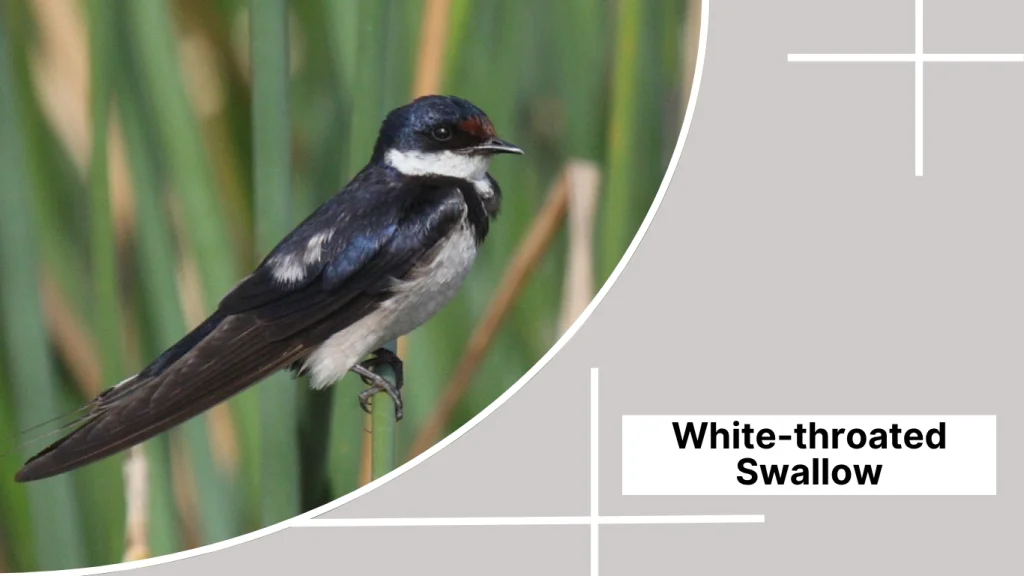
The White-throated Swallow is a sleek and graceful bird native to southern Africa. It is easily recognized by its sharp white throat, glossy blue back, and rich chestnut forehead, often seen flying low over water in search of insects.
Identification
- Common Name: White-throated Swallow
- Scientific Name: Hirundo albigularis
- Size: 5.9 to 6.3 inches (15 to 16 cm)
- Wingspan: Around 12 inches (30 cm)
- Weight: 0.5 to 0.6 ounces (14 to 17 grams)
- Coloration: Glossy dark blue back and wings, white throat and underparts, chestnut forehead
- Tail: Long, forked tail with white spots
- Bill: Small and black
- Eyes: Dark brown
- Habitat: Rivers, lakes, open grasslands, farmlands, and human settlements
- Call: Fast chattering and sweet twittering tones
- Migration: Partial migrant within southern Africa
Behavior and Feeding
Feeds mainly on flying insects caught over water and open areas. Often seen gliding over rivers and dams. Typically active in small groups or pairs, they frequently return to familiar feeding and nesting sites.
Nesting Habits
They build bowl-shaped mud nests against vertical surfaces such as cliffs, culverts, and building walls. Nests are reinforced with grass and feathers. They often return to the same nest site in successive years.
Global Range
Occurs primarily in southern Africa, including South Africa, Namibia, Botswana, and Zimbabwe.
15. House Martin
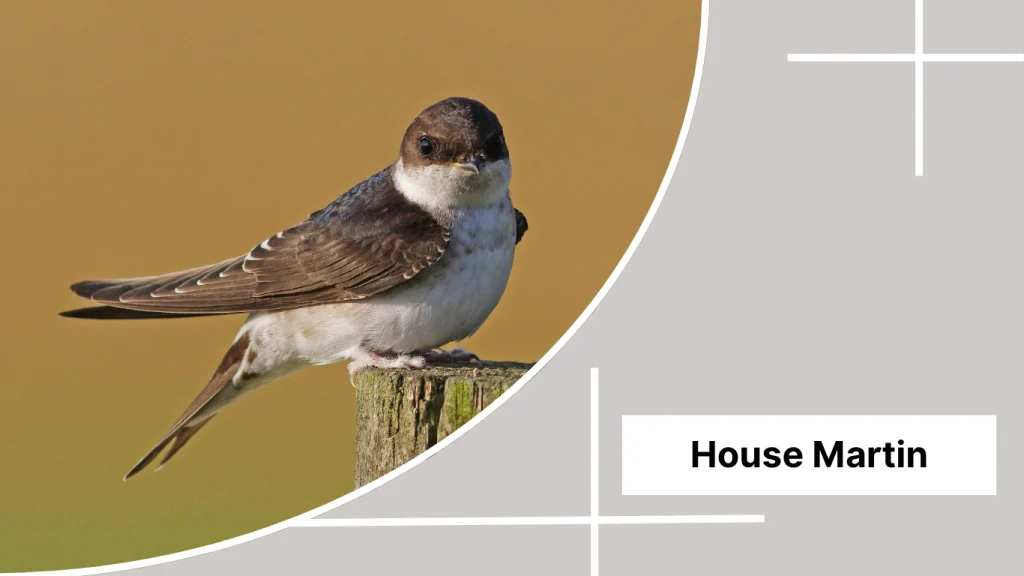
The House Martin is a small, agile swallow with a white rump and belly, often found nesting under the eaves of buildings in towns and villages. It is a familiar summer visitor in Europe and parts of Asia.
Identification
- Common Name: House Martin
- Scientific Name: Delichon urbicum
- Size: 5 to 5.5 inches (13 to 14 cm)
- Wingspan: 10.5 to 12 inches (27 to 30 cm)
- Weight: 0.5 to 0.7 ounces (13 to 20 grams)
- Coloration: Glossy blue-black upperparts, bright white underparts and rump
- Tail: Short and forked
- Bill: Small and black
- Eyes: Dark
- Habitat: Urban areas, cliffs, and open countryside near water
- Call: Soft twittering and chattering sounds
- Migration: Long-distance migrant; winters in Africa and tropical Asia
Behavior and Feeding
Feeds on flying insects over meadows, lakes, and towns. Its fluttery, buoyant flight makes it easily distinguishable from other swallows. Frequently gathers in flocks before migration.
Nesting Habits
Builds mud nests beneath eaves and ledges of buildings. The nests are fully enclosed with a small entrance hole. House Martins often breed in colonies and are loyal to nest sites.
Global Range
Breeds across Europe and temperate Asia; winters in Sub-Saharan Africa and tropical parts of Asia.
16. Sand Martin
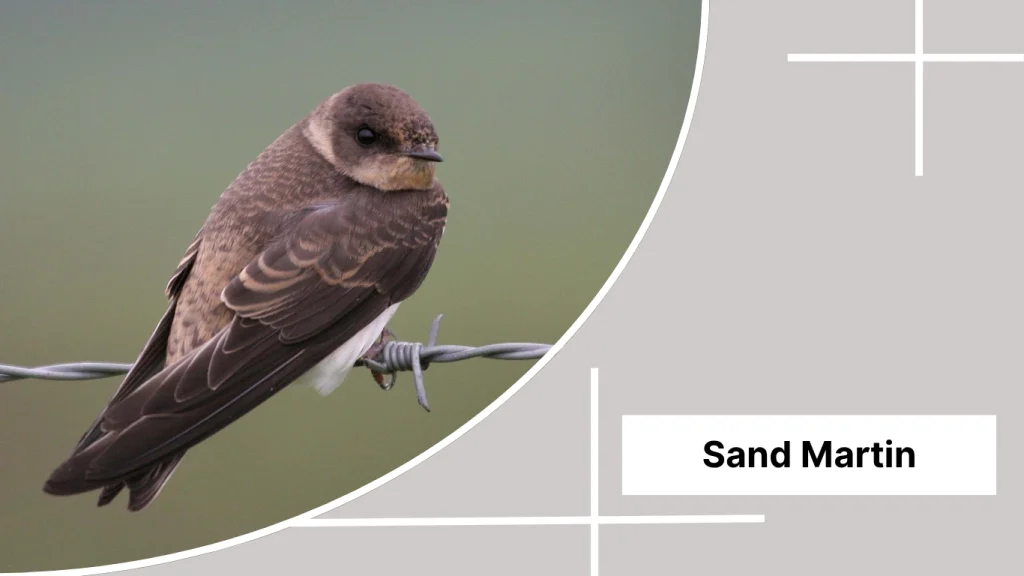
The Sand Martin, also known as the Bank Swallow in North America, is a small and slender swallow that nests colonially in sandy banks. It is widely distributed across the Northern Hemisphere and known for its soft, rapid flight over rivers and open fields.
Identification
- Common Name: Sand Martin
- Scientific Name: Riparia riparia
- Size: 4.7 to 5.1 inches (12 to 13 cm)
- Wingspan: 10.6 to 11.8 inches (27 to 30 cm)
- Weight: 0.4 to 0.6 ounces (10 to 16 grams)
- Coloration: Brown upperparts, distinct brown chest band, and white underparts
- Tail: Slightly forked
- Bill: Small and dark
- Eyes: Black
- Habitat: Sandy riverbanks, quarries, lakeshores, and dunes
- Call: Harsh, buzzy “brrrt” or short twittering phrases
- Migration: Long-distance migrant; winters in tropical Africa, India, and Central/South America
Behavior and Feeding
Sand Martins feed exclusively on small flying insects, often over water or damp grasslands. They are very social and forage in large flocks, sometimes with other swallow species.
Nesting Habits
They excavate tunnels in vertical sandy or earthen banks. At the end of each tunnel, a nesting chamber is created and lined with feathers and grass. Colonies can number from dozens to hundreds of pairs.
Global Range
Breeds across Europe, Asia, and North America; winters in Sub-Saharan Africa, South Asia, and Latin America.
17. Blue-and-white Swallow
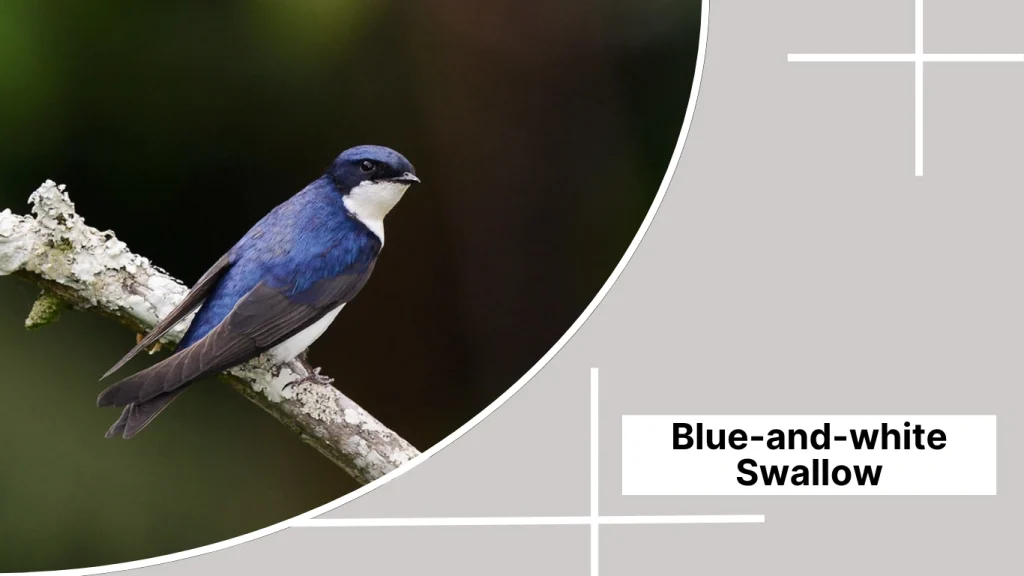
The Blue-and-white Swallow is a small, attractive bird with a crisp contrast between its glossy blue upperparts and white underparts. It is found across Central and South America and is often seen in towns, farmlands, and forest edges.
Identification
- Common Name: Blue-and-white Swallow
- Scientific Name: Pygochelidon cyanoleuca
- Size: 4.7 to 5.1 inches (12 to 13 cm)
- Wingspan: Approximately 11 inches (28 cm)
- Weight: 0.4 to 0.5 ounces (12 to 15 grams)
- Coloration: Glossy blue upperparts, pure white underparts and throat
- Tail: Slightly forked
- Bill: Short and black
- Eyes: Dark brown
- Habitat: Urban areas, farms, forest edges, and open fields
- Call: Soft, high-pitched twittering and chirping
- Migration: Mostly resident; some seasonal altitudinal movements
Behavior and Feeding
These swallows feed on flying insects and are commonly seen darting over fields and near buildings. They are agile fliers and often perch on wires or fences.
Nesting Habits
They use natural cavities, holes in buildings, and nest boxes to raise their young. The nest is typically cup-shaped and lined with soft materials like feathers.
Global Range
Widespread across Central and South America, from southern Mexico to Argentina and Chile, including highland and lowland regions.
18. Golden Swallow
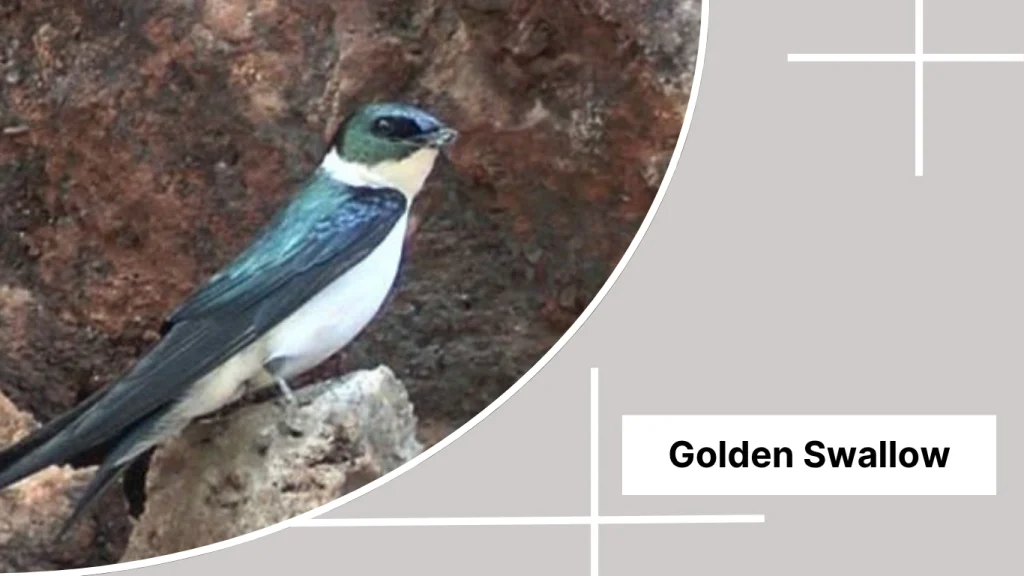
The Golden Swallow is a rare and shimmering swallow species with a brilliant metallic green-bronze sheen. Native to the Caribbean, it was once widespread but is now critically endangered and likely extinct in some parts of its former range.
Identification
- Common Name: Golden Swallow
- Scientific Name: Tachycineta euchrysea
- Size: 5.1 to 5.5 inches (13 to 14 cm)
- Wingspan: About 11 inches (28 cm)
- Weight: Approximately 0.6 ounces (16 to 17 grams)
- Coloration: Iridescent golden-green upperparts, metallic blue-green wings, and white belly
- Tail: Slightly forked with a neat finish
- Bill: Small, black, slightly curved
- Eyes: Dark
- Habitat: Montane forests, pine woodlands, and open highland areas
- Call: High-pitched “tsee-tsee” and sharp trills
- Migration: Non-migratory
Behavior and Feeding
Golden Swallows hunt flying insects over clearings, open slopes, and forest edges. They are swift, agile, and usually observed in pairs or small groups.
Nesting Habits
They nest in tree cavities and old woodpecker holes, often in cliffs or tall dead trees. The nest is built with fine grasses and feathers.
Global Range
Historically found in Jamaica and Hispaniola. Now likely extinct in Jamaica, and the population in the Dominican Republic is critically endangered and highly localized.
19. Striated Swallow
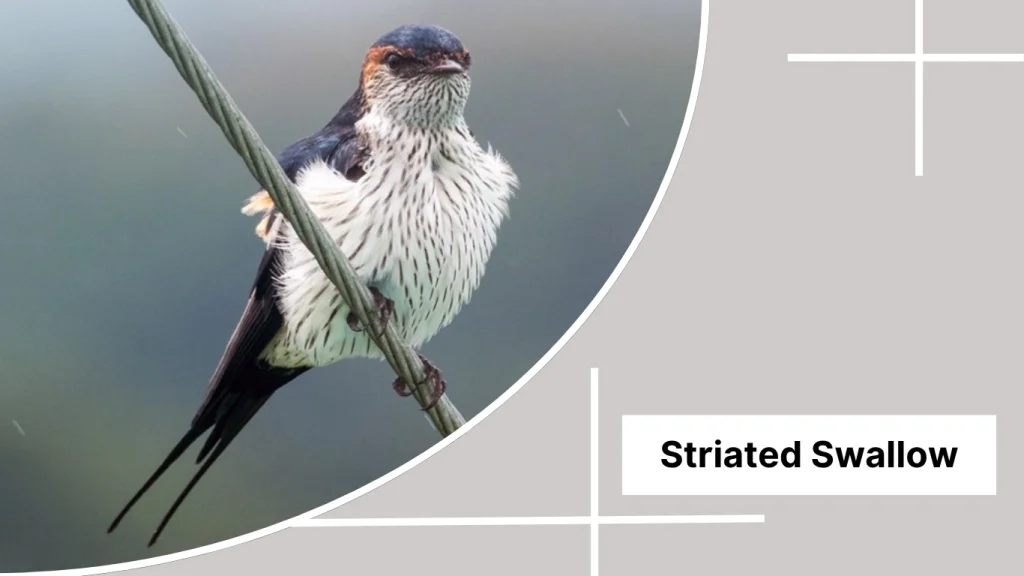
The Striated Swallow is a robust and colorful swallow found throughout South and Southeast Asia. Its reddish forehead and streaked underparts make it easy to distinguish from other swallows in its range.
Identification
- Common Name: Striated Swallow
- Scientific Name: Cecropis striolata
- Size: 6.3 to 6.7 inches (16 to 17 cm)
- Wingspan: Approximately 12 inches (30 cm)
- Weight: 0.6 to 0.7 ounces (17 to 20 grams)
- Coloration: Blue-black upperparts, rufous forehead and rump, and creamy underparts with fine dark streaks
- Tail: Long and forked with white spots
- Bill: Short and slightly curved
- Eyes: Dark brown
- Habitat: Hill forests, open areas, farmland, and cliffs
- Call: Pleasant chattering and high-pitched whistles
- Migration: Mostly resident; some local altitudinal shifts
Behavior and Feeding
Feeds on flying insects while gliding and swooping in open areas. Often seen in small flocks or family groups. Prefers less urbanized areas compared to other swallows.
Nesting Habits
Builds flask-shaped mud nests with a long entrance tunnel, attached to cliffs, buildings, and bridges. Nests are lined with feathers and plant material.
Global Range
Found across the Indian subcontinent, Southeast Asia, southern China, and the Greater Sundas. It inhabits both lowland and upland regions depending on the season.
20. White-bibbed Swallow
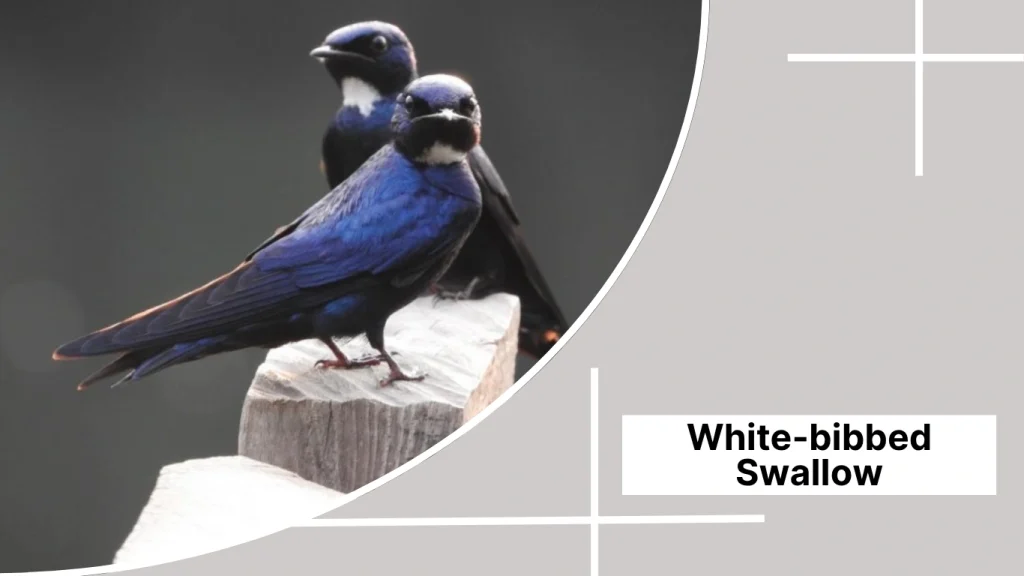
The White-bibbed Swallow is a rare and elegant swallow found primarily in the Andes of South America. It is easily recognized by its deep blue plumage and contrasting bold white bib. This high-altitude specialist is elusive and typically seen flying low over mountain streams and valleys.
Identification
- Common Name: White-bibbed Swallow
- Scientific Name: Hirundo nigrita
- Size: 5.5 to 6 inches (14 to 15 cm)
- Wingspan: About 11.5 inches (29 cm)
- Weight: Approximately 0.6 ounces (16 to 17 grams)
- Coloration: Deep glossy blue upperparts, prominent white bib and throat, and bluish underparts
- Tail: Moderately forked
- Bill: Short, black, slightly flattened
- Eyes: Dark brown
- Habitat: Highland valleys, fast-flowing rivers, Andean foothills, and nearby grasslands
- Call: Thin, whistled chirps, less musical than other swallows
- Migration: Largely resident with minimal movement
Behavior and Feeding
White-bibbed Swallows are often observed flying low over streams and gorges in pairs or small flocks. They feed on small flying insects, snatched just above the water surface or near rocky outcrops.
Nesting Habits
Their nests are typically located in natural crevices of cliffs or under rock ledges. The structure is built with mud and grass, lined with feathers for insulation. Nesting sites are often remote and well protected.
Global Range
Restricted to mountainous regions of South America, especially the eastern Andes in countries like Colombia, Ecuador, Peru, and Bolivia. Considered uncommon to rare due to limited distribution and specialized habitat.