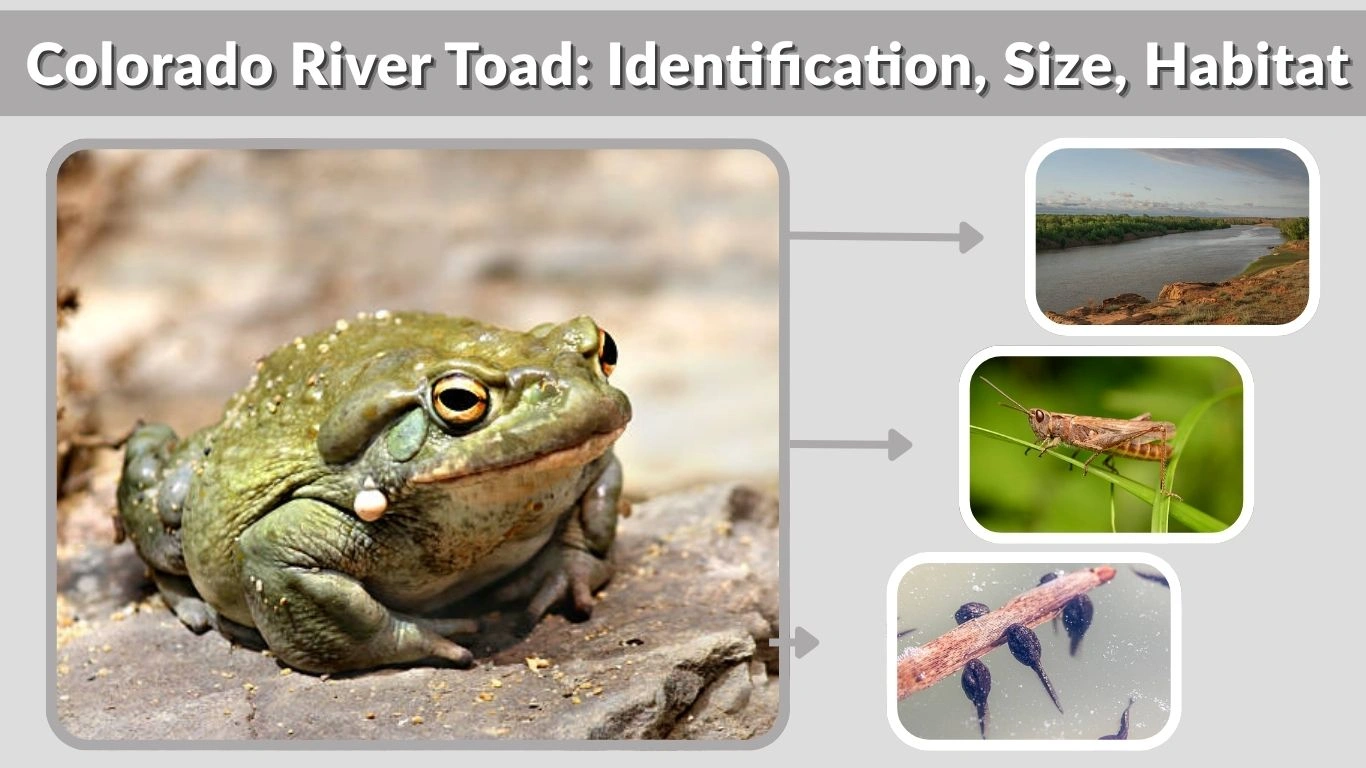






The Western toad (Anaxyrus boreas) is a common amphibian found across western North America, known for its adaptability and distinctive appearance. It inhabits a wide range of environments, from forests and wetlands to mountainous regions. This species plays an important ecological role by controlling insect populations. However, in some areas, Western toad populations are declining due to habitat loss and disease. Understanding its identification, habitat, size, and behavior helps support conservation efforts and proper recognition.
What is a Western Toad?
The Western toad is a medium-sized amphibian belonging to the Bufonidae family, commonly referred to as “true toads.” It is widely distributed and can survive in diverse climates, including cold mountainous regions. This adaptability makes it one of the most widespread toad species in western North America.
Scientific Name and Classification
The scientific name of the Western toad is Anaxyrus boreas. It belongs to the Bufonidae family, which includes many terrestrial toads known for their dry, warty skin and toxin-producing glands. Like other toads in this family, it uses mild toxins as a defense against predators.
Subspecies
There are recognized subspecies of the Western toad, including the boreal toad (Anaxyrus boreas boreas) and the California toad (Anaxyrus boreas halophilus). These subspecies differ slightly in distribution and physical characteristics but share many common traits.
Western Toad Identification
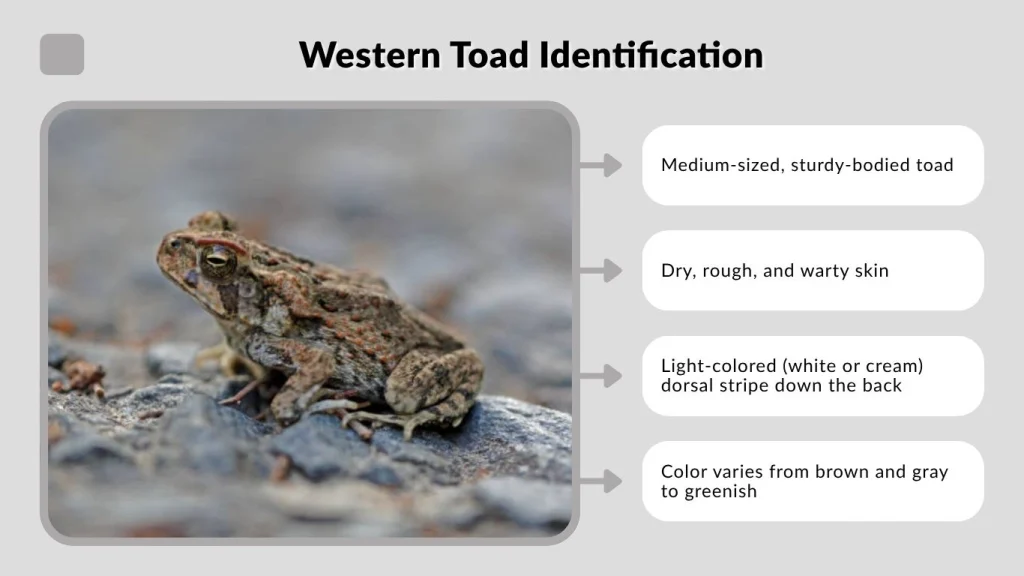
The Western toad is easy to identify thanks to its distinctive markings and typical “true toad” features. It has a compact body, rough skin, and a noticeable light stripe along its back, which helps distinguish it from similar species. Correct identification is important, especially in areas where multiple toad species may coexist.
Key Identification Features
- Medium-sized, sturdy-bodied toad
- Dry, rough, and warty skin
- Light-colored (white or cream) dorsal stripe down the back
- Color varies from brown and gray to greenish
- Oval parotoid (poison) glands behind the eyes
- Horizontal pupils
- Short legs with slow, walking or hopping movement
- Active during dusk, night, and sometimes daytime
Quick Identification Tips
- Look for the distinct pale stripe along the back
- Check for warty skin and compact body shape
- Notice moderate size (not too large like cane toads)
- Often found near water during breeding season
Western Toad Size
The Western toad is considered a medium-sized toad, with noticeable differences between males and females.
Average Size
Most Western toads measure between 5 and 13 centimeters (2 to 5 inches) in length. This size makes them smaller than large species like cane toads but still easily visible in their habitat.
Differences Between Sexes
Females are generally larger than males, which is common among many amphibian species. Males are usually smaller and may have darker throats, especially during breeding season.
Weight and Build
Western toads have a compact and sturdy body structure. While not as heavy as larger toad species, they still appear robust and well-adapted for life on land.
Western Toad Habitat
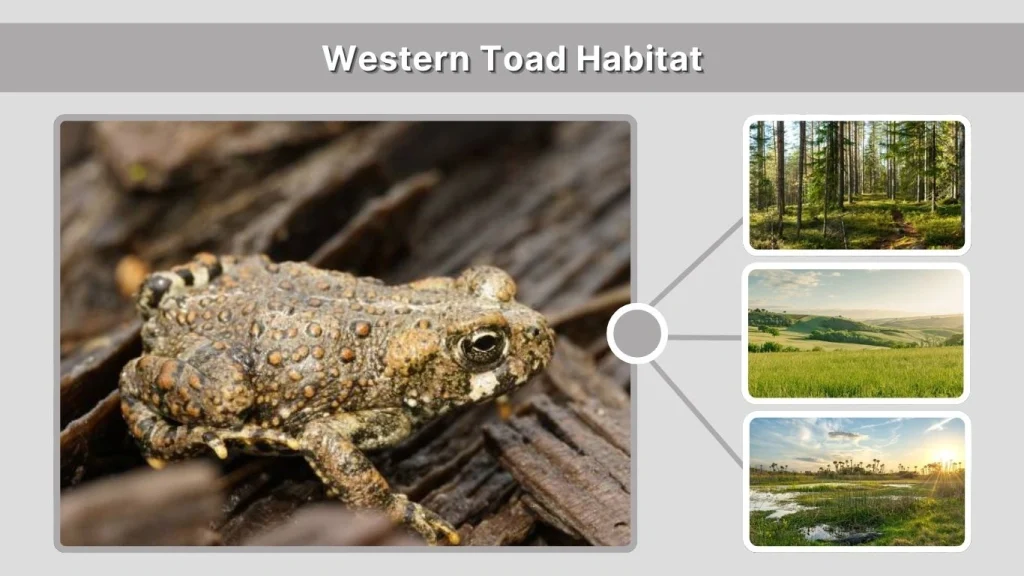
The Western toad is highly adaptable and can be found in a wide variety of environments across its range.
Geographic Range
This species is native to western North America, including the western United States and parts of Canada such as British Columbia and Alberta. Its wide distribution reflects its ability to adapt to different climates and elevations.
Preferred Environments
Western toads inhabit forests, grasslands, meadows, and wetlands. They are also commonly found in mountainous regions, sometimes at high elevations. Access to water is important, especially during the breeding season.
Seasonal Behavior
Western toads are active during warmer months and enter hibernation during winter. They often burrow into soil or hide under rocks and logs to survive cold temperatures. In spring, they emerge and migrate to breeding sites.
Western Toad Diet
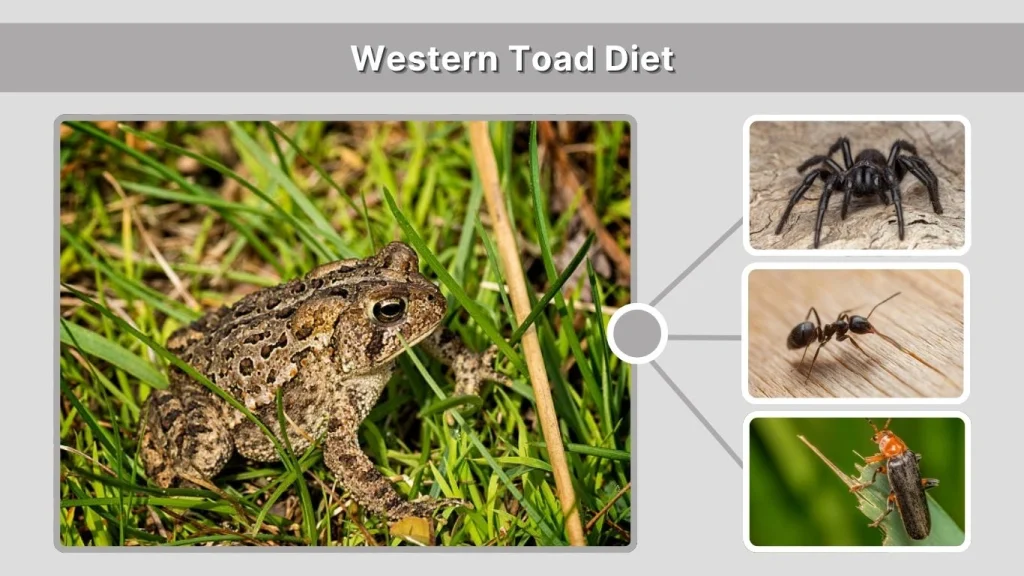
The Western toad plays an important role in controlling insect populations through its feeding habits.
Common Foods
Its diet mainly consists of insects such as ants, beetles, flies, and spiders. It also eats other small invertebrates found in its habitat.
Feeding Behavior
Western toads are opportunistic feeders. They use a sit-and-wait strategy, remaining still until prey comes within reach. They then quickly capture it using their sticky tongue. Feeding typically occurs during the evening and nighttime when prey is more active.
Western Toad Life Cycle
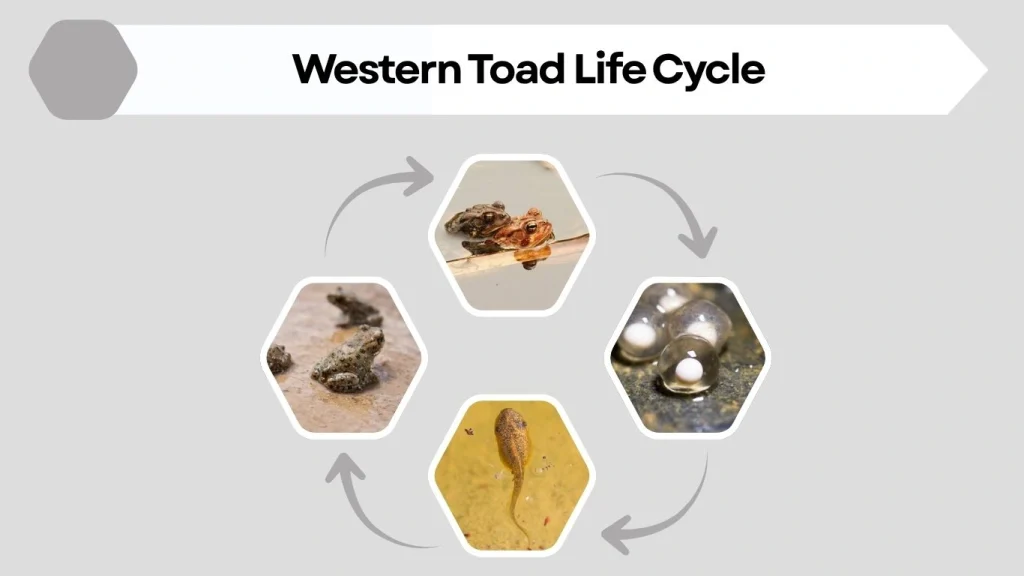
The Western toad has a typical amphibian life cycle that depends heavily on water availability, especially during the breeding season. Its development stages allow it to adapt to both aquatic and terrestrial environments.
Breeding Season
Breeding usually occurs in spring to early summer, depending on the region and climate. Adult toads migrate to ponds, lakes, or slow-moving water to reproduce. Males call to attract females, creating noticeable breeding gatherings.
Egg Stage
Females lay eggs in long, gelatinous strings in shallow water. These strings can contain thousands of eggs, increasing the chances that some will survive despite predators and environmental challenges.
Tadpole Stage
The eggs hatch into small, dark-colored tadpoles. These tadpoles feed on algae and organic material in the water. They often gather in large groups and grow quickly as they prepare for transformation.
Metamorphosis and Adult Stage
Within a few weeks, tadpoles develop legs and lungs, transforming into small toadlets. These young toads leave the water and begin life on land. As adults, they can live for several years and return to water only for breeding.
Western Toad vs American Toad
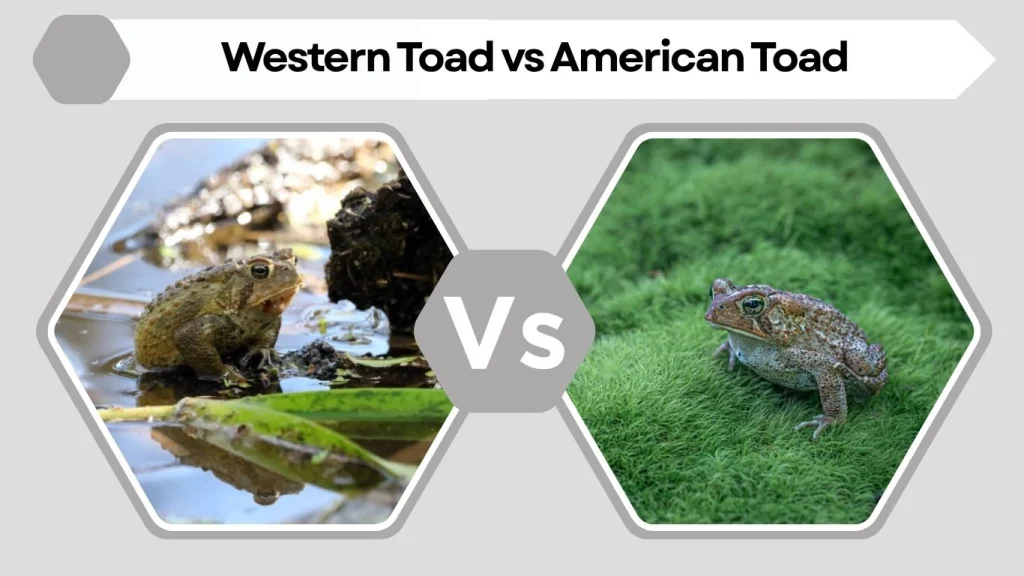
The Western toad is often compared with the American toad, but there are several key differences that help distinguish them.
Key Differences
The Western toad is found in western North America, while the American toad is more common in eastern regions. Their habitats and ranges rarely overlap, which makes geographic location an important identification factor.
Identification Differences
Western toads typically have a clear, light-colored stripe running down their back, while American toads usually have more distinct dark spots on their bodies. The overall coloration and patterning also differ slightly between the two species.
Interesting Western Toad Facts
The Western toad has several interesting features that make it unique among amphibians.
Unique Traits
- Has a distinct light stripe down its back
- Produces mild toxins for defense
- Can survive in a wide range of habitats
Adaptations
- Able to live at high elevations
- Survives cold winters through hibernation
- Highly adaptable to different climates
Ecological Role
- Helps control insect populations
- Serves as prey for birds, mammals, and reptiles
- Contributes to ecosystem balance
Are Western Toads Dangerous?
Western toads are generally not dangerous, but they do have mild toxins that serve as a defense mechanism.
Toxicity
The glands behind their eyes produce a mild toxin that can deter predators. While not deadly in most cases, it can cause irritation if ingested or if it comes into contact with sensitive areas.
Risks to Pets
Pets such as dogs may experience drooling or mild discomfort if they bite or lick a Western toad. However, the effects are usually less severe compared to highly toxic species like cane toads.
Human Interaction
Western toads are harmless to humans if left undisturbed. It is best to avoid handling them unnecessarily, and hands should be washed after contact to prevent irritation.
Conservation Status
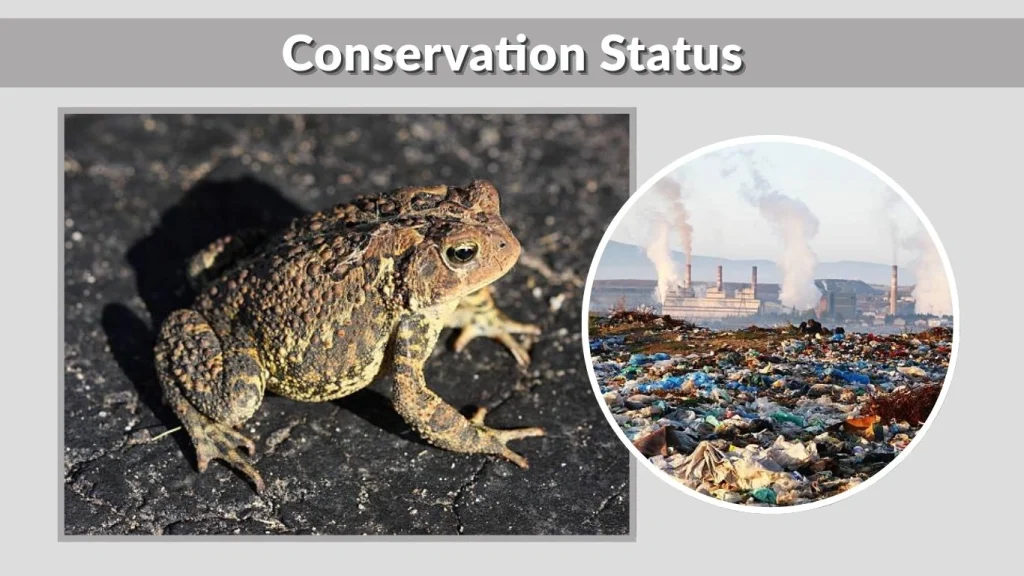
Although the Western toad is still found across a wide range, some populations are declining due to environmental pressures.
Threats
Major threats include habitat loss, climate change, pollution, and disease—particularly the chytrid fungus, which has affected many amphibian species worldwide. Road mortality and human activity also contribute to population declines.
Protection Efforts
Efforts to protect Western toads include habitat conservation, monitoring populations, and raising public awareness. In some areas, conservation programs focus on protecting breeding sites and reducing environmental threats.
Conclusion
The Western toad is a versatile and important amphibian species found throughout western North America. With its distinctive dorsal stripe, adaptable habitat range, and role in controlling insect populations, it plays a valuable part in maintaining ecological balance. However, threats such as habitat loss and disease highlight the need for conservation efforts. By understanding its identification, behavior, and life cycle, we can better appreciate this species and contribute to its protection.
FAQs
What is a Western toad?
The Western toad (Anaxyrus boreas) is a medium-sized amphibian native to western North America, commonly found in forests, wetlands, and mountainous regions.
How do you identify a Western toad?
It can be identified by its dry, warty skin, brown or gray coloration, and a distinctive light stripe running down its back.
How big do Western toads get?
Western toads typically grow between 5–13 cm (2–5 inches), with females generally larger than males.
Where do Western toads live?
They live in a wide range of habitats, including forests, grasslands, wetlands, and mountain regions across western North America.
Are Western toads dangerous?
No, they are not dangerous. They produce mild toxins that may cause irritation but are generally harmless to humans.