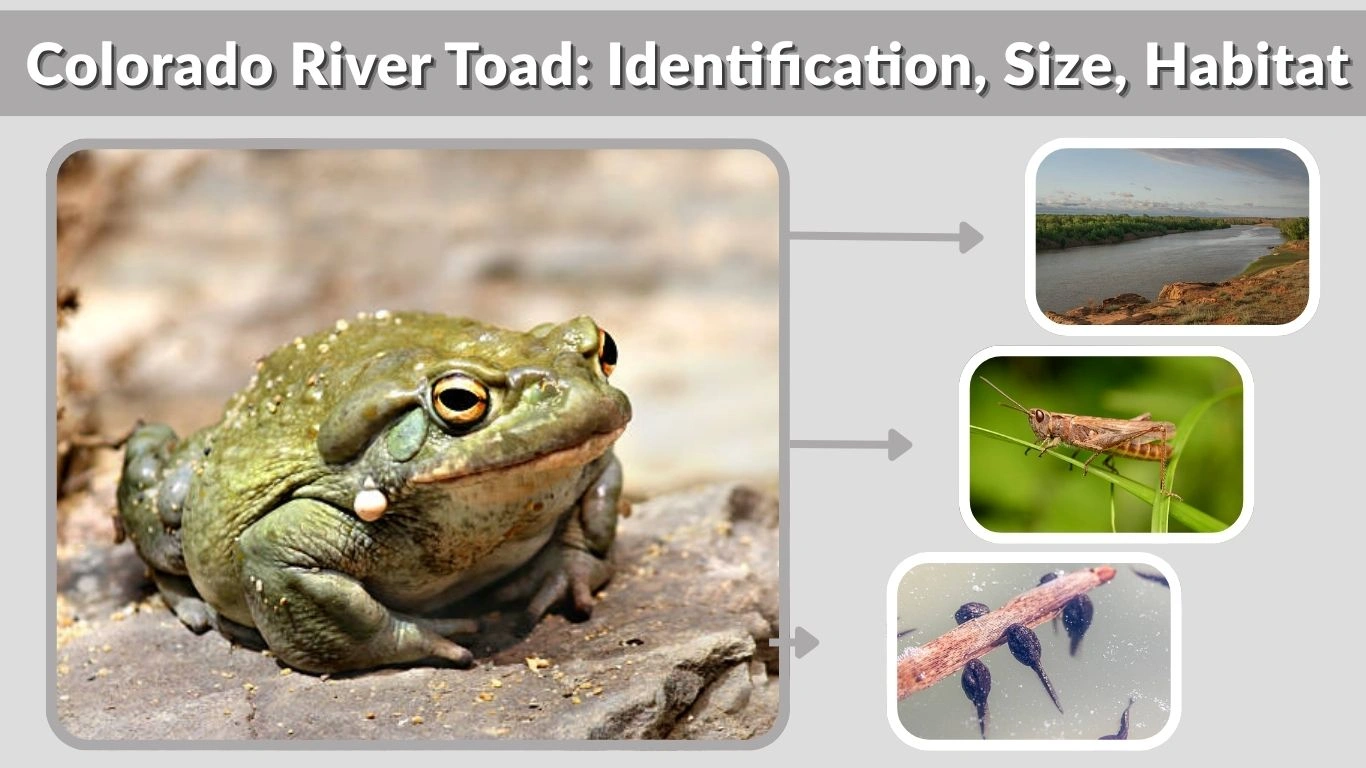






The Southern toad (Anaxyrus terrestris) is a common amphibian found throughout the southeastern United States. Known for its warty skin and distinctive head ridges, this species thrives in a variety of environments, including forests, wetlands, and even residential areas. It plays an important role in controlling insect populations, making it beneficial to ecosystems and gardens alike. Understanding its identification, habitat, size, and behavior can help distinguish it from similar species and appreciate its ecological value.
What is a Southern Toad?
The Southern toad is a medium-sized amphibian belonging to the Bufonidae family, often referred to as “true toads.” It is well adapted to warm, humid environments and is commonly encountered in both natural and urban settings. Its ability to live near humans makes it one of the more familiar toad species in its range.
Scientific Name and Classification
The scientific name of the Southern toad is Anaxyrus terrestris. It belongs to the Bufonidae family, which includes many terrestrial toads known for their dry, warty skin and toxin-producing glands. These toxins provide protection against predators.
Geographic Range
Southern toads are native to the southeastern United States, including Florida, Georgia, South Carolina, North Carolina, and Alabama. They are especially abundant in Florida, where they are one of the most commonly seen amphibians.
Southern Toad Identification

The Southern toad is easy to identify thanks to its rough, warty skin and distinctive head ridges. Unlike some larger or invasive toads, it has a more compact body and noticeable cranial crests that form raised bumps on the head. These features make it stand out from similar species in its range.
Key Identification Features
- Medium-sized, compact-bodied toad
- Dry, rough, and warty skin
- Brown, gray, or reddish coloration
- Prominent cranial crests (head ridges with knob-like bumps)
- Oval parotoid (poison) glands behind the eyes
- Short legs with slow, hopping movement
- Mostly active at night
Quick Identification Tips
- Look for raised head ridges with bumps (key feature)
- Notice the warty skin and compact size
- Check for moderate size (smaller than cane toads)
- Often found near lights or moist areas at night
Southern Toad Size
The Southern toad is considered a medium-sized toad, smaller than invasive species like cane toads but still easy to spot.
Average Size
Most Southern toads measure between 5 and 9 centimeters (2 to 3.5 inches) in length. Their moderate size makes them common but not overly large compared to other toads.
Differences Between Sexes
Females are generally larger than males, which is typical among many amphibian species. Males are often smaller and may have darker throats, especially during breeding season.
Body Structure
Southern toads have a compact and sturdy body. Their rough skin and solid build help them survive in a variety of environments, from forests to suburban areas.
Southern Toad Habitat
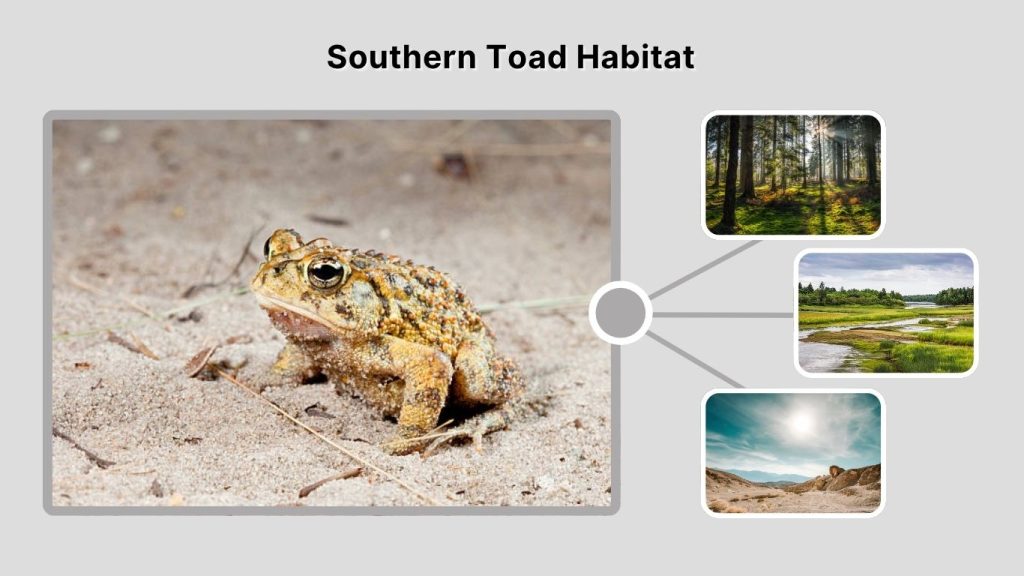
The Southern toad is highly adaptable and can thrive in both natural and human-altered environments.
Preferred Environments
Southern toads are commonly found in forests, wetlands, grasslands, and sandy areas. They prefer moist environments but can tolerate short periods of dryness by seeking shelter underground or under debris.
Urban Adaptation
One of the reasons Southern toads are so common is their ability to live in urban and suburban areas. They are frequently seen in gardens, parks, and backyards, especially at night when they come out to feed.
Seasonal Behavior
Southern toads are most active during warm months, particularly in spring and summer. During colder or drier periods, they may burrow into the soil or hide in protected areas to conserve moisture and regulate body temperature.
Southern Toad Diet

The Southern toad plays an important role in controlling insect populations through its feeding habits.
Common Foods
Its diet mainly consists of insects such as ants, beetles, termites, and flies. It also consumes other small invertebrates found in its habitat.
Feeding Behavior
Southern toads are opportunistic feeders. They use a sit-and-wait strategy, remaining still until prey comes close. They then quickly capture it using their sticky tongue. Feeding usually occurs at night when insects are most active.
Southern Toad Life Cycle
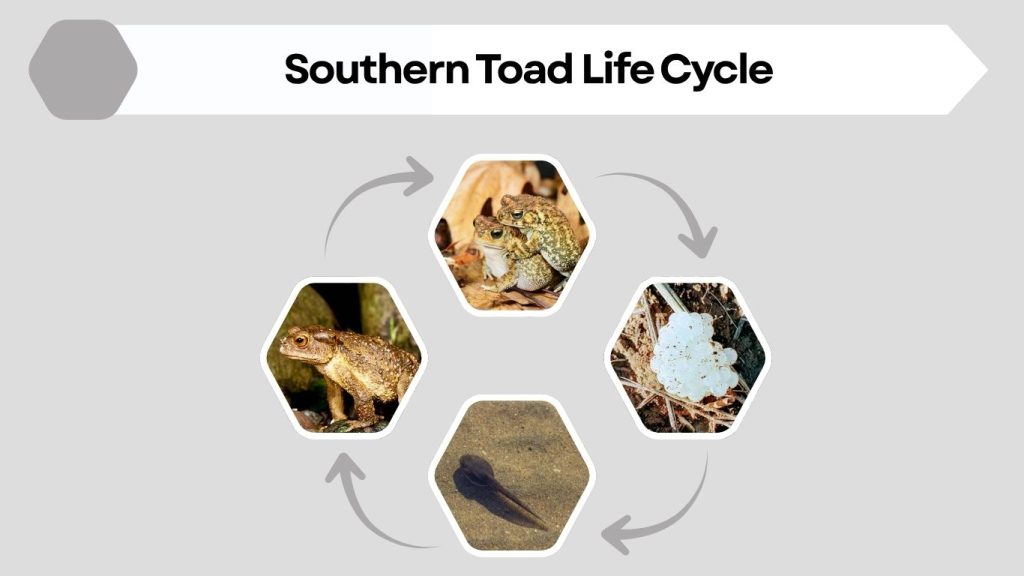
The Southern toad follows a typical amphibian life cycle that depends on water for reproduction and land for adult life. Its ability to reproduce in large numbers helps maintain stable populations.
Breeding Season
Breeding usually occurs from spring through summer, especially after heavy rains. Male toads gather near water and produce a high-pitched trill to attract females. These calls are often heard at night.
Egg Stage
Females lay eggs in long, jelly-like strings in shallow water such as ponds, ditches, or temporary pools. Each female can lay thousands of eggs at once, increasing survival chances.
Tadpole Stage
The eggs hatch into small, dark-colored tadpoles within a few days. These tadpoles feed on algae and organic matter in the water. They grow quickly and often form groups.
Metamorphosis and Adult Stage
Within a few weeks, tadpoles develop legs and lungs, transforming into tiny toadlets. These young toads leave the water and begin life on land. As they mature, they develop into adults capable of reproduction.
Southern Toad vs Cane Toad
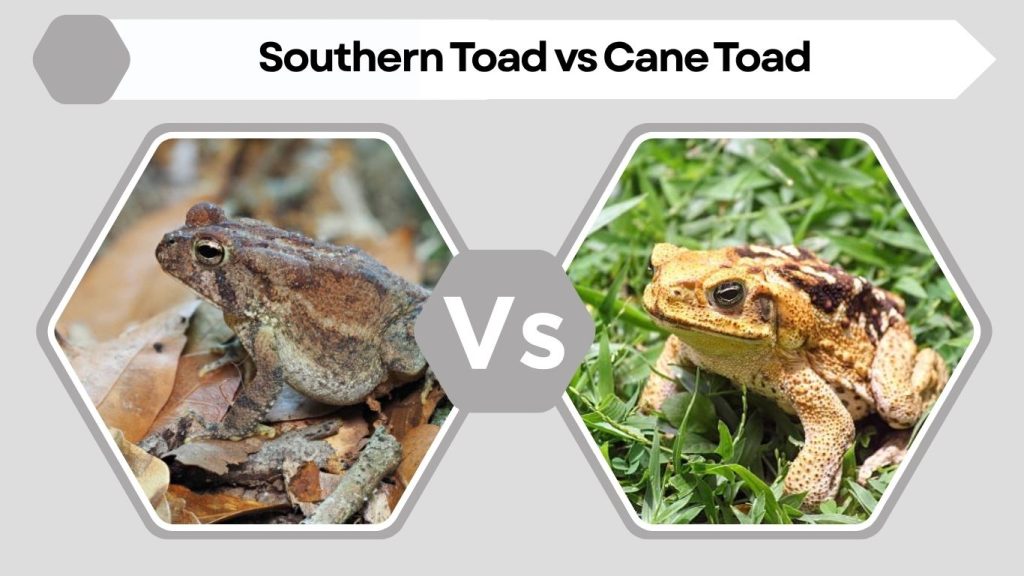
The Southern toad is often confused with the cane toad, but there are important differences between the two.
Key Differences
The most obvious difference is size. Southern toads are much smaller, while cane toads are large and heavy-bodied. Cane toads also have much larger poison glands, making them more dangerous.
Appearance Differences
Southern toads have distinct cranial crests (ridges) on their heads, while cane toads have a smoother head without pronounced ridges. The Southern toad’s body is also more compact and less bulky.
Toxicity Comparison
Both species produce toxins, but the cane toad is far more toxic. Its poison can be deadly to pets and wildlife, while the Southern toad’s toxin is relatively mild and mainly causes irritation.
Interesting Southern Toad Facts
The Southern toad has several interesting characteristics that make it unique among amphibians.
Unique Traits
- Recognizable by its head ridges and warty skin
- Commonly found in residential areas
- Produces a distinctive trill during breeding season
Adaptations
- Can burrow into soil to avoid heat and dryness
- Survives in both natural and urban environments
- Active mostly at night to conserve moisture
Ecological Role
- Helps control insect populations
- Serves as prey for birds, snakes, and mammals
- Contributes to ecosystem balance
Are Southern Toads Dangerous?
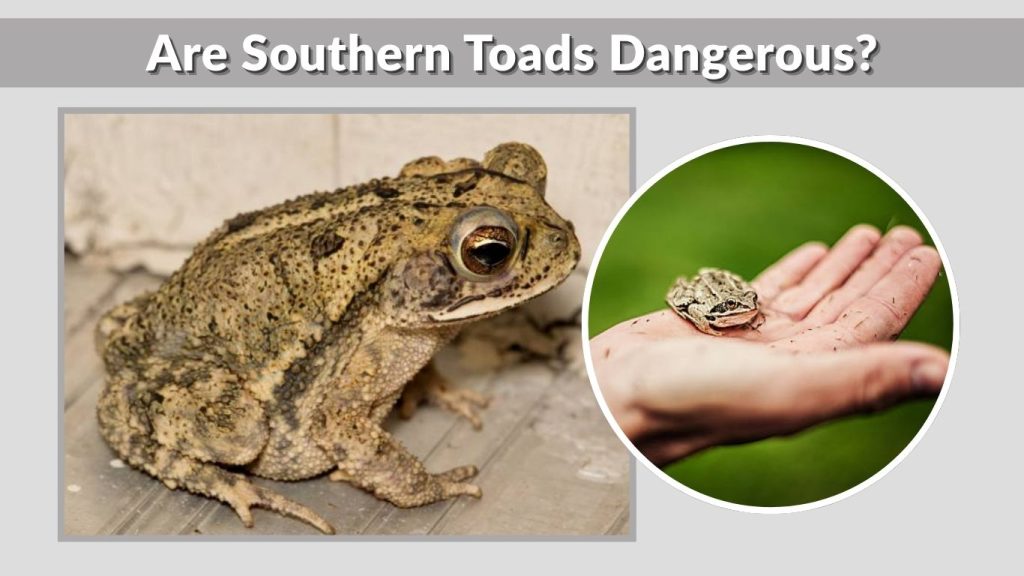
Southern toads are generally harmless but do have mild toxins for defense.
Toxicity
The glands behind their eyes produce a mild toxin that can deter predators. While not dangerous to humans, it can cause irritation if it comes into contact with sensitive areas.
Risks to Pets
Pets may experience drooling or mild discomfort if they bite or lick a Southern toad. However, the effects are usually not severe compared to more toxic species.
Human Interaction
Southern toads are safe to observe and generally harmless if left undisturbed. It is still recommended to avoid handling them unnecessarily and to wash hands after contact.
Conclusion
The Southern toad is a common and beneficial amphibian found throughout the southeastern United States. With its distinctive head ridges, adaptable habitat, and role in controlling insect populations, it plays an important part in local ecosystems. Although it produces mild toxins, it is generally harmless to humans and poses little risk compared to more toxic species. By understanding its identification, habitat, diet, and life cycle, we can better appreciate this species and its contribution to the environment.
FAQs
What is a Southern toad?
The Southern toad (Anaxyrus terrestris) is a medium-sized amphibian native to the southeastern United States, commonly found in forests, wetlands, and residential areas.
How do you identify a Southern toad?
It can be identified by its warty skin, brown or gray color, and prominent cranial crests (ridges) on its head.
How big do Southern toads get?
Southern toads typically grow between 5–9 cm (2–3.5 inches), with females usually larger than males.
Where do Southern toads live?
They live in forests, wetlands, gardens, and suburban areas across the southeastern United States.
Are Southern toads dangerous?
No, they are not dangerous. They produce mild toxins that may cause irritation but are generally harmless to humans.