






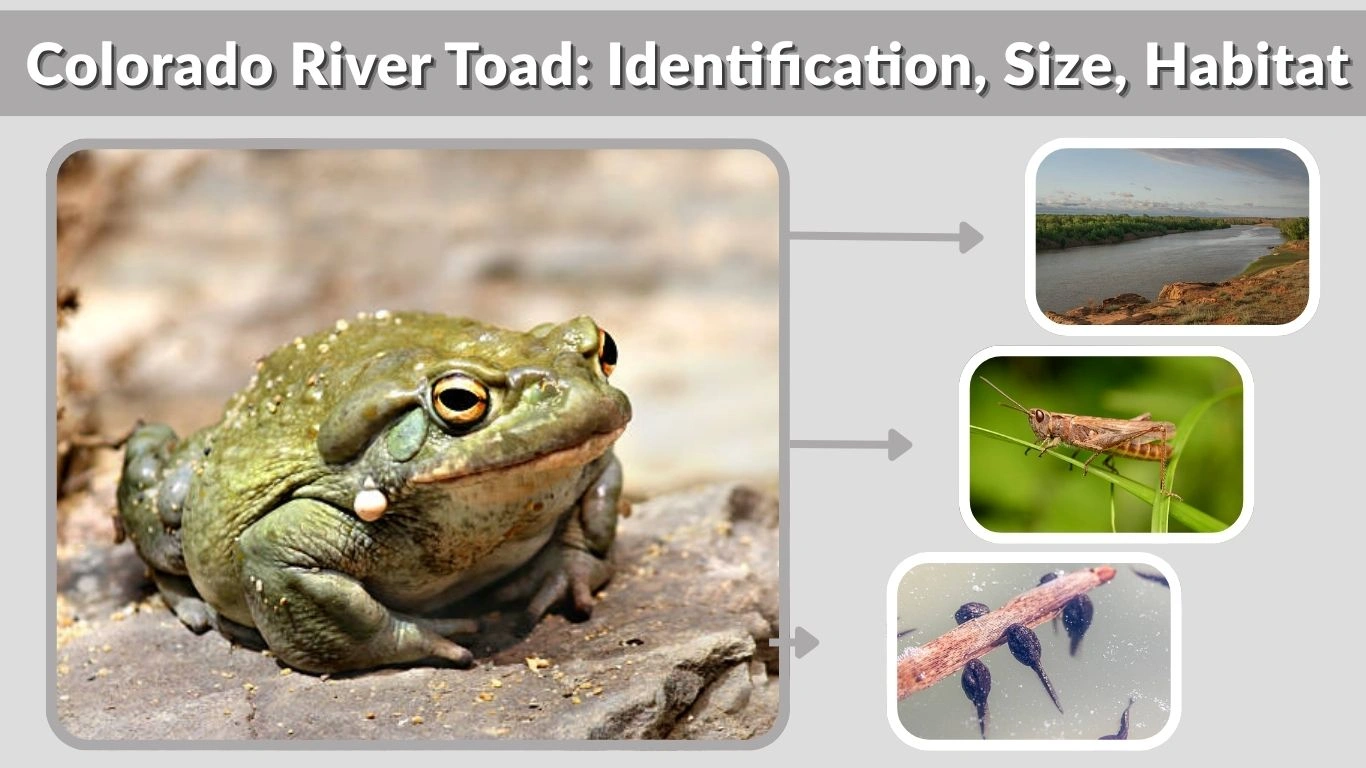
The Colorado River toad (Incilius alvarius), also known as the Sonoran Desert toad, is one of the largest and most distinctive toads in North America. Native to the southwestern United States and northern Mexico, this species is well known for its size, smooth skin, and powerful defensive toxins. Despite its intimidating traits, it plays an important role in desert ecosystems. Understanding its identification, habitat, size, and behavior helps people recognize this unique amphibian and avoid potential risks.
What is a Colorado River Toad?
The Colorado River toad is a large terrestrial amphibian belonging to the Bufonidae family. Unlike many other toads, it has relatively smooth skin and a more rounded, robust body. It is particularly adapted to life in desert and semi-arid environments, where it survives extreme temperatures by remaining inactive for long periods.
Scientific Name and Classification
The scientific name of the Colorado River toad is Incilius alvarius. It belongs to the Bufonidae family, which includes true toads found across many parts of the world. This species stands out due to its size and unique adaptations to harsh environments.
Common Names
The Colorado River toad is also widely known as the Sonoran Desert toad. This name reflects its primary habitat in the Sonoran Desert region. Both names refer to the same species and are used interchangeably in scientific and common contexts.
Colorado River Toad Identification
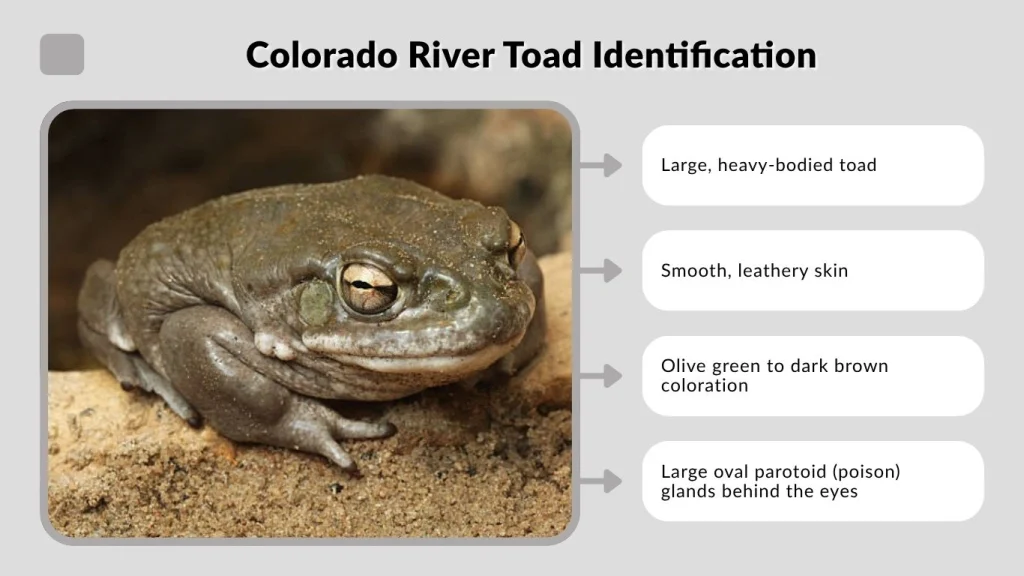
The Colorado River toad is easy to recognize once you know its key features. Unlike many other toads, it has smoother skin and a more uniform color, giving it a distinct appearance. Its large size and prominent poison glands also make it stand out in its natural habitat. Proper identification is important, especially in regions where similar-looking toads exist.
Key Identification Features
- Large, heavy-bodied toad
- Smooth, leathery skin (less warty than most toads)
- Olive green to dark brown coloration
- Large oval parotoid (poison) glands behind the eyes
- Broad, rounded head with no noticeable crests
- Thick limbs with slow, deliberate movement
- Nocturnal behavior (active at night)
- Often appears after rainfall, especially in desert areas
Quick Identification Tips
- Look for smooth skin + large size
- Notice the big poison glands behind the eyes
- Check for lack of head ridges or crests
- Spot them near water after rain at night
Colorado River Toad Size
The Colorado River toad is one of the largest native toads in North America, making size a key identifying feature.
Average Size
Most adult Colorado River toads measure between 11 and 18 centimeters (4.5 to 7 inches) in length. This makes them noticeably larger than many other toads found in the same regions.
Maximum Size
Some individuals can grow up to 19 centimeters (about 7.5 inches). Their large size often surprises people who encounter them for the first time, especially in desert environments where amphibians are less expected.
Weight
These toads have a heavy, robust body structure. While exact weight varies, they are generally thick and solid in build, contributing to their overall bulky appearance.
Colorado River Toad Habitat
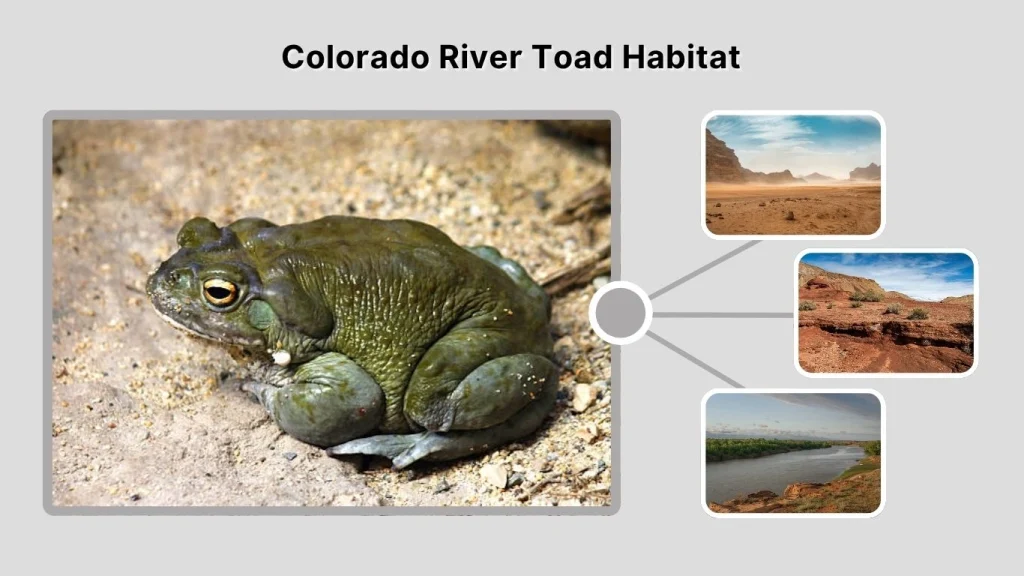
The Colorado River toad is well adapted to desert and semi-arid environments, where survival depends on both water availability and temperature regulation.
Geographic Range
This species is primarily found in the southwestern United States, including Arizona, southern California, and parts of New Mexico. It is also common in northern Mexico, particularly in regions connected to the Sonoran Desert.
Preferred Environments
Colorado River toads typically inhabit desert areas, scrublands, and semi-arid regions. Despite living in dry climates, they are usually found near water sources such as streams, rivers, irrigation canals, and temporary pools formed after rainfall.
Seasonal Activity
These toads are most active during the rainy season, especially during summer monsoons. During dry periods, they avoid extreme heat by burrowing underground, where they remain inactive until conditions improve. This behavior helps them conserve moisture and survive harsh desert conditions.
Colorado River Toad Diet
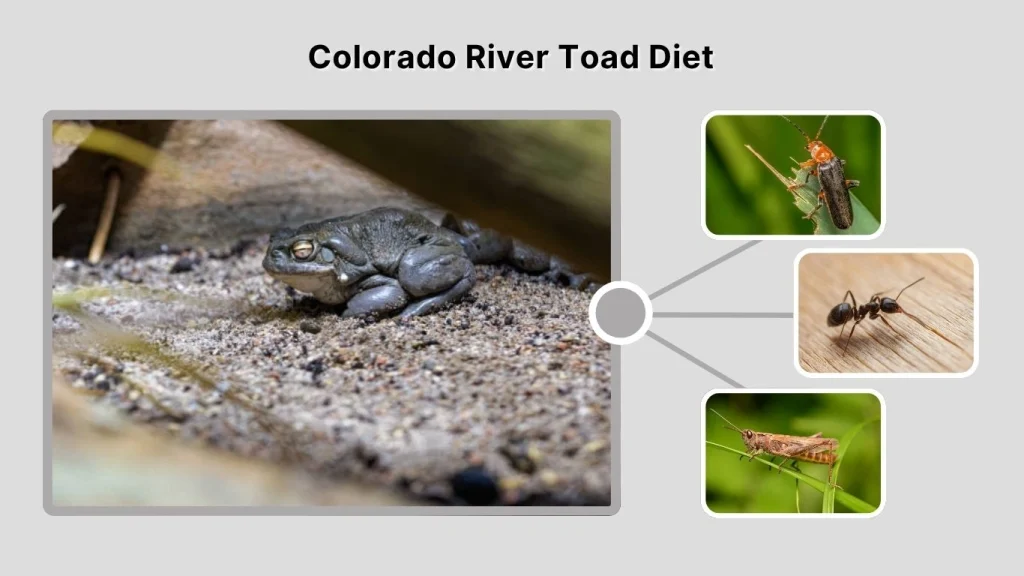
The Colorado River toad is an opportunistic feeder, meaning it eats a wide variety of prey depending on availability. Its diet plays an important role in controlling insect populations in its habitat.
Common Foods
Its diet mainly consists of insects such as beetles, ants, crickets, and grasshoppers. However, it is not limited to small prey. The Colorado River toad will also consume small vertebrates, including lizards, other frogs, and even small rodents when the opportunity arises.
Feeding Behavior
Like many toads, it is a sit-and-wait predator. It remains still and waits for prey to come close before quickly capturing it with its sticky tongue. Being nocturnal, it feeds primarily at night when prey is more active and temperatures are cooler.
Colorado River Toad Life Cycle
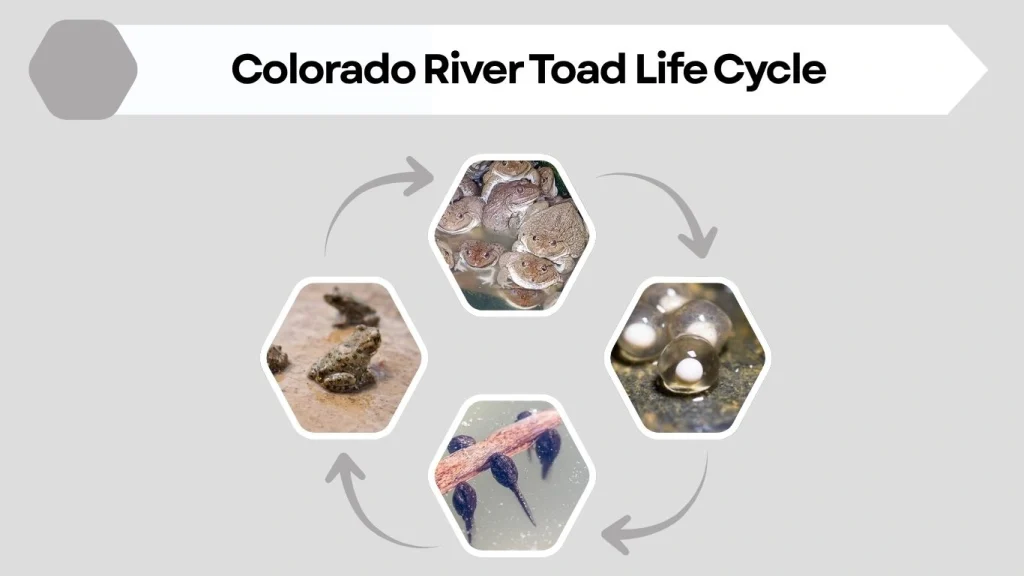
The life cycle of the Colorado River toad is closely tied to seasonal rainfall. Its reproduction depends on temporary water sources that appear during the monsoon season.
Breeding Season
Breeding typically occurs during the summer rainy season when water becomes available. Male toads gather near water bodies and call to attract females. These calls are loud and distinctive, often heard at night after rainfall.
Egg Stage
Females lay long strings of eggs in shallow water such as ponds, streams, or temporary pools. A single female can lay thousands of eggs at once, increasing the chances of survival for the species.
Tadpole Stage
The eggs hatch into tadpoles within a few days. These tadpoles develop quickly due to the temporary nature of desert water sources. They feed on algae and organic material while growing rapidly.
Metamorphosis and Adult Stage
Within a few weeks, tadpoles transform into small toadlets and leave the water. As they mature, they develop into fully terrestrial adults. Adult Colorado River toads can live for several years, depending on environmental conditions.
Colorado River Toad vs Cane Toad
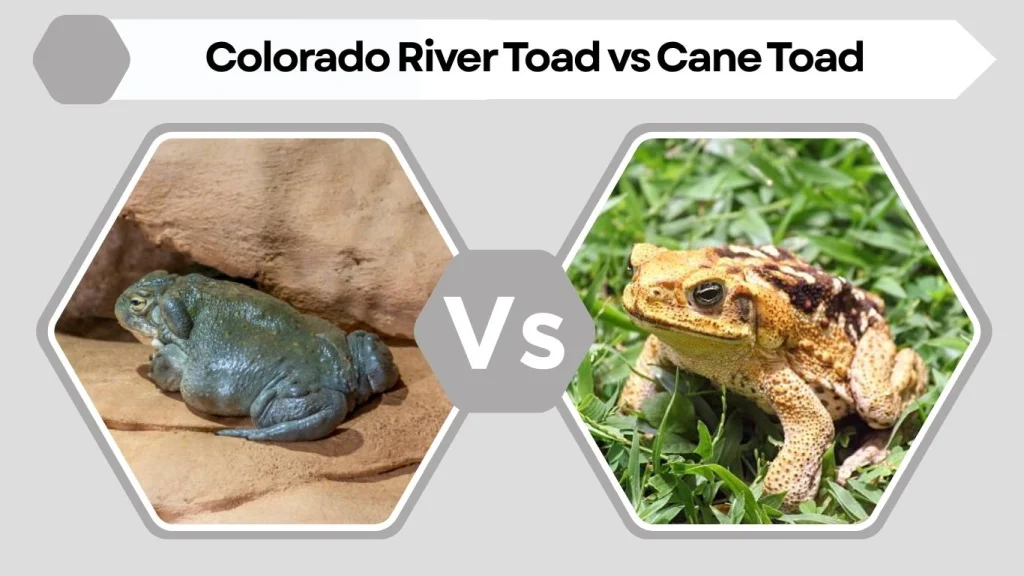
The Colorado River toad is sometimes confused with the cane toad, but there are several important differences between the two species.
Key Differences
The cane toad is generally larger and has rough, warty skin, while the Colorado River toad has smoother, leathery skin. Cane toads are found in tropical and invasive regions worldwide, whereas Colorado River toads are native to desert regions of North America.
Appearance Differences
Colorado River toads have a more uniform olive or brown coloration and lack prominent head crests. In contrast, cane toads often have more textured skin and a heavier, more rugged appearance.
Toxicity Comparison
Both species produce toxic secretions, but the composition of their toxins differs. While both can be dangerous to predators and pets, the Colorado River toad’s toxin is particularly potent and should be avoided.
Are Colorado River Toads Dangerous?
Although they are not aggressive, Colorado River toads can pose risks due to their toxic secretions.
Toxic Secretions
The large glands behind their eyes release toxins when the toad feels threatened. These chemicals are designed to deter predators and can be harmful if ingested.
Risks to Pets
Dogs are especially vulnerable because they may try to bite or lick the toad. Exposure can lead to symptoms such as drooling, confusion, seizures, or even death if not treated quickly.
Human Safety
For humans, the main risk comes from handling the toad and then touching the eyes or mouth. This can cause irritation or discomfort. It is best to avoid direct contact and wash hands thoroughly if contact occurs.
Interesting Colorado River Toad Facts
The Colorado River toad has several fascinating characteristics that make it unique among amphibians.
Unique Traits
- One of the largest native toads in North America
- Has smooth skin unlike most other toads
- Produces powerful defensive toxins
Adaptations
- Can survive extreme desert temperatures
- Spends long periods burrowed underground
- Emerges quickly after rainfall
Ecological Role
- Helps control insect populations
- Serves as prey for some resistant predators
- Plays a role in maintaining ecosystem balance
Conservation Status
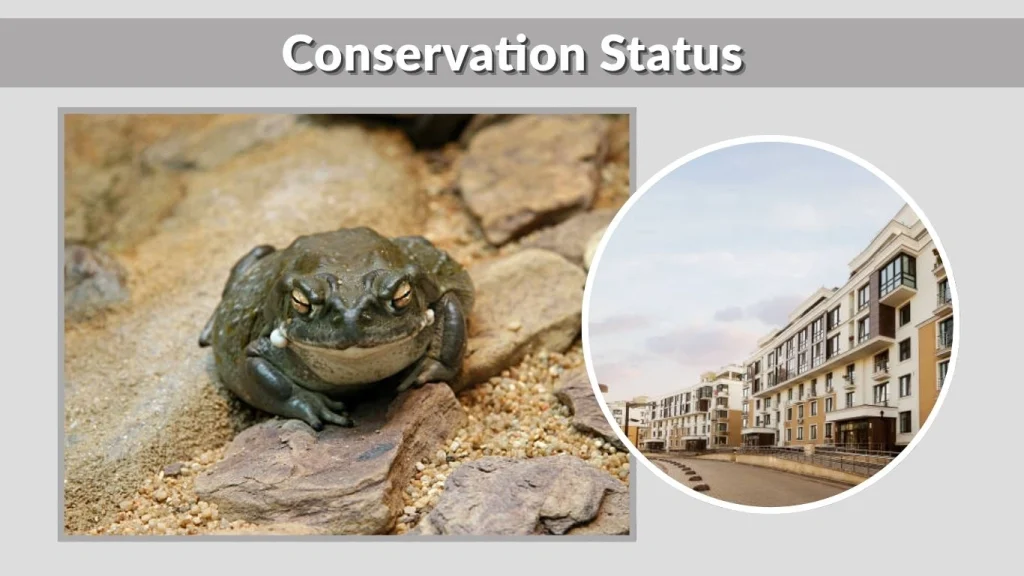
While the Colorado River toad is not currently extinct, it faces several threats that impact its population.
Threats
Habitat loss is one of the biggest challenges, as urban development reduces natural environments. Road mortality and environmental changes also affect their survival. In some areas, illegal collection has become a concern.
Protection Efforts
Conservation efforts include habitat protection, public education, and legal restrictions in certain regions. Raising awareness about the species helps reduce harm and supports long-term survival.
Conclusion
The Colorado River toad is a remarkable amphibian known for its size, adaptability, and powerful defense mechanisms. Native to desert regions of North America, it plays an important role in maintaining ecological balance. However, its toxic nature means it should be treated with caution, especially around pets. By understanding its identification, habitat, diet, and life cycle, people can better appreciate this unique species while minimizing risks and supporting conservation efforts.
FAQs
What is a Colorado River toad?
The Colorado River toad (Incilius alvarius) is a large amphibian native to the southwestern United States and northern Mexico, also known as the Sonoran Desert toad.
How do you identify a Colorado River toad?
It can be identified by its large size, smooth leathery skin, olive-brown color, and large poison glands behind the eyes.
How big do Colorado River toads get?
They typically grow between 11–18 cm (4.5–7 inches) and can reach up to 19 cm (7.5 inches).
Where do Colorado River toads live?
They live in desert and semi-arid regions, usually near water sources such as streams, canals, and temporary pools.
Are Colorado River toads dangerous?
Yes, they produce toxic secretions that can harm pets and cause irritation in humans if handled improperly.


