
Bites on your skin can leave you anxious, especially if you’re unsure whether they’re from bed bugs or spiders. While both can cause red, irritated marks, understanding their differences is essential for choosing the right treatment and preventing future bites.
In this article, you’ll learn the visual and behavioral differences between spider bites and bed bug bites, how each one affects your body, and how to respond if you’re bitten.
Visual Differences Between the Bites

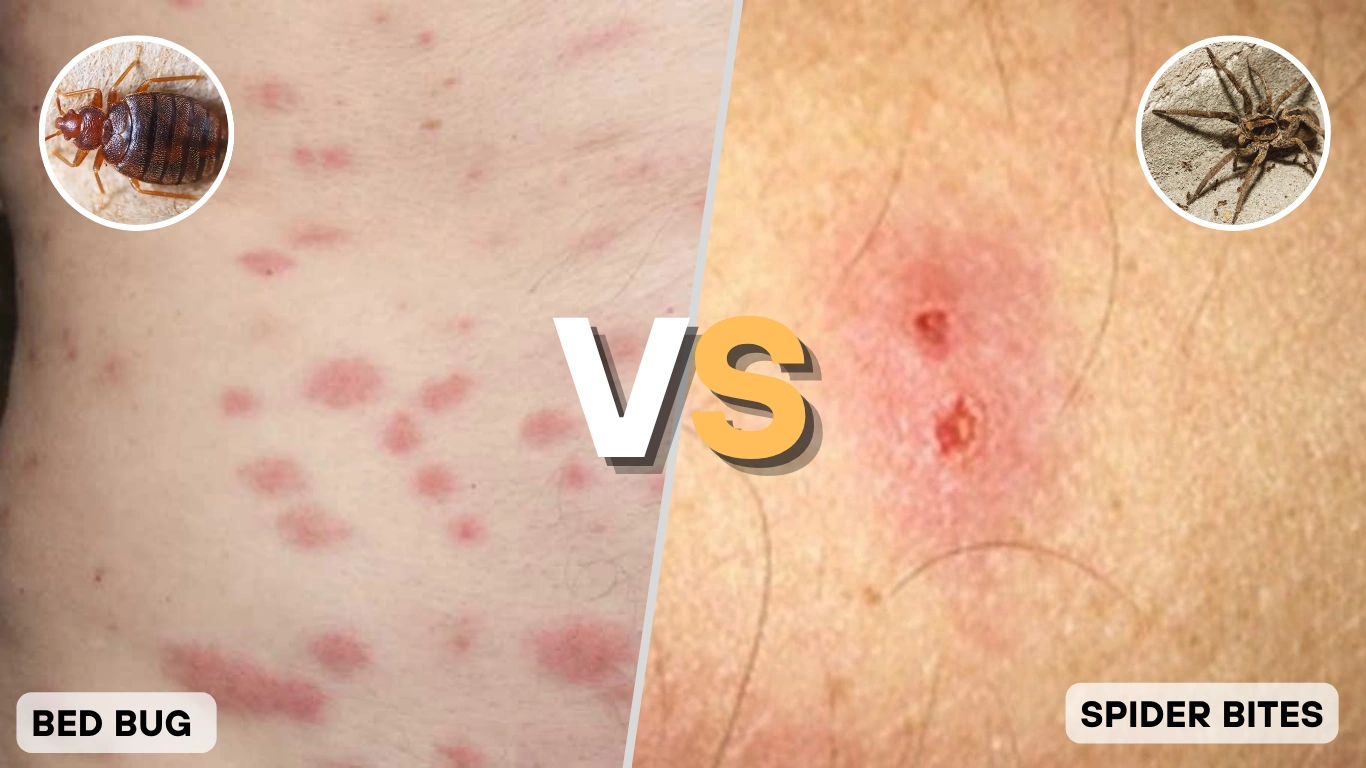
Bed Bug Bites
Bed bug bites are typically:
- Grouped together in lines or clusters
- Appearing on exposed skin like the face, arms, neck, and legs
- Red, flat, or slightly raised
- Very itchy, sometimes with a burning sensation
They usually show up overnight, and the itching may begin hours later.
Spider Bites
Spider bites tend to be:
- Single red bumps, not grouped
- Found on arms, legs, or torso—where a spider might get trapped in clothing or bedding
- Painful or tender rather than itchy
- May feature two small puncture marks
- In rare cases, blisters or a blackened center can form
In general, spider bites cause more pain, while bed bug bites cause more itching.
Differences in Cause and Behavior

What Causes Bed Bug Bites?
Bed bugs are nocturnal pests that feed on human blood while you sleep. They hide in mattress seams, bed frames, headboards, and even wall cracks. Their bite is painless at first, but the immune response kicks in after a few hours, leading to irritation and swelling.
They’re known for their repeat feeding behavior. This means you might wake up with several new bites each morning in straight or zigzag lines.
Why Do Spiders Bite?
Spiders bite in self-defense, not to feed. A spider will only bite if:
- It feels trapped, such as when rolled onto in bed
- It’s accidentally pressed against your skin while you’re reaching into clothes or under furniture
Most spiders are not aggressive, and bites occur accidentally. Dangerous spiders like the brown recluse or black widow are rare in most homes but can cause serious reactions.
Common Symptoms and Progression
Bed Bug Bite Symptoms
- Itching that increases over time
- Redness, swelling, and possible blistering (in sensitive individuals)
- Bites heal in 7–10 days unless infected
- No central puncture marks
You may notice new bites for days if the infestation isn’t addressed.
Spider Bite Symptoms
- Immediate or delayed pain
- Swelling and redness around the bite
- Two tiny puncture holes
- Systemic symptoms (rare) like nausea, cramps, or fever with venomous bites
- Wound may worsen over time, especially in brown recluse bites
Bite Comparison Table

| Feature | Bed Bug Bite | Spider Bite |
| Number of Bites | Multiple, often in lines | Single, sometimes isolated |
| Pain or Itch | Itchy, rarely painful | Painful or tender, mild itch |
| Timing | Noticed after waking | Can happen anytime |
| Appearance | Red, flat or raised, without puncture | Red, swollen, sometimes with central punctures |
| Blister/Necrosis Risk | Very rare | Possible with venomous spiders |
| Healing Time | 7–10 days | Few days to several weeks (in severe cases) |
5 Realistic Spider Bite

1. Brown Recluse Spider Bite
Often painless at first, but within 4–8 hours, the site becomes red, swollen, and tender. It may blister, and in severe cases, the tissue can die (necrosis), creating an open sore. Healing may take weeks, and antibiotics or surgery might be needed.
2. Black Widow Spider Bite
Starts as a small red bump but quickly becomes very painful. Pain may radiate to the chest, abdomen, or back, often accompanied by muscle cramps, sweating, and nausea. Medical treatment is usually necessary. Healing can take several days to a week.
3. Wolf Spider Bite
Causes moderate swelling, redness, and itching, but is not medically serious. It may feel like a bee sting. Most symptoms subside within 3–5 days with basic first aid.
4. Hobo Spider Bite
Can look similar to a brown recluse bite. Starts with a red welt, then develops a central blister that may break and ulcerate. Some bites heal quickly, but others linger for weeks with skin damage. Not all hobo spider bites are venomous.
5. Jumping Spider Bite
Rare and usually mild. The bite site may become red and itchy, with slight swelling. No serious symptoms occur, and healing typically happens in 2–3 days without treatment.
5 Realistic Bed Bug Bite
1. Classic Line Pattern
Three small, red, itchy welts appear in a straight line on the forearm. The itching gets worse throughout the day. Common in people sleeping in infested beds. Healing takes about 5–7 days if not scratched.
2. Clustered Bites on Neck
One night leads to a group of bites on the neck and collarbone area. Each bump is slightly swollen and intensely itchy. Scratching leads to scabbing. Skin clears in 1–2 weeks with calamine lotion and no further exposure.
3. Delayed Reaction
After traveling, someone notices itchy red welts two days later. Bites are scattered on both legs. No initial signs during the trip. This is common in people who have slow immune responses to bed bug saliva.
4. Severe Allergic Reaction
Dozens of bites appear overnight with significant swelling and redness. The person experiences hives and mild dizziness. Treated with antihistamines and corticosteroid cream. Recovery takes over 2 weeks. Severe cases like this are rare but can happen.
5. No Itch, Only Red Spots
Some people don’t react strongly to bed bug bites. In this case, there are several flat red dots on the ankle and calf, but no itching or swelling. The bites fade in 3–4 days and are only noticeable by appearance.
How to Treat Each Bite Type
Treating Bed Bug Bites
- Wash with soap and water to reduce infection risk
- Use topical corticosteroids or antihistamines for itching
- Apply cool compresses to reduce swelling
- Avoid scratching to prevent open wounds or scarring
- If allergic, see a doctor for stronger medications
Treating Spider Bites
- Clean the bite area thoroughly
- Apply cold packs for 10 minutes on and off to reduce swelling
- Take pain relievers like ibuprofen or acetaminophen
- Watch closely: if symptoms worsen, see a doctor
- Seek emergency care if you experience:
- Spreading redness
- Ulcers or tissue damage
- Fever, nausea, or muscle cramps
- Spreading redness
When to See a Doctor
Seek medical attention for bed bug bites if:
- There are signs of secondary infection (pus, heat, or severe swelling)
- You experience an allergic reaction (hives, breathing difficulty)
- Bites continue for days despite cleaning
Seek immediate care for spider bites if:
- The area becomes black, ulcerated, or increasingly painful
- You develop muscle cramps, dizziness, fever, or vomiting
- You suspect a bite from a black widow or brown recluse
Prevention Tips
Preventing Bed Bug Bites
- Inspect hotel bedding before use
- Use protective mattress covers
- Vacuum carpets and bedding regularly
- Wash bedding in hot water weekly
- If infestation is suspected, hire professional pest control
Preventing Spider Bites
- Shake out clothes, shoes, and towels before wearing
- Keep your home clean and clutter-free
- Seal cracks in doors, windows, and walls
- Use sticky traps or spider deterrents like peppermint oil
- Avoid leaving clothes on the floor or in dark corners
FAQs
Can a bed bug bite look like a spider bite?
Yes, a single bed bug bite can resemble a spider bite, especially if it’s red and swollen. However, bed bug bites usually appear in clusters or rows, are extremely itchy, and occur overnight. Spider bites are typically isolated, often more painful than itchy, and may have puncture marks.
Do bed bugs come out during the day?
Bed bugs are primarily nocturnal, feeding at night while people are sleeping. If you spot them during the day, it could indicate a significant infestation. In crowded or disturbed environments, they may adapt their behavior and come out at any time, especially if a food source is readily available.
Can spider bites be itchy like bug bites?
Yes, some spider bites can cause itching, particularly in the early stages. However, spider bites more often result in pain, swelling, and tenderness, unlike typical bug bites that are mostly just itchy. Itchiness alone doesn’t confirm a spider bite—look for puncture marks or a worsening wound.
How long does it take for spider bites to heal?
Most non-venomous spider bites heal in 3 to 7 days with proper care. Bites from venomous spiders, such as the brown recluse or black widow, may take several weeks to heal and sometimes lead to tissue damage or systemic symptoms. Medical treatment speeds healing and prevents complications.
Final Thoughts
Telling the difference between bed bug bites and spider bites comes down to patterns, symptoms, and timing. While both can be irritating, understanding what bit you helps you take the right steps toward relief and prevention. If in doubt—or if symptoms worsen—don’t hesitate to consult a healthcare provider. Treating the bite is important, but eliminating the source is the real key to solving the problem.