A black widow spider bite can be alarming, especially due to the spider’s reputation and potent venom. While bites are rare and often not fatal, they can lead to serious discomfort if left untreated. Recognizing the early signs can help you respond quickly and appropriately.
In this guide, we’ll cover 7 key symptoms of a black widow spider bite—ranging from localized pain to full-body effects—so you know what to look for and when to seek medical help.
1. Sharp, Immediate Pain or Burning at the Bite Site

What It Feels Like
The bite from a black widow spider often causes sudden, sharp pain or a burning sensation at the exact location where the spider bit. Many people describe it as similar to a pinprick or bee sting, but the discomfort can intensify within minutes.
When It Appears
This pain usually starts immediately or within the first hour after the bite occurs. It may be localized at first but can spread depending on the severity of the envenomation.
Where It Happens
Black widow spiders typically bite arms, legs, or the torso, especially when trapped against the skin in clothing, shoes, or bedding. The bite site may show two small puncture marks, but they can be difficult to see.
Important Note
Not everyone feels intense pain right away. Some people may only notice mild discomfort that worsens over time. However, sharp localized pain is often the first clear sign of a black widow bite and should be taken seriously—especially if accompanied by muscle cramps or other systemic symptoms.
2. Redness and Swelling Around the Bite

What It Looks Like
Soon after the bite, the surrounding skin may become red, inflamed, and slightly swollen. The redness can expand gradually, creating a halo-like pattern around the bite area.
Common Characteristics
- The swelling is typically mild to moderate, but it may feel firm or warm to the touch.
- The center of the bite may remain pale while the surrounding area becomes red or irritated.
Progression Over Time
Within a few hours, the swelling may increase slightly, and in some cases, the area may feel tight or tender. However, this symptom alone does not necessarily indicate a serious reaction unless it spreads rapidly or is paired with more intense symptoms like muscle pain or fever.
When to Watch Closely
If redness and swelling continue to spread, or if the bite develops into an open sore or blister, it could signal a secondary infection or a more severe response and should be evaluated by a healthcare provider.
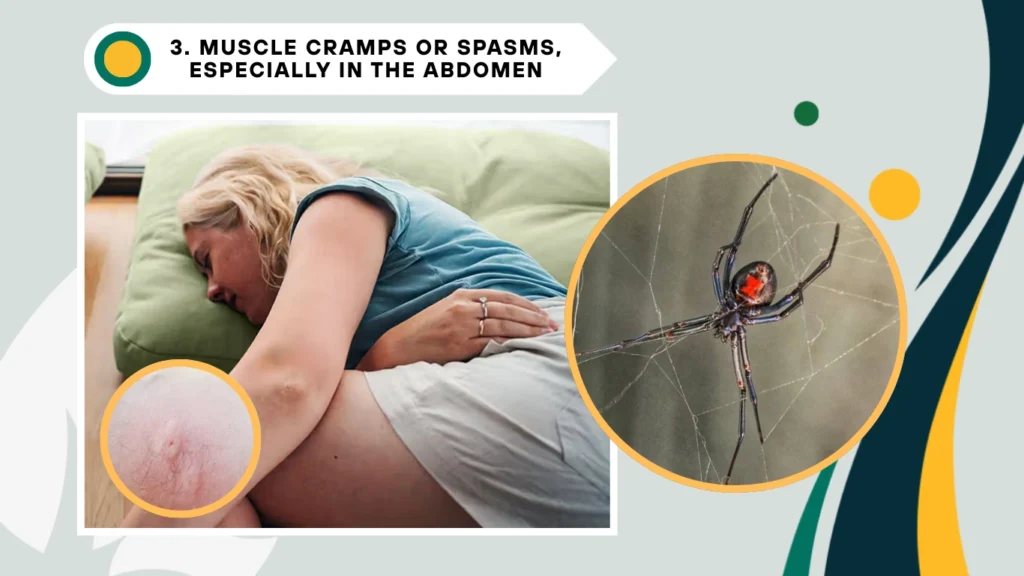
3. Muscle Cramps or Spasms, Especially in the Abdomen
How It Develops
One of the most distinct and serious symptoms of a black widow bite is the onset of painful muscle cramps or spasms, typically beginning within 1 to 3 hours after the bite.
Where It Occurs
These cramps often start in the abdomen and can mimic severe stomach pain, sometimes leading to misdiagnosis as appendicitis or another abdominal condition. The cramps may then spread to:
- Lower back
- Thighs
- Chest or shoulders
What It Feels Like
People describe the sensation as tightening or knotting of the muscles, sometimes accompanied by tremors or stiffness. The cramping can come and go in waves or feel constant.
Why It Happens
The black widow’s venom affects the nervous system, triggering uncontrolled nerve signals that cause muscles to contract painfully.
Medical Importance
This symptom is a clear sign of systemic envenomation and requires medical attention. Muscle cramps are more common in children, elderly individuals, or those with weakened immune systems, and they can last for several hours to days if untreated.
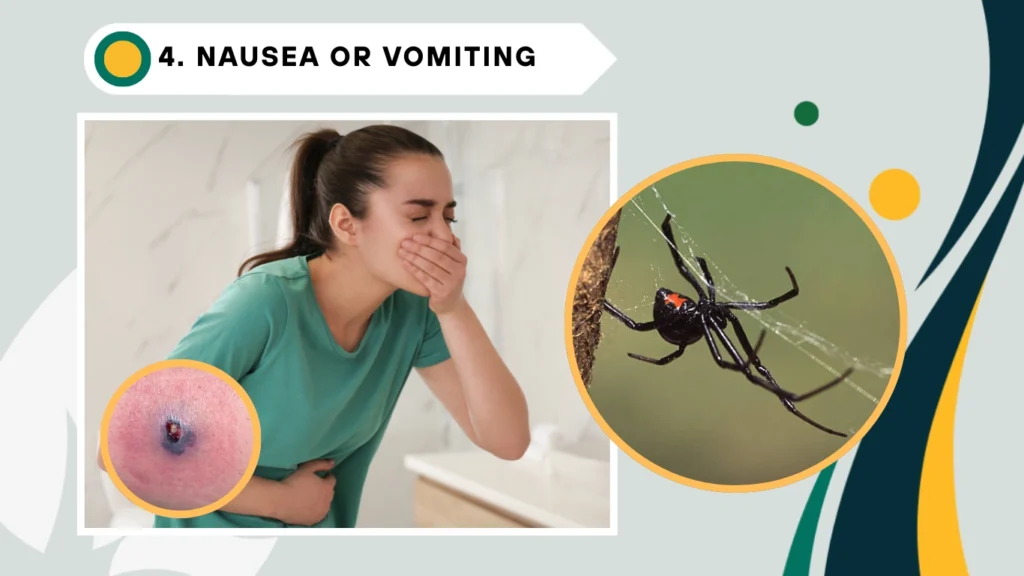
4. Nausea or Vomiting
When It Appears
Nausea is a common systemic reaction that may begin within 1 to 6 hours after a black widow bite. In some cases, it can progress to vomiting, especially if the person is sensitive to venom or experiencing severe muscle pain.
Why It Happens
The venom affects the body’s autonomic nervous system, which controls involuntary functions like digestion. This can lead to gastrointestinal upset, including:
- Queasiness
- Stomach discomfort
- Loss of appetite
- In more serious cases, repeated vomiting
Severity and Duration
For most people, nausea is mild to moderate and fades within 24–48 hours. However, when combined with other symptoms like cramps, dizziness, or fever, it may require supportive treatment such as anti-nausea medication or IV fluids.
Who’s Most at Risk
Children and elderly individuals may be more prone to nausea or dehydration after a bite, so it’s important to monitor fluid intake and seek medical help if symptoms worsen or persist.
5. Sweating (Often Localized to the Bite Area)

What Happens
A black widow spider bite can trigger unusual sweating, often localized to the area around the bite. In some cases, sweating becomes generalized, affecting the entire body.
Why It Occurs
The venom stimulates the nervous system, which can activate sweat glands near the bite site. It may also cause clamminess or moist skin, even if the person isn’t overheated.
What to Look For
- Moist skin around the bite
- Sudden perspiration without physical activity
- Sometimes accompanied by chills or restlessness
While not harmful on its own, localized sweating is a strong indicator of venom reaction and should be monitored alongside other symptoms.
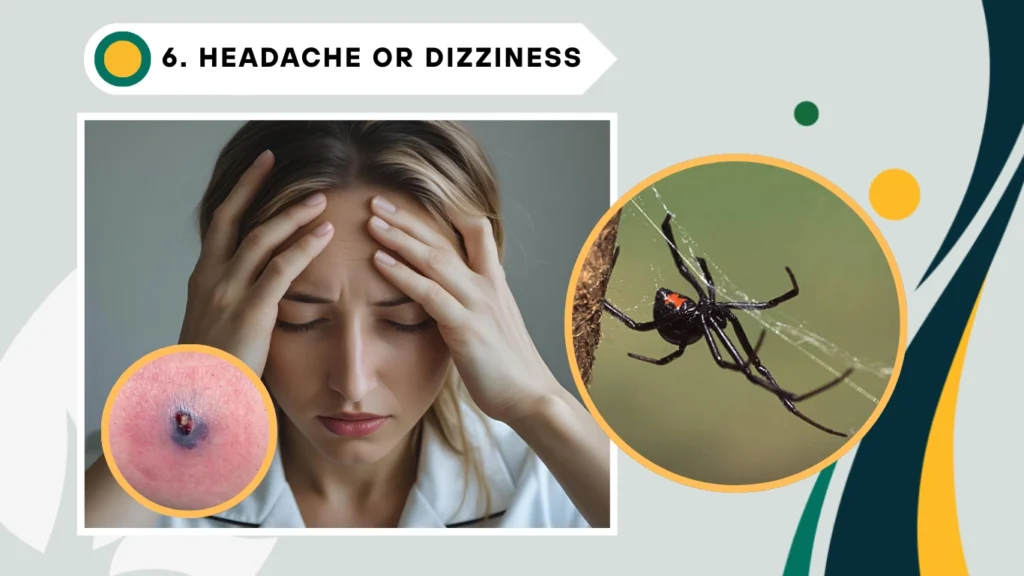
6. Headache or Dizziness
Timing and Sensation
A person bitten by a black widow may experience a throbbing headache or lightheadedness. This often develops within the first few hours and may be accompanied by fatigue, mental fog, or visual sensitivity.
Why It Happens
These symptoms are caused by the body’s systemic response to the venom. Dehydration from sweating, nausea, and stress on the nervous system may also contribute.
What to Monitor
- Persistent headache not relieved by rest
- Dizziness when standing or walking
- Signs of fainting (especially in children or elderly)
Headache is common but should be taken seriously if combined with vomiting, blurred vision, or loss of coordination.
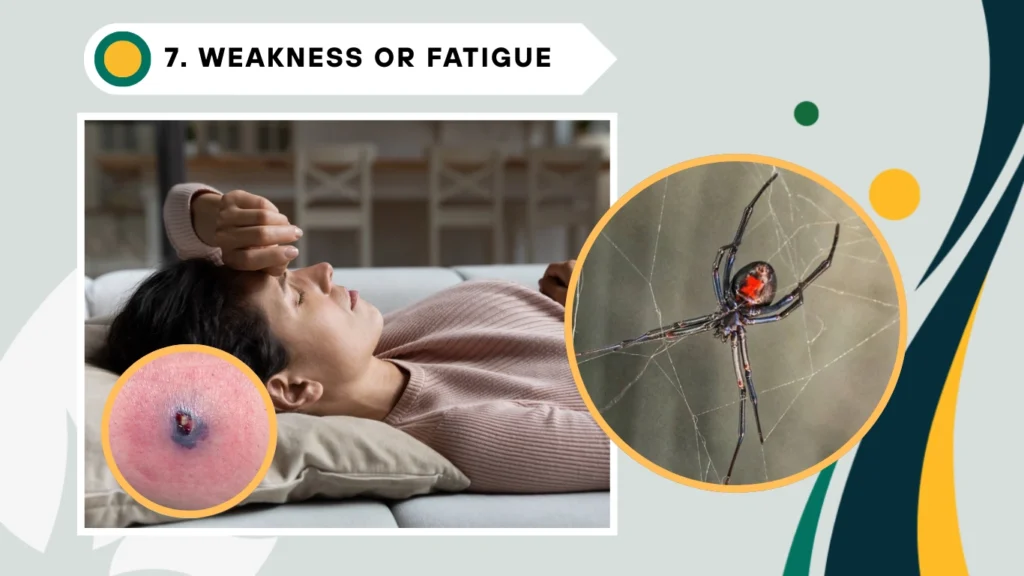
7. Weakness or Fatigue
How It Feels
Many people bitten by a black widow report feeling weak, exhausted, or drained, even after minor physical activity. This fatigue may last for hours or days, depending on the person’s overall health and the severity of the envenomation.
Causes
This fatigue is due to:
- Muscle strain from cramping
- The immune system’s effort to neutralize venom
- Stress, poor sleep, or dehydration caused by other symptoms
When to Seek Help
If weakness worsens or affects mobility, breathing, or daily functions, it’s best to consult a healthcare provider—especially for high-risk groups like young children or older adults.