
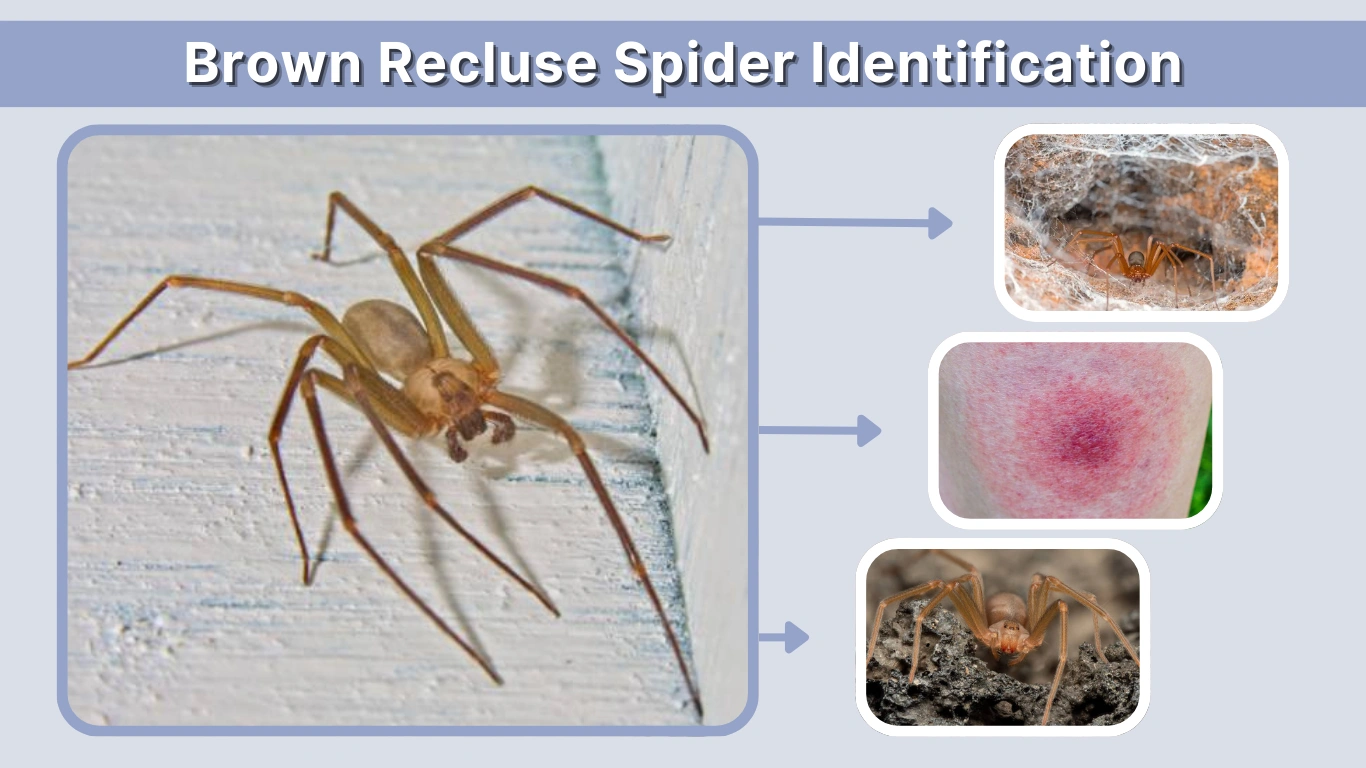
Brown recluse spider identification is important because this spider is often misunderstood and frequently mistaken for other harmless species. The brown recluse (Loxosceles reclusa) is known for its distinctive appearance and medically significant bite, but accurate identification requires more than spotting a brown spider. Many spiders share similar colors and sizes, which leads to misidentification. By learning the key characteristics—such as the violin-shaped marking, six-eye pattern, and plain brown body—you can better recognize this species and avoid unnecessary concern or unsafe encounters.
What Is a Brown Recluse Spider?
The brown recluse spider is a venomous species native to parts of North America. Despite its reputation, it is generally shy and avoids human contact. These spiders usually hide in quiet, undisturbed places and only bite when they feel threatened or trapped. Because of their secretive nature, many people may live in areas with brown recluse spiders without ever seeing one.
Scientific Classification
The brown recluse spider belongs to the genus Loxosceles and the family Sicariidae. Its scientific name is Loxosceles reclusa. This species is one of several recluse spiders found around the world, but it is the most commonly known species in the United States. The spider gained attention because its bite can sometimes cause skin irritation or tissue damage in rare cases.
Why It Is Called a “Recluse”
The name “recluse” reflects the spider’s behavior. Brown recluse spiders prefer dark, quiet environments where they can remain hidden. They avoid bright lights and busy areas and typically stay in places where they are unlikely to be disturbed. Because they rarely roam openly, people usually encounter them accidentally when moving stored items or clothing.
Key Features of Brown Recluse Spider Identification
Identifying a brown recluse spider involves looking at several physical characteristics. While one feature alone may not confirm identification, a combination of traits can help distinguish this spider from others.
Violin-Shaped Marking
One of the most well-known features of the brown recluse spider is the violin-shaped marking on its body. This marking appears on the cephalothorax, which is the front section where the legs attach.
The marking resembles a violin, with the wider part near the spider’s head and the narrow “neck” pointing toward the abdomen. Because of this shape, the brown recluse is sometimes called the “fiddleback spider.” However, it is important to remember that some other spiders may have similar markings, so this feature alone should not be used as the only identification clue.
Unique Six-Eye Arrangement
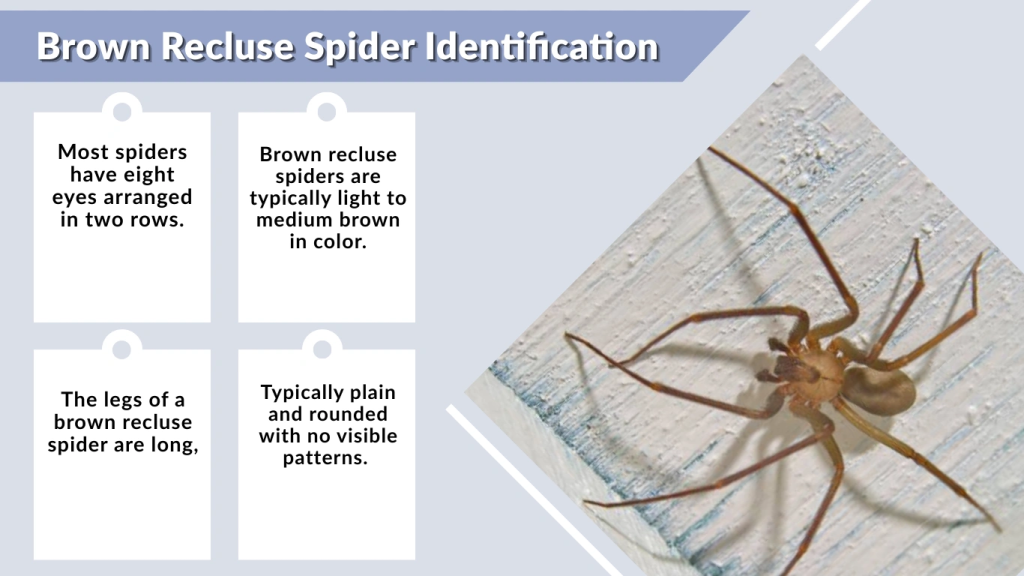
Another key identifying feature is the spider’s eye pattern. Most spiders have eight eyes arranged in two rows. The brown recluse is different because it has only six eyes.
These six eyes are arranged in three pairs: one pair in the middle and one pair on each side. This eye arrangement is a distinctive characteristic of recluse spiders and can help confirm identification when observed closely, often with magnification.
Body Color and Texture
Brown recluse spiders are typically light to medium brown in color. Their bodies usually appear smooth and uniform without noticeable stripes or patterns. Unlike many other spiders, they do not have thick spines on their legs.
Instead, the legs and body are covered with very fine hairs that give the spider a slightly velvety appearance. The overall coloration is usually consistent across the body, which helps differentiate it from patterned spider species.
Legs and Abdomen
The legs of a brown recluse spider are long, thin, and relatively delicate compared to many other spiders. They usually lack dark bands or stripes, which are common on species such as wolf spiders or fishing spiders.
The abdomen is typically plain and rounded with no visible patterns. This smooth and simple appearance is another important identification trait. When combined with the violin marking and six-eye pattern, these features can help distinguish a brown recluse from other spiders that may look similar at first glance.
Brown Recluse Spider Size and Appearance
Understanding the typical size and proportions of a brown recluse spider can also help with identification. Although they are often described as large or dangerous-looking, brown recluse spiders are actually relatively small compared to many other household spiders.
Average Body Size
An adult brown recluse spider usually has a body length ranging from about 6 to 20 millimeters. This means the spider’s body is typically smaller than a coin. Because of their modest size, they can easily hide in narrow spaces such as cracks, boxes, or folded clothing.
Juvenile brown recluse spiders are even smaller and may be harder to identify because their markings are not always fully developed.
Leg Span
When including the legs, the spider’s total span can reach about one inch. The legs appear long and slender, which sometimes makes the spider look larger than it actually is. These long legs help the spider move quickly when disturbed.
Color Variations
Although the spider is generally described as brown, its color can vary slightly. Some individuals may appear light tan, while others may be darker brown depending on age, lighting conditions, and environment. However, the overall appearance usually remains plain and uniform without bright markings or patterns.
Brown Recluse vs Similar Spiders
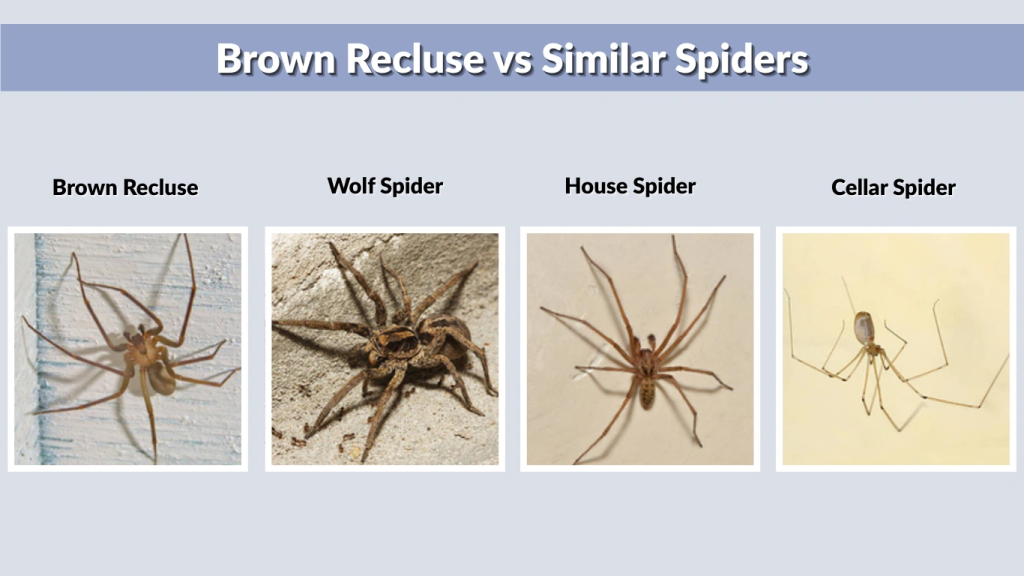
One reason brown recluse spider identification can be difficult is that many other spiders look similar at first glance. Several common household spiders share a brown color or similar body shape, which often leads to confusion. Learning the differences between these species can help you avoid misidentifying harmless spiders as brown recluses.
Brown Recluse vs Wolf Spider
Wolf spiders are often mistaken for brown recluse spiders because they are also brown and commonly found indoors or around homes. However, wolf spiders are usually larger and have a much hairier appearance.
One of the easiest ways to distinguish them is by looking at their eyes. Wolf spiders have eight eyes arranged in three rows, while brown recluse spiders have six eyes in three pairs. Wolf spiders also tend to have thicker legs with visible spines and may show patterns or stripes on their bodies.
Brown Recluse vs House Spider
Common house spiders are another species frequently confused with brown recluse spiders. House spiders often build visible webs in corners of rooms or near ceilings.
Unlike the brown recluse, house spiders usually have patterned abdomens with spots, lines, or mottled colors. Their legs may also have banding or darker sections. In contrast, the brown recluse has a plain, uniform abdomen and legs without stripes or noticeable patterns.
Brown Recluse vs Cellar Spider
Cellar spiders, sometimes called “daddy longlegs,” are easy to distinguish once you know what to look for. These spiders have extremely long, thin legs and very small bodies.
Cellar spiders typically hang upside down in loose webs that are clearly visible in basements, garages, or ceiling corners. Brown recluse spiders do not hang in open webs like this and have a more balanced body-to-leg proportion.
Where Brown Recluse Spiders Are Commonly Found
Brown recluse spiders are not found everywhere, and understanding their typical range and habitats can help with identification. These spiders prefer quiet environments where they can remain undisturbed.
Geographic Distribution
Brown recluse spiders are most commonly found in the central and southern United States. Their primary range includes states such as Missouri, Kansas, Arkansas, Oklahoma, and parts of Texas and surrounding regions.
Although reports sometimes occur outside this area, many of those sightings turn out to be misidentified spiders. True brown recluse populations are relatively limited to specific regions.
Indoor Hiding Places
Inside homes, brown recluse spiders usually hide in dark and rarely disturbed areas. These locations provide shelter and protection from predators.
Common indoor hiding spots include:
- Closets and storage areas
- Basements and attics
- Cardboard boxes and clutter
- Shoes, clothing, or folded fabrics
Because these spiders prefer undisturbed spaces, they are more likely to be found in areas that are not frequently cleaned or moved.
Outdoor Habitats
Outdoors, brown recluse spiders seek similar sheltered environments. They prefer places that provide darkness and protection from weather.
Typical outdoor hiding places include:
- Wood piles
- Sheds and garages
- Under rocks or logs
- Beneath debris or stacked materials
These locations offer safe hiding spots where the spiders can rest during the day and search for insects at night.
Brown Recluse Web Identification
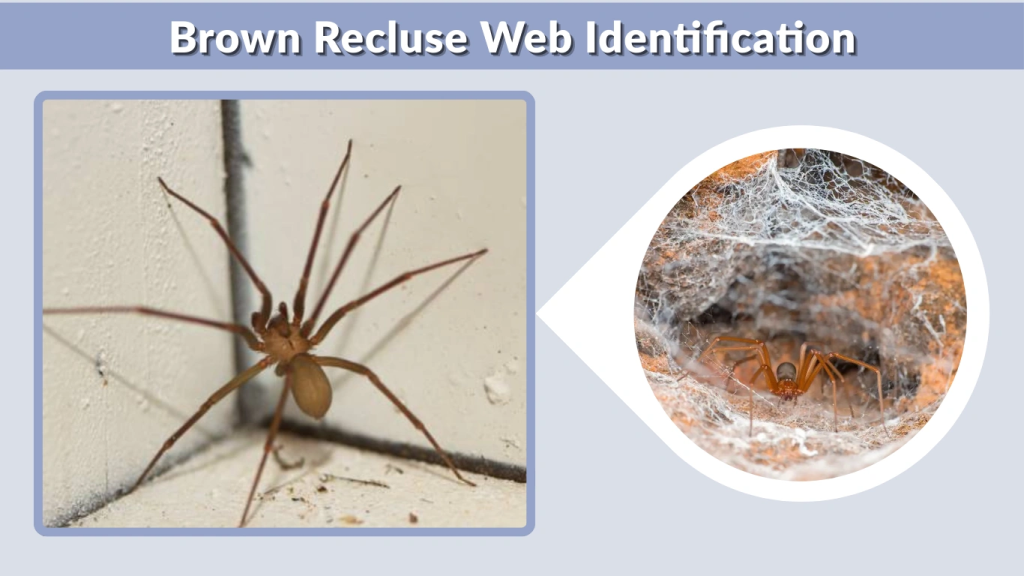
Brown recluse spiders do produce webs, but their webs look very different from those of many other spiders. Instead of creating large, organized webs used to catch prey, they usually build small irregular webs for shelter.
These webs often appear loose and messy and are commonly found in hidden areas such as behind furniture, inside boxes, or in dark corners. The web is mainly used as a resting place rather than an active trap for insects.
Because their webs are often hidden and not very noticeable, many people may never see them even if the spider is present.
Signs of Brown Recluse Spiders in Your Home
In many cases, people do not notice brown recluse spiders directly. Instead, they may observe small clues that suggest spiders could be living in certain areas of the home.
Possible signs include:
- Seeing small brown spiders in dark corners
- Discovering shed spider skins
- Finding egg sacs in hidden spaces
- Noticing irregular webs in undisturbed areas
However, these signs are not exclusive to brown recluse spiders. Many harmless spider species can leave similar evidence, which is why careful identification is important.
Brown Recluse Bite Identification
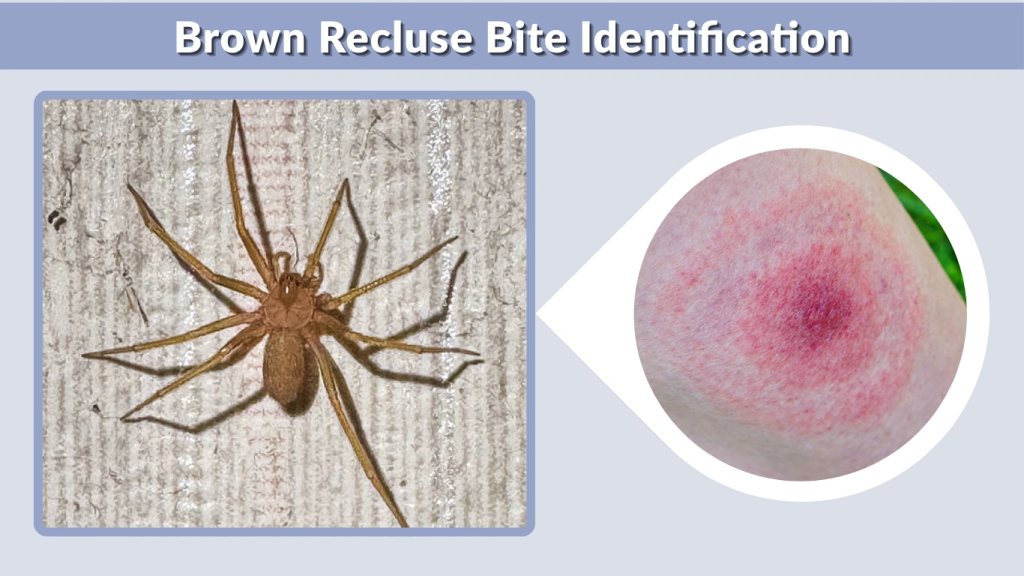
Although brown recluse spiders are venomous, bites are relatively uncommon because the spiders usually avoid humans. Most bites occur when a spider becomes trapped in clothing, bedding, or shoes.
Early Bite Symptoms
A brown recluse bite may not be immediately noticeable. In some cases, the person may feel only a mild stinging sensation.
Early symptoms can include:
- Redness around the bite area
- Mild swelling
- Itching or burning sensation
These symptoms may resemble other insect bites and can vary from person to person.
Severe Bite Symptoms
In rare situations, the bite may develop more serious symptoms. This can include blistering or the formation of an open sore at the bite site.
Some people may also experience:
- Fever or chills
- Nausea
- Increasing pain around the wound
Because reactions vary widely, medical attention should be sought if symptoms worsen or appear unusual.
When to Seek Medical Attention
Medical care should be considered if the bite area becomes increasingly painful, shows signs of infection, or begins to develop significant skin damage. A healthcare professional can evaluate the symptoms and recommend appropriate treatment.
Tips for Safe Brown Recluse Identification
If you believe you have seen a brown recluse spider, it is best to approach the situation carefully and avoid direct contact.
Helpful safety tips include:
- Do not attempt to handle the spider with bare hands
- Observe the spider from a safe distance
- Take a clear photo if possible for identification
- Compare multiple features such as eye pattern, markings, and body shape
If there is uncertainty about the spider’s identity or if several spiders are found in the home, contacting a pest control professional can help ensure accurate identification and safe removal.
Conclusion
Brown recluse spider identification requires careful observation of several features rather than relying on a single characteristic. Key traits include the violin-shaped marking on the cephalothorax, the unique six-eye arrangement, a plain brown body, and long thin legs without banding. Understanding these features can help distinguish the brown recluse from many harmless spiders that are commonly misidentified. By learning where these spiders live and how they behave, homeowners can better recognize them and respond safely if they appear.