

Fen raft spiders and their close relatives, the raft spiders, are among the most remarkable arachnids in Europe. Known for walking on water and hunting aquatic prey, these spiders often raise curiosity—and fear. But are they truly dangerous? Where can they be found? This detailed FAQ guide answers 45 common questions about their size, habitat, diet, behavior, and conservation status to help you better understand these unique semi-aquatic spiders.
1. What is a fen raft spider?

The fen raft spider (Dolomedes plantarius) is a semi-aquatic spider native to parts of Europe, including the UK. It is one of the UK’s largest spiders and is known for living near wetlands, ditches, and fen habitats. This rare species can walk on water and catch aquatic insects or small tadpoles near the surface.
2. What is a raft spider?
A raft spider refers to two similar species: the fen raft spider (Dolomedes plantarius) and the raft spider (Dolomedes fimbriatus). Both are large, water-loving spiders that inhabit bogs, wetlands, and pond margins. They are capable hunters that use the surface tension of water to walk, sense vibrations, and ambush prey.
3. What makes the fen raft spider special?
The fen raft spider is unique because of its ability to walk on water and dive underwater to escape predators. It’s also a conservation concern, being one of the UK’s rarest and most protected spiders. Its survival depends on clean, undisturbed wetland environments, making it a symbol of successful habitat restoration efforts.
4. What does a fen raft spider look like?

Fen raft spiders are large, with adult females reaching up to 23mm in body length. They are dark brown with a distinctive white or cream stripe along each side of the body. Their long legs help them move across water, and their size and markings make them easily distinguishable from other UK spiders.
5. What does a raft spider look like?
Raft spiders typically have a dark brown or olive body with pale side stripes and long legs that spread widely. They resemble the fen raft spider but may vary slightly in coloration and size. Males are smaller than females. Both types of raft spiders are often seen sitting on vegetation at the water’s edge.
6. How big is a fen raft spider?
Female fen raft spiders can grow up to 23mm in body length, with a leg span reaching about 70mm. Males are smaller, usually around half the size. Their impressive size and leg span make them among the largest native spiders in the UK, especially visible when resting on water or reed stems.
7. How big can a fen raft spider get?

A fen raft spider can grow up to 23mm in body size (not including legs), with a total leg span of up to 7cm. This size allows them to effectively hunt small aquatic creatures. Their large body and long legs make them one of the most visually striking spiders found in UK wetlands.
8. How big is a raft spider?
Raft spiders are similarly large, with females averaging 15–22mm in body length and a leg span of 6–7cm. Males are smaller. Their size helps them dominate the aquatic insect food chain, and they use their long legs to detect vibrations from prey at the surface of the water.
9. How big do raft spiders get?
Raft spiders can grow quite large—adult females typically reach up to 22mm in body length, and their leg span can exceed 70mm. Males are generally half the size. Their size allows them to subdue a variety of prey and thrive in semi-aquatic environments like marshes, ponds, and bogs.
10. How big is a bog raft spider?

The term “bog raft spider” often refers to Dolomedes fimbriatus, found in bogs and wet heaths. It reaches similar sizes as the fen raft spider, with adult females growing up to 20mm in body length. These spiders are built for watery environments and use their size and strength to hunt insects near bog pools.
11. How big is a great raft spider?
The “great raft spider” is another name for the fen raft spider, which is one of the UK’s largest spiders. Adult females can reach up to 23mm in body length and have a leg span of around 7cm. Their impressive size makes them excellent aquatic hunters and one of the most striking spiders in Europe.
12. Where do fen raft spiders live?
Fen raft spiders live in wetland environments like fens, reedbeds, and marshy ditches. They prefer shallow, still, or slow-moving water bodies with plenty of vegetation. In the UK, they are found in carefully managed nature reserves where water quality and habitat structure support their semi-aquatic lifestyle and reproduction.
13. Where are fen raft spiders found?
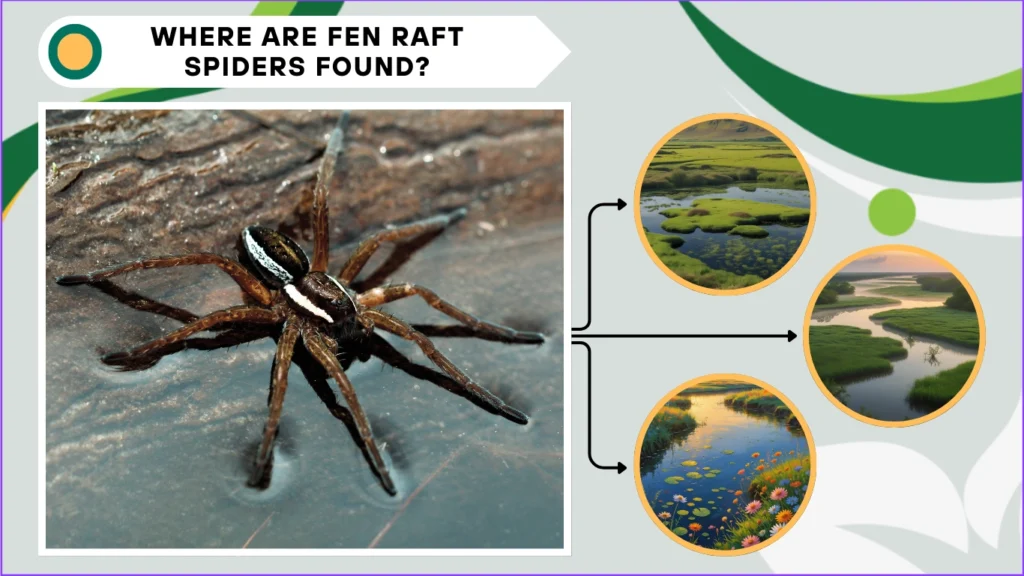
Fen raft spiders are mainly found in the UK and parts of mainland Europe. In the UK, their populations are limited to a few protected areas in Suffolk, East Sussex, and South Wales. These sites offer the shallow, well-vegetated freshwater environments essential for the spider’s hunting and breeding success.
14. Where do raft spiders live?
Raft spiders inhabit wet, marshy habitats like bogs, pond edges, and fens. They are closely associated with freshwater environments and can be found across northern and central Europe, including parts of the UK. Their presence depends heavily on unpolluted, undisturbed aquatic habitats with dense vegetation for shelter and hunting.
15. Where are raft spiders found?
Raft spiders are distributed across much of northern and central Europe, including the UK, Ireland, Germany, and Scandinavia. In the UK, Dolomedes fimbriatus is found in Scotland and some parts of Wales and southern England, while the rarer Dolomedes plantarius has a much more restricted distribution.
16. Where are fen raft spiders in the UK?

In the UK, fen raft spiders are found in only a few protected wetland sites. The most well-known locations include Redgrave and Lopham Fen in Suffolk, the Pevensey Levels in East Sussex, and a reintroduction site in South Wales. These spiders rely on careful conservation to maintain their fragile populations.
17. Where do fen raft spiders live in the UK?
Fen raft spiders live in shallow freshwater habitats such as marsh ditches and reed beds in the UK. Their known habitats include Redgrave and Lopham Fen, Pevensey Levels, and Crymlyn Bog. These locations offer the clean water, vegetation, and microhabitat features necessary for their survival and reproduction.
18. Where in the UK are fen raft spiders found?
Fen raft spiders are found in three main areas in the UK:
- Redgrave and Lopham Fen (Suffolk/Norfolk border)
- Pevensey Levels (East Sussex)
- Crymlyn Bog (South Wales, reintroduced population)
These rare spiders require wetland management and protected environments to sustain their limited and vulnerable populations.
19. Where can fen raft spiders be found?
Fen raft spiders can be found in select freshwater wetlands with dense aquatic vegetation. In the UK, they are confined to a few conservation sites, and in Europe, they appear in scattered regions with suitable conditions. They often rest on floating vegetation or water margins, waiting for prey to come near.
20. Where can I find a fen raft spider?

You’re most likely to find a fen raft spider in protected wetland reserves in the UK. Visit sites like Redgrave and Lopham Fen or Pevensey Levels during late spring to early autumn. Look for them on water surface vegetation near ditches or slow-moving water. Observation should be done carefully to avoid disturbance.
21. Where can you find fen raft spiders?
Fen raft spiders can be found in freshwater marshes and fen habitats with slow-moving or still water. In the UK, they are limited to three known populations in Suffolk, East Sussex, and South Wales. These areas offer the specific conditions they need: clean water, dense vegetation, and minimal human disturbance.
22. Are raft spiders found in Ireland?
Raft spiders (Dolomedes fimbriatus) are not known to be native to Ireland. Their confirmed populations are mostly found in mainland Britain and parts of Europe. While Ireland has suitable wetland environments, there have been no documented stable populations of raft spiders recorded there as of current data.
23. Are raft spiders found in Scotland?

Yes, Dolomedes fimbriatus, a species of raft spider, is found in parts of Scotland. They inhabit boggy moorlands, wet heaths, and other freshwater areas with dense vegetation. Scotland provides an ideal habitat for this species, particularly in remote, undisturbed locations with cool, moist climates and shallow standing water.
24. Are raft spiders rare?
Raft spiders are considered rare in the UK due to habitat loss and their specialized wetland requirements. Dolomedes plantarius (fen raft spider) is especially rare and protected under UK law. Dolomedes fimbriatus is more widespread but still uncommon. Conservation efforts focus on habitat restoration to support both species.
25. How many fen raft spiders are in the UK?
The exact number of fen raft spiders in the UK is hard to determine, but their population is estimated to be in the low thousands across the three known sites. Conservation monitoring helps track breeding success and habitat quality, and reintroduction projects have slightly increased their numbers in recent years.
26. Is the fen raft spider endangered?

Yes, the fen raft spider is classified as endangered in the UK and listed as a priority species for conservation. It faces threats from habitat loss, water pollution, and climate change. Protective measures, including habitat restoration and population monitoring, are in place to help conserve this rare and declining species.
27. Do fen raft spiders bite?
Yes, fen raft spiders can bite if provoked, but bites are rare and typically harmless to humans. Their fangs can pierce skin, causing mild pain or irritation. They are not aggressive and will usually flee from humans. Most bites happen only when the spider is handled roughly or accidentally disturbed.
28. Can fen raft spiders bite?
Fen raft spiders are capable of biting, as they have strong fangs used to subdue prey. However, they rarely bite humans unless threatened. Their venom is designed for insect prey, and a bite may cause only mild symptoms like localized pain, swelling, or redness—similar to a bee sting.
29. Does the fen raft spider bite?

Yes, the fen raft spider can bite, but it’s uncommon and not medically significant to humans. Most bites occur only under stress, such as if the spider is caught or touched. The bite may cause temporary discomfort, but it poses no serious health risk unless an allergic reaction occurs.
30. Do raft spiders bite?
Raft spiders do bite, but only in self-defense. They are not aggressive and prefer to escape if disturbed. Their bite is usually mild and comparable to a small insect sting. While their size might look intimidating, raft spiders are not considered dangerous to people and do not pose a health threat.
31. Can raft spiders bite?
Yes, raft spiders can bite, but they rarely do unless directly provoked. Their bite is not dangerous to humans and may feel like a mild sting or pinprick. They use their fangs to subdue insect prey, not for defense. If bitten, symptoms are typically mild, including slight redness or irritation at the bite site.
32. Do raft spiders bite humans?
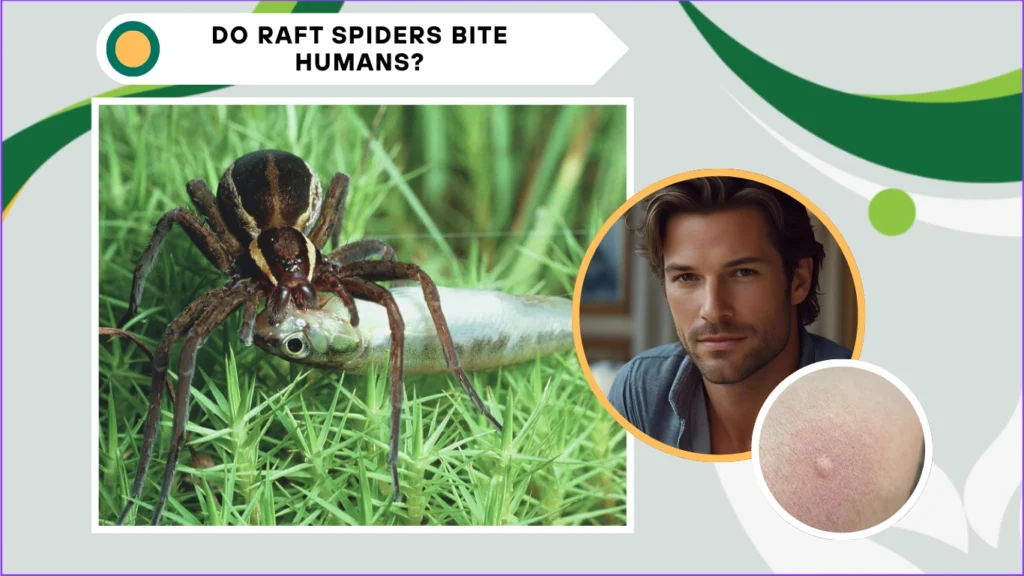
Raft spiders do not typically bite humans. They are shy, non-aggressive spiders that avoid contact with people. Bites are extremely rare and only occur if the spider is handled or threatened. In the rare event of a bite, the effects are mild and short-lived, similar to an insect bite or sting.
33. Are raft spiders venomous?
Yes, raft spiders are venomous, but their venom is only effective on their prey—usually insects and small aquatic animals. Their venom is not harmful to humans and does not cause serious medical issues. While they have fangs and can bite, their venom does not pose a danger to people or pets.
34. Are raft spiders poisonous?
No, raft spiders are not poisonous. The term “poisonous” refers to something harmful if eaten or touched, whereas raft spiders are venomous—meaning they inject venom through a bite. However, their venom is very mild and not medically dangerous to humans. They pose no poisoning risk through touch or ingestion.
35. Is the raft spider poisonous?

No, the raft spider is not poisonous. People often confuse “poisonous” with “venomous.” Raft spiders are venomous to their prey but harmless to humans. They do not release toxins through skin contact or cause poisoning if accidentally touched. Their primary threat is only to insects and small aquatic creatures.
36. Is the fen raft spider poisonous?
The fen raft spider is not poisonous to humans. It is venomous, using its venom to immobilize insect prey. The venom has little to no effect on people, and bites are extremely rare. If one does bite, it may cause mild pain or redness, but it is not medically dangerous.
37. Are raft spiders aggressive?
Raft spiders are not aggressive. They prefer to avoid humans and will flee if disturbed. Even when guarding their egg sacs or territory, they rarely bite. Their large size might make them appear threatening, but they are peaceful creatures that rely on ambush hunting rather than confrontation.
38. Are raft spiders dangerous?

Raft spiders are not considered dangerous to humans. Though they are large and capable of biting, their venom is not harmful to people. They pose no threat to pets, children, or adults and play an important role in wetland ecosystems by controlling insect populations.
39. Can a fen raft spider kill you?
No, a fen raft spider cannot kill you. Its venom is designed to subdue insects, not harm humans. Even if it does bite, which is rare, the effects are mild and temporary. There are no recorded cases of serious complications or fatalities resulting from a fen raft spider bite.
40. What do fen raft spiders eat?
Fen raft spiders are carnivorous and primarily feed on aquatic insects like water beetles, flies, and mosquito larvae. They may also prey on small fish, tadpoles, or other invertebrates that touch the water surface. They detect prey using the vibrations on the water and use their venom to immobilize it.
41. What do raft spiders eat?

Raft spiders eat a variety of small aquatic and semi-aquatic creatures. Their diet includes insects like flies, beetles, mosquito larvae, and sometimes small tadpoles or fish fry. They use the vibrations on the water surface to detect movement, then lunge at the prey, inject venom, and drag it back to consume.
42. What does the fen raft spider eat?
Fen raft spiders eat aquatic insects, larvae, and occasionally small vertebrates such as tadpoles or tiny fish. They hunt by detecting ripples on the water surface caused by struggling prey. Once located, they sprint across the water, seize the prey, and inject venom to subdue it before feeding.
43. What eats fen raft spiders?
Fen raft spiders have several natural predators, including birds, amphibians like frogs, and larger insects. Water beetles and dragonfly larvae may prey on juvenile spiders. Their vulnerability is highest when young or during molting. Habitat disturbance also increases predation risks due to less available cover and exposure to predators.
44. What eats raft spiders?

Raft spiders are eaten by a range of predators depending on their life stage. Birds such as herons or ducks, amphibians like frogs, and some larger spiders may prey on them. Their eggs and spiderlings are especially vulnerable to predation by ants, beetles, and even other spiders.
45. How do raft spiders walk on water?
Raft spiders walk on water by taking advantage of surface tension. Their legs are covered in water-repellent hairs that allow them to stay afloat. They distribute their weight evenly and move with smooth, rowing-like motions. This adaptation helps them hunt aquatic prey and escape predators without sinking.