
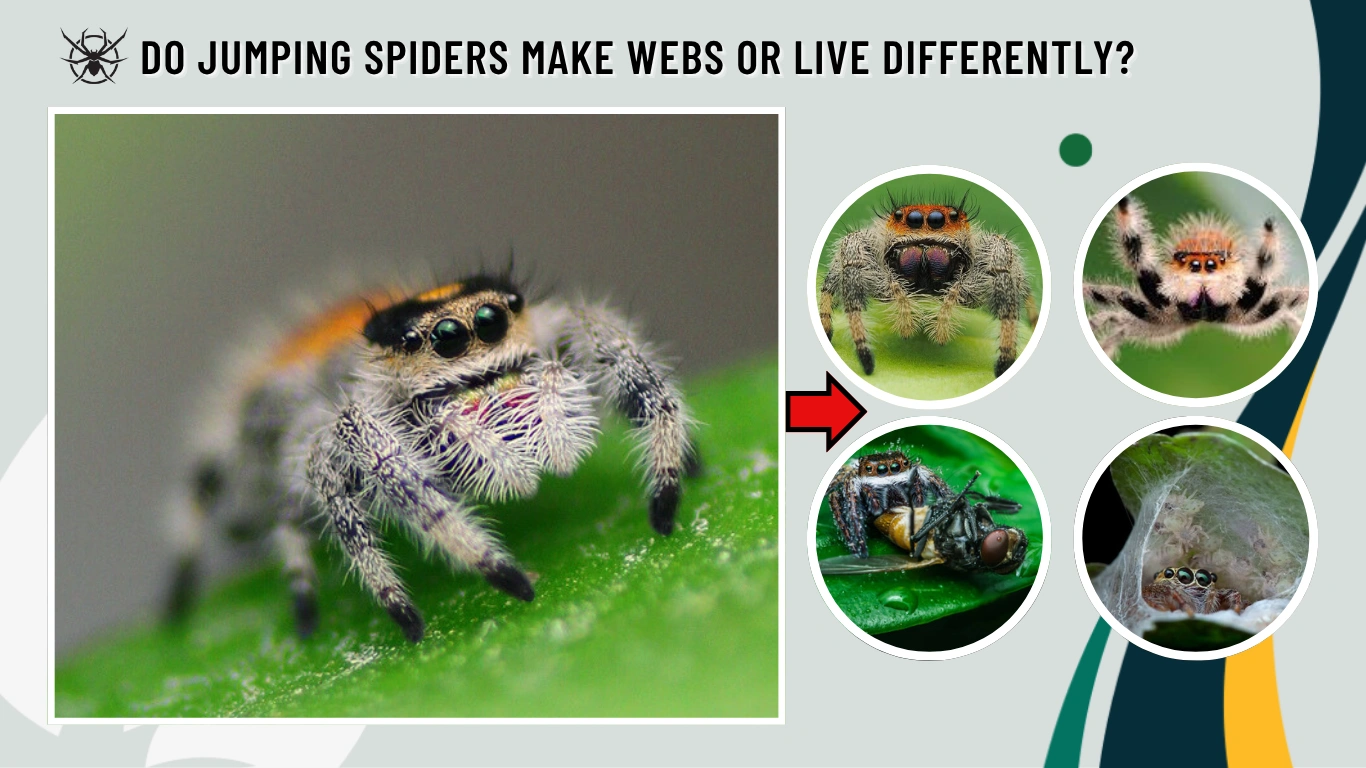
Jumping spiders are among the most fascinating and intelligent arachnids on Earth. Known for their expressive eyes, curious nature, and leaping ability, they stand apart from most other spider species. One common question about them is: Do jumping spiders make webs like other spiders? The answer is both yes and no. They do produce silk, but they don’t use it to spin webs for trapping prey. Instead, jumping spiders have a unique relationship with silk, using it in different, purposeful ways that support their active hunting lifestyle.
Let’s explore how jumping spiders use silk, what kind of “webs” they make, and how it fits into their daily routine and survival strategy.
Do Jumping Spiders Make Webs?

Not for Hunting Prey
Unlike orb-weaving spiders or cobweb spiders, jumping spiders do not build traditional webs to catch insects. Instead, they are visual hunters. They stalk their prey carefully and leap with precision to catch it, using their front legs to grasp and subdue the target.
Their eight eyes, especially the large central pair, give them excellent vision, allowing them to detect prey, threats, and potential mates with great accuracy. This active lifestyle eliminates the need for sticky, elaborate webs.
How Do Jumping Spiders Use Silk?
Even though they don’t trap prey in webs, jumping spiders are skilled silk users. Their silk is vital for navigation, protection, and reproduction.
1. Draglines for Jumping Safety
When jumping from one spot to another, these spiders leave a silk dragline behind. This silk thread acts like a safety rope in case they miss their target or fall. If something goes wrong during a leap, they can climb back up the dragline to their original position.
This behavior is similar to a climber using a harness—helpful, especially when exploring vertical surfaces like walls, ceilings, or tree trunks.
2. Shelter Construction – Silken Retreats
Jumping spiders often build small silk retreats, which are not full webs but silken enclosures. These retreats serve as:
- Sleeping areas at night
- Shelters during bad weather
- Hiding spots from predators
- Safe locations for molting
You might find these retreats folded inside a leaf, under bark, behind furniture, or in wall corners indoors. These silk homes are carefully sealed, with a small entrance that the spider can open and close.
3. Egg Sacs and Reproduction
Female jumping spiders use silk to create egg sacs after mating. These sacs are thick and secure, often placed inside their existing retreat or hidden somewhere safe. The female guards the sac until the spiderlings hatch, sometimes even helping them emerge.
Once the babies hatch, the mother may stay with them for a while, depending on the species, before they disperse to live independently.
How Jumping Spiders Use Their Silk in Daily Life

Morning Routine
Each morning, a jumping spider exits its silk retreat by cutting a small slit or opening. After exiting, the spider begins its day actively—exploring, hunting, or basking in the sun.
Unlike web-weavers who sit still and wait, jumping spiders are always on the move, climbing walls, leaves, and windows in search of prey.
Evening Retreat
At night or when threatened, jumping spiders return to their silk home. These retreats are crucial for rest and protection. They may rebuild or reinforce the silk daily to keep it strong and clean.
If a predator disturbs their retreat or if they are injured, they might retreat and stay hidden until it’s safe again.
Lifestyle and Habitat of Jumping Spiders

Active Day Hunters
Jumping spiders are diurnal, meaning they’re most active during the day. Their sharp vision helps them locate insects from a distance. They carefully stalk prey like fruit flies, moths, and mosquitoes, then leap and attack with precision.
Unlike many spiders that wait in webs, jumpers use strategy and planning when hunting.
Solitary and Territorial Creatures
These spiders are generally solitary. Each spider creates and defends its own space, whether it’s in a leaf fold, a bark crevice, or a quiet corner of your home.
If another spider invades their retreat, they may show signs of aggression or move to a new spot.
Favorite Sheltering Spots
Jumping spiders like to build silk retreats in places that are:
- Dry
- Hidden
- Easy to escape from
Common locations include:
- Under leaves in gardens
- Behind outdoor signs or pots
- Window sills or behind wall art indoors
- Inside furniture crevices or bookshelf corners
They prefer areas with good visibility and warmth, which suits their vision-based hunting style.
Final Thoughts
Jumping spiders do not make webs for trapping prey, but they still depend heavily on silk. Their use of draglines, shelters, and egg sacs reveals a more versatile, purposeful use of silk compared to other spider species. Their lifestyle is active, calculated, and incredibly adaptive.
If you ever spot a tiny silken tent in your garden or home and notice a bold-eyed spider popping its head out during the day—it’s likely a jumping spider. They might not weave webs, but they certainly build smart little silk homes.