

The goldenrod crab spider is one of nature’s most remarkable flower-dwelling predators, known for its shapeshifting colors, unusual hunting strategy, and striking appearance. Often spotted on daisies, goldenrods, and other bright blossoms, this spider blends perfectly into its surroundings. Its ability to ambush prey larger than itself, along with its vivid white or yellow form, attracts curiosity from nature lovers and gardeners across North America and Europe.
Overview of the Goldenrod Crab Spider
The goldenrod crab spider (Misumena vatia) is a small but visually distinct species found on flowers throughout the warmer months. Unlike web-building spiders, it uses stealth and camouflage to catch insects, relying on patience rather than silk traps. Its crab-like stance, ability to walk sideways, and rapid striking speed make it a fascinating example of ambush predation. These spiders often appear in gardens, meadows, roadsides, and wildflower fields where pollinators are abundant.
Identification and Physical Appearance

Size, Shape, and Body Features
- Small body; females larger than males
- Rounded, smooth abdomen
- Crab-like sideways stance
- Forward-facing eyes for hunting
- Subtle “smile” pattern on abdomen in many individuals
Color Variations
- Common forms: bright white or lemon yellow
- Occasional pink, brown, or pale shades
- Red or dark streaks may appear after feeding
- Color tone varies by flower type and environment
Color-Changing Ability
- Can shift between white and yellow
- Change takes several days
- Helps match flower color for camouflage
- UV fluorescence visible under ultraviolet light
Camouflage and Hunting Strategy

The goldenrod crab spider is a master of ambush, relying on patience and camouflage to secure prey rather than spinning webs. Its hunting techniques allow it to overpower insects much larger than itself.
Ambush Predation
Instead of building webs, these spiders position themselves on flower heads where bees, flies, butterflies, and other pollinators frequently land. They remain motionless until prey comes within reach, then strike rapidly with their front legs and inject venom to immobilize the target. This method allows them to hunt efficiently without the energetic cost of web construction.
Camouflage Effectiveness
Camouflage is the spider’s greatest advantage. By matching the color of the flower, it becomes nearly invisible to both predators and prey. Pollinators often fail to detect the spider until it is too late, increasing the spider’s capture success. This camouflage also protects the spider from birds and wasps, which actively hunt insects on flowers.
Diet and Feeding Behavior
Goldenrod crab spiders feed mainly on flying insects such as bees, butterflies, moths, beetles, and hoverflies. Their venom is potent enough to subdue prey several times their own size. Once captured, the spider holds the insect tightly while feeding, often causing color changes on its abdomen as pigments shift due to recent meals. Their choice of hunting plant, such as goldenrod or wild parsnip, often reflects the flower’s ability to attract abundant pollinators.
Habitat and Geographic Range
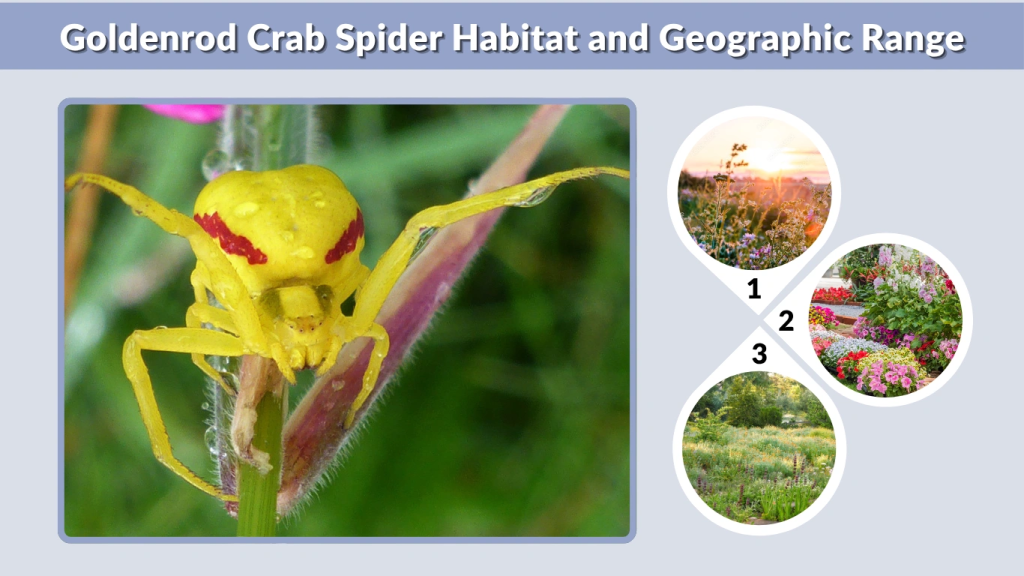
Goldenrod crab spiders thrive in sunny, flower-rich environments where insects gather in large numbers. They prefer habitats that allow them to blend easily into blooming plants and remain hidden from both prey and predators. Because they do not rely on webs, they choose locations offering stable surfaces for perching and hunting.
Preferred Habitat
These spiders are commonly found on wildflowers, garden blooms, and meadow plants. Goldenrods, daisies, asters, and yarrow are among their favorite hunting platforms. They also appear along forest edges, hiking trails, and even in backyard gardens, where pollinators are plentiful. Their ability to camouflage makes them highly successful in open, sunny landscapes.
Geographic Distribution
The goldenrod crab spider is widely distributed across North America, including regions such as Colorado, California, Michigan, Oregon, Ohio, Washington state, Wisconsin, Western New York, Maine, and New Hampshire. They also occur in Canada, particularly in Ontario and Alberta. Beyond North America, they are found throughout Europe, especially in the UK, and reported in parts of Australia. This broad range reflects their adaptability and preference for habitats rich in flowering plants.
Life Cycle and Reproduction

The lifecycle of the goldenrod crab spider includes distinct growth stages influenced by seasonal cycles. Like many crab spiders, they experience a single generation each year, with their development closely tied to flower availability.
Egg Laying
Females deposit egg sacs in late summer, usually on leaves or stems near their hunting sites. Each sac is covered with protective silk and guarded aggressively by the mother. During this period, females often remain near the eggs, displaying defensive behaviors to deter predators.
Spiderling Development
When spiderlings hatch, they remain inside the sac until temperatures warm enough for dispersal. Early-stage juveniles are tiny but recognizable, with pale coloring that darkens as they feed. They eventually climb to elevated points and release silk threads to disperse by ballooning, allowing them to colonize new flower patches.
Lifespan
Goldenrod crab spiders generally live for about one year. Females survive through the breeding season to protect egg sacs, while males typically die shortly after mating. Environmental conditions, prey availability, and predation pressure all influence their overall lifespan.
Male vs Female Differences

Sexual dimorphism is a defining characteristic of this species. Males and females differ substantially in size, color, and behavior.
Sexual Dimorphism
Female goldenrod crab spiders are significantly larger and more robust, often dominating the flowers they occupy. Males are much smaller, lighter, and more agile, enabling them to search for mates without attracting predators. Females often display brighter colors, while males appear thinner and darker.
Mating Behavior
Males locate females by following scent cues and approach cautiously to avoid triggering a defensive response. Courtship involves slow, deliberate movements. After mating, females continue hunting while developing eggs, whereas males rarely survive long into the late season.
Venom, Bites, and Danger to Humans
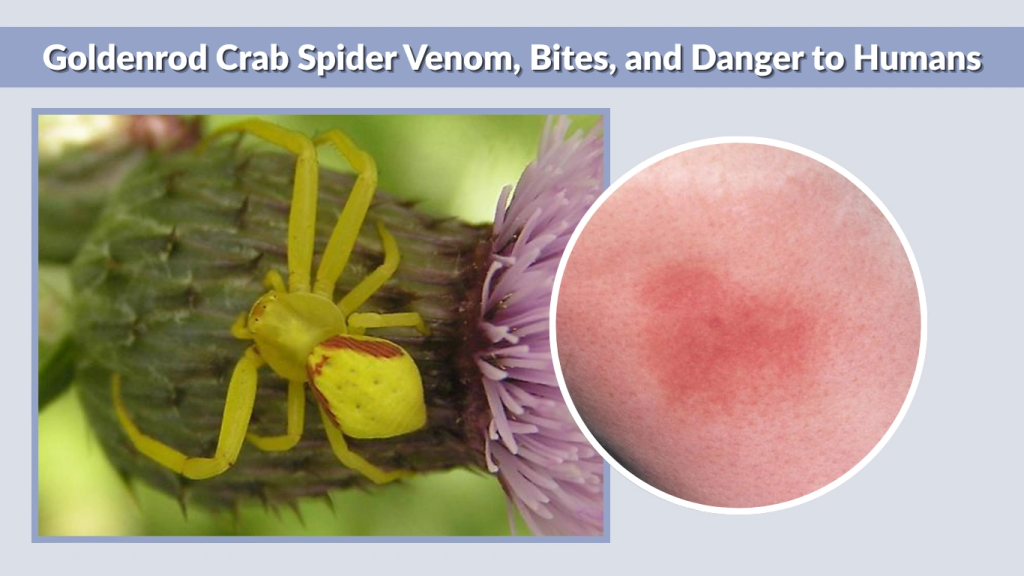
Although goldenrod crab spiders are venomous, their venom is specialized for small insects and poses little risk to humans. Most encounters result in no bites at all, as these spiders are shy and non-aggressive.
Are They Venomous?
Yes, the species uses venom to immobilize prey. However, this venom is not dangerous to humans. It is too mild to cause significant symptoms and is not considered medically important. Confusion arises due to the spider’s ability to overpower large insects, but this strength does not translate into harm for people.
Bite Symptoms
Bites are extremely rare because these spiders prefer to flee rather than defend themselves. When bites do occur, symptoms are minor: slight redness, localized swelling, or mild itching. These reactions generally resolve quickly without treatment.
Misinformation and Safety
Many online claims exaggerate the dangers of crab spider bites. In reality, goldenrod crab spiders are harmless garden inhabitants that play an important role in controlling insect populations. Only individuals with severe allergies or infected bites should seek medical attention.
Behavior and Daily Activity
Goldenrod crab spiders exhibit behaviors adapted for a life spent on flowers. Their movements, defensive responses, and daily routines revolve around hunting and avoiding predators.
Movement & Locomotion
Their sideways, crab-like walking style allows them to reposition across petals with precision. They move slowly when stalking but can strike with surprising speed when grabbing prey.
Interaction With Predators
Birds and parasitic wasps are among their main threats. Camouflage helps protect the spiders, but when discovered, they retreat to the underside of petals to avoid being eaten.
Common Places People Encounter Them
Encounters typically happen in gardens, parks, and fields. Their bright yellow or white color often makes them easy to spot on contrasting flowers, especially during late summer when goldenrod blooms peak.
Photos, Identification Tools, and Observation Tips
Key Features to Look For
- Rounded abdomen with smooth texture
- Sideways stance and crab-like legs
- Bright white or yellow coloration
- Presence on flower heads
Using Photos for Identification
Pictures showing the top view, side profile, and face help distinguish this species from other crab spiders. Color may vary depending on recent environment, so markings and body shape are more reliable identifiers.
Recommended Sources
BugGuide, iNaturalist, and regional wildlife websites provide helpful identification images and species reports. Nature guides also frequently include Misumena vatia due to its popularity among photographers.
Cultural, Symbolic & Interesting Facts
Symbolic Meaning
In some traditions, the goldenrod crab spider symbolizes patience, adaptability, and hidden strength. Its ability to blend seamlessly into its environment is often interpreted as a sign of harmony with nature.
Fun Facts
These spiders can catch prey larger than themselves, glow under UV light, and change color based on their surroundings. Females dominate the species in size and strength, contributing significantly to ecological balance.
Misumena vatia in Media
Frequently featured in insect guides, educational websites, and nature blogs, this spider remains a favorite for macro photographers due to its vivid color and flower-dwelling habits.
FAQs
Is the goldenrod crab spider poisonous to humans?
The goldenrod crab spider is venomous to insects but not poisonous or dangerous to humans. Its venom is used to subdue prey and is too weak to cause any serious reaction in people. Most bites result in brief redness or mild irritation, which typically disappears without treatment.
Can a goldenrod crab spider bite you?
Yes, it can bite if handled directly, but bites are extremely rare. These spiders are shy and prefer to retreat rather than defend themselves. When a bite does occur, symptoms are mild and not medically significant, making them one of the safest spiders to encounter outdoors.
Why do goldenrod crab spiders change color?
They change color to blend into the flowers where they hunt. This camouflage helps them remain hidden from predators and increases their chances of catching pollinators such as bees and butterflies. The shifting process occurs gradually and allows the spider to match different flower species.
Where can goldenrod crab spiders be found?
They are common across North America, including the United States and Canada, and occur throughout Europe and parts of Australia. You can find them on wildflowers, in gardens, along forest edges, and in meadows where pollinators are abundant.
What do goldenrod crab spiders eat?
Their diet consists mainly of bees, butterflies, flies, beetles, and other flower-visiting insects. They use stealth, camouflage, and fast ambush attacks to capture prey. Their venom quickly immobilizes insects, allowing them to feed even on creatures several times their own size.