

The Golden Silk Orb-Weaver, often called the banana spider or golden orb weaver, is one of the most fascinating arachnids in the world. Known for its shimmering golden web and striking appearance, this spider is commonly found in the southeastern United States, Central and South America, and even parts of Asia and Australia. Despite their intimidating look, they’re mostly harmless to humans—and they play an important role in controlling insect populations.
Identification and Physical Appearance
What Does a Golden Silk Orb-Weaver Look Like?
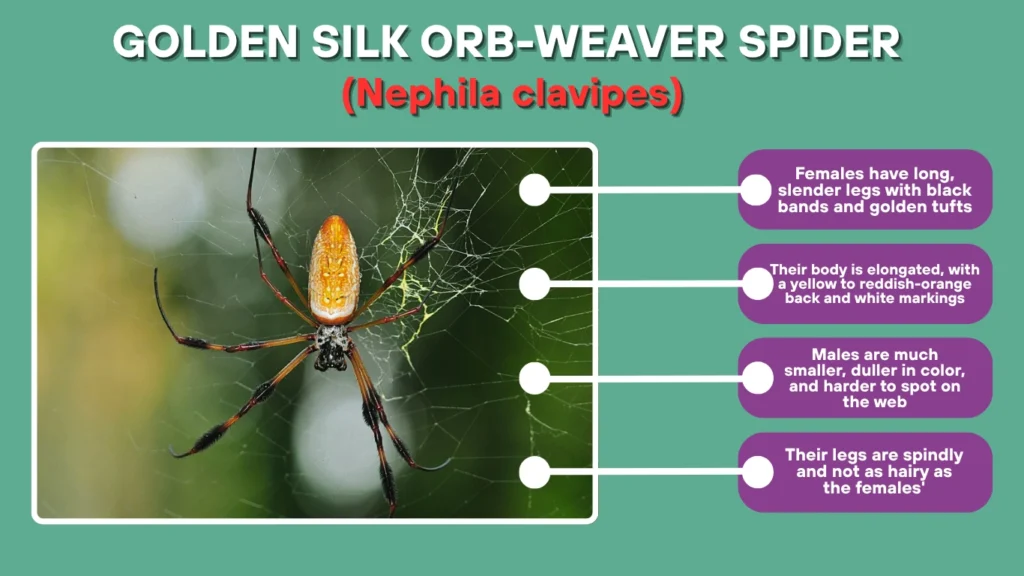
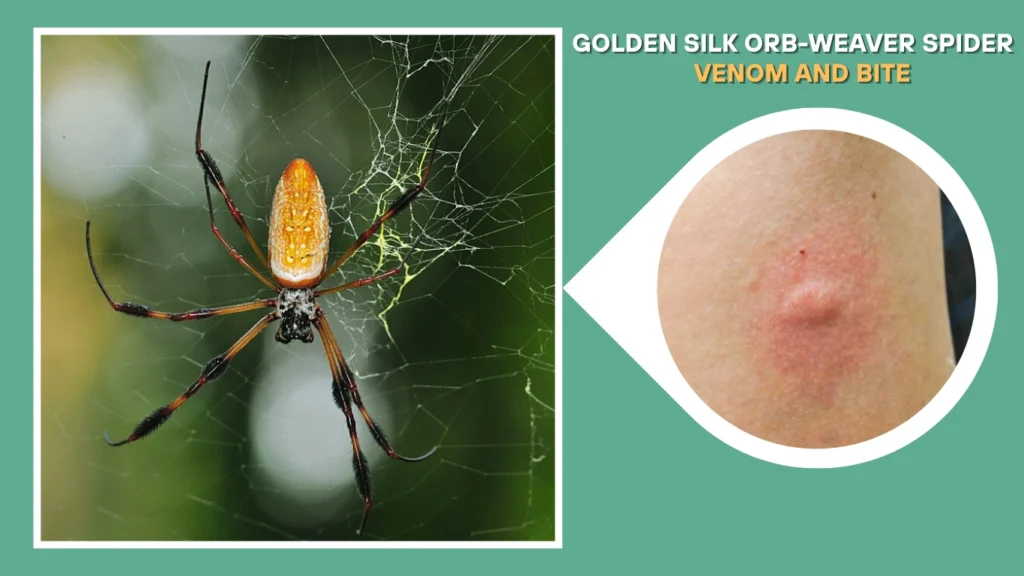
The golden silk orb-weaver is visually striking and easy to identify if you know what to look for.
- Females have long, slender legs with black bands and golden tufts
- Their body is elongated, with a yellow to reddish-orange back and white markings
- Males are much smaller, duller in color, and harder to spot on the web
- Their legs are spindly and not as hairy as the females’
Size Differences
Golden silk orb-weavers show extreme sexual size dimorphism.
- Females: Body length can reach 1.5–2 inches, with a leg span of 4–5 inches
- Males: Much smaller—usually under 0.5 inches, with a thin build
This size gap is one of the most noticeable differences between genders in any spider species.
Habitat and Distribution
Where Are They Found?
Golden silk orb-weavers are widespread across warmer climates.
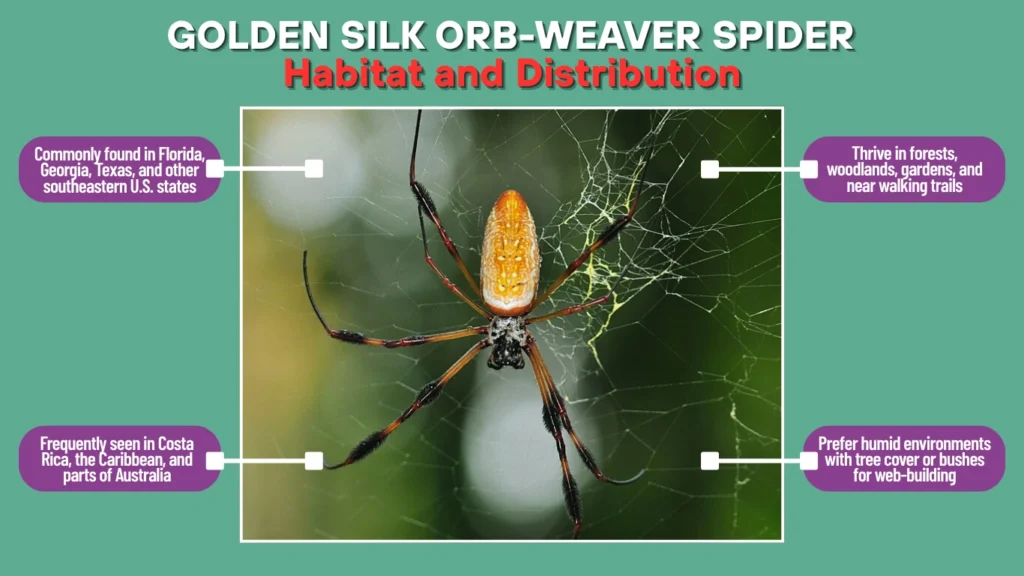
- Commonly found in Florida, Georgia, Texas, and other southeastern U.S. states
- Frequently seen in Costa Rica, the Caribbean, and parts of Australia
- Thrive in forests, woodlands, gardens, and near walking trails
- Prefer humid environments with tree cover or bushes for web-building
Seasonal Behavior and Range
These spiders are most active in late summer and early fall, especially in regions like Florida. Their range extends from the southeastern U.S. through Central America and down into South America.
Web and Silk
Structure of the Web
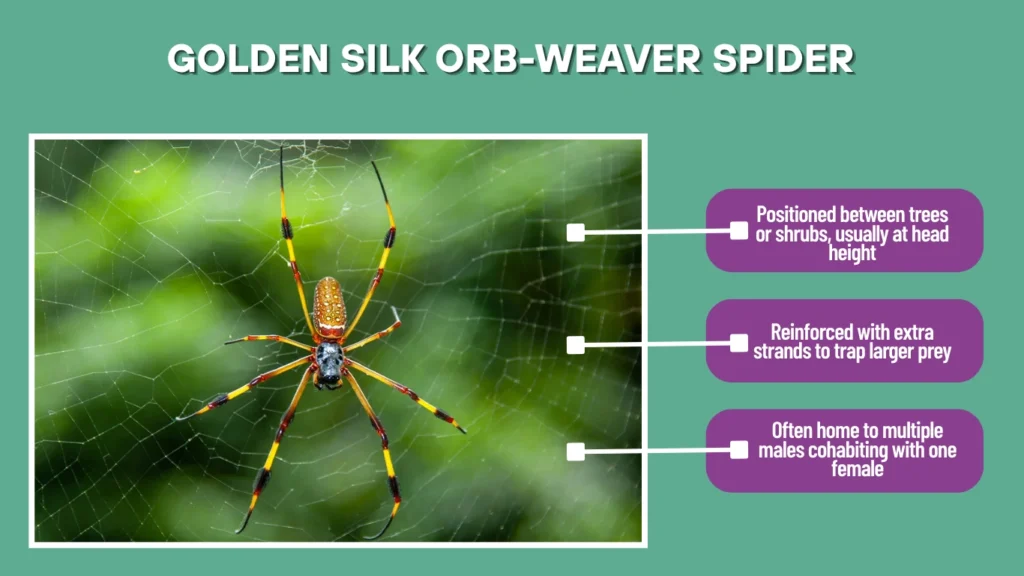
Golden silk orb-weavers build enormous and intricate orb webs, sometimes more than 3 feet across. Their webs are:
- Positioned between trees or shrubs, usually at head height
- Reinforced with extra strands to trap larger prey
- Often home to multiple males cohabiting with one female
The Famous Golden Silk
Their golden silk has captured the imagination of scientists and artists alike.
- The silk reflects sunlight, giving it a golden shimmer
- It is stronger than Kevlar by weight, making it incredibly durable
- Research has used their silk to create experimental fabrics, tapestries, and even capes
- Known applications include golden orb weaver silk cloth, dress, and tapestry made from hundreds of spider webs
Behavior and Diet
What Do They Eat?
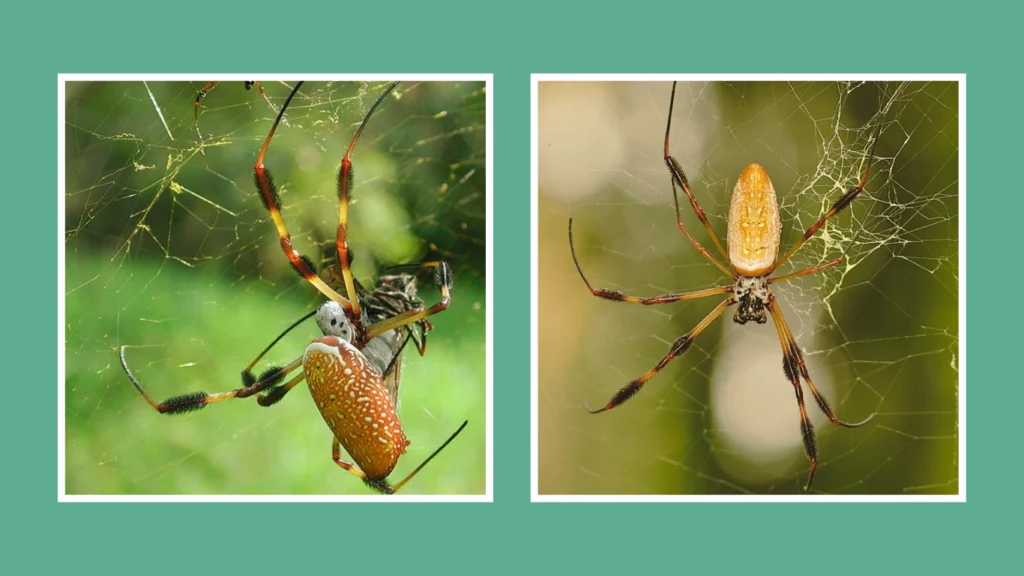
Golden silk orb-weavers are patient predators. They wait motionless in the center of their web until vibrations signal that prey has been caught. Once detected, they rush over, wrap the insect in silk, and either feed immediately or store it for later. Their diet typically consists of flies, grasshoppers, wasps, mosquitoes, and moths. Occasionally, they have been observed feeding on surprising prey like small birds or even snakes—though these cases are rare and often exaggerated.
Hunting and Feeding Habits
They don’t hunt aggressively but rely on the strength and size of their web to trap prey. After ensnaring it, they inject venom that liquefies the inside of the prey, making it easy to consume. Interestingly, males rarely catch prey—they survive by stealing bits of food from the female’s web or feeding on small trapped insects without building a web of their own.
Reproduction and Lifespan

Mating Behavior
Male golden silk orb-weavers live quietly on the edge of the female’s web. To avoid being mistaken for prey, they vibrate the web in a specific rhythm to announce their presence. Mating is risky—many males die during or after the act, either from exhaustion or because the female eats them. This behavior, known as sexual cannibalism, is common in orb-weaving spiders.
Eggs and Egg Sac
After mating, the female lays hundreds of eggs in a protective silk sac, typically hidden in nearby foliage. The sac is golden or tan in color and blends well with leaves, helping protect the eggs from predators. Baby spiders hatch weeks later and disperse using a behavior called ballooning—releasing silk threads that carry them off in the wind.
Venom and Bite
Are They Poisonous or Venomous?
Many people confuse the terms “poisonous” and “venomous.” Golden silk orb-weavers are venomous because they inject venom to immobilize prey—but their venom poses little threat to humans. A bite may cause minor irritation, similar to a mosquito bite or bee sting.
- Symptoms: redness, mild swelling, or itching
- No known fatalities or serious reactions in healthy individuals
These spiders are shy and non-aggressive. They usually only bite if trapped against the skin, such as in clothing or during handling.
Similar Species and Comparisons
Golden Silk Orb-Weaver vs Banana Spider

The name “banana spider” is often used interchangeably with golden silk orb-weaver, especially in Florida. However, in other parts of the world, banana spider may refer to different species like the Brazilian wandering spider. In the U.S., the term typically means Nephila clavipes—the golden silk orb-weaver.
Golden Silk Orb-Weaver vs Joro Spider
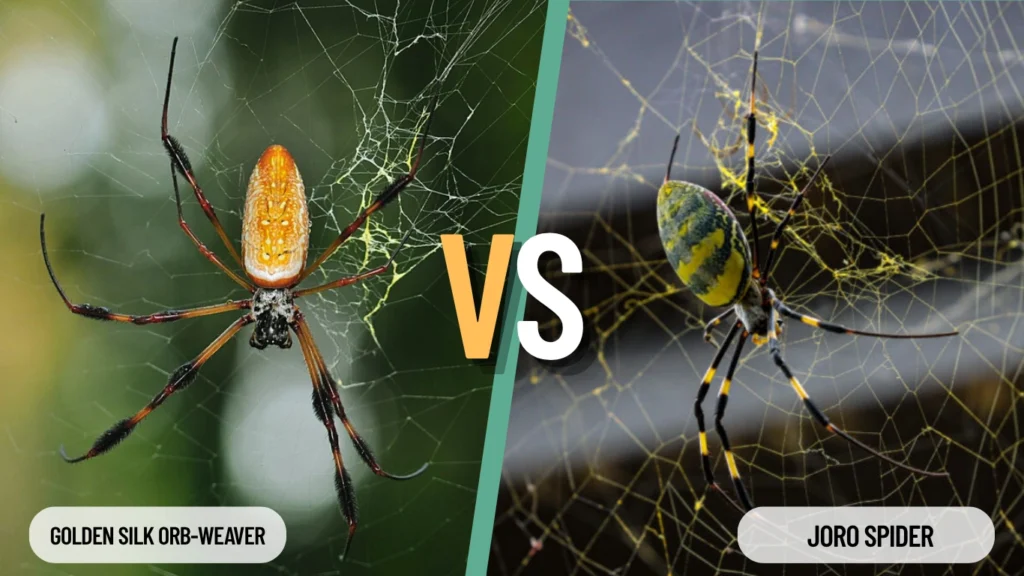
The Joro spider (Trichonephila clavata), native to East Asia and now found in the southeastern U.S., is often mistaken for its cousin. While both species produce golden silk and have similar web styles, the Joro spider has a more vibrant yellow-and-blue body and is more cold-tolerant. Researchers are currently studying how these two species interact as their ranges begin to overlap in places like Georgia and Tennessee.
Human Interest and Use
Golden Silk in Research and Clothing
Golden silk orb-weaver silk is not just visually stunning—it’s scientifically remarkable. Its golden sheen comes from the structure of the silk itself, and it’s known for being incredibly strong, lightweight, and flexible. Researchers have studied its properties to develop synthetic materials and even experimental bulletproof fabrics.
In Madagascar, a group of artists and scientists once created a silk cape and tapestry using threads from over a million spiders—demonstrating both the silk’s beauty and its potential in luxury textile design.
Can You Keep One as a Pet?
Golden Silk Orb-Weaver as a Pet
While not a common pet, it is technically possible to keep a golden silk orb-weaver in captivity. However, their large web-building space requirements, delicate nature, and short lifespan make them more suited for experienced exotic pet keepers or educational purposes than for casual hobbyists.
They feed on live insects and need consistent humidity and warmth. Additionally, since males are tiny and not web builders, people usually keep females if they choose to keep one at all.
Is It Available for Sale?
Buying or Selling Golden Silk Orb-Weavers
Golden silk orb-weavers are rarely sold in the pet trade. Due to their abundance in warm regions like Florida and Costa Rica, people more often observe them in nature than purchase them. In some places, it may be illegal or discouraged to sell or ship wild-caught specimens.
If you’re interested in observing one, a visit to botanical gardens or natural parks in southern U.S. states during late summer is your best bet.
Facts and Fascination
Fascinating Facts About the Golden Silk Orb-Weaver
There’s more to this spider than its golden threads. Here are two eye-catching facts:
- Web glows in sunlight: The golden silk not only looks beautiful but may also attract bees and other prey with its shimmer.
- Males risk everything for love: Mating is often fatal for the male, but it ensures the survival of his genetic line.
These spiders are quiet contributors to their ecosystems and deserve admiration rather than fear.
FAQs
Is the golden silk orb-weaver dangerous?
No, it’s not dangerous to humans. Its bite may cause mild irritation, but it isn’t harmful unless you have severe allergies.
How strong is golden orb-weaver silk?
Golden orb-weaver silk is one of the strongest natural materials—stronger than steel by weight and extremely elastic.
Where can I find golden silk orb-weavers?
They’re common in warm, humid areas like Florida, Georgia, and parts of Central and South America. Look for their large golden webs in wooded areas or gardens during late summer.
How long do they live?
Females live for about one year. Males usually die shortly after mating.
Are golden silk orb-weavers venomous or poisonous?
They are venomous, meaning they use venom to subdue prey, but their venom is not dangerous to humans.
Conclusion
The golden silk orb-weaver is a perfect example of how nature blends beauty with function. From its shimmering golden web to its gentle and non-aggressive nature, this spider is more fascinating than fearsome. Found across Florida, Texas, Costa Rica, and beyond, it plays a crucial role in pest control while also captivating scientists and spider lovers alike. Whether admired in the wild or studied for its silk, this species stands out as one of the most iconic spiders in the world.