
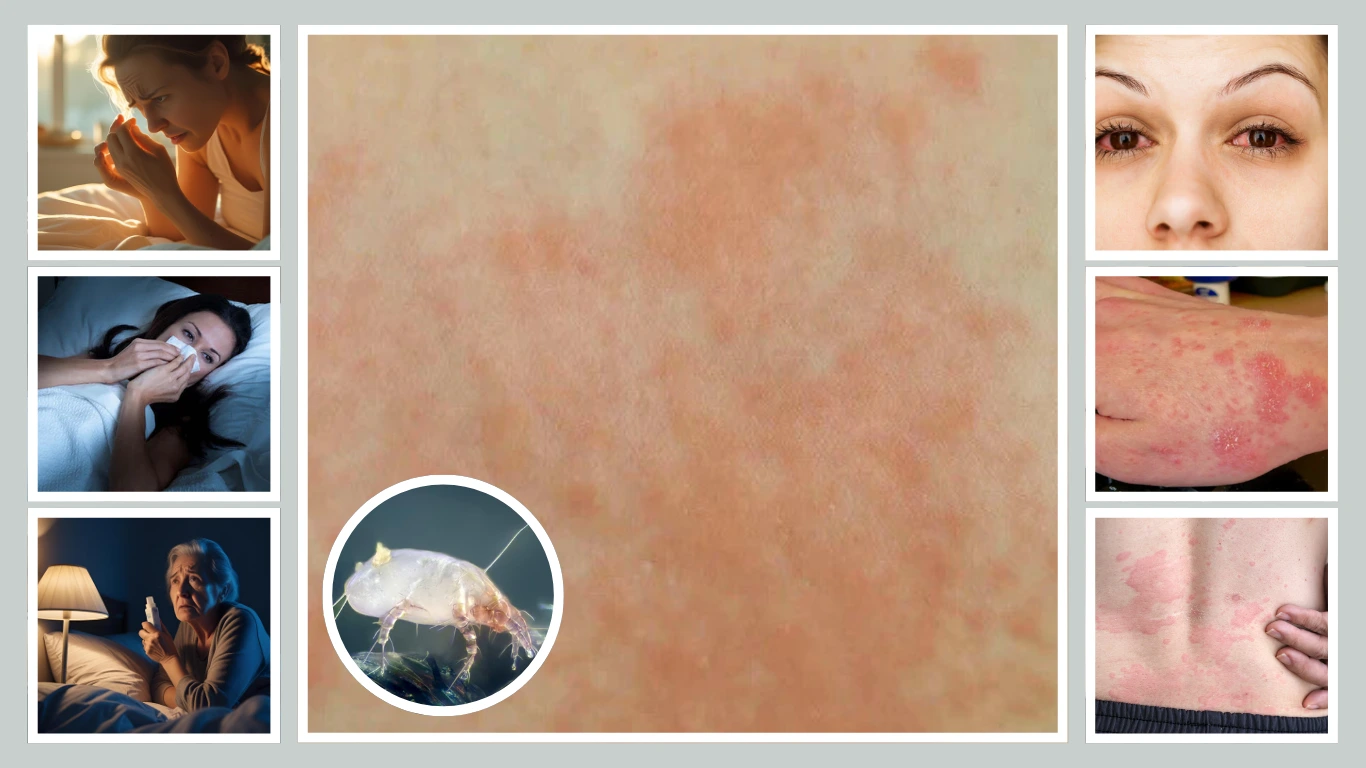
Waking up with itchy skin, sneezing, or red bumps may leave you wondering if something is lurking in your bed. While dust mites don’t bite, they can trigger allergic reactions that feel just as irritating. These microscopic pests thrive in mattresses, pillows, and blankets—right where you sleep.
In this article, we’ll break down 7 key signs that dust mites might be affecting your health and your sleep, along with tips to detect and reduce their presence.
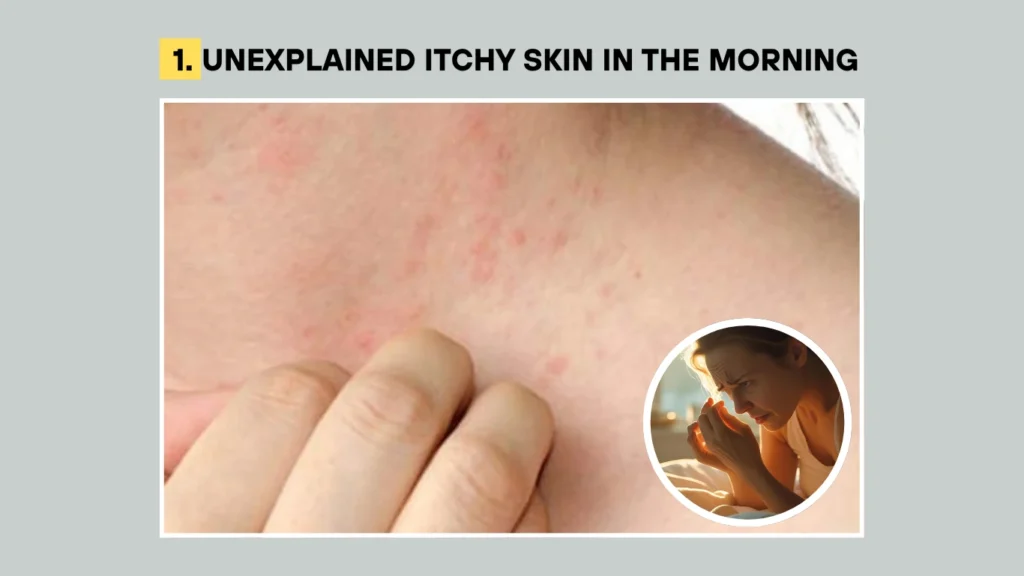
1. Unexplained Itchy Skin in the Morning
Why Mite Allergens Irritate the Skin
Dust mites themselves don’t bite, but their waste and body fragments contain proteins that can trigger allergic reactions. When your skin comes into contact with bedding that’s full of dust mites, you might experience mild to intense itching—especially in sensitive areas like the arms, neck, or face.
Difference Between Dust Mite Rash and Bites
Unlike insect bites that have a puncture mark or swelling, dust mite reactions usually show as widespread itching or a mild rash. There’s no visible bite, but the skin may feel irritated or sensitive to the touch.
Where the Itch Usually Occurs
Itchy patches typically show up on the upper body—especially where skin contacts pillows, sheets, or blankets overnight. If your itching gets worse after sleeping, your bed may be a dust mite hotspot.
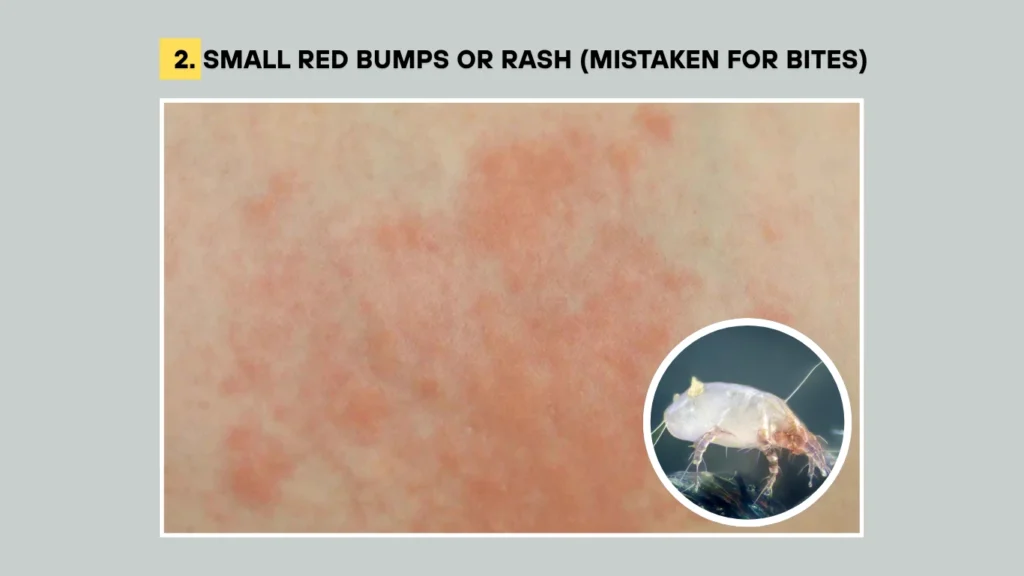
2. Small Red Bumps or Rash (Mistaken for Bites)
What Dust Mite Reactions Look Like
Dust mite exposure can lead to allergic contact dermatitis or hives, which often appear as small red bumps or flat patches. These bumps may look like insect bites, but they lack a central dot or stinger mark.
Common Areas on the Body
Red patches are usually found on the chest, back, arms, or legs—places where your body presses against bedding. In some cases, the bumps may appear in clusters, making them easy to confuse with flea or bed bug bites.
How to Tell From Bed Bug Bites
Bed bug bites tend to form in straight lines or zigzag patterns and may swell or blister. Dust mite-related rashes, on the other hand, are less defined and tend to spread gradually, often accompanied by dry or flaky skin rather than fluid.
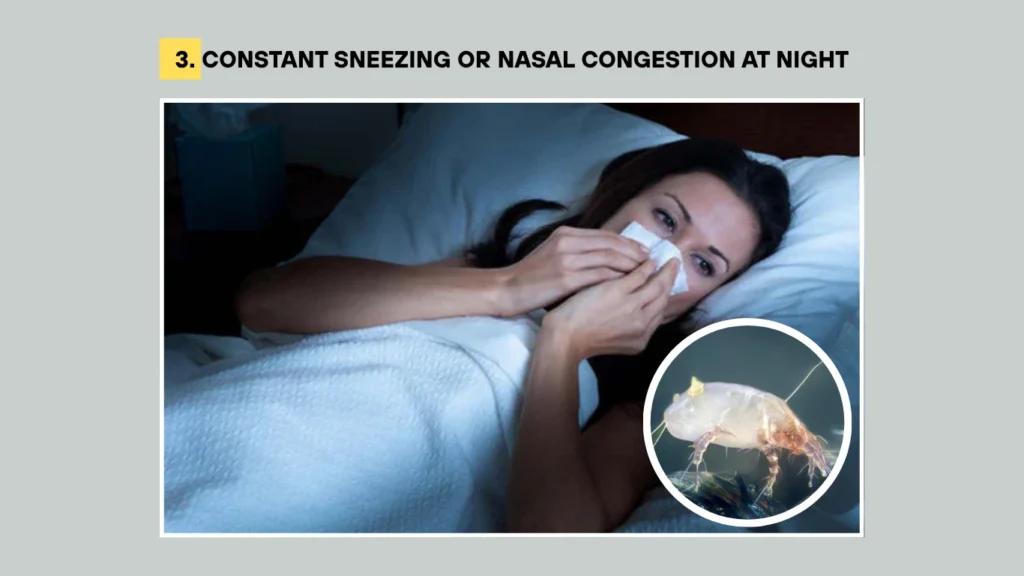
3. Constant Sneezing or Nasal Congestion at Night
Allergic Rhinitis Linked to Dust Mites
Dust mites are a major indoor allergen responsible for allergic rhinitis—commonly known as hay fever. When you lie in bed, your nose is in close contact with mite-contaminated pillows and blankets. Inhaling these allergens triggers an immune response, leading to sneezing, nasal congestion, and a runny nose—especially at night or early morning.
Why Symptoms Flare Up in Bed
Your bed is warm, humid, and full of dead skin cells—ideal conditions for dust mites. As you toss and turn, mite allergens get released into the air and inhaled through the nose, making symptoms worse when you’re lying down.
Signs It’s Not Just a Cold
If your sneezing and congestion persist for weeks—especially at night—and improve when you’re away from home, dust mites are likely the cause, not a virus.
4. Worsening Asthma or Wheezing at Night

Dust Mites and Breathing Issues
For people with asthma or respiratory sensitivities, dust mite allergens can trigger inflammation in the lungs. This leads to coughing, chest tightness, wheezing, or difficulty breathing—often during the night when exposure is highest.
Nighttime Exposure and Lung Sensitivity
Breathing becomes more shallow during sleep, and exposure to allergens is prolonged. If you wake up gasping for air, coughing, or needing your inhaler, dust mites in your bedding could be contributing to nighttime asthma flare-ups.
Dust Mites vs. Mold Allergies
While both dust mites and mold can worsen asthma, dust mites are more likely if symptoms flare in clean but humid rooms. If you also experience skin itching and nasal issues, dust mites are the stronger suspect.
5. Puffy, Itchy, or Watery Eyes After Waking Up

How Dust Mites Affect the Eyes
Allergens released by dust mites can irritate your eyes overnight. When allergens settle on your pillow or blanket, they come into direct contact with your eyelids and eyelashes, leading to inflammation and discomfort.
Eye Irritation as an Allergy Symptom
Common signs include redness, puffiness, watery discharge, and itchiness. In some cases, your eyes may feel dry and gritty—making it hard to open them fully after waking.
Relief Tips for Morning Flare-Ups
Use cold compresses and antihistamine eye drops to reduce swelling. Replacing your pillow or using allergen-proof covers can also prevent allergens from accumulating near your face.
6. Skin Reactions That Appear in Clusters or Patches

Dust Mite “Bites” vs. Contact Dermatitis
Dust mites don’t bite, but their allergens can trigger allergic contact dermatitis. This condition causes red, inflamed patches or bumps that may appear in clusters—often leading people to mistake them for insect bites. Unlike real bites, there’s no single point of entry or puncture mark.
Appearance of Red, Dry, or Inflamed Skin
Affected areas may feel rough, flaky, or warm to the touch. In sensitive individuals, prolonged exposure can lead to eczema flare-ups or hives, especially around the elbows, neck, or face.
When to Seek Medical Advice
If your skin irritation worsens, spreads, or becomes painful, consult a dermatologist. Persistent rashes that don’t respond to over-the-counter creams may require prescription treatment and allergy testing.
7. Allergy Symptoms That Improve When Away From Home

Symptoms Vanish in Dust-Free Environments
If your itching, sneezing, or congestion fades when you sleep elsewhere—like in a hotel or a friend’s home—it’s a strong clue your mattress or bedroom contains dust mites. These reactions typically return after spending a night back in your own bed.
Hotel or Vacation Comparison
Many modern hotels use hypoallergenic bedding or hard flooring, which reduces dust mite populations. If you sleep better and wake up symptom-free on vacation, your home environment may be to blame.
Why Your Bed Might Be the Main Source
Mattresses, pillows, and blankets are rarely cleaned deeply. Over time, they accumulate dust, dead skin, and moisture—perfect for mite colonies. If symptoms reappear quickly after returning home, it’s time to take action.
Bonus: How to Confirm Dust Mites in Your Bed
Dust Mite Test Kits
Home allergen test kits can detect the presence of dust mite allergens in dust samples taken from your bed or furniture. These kits don’t detect mites directly but measure allergen concentration.
Humidity and Heat Conditions
If your bedroom has humidity above 50% and lacks ventilation, it’s likely supporting dust mite growth. Mites thrive in warm, moist conditions, especially in bedding that traps heat and moisture overnight.
What to Check Visibly and Invisibly
While you can’t see dust mites with the naked eye, signs like worsening allergies, itchy skin, or a musty smell in the bedroom may indicate their presence. Vacuuming your mattress or replacing old pillows can help reduce hidden allergen buildup.
How to Get Rid of Dust Mites and Their Effects
Wash Bedding in Hot Water
To kill dust mites, wash all bed linens, pillowcases, and blankets weekly in hot water—at least 130°F (54°C). This destroys mites and removes their allergenic waste. Don’t forget to wash stuffed toys or decorative pillows if they’re in your bed.
Use Allergen-Proof Mattress and Pillow Covers
Special covers with tightly woven fabric block dust mites from entering or exiting mattresses and pillows. Zippered encasements create a barrier between you and the mites, reducing allergic reactions during sleep.
HEPA Vacuum and Air Purifiers
Vacuum your mattress, carpets, and upholstered furniture regularly using a vacuum with a HEPA filter. This captures microscopic mite particles that ordinary vacuums might release back into the air. HEPA air purifiers further reduce airborne allergens—especially in bedrooms.
Lower Indoor Humidity
Dust mites thrive in moist environments. Keep your home’s humidity below 50% using a dehumidifier, especially in the bedroom. Good airflow and less moisture create an environment where mites struggle to survive.
FAQs
Do dust mites bite like bed bugs?
No. Dust mites don’t bite. Unlike bed bugs, they don’t feed on blood. Instead, they feed on dead skin cells and cause allergic reactions—not puncture marks or wounds.
What does a dust mite rash look like?
It usually appears as small, red, itchy bumps or patches—often on areas that touch bedding like the arms, neck, or face. There’s no visible bite mark, but it can resemble insect bites or eczema.
How do I know if my bed has dust mites?
Signs include increased sneezing, nasal congestion, itching, or skin irritation at night or after waking up. Dust mite test kits and humidity checks can confirm their presence.
Can dust mites cause hives or eczema?
Yes. In sensitive individuals, dust mite allergens can worsen eczema or trigger hives, especially with prolonged skin exposure during sleep.
Do dust mites cause itchy skin without rash?
Yes. Some people experience itching due to allergic sensitivity, even without a visible rash. This can feel like a crawling sensation or persistent itchiness, especially on the face, neck, or chest.
