
If you’ve ever noticed clouds of tiny white insects flying off when you brush past a plant, you’ve likely encountered whiteflies. Though small and delicate-looking, these pests can cause serious damage by draining plant sap, spreading diseases, and leaving sticky honeydew that encourages mold growth. What makes them particularly challenging to control is their rapid reproduction and overlapping generations. To effectively fight an infestation, it’s crucial to understand the whitefly life cycle—from egg to adult.
Understanding the Whitefly Life Cycle

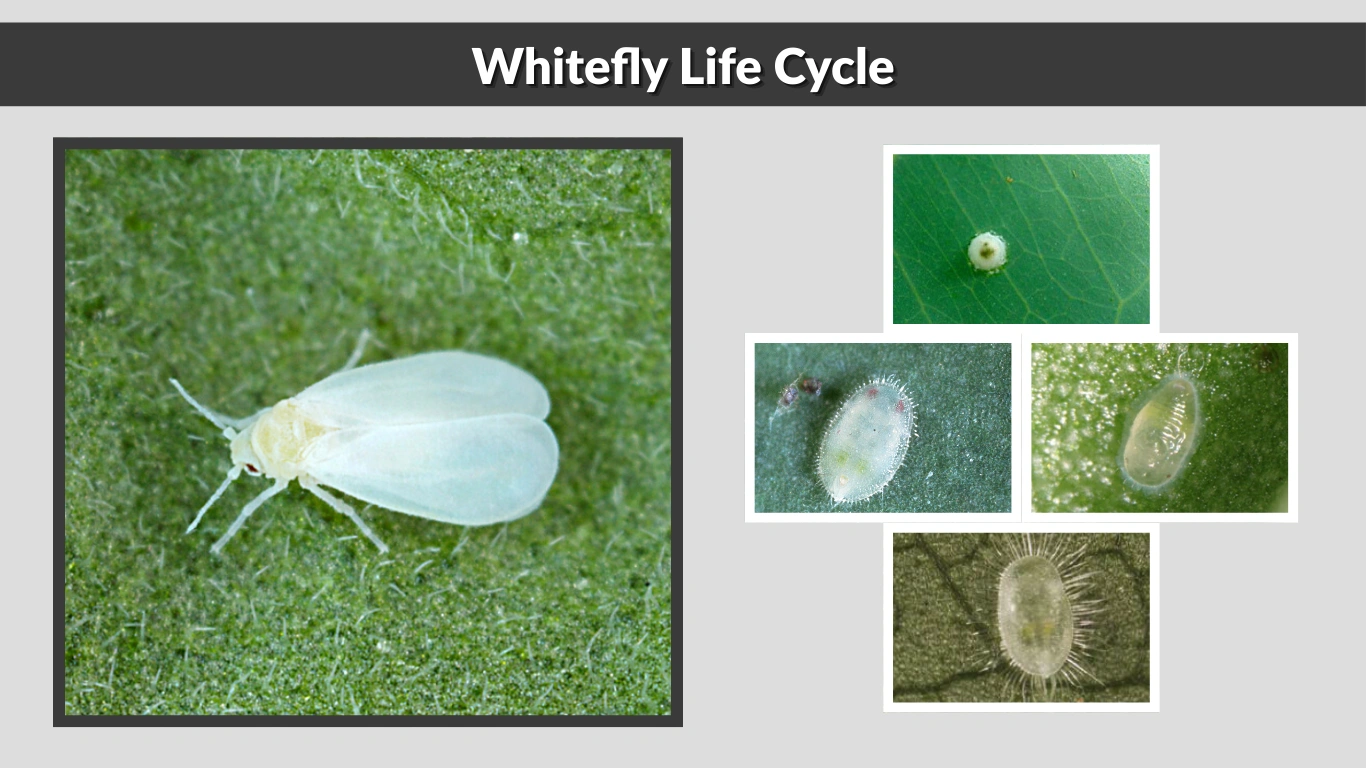
Whiteflies don’t undergo a complete metamorphosis like butterflies; instead, their development is classified as hemimetabolous, meaning they pass through egg and several immature stages before becoming adults. A typical cycle includes:
- Egg stage
- Crawlers (first nymph stage)
- Immobile nymphal stages (second to fourth instars)
- Pupal-like stage (red-eyed nymph)
- Adult stage
Depending on temperature and environment, the full cycle may take as little as 3–4 weeks in warm climates or extend to 6–8 weeks in cooler conditions. This fast turnover allows infestations to build quickly, often with several overlapping generations at once.
1. Egg Stage

Appearance and Placement
Whitefly eggs are tiny, spindle-shaped, and pale yellow to whitish in color. Because of their microscopic size, they often go unnoticed until large populations emerge. Females lay eggs in neat semicircular or spiral patterns, usually on the undersides of leaves, which makes detection even harder.
Duration
Under warm conditions, eggs hatch within 5–10 days. In cooler weather, hatching may take up to two weeks. The speed at which eggs hatch directly influences how quickly an infestation can escalate.
Importance for Infestation
A single female can lay up to 400 eggs during her lifetime, ensuring that populations grow explosively. Early monitoring of leaves for eggs is vital to preventing outbreaks.
2. First Nymph Stage (Crawlers)
Characteristics
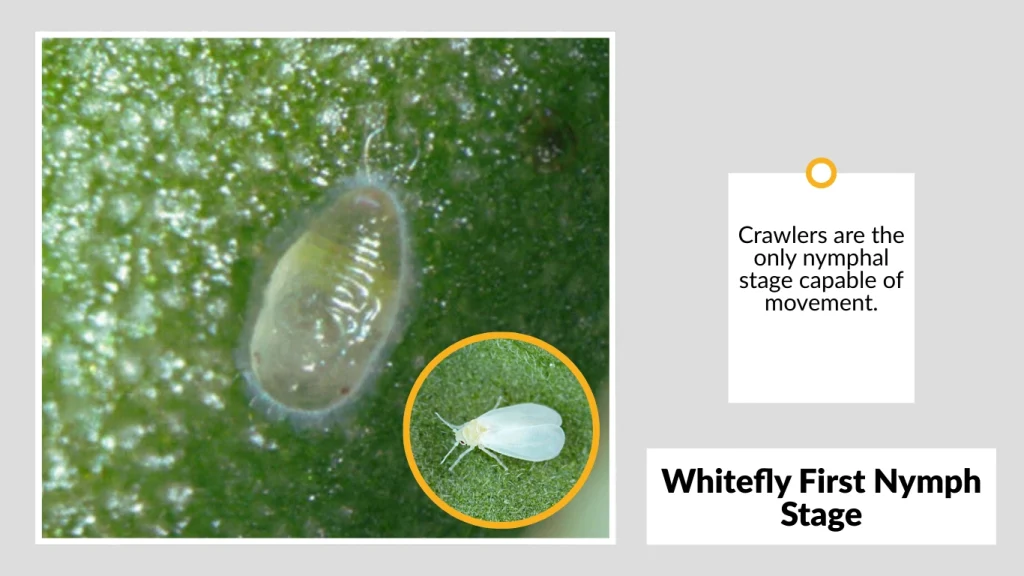
Once the eggs hatch, tiny mobile nymphs known as crawlers emerge. They are almost transparent, flat, and extremely small, making them easy to overlook.
Behavior
Crawlers are the only nymphal stage capable of movement. They roam across the leaf surface until they find a suitable spot to feed. Once settled, they pierce the plant tissue with their needle-like mouthparts and begin feeding on sap. After this stage, they remain immobile for the rest of their development.
Control Significance
Because crawlers are exposed and mobile, they are among the easiest stages to target with sprays such as insecticidal soap or neem oil. If left untreated, however, they quickly molt into more resilient stages.
3. Second to Fourth Nymphal Stages

Description
After the crawler settles, it transforms into a flat, oval-shaped insect that looks more like a tiny scale than a fly. These stages are often referred to as “scales” because of their immobility. Over successive molts, they grow in size but remain attached firmly to the leaf surface.
Feeding Behavior
During these stages, nymphs continuously suck sap from plant cells, weakening the host plant. They also secrete sticky honeydew, which promotes the growth of sooty mold and attracts ants. This double effect not only harms the plant but also signals the presence of a severe infestation.
Development Time
This part of the cycle usually lasts 2–3 weeks depending on environmental conditions. Since they remain attached and protected, controlling them is more difficult compared to the crawler stage.
4. Pupal-like Stage (Red-Eyed Nymph)

Appearance
The final immature stage of the whitefly is called the puparium or red-eyed nymph stage. At this point, the insect appears as a whitish, oval casing attached to the underside of the leaf. The most distinctive feature is the pair of bright red eyes that become visible as the adult develops inside.
Function
Although often described as “pupal-like,” this stage is not a true pupa. Instead, it is a transition period where the immobile nymph transforms internally into a winged adult.
Duration
This stage lasts about 5–7 days in warm conditions. During this time, the insect does not feed, making it less harmful to the plant but more resilient to treatments.
Importance for Control
The puparium is particularly tough to manage because its protective covering shields the insect from contact sprays and natural enemies. This makes it one of the most resistant stages of the life cycle.
5. Adult Stage

Physical Traits
Once development is complete, the adult whitefly emerges from the puparium. Adults are small—about 1–2 mm long—with white, powdery wings that resemble tiny moths.
Behavior
Adults are mobile and easily disturbed, often flying in swarms when a plant is touched. Within a few days of emerging, females begin laying eggs, restarting the cycle almost immediately.
Lifespan
Adult whiteflies live for about one to two months, depending on temperature and host plant quality. During this time, a single female may lay hundreds of eggs, ensuring overlapping generations that make infestations persistent and difficult to eliminate.
Complete Life Cycle Duration
- Warm climates (25–30°C / 77–86°F): 3–4 weeks from egg to adult.
- Cooler climates (15–20°C / 59–68°F): 6–8 weeks.
- Greenhouse conditions: Favor continuous reproduction year-round.
Because multiple generations overlap, plants may simultaneously host eggs, nymphs, and adults, creating constant pressure on the garden.
Factors Affecting Whitefly Development
Temperature
Higher temperatures accelerate reproduction and shorten the life cycle, making infestations spread more quickly.
Host Plant Availability
Nutrient-rich plants with tender new growth encourage higher egg production and faster development.
Predators and Parasites
Natural enemies such as lacewings, ladybugs, and parasitic wasps slow down population growth.
Chemical Resistance
Frequent pesticide use can create resistant populations, making management more difficult.
Why Knowing the Life Cycle Matters
Understanding the whitefly life cycle is essential for effective control:
- Targeting crawlers: Since they are the most vulnerable, sprays work best during this stage.
- Timing biological control: Releasing predators like Encarsia formosa is most effective when nymphs are abundant.
- Breaking the cycle: Preventing egg-laying and early nymph survival reduces long-term infestations.
By aligning control strategies with the right stage, gardeners can drastically improve success rates.
FAQs
How many eggs can a whitefly lay?
A female whitefly can lay up to 400 eggs during her lifetime. These eggs are usually laid in clusters on the undersides of leaves. This high reproductive rate allows populations to build up quickly, making early detection and control crucial for preventing serious infestations in gardens or greenhouses.
Which stage is most harmful to plants?
The nymph stages, especially the second to fourth instars, are the most harmful. During this period, whiteflies feed continuously on plant sap, weakening the plant, causing yellowing leaves, and leaving behind honeydew. This feeding not only stresses the plant but also encourages sooty mold and disease transmission.
Can whiteflies survive winter?
In warmer climates or heated greenhouses, whiteflies can survive year-round. However, in colder outdoor environments, their populations decline significantly. Some may survive indoors on houseplants, making it important to check plants regularly during winter months, especially if you are bringing outdoor plants inside.
Why is the pupal stage harder to control?
The pupal-like stage, also called the puparium, has a tough protective casing that shields the insect. During this time, it does not feed, which makes contact sprays ineffective. Because of this resistance, other stages such as crawlers or young nymphs are better targets for pest management efforts.
How long does it take for whiteflies to become adults?
The full life cycle from egg to adult generally takes 3–8 weeks. In warm climates, development is faster, taking as little as 3–4 weeks. In cooler conditions, it may extend to 6–8 weeks. This rapid cycle allows multiple generations to overlap, causing infestations to build quickly.
