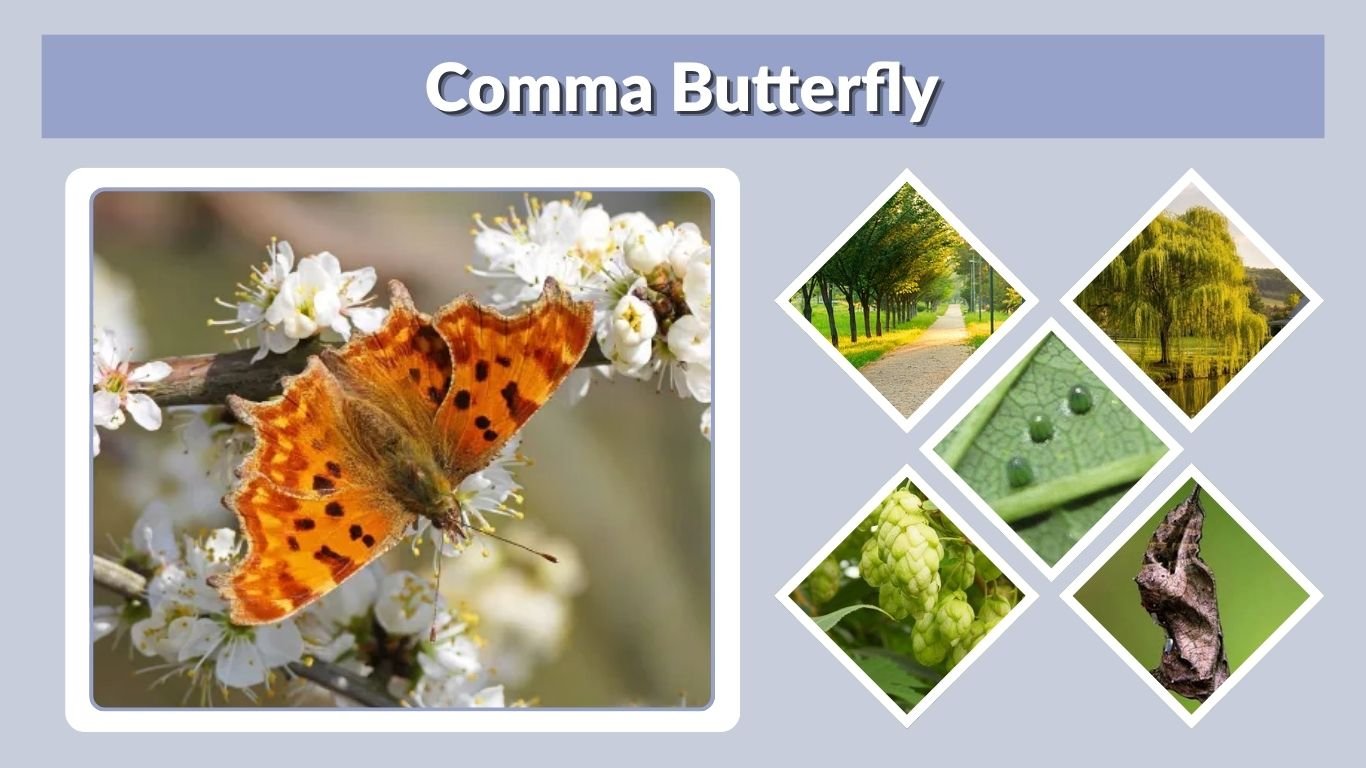
With jagged orange wings and a tiny white marking underneath, the comma butterfly is one of nature’s most convincing leaf mimics. The name commonly refers to Polygonia c-album in Britain, while North America has several related species, including the eastern comma. They inhabit woodland edges and gardens, where they feed on nectar, soft fruit, or tree sap during warmer months. Learning their identification features, host plants, life cycle, and differences from the question mark butterfly makes spotting them much easier in the wild.
What Is a Comma Butterfly?
Comma butterflies belong to the brush-footed family Nymphalidae and the genus Polygonia. Their deeply scalloped wings are distinctive. In Britain, the name usually means the European comma, Polygonia c-album.
Comma Butterfly Identification
Look for these features when identifying a European comma butterfly:
- Wingspan: Usually around 50–60 millimeters.
- Upper wings: Bright orange with dark brown and black markings.
- Wing edges: Deeply notched, giving an irregular, torn appearance.
- Underside: Mottled brown, resembling dry leaves or bark.
- White marking: A small, curved, comma-like mark on the hindwing underside.
- Resting posture: Wings often close together, exposing their camouflaged undersides.
Why Is It Called a Comma Butterfly?
Its name comes from the distinctive pale punctuation-shaped mark visible beneath each hindwing. The scientific name c-album also refers to this white, C-shaped marking. Closed wings resemble dead foliage.
Where Do Comma Butterflies Live?
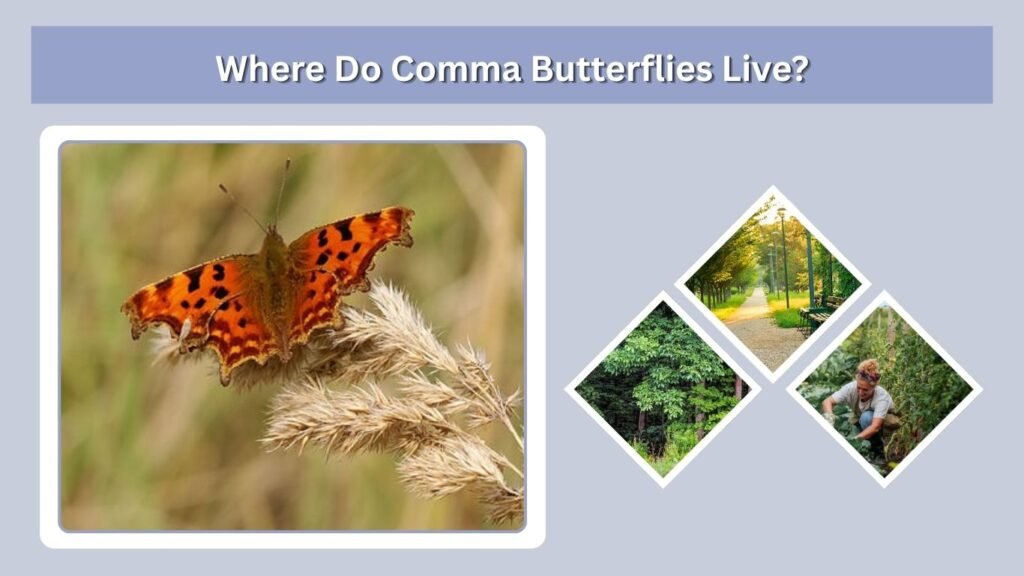
Comma butterflies favor habitats with caterpillar food plants and adult feeding sites. Woodland clearings, hedgerows, and gardens provide shelter and sunlight.
Comma Butterfly in the UK
The European comma occurs across England and Wales and has expanded northward. It visits woodland edges, parks, and gardens, especially where nettles grow. Adults can appear from early spring through autumn because some survive the winter.
Eastern Comma Butterfly in North America
The eastern comma (Polygonia comma) inhabits the eastern United States and southern Canada. It favors deciduous woodland near rivers and wetlands. Its orange wings resemble the British comma, but it is a separate species.
What Do Comma Butterflies Eat?
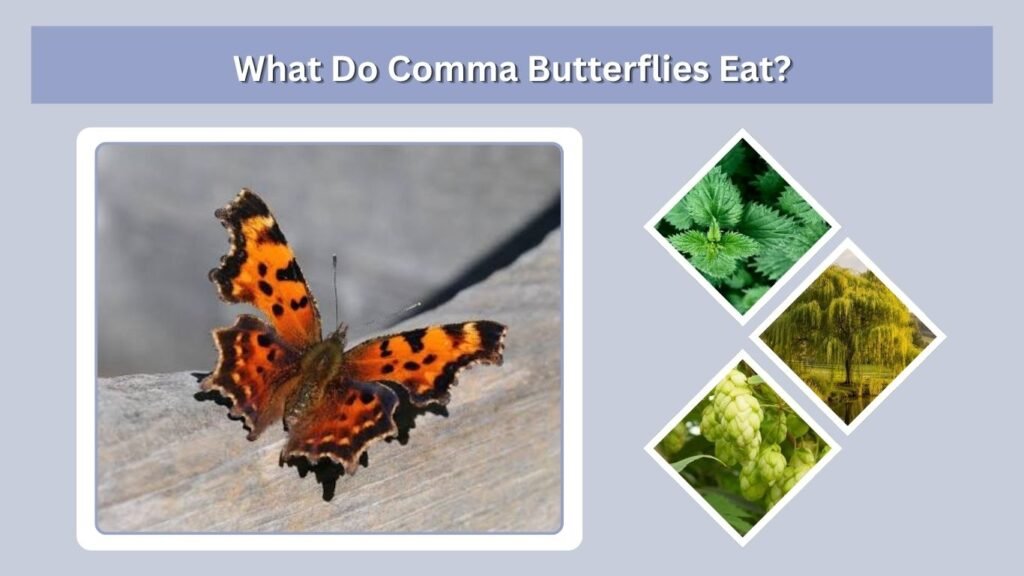
Comma butterfly diets change dramatically between caterpillar and adult stages. Larvae eat leaves from suitable host plants, whereas adults seek energy-rich liquids. Food plants vary between species.
Adult Comma Butterfly Food
British comma butterflies visit nectar-rich flowers, including thistles and knapweed. In late summer and autumn, they also feed on ripe blackberries, fallen plums, and other soft fruit. Eastern commas more commonly visit tree sap and rotting fruit than flowers.
Comma Butterfly Caterpillar Host Plants
Important host plants include:
- Stinging nettle: A major food plant for European comma caterpillars.
- Hop: Used by European commas and eastern commas.
- Elm: Supports caterpillars of both species.
- Willow: An additional recorded host for the European comma.
- Wood nettle and false nettle: Important hosts for eastern comma larvae.
Females lay eggs on or near these plants.
Comma Butterfly Life Cycle
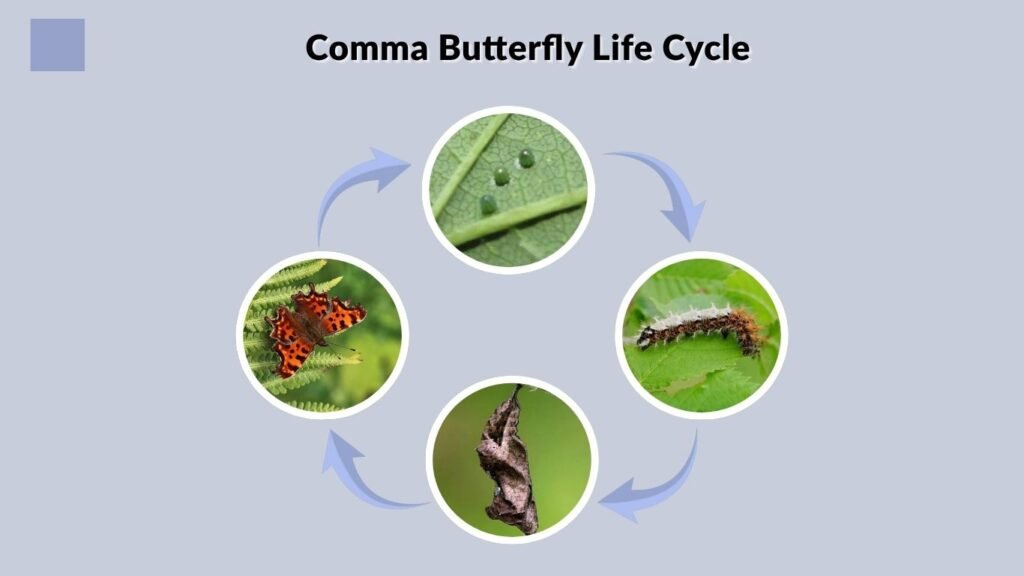
Comma butterflies undergo complete metamorphosis, passing through egg, caterpillar, chrysalis, and adult stages. Their development is closely connected to seasonal temperatures and the availability of fresh host-plant leaves.
Eggs and Comma Butterfly Caterpillars
European comma females usually deposit eggs individually on host-plant leaves. The tiny eggs hatch after several days, releasing hungry larvae that feed and molt as they grow. Mature British comma caterpillars have a white back patch resembling bird droppings.
Chrysalis, Adult, and Lifespan
Fully grown caterpillars hang from vegetation and form suspended chrysalises. Adult butterflies emerge after development is complete. Summer adults may live for weeks, while adults that overwinter can survive for several months. Lifespan depends on season and hibernation.
Comma Butterfly vs. Question Mark Butterfly
The eastern comma and question mark butterfly (Polygonia interrogationis) are closely related North American species. Both have orange-and-black upper wings and mottled undersides, so their small distinguishing features matter more than overall color.
How to Tell Them Apart
- Underside symbol: The eastern comma has one silvery comma-shaped mark; the question mark usually has a curved mark plus a separate dot.
- Size: Question marks are generally larger.
- Forewing shape: The question mark has a more strongly hooked forewing tip.
- Wing markings: The arrangement of dark spots on the upper forewing also differs.
- Hindwing projection: The question mark typically has a longer tail-like projection.
Are They Found in the Same Places?
Yes. Both inhabit much of eastern North America, including wooded areas and suburban green spaces. Use underside markings and wing shape for identification.
Other Types of Comma Butterflies
The genus Polygonia includes several North American commas. They share angular wings and leaflike undersides but differ in markings and range.
Green Comma Butterfly
The green comma (Polygonia faunus) inhabits forests and mountain streamsides across parts of Canada and the United States. Despite its name, it is not entirely green: its upper wings are orange-brown, while the underside includes greenish tones that aid camouflage.
Gray, Hoary, and Satyr Commas
The gray comma (Polygonia progne) has a charcoal-gray underside and a small silvery mark. The hoary comma (Polygonia gracilis) shows a noticeably pale, frosted appearance beneath its wings. The satyr comma (Polygonia satyrus) is another North American relative, commonly associated with nettle-rich habitats.
Comma Butterfly Behavior and Adaptations
Comma butterflies survive partly because their wing shape and seasonal behavior make them difficult to detect. These traits help them avoid predators.
Camouflage with Wings Closed
When a comma butterfly closes its wings, the vivid orange upper surface disappears. Its brown, jagged outline resembles a dried leaf, and it can become nearly invisible among woodland litter, branches, or dead vegetation.
Hibernation and Seasonal Activity
European comma butterflies overwinter as adults in sheltered places such as tree hollows and log piles. They reappear in spring. Several North American comma species also overwinter as adults, with different seasonal forms.
Are Comma Butterflies Rare?
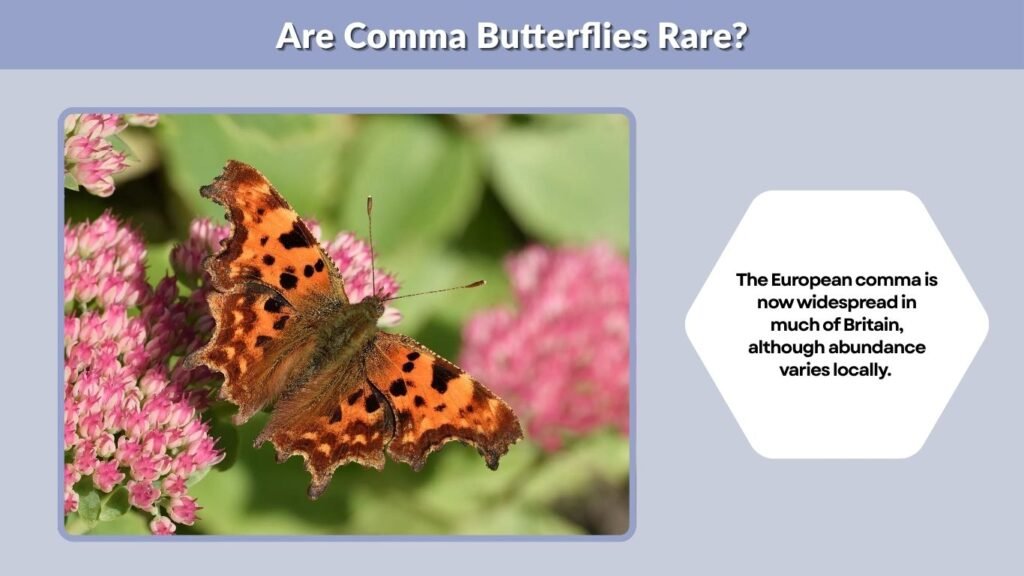
The European comma is now widespread in much of Britain, although abundance varies locally. Eastern commas are also broadly distributed in their North American range. Both need suitable host plants.
How to Help Comma Butterflies
Simple habitat choices can benefit comma butterflies:
- Leave some nettles undisturbed where practical.
- Grow appropriate native host plants and nectar flowers.
- Keep a few sheltered, undisturbed areas for overwintering.
- Minimize unnecessary insecticide use around butterfly habitat.
Comma Butterfly Meaning
Spiritual Meaning and Symbolism
Some people associate comma butterflies with renewal, resilience, and transformation. Their return after winter can inspire these meanings, although they are personal interpretations rather than scientific properties.
FAQs
1. Are comma butterfly caterpillars poisonous?
Comma caterpillars are not generally considered poisonous to people. Their spines and unusual coloration primarily help discourage predators, although handling wild caterpillars is best avoided.
2. Why do comma butterflies close their wings?
Closing their wings exposes mottled brown undersides, helping them blend into dead leaves and bark while resting or avoiding predators.
3. How long do comma butterflies live?
Lifespan varies by species and season. Summer adults may survive several weeks, while overwintering adults can live for months.
4. What is the white mark on a comma butterfly?
It is a pale, comma-shaped marking on the underside of the hindwing, which gives comma butterflies their common name.
5. Are commas and question marks the same butterfly?
No. The eastern comma (Polygonia comma) and question mark (Polygonia interrogationis) are separate species with different wing markings and shapes.