
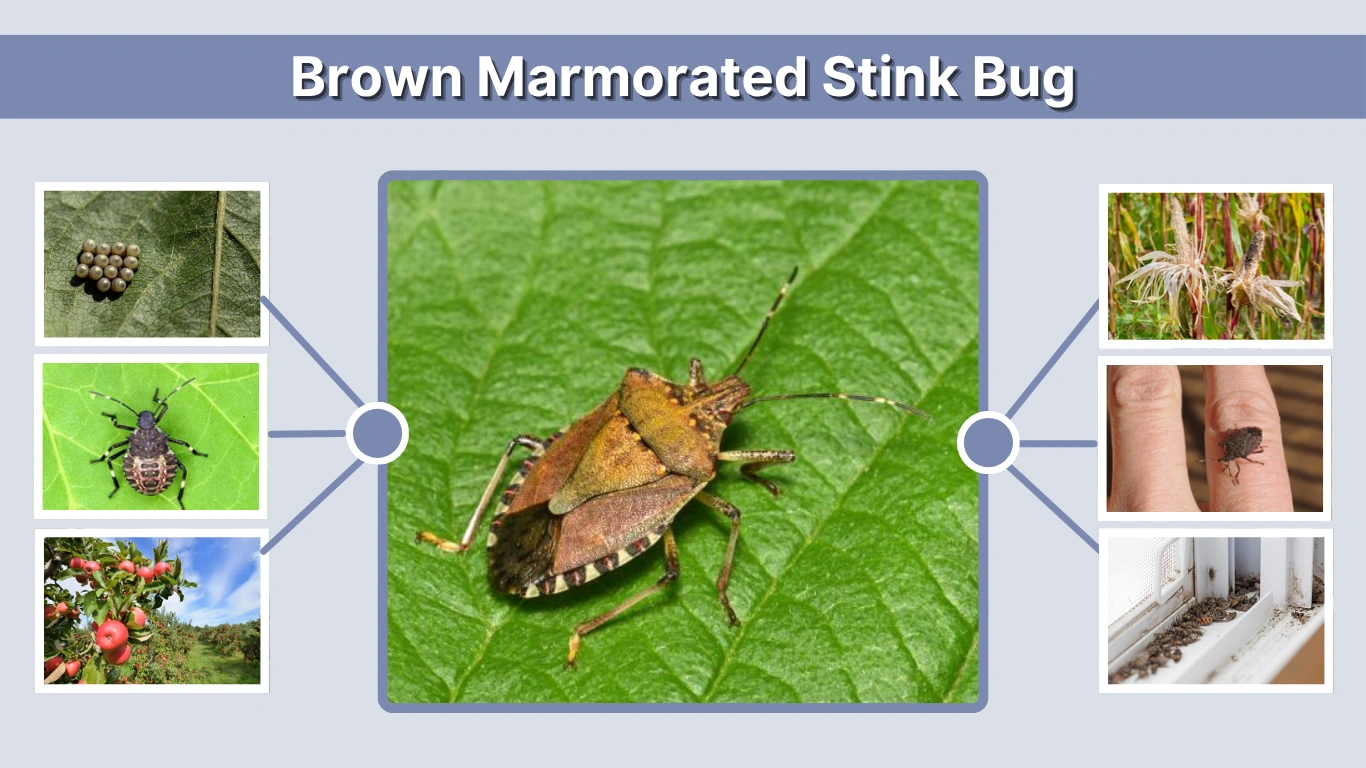
The brown marmorated stink bug (Halyomorpha halys) is one of the most notorious invasive insects that spread rapidly across North America, Europe, and parts of Australia. Known for its distinctive shield-shaped body and foul odor when disturbed, this pest has become a serious threat to agriculture, natural ecosystems, and even households. Originally from East Asia, it has gained global attention due to its destructive feeding habits and its resilience against common control measures.
Overview and Scientific Classification
The brown marmorated stink bug belongs to the order Hemiptera and the family Pentatomidae. Its scientific name is Halyomorpha halys. This insect is commonly referred to as “BMSB,” a term frequently used in agriculture and pest management discussions.
- Order: Hemiptera (true bugs)
- Family: Pentatomidae (stink bugs)
- Genus: Halyomorpha
- Species: halys
- Class: Insecta
- Common Name: Brown marmorated stink bug
This classification places it among other plant-feeding insects, but BMSB has gained more notoriety due to its invasiveness and ability to spread rapidly across different environments.
Identification and Appearance

Correct identification of the brown marmorated stink bug is crucial for control. They are shield-shaped insects measuring about 12–17 mm in length. Their coloring is mottled brown with distinct white bands on the antennae and legs.
- Eggs: Laid in clusters of 20–30 on the underside of leaves. They are light green or pale white, nearly spherical in shape.
- Nymphs: Smaller, wingless, and often more colorful. Early instars are orange-red with black markings, while later stages gradually take on the mottled brown adult appearance.
- Adults: Fully developed wings, capable of flying and dispersing widely. They emit a strong odor when crushed or threatened.
- Male vs. Female: While similar in shape, females are often slightly larger and produce more noticeable egg batches.
- Look-alikes: Some native stink bugs resemble BMSB, but the key distinction is the alternating dark and light bands on antennae and abdomen edges.
Because of these markings, it’s relatively easy to distinguish them from harmless native stink bugs once you know the signs.
Life Cycle and Reproduction

The brown marmorated stink bug goes through several developmental stages that can be broken into egg, nymph, and adult.
- Egg Stage
- Eggs are deposited on leaves in summer, usually in large clusters.
- Each female can lay several hundred eggs in her lifetime, contributing to population explosions.
- Eggs are deposited on leaves in summer, usually in large clusters.
- Nymph Stage
- Nymphs progress through five instars (growth phases).
- They feed on plant juices, causing early damage to crops and ornamental plants.
- Nymphs lack wings but are very mobile.
- Nymphs progress through five instars (growth phases).
- Adult Stage
- Adults emerge after the fifth instar, fully winged and capable of long-distance travel.
- They feed on fruits, vegetables, and seeds.
- Adults seek sheltered locations (such as houses) to overwinter.
- Adults emerge after the fifth instar, fully winged and capable of long-distance travel.
The life span of BMSB can extend through one season, with some surviving long enough to cause damage across multiple growing cycles. In temperate regions, they typically produce one to two generations per year.
Habitat and Distribution
The brown marmorated stink bug is native to China, Japan, and Korea, but its ability to hitch rides on cargo shipments allowed it to spread globally.
- United States: First detected in Pennsylvania in the late 1990s, it has since spread to over 40 states including Oregon, California, New York, Illinois, Indiana, Michigan, Minnesota, Massachusetts, Washington, and Georgia.
- Canada: Established in areas of British Columbia.
- Australia: Considered a biosecurity threat. Strict fumigation rules apply to prevent it from establishing.
- Europe: Populations exist in Italy, Switzerland, and surrounding countries.
BMSB thrives in both urban and agricultural settings. They are often found in orchards, vegetable farms, vineyards, and gardens. In colder months, they move indoors, causing frustration for homeowners.
Behavior and Diet
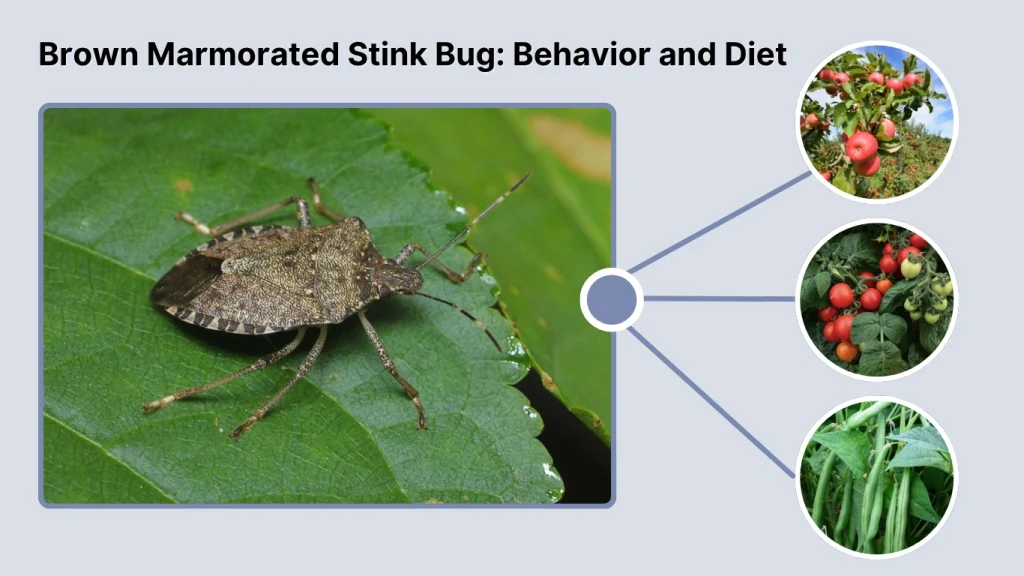
The feeding habits of the brown marmorated stink bug are the main reason it is considered a pest. Using its piercing-sucking mouthparts, it punctures plant tissues and extracts juices.
What They Eat
- Fruits: apples, peaches, pears, grapes
- Vegetables: tomatoes, peppers, corn, beans
- Ornamental plants and trees
Feeding Behavior
- Causes discoloration, sunken spots, and premature fruit drop.
- Can transmit plant diseases through feeding.
- Known to swarm in large numbers during harvest seasons.
BMSB is also highly mobile, capable of flying long distances to find food sources. During autumn, adults often congregate in huge numbers around buildings, seeking warmth for overwintering.
Damage to Plants and Ecosystems

The economic and ecological impact of the brown marmorated stink bug cannot be overstated.
- Agricultural Damage: BMSB is a direct threat to fruit orchards, vineyards, and vegetable farms. Feeding scars reduce crop value, and in severe infestations, entire harvests can be lost.
- Ecosystem Impact: By feeding on a wide range of plants, BMSB disrupts native ecosystems and competes with native insect species.
- Spread of Infestation: Their ability to fly and reproduce quickly makes containment difficult.
In the United States alone, growers of apples, peaches, and grapes have reported millions of dollars in crop losses attributed to BMSB infestations.
Human Interaction and Health Concerns
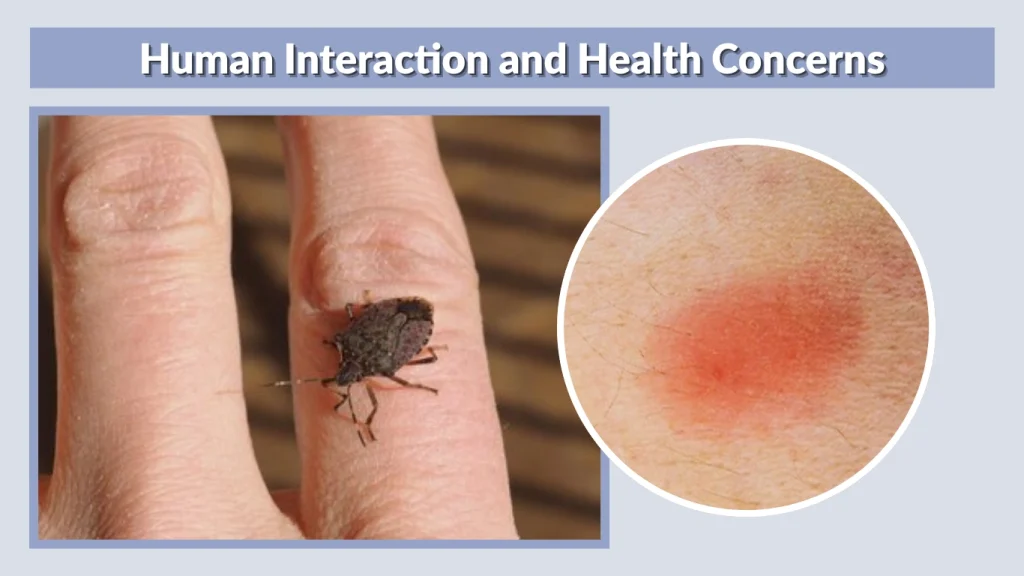
One of the most common questions about the brown marmorated stink bug is whether it poses a direct threat to humans. While these insects are not poisonous, their presence often causes anxiety because of their odor and tendency to invade homes.
- Do They Bite? BMSB does not actively bite humans. They feed exclusively on plants, but in rare cases, they may probe skin if handled, causing mild irritation.
- Bite Treatment: If skin contact occurs, washing with soap and applying a mild antiseptic is sufficient.
- Harmful to Humans? They are not toxic, but their defensive odor can trigger allergies in sensitive individuals.
- Poisonous or Dangerous? Scientifically, they are neither poisonous nor venomous. Their main issue lies in property nuisance and agricultural losses.
Thus, while not a direct health hazard, their presence indoors is unpleasant and unwelcome.
Why They Are Considered a Problem
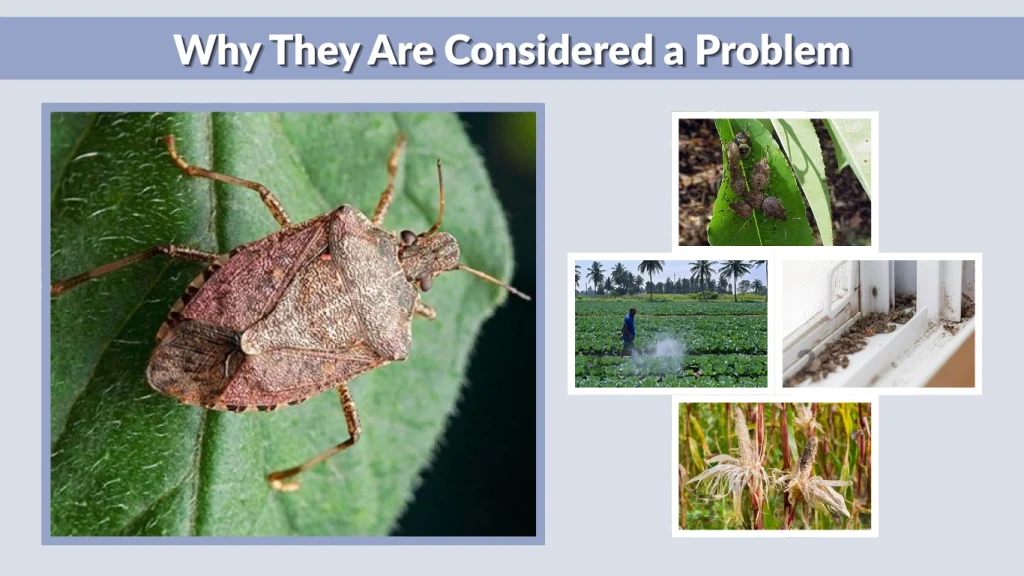
Brown marmorated stink bugs are officially recognized as invasive species. Their rapid spread is tied to their ability to:
- Reproduce in large numbers
- Overwinter inside homes and buildings
- Damage crops, fruits, and vegetables
- Survive common insecticides
The U.S. Department of Agriculture has identified BMSB as a serious agricultural pest, particularly in orchards and vineyards. Their invasiveness also disrupts ecosystems, making them a priority for monitoring and control programs.
Predators and Natural Enemies
In their native range of Asia, brown marmorated stink bugs face a wide range of natural enemies. However, outside their homeland, these predators are less common.
- Predators: Certain birds, assassin bugs, spiders, and predatory beetles feed on BMSB.
- Parasitic Wasps: In Asia, the samurai wasp (Trissolcus japonicus) parasitizes stink bug eggs. Scientists are studying its controlled release as a biological control method in the U.S. and Europe.
- Other Natural Enemies: Some fungal pathogens and parasitic flies also target them.
Despite these predators, stink bug populations often outpace natural control in invaded regions.
Control and Prevention Methods
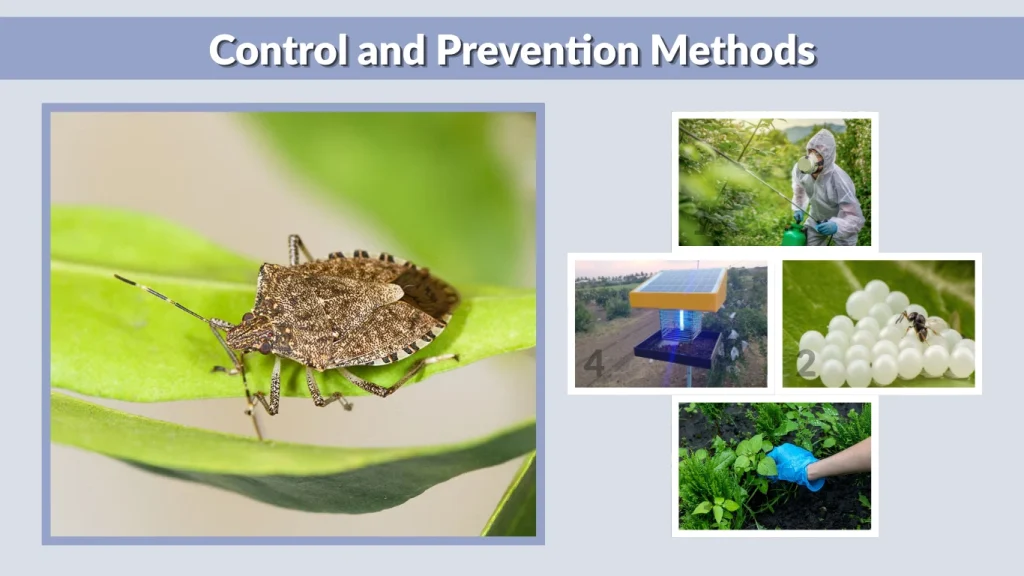
Controlling brown marmorated stink bugs requires a mix of strategies. Farmers and homeowners alike have developed ways to reduce infestations.
Agricultural Control
- Chemical Control: Insecticides are used, but BMSB often develops resistance, requiring repeated applications.
- Biological Control: Introduction of natural predators, especially the samurai wasp, is a long-term solution.
- Cultural Practices: Removing weeds and alternate host plants near crops helps reduce feeding grounds.
Household Control
- Traps: Light traps and pheromone traps can capture them, though not always 100% effective.
- Repellents: Essential oils such as peppermint, garlic sprays, or vinegar solutions are natural deterrents.
- Extermination: Professional pest control services may be required during large infestations.
Home Invasion and Prevention
One of the biggest frustrations with brown marmorated stink bugs is their tendency to invade homes during fall and winter. They seek warmth in walls, attics, and basements.
- Prevention: Sealing cracks, repairing screens, and closing gaps around windows and doors is the first line of defense.
- Indoor Removal: Use a vacuum to collect them (dispose of the bag afterward, as the odor lingers).
- DIY Methods: Soap-water sprays and sticky traps work indoors without harmful chemicals.
- Repellents: Natural scents like peppermint oil or dryer sheets can deter them from entry points.
Although they do not reproduce indoors, the sheer number of bugs makes them an annoying problem for homeowners.
Facts and Interesting Information
The brown marmorated stink bug has unique traits that make it stand out from other pests.
- Odor Defense: Their smell is released from glands when threatened, acting as a defense mechanism.
- Migration to America: They likely arrived in shipping containers from Asia in the late 1990s.
- Symbolic Meaning: In some cultures, stink bugs represent change or adaptation, though in agriculture, they symbolize loss.
- Smell: The odor is often described as pungent, resembling cilantro or rotten vegetables.
- Global Attention: Australia enforces strict fumigation rules for imports to prevent their establishment.
These facts highlight why the insect is both fascinating and frustrating for scientists, farmers, and homeowners.
FAQs
What damage can the brown marmorated stink bug cause?
Brown marmorated stink bugs feed on fruits, vegetables, and ornamental plants. Their piercing-sucking mouthparts damage crops, causing scarring, discoloration, and premature fruit drop. Farmers often report massive yield losses in apples, grapes, and peaches. Even small infestations can reduce market quality, leading to significant economic losses in agriculture.
Are brown marmorated stink bugs dangerous to humans?
No, these stink bugs are not directly dangerous to humans. They rarely bite, and if they do, the effect is minimal—similar to a mosquito bite. They are not poisonous, do not spread disease, and are not harmful to pets. Their biggest nuisance is the foul odor they release when disturbed or crushed indoors.
How can you get rid of brown marmorated stink bugs in your house?
The best way is prevention—seal cracks, repair screens, and use door sweeps to block entry. If they’re already indoors, vacuuming or trapping them in soapy water works well. Avoid crushing them, as the odor can linger. Pheromone traps and natural repellents like peppermint oil can also help reduce infestations in homes.
Why are brown marmorated stink bugs considered invasive?
They are considered invasive because they are not native to North America, Europe, or Australia but have spread rapidly in these regions. Their populations grow unchecked due to a lack of natural predators, leading to agricultural losses and ecosystem disruptions. Their ability to infest homes in large numbers adds to their invasive reputation.
What do brown marmorated stink bugs eat?
Brown marmorated stink bugs feed on a wide range of host plants. Their diet includes apples, pears, peaches, grapes, corn, beans, peppers, tomatoes, and various ornamental plants. This broad feeding preference makes them highly destructive to both commercial agriculture and backyard gardens. Their constant feeding weakens plants and reduces crop quality.
