
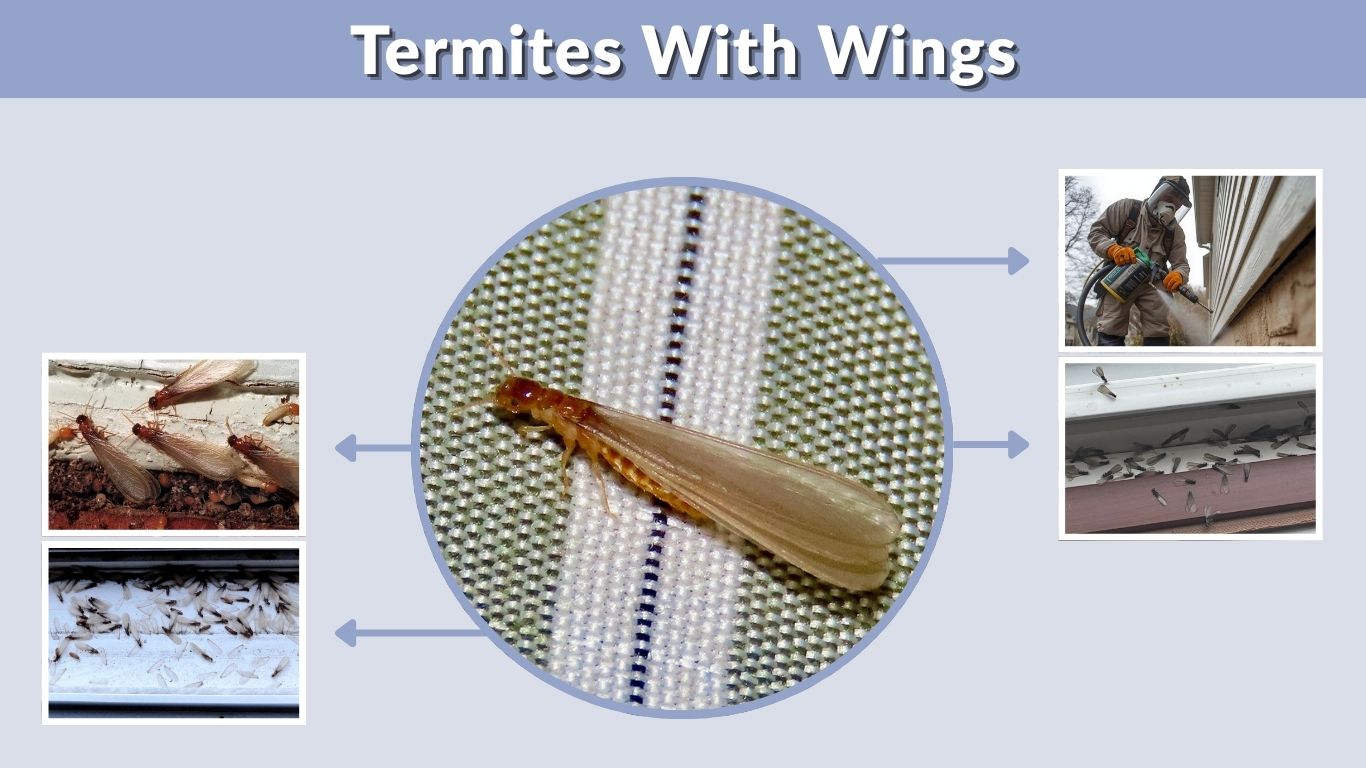
Seeing termites with wings inside or around your house can be alarming. These winged termites, also called swarmers or alates, are reproductive termites that leave a mature colony to start new colonies. Many homeowners confuse them with flying ants, but the difference matters. Knowing what termites with wings look like can help you act quickly before a hidden infestation becomes more serious.
What Are Termites With Wings?
Termites with wings are reproductive members of a termite colony. Their job is to fly away, mate, shed their wings, and begin a new colony. They are often seen during swarming season when weather conditions are warm, humid, or favorable for termite activity.
Winged termites do not usually cause damage themselves. The bigger concern is what they signal. If you see termites with wings in house areas such as windows, doors, bathrooms, basements, or near lights, there may be an active colony nearby or inside the structure.
What Does a Termite With Wings Look Like?
A termite with wings usually has a straight body, straight antennae, and four wings that are equal in length. The wings are often longer than the body and may look clear, smoky, or lightly tinted. Depending on the species, the body may be black, brown, tan, reddish-brown, or yellowish.
Unlike ants, termites do not have a narrow pinched waist. Their body looks more uniform from head to abdomen. This is one of the easiest ways to tell the difference between termites and ants with wings.
How Big Are Termites With Wings?
Most termites with wings are small, usually around 1/4 to 1/2 inch long, including their wings. Some species may be slightly smaller or larger. Subterranean termite swarmers are often dark and small, while drywood termite swarmers may be lighter brown or reddish-brown.
Because they are small, homeowners often notice the wings before they notice the insects. Discarded wings near windowsills, doors, baseboards, or light fixtures are a common warning sign.
What Do Termites Look Like With Wings?
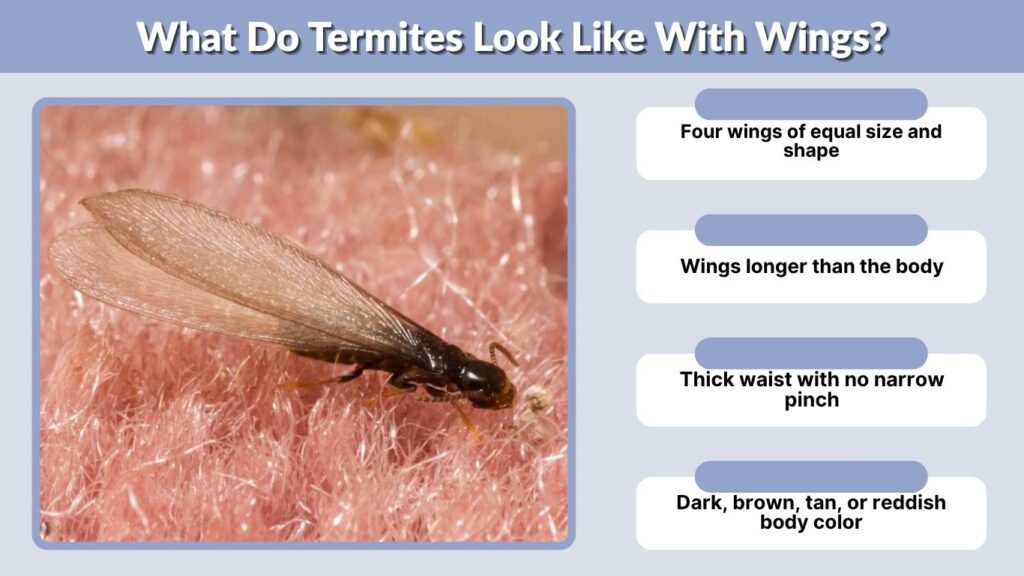
Termites with wings look like small flying insects with long, delicate wings. They may appear black, brown, tan, or amber depending on the species. Their wings are usually much longer than their bodies and lie flat over the back when they are resting.
Many people search for pictures of termites with wings because the insects are easy to confuse with other flying bugs. While photos can help, body shape is often more important than color alone.
Common Features of Winged Termites
Winged termites share several visual traits that help separate them from ants and other insects.
Look for these features:
- Four wings of equal size and shape
- Wings longer than the body
- Straight antennae
- Thick waist with no narrow pinch
- Soft, straight body
- Dark, brown, tan, or reddish body color
- Swarming near windows, doors, lights, or vents
If the insect has bent antennae, a narrow waist, and uneven wings, it is more likely a flying ant than a termite.
What Color Are Termites With Wings?
Termites with wings may be black, dark brown, light brown, tan, amber, or reddish-brown. Color depends on the termite species and location. Black termites with wings are often subterranean termite swarmers. Brown termites with wings may be drywood termites or another species.
Color alone should not be used for identification. A black winged insect could be a termite, flying ant, or another bug. The best way to identify it is by checking the antennae, waist, and wing length.
Are Termites Black With Wings?
Yes, some termites are black with wings. Subterranean termite swarmers are often dark brown to black. These are the termites many homeowners see near windows, lights, or doors during swarming season.
However, not all winged termites are black. Drywood termite swarmers may be brown, tan, or reddish. In Florida, California, Texas, and other warm regions, several termite species may produce winged swarmers with different colors.
Ants With Wings vs Termites
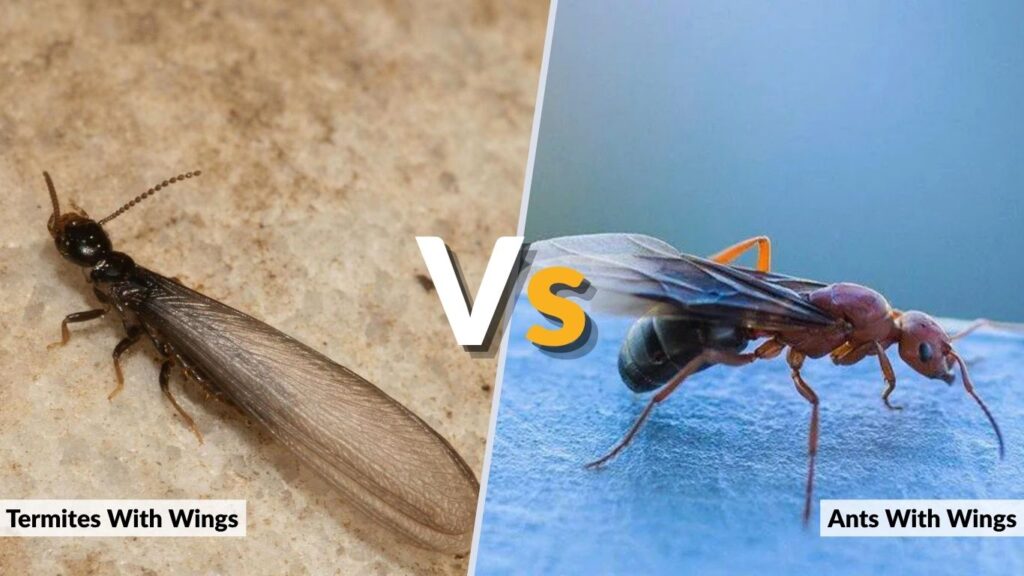
One of the biggest keyword groups in this topic is ants with wings vs termites. This is because flying ants and winged termites appear around similar areas and can look alike at first glance.
The difference is important because ants and termites require different treatment plans. Termites can damage wood and structural materials, while most ants are less destructive, although carpenter ants can also damage wood.
| Feature | Termites With Wings | Ants With Wings |
| Antennae | Straight | Bent or elbowed |
| Waist | Thick and straight | Narrow and pinched |
| Wings | Four equal-length wings | Front wings longer than back wings |
| Body shape | Soft, uniform body | Segmented body |
| Common sign | Discarded wings, swarms, mud tubes | Trails, nests, food activity |
| Risk level | May indicate termite colony | May indicate ant nest |
Termite vs Ant With Wings
A termite with wings has equal wings, a broad waist, and straight antennae. An ant with wings has uneven wings, a pinched waist, and bent antennae. This comparison is the fastest way to identify what you are seeing.
If you are looking at a dead insect or discarded wings, check whether the wings are all the same size. Termite wings are usually equal in length and may break off easily after swarming.
Carpenter Ants With Wings vs Termites
Carpenter ants with wings are often confused with termites because both can appear around wood. However, carpenter ants do not eat wood the way termites do. They tunnel through wood to build nests, often leaving behind sawdust-like material.
Carpenter ants usually have a narrow waist and bent antennae. Termites have a thicker waist and straight antennae. If you see wood damage, piles of wings, or mud tubes, it is smart to get a professional inspection to confirm the pest.
Are Ants With Wings Termites?
No, not all ants with wings are termites. Some ants grow wings during their reproductive stage and swarm to start new nests. These winged ants can look similar to termites but have different body features.
If you are unsure, do not rely only on color or size. Compare the antennae, wings, and waist. You can also collect a sample or take a close-up photo for a pest control professional.
Termites With Wings Inside the House
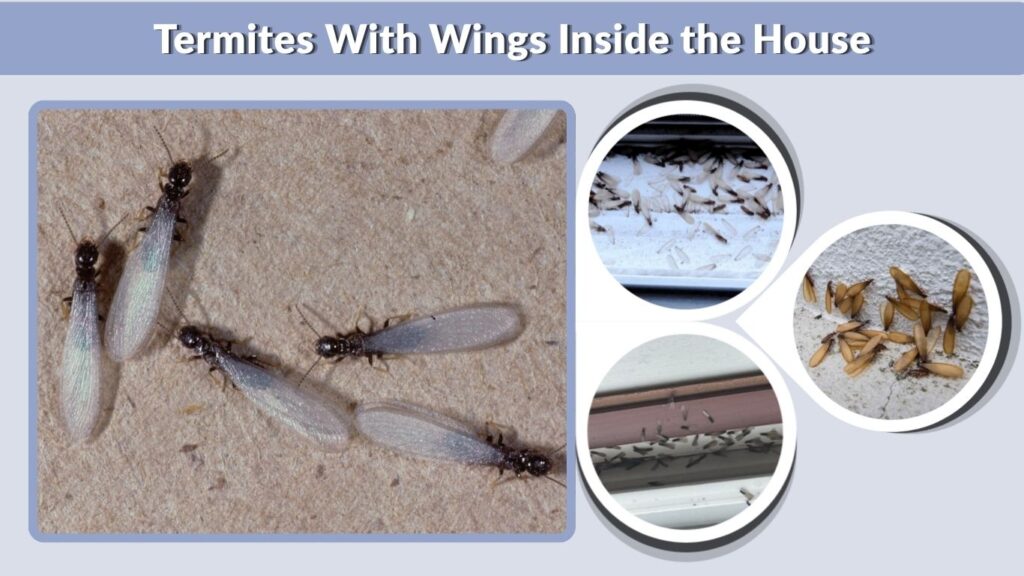
Finding termites with wings inside house areas can be a serious warning sign. It may mean a termite colony is active nearby, possibly inside the walls, flooring, attic, crawl space, or foundation area.
A single insect may enter from outside, especially near open doors or windows. But repeated sightings, groups of swarmers, or piles of wings indoors should be taken seriously.
Why Are There Termites With Wings in My House?
Winged termites may appear inside because they are leaving an active colony. They are attracted to light and may gather around windows, lamps, doors, or bright indoor areas. If they cannot escape, they may die and leave piles of wings behind.
Common indoor places to find winged termites include:
- Windowsills
- Door frames
- Light fixtures
- Bathroom areas
- Basement walls
- Crawl space entries
- Garage corners
- Attic vents
- Baseboards
If you find them in these areas, look for other termite signs such as mud tubes, hollow wood, soft flooring, bubbling paint, or small droppings.
What Attracts Termites With Wings?
Winged termites are often attracted by light, moisture, and suitable nesting conditions. Outdoor lights, porch lights, window lights, and indoor lamps can draw swarmers toward a home.
Termites may also be attracted by:
- Moist soil near the foundation
- Leaking pipes or faucets
- Wood touching soil
- Damp crawl spaces
- Poor drainage
- Firewood stored near the house
- Dead trees or stumps
- Mulch placed too close to siding
Reducing moisture and removing wood-to-soil contact can help lower termite risk, but it will not eliminate an established colony.
Types of Winged Termites
Different termite species can produce swarmers. The most common winged termites homeowners ask about are subterranean termites and drywood termites.
Subterranean Termites With Wings
Subterranean termites with wings are usually dark brown or black. They often swarm in large numbers, especially after rain or during warm weather. These termites live underground and use mud tubes to reach wood above the soil.
If you see black termites with wings near the foundation, basement, crawl space, or windows, subterranean termites may be the cause. Look for mud tubes along foundation walls, concrete, or crawl space surfaces.
Drywood Termite With Wings
Drywood termite swarmers may be tan, brown, or reddish-brown. They live inside dry wood and do not need contact with soil. They are common in warmer regions and may infest attic beams, furniture, trim, flooring, and wall framing.
Drywood termites often leave tiny pellet droppings called frass. If you see winged termites along with small piles of pellets near wood, drywood termites may be active.
Baby Termites With Wings
Baby termites do not have wings. Termites develop wings only when they become reproductive swarmers. If you see very small pale termites, they are likely workers or young termites, not winged baby termites.
Searches for baby termites with wings usually come from confusion between small swarmers, workers, and other insects. A small termite with wings is usually an adult reproductive termite, not a baby termite.
Queen Termite With Wings
A queen termite may have wings early in her life before she mates and starts a colony. After mating, she sheds her wings and becomes the egg-laying queen. Homeowners rarely see termite queens because they stay hidden inside the colony.
If you see a winged termite, it is more likely a swarmer than a queen.
Regional Winged Termites
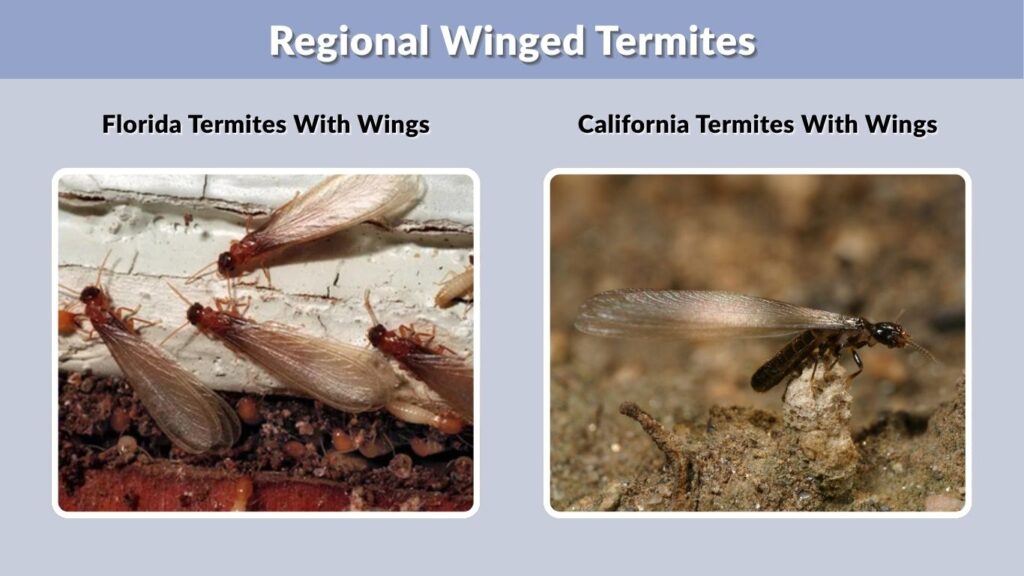
Winged termites appear in many states, but species and swarm seasons can vary by region. Searches such as Florida termites with wings and California termites with wings show strong local interest.
Florida Termites With Wings
Florida has several termite species, including subterranean, drywood, and Formosan termites. Winged termites in Florida may be black, brown, tan, or reddish depending on the species. Because the climate is warm and humid, termite activity can be a year-round concern in many areas.
Homeowners in Florida should pay close attention to swarmers, discarded wings, droppings, and wood damage.
California Termites With Wings
California homes may experience both drywood and subterranean termites. Drywood termites are common in many coastal and warmer areas, while subterranean termites may appear near soil and foundation zones.
Winged termites in California may show up around windows, doors, attic spaces, or exterior lights. If wings or swarmers appear indoors, a termite inspection is recommended.
How to Get Rid of Termites With Wings
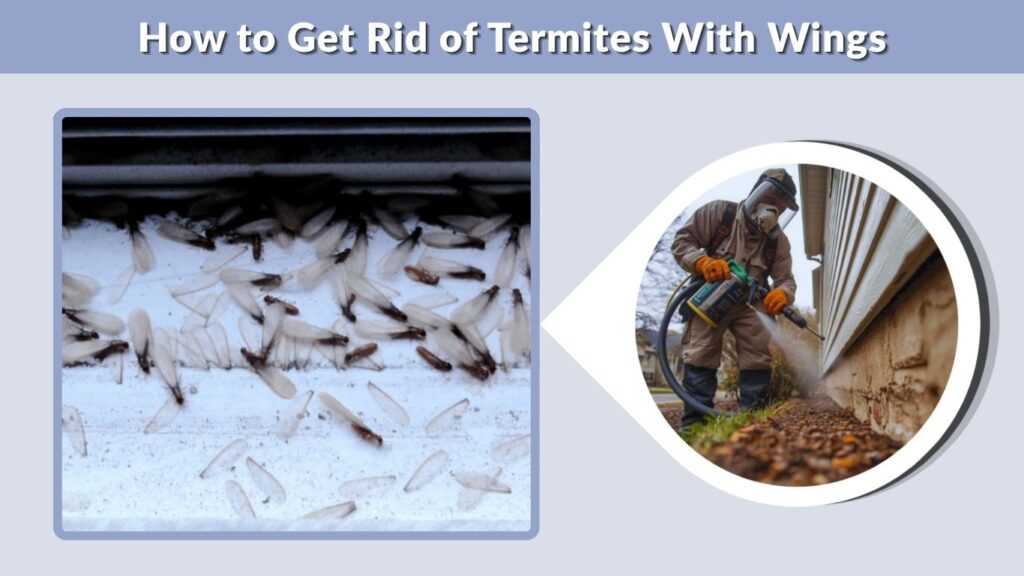
If you see termites with wings, the first step is not simply killing the visible insects. Winged termites are only part of the problem. The real issue is the colony that produced them.
Spraying the swarmers may remove the immediate nuisance, but it will not fix an active termite infestation. The best approach is to identify the species, locate the source, and use the right treatment.
What to Do Immediately
If you find termites with wings inside the house, take a few simple steps before calling a professional.
You should:
- Save a sample in a small bag or container
- Take clear photos of the insects and wings
- Note where and when you saw them
- Check nearby windows, doors, and baseboards
- Look for mud tubes, droppings, or damaged wood
- Avoid disturbing major damaged areas before inspection
- Contact a termite control professional
This information can help the inspector identify whether the insects are termites, ants, or another winged bug.
Professional Treatment Options
Treatment depends on the termite species and infestation location. Subterranean termites may require soil treatment, bait systems, or foundation protection. Drywood termites may require localized treatment, wood treatment, heat treatment, or fumigation in severe cases.
A professional may recommend:
- Termite inspection
- Moisture correction
- Soil treatment
- Bait station installation
- Localized wood treatment
- Foam or dust treatment
- Fumigation for severe drywood infestations
- Ongoing monitoring
The correct method depends on whether the colony is underground, inside wood, or spread throughout the structure.
Home Remedy for Termites With Wings
Home remedies may reduce visible swarmers but usually do not eliminate the colony. Vacuuming swarmers, turning off lights, reducing moisture, and sealing cracks may help temporarily. However, these steps should not replace professional termite control when active termites are present.
Home remedies may help with prevention, but termites often hide deep inside walls, soil, or wood. If you see repeated swarms or discarded wings indoors, professional treatment is the safer choice.
Bugs That Look Like Termites With Wings
Several insects can look like winged termites. Flying ants are the most common lookalike, but other bugs may also cause confusion.
Possible lookalikes include:
- Flying ants
- Carpenter ants
- Moisture ants
- Flying beetles
- Mayflies
- Gnats
- Small moth-like insects
The easiest way to separate termites from these insects is to check the wings, waist, and antennae. Termites have equal wings, straight antennae, and a thick waist.
FAQs
What do termites with wings look like?
Termites with wings have straight antennae, thick waists, and four wings of equal length. Their wings are usually longer than their bodies and may look clear or smoky. Their bodies can be black, brown, tan, or reddish, depending on the termite species.
Are termites with wings dangerous?
Winged termites do not usually cause direct damage, but they are a warning sign. They often mean a mature termite colony is nearby. If you see them indoors, especially with discarded wings, mud tubes, or wood damage, you should schedule a termite inspection.
What is the difference between ants with wings and termites?
Termites have straight antennae, broad waists, and equal-length wings. Flying ants have bent antennae, narrow pinched waists, and front wings that are longer than their back wings. This body shape difference is the easiest way to tell them apart.
Why do I see termites with wings inside my house?
Termites with wings may appear inside when a colony swarms. They are attracted to light and may gather near windows, doors, lamps, or vents. Indoor swarmers can indicate a hidden colony in walls, floors, crawl spaces, or nearby soil.
How do I get rid of flying termites with wings?
You can vacuum visible swarmers and save a sample, but killing flying termites does not remove the colony. The best solution is a professional termite inspection and treatment plan. Depending on the termite species, treatment may involve bait systems, soil treatment, wood treatment, or fumigation.
