
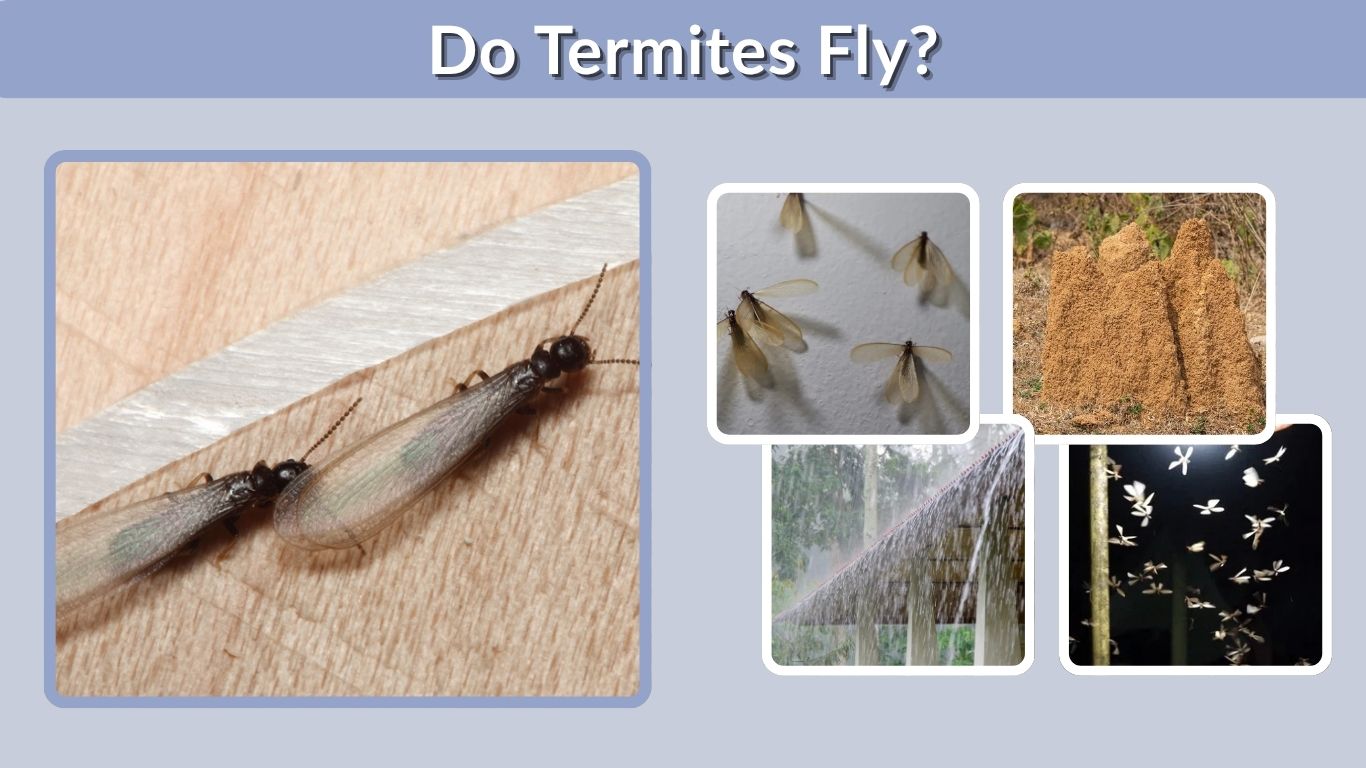
Seeing winged insects around windows, lights, or doors can make any homeowner nervous. Many people ask, “Do termites fly?” because flying termites often appear suddenly and look similar to flying ants. The answer is yes, some termites can fly, but only during a specific stage of their life cycle. This guide explains what flying termites look like, why they appear, and what to do next.
Do Termites Fly?
Yes, termites can fly, but not every termite has wings. Only reproductive termites, also called swarmers or alates, develop wings and leave the colony to mate and start new colonies. Worker termites and soldier termites do not fly.
Flying termites are usually seen during a swarm. A swarm happens when a mature termite colony releases winged reproductive termites. These termites fly for a short time, look for mates, and then shed their wings. After that, they try to begin a new colony in a suitable location.
Do All Termites Fly?
No, all termites do not fly. A termite colony has different members with different jobs. Workers search for food and damage wood. Soldiers protect the colony. Reproductive termites are the ones that grow wings and fly.
This is why you may see termites in two very different forms. Some are pale, soft-bodied workers hidden inside wood or soil. Others are dark, winged swarmers seen near lights, windows, or doors.
Do Winged Termites Fly?
Yes, winged termites fly, but usually not for long. Their flight is mainly for reproduction. Once they find a mate, they often drop their wings and crawl away to find a place to start a new colony.
If you find piles of small wings indoors, especially near a windowsill or door, it may mean termite swarmers were recently active nearby.
Why Do Flying Termites Suddenly Appear?
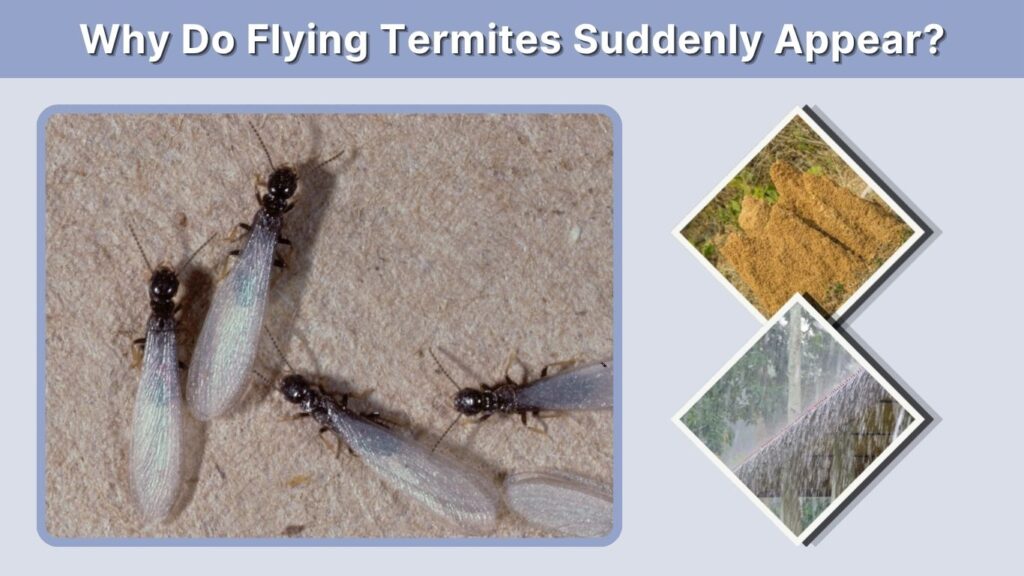
Flying termites suddenly appear when weather and colony conditions are right. Most swarms happen when a termite colony is mature enough to produce reproductive termites. Warm temperatures, humidity, and rain can trigger swarm activity.
Flying termites often appear suddenly because they leave the colony in groups. A homeowner may see nothing one day and then notice dozens or hundreds of winged termites the next day.
Why Do Flying Termites Suddenly Appear at Night?
Some termites swarm at night because they are attracted to light. Porch lights, lamps, bathroom lights, and window reflections can draw them indoors or close to the house.
Night swarms are common in some termite species, especially in warm and humid areas. If flying termites appear around lights inside your home, it is worth scheduling an inspection.
Flying Termites After Rain
Rain can create ideal swarming conditions. Moist soil, warm air, and high humidity help termites survive during the short time they are outside the colony. This is why many homeowners notice flying termites after rain or during seasonal weather changes.
Outdoor swarms after rain do not always mean your home is infested. However, flying termites inside the house are more concerning.
What Do Flying Termites Look Like?
Flying termites are small insects with straight bodies, long wings, and straight antennae. Their color may be black, brown, tan, or yellowish depending on the species.
Many people search for what flying termites look like because they are easy to confuse with ants. The body shape and wings are the best clues.
| Feature | Flying Termites | Flying Ants |
| Waist | Thick, straight waist | Narrow, pinched waist |
| Wings | Equal-length wings | Front wings longer than back wings |
| Antennae | Straight antennae | Bent antennae |
| Body shape | Uniform body | Segmented body |
| Main concern | Possible termite colony | Possible ant nest |
Do Termites Look Like Flying Ants?
Yes, termites can look like flying ants at first glance. Both insects may swarm, fly near lights, and appear suddenly indoors or outdoors.
The easiest way to tell them apart is the waist. Flying ants have a pinched waist. Flying termites have a straight, thicker body. Their wings are also different. Termite wings are usually equal in length and longer than the body.
What Do Termites Look Like When They Fly?
When termites fly, they often look like small dark insects with oversized wings. Their wings may appear delicate, pale, or smoky. Because the wings are longer than the body, flying termites can look larger than they really are.
After swarming, they may shed their wings. If you see insects crawling without wings near piles of discarded wings, they may be termite swarmers.
Do Subterranean Termites Fly?
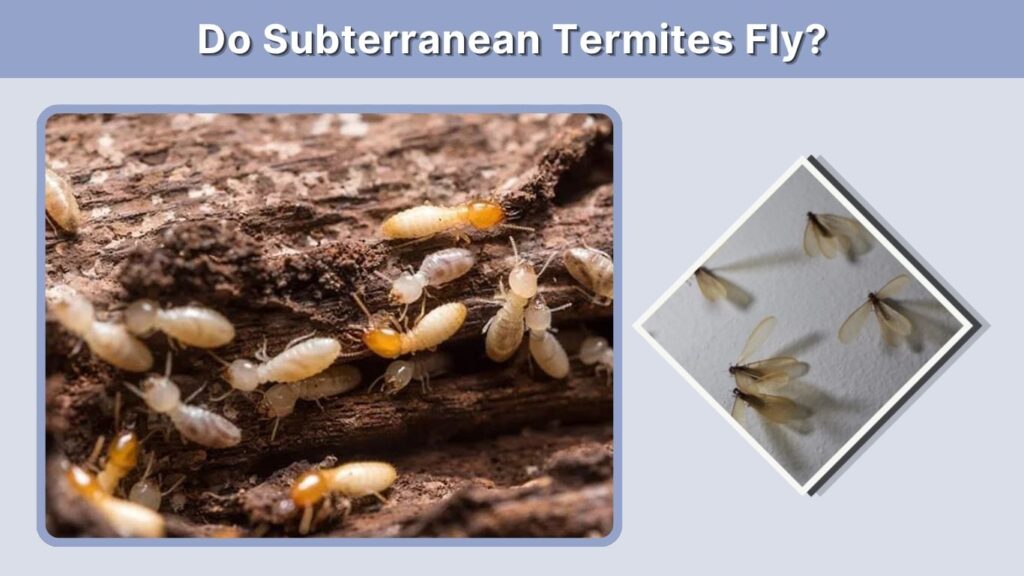
Yes, subterranean termites can fly during their reproductive stage. Subterranean termite swarmers leave mature colonies to mate and start new colonies. These termites often nest in soil and enter homes through cracks, foundation gaps, mud tubes, or wood-to-soil contact.
Do Drywood Termites Fly?
Yes, drywood termites can also fly. Unlike subterranean termites, drywood termites do not need constant soil contact. They can live inside dry wood, furniture, attic framing, window frames, or wall voids.
Drywood termite swarmers may appear indoors if the colony is inside the structure. You may also notice tiny droppings, called frass, near wood surfaces.
Do Flying Termites Eat Wood?
Flying termites are not the main wood-eating members of the colony. Worker termites are responsible for most wood damage. However, flying termites come from a colony that includes workers, so their presence can still point to a wood-damaging problem.
What Do Flying Termites Eat?
Flying termites usually do not focus on feeding during the short swarming period. Their main purpose is reproduction. After they pair up and shed their wings, they look for a protected place to begin a new colony.
Once a colony develops, worker termites feed on cellulose materials such as:
- Wood
- Paper
- Cardboard
- Plant matter
- Some building materials
- Dead tree roots or stumps
So, while the flying termites themselves may not be actively chewing your home, they can be a warning sign of termite activity nearby.
Do Flying Termites Bite?
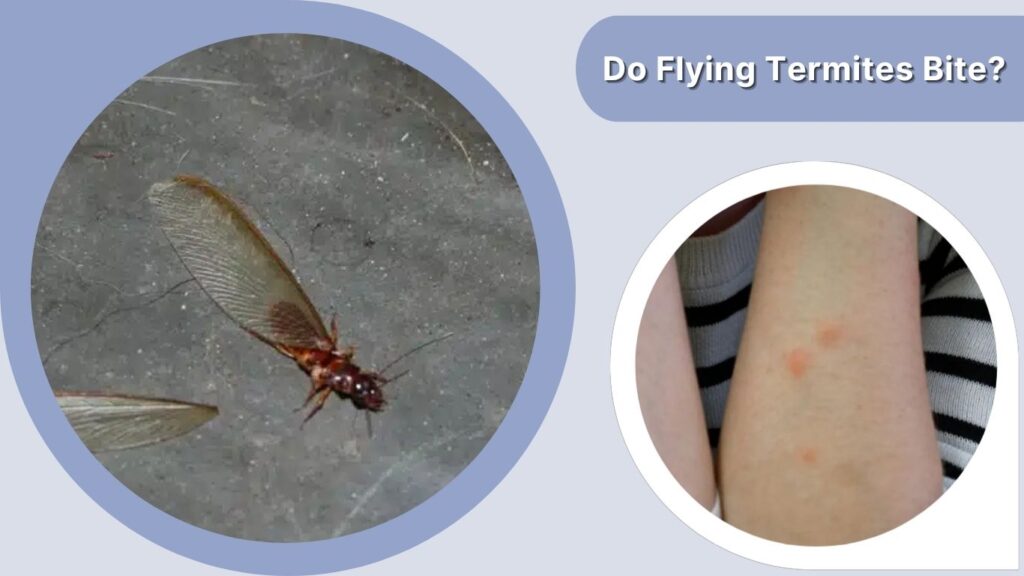
Flying termites rarely bite people and are not considered a major biting pest. They are not like mosquitoes, fleas, or bed bugs. Their main purpose is to mate and start colonies, not to feed on humans.
Do Flying Termites Bite Humans?
Flying termites generally do not bite humans in a meaningful way. Soldier termites have stronger jaws, but they are usually hidden inside the colony and are not flying around your home.
The bigger concern is not personal injury. The real risk is possible property damage if the swarm came from an active colony inside or near your home.
Are Flying Termites Dangerous?
Flying termites are not usually dangerous to people, but they may be dangerous to your property. Seeing swarmers indoors may mean there is a mature termite colony inside walls, flooring, crawl spaces, or nearby wood.
A few flying termites outside may not be an emergency. Repeated indoor swarms should be treated seriously.
Flying Termites in the House
Flying termites in the house can mean one of two things. They may have entered from outside during a swarm, or they may be coming from a hidden colony inside the structure.
If you see only one or two near an open door, they may have flown in from outdoors. If you see many flying termites, piles of wings, or repeated swarms, a termite inspection is recommended.
How Do Flying Termites Get in Your House?
Flying termites may get inside through:
- Open doors or windows
- Gaps around frames
- Foundation cracks
- Vents or utility openings
- Attic or crawl-space gaps
- Existing termite tunnels
- Infested wood inside the home
They are often attracted to light, which is why they may gather near lamps, windows, bathrooms, and porch doors.
Where Do Flying Termites Hide?
Flying termites may hide near windows, baseboards, wall voids, attics, crawl spaces, wooden trim, and damp areas. After they shed their wings, they crawl into cracks and protected spaces.
If they find the right conditions, they may try to start a new colony.
Do Termites Fly Around Lights?
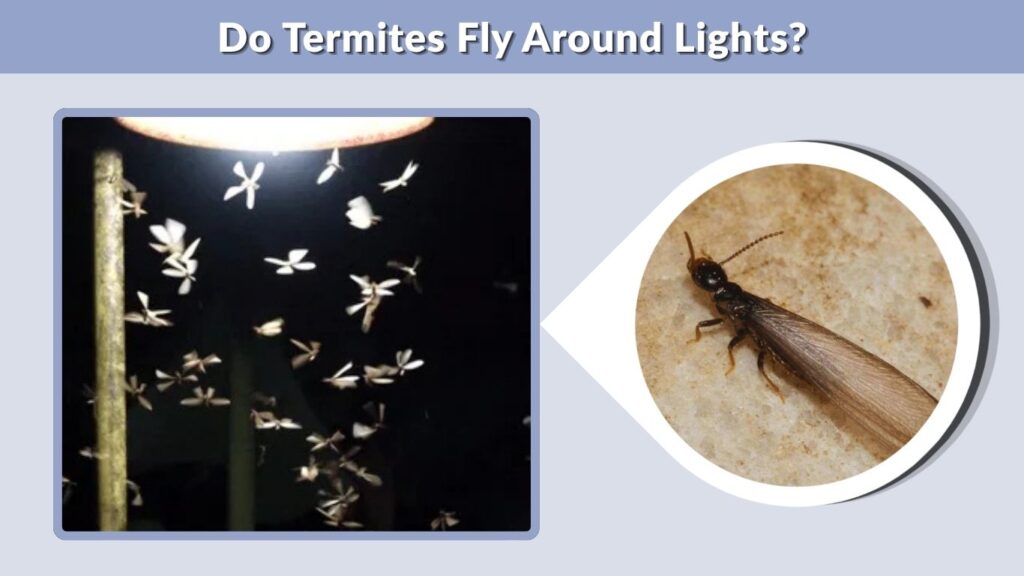
Yes, many flying termites are attracted to lights. They may fly toward porch lights, lamps, bathroom lights, or bright windows. This is especially common during evening or night swarms.
Do Termites Fly at Night?
Some termite species do fly at night. Others may swarm during the day. The timing depends on the species, weather, season, and local climate.
If winged termites repeatedly appear around lights at night, turn off unnecessary lights and contact a termite professional for identification.
How Long Do Flying Termites Live?
Flying termites often live only a short time if they do not find the right conditions. Many swarmers die within hours or days because they dry out, get eaten by predators, or fail to find a mate and nesting site.
Why Do Flying Termites Suddenly Die?
Flying termites may suddenly die because swarmers are fragile outside the colony. Dry indoor air, lack of moisture, and failure to find a suitable nesting place can kill them quickly.
However, dead swarmers do not mean the termite problem is gone. The original colony may still be active.
Do Flying Termites Lose Their Wings?
Yes, flying termites often lose their wings after swarming. Wing piles are one of the most common signs of termite activity. You may find them near windowsills, door tracks, vents, tubs, sinks, or floors.
Discarded wings indoors should not be ignored.
What to Do About Flying Termites
If you see flying termites, stay calm but act quickly. The goal is to identify whether they are termites or flying ants and determine whether they came from inside or outside the home.
Immediate Steps
You can take these steps right away:
- Save a few insects or wings in a sealed bag
- Take clear photos before cleaning them up
- Vacuum visible swarmers
- Check windowsills and doors for wing piles
- Look for mud tubes, soft wood, or bubbling paint
- Turn off unnecessary lights at night
- Schedule a termite inspection if activity is indoors
Avoid spraying random chemicals into walls or cracks without knowing the source. This may scatter insects and make inspection harder.
How Do You Kill Flying Termites?
You can kill visible flying termites by vacuuming them or using a labeled household insect spray for temporary control. However, killing swarmers does not kill the colony.
The right treatment depends on the termite type and where the colony is located.
Professional Treatment Options
A termite professional may recommend:
- Liquid soil treatment for subterranean termites
- Bait stations around the home
- Foam treatment in wall voids
- Wood treatment for exposed or accessible areas
- Fumigation for severe drywood termite infestations
- Moisture repair and prevention steps
The main goal is not just to kill the flying termites you see. The goal is to treat the colony and prevent future damage.
Do Flying Termites Go Away on Their Own?
Flying termites may disappear on their own after a swarm, but that does not always mean the infestation is gone. Swarmers often die quickly, but the mature colony that produced them may continue living and feeding.
If swarmers came from inside the home, they are a warning sign. Even if they vanish after one day, you should still inspect the property.
FAQs
Do termites fly?
Yes, termites fly during the reproductive stage. These winged termites are called swarmers or alates. They leave mature colonies to mate and start new colonies. Worker and soldier termites do not fly, so flying termites are only one part of the termite colony.
Why do flying termites suddenly appear?
Flying termites suddenly appear when weather conditions trigger a swarm. Warm temperatures, humidity, and rain often encourage swarming. They may also appear near lights at night. Indoor swarms can indicate a hidden termite colony inside or near your home.
What do flying termites look like?
Flying termites usually have a straight waist, straight antennae, and four wings of equal length. Their wings are often longer than their body. They may be black, brown, or tan, depending on the termite species and local conditions.
Do flying termites bite?
Flying termites rarely bite people and are not considered dangerous to humans. They do not feed on blood or behave like common biting pests. The bigger concern is property damage because flying termites may signal an active colony nearby.
How do you get rid of flying termites?
Vacuuming can remove visible flying termites, but it will not eliminate the colony. Save a sample, check for discarded wings or damage, and schedule a termite inspection. Professional treatment may include soil treatment, bait stations, wood treatment, or fumigation.
