

The big black wasp is one of the most striking insects found across North America. With its shiny dark body, long wings, and intimidating size, it often causes fear, though most species are harmless to humans. These wasps play a vital role in nature by controlling pest populations. Found commonly in Texas, Florida, Georgia, and Arizona, they are solitary hunters that help maintain ecological balance. Understanding their appearance, habits, and sting reactions can help you identify and coexist with them safely.
Identification of Big Black Wasps

Big black wasps are easily recognized by their glossy black exoskeleton and metallic blue or purple wings. They have narrow waists, long antennae, and strong mandibles used for hunting prey and digging nests. Adult females are noticeably larger, measuring 1 to 1.5 inches in length. Their wings shimmer in sunlight, creating an iridescent hue that makes them stand out.
Unlike social wasps, which live in colonies, big black wasps are solitary. Each female builds her own nest, hunts, and raises her young independently. Their large size and loud buzzing can be intimidating, but most are gentle pollinators that only sting when threatened.
Common Types of Big Black Wasps
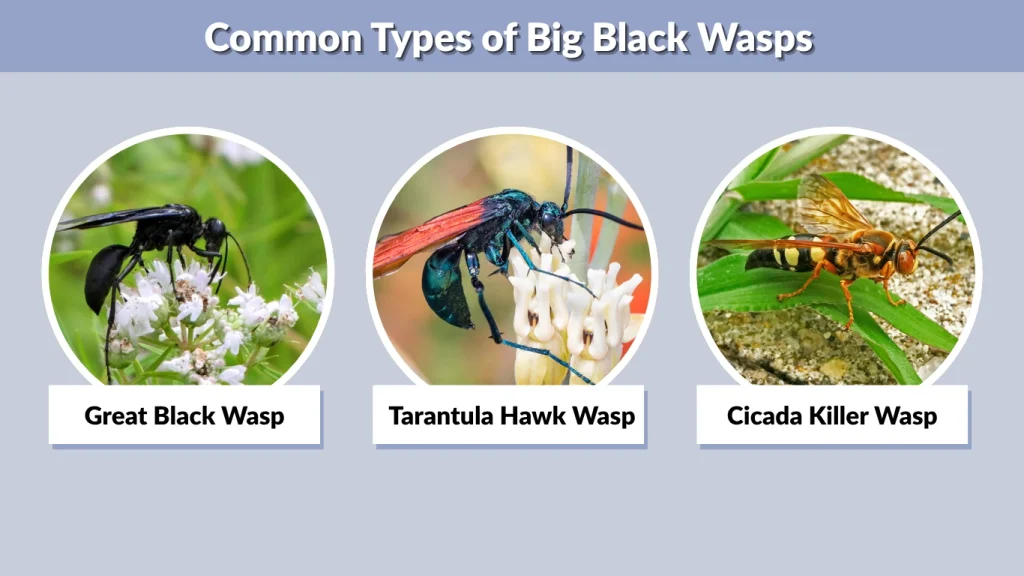
Great Black Wasp (Sphex pensylvanicus)
This species is perhaps the most common across the U.S. Known for its metallic-blue wings, the Great Black Wasp hunts grasshoppers and katydids. Females dig tunnels in soft soil, paralyze their prey with a sting, and place them inside the burrow as food for their larvae. Despite their size, they are not aggressive toward humans.
Tarantula Hawk Wasp
The Tarantula Hawk is one of the largest wasps in the world, famous for its orange wings and painful sting. It preys on tarantulas, paralyzing them and dragging them to underground nests. Found mostly in Texas, Arizona, and California, these wasps are solitary and only sting when provoked.
Cicada Killer Wasp
Often confused with hornets, Cicada Killers are gentle giants. They dig burrows in lawns and sandy soils, hunting cicadas as food for their larvae. Though large and noisy, they rarely sting humans and actually benefit gardens by controlling cicada populations.
Geographic Range and Habitats
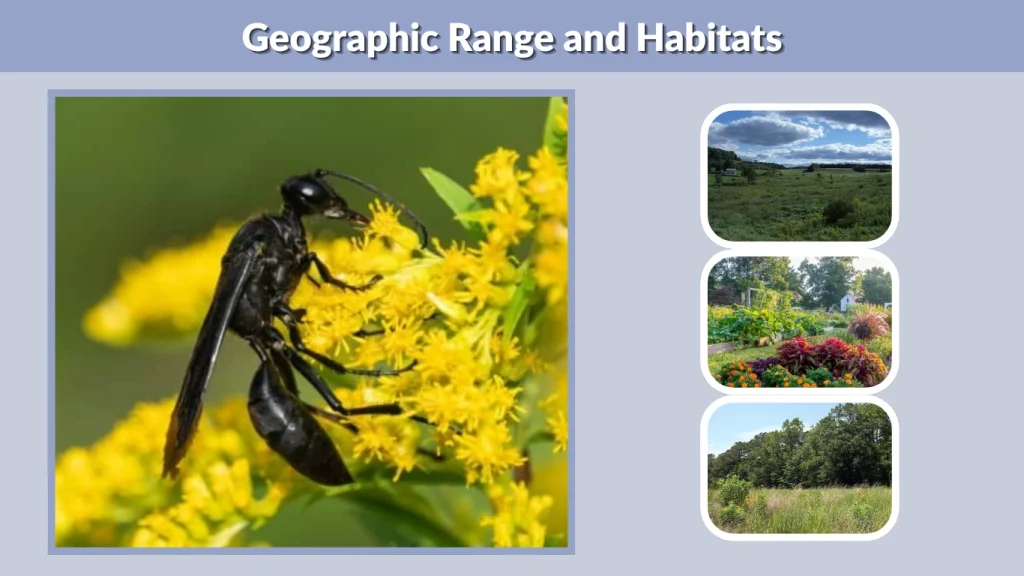
Big black wasps are distributed across North America, particularly in warmer regions. States such as Texas, Florida, Georgia, Oklahoma, and California host large populations due to favorable climates and abundant prey. These wasps prefer open fields, gardens, and forest edges where they can easily hunt and dig nests.
In rural areas, they can be found around barns, sheds, and grassy fields. In suburban neighborhoods, they may nest in flowerbeds or under decks. Some species, like cicada killers, favor loose sandy soil for easy digging. Others, like mud daubers, build nests on walls or ceilings.
Their activity peaks during summer months, from June to August, when temperatures are warm, and insect prey is plentiful.
Behavior and Feeding Habits
Big black wasps are solitary hunters that spend their lives building nests and hunting prey for their offspring. They are powerful fliers, capable of capturing large insects like grasshoppers, spiders, and cicadas. Once the prey is stung and paralyzed, the female carries it to her burrow, lays an egg on it, and seals the chamber. The larva then feeds on the immobilized insect until it matures.
Adult wasps mainly feed on nectar and plant juices, visiting flowers such as milkweed, goldenrod, and wild carrot. While feeding, they unintentionally help with pollination, making them beneficial to gardens and crops.
Although their buzzing flight may seem aggressive, they rarely attack. These wasps only sting when handled roughly or if someone disturbs their nest area. Their calm behavior makes them less of a threat than yellowjackets or hornets.
Are Big Black Wasps Dangerous?
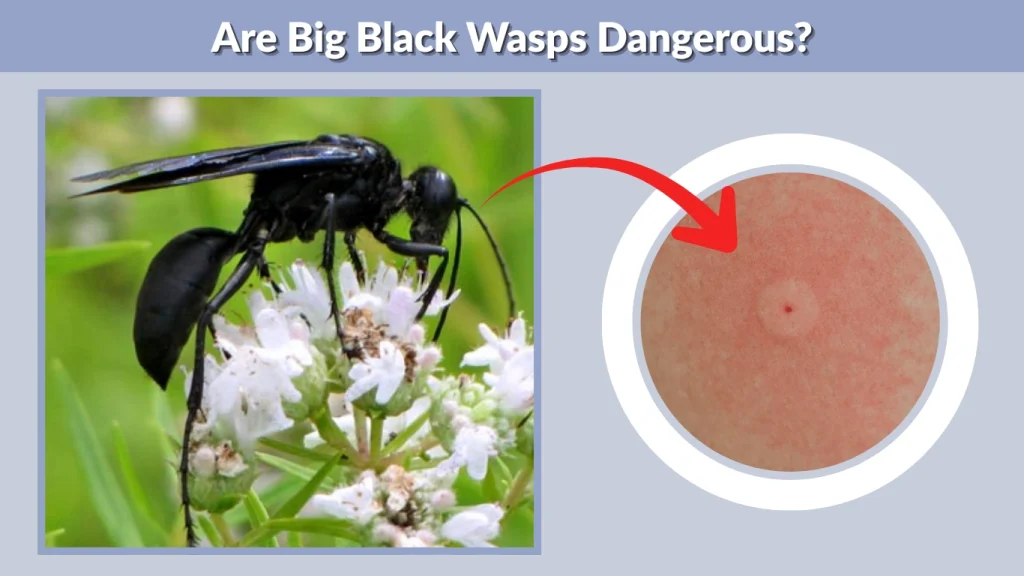
Despite their size, big black wasps are not usually dangerous. Their sting can be painful but is generally used only in self-defense. The Great Black Wasp’s sting causes mild swelling and redness, while the Tarantula Hawk’s sting ranks among the most painful in the insect world — though the pain fades quickly and is rarely medically serious.
People allergic to wasp venom should exercise caution, as reactions can include swelling, dizziness, or difficulty breathing. However, most encounters result in no stings at all. These wasps are not territorial like hornets and tend to avoid human contact.
If you encounter a large black wasp in your garden, observe it from a distance. Chances are, it’s helping by hunting pests rather than posing a threat.
Physical Appearance and Key Identification Traits
- Shiny, smooth black body with no visible hair
- Iridescent blue or purple wings
- Large size ranging from 1 to 1.5 inches
- Long legs that dangle during flight
- Thin, wasp-like waist separating thorax and abdomen
These features help distinguish them from carpenter bees (which are round and fuzzy) or hornets (which are bulkier and often striped). Observing their body shape and flight pattern is the best way to confirm identification.
Nesting and Reproduction
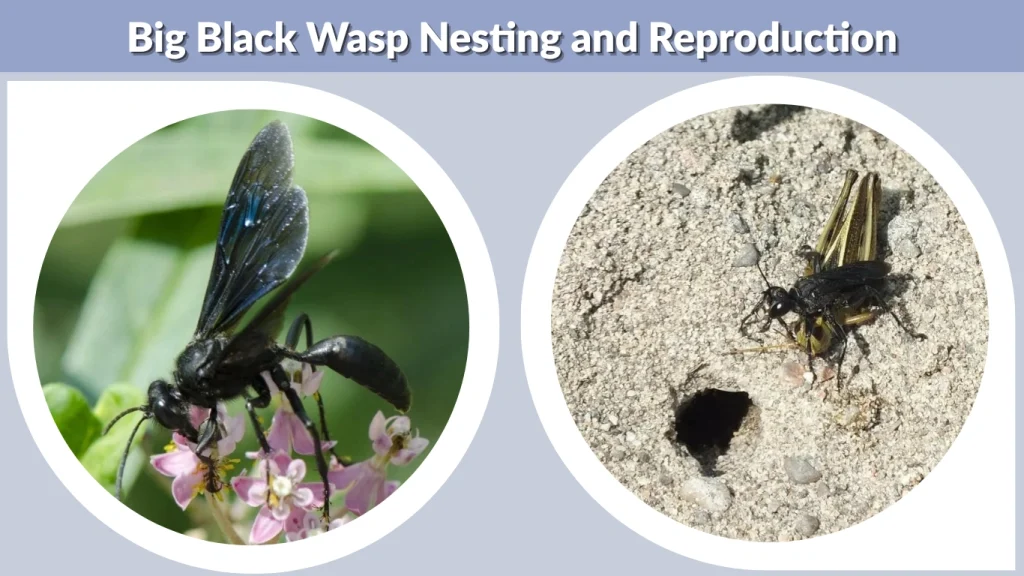
Female big black wasps are skilled diggers. They create underground burrows that can extend several inches deep, each leading to multiple chambers. Inside these chambers, they place paralyzed prey such as crickets, cicadas, or spiders. An egg is laid on each captured insect, providing food for the emerging larva.
Unlike social wasps, big black wasps do not build paper nests or live in colonies. Every female builds her own nest and cares for her offspring independently. Once the larvae mature, they remain in the soil through winter and emerge as adults the following summer.
These solitary nesting habits make them far less aggressive than yellowjackets or hornets, as they don’t have a colony to defend.
Big Black Wasp Sting and First Aid
The sting of a big black wasp can be painful but rarely dangerous. The sensation varies depending on the species:
- Great Black Wasp: Sharp pain that fades in minutes, followed by mild redness.
- Tarantula Hawk Wasp: Intense, burning pain that peaks for a few minutes, then subsides without lasting harm.
- Cicada Killer: Usually stings only when crushed or grabbed; pain is minimal.
First Aid Tips:
- Clean the sting area with soap and water.
- Apply ice to reduce swelling and soothe pain.
- Take an antihistamine or pain reliever if irritation persists.
- If allergic symptoms appear — such as swelling of the lips, hives, or trouble breathing — seek emergency care immediately.
For most people, wasp stings cause temporary discomfort and mild inflammation that resolves within a few hours. Avoid scratching the sting area to prevent infection.
Look-Alikes: Insects That Resemble Big Black Wasps

Many harmless insects share the black wasp’s intimidating look, using similar coloring as a defense mechanism. Here are some common wasp mimics:
- Carpenter Bees: Round and fuzzy, these bees bore into wood and are harmless unless disturbed.
- Robber Flies: Predatory flies with large eyes and similar size, but with a distinct flight pattern.
- Black Hornets: Actually darker-colored wasps, not true hornets, often confused due to size and markings.
- Sawflies: Winged insects resembling wasps but lacking a narrow waist.
To distinguish real wasps from mimics, observe their behavior. True wasps have longer legs that dangle during flight, fly more directly, and are often seen hunting or nesting.
Preventing Big Black Wasps Around Homes
While big black wasps are beneficial for pest control, it’s best to prevent them from nesting too close to human activity. Here are a few reliable prevention measures:
- Seal small holes and gaps in decks, siding, and window frames.
- Keep outdoor trash bins closed to reduce food odors.
- Limit standing water, which attracts insects and wasps.
- Avoid leaving sugary drinks or pet food outdoors.
- Use natural repellents like peppermint, eucalyptus, or clove oil around entry points.
If a wasp nest is already established near your home, it’s safer to call pest control for removal rather than handling it yourself. Since most large black wasps are solitary, eliminating one nest usually resolves the issue.
FAQs
What are big black wasps called?
The most common species are the Great Black Wasp, Cicada Killer Wasp, and Tarantula Hawk Wasp. Each is large, glossy, and black, but they differ in wing color and prey type. All are solitary and generally non-aggressive.
Are big black wasps aggressive?
No. Despite their intimidating size, they rarely sting humans. Big black wasps focus on hunting insects and caring for their nests. They only sting when physically threatened or cornered.
How painful is a big black wasp sting?
The pain depends on the species. The Tarantula Hawk Wasp delivers one of the most painful stings known to humans, though it lasts only a few minutes. The Great Black Wasp causes moderate pain and minor swelling, fading quickly.
Where do big black wasps live?
They live in open fields, gardens, forests, and sandy soils across the U.S., especially in Texas, Florida, Arizona, and Georgia. They build burrows in the ground or use hollow wood for nesting.
Should I remove a big black wasp nest?
Only if it’s located close to human areas like doorways, decks, or play spaces. Otherwise, it’s best to leave it undisturbed since these wasps control pests naturally. If removal is necessary, call a pest professional to do it safely.
