
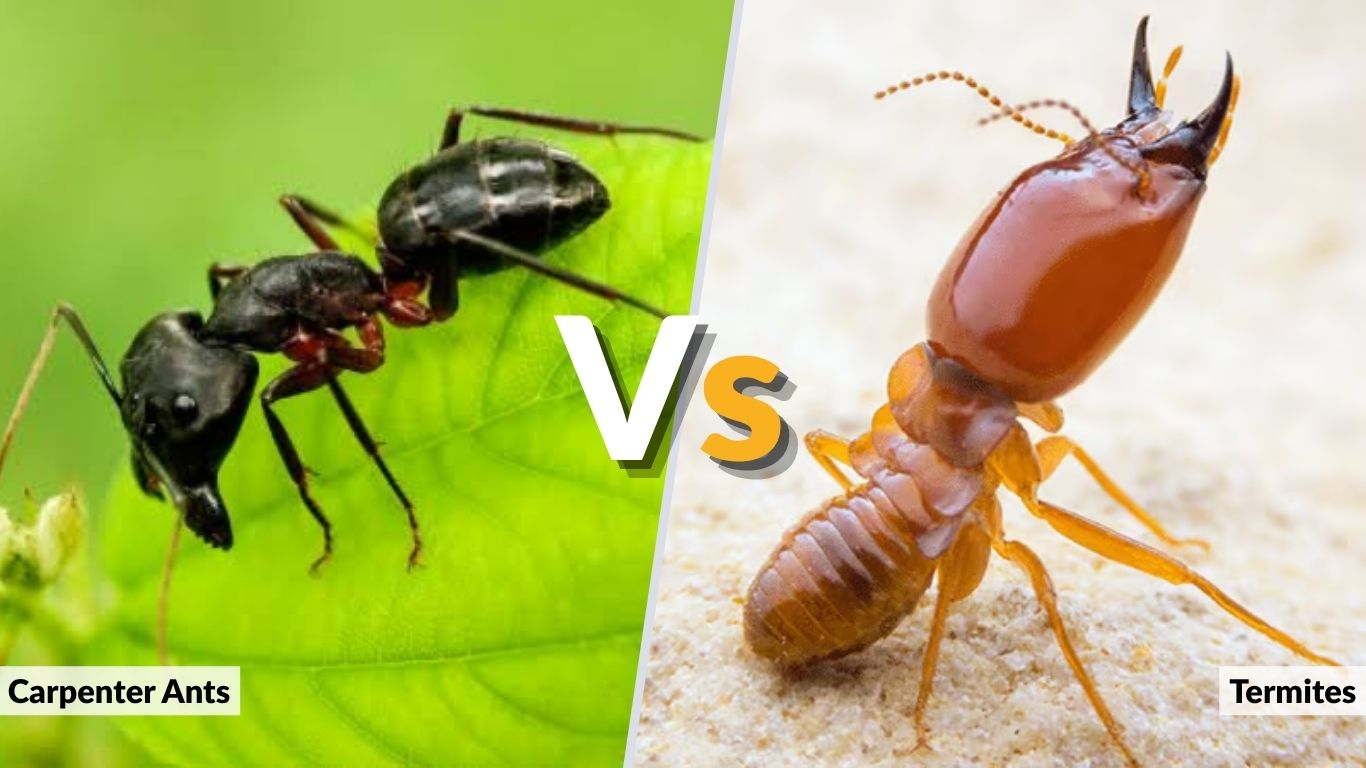
Carpenter ants and termites are often confused because both are linked to wood damage, swarmers, and hidden activity inside homes. However, they are very different pests. Termites eat wood, while carpenter ants only tunnel through it to build nests. Knowing the difference between carpenter ants vs termites helps you identify the problem faster, choose the right treatment, and prevent costly structural damage.
Carpenter Ants vs Termites: Quick Overview
Carpenter ants and termites can both damage wooden parts of a home, but they do it in different ways. Termites feed on cellulose in wood, while carpenter ants excavate wood to create nesting galleries. This means termite damage usually involves eaten, hollowed-out wood, while carpenter ant damage often includes smooth tunnels and sawdust-like debris.
| Feature | Carpenter Ants | Termites |
|---|---|---|
| Main behavior | Tunnel through wood to nest | Eat wood for food |
| Body shape | Narrow, pinched waist | Broad, straight waist |
| Antennae | Bent or elbowed | Straight |
| Wings | Front wings longer than back wings | Wings equal in length |
| Wood damage | Smooth galleries | Hollow, layered, or muddy galleries |
| Debris | Sawdust-like frass | Pellets, mud tubes, or soil-like material |
| Common clue | Large black ants indoors | Mud tubes or discarded wings |
Are Carpenter Ants and Termites the Same?
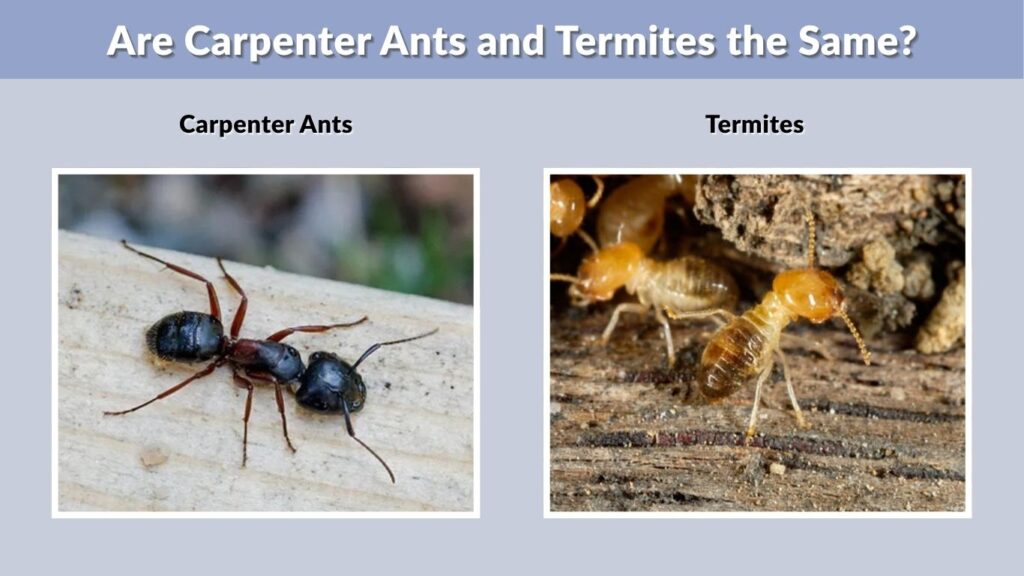
Carpenter ants and termites are not the same. They belong to different insect groups and behave differently around wood. Carpenter ants are ants, while termites are closer in behavior to colony-building wood feeders.
The biggest difference is that termites eat wood. Carpenter ants do not. Carpenter ants chew through wood and remove the material so they can create tunnels and nesting spaces. This is why carpenter ant infestations often leave piles of sawdust-like frass near damaged wood.
Termites, on the other hand, consume wood from the inside out. Because they feed on cellulose, they can continue damaging structural wood for a long time without being seen. This is one reason termites are usually considered more destructive than carpenter ants.
What Do Carpenter Ants Look Like?
Carpenter ants are usually larger than termites. Most carpenter ants are black, dark brown, reddish-black, or a combination of red and black. They have a narrow waist, bent antennae, and a segmented body.
Winged carpenter ants may appear during mating season. These swarmers can be mistaken for flying termites, especially when they gather near windows, doors, or lights. However, carpenter ants have uneven wings, with the front wings longer than the back wings.
Carpenter ants are often seen walking in trails. You may notice them in kitchens, bathrooms, basements, attics, around windows, or near damp wood. Seeing one or two ants does not always mean there is a nest inside, but repeated activity should be inspected.
What Do Termites Look Like?
Termites are smaller, softer-bodied insects. Worker termites are usually pale, cream, white, or light tan. Soldiers may have darker heads and larger jaws. Winged termites, also called swarmers, are usually darker and have long wings.
A termite’s body is more uniform than a carpenter ant’s body. Termites have straight antennae, a broad waist, and two pairs of wings that are equal in length. Their wings are often longer than their bodies and may break off easily after swarming.
Unlike carpenter ants, termites are rarely seen walking around in the open. They usually stay hidden inside wood, soil, wall voids, or mud tubes. This makes termite infestations harder to detect early.
Carpenter Ants with Wings vs Termites
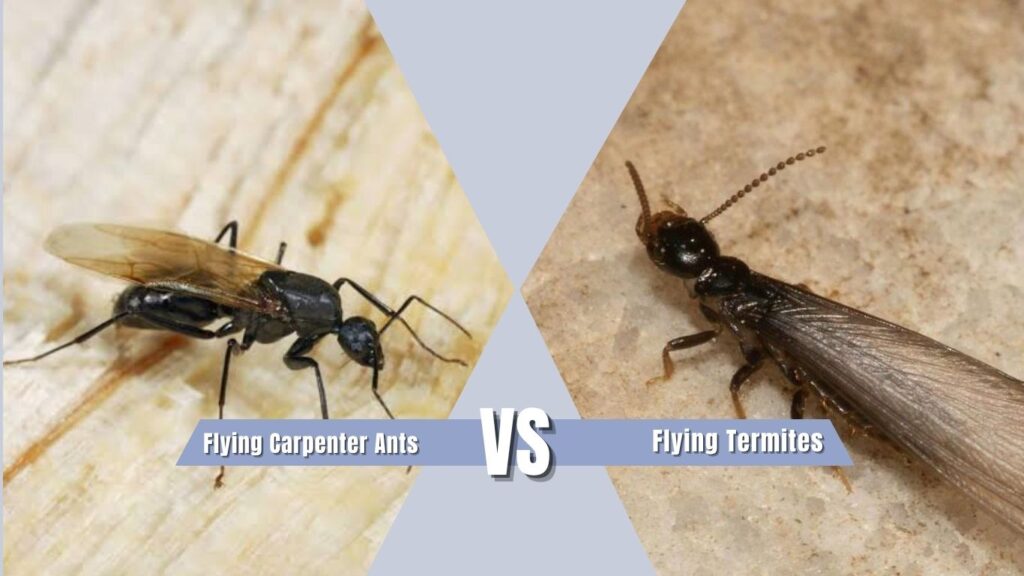
Flying insects are one of the most common reasons homeowners compare carpenter ants vs termites. Both pests produce winged reproductives that leave mature colonies to start new ones. These winged insects may appear suddenly indoors or outdoors.
Flying carpenter ants have bent antennae, a narrow waist, and uneven wings. Their bodies often look more ant-like, with clear segmentation between the head, middle, and abdomen.
Flying termites have straight antennae, a thick waist, and equal-length wings. They may appear in large numbers near windows, lights, doors, or vents. After swarming, termites often shed their wings, leaving small piles of wings on floors or windowsills.
| Sign | Flying Carpenter Ants | Flying Termites |
|---|---|---|
| Antennae | Bent | Straight |
| Waist | Narrow and pinched | Broad and straight |
| Wing size | Unequal wings | Equal-length wings |
| Body appearance | Segmented ant-like body | More uniform body |
| Common location | Near lights, damp wood, windows | Near windows, doors, lights, vents |
| Discarded wings | Possible, but less common | Very common after swarming |
Carpenter Ant Damage vs Termite Damage
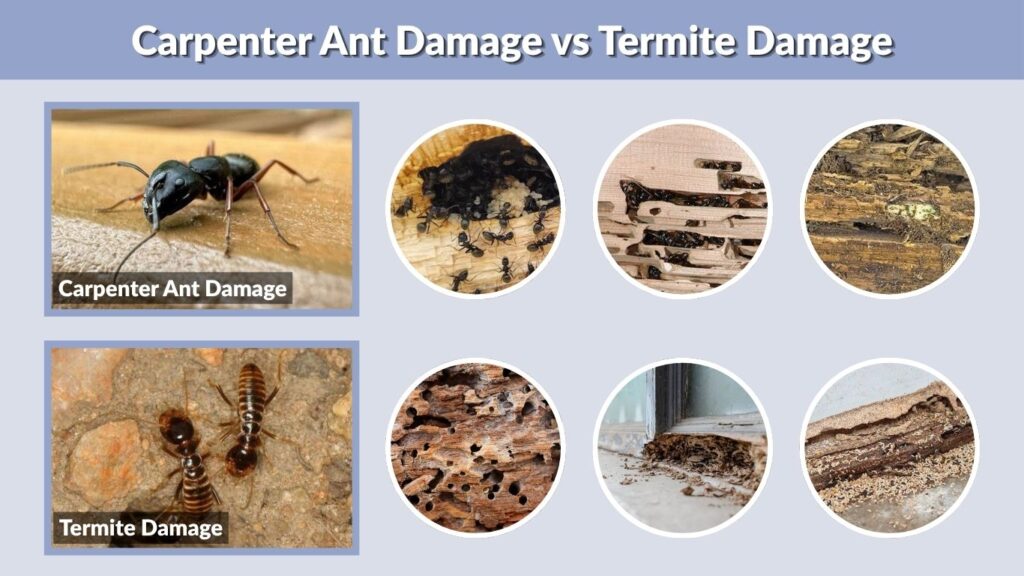
The damage pattern is one of the best ways to tell whether you have carpenter ants or termites. Both pests can weaken wood, but the inside of the damaged wood often looks different.
Carpenter Ant Damage
Carpenter ant damage usually appears as smooth, clean galleries inside wood. Since carpenter ants do not eat the wood, they remove it and push the debris outside the nest. This debris is often called frass.
Carpenter ants prefer damp, softened, or decaying wood. They may infest wood near leaks, poor ventilation, roof damage, wet crawl spaces, or old window frames. Over time, they may expand into sound wood as the colony grows.
Signs of carpenter ant damage include visible ant trails, sawdust-like debris, rustling sounds in walls, and smooth tunnels inside wooden structures.
Termite Damage
Termite damage is often more hidden and more serious. Termites eat wood from the inside, leaving thin outer layers behind. This can make wood look normal on the outside even when the inside is hollow or badly damaged.
Subterranean termites often leave mud tubes and muddy galleries. Drywood termites may leave small kick-out holes and pellet-like droppings. Termite-damaged wood may sound hollow, feel soft, or break apart easily.
| Damage Clue | Carpenter Ants | Termites |
|---|---|---|
| Wood surface | May look excavated | May look blistered or hollow |
| Inside galleries | Smooth and clean | Rough, layered, muddy, or hollow |
| Debris | Sawdust-like frass | Pellets, mud, or soil-like material |
| Moisture link | Often connected to damp wood | Common with moisture, but drywood termites can infest dry wood |
| Structural risk | Can become serious over time | Often more severe and hidden |
| Main warning sign | Ants and sawdust | Mud tubes, wings, hollow wood |
Carpenter Ant Frass vs Termite Frass
Frass is a major clue when comparing carpenter ant vs termite activity. However, carpenter ant frass and termite frass do not look the same.
Carpenter ant frass usually looks like sawdust, wood shavings, or small piles of shredded material. It may include bits of insulation, dead insects, soil, or other debris. This happens because carpenter ants remove wood as they tunnel.
Drywood termite frass looks more like tiny pellets. These pellets are usually hard, dry, and uniform in shape. They may look like grains of sand, pepper, or coffee grounds. Drywood termites push these pellets out of small holes in the wood.
Subterranean termites usually do not leave dry pellet piles. Instead, they are more likely to leave mud tubes, muddy galleries, or soil-like material because they live in or near the soil.
Termite Droppings vs Carpenter Ant Droppings
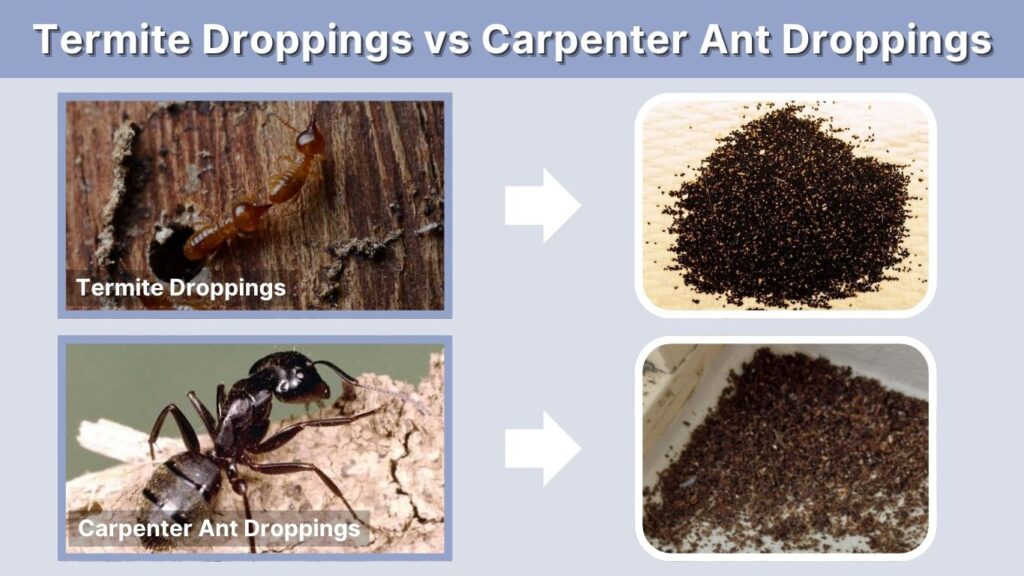
The phrase “droppings” can be confusing because carpenter ant debris is not always true waste. Carpenter ants leave behind excavated wood material, while termites may leave actual fecal pellets or mud-like evidence depending on the species.
If you find sawdust-like piles near windows, baseboards, or beams, carpenter ants may be responsible. If you find tiny, hard, six-sided pellets below holes in wood, drywood termites may be the cause. If you find mud tubes on the foundation, walls, or crawl space, subterranean termites are more likely.
Do not clean up the evidence right away. Take photos and note the location. This helps pest control professionals identify the pest and choose the right treatment.
Signs of Carpenter Ants vs Termites
Carpenter ants and termites may both stay hidden, but they leave different warning signs.
Signs of carpenter ants include:
- Large black or reddish ants indoors
- Ant trails near windows, sinks, or damp areas
- Sawdust-like frass below wood
- Rustling sounds inside walls
- Smooth tunnels in wood
- Activity near rotting wood or moisture
Signs of termites include:
- Mud tubes on walls or foundations
- Hollow-sounding wood
- Discarded wings near windows
- Pellet-like droppings
- Blistered paint or warped wood
- Soft or crumbling structural wood
If you see winged insects indoors, that should be treated as a warning sign. Whether they are carpenter ants or termites, indoor swarmers often mean a mature colony is nearby.
Are Carpenter Ants as Bad as Termites?
Termites are usually considered worse than carpenter ants because they eat wood continuously. A termite colony can quietly damage beams, floors, walls, and other structural areas before the homeowner notices anything.
However, carpenter ants are still a serious pest. They can weaken wood over time, especially when the nest is large or has multiple satellite colonies. Carpenter ants can also indicate moisture problems, roof leaks, plumbing leaks, or decaying wood.
So while termites often cause more severe damage, carpenter ants should not be ignored. Both pests require proper identification and treatment.
Do Carpenter Ants Eat Termites?
Carpenter ants may occasionally prey on termites or other insects, but they are not a reliable form of termite control. If you see carpenter ants and termites around the same property, it usually means there are conditions attracting wood-damaging pests.
Moisture, rotting wood, stumps, mulch, firewood, and structural cracks can attract both pests. Instead of assuming one pest will control the other, inspect the home and treat the actual infestation.
How to Know If You Have Termites or Carpenter Ants
The easiest way to know whether you have termites or carpenter ants is to compare the insect and the damage.
Look at the body first. Carpenter ants have a narrow waist and bent antennae. Termites have a broad waist and straight antennae. If the insect has wings, compare the wing sizes. Unequal wings suggest carpenter ants, while equal wings suggest termites.
Next, inspect the damage. Smooth tunnels and sawdust-like debris suggest carpenter ants. Mud tubes, hollow wood, and pellet droppings suggest termites.
If you only see damage but no insects, a professional inspection is the safest choice. Misidentifying the pest can lead to the wrong treatment and allow the infestation to continue.
Treatment for Carpenter Ants and Termites
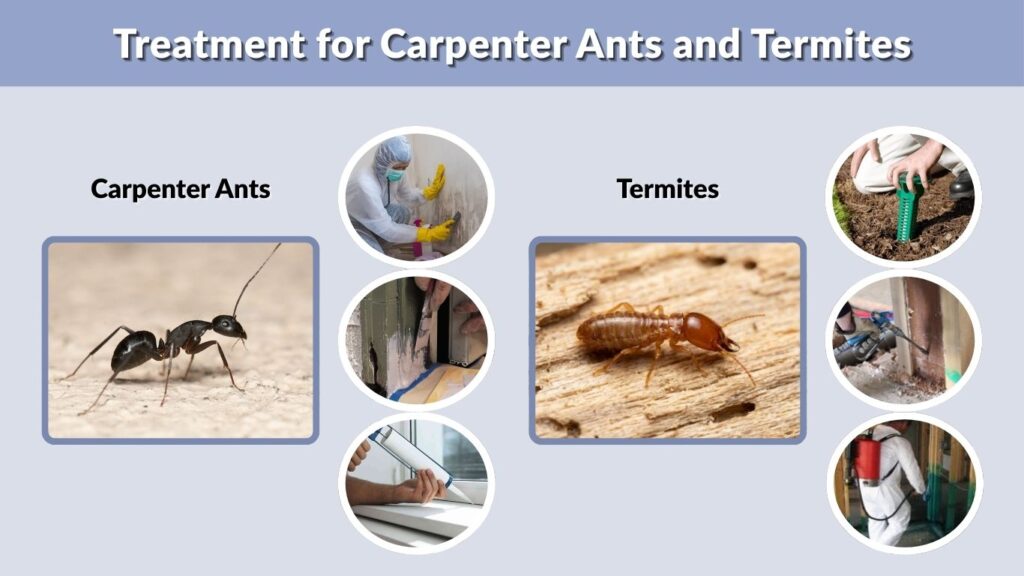
Treatment should depend on the pest type, infestation size, and location. A product labeled as a carpenter ant and termite killer may kill visible insects, but it may not eliminate hidden nests or colonies.
Carpenter Ant Treatment
Carpenter ant treatment usually focuses on finding and removing the nest. Spraying visible ants may not solve the problem if the main colony or satellite nests remain hidden.
Effective carpenter ant control may include:
- Fixing moisture problems
- Removing rotted wood
- Sealing entry points
- Trimming branches away from the roof
- Using ant baits
- Treating wall voids or nesting areas
- Removing outdoor nesting sites, such as stumps
Termite Treatment
Termite treatment depends on the species. Subterranean termites may require soil treatment, bait stations, or foundation protection. Drywood termites may require spot treatment, wood treatment, or fumigation if the infestation is widespread.
Termite treatment is usually more complex than carpenter ant treatment because the colony may be underground, inside walls, or spread through multiple areas of the structure.
Can the Same Spray Kill Carpenter Ants and Termites?
Some sprays are labeled for both carpenter ants and termites, but they should not be treated as a complete solution for every infestation. Contact sprays may kill the insects you see, but hidden colonies often survive.
For carpenter ants, baiting and nest treatment may work better than spraying trails. For termites, professional treatment is often necessary because the colony may not be visible.
If there is active damage inside walls, floors, beams, or foundations, do not rely only on store-bought sprays. A professional inspection can prevent the problem from getting worse.
How to Prevent Carpenter Ants and Termites
Prevention focuses on removing the conditions that attract wood-damaging pests. Moisture control is one of the most important steps because both carpenter ants and termites are often linked to damp or weakened wood.
To prevent infestations:
- Fix plumbing leaks quickly
- Repair roof leaks and damaged flashing
- Clean gutters and downspouts
- Keep mulch away from siding
- Store firewood away from the house
- Remove stumps and dead wood
- Seal cracks and gaps around the home
- Improve crawl space ventilation
- Replace rotting wood
- Keep tree branches away from the roof
Regular inspections are also helpful, especially if your home has had past termite or carpenter ant activity.
When to Call a Professional
Call a pest control professional if you see mud tubes, discarded wings, pellet droppings, repeated carpenter ant activity, hollow wood, or visible structural damage. You should also call if you cannot tell whether the pest is a termite or carpenter ant.
A professional can identify the insect, locate the source of the infestation, check hidden areas, and recommend the correct treatment. Early action can reduce repair costs and prevent further damage.
FAQs
What is the main difference between carpenter ants and termites?
The main difference is that termites eat wood, while carpenter ants tunnel through wood to build nests. Carpenter ants usually leave sawdust-like frass, while termites may leave mud tubes, hollow wood, discarded wings, or pellet-like droppings depending on the species.
How can I tell if I have carpenter ants or termites?
Look at the insect’s body, antennae, wings, and damage signs. Carpenter ants have bent antennae, narrow waists, and uneven wings. Termites have straight antennae, broad waists, and equal-length wings. Sawdust-like debris suggests carpenter ants, while mud tubes often suggest termites.
Which is worse, carpenter ants or termites?
Termites are usually worse because they eat wood and can cause hidden structural damage over time. Carpenter ants can also damage wood, but they excavate it instead of eating it. Both pests should be taken seriously if they are found inside a home.
What does carpenter ant frass look like compared to termite frass?
Carpenter ant frass usually looks like sawdust or wood shavings and may contain insect parts or debris. Drywood termite frass looks like tiny hard pellets. Subterranean termites usually leave mud tubes or muddy material rather than dry pellets.
Can one treatment kill both carpenter ants and termites?
Some products are labeled for both pests, but treatment should depend on the infestation. Sprays may kill visible insects but fail to reach hidden colonies. Carpenter ants often require nest treatment, while termites may need bait systems, soil treatment, wood treatment, or fumigation.
