

The term “water bug” is often used loosely to describe several different insects — some true aquatic species, others misidentified cockroaches. True water bugs live in ponds, lakes, and streams, while household “water bugs” are actually large roaches drawn to moisture. Understanding what water bugs really are helps distinguish harmless aquatic species from household pests and appreciate their fascinating role in nature.
Understanding What a Water Bug Is
Scientific Definition
Water bugs belong to the order Hemiptera, also known as “true bugs.” These aquatic insects are part of the suborder Heteroptera, which includes species adapted for life in or near water. They are skilled swimmers and predators, using specialized hind legs to move through water and catch prey. Common examples include giant water bugs, water boatmen, and backswimmers — all true water bugs, unlike the household cockroaches often mislabeled the same way.
Common Misuse of the Term
In everyday language, people often call large cockroaches “water bugs,” particularly the American cockroach and Oriental cockroach. These roaches thrive in damp basements, bathrooms, and drains, giving them a misleading association with water. However, unlike aquatic water bugs, cockroaches cannot swim or live underwater — they simply prefer moist environments. True water bugs, by contrast, are aquatic predators that breathe through air trapped under their wings.
Appearance and Identification
Physical Characteristics
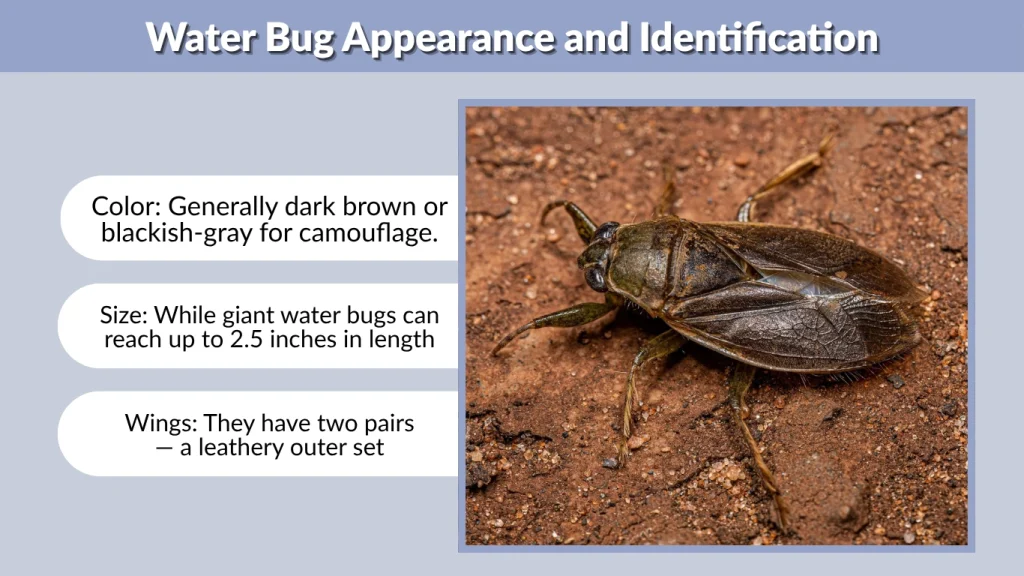
True water bugs have broad, flat bodies that make swimming efficient. Their hind legs are shaped like paddles, covered in fine hairs that help them glide through water. They range in color from dark brown to gray or black, allowing them to blend into muddy pond bottoms. Their bodies are smooth and waterproof, and most species can fly short distances between water sources.
Color and Size Details
Water bugs vary in size depending on the species.
- Color: Generally dark brown or blackish-gray for camouflage.
- Size: Small species like water boatmen measure around ½ inch, while giant water bugs can reach up to 2.5 inches in length — making them among the largest aquatic insects in North America.
- Wings: They have two pairs — a leathery outer set and a delicate inner pair for flight.
- Eyes and Beak: Their large compound eyes provide excellent vision for hunting, and a sharp, needle-like beak is used to pierce prey.
How to Tell Them Apart From Roaches
While both may appear similar at first glance, there are clear distinctions between water bugs and roaches:
| Feature | Water Bug | Cockroach |
| Habitat | Aquatic environments | Damp indoor areas |
| Color | Dark brown or black | Reddish-brown |
| Size | Up to 2.5 inches | 1–1.5 inches |
| Behavior | Solitary predator | Scavenger and colony dweller |
| Flight | Can fly short distances outdoors | May glide indoors but rarely flies far |
| Bite Risk | Can bite defensively | Almost never bites |
Knowing these differences helps determine whether you’re seeing a true water bug from outdoors or an indoor roach infestation.
Types of Water Bugs

Giant Water Bug (Lethocerus americanus)
The giant water bug, also called the “toe-biter,” is the largest and most well-known water bug. Found in lakes, ponds, and slow-moving streams, it is a fierce predator that feeds on small fish, tadpoles, and insects. It uses its strong front legs to grab prey and its beak to inject digestive enzymes. Although its bite is painful, it’s not venomous. Males carry eggs on their backs until they hatch — a fascinating example of paternal care in insects.
Water Boatman
Water boatmen are smaller, oval-shaped insects that move smoothly across the pool or pond surface. Unlike the predatory giant water bug, they feed on algae and organic debris. Their presence in pools often signals algae buildup or poor sanitation. They are completely harmless to humans and do not bite.
Backswimmer
Backswimmers are active, upside-down swimmers that use their oar-like legs to move. They are natural predators of water boatmen and mosquito larvae but are also known to bite when handled. Their bites can feel like bee stings, though they pose no medical danger. Because they are attracted to light, they’re commonly seen in swimming pools at night.
Regional Varieties
Certain areas use regional terms for water bugs:
- Texas Water Bug: Usually refers to the American cockroach, a household pest mistaken for a water bug.
- Pool Water Bug: Commonly means water boatmen or backswimmers found in residential pools.
- Southern Water Bug: A general term for large aquatic insects common in warm, humid climates.
Water Bugs vs. Cockroaches

Key Differences
Many people confuse the two, but water bugs and roaches are biologically unrelated. Cockroaches belong to the order Blattodea, while water bugs belong to Hemiptera. The easiest way to tell them apart is by where they live — roaches prefer kitchens and bathrooms, while true water bugs are outdoor aquatic hunters.
| Characteristic | Water Bug | Cockroach |
| Order | Hemiptera | Blattodea |
| Habitat | Freshwater ponds, lakes | Indoors, humid spaces |
| Diet | Predatory | Scavenger |
| Movement | Swims with hind legs | Crawls on flat surfaces |
| Reproduction | Lays eggs in water | Lays eggs in ootheca (egg case) |
Why They’re Confused
The confusion arises because both insects appear in damp areas and move quickly when disturbed. In urban regions, residents often label large cockroaches as “water bugs.” However, cockroaches can’t survive submerged in water and are mostly attracted to household waste and humidity.
Habitat and Behavior

Where They Live
True water bugs live in freshwater habitats such as ponds, lakes, and marshes. They cling to aquatic plants or hide in muddy bottoms while waiting for prey. Their natural camouflage helps them blend into their surroundings, making them difficult to spot. Some species, like backswimmers, swim upside down just beneath the surface, while others rest motionless on aquatic vegetation.
Indoor Appearances
If you see something that looks like a “water bug” indoors, it’s likely a cockroach, not an aquatic insect. These roach species wander into homes through drains, open windows, or cracks in foundations, seeking humidity and warmth. True water bugs cannot survive for long inside a house — without access to water or prey, they die within a short time.
Diet and Feeding Habits
Water bugs are carnivorous predators. They hunt small aquatic creatures like tadpoles, mosquito larvae, and even tiny fish. Their front legs are strong and adapted for grasping prey. Once caught, they inject digestive saliva through a sharp beak, liquefying the prey’s insides before sucking it up.
Water boatmen are an exception — they are herbivores that feed on algae, contributing to natural water cleaning.
Life Cycle and Lifespan
Stages of Development
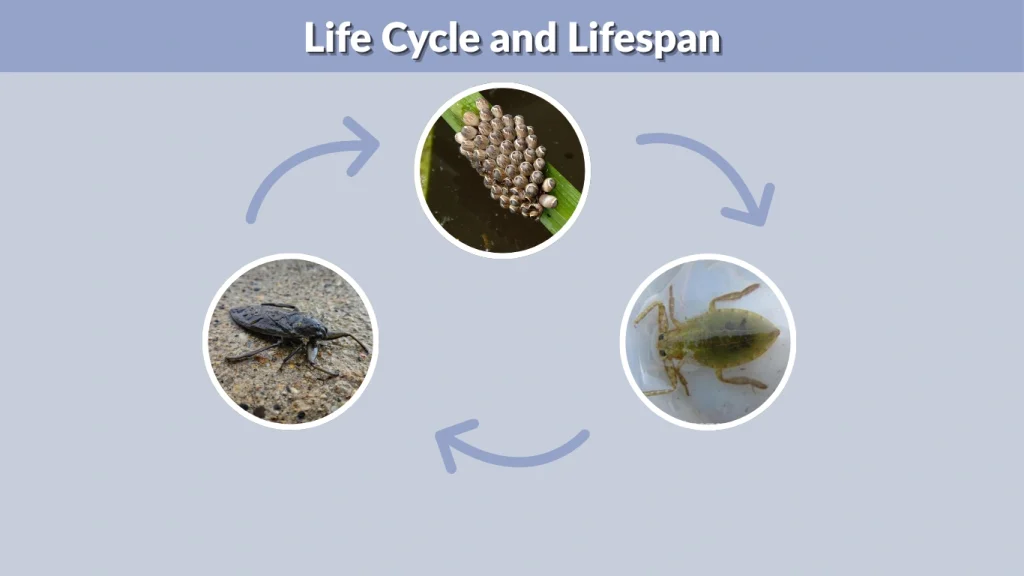
Like most insects, water bugs go through incomplete metamorphosis, consisting of three stages:
- Egg: Females lay clusters of eggs on submerged plants or rocks. In some species, males carry the eggs on their backs until hatching.
- Nymph: Young water bugs (nymphs) resemble adults but are smaller and wingless. They molt several times before reaching maturity.
- Adult: Fully grown bugs develop wings and reproductive organs. Adults can fly short distances and live independently in or near water.
How Long They Live
The lifespan of water bugs varies by species and environment:
- Water Boatmen: 6–9 months.
- Backswimmers: 9–12 months.
- Giant Water Bugs: Up to 1 year in the wild, sometimes longer in captivity.
Temperature, water quality, and available food all affect how long they survive.
Purpose and Role in Nature
Ecological Importance
Despite their intimidating appearance, water bugs play an important ecological role. As predators, they help control populations of mosquito larvae, flies, and other aquatic insects. This natural pest control reduces the spread of mosquito-borne diseases and maintains a balanced ecosystem.
Water boatmen, which feed on algae and organic debris, also contribute to cleaner water systems. Their presence can even indicate a healthy aquatic environment.
Benefits to the Environment
Water bugs serve as a food source for birds, amphibians, and fish. They’re an essential link in freshwater food chains. Giant water bugs, for instance, are preyed upon by ducks and wading birds. Their populations reflect the health of local waterways — when water quality declines, these insects often disappear first.
Regional and Unique Species
Texas and Southern Water Bugs
In southern states like Texas and Florida, the term “water bug” often refers to the American cockroach, which thrives in warm, humid environments. These roach species are not true aquatic insects but can survive near drains and sewers.
Meanwhile, true water bugs in these regions prefer ponds, canals, and marshy backyards. They’re most active in summer and after heavy rains.
Water Bugs in Pools
Pools often attract water boatmen and backswimmers. Water boatmen feed on algae in the pool, while backswimmers arrive later to prey on them. Maintaining proper chlorine and pH levels prevents these insects from breeding or feeding in your pool. Covering the pool at night and keeping lights off also reduces attraction.
Water Bugs in South Carolina and Coastal Areas
In humid coastal regions like South Carolina, water bugs are common around marshlands and ponds. Their presence usually increases during late spring and summer when breeding conditions are ideal. Outdoor lighting and standing water can attract them closer to homes.
Fun and Cultural Facts
Slang and Popular References
In slang, a “water bug” may describe someone quick or energetic — “skimming across the surface” like the insect itself. In technology, the name “Water Bug” has been used for software, power systems, and even security alarms (e.g., Water Bug Alarm used to detect leaks).
In some cultures, particularly in Southeast Asia, giant water bugs are eaten as delicacies or used for their aromatic oils in traditional cooking.
Interesting Trivia
- Male giant water bugs are devoted fathers, carrying eggs on their backs until they hatch.
- Some species can trap air bubbles under their wings, allowing them to breathe underwater for extended periods.
- When threatened, they release a foul odor to deter predators.
- They can fly between ponds, which is why they sometimes appear unexpectedly in swimming pools.
Common Misconceptions
Myth 1: Water Bugs Live Indoors
False — true water bugs cannot survive long in houses. The ones people find indoors are almost always roaches.
Myth 2: All Water Bugs Bite
Only species like giant water bugs and backswimmers bite when handled. Their bite can be painful but is not venomous or medically serious.
Myth 3: Water Bugs Spread Disease
Unlike cockroaches, water bugs don’t spread bacteria or pathogens. They live in clean, natural water bodies and aren’t a threat to human health.
FAQs
What does a water bug look like?
Water bugs are flat, oval, and dark brown or gray. They have strong hind legs shaped like paddles and a short, pointed beak for catching prey. Larger species, like giant water bugs, can grow over two inches long.
Are water bugs the same as cockroaches?
No. Cockroaches are land-dwelling scavengers that live indoors, while true water bugs are aquatic predators. Their physical structure and behavior differ completely.
Do water bugs bite humans?
Some species, such as backswimmers and giant water bugs, bite when handled or threatened. The bite feels similar to a bee sting but isn’t dangerous or venomous.
What is the lifespan of a water bug?
Water bugs typically live between six months and one year, depending on species and environment. Giant water bugs often live longest, especially in stable aquatic habitats.
Why are water bugs important to the environment?
They help maintain balance in aquatic ecosystems by controlling insect populations and serving as food for birds and fish. Their presence often indicates clean, healthy water.
