

Grasshoppers are known for their jumping ability, but some species grow to astonishing sizes that surprise even seasoned nature enthusiasts. These “big grasshoppers” appear in various regions around the world, displaying incredible colors and unique behaviors. From the massive Eastern Lubber in Florida to the colorful giants of Central America and Australia, these insects reveal just how diverse the grasshopper family can be in both size and form.
Overview of Big Grasshoppers
How Big Can Grasshoppers Get?
Most grasshoppers measure between one to two inches in length, but certain species can grow far beyond this range. The largest grasshoppers can reach up to four or even five inches long, with wingspans of nearly six inches. The Eastern Lubber Grasshopper of the United States and the Giant Valanga Grasshopper of Australia are among the largest known. Their substantial size not only makes them visually impressive but also gives them an advantage in survival, as predators tend to avoid larger prey.
Why Some Grasshoppers Grow Larger
Grasshopper size depends heavily on climate, food availability, and genetics. Warmer environments like Florida, Mexico, and Costa Rica provide ideal conditions for rapid growth. Access to nutrient-rich plants also contributes to their large size. Evolutionarily, bigger grasshoppers have better defenses — thicker exoskeletons, more vivid warning colors, and stronger jaws. These traits help them thrive in environments where smaller species might struggle to survive.
Big Grasshoppers in the United States
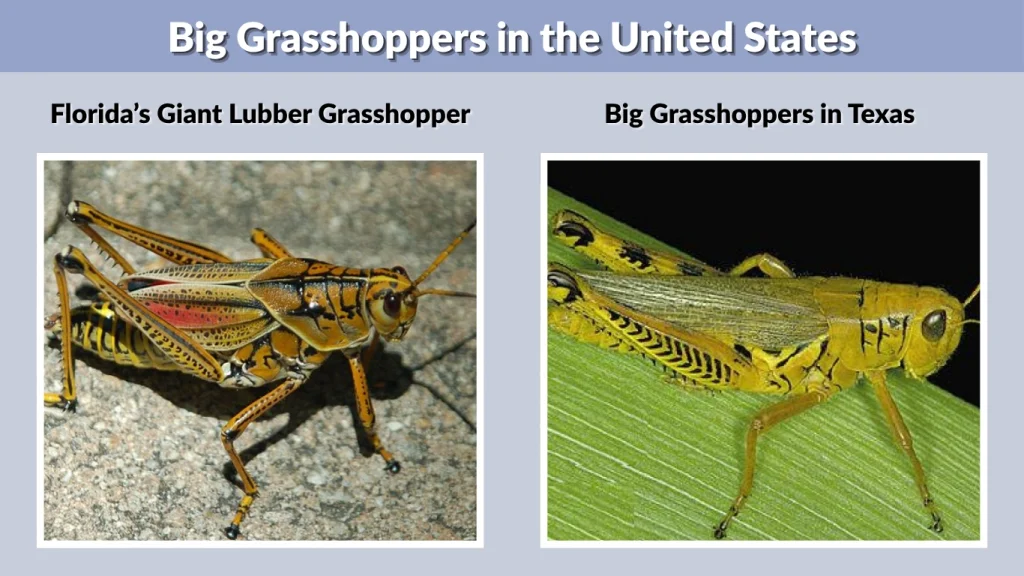
Florida’s Giant Lubber Grasshopper
Florida is home to one of the most famous large grasshoppers — the Eastern Lubber Grasshopper (Romalea microptera). This species can grow up to four inches long, making it one of the largest grasshoppers in North America. It is easily recognized by its bright yellow, orange, and black markings. Despite its large wings, the Florida Lubber cannot fly; its heavy body limits it to walking, climbing, and short hops. To defend itself, it secretes a foul-smelling foam and produces hissing sounds to deter predators. Its slow, lumbering movements and bold colors warn birds and reptiles that it’s toxic if eaten.
Big Grasshoppers in Texas and the South
Texas, Georgia, Louisiana, and Alabama also host several large species, including the bird grasshopper (Schistocerca americana). Unlike the Florida Lubber, this species can fly long distances and has a slimmer, more aerodynamic body. Bird grasshoppers are known for their tan or brown coloration, often accented with green or yellow tones that help them blend into fields and shrubs. In southern regions, they can become agricultural pests when populations rise, feeding heavily on crops and garden plants.
These states’ warm, humid climates make them ideal environments for larger grasshoppers to thrive. You might also spot big black grasshoppers in Louisiana or bright yellow and orange varieties across Texas during late summer when populations peak.
Color and Appearance Variations

Big Green Grasshoppers
One of the most common large species seen worldwide is the green grasshopper. Their bright coloration provides excellent camouflage among grasses and leaves, protecting them from predators. In Florida and Texas, these big green grasshoppers can grow over three inches long and are often mistaken for katydids or leaf insects due to their vivid color and long wings. Some, like the Acrida conica, even have pointed heads and leaf-like wings that make them nearly invisible in foliage.
Black and Dark Varieties
In the southern United States, especially Louisiana and Florida, big black grasshoppers are quite common. These include variations of the Lubber species and others with striking red or yellow stripes. Their dark bodies absorb heat efficiently, helping them stay active in cooler mornings. The contrasting bright lines on their legs and wings serve as warning colors — a visual signal to predators that they might be toxic or unpleasant to eat.
Some black varieties even have red hind wings that flash open when disturbed, startling birds and lizards. These bold patterns are a natural defense mechanism known as aposematism, designed to scare away potential threats.
Yellow, Brown, and Orange Grasshoppers
While green and black species are most common, large yellow and orange grasshoppers are equally fascinating. The Florida Lubber, for instance, displays brilliant yellow with black outlines and orange highlights. Similarly, big brown grasshoppers are widespread across Texas and the Midwest, where they blend seamlessly with dry grasslands. Their earthy tones make them masters of camouflage, allowing them to hide from predators while feeding in open fields.
In tropical regions, orange grasshoppers are often more vivid. These insects rely on their coloration to mimic poisonous species, reducing the risk of being hunted. The combination of size and color variation makes grasshoppers one of the most visually diverse insect groups in nature.
Colorful and Exotic Types
Beyond the United States, some of the world’s largest and most colorful grasshoppers can be found in Central and South America, Australia, and Africa. For example, Costa Rica hosts several vibrant species with green, red, and gold markings. In Mexico, the Mexican Grasshopper (Sphenarium purpurascens) is famous for its purple-green sheen and is even harvested as a delicacy in local cuisine.
The Giant Grasshopper of Australia (Valanga irregularis) can reach four inches in length and displays stunning green and brown shades that blend perfectly into eucalyptus trees. These exotic grasshoppers showcase the vast diversity of the Orthoptera order, each adapted to its own landscape and climate.
Large Grasshoppers Around the World

North and Central America
Beyond the well-known Florida Lubber and Bird Grasshopper, Central America is home to even larger and more colorful species. The Mexican Grasshopper (Sphenarium purpurascens) is often bright green or purple and plays an important role in both agriculture and culture — it’s commonly eaten as a high-protein snack in Mexico. In Costa Rica, giant tropical species with orange and gold markings glide between trees in humid rainforests, showing how tropical heat contributes to larger body sizes.
Australia and the Tropics
Australia’s Giant Valanga Grasshopper (Valanga irregularis) is among the heaviest grasshoppers in the world, reaching four inches in length. It feeds on leaves of eucalyptus and acacia trees and is frequently seen clinging to trunks in warm, coastal regions. Tropical climates in Southeast Asia and Oceania also support massive, vividly colored grasshoppers adapted to dense vegetation. Their broad wings, strong legs, and vibrant colors allow them to thrive in ecosystems teeming with predators.
Other Notable Regions
Large grasshoppers also appear in the deserts of Arizona, Africa’s savannas, and parts of South America. Many desert species are brown or gray, matching the sand and rocks around them. In contrast, rainforest varieties show bold green and orange patterns. This variation in coloration and size demonstrates the grasshopper’s remarkable adaptability — each region shapes the insect to suit its environment.
Diet and Behavior of Big Grasshoppers
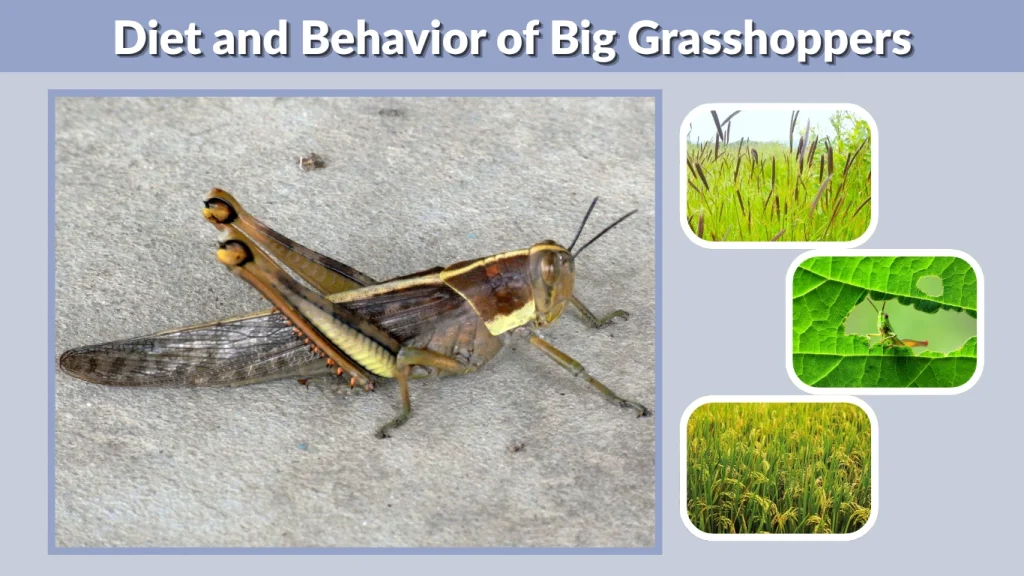
What Do Big Grasshoppers Eat?
Despite their intimidating size, big grasshoppers are gentle herbivores. They primarily feed on fresh grasses, leafy plants, crops, and flowers. Their powerful jaws can chew through fibrous stems and thick vegetation, making them highly efficient eaters. In agricultural areas, they sometimes become pests, consuming large portions of corn, soybeans, or garden plants. However, they also help control plant overgrowth and recycle nutrients in natural habitats.
Do Bigger Grasshoppers Cause More Damage?
Larger grasshoppers eat more, but their population density usually remains lower than smaller species. A single giant grasshopper won’t devastate crops, but a group can strip a garden bare within days. Warm weather and plentiful rainfall can cause population surges, especially in southern regions. Farmers often use environmentally friendly deterrents, such as natural predators or organic sprays, to manage their numbers without harming the ecosystem.
Identification and Similar Insects
Big Grasshopper-Like Bugs
Many people mistake other insects for large grasshoppers. Katydids, for example, are bright green and leaf-shaped but have very long antennae. Locusts resemble grasshoppers too but are known for their swarming behavior and migratory patterns. Even certain leafhoppers or mantises can appear similar when seen from a distance.
A true grasshopper can be identified by its short antennae, strong hind legs, and distinctive chewing mouthparts. Most also have thick bodies with tough exoskeletons, built to endure high jumps and the occasional bird attack.
Unique Traits to Identify Big Grasshoppers
Big grasshoppers often appear slower and more deliberate in movement than smaller ones. They may have thick heads, wide thoraxes, and shorter wings relative to their body. When disturbed, some species emit a defensive hiss or leak a frothy fluid from their joints — a harmless but effective deterrent. Observing these traits can help enthusiasts tell a giant grasshopper apart from other similar bugs.
Safety and Human Interaction
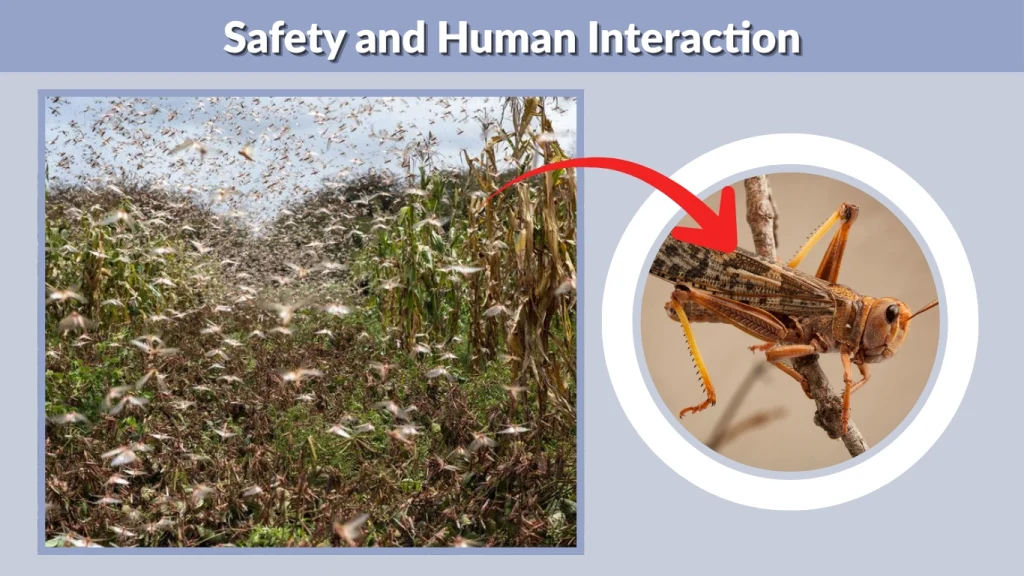
Are Big Grasshoppers Dangerous?
Although their size and sharp jaws can seem intimidating, big grasshoppers are not dangerous to humans. They don’t sting or bite unless provoked, and even then, their bite is harmless. Some species, like the Eastern Lubber, secrete a foul-tasting foam to discourage predators. The “stinger” seen at the end of a female’s body is actually an ovipositor, used to lay eggs in the soil, not to attack.
Handling and Observation Tips
When observing or photographing large grasshoppers, it’s best to use gentle movements. They may jump or fly short distances when startled but rarely show aggression. Avoid grabbing them suddenly, as this can cause them to excrete defensive liquid. Enthusiasts often use clear containers or light nets for short-term observation before releasing them back into the wild. These fascinating insects are important for ecological balance, helping to aerate soil and feed birds and reptiles.
Symbolism and Meaning of Big Grasshoppers
Spiritual and Cultural Interpretations
In many cultures, grasshoppers symbolize good fortune, growth, and freedom. Seeing a particularly large grasshopper can represent transformation or a leap forward in one’s life journey. Ancient Chinese and Native American traditions often viewed them as omens of abundance and courage. Because of their powerful leaps, grasshoppers also symbolize progress — the ability to move forward fearlessly without looking back.
Color Meanings
The symbolism of big grasshoppers also ties to their color.
- Green represents harmony, health, and renewal.
- Black signifies mystery, strength, and resilience.
- Yellow or Orange stands for optimism and creativity.
Each color reflects nature’s diversity and the many ways humans interpret these creatures beyond their physical traits.
Common Big Grasshopper Species
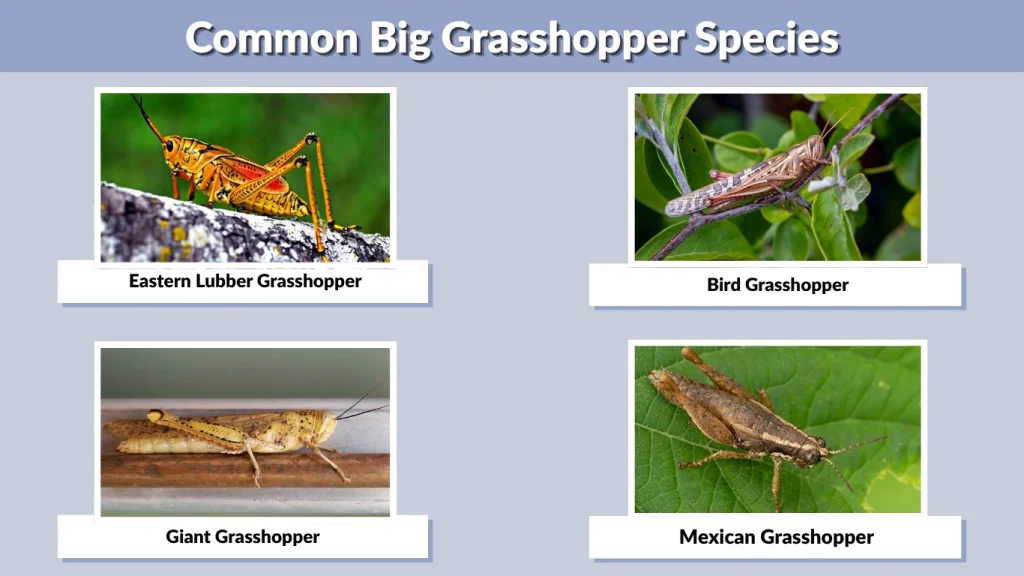
| Common Name | Scientific Name | Color | Size Range | Region |
| Eastern Lubber Grasshopper | Romalea microptera | Yellow / Black / Orange | 3–4 in | Florida & Southeast U.S. |
| Bird Grasshopper | Schistocerca americana | Brown / Green | 2–3 in | Southern U.S., Mexico |
| Giant Grasshopper | Valanga irregularis | Green / Brown | 3–4 in | Australia |
| Mexican Grasshopper | Sphenarium purpurascens | Green / Purple | 2–3 in | Mexico |
| Costa Rican Giant Grasshopper | Tropidacris cristata | Green / Orange | Up to 5 in | Central America |
Pop Culture and Fun Mentions
The Big Bang Theory – “The Grasshopper Experiment”
The phrase “Grasshopper Experiment” became popular after an episode of The Big Bang Theory featured the “Grasshopper” cocktail — a sweet green drink made with crème de menthe. While unrelated to insects, it boosted the grasshopper’s name in pop culture and inspired themed beverages and merchandise.
Big Rock Grasshopper Wheat Ale
The Big Rock Grasshopper Wheat Ale from Canada draws its name from the insect’s agility and resilience. It’s a nod to how grasshoppers have become symbols of adaptability in nature and even in branding.
FAQs
How big can a grasshopper get?
Some species can grow up to five inches long, with wingspans nearing six inches. The Eastern Lubber in Florida and the Giant Grasshopper in Australia are two of the largest examples found in nature.
What’s the largest grasshopper species in the U.S.?
The Eastern Lubber Grasshopper (Romalea microptera) holds the title. Females are typically larger than males and can reach almost four inches. Their bold colors and defensive toxins make them both fascinating and formidable.
Are big grasshoppers poisonous or dangerous?
No. They are non-venomous and harmless to humans. Their bright colors simply warn predators that they taste bad or release irritating fluids when threatened.
Why are Florida grasshoppers so large and colorful?
Florida’s warm climate and abundant vegetation support rapid growth and vibrant coloration. The bright hues of the Eastern Lubber act as warning colors, signaling toxicity to predators.
Do big grasshoppers have wings and can they fly?
Yes, most have wings, though flight ability varies. Bird grasshoppers can fly long distances, while the heavy Eastern Lubber can only glide or hop short spans due to its body weight.
