
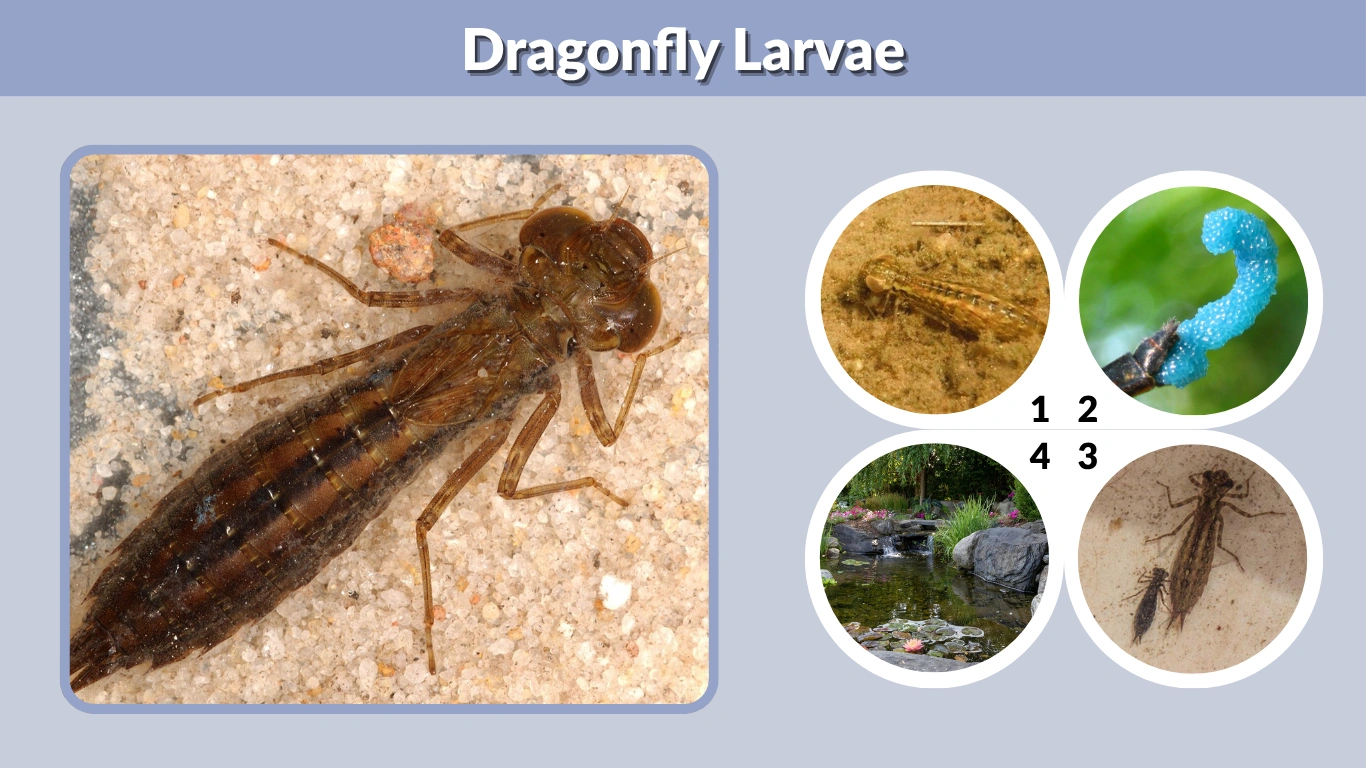
Dragonfly larvae, also known as nymphs, are among the most fascinating and efficient predators in freshwater ecosystems. Before taking flight as the colorful adults we often see near ponds and rivers, dragonflies spend most of their lives underwater. These aquatic hunters help control mosquito populations and serve as crucial indicators of clean, oxygen-rich water. Understanding their life cycle, diet, and behavior reveals just how vital they are to nature’s balance.
Scientific Classification and Identification

Taxonomy Overview
Dragonfly larvae belong to the order Odonata and the suborder Anisoptera. Their scientific classification is as follows:
- Kingdom: Animalia
- Phylum: Arthropoda
- Class: Insecta
- Order: Odonata
- Suborder: Anisoptera
- Common Name: Dragonfly Larva or Nymph
These insects share their order with damselflies, but dragonfly larvae are generally bulkier, stronger, and more aggressive underwater predators.
Physical Characteristics
Dragonfly larvae have stocky, armored bodies adapted for life underwater. Their head is large with powerful mandibles for catching prey, and their eyes give them nearly 360-degree vision. A key identifying feature is their extendable lower jaw (labium) — a specialized mouthpart that shoots out to grab prey with lightning speed.
Unlike damselfly larvae, dragonfly larvae have internal gills located in the rectum. They breathe by drawing water into their abdomen and expelling it, a process that also provides jet propulsion for fast escapes. Most larvae range from 1 to 5 centimeters in length and vary in color from greenish-brown to black, helping them blend into muddy environments.
Life Cycle and Development

Egg to Adult Transition
The dragonfly life cycle has three main stages: egg, larva (nymph), and adult. After mating, females lay eggs in or near water — often on submerged plants. Once the eggs hatch, the larvae emerge and begin their underwater life.
This stage lasts from a few months to several years, depending on species and climate. During this time, larvae feed constantly, growing larger and molting multiple times. Each shedding of the outer skin (called an instar) allows them to expand and develop further.
Molting and Growth
A dragonfly larva can molt between 8 and 15 times before becoming an adult. When it reaches full size, it climbs up a plant stem or rock near the water’s surface. The outer skin splits open, and the adult dragonfly emerges, expanding its wings and drying them in the sun. The empty shell left behind, known as an exuvia, is a common sight along pond edges.
The transition from larva to adult, called emergence, marks one of the most dramatic transformations in nature — from a water-dwelling predator to an agile aerial hunter.
Habitat and Environment

Preferred Aquatic Habitats
Dragonfly larvae thrive in clean, still, or slow-moving water such as ponds, lakes, wetlands, and streams. They prefer areas rich in aquatic vegetation, which provides cover for ambushing prey. Each species has its own habitat preferences — for instance, clubtail dragonflies prefer sandy-bottomed rivers, while darner larvae are common in ponds and marshes.
The larvae are sensitive to water conditions and typically avoid polluted or low-oxygen environments. Their abundance in a pond is a good indicator of healthy water quality.
Water Quality and Conditions
Dragonfly larvae require oxygen-rich, clear water to survive. They are intolerant of high pollution, sedimentation, or extreme temperature changes. Their internal gills function efficiently only when the water is well-oxygenated.
Environmental changes — such as runoff containing pesticides or fertilizers — can harm larvae populations. Even mosquito control methods like BTI (Bacillus thuringiensis israelensis) or mosquito dunks may inadvertently affect young dragonflies, especially in smaller, enclosed water bodies.
Adaptations for Aquatic Life
Dragonfly larvae are perfectly designed for underwater survival. Their rectal gills allow them to breathe and move by expelling water forcefully — a built-in propulsion system that helps them escape predators. Their coloration provides excellent camouflage against mud, plants, and rocks, making them nearly invisible to prey.
Some species can even survive brief periods out of water by trapping moisture inside their bodies, though they primarily depend on aquatic life for feeding and breathing.
Feeding and Diet

What Dragonfly Larvae Eat
Dragonfly larvae are voracious carnivores. Their diet includes mosquito larvae, tadpoles, worms, small crustaceans, and even tiny fish. They lie in wait, hidden among plants or mud, then extend their jaw to catch unsuspecting prey with stunning accuracy. This ambush technique allows them to conserve energy while maintaining high hunting success.
A single dragonfly larva can consume hundreds of mosquito larvae per day, making them natural pest controllers in ponds and wetlands.
Feeding Behavior
Dragonfly larvae are active hunters, using stealth and patience to capture prey. Their labium — a hinged lower jaw tipped with hooks — can shoot forward in less than a tenth of a second. Once the prey is secured, it’s pulled toward the mouth and eaten whole.
They feed throughout the day and night, taking advantage of any available movement in their vicinity. In aquariums, they can be fed small live foods such as mosquito larvae or daphnia. Their feeding habits make them both fascinating to observe and incredibly valuable to ecosystems.
Behavior and Adaptations

Locomotion and Movement
Dragonfly larvae move in a way that’s both stealthy and powerful. They use jet propulsion, expelling water from their rectum to propel themselves forward in short bursts. This movement helps them escape predators and chase prey effectively. Their six strong legs are adapted for gripping surfaces like rocks, mud, and plant stems, allowing them to anchor themselves while hunting.
Different species have slightly varied swimming behaviors — some dart quickly between plants, while others rely on crawling and hiding under debris. These subtle differences are shaped by habitat type and water flow.
Survival Mechanisms
Dragonfly larvae have evolved several unique adaptations to ensure survival underwater. Their coloration provides natural camouflage, blending perfectly with mud, algae, and vegetation. When threatened, they can release a burst of water from their rectum to dart away instantly.
If a predator grabs them, larvae often play dead or burrow into the substrate to escape detection. They can also regenerate lost limbs during molting, ensuring minimal loss from injury. Their combination of stealth, speed, and regeneration makes them remarkably resilient aquatic hunters.
Buying and Keeping Dragonfly Larvae
Where to Buy Dragonfly Larvae
Dragonfly larvae are available from specialized pond and aquarium suppliers. They are often sold for mosquito control, research, or educational observation. Common search terms include:
- “Buy dragonfly larvae”
- “Live dragonfly larvae for sale”
- “Where can I buy dragonfly larvae”
In the U.S. and U.K., some vendors provide live larvae in small batches for garden ponds, while others offer them as part of biological mosquito control kits. Ethical sourcing is essential — only purchase larvae from certified, sustainable suppliers that do not harm wild populations.
Why People Buy Dragonfly Larvae
There are three main reasons people buy dragonfly larvae:
- Natural Mosquito Control: Dragonfly larvae are natural predators of mosquito larvae, providing an eco-friendly way to manage pests in ponds.
- Educational Study: Observing the dragonfly life cycle is a favorite project in schools and nature centers.
- Aquarium Hobby: Some aquarists keep larvae for short-term observation before releasing them, as they add interest to freshwater tanks.
Caring for Dragonfly Larvae
Keeping dragonfly larvae is relatively simple if their natural environment is replicated. They require:
- Oxygen-rich water with a stable temperature between 18°C–25°C.
- Aquatic plants for hiding and perching.
- A steady food source like mosquito larvae, bloodworms, or daphnia.
Larvae should be released into an outdoor pond once they mature. They cannot survive long-term captivity unless part of controlled research. Never release non-native species into local water bodies, as they may disrupt ecosystems.
Dragonfly Larvae vs. Other Species
Dragonfly vs. Damselfly Larvae

| Feature | Dragonfly Larvae | Damselfly Larvae |
| Body Shape | Short, stocky | Slender, elongated |
| Gills | Internal (rectal) | External (three leaf-like tails) |
| Swimming Method | Jet propulsion | Tail undulation |
| Behavior | Ambush predator | Active stalker |
| Habitat Preference | Still or slow-moving water | Vegetation-rich shallows |
Damselfly larvae can easily be confused with young dragonflies, but the presence of three external gills at the end of the abdomen quickly identifies damselflies.
Dragonfly vs. Mosquito Larvae
| Feature | Dragonfly Larvae | Mosquito Larvae |
| Diet | Carnivorous | Filter-feeding herbivore |
| Movement | Quick propulsion | Wiggles to surface |
| Respiration | Internal gills | Breathing siphon |
| Role in Ecosystem | Predator (beneficial) | Pest (disease carrier) |
Dragonfly larvae are natural mosquito predators, feeding on all mosquito stages they encounter. This makes them an essential part of natural pest control programs.
Predators and Threats
Natural Enemies
Despite being fierce hunters, dragonfly larvae are preyed upon by fish, frogs, turtles, and birds. Larger dragonfly larvae also feed on smaller ones. Their camouflage and lightning-fast escape mechanisms are their best defenses.
In ponds without fish, larvae populations thrive, but in aquariums with predatory fish, they should be kept separately to avoid being eaten.
Environmental Challenges
Dragonfly larvae face increasing threats due to pollution, pesticide runoff, and the destruction of wetlands. Chemical mosquito treatments such as BTI dunks can inadvertently harm larvae, reducing their natural control over mosquito populations. Maintaining chemical-free ponds with plants and clean water supports their survival.
Interesting Facts About Dragonfly Larvae
- They spend 90% of their lives underwater before becoming adults.
- Some species live as larvae for up to five years.
- They breathe through their rectum and can move using jet propulsion.
- Their jaws strike prey faster than a human blink — among the fastest movements in nature.
- One larva can eat hundreds of mosquito larvae per day, making it a key player in mosquito population control.
FAQs
What do dragonfly larvae eat?
They feed on mosquito larvae, small fish, worms, and tadpoles. They are ambush predators that use a spring-loaded jaw to capture prey with precision.
Can dragonfly larvae bite humans?
They can give a gentle pinch if handled, but they cannot harm or pierce human skin. Their jaws are designed for small, soft-bodied prey.
Can dragonfly larvae live out of water?
Only briefly. They need water to breathe and feed but can leave it temporarily when emerging as adults.
Are dragonfly larvae good for ponds?
Yes. They help keep mosquito populations under control and indicate a healthy, balanced pond ecosystem.
Where can I buy dragonfly larvae?
You can purchase them from pond supply stores or licensed online retailers. Always choose native species suited to your local environment.
