

Fireflies have fascinated humans for thousands of years. Their gentle flashing lights appear like floating stars drifting above grasslands, forests, and warm summer backyards. But what makes these insects glow? Why do some flash while flying, while others blink rhythmically from a leaf or branch? And why does their glow appear only at night?
Fireflies—also known as lightning bugs—use a special chemical reaction inside their bodies to create “cold light,” a form of bioluminescence. Their glow plays important roles in mating, communication, and survival. This article explains the science behind firefly light and explores why these beetles shine so brightly in the darkness.
What Makes Fireflies Glow? (The Basic Science)

Fireflies produce light through a fascinating natural process called bioluminescence. Unlike most insects, fireflies have a specialized light organ located in their lower abdomen. When they glow, it often appears as if their “butts” light up—something that makes them especially recognizable.
The light they produce is incredibly efficient. Nearly 100% of the energy from the reaction becomes light, not heat. This is why bioluminescent light is often called cold light.
The Chemical Reaction
Firefly light is created through a precisely timed chemical reaction involving:
- Luciferin (a light-emitting molecule)
- Luciferase (an enzyme that triggers the reaction)
- ATP (energy molecule)
- Oxygen
When oxygen enters the light organ and mixes with luciferin and luciferase, the reaction emits a bright green or yellow glow. Because the reaction produces almost no heat, the firefly doesn’t burn itself.
This controlled chemical reaction is the key to everything fireflies do—from finding mates to warning predators.
Why Firefly Light Is Green or Yellow
Different species of fireflies glow in slightly different colors. Most North American species glow green, while others glow yellow or pale gold. Color differences occur because:
- Chemical structures vary slightly between species
- Light wavelengths differ based on temperature
- The thickness of the light organ affects emission color
Many people notice fireflies glowing greener at midnight due to cooler air temperatures affecting the luciferin reaction.
Why Do Fireflies Glow? (Main Purposes)
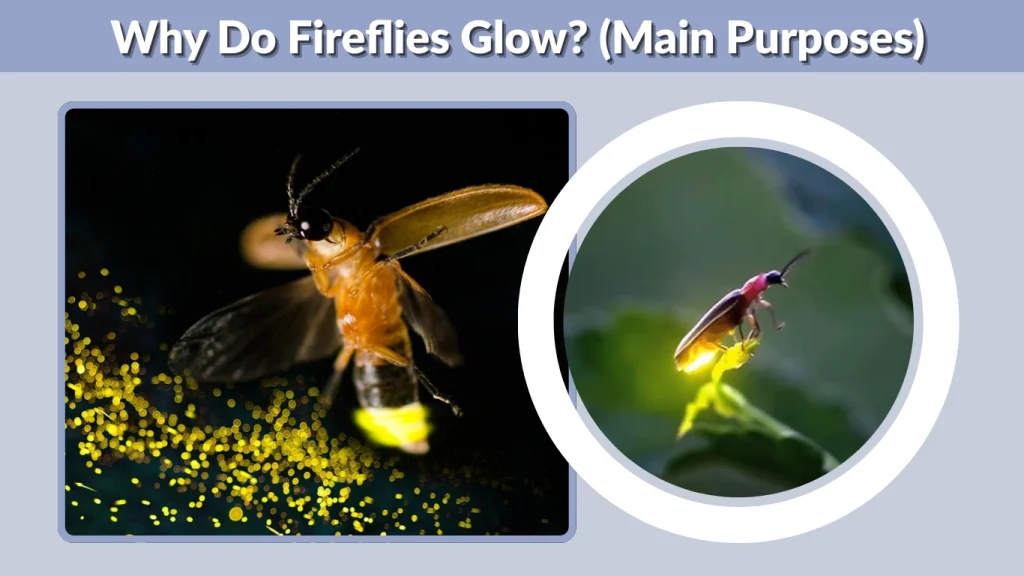
While the glowing might seem magical, it serves very important biological purposes. Every flash carries a message, whether for attraction, warning, or identification.
Mating Signals
For adult fireflies, the primary purpose of glowing is reproduction. Each species has a unique flash pattern. During summer evenings:
- Males flash while flying above the grass
- Females sit quietly on vegetation and respond with perfectly timed flashes
This flash “conversation” helps males find females of the same species while avoiding mismatches.
In some species, males compete by flashing more frequently or in more complex patterns to attract female attention.
Communication & Identification
Biologists have discovered that firefly flashes act like a species-specific code.
Flash signals help fireflies:
- Identify members of their own species
- Avoid mating with the wrong species
- Communicate readiness to mate
- Signal territory
For example, one species may emit a single bright flash, while another produces two short flashes followed by a pause.
Defense Against Predators
Many firefly species contain bitter or toxic chemicals. Their glow serves as a warning to predators like bats, birds, and lizards. This glowing defense evolved long before adults were using the light for mating.
Because the glow warns predators that fireflies are unpleasant to eat, fewer of them are attacked—an evolutionary advantage.
In fact, firefly larvae and eggs also glow, mainly as a defensive warning.
Why Fireflies Glow Only at Night

Fireflies do not glow only at night—but their glow is visible only in darkness. Daylight washes out their bioluminescent signals, making them harder to see.
Nighttime Advantages
Night offers several benefits:
- The glow is dramatically more visible
- Cooler temperatures prevent dehydration
- Lower risk of daytime predators
- Darkness helps mating signals stand out
- Less competition with sunlight
Night is the perfect environment for a luminous insect.
Why They Glow at Dusk
Dusk provides the ideal balance of:
- Moderate humidity
- Comfortable temperature
- Just enough darkness for visibility
This is why many people report fireflies appearing only around sunset.
Why Fireflies Stop Glowing
Fireflies may stop glowing when:
- They’ve completed mating
- Temperatures drop
- They conserve oxygen or energy
- They experience stress
- Predators are absent
Glow is costly to maintain, so fireflies use it strategically.
How Fireflies Blink On and Off

A unique feature of fireflies is their ability to flash rather than glow steadily. Their blinking is controlled by a combination of oxygen flow and nerve signals.
Oxygen Control System
Fireflies turn their light on by allowing oxygen into their light organ.
They turn the light off by stopping oxygen flow.
This switching action is fast and efficient.
Scientists believe nerve cells send signals that open tiny air tubes called tracheoles, causing quick flashes.
Flash Patterns & Meaning
Firefly blinking isn’t random. Each flash conveys information:
- Courtship flashes to attract mates
- Warning flashes to predators
- Navigation flashes while flying
- Species signals to avoid confusion
Different species flash at different speeds, rhythms, and brightness levels.
Firefly Life Stages: Eggs, Larvae & Adults

Fireflies glow through multiple stages of their life cycle—not just as adults. In fact, their bioluminescence begins before they even hatch and often continues until adulthood.
Why Firefly Eggs Glow
Although tiny, firefly eggs sometimes emit a faint glow. Scientists believe this glow serves one major purpose:
- Defense against predators
The soft light warns ants, spiders, and small insects that firefly eggs contain bitter chemicals and are not safe to eat. The glow acts as a built-in “stay away” signal from the moment the eggs are laid.
Why Firefly Larvae Glow (Glowworms)
Before becoming adults, fireflies spend most of their lives as underground larvae—commonly known as glowworms. These larvae are fierce predators that feed on snails, slugs, and worms.
Their glow has multiple roles:
- Defense mechanism: warns predators of toxicity
- Communication: signals danger
- Hunting tool (in some species): attracts small prey
Larvae often glow brighter and more frequently than adults because they remain vulnerable throughout development.
Do Pupae Glow?
Yes, firefly pupae can glow. Although they are not active, the glow continues:
- As a leftover physiological function
- To deter predators
- To signal toxicity
This subtle glow protects them during their vulnerable transformation into adults.
Special Cases of Bioluminescence
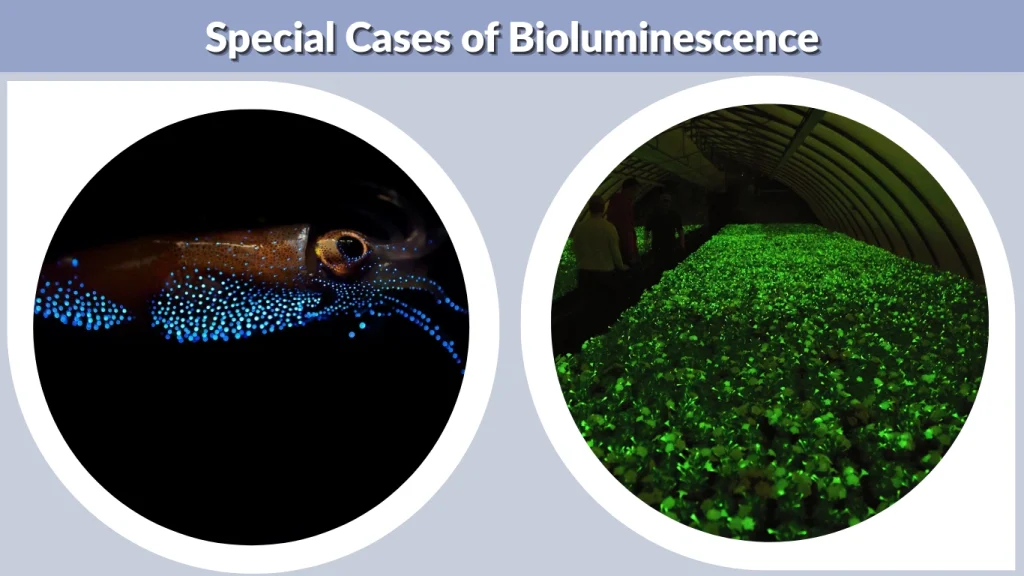
Firefly glow is part of a bigger global phenomenon—many organisms glow through similar chemical reactions. Some related examples help deepen understanding.
Why Firefly Squid Glow
The firefly squid of Japan is a deep-sea species known for its spectacular blue-light displays. Even though they are not insects, they glow for similar biological reasons:
- To communicate with mates
- To camouflage using countershading (glowing downward to blend with moonlight)
- To confuse or deter predators
- To communicate within groups
Their glowing bodies create beautiful underwater spectacles and attract millions of tourists during spawning season.
Why Firefly Petunias Glow
Firefly petunias are genetically engineered plants designed to glow faintly in the dark.
They glow because:
- Scientists inserted a luciferase gene into the plant
- The reaction mimics the firefly chemical process
- The purpose is educational and decorative, not natural
These glowing plants help teach students about genetics and bioluminescence.
Why Fireflies Glow in Jars or When Touched

Many people notice that when fireflies are gently handled or placed in jars (a childhood tradition), their glow may change or intensify—but not always for a good reason.
Why They Glow in a Jar
A jar simulates close quarters and darkness, and fireflies may glow because:
- They are searching for mates
- They are experiencing stress, triggering defensive glowing
- Low light encourages natural bioluminescence
However, fireflies often stop glowing after a while because jars have:
- Low oxygen supply
- High heat
- Stressful, unnatural conditions
For this reason, fireflies should always be released after short observation.
Why They Glow When Moving
Movement increases oxygen flow to the light organ. This leads to:
- Brighter flashes
- More frequent blinking
- Enhanced mating signals
Fireflies often glow more when flying downward because the angle helps their signal spread wider to potential mates.
Evolution of Firefly Bioluminescence
Firefly glow did not evolve for beauty—it developed through millions of years of natural selection.
Origin of the Glow
Researchers believe:
- The glow first evolved in larvae, not adults
- Initial purpose: warning glow to deter predators
- Adults later adapted the glow for communication and mating
This two-stage evolution shows how one trait can develop new purposes over time.
Why Natural Selection Favored the Glow
Fireflies survived and diversified because glowing provided advantages:
- Protection: predators learned to avoid glowing insects
- Reproduction: glowing males found mates more efficiently
- Species separation: unique flash patterns prevented crossbreeding
Over thousands of generations, glowing insects outcompeted non-glowing ones.
Firefly Glow in Chemistry & Class 10 Science
Fireflies are frequently used in schools to explain chemical reactions, energy transfer, and natural bioluminescence.
NCERT / Class 10 Explanation
In simple terms for students:
- Fireflies glow because of a chemical reaction between luciferin, luciferase, oxygen, and ATP.
- The reaction produces cold light without heat.
- They glow at night because darkness makes the signal visible for mating and communication.
This explanation matches NCERT, Meritnation, and Brainly-style science answers.
Classroom Experiment Summary
Teachers often demonstrate firefly chemistry with:
- Glow sticks (which use a similar chemical reaction)
- Videos showing luciferin and luciferase in lab conditions
- Mystery Science modules to explain bioluminescence
These activities help students understand oxidation reactions and energy release.
Real-Life Uses of Firefly Bioluminescence
Firefly luciferase is used in:
- Medical imaging
- Genetic research
- Forensic science
- Environmental monitoring
Scientists use luciferase as a marker to track gene activity, locate tumors, and detect bacterial contamination.
FAQs
Why do fireflies glow green?
Because their chemical reaction emits light at a wavelength around 510–570 nm (green–yellow range).
Why do fireflies glow and then stop?
They control oxygen flow to conserve energy or end communication.
Why do fireflies glow in the dark?
Their signals are visible only at night, making communication more effective.
Why do firefly larvae glow?
Larvae glow to warn predators of their toxicity.
Can fireflies glow during the day?
Yes, but daylight overpowers the glow, making it nearly invisible.
