

Green butterflies are among the most eye-catching insects in nature, admired for their emerald, lime, and metallic shades. These butterflies are found across tropical forests, grasslands, woodlands, and gardens, where their green coloration helps with camouflage and visual signaling. From large swallowtails to tiny hairstreaks and metalmarks, green butterflies display remarkable diversity in size, pattern, and behavior, making them a favorite subject for nature lovers and butterfly enthusiasts worldwide.
1. Emerald Swallowtail
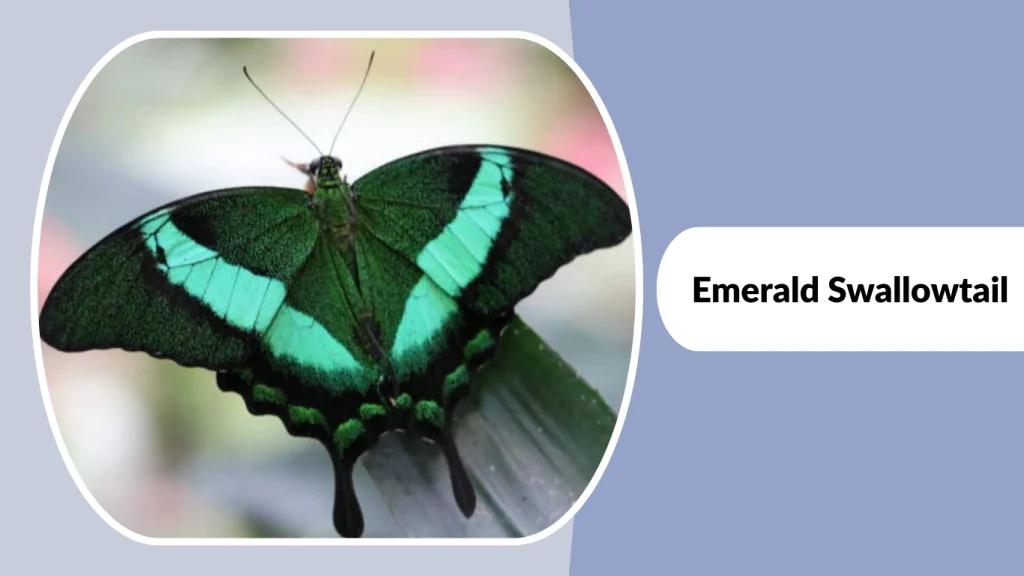
The Emerald Swallowtail is a striking tropical butterfly known for its vivid metallic green markings contrasted against deep black wings. It is often considered one of the most beautiful swallowtails due to its shimmering appearance and elegant flight.
Identification
- Medium to large-sized swallowtail butterfly
- Velvety black wings with bright emerald-green bands
- Metallic green spots on both forewings and hindwings
- Short tail extensions on the hindwings
- Glossy sheen visible in sunlight
Color Pattern
The wings are predominantly black, overlaid with iridescent emerald-green bands and patches. The green coloration can appear bluish or neon depending on light angle, giving the butterfly a jewel-like glow.
Habitat
Emerald Swallowtails are commonly found in tropical rainforests, forest edges, and well-vegetated gardens. They prefer warm, humid environments with abundant flowering plants and host trees.
Behaviors
This species is an active daytime flier and often seen gliding smoothly between flowers. It feeds on nectar and occasionally puddles on moist ground for minerals. Males are territorial and may chase away intruders from favored areas.
2. Green-banded Swallowtail
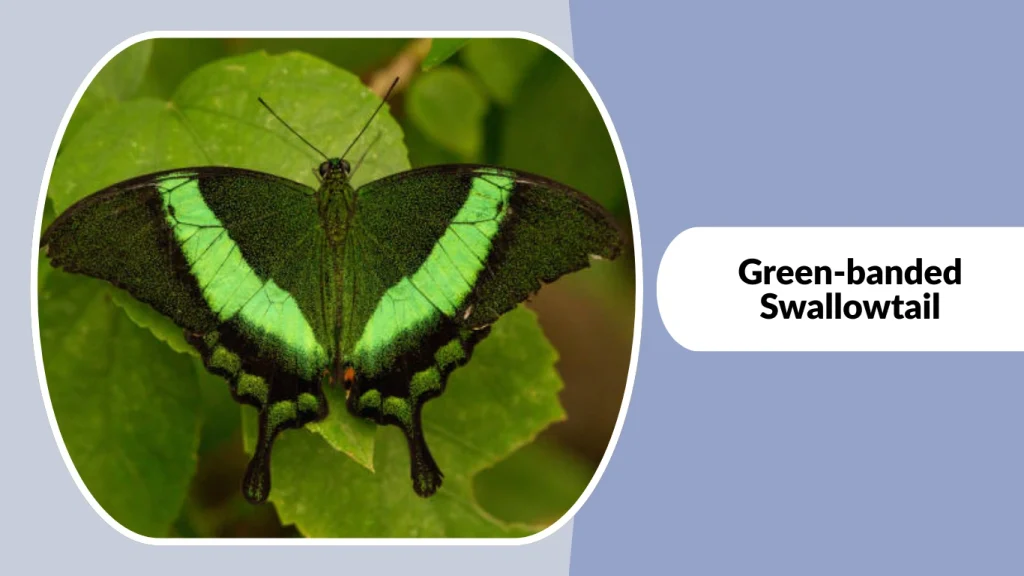
The Green-banded Swallowtail is a graceful butterfly admired for its long tails and bright green transverse bands. It is commonly seen fluttering along forest paths and riversides in tropical regions.
Identification
- Medium-sized swallowtail butterfly
- Black wings crossed by a broad green band
- Long, slender tail extensions on hindwings
- Green markings continue onto the underside
- Sleek body with dark coloration
Color Pattern
The wings are deep black with a vivid green band running across both forewings and hindwings. The underside is paler, showing softer green tones mixed with brown and gray shades.
Habitat
This butterfly inhabits tropical forests, wooded hills, and riverbanks. It prefers shaded areas with dense vegetation and access to nectar-rich flowers.
Behaviors
Green-banded Swallowtails are fast and agile fliers. They are often seen mud-puddling near streams and damp soil. Males frequently patrol specific routes in search of females.
3. Green Dragontail
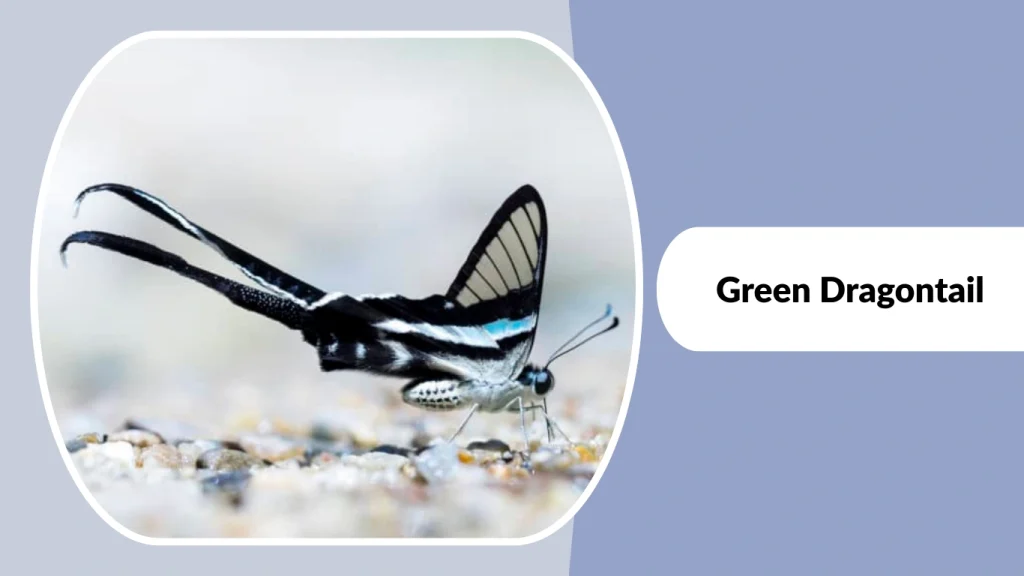
The Green Dragontail is a distinctive butterfly recognized by its elongated tail streamers and translucent green wing markings, giving it a dragon-like appearance in flight.
Identification
- Medium-sized swallowtail butterfly
- Black wings with translucent green patches
- Extremely long tail streamers on hindwings
- Narrow wing shape with pointed tips
- Slender black body
Color Pattern
Its wings are mostly black, accented with semi-transparent green spots and streaks. The elongated tails are black and trail behind dramatically during flight.
Habitat
Green Dragontails are typically found in tropical forests, forest edges, and mountainous regions. They favor areas with citrus plants, which serve as host plants for their larvae.
Behaviors
This species is an energetic flier, often flying high among trees before descending to feed on nectar. It is alert and quick to escape predators, using speed and agility as defense.
4. Malachite
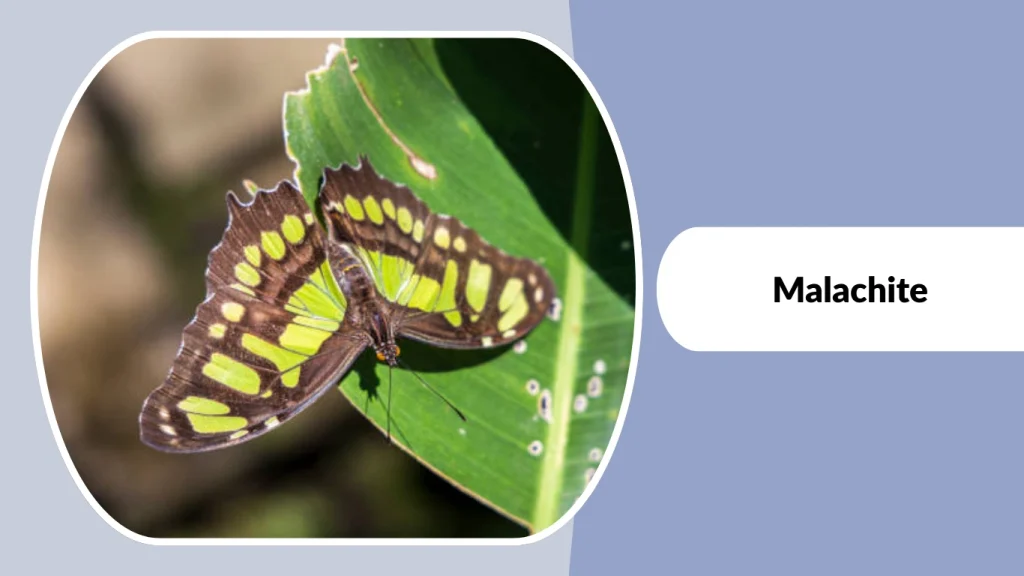
The Malachite is a bold and eye-catching butterfly, easily recognized by its bright green markings and strong, confident flight. It is a common sight in tropical forests and open woodland areas.
Identification
- Medium to large-sized butterfly
- Black wings with bright green bands and patches
- Broad forewings with squared edges
- Thick, robust body structure
- Green markings visible on both upper and underside
Color Pattern
The wings display vivid emerald to lime-green bands set against a deep black background. The underside appears slightly duller, with olive-green tones mixed with brown and gray.
Habitat
Malachites are found in tropical forests, forest edges, and secondary growth areas. They often stay close to host plants and are commonly seen near sunny clearings.
Behaviors
This butterfly is a strong, fast flier and often glides between perches. It is territorial and may repeatedly return to the same resting spot. Adults frequently feed on nectar and fermenting fruit.
5. Green Hairstreak
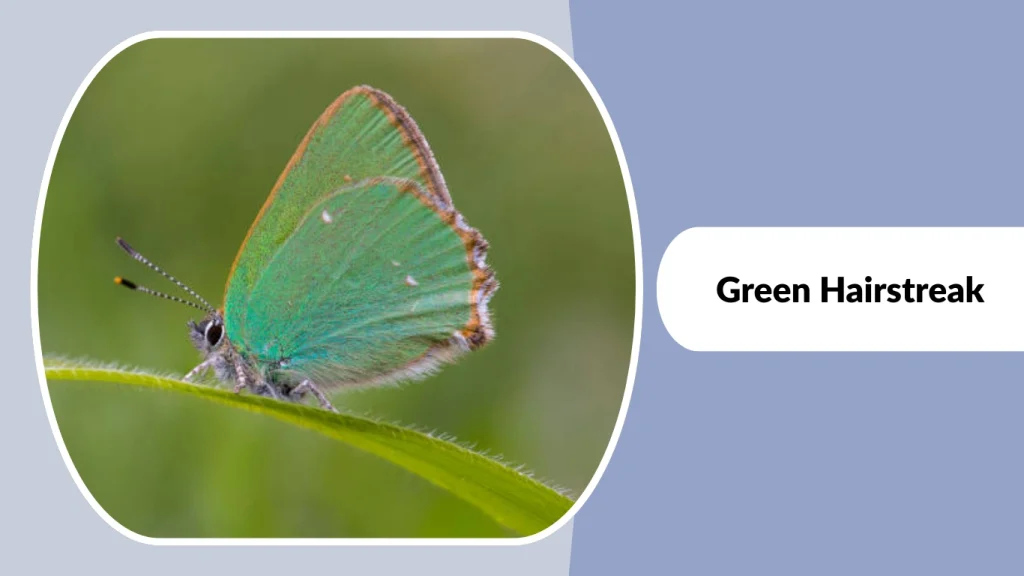
The Green Hairstreak is a small but striking butterfly known for its vivid green underside, which helps it blend seamlessly into vegetation.
Identification
- Small-sized butterfly
- Bright green underside of wings
- Brown to gray upper wing surface
- Short tail-like extensions on hindwings
- Slender body with fine antennae
Color Pattern
While the upper wings are dull brown or gray, the underside is a brilliant leaf-green, sometimes with faint white streaks. This coloration provides excellent camouflage when the wings are closed.
Habitat
Green Hairstreaks inhabit grasslands, heathlands, woodland edges, and scrubby areas. They prefer low vegetation where host plants and nectar sources are abundant.
Behaviors
This species is active in sunny weather and often perches with wings closed. It is quick and darting in flight but usually stays close to the ground. Males defend small territories aggressively.
6. Common Green Birdwing
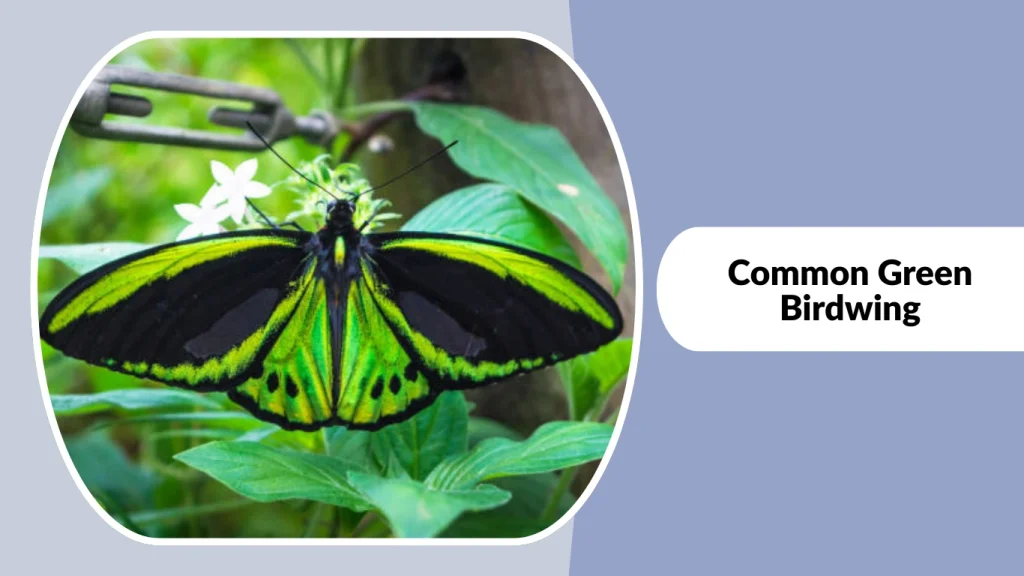
The Common Green Birdwing is a large and spectacular butterfly admired for its impressive wingspan and bright green coloration. It is one of the most noticeable butterflies in its native range due to its size and slow, majestic flight.
Identification
- Very large butterfly with broad wings
- Males show bright green and black wings
- Females are larger with brown and cream markings
- Strong, heavy body
- Rounded hindwings without long tails
Color Pattern
Males display vivid emerald-green patches bordered by deep black, creating a bold contrast. Females lack the green color and instead show muted brown, cream, and white patterns that provide camouflage.
Habitat
This species lives in tropical rainforests, forest edges, and well-vegetated lowlands. It depends on dense forest areas where its larval host plants are available.
Behaviors
Common Green Birdwings fly slowly and powerfully, often high above the canopy. Adults feed on nectar from large flowers, and males are frequently seen patrolling forest clearings.
7. Tailed Jay
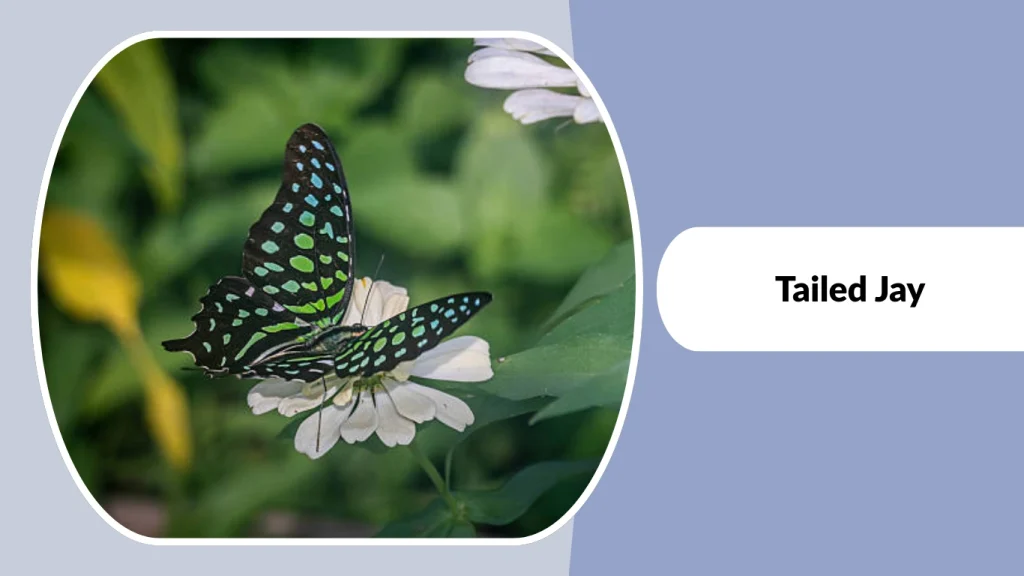
The Tailed Jay is a fast-flying and energetic butterfly known for its bright green spots and long tail extensions. It is commonly seen darting through forested landscapes.
Identification
- Medium to large-sized swallowtail butterfly
- Black wings with bright green spots and bands
- Long, pointed tail extensions on hindwings
- Streamlined body for fast flight
- Green markings visible on both wing surfaces
Color Pattern
The wings are glossy black decorated with vivid apple-green spots and streaks. These markings form broken bands that stand out sharply during flight.
Habitat
Tailed Jays inhabit tropical forests, gardens, and wooded areas. They adapt well to human-altered landscapes as long as host plants are present.
Behaviors
This butterfly is a rapid and restless flier, rarely settling for long. It feeds on nectar, visits damp ground for minerals, and often flies in quick zigzag patterns through trees and open spaces.
8. Paris Peacock
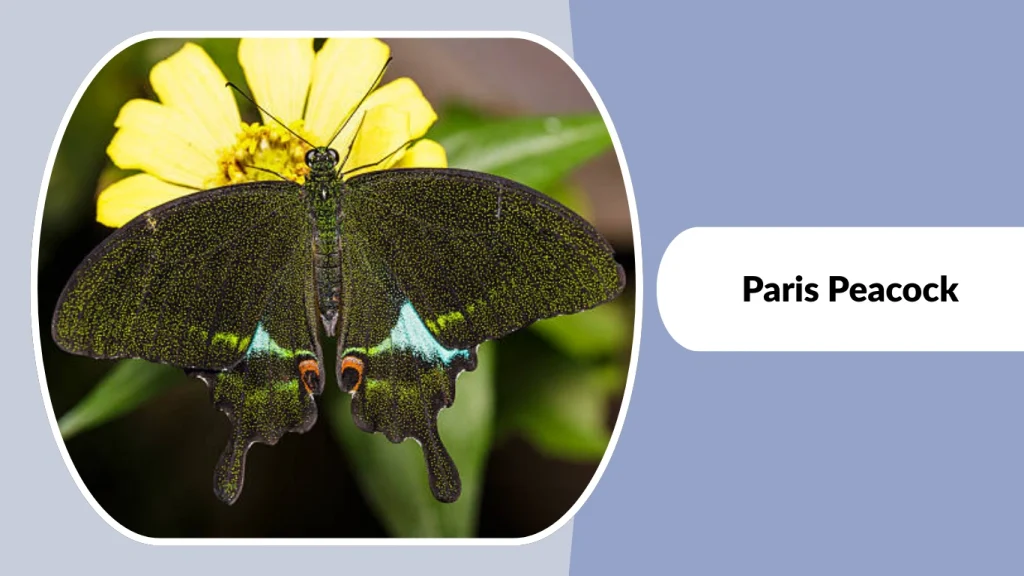
The Paris Peacock is a striking swallowtail butterfly admired for its shimmering green bands and elegant shape. It is often associated with forested regions and is highly active during warm daylight hours.
Identification
- Medium to large-sized swallowtail butterfly
- Black wings with iridescent green bands
- Rounded hindwings with short tail extensions
- Subtle blue and green sheen in sunlight
- Strong, well-defined wing veins
Color Pattern
Its wings are deep black with bright metallic green bands that may appear bluish under certain light angles. The underside is darker and less reflective, offering camouflage when at rest.
Habitat
Paris Peacock butterflies are found in tropical and subtropical forests, hillsides, and wooded valleys. They favor areas with abundant shade and flowering plants.
Behaviors
This species is a strong and confident flier, often seen gliding along forest paths. Males are territorial and may chase other butterflies from preferred areas.
9. Blue Mormon
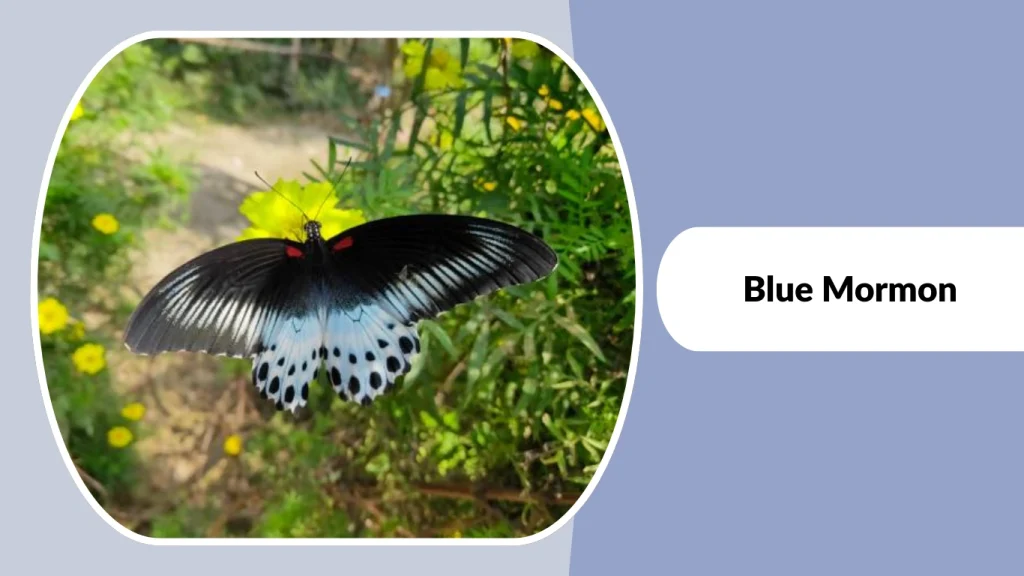
The Blue Mormon is a large and elegant swallowtail butterfly known for its blue-green sheen and graceful flight. It is commonly observed in forested areas and urban gardens.
Identification
- Large-sized swallowtail butterfly
- Velvety black wings with blue-green iridescence
- Females show white patches on hindwings
- Broad wings with smooth edges
- Thick-bodied appearance
Color Pattern
Males exhibit a glossy blue-green sheen over black wings, especially visible in sunlight. Females are more contrasting, with creamy white patches bordered by black.
Habitat
Blue Mormons inhabit tropical forests, forest edges, and cultivated gardens. They are often found near citrus plants, which serve as larval hosts.
Behaviors
This butterfly is a powerful flier, frequently soaring high before descending to nectar sources. It is active throughout the day and often visits flowers and damp soil for nutrients.
10. Common Jay

The Common Jay is a colorful and active swallowtail butterfly recognized for its bright green markings and quick, darting flight. It is a familiar species in tropical and subtropical regions.
Identification
- Medium to large-sized swallowtail butterfly
- Black wings with bright green bands and spots
- Short tail extensions on hindwings
- Rounded forewings with smooth edges
- Green markings visible on both sides
Color Pattern
The wings are deep black highlighted with vivid green bands arranged in a broken pattern. The underside shows paler green and brown tones, providing camouflage when resting.
Habitat
Common Jays inhabit forests, forest edges, gardens, and plantations. They adapt well to human-modified environments where host plants are available.
Behaviors
This species is fast and agile in flight, often seen fluttering along paths and clearings. It frequently feeds on nectar and is known to visit damp ground for minerals.
11. Graphium Agamemnon
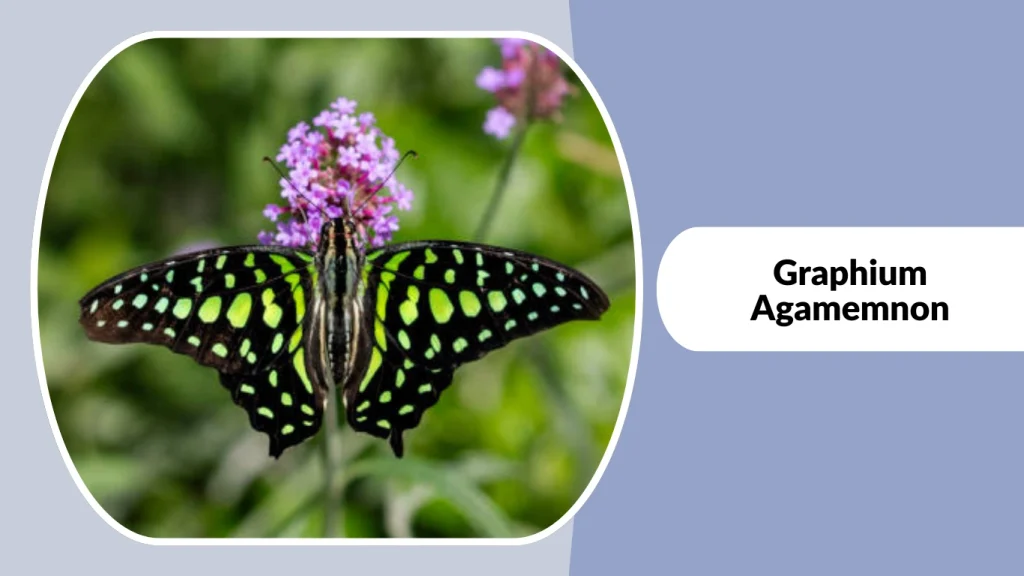
Graphium Agamemnon, also known as the Tailed Jay, is a striking butterfly admired for its neon-green spots and high-energy flight style.
Identification
- Medium-sized swallowtail butterfly
- Black wings covered with bright green spots
- Long tail extensions on hindwings
- Slim, streamlined body
- Prominent wing veins
Color Pattern
The wings display a bold pattern of fluorescent green spots scattered across a black background. The underside appears slightly duller with olive-green tones.
Habitat
This species thrives in tropical forests, gardens, and urban green spaces. It is commonly found in warm, humid environments with flowering plants.
Behaviors
Graphium Agamemnon is an extremely fast flier and rarely stays still. It feeds on nectar while hovering and often flies rapidly between flowers and trees.
12. Green-veined White
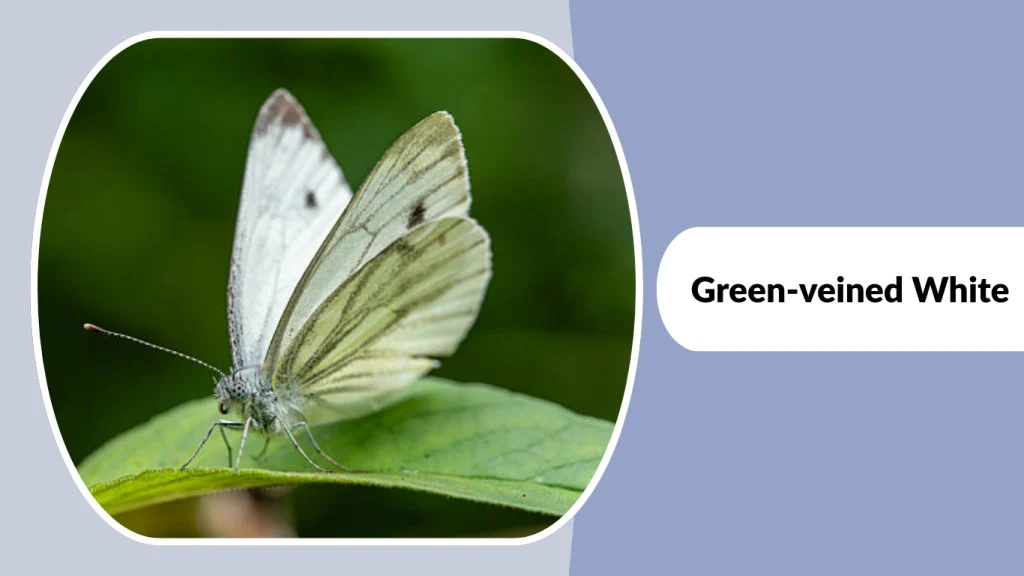
The Green-veined White is a delicate and easily recognizable butterfly known for the fine greenish veins on its wings. It is commonly seen fluttering gently in open landscapes.
Identification
- Medium-sized white butterfly
- Pale white wings with greenish-black veins
- Rounded wing shape
- Slender body with gray tones
- Subtle spotting near wing tips
Color Pattern
The wings are creamy white with soft greenish or gray veins, most noticeable on the underside. The upper side appears cleaner and brighter with minimal markings.
Habitat
This butterfly inhabits meadows, grasslands, woodland edges, and riverbanks. It prefers cool, moist environments with abundant wildflowers.
Behaviors
Green-veined Whites are slow, floating fliers and often move close to the ground. They feed on nectar from a variety of flowers and are active mainly during sunny periods.
13. Speckled Green Triangle
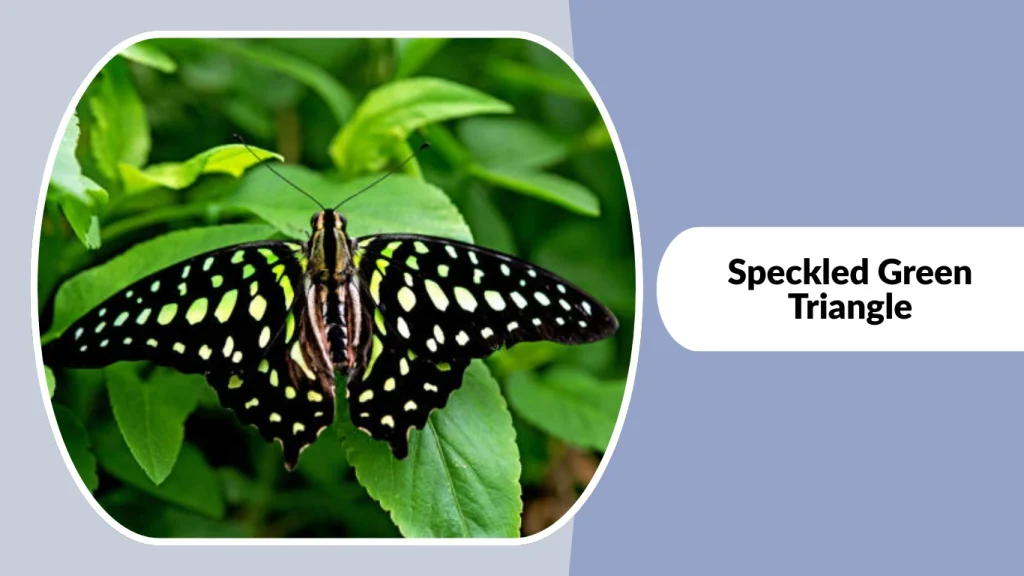
The Speckled Green Triangle is a rare and distinctive butterfly admired for its triangular green markings and elegant form. It is usually found in undisturbed forest habitats.
Identification
- Medium-sized butterfly
- Black wings with green triangular speckles
- Broad forewings with angular shape
- Slight tail-like extensions on hindwings
- Smooth, dark body
Color Pattern
Its wings are dark brown to black with speckled green triangular patches concentrated toward the forewings. The underside shows muted green and brown shades.
Habitat
This species lives in tropical rainforests and dense forest interiors. It prefers shaded areas with minimal human disturbance.
Behaviors
Speckled Green Triangles are calm and graceful fliers. They often glide through the forest understory and settle on leaves, relying on camouflage to avoid predators.
14. Green Oakblue
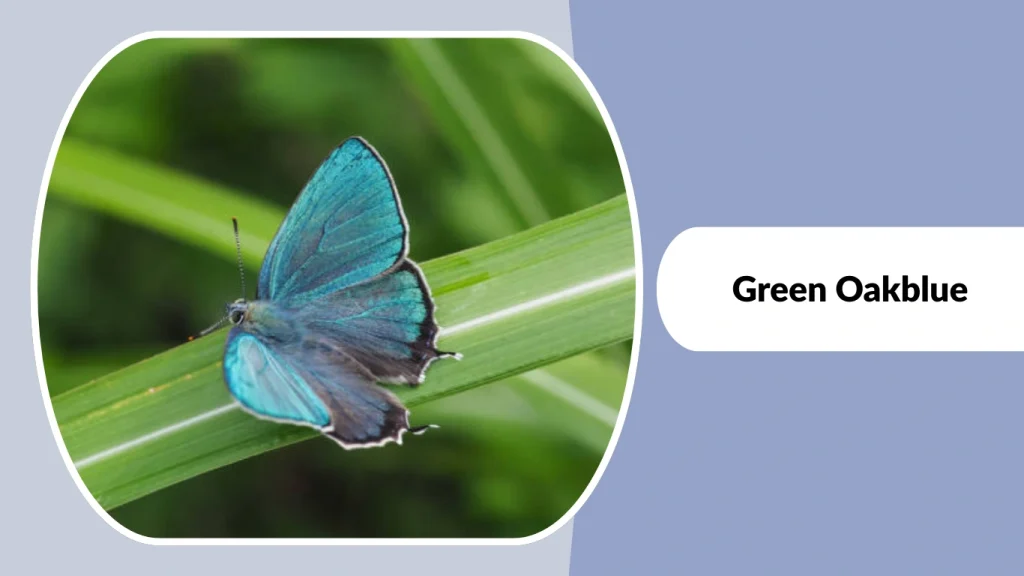
The Green Oakblue is a small and delicate butterfly valued for its soft green underside and subtle beauty. It is often overlooked due to its size but is common in suitable habitats.
Identification
- Small-sized butterfly
- Pale green underside of wings
- Brownish upper wing surface
- Thin white lines on the underside
- Slender body and short antennae
Color Pattern
The upper wings are dull brown, while the underside shows a gentle green shade crossed with fine white streaks. This coloration provides effective camouflage among leaves.
Habitat
Green Oakblues are found in woodlands, forest edges, scrublands, and gardens. They prefer areas with oak and other host trees.
Behaviors
This butterfly flies weakly and stays close to vegetation. It often perches with wings closed and feeds on nectar from small flowers.
15. Green Silverline
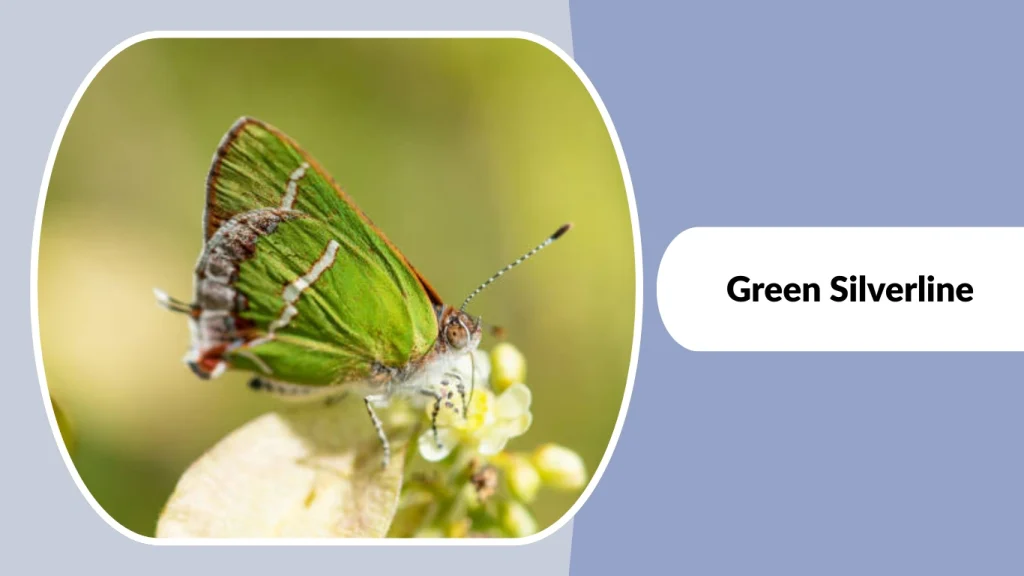
The Green Silverline is a small but attractive butterfly known for its green-tinted underside and fine silver lines that reflect light subtly.
Identification
- Small butterfly species
- Greenish underside with silver line markings
- Brown to gray upper wings
- Fine tail-like extensions on hindwings
- Compact body structure
Color Pattern
The underside displays soft green hues accented with thin, silvery white lines. The upper wings are darker and less colorful, helping the butterfly blend in when at rest.
Habitat
This species inhabits dry forests, scrublands, and open woodlands. It is commonly seen in warm, sunny areas with low vegetation.
Behaviors
Green Silverlines are quick and darting fliers. They often rest on leaves with wings closed and are active mainly during bright sunlight.
16. Green Awlet
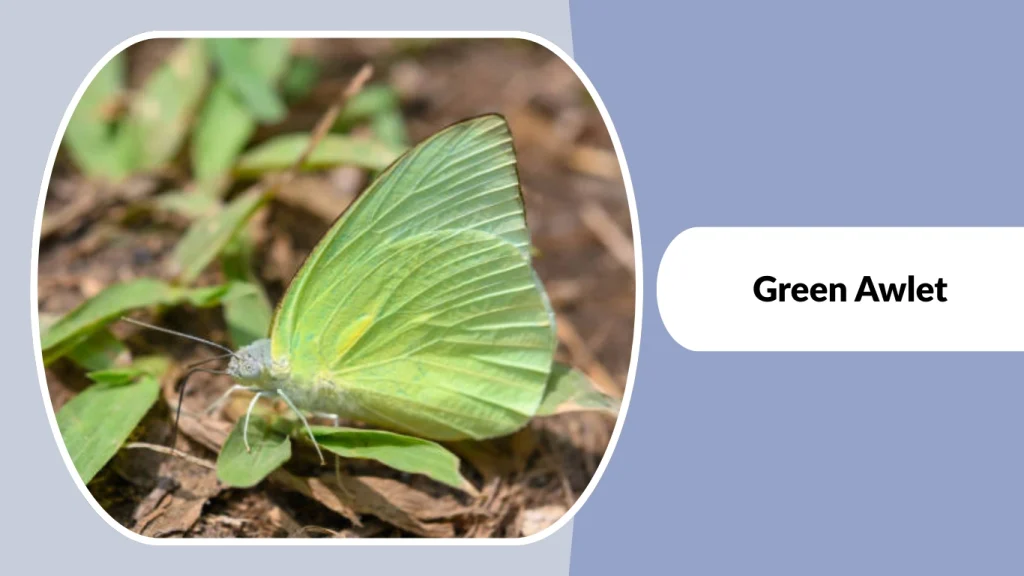
The Green Awlet is a small, fast-moving butterfly known for its muted green tones and skipper-like appearance. It is often seen briefly as it darts through forested areas.
Identification
- Small to medium-sized butterfly
- Dark brown wings with greenish markings
- Stocky body typical of skippers
- Short, hooked antennae
- Rapid wing movement when perched
Color Pattern
The wings are dark brown with subtle olive-green or mossy green patches, mostly visible in good light. The underside appears duller, aiding camouflage.
Habitat
Green Awlets inhabit tropical forests, forest edges, and shaded trails. They prefer dense vegetation and moist environments.
Behaviors
This species is very fast and elusive, often making short, rapid flights before settling briefly. It feeds on nectar and occasionally visits damp ground.
17. Green Flash
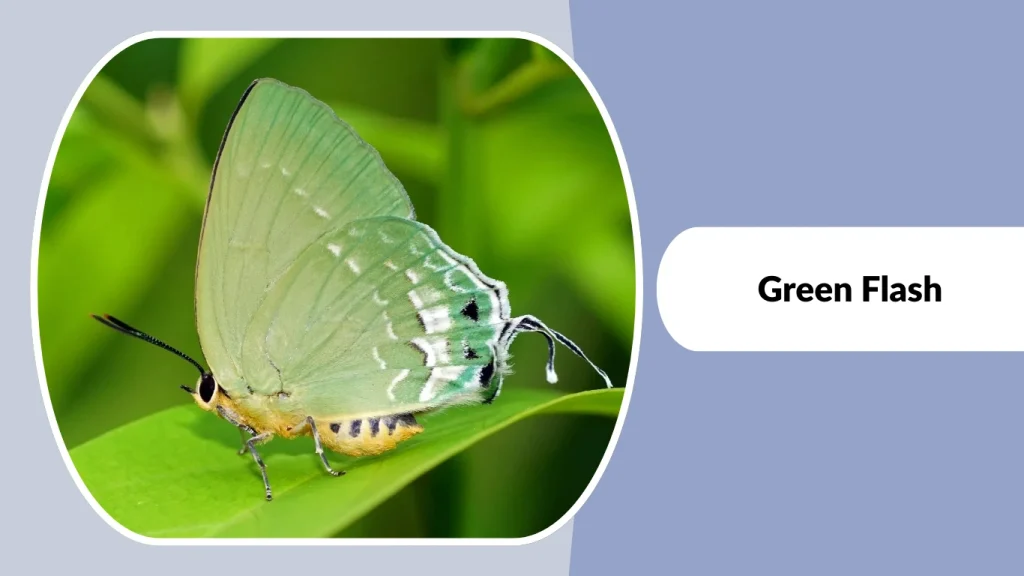
The Green Flash is a striking butterfly recognized for its sudden flashes of green when its wings catch the light. It is admired for its sleek form and energetic movement.
Identification
- Medium-sized butterfly
- Dark wings with bright green reflective patches
- Smooth wing edges without tails
- Slender body shape
- Metallic sheen visible in sunlight
Color Pattern
The wings appear dark brown or black at rest but reveal bright emerald or neon-green flashes during flight. The underside is generally dull and understated.
Habitat
Green Flashes are found in tropical forests, open woodlands, and forest clearings. They favor sunlit spots near dense vegetation.
Behaviors
This butterfly is active and alert, often flying quickly between sunny patches. It feeds on nectar and frequently rests in shaded areas between flights.
18. Common Green Forester
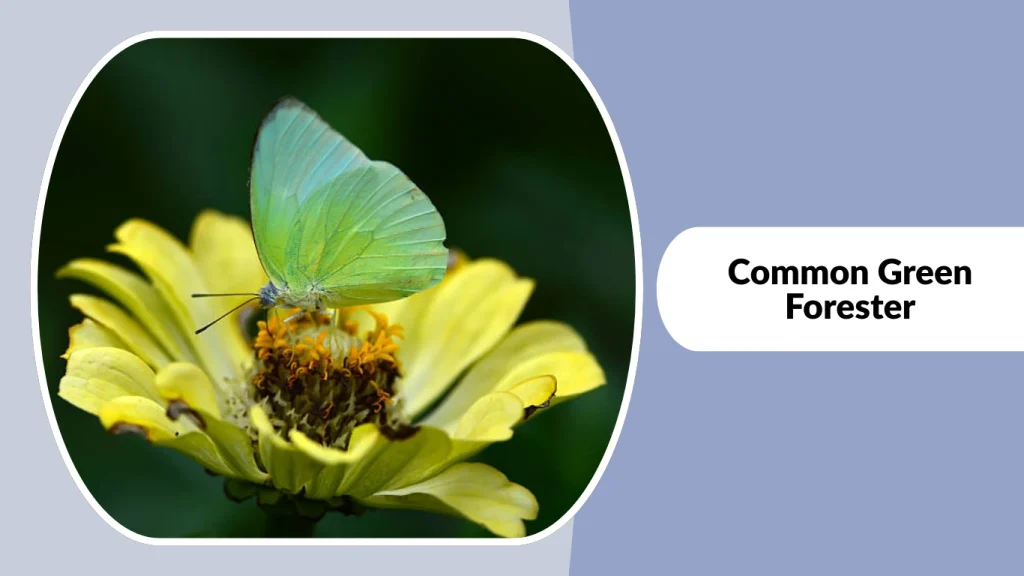
The Common Green Forester is a small, moth-like butterfly admired for its metallic green sheen. Despite its name, it is often mistaken for a day-flying moth due to its body shape.
Identification
- Small-sized butterfly
- Metallic green wings with glossy surface
- Short, rounded wings
- Thick, fuzzy body
- Slow, fluttering flight
Color Pattern
The wings are a rich metallic green that may appear bluish in strong sunlight. The body is darker, often black or deep green, enhancing the reflective wing color.
Habitat
This species inhabits woodlands, forest edges, and grassy clearings. It prefers areas with plenty of sunlight and flowering plants.
Behaviors
Common Green Foresters are day-active and often fly slowly close to vegetation. They feed on nectar and rest openly on leaves and flowers.
19. Green Emperor
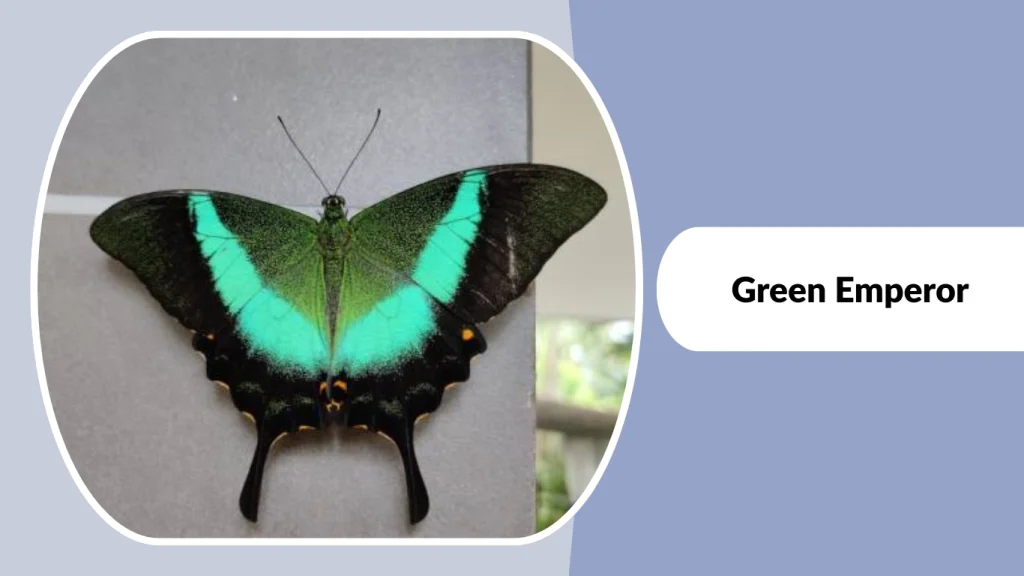
The Green Emperor is a bold and powerful butterfly known for its vivid green coloration and commanding presence in forest environments.
Identification
- Large-sized butterfly
- Bright green wings with dark borders
- Broad wings with strong venation
- Thick, muscular body
- Strong legs and antennae
Color Pattern
The wings are predominantly bright green with darker edging that frames the shape. The underside is paler with muted green and brown tones.
Habitat
Green Emperors are found in tropical forests, especially in dense, mature woodland areas. They prefer high canopy zones but descend to feed.
Behaviors
This species is a strong and purposeful flier. It often glides powerfully through forest openings and feeds on nectar, tree sap, and fallen fruit.
20. Green Sapphire
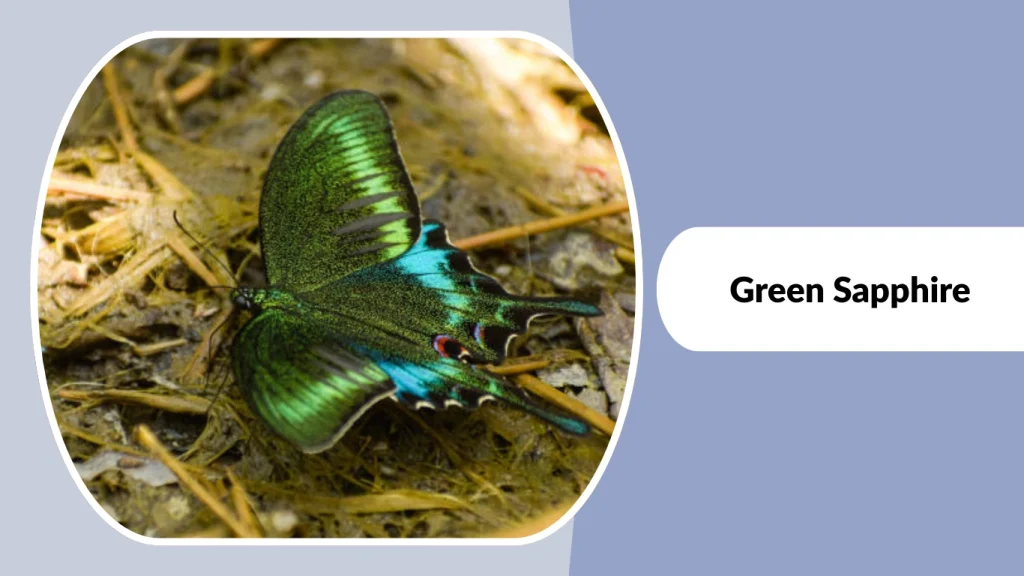
The Green Sapphire is a small yet dazzling butterfly prized for its jewel-like green coloration. Its subtle size contrasts with its striking iridescence when viewed in sunlight.
Identification
- Small-sized butterfly
- Shimmering green to blue-green wings
- Slim body with fine antennae
- Smooth wing margins
- Bright sheen most visible in direct light
Color Pattern
The wings display a glossy green or turquoise sheen that changes with viewing angle. The underside is paler, often grayish or light green, helping it remain concealed at rest.
Habitat
Green Sapphires inhabit tropical forests, forest edges, and shaded gardens. They favor warm areas with dense foliage and flowering plants.
Behaviors
This butterfly is quick and agile, often making short flights between leaves. It usually rests with wings closed and feeds on nectar from small flowers.
21. Green Metalmark
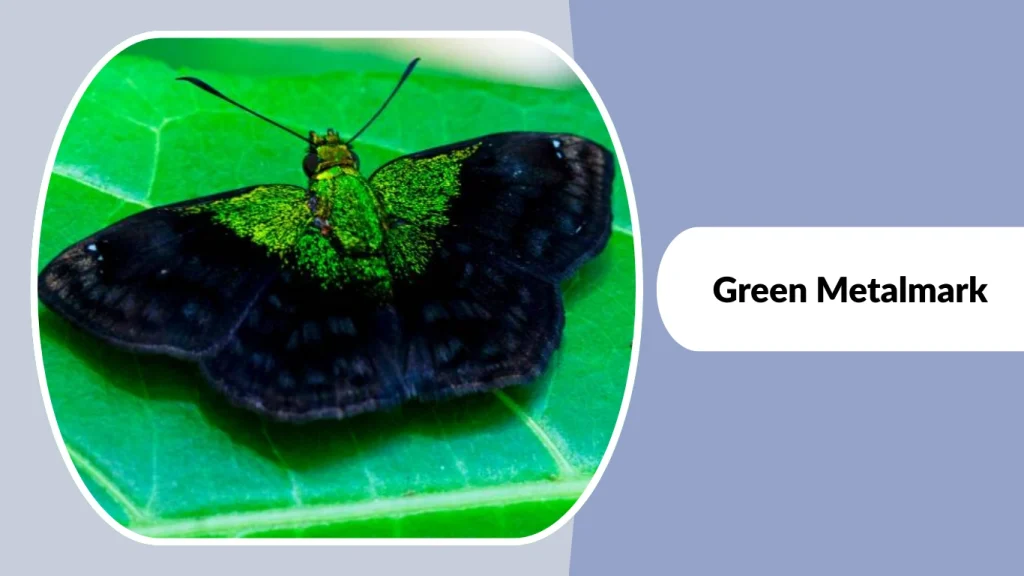
The Green Metalmark is a rare and distinctive butterfly known for its metallic green markings and compact shape. It is especially valued by butterfly watchers for its unique appearance.
Identification
- Small butterfly species
- Metallic green patches on dark wings
- Compact, stout body
- Rounded wings with fine texture
- Subtle reflective scales
Color Pattern
The wings are dark brown to black with shimmering green metallic spots or bands. The reflective scales give the butterfly a sparkling effect in sunlight.
Habitat
Green Metalmarks are typically found in tropical forests and shaded woodland areas. They prefer undisturbed habitats with rich plant diversity.
Behaviors
This species is usually calm and slow-flying. It often perches on leaves or low vegetation and relies on its metallic coloration for camouflage and signaling.
