
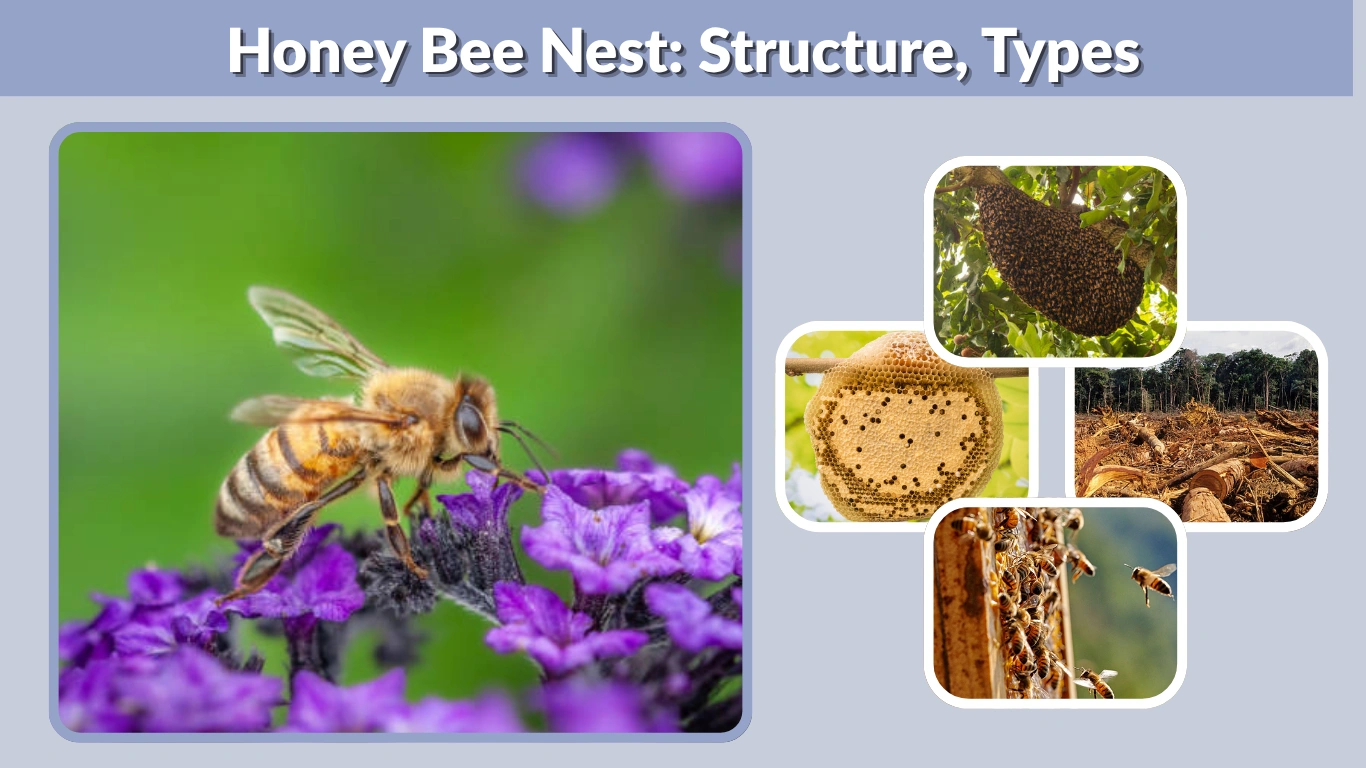
A honey bee nest is the natural home where honey bees live, grow, and store their food. It is a highly organized structure built by worker bees using wax produced from their own bodies. Inside the nest, thousands of bees work together in a well-coordinated system that supports the entire colony.
Many people often confuse the terms “nest” and “hive.” A honey bee nest refers to the natural structure created by bees in the wild, while a hive usually refers to a man-made box provided by beekeepers. Despite this difference, both serve the same purpose—providing shelter and space for the colony.
The honey bee nest is essential for survival. It protects the colony from predators, harsh weather, and environmental threats while also serving as a place for raising young bees and storing honey and pollen.
What Is a Honey Bee Nest?
Definition and Meaning
A honey bee nest is a structure made of honeycomb, where bees live as a colony. It is built entirely by worker bees using beeswax and is designed to support all activities of the colony, including reproduction, food storage, and communication.
The nest is not just a shelter—it is a complete living system where each section has a specific function.
Nest vs Hive
Although often used interchangeably, there is a clear difference:
- Nest: Natural structure built by bees in the wild
- Hive: Artificial structure created by humans for beekeeping
Natural nests are usually irregular in shape and built according to the available space, while hives are designed with frames for easy management.
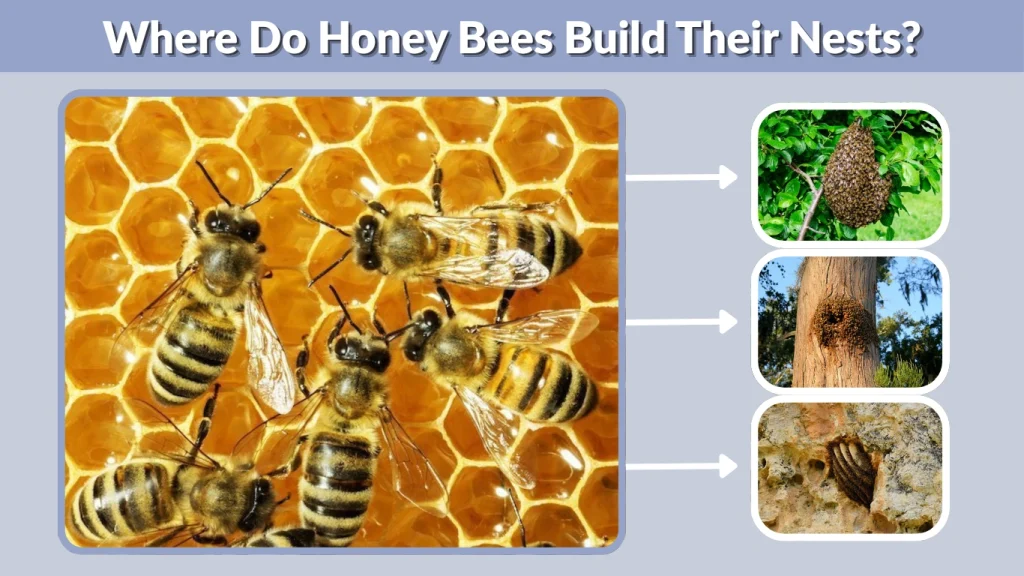
Where Do Honey Bees Build Their Nests?
Natural Locations
Honey bees prefer safe, enclosed spaces that offer protection and stability. Common natural nesting sites include:
- Tree cavities
- Hollow logs
- Rock crevices
- Underground spaces
These locations provide shelter from predators and environmental conditions.
Urban Environments
In modern environments, honey bees have adapted to living near humans. They may build nests in:
- Wall cavities
- Roof spaces
- Chimneys
- Abandoned structures
Urban nesting can sometimes cause conflicts with humans, especially if nests are disturbed.
Structure of a Honey Bee Nest
Honeycomb Design
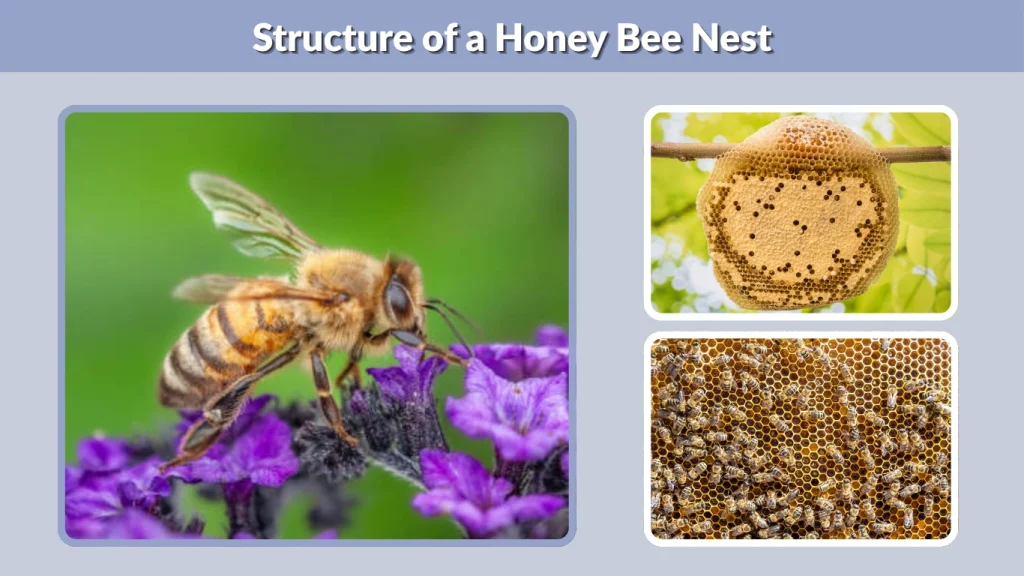
The most remarkable feature of a honey bee nest is the honeycomb, which is made up of perfectly shaped hexagonal cells. This design is highly efficient because it:
- Uses minimal wax
- Maximizes storage space
- Provides strong structural support
The hexagonal pattern is one of nature’s most efficient architectural designs.
Sections of the Nest
A honey bee nest is divided into different functional areas:
- Brood area: Where eggs, larvae, and pupae develop
- Honey storage area: Where nectar is stored and converted into honey
- Pollen storage area: Where pollen is kept as a protein source
Each section is carefully organized to maintain efficiency within the colony.
Materials Used
Honey bees use beeswax to construct their nests. Worker bees produce wax from special glands on their abdomen. The wax is then chewed and molded into the honeycomb structure.
This natural material is strong, flexible, and ideal for building durable nests.
How Honey Bees Build Their Nest
Wax Production
Worker bees are responsible for producing wax. They secrete small wax flakes from glands on their bodies, which are then collected and softened using their mandibles (mouthparts).
This wax becomes the building material for the entire nest.
Construction Process
The construction of a honey bee nest is a coordinated effort:
- Bees begin by forming small wax structures
- They shape the wax into hexagonal cells
- Cells are arranged in a continuous pattern to form honeycomb
The process requires teamwork and precision, with thousands of bees contributing.
Role of Worker Bees
Worker bees handle all aspects of nest construction. Their responsibilities include:
- Producing wax
- Building and repairing comb
- Cleaning cells
- Maintaining nest structure
Their cooperation ensures that the nest remains functional and efficient.
Types of Honey Bee Nests
Open Nests
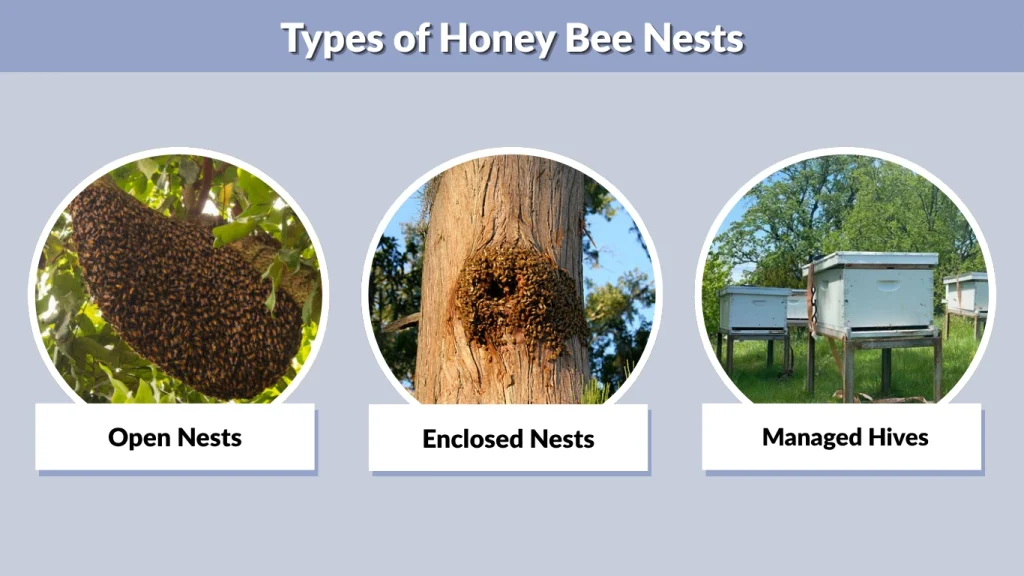
Some species of honey bees build open nests, which are exposed and often hang from tree branches or cliffs. These nests usually consist of a single comb.
Enclosed Nests
Most honey bees prefer enclosed nests, built inside cavities like trees or walls. These nests provide better protection and can contain multiple combs.
Managed Hives
In beekeeping, humans provide artificial structures called hives. These are designed to mimic natural nests while allowing easy access for honey collection and hive management.
Internal Organization of a Nest
Queen’s Area
At the center of the nest is the queen’s area, also known as the brood chamber. This is where the queen lays eggs. Worker bees carefully prepare and clean cells to ensure a safe environment for developing larvae.
Worker Activity Zones
Worker bees perform most of their tasks within specific areas of the nest. These include:
- Feeding larvae
- Cleaning and maintaining cells
- Producing wax and building comb
As worker bees age, their responsibilities change, ensuring smooth colony operation.
Storage Zones
The nest also contains designated storage areas:
- Honey storage: For energy supply
- Pollen storage: For protein and nutrition
These reserves help the colony survive during times when food is scarce.
Importance of Honey Bee Nests
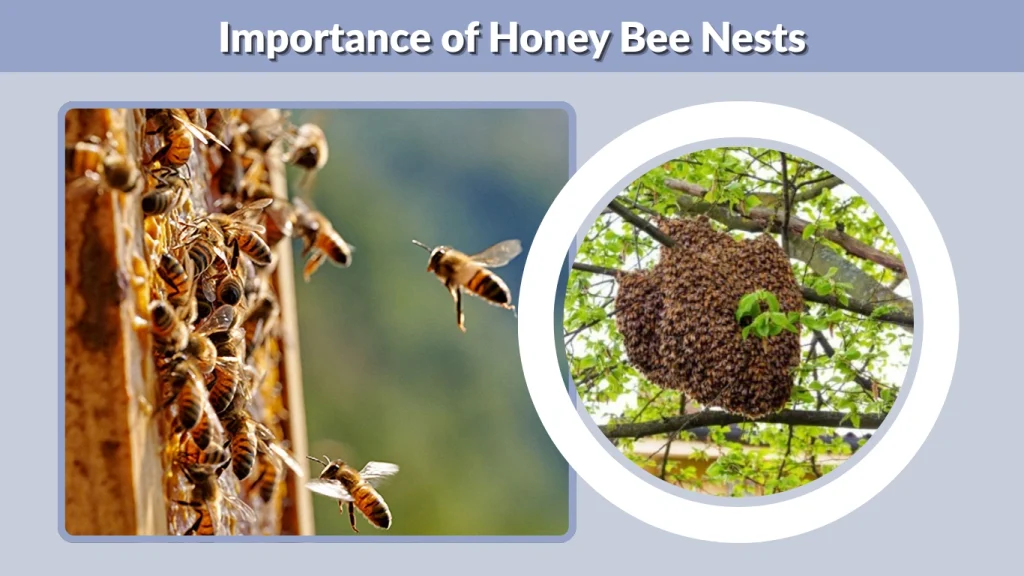
Protection and Shelter
The nest provides protection from predators, weather, and environmental hazards, ensuring the colony’s safety.
Raising Brood
It serves as a nursery where eggs develop into adult bees, ensuring the colony’s growth and continuity.
Food Storage
The nest allows bees to store honey and pollen, which are essential for survival, especially during winter or dry seasons.
Differences Between Honey Bee Nest and Beehive
Natural vs Artificial
A honey bee nest is naturally built by bees, while a beehive is created by humans for beekeeping.
Structure and Design
Natural nests are irregular and adapt to available space, whereas hives are structured with frames for easy management.
Human Intervention
Nests function independently, while hives require human care and maintenance.
Threats to Honey Bee Nests
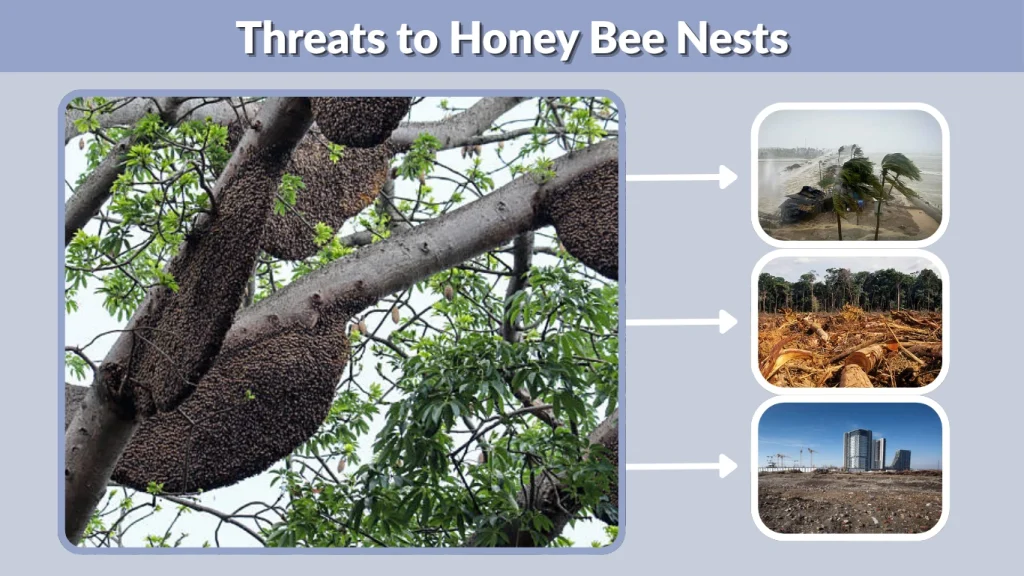
Environmental Factors
- Extreme weather conditions
- Climate change affecting food sources
Human Disturbance
- Deforestation
- Urban development destroying nesting sites
Predators and Pests
- Birds and mammals
- Insects such as mites
These threats can damage or destroy nests, putting entire colonies at risk.
How to Identify a Honey Bee Nest
Visual Signs
- Frequent bee activity in a specific area
- Bees entering and exiting a small opening
Nest Appearance
- Visible wax comb structure
- Clusters of bees around a location
Recognizing these signs can help you identify a nest safely.
What to Do If You Find a Honey Bee Nest
Safety Tips
- Keep a safe distance
- Avoid sudden movements
- Do not attempt to disturb the nest
Avoiding Disturbance
Bees are generally not aggressive unless threatened. Leaving them undisturbed is the safest approach.
Contacting Professionals
If a nest is in a risky location, contact a beekeeper or pest control expert to handle it safely and humanely.
Interesting Facts About Honey Bee Nests
- Honeycomb cells are perfectly hexagonal for maximum efficiency
- Bees maintain a constant temperature inside the nest
- A single nest can house thousands of bees
- Bees work together to repair and expand their nest
- The nest functions like a well-organized city
FAQs
How big can a honey bee nest get?
A honey bee nest can grow quite large, sometimes containing tens of thousands of bees and multiple layers of honeycomb, depending on space and resources.
Do honey bees leave their nest?
Yes, honey bees leave the nest daily to collect nectar, pollen, and water, but they always return to the same nest.
How long does it take bees to build a nest?
Bees can start building a nest within a few days, but fully developing a large, functional nest may take several weeks.
What happens if a honey bee nest is destroyed?
If a nest is destroyed, the colony may relocate and rebuild elsewhere, but it can be harmful and reduce their survival chances.
Why are honey bee nests usually hidden?
Honey bees prefer hidden or enclosed spaces because they provide protection from predators, weather, and disturbances.
Conclusion
The honey bee nest is an incredible example of nature’s engineering and teamwork. Built with precision and maintained through cooperation, it serves as the heart of the colony—supporting life, growth, and survival.
Understanding how honey bees build and organize their nests helps us appreciate their importance in the ecosystem. Protecting these nests is essential, as they play a key role in pollination and biodiversity.
By respecting honey bee habitats and avoiding unnecessary disturbance, we can help ensure that these vital pollinators continue to thrive.
