
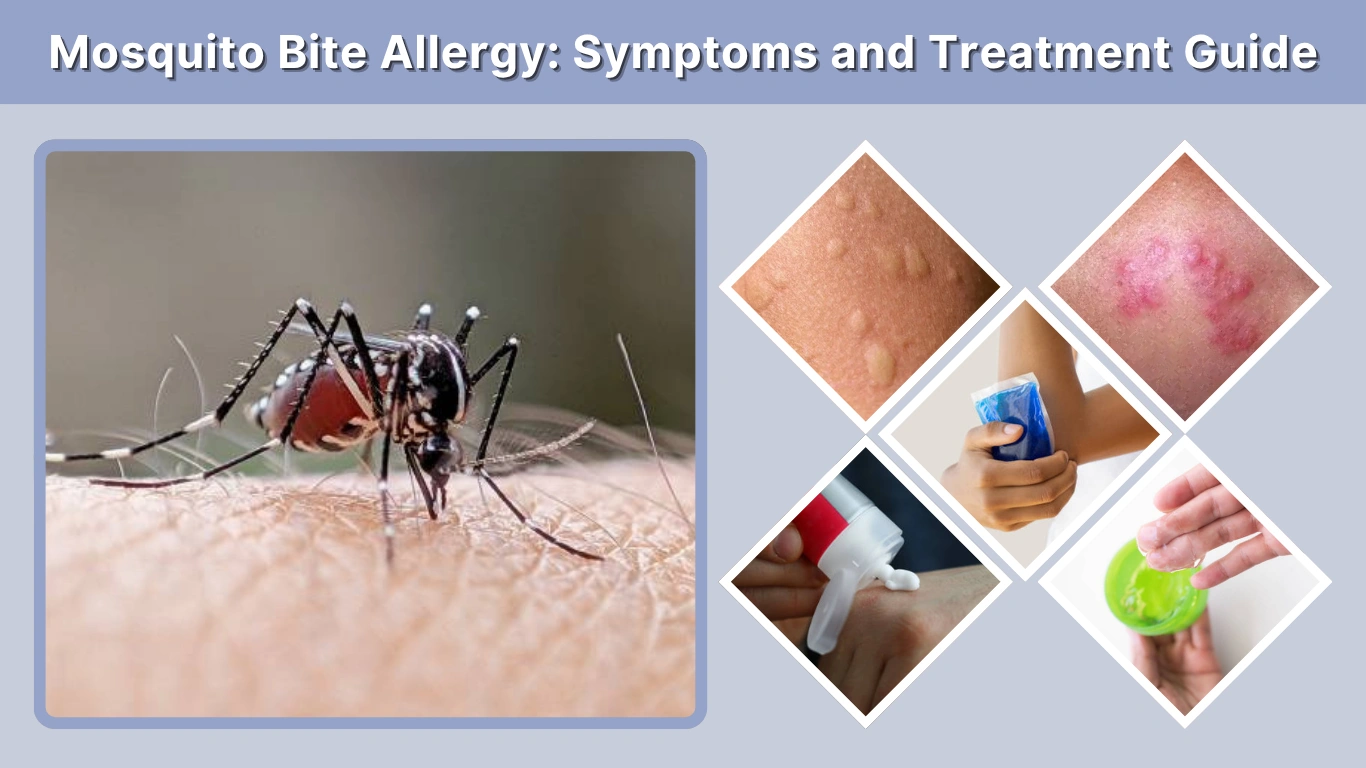
Mosquito bites are usually harmless, but for some people, they can trigger strong allergic reactions. Instead of a small itchy bump, the bite may swell, turn red, and become painful or even blistered. This condition, often referred to as a mosquito bite allergy, occurs when the immune system reacts aggressively to proteins in mosquito saliva. Understanding how to identify these reactions and manage them properly can help reduce discomfort and prevent complications, especially in sensitive individuals and children.
What Is a Mosquito Bite Allergy?
A mosquito bite allergy happens when your body overreacts to the saliva injected during a bite. While most people experience mild itching, allergic individuals may develop more intense symptoms that last longer and feel more severe.
- It is caused by an immune system response
- Reaction severity varies from mild to severe
- Can affect both adults and children
- May worsen with repeated mosquito exposure
This type of allergy is not uncommon and can sometimes develop suddenly, even if you previously had normal reactions to mosquito bites.
Normal Mosquito Bite vs Allergy

It’s important to understand the difference between a typical bite and an allergic reaction so you can respond appropriately.
Normal Mosquito Bite
- Small, round, red bump
- Mild itching
- Disappears within a few days
Mosquito Bite Allergy
- Large swollen area around the bite
- Intense itching or burning sensation
- May include blisters or hives
- Takes longer to heal
Recognizing these differences helps determine whether simple home care is enough or if additional treatment is needed.
Mosquito Bite Allergy Symptoms
Symptoms of mosquito bite allergy can vary in intensity depending on how your body reacts. Some people experience only mild swelling, while others may develop more noticeable and uncomfortable symptoms.
- Large swelling extending beyond the bite area
- Redness that spreads across the skin
- Severe itching or tenderness
- Blisters or raised hives
- Warm or inflamed skin
These symptoms often appear within hours of the bite and may last several days if not treated properly.
Severe Mosquito Bite Allergy (Skeeter Syndrome)

Some individuals experience an extreme form of mosquito bite allergy known as Skeeter syndrome. This condition causes exaggerated reactions that can be alarming, especially in children.
What Is Skeeter Syndrome?
- A strong allergic reaction to mosquito saliva
- Leads to excessive swelling and inflammation
- Often mistaken for infection
Symptoms of Severe Reaction
- Very large, painful swelling
- Skin that feels hot and tight
- Fever or general discomfort
How It Differs From Normal Allergy
- Symptoms are more intense and long-lasting
- Swelling can affect large areas of the body
- May require medical attention
Skeeter syndrome is not dangerous in most cases, but proper care is important to reduce discomfort and prevent complications.
What Does a Mosquito Bite Allergy Look Like?
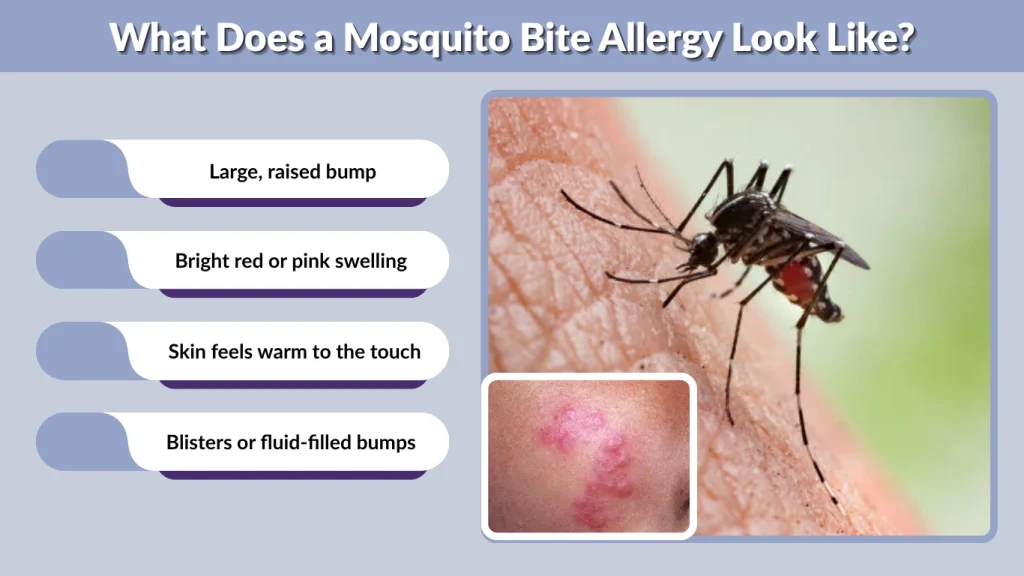
Mosquito bite allergies often look different from regular bites, making them easier to identify once you know what to look for.
Common Appearance
- Large, raised bump
- Bright red or pink swelling
- Skin feels warm to the touch
Severe Cases
- Blisters or fluid-filled bumps
- Rash-like patches spreading around the bite
- Noticeable swelling on sensitive areas like the face
The appearance may vary depending on skin type and sensitivity, but allergic reactions are generally larger and more noticeable than normal mosquito bites.
Causes and Risk Factors of Mosquito Bite Allergy
Mosquito bite allergies do not affect everyone equally. Some people are more prone to strong reactions due to how their immune system responds to mosquito saliva. The body treats the saliva as a harmful substance, triggering inflammation and irritation.
Common Causes
- Overactive immune response to mosquito saliva
- Repeated exposure to mosquito bites
- Genetic sensitivity to insect bites
Risk Factors
- Children and infants with sensitive skin
- People with existing allergies
- Individuals frequently exposed to mosquitoes
Understanding these causes helps explain why reactions can suddenly become more severe over time.
How to Treat Mosquito Bite Allergy

Treating mosquito bite allergy early can reduce swelling, itching, and discomfort. Most mild to moderate reactions can be managed at home with simple remedies.
At-Home Treatment
- Apply a cold compress to reduce swelling
- Use aloe vera or soothing gel
- Keep the area clean and avoid scratching
Over-the-Counter Options
- Antihistamine creams to reduce itching
- Calamine lotion for skin relief
- Oral antihistamines for stronger reactions
Medical Treatment
- Prescription steroid creams
- Strong antihistamines
- Doctor consultation for severe symptoms
Early treatment helps prevent the reaction from worsening and speeds up recovery.
Best Allergy Medicines for Mosquito Bites
When symptoms are more intense, allergy medications can provide effective relief. These medicines help reduce the immune response and calm itching and swelling.
- Antihistamines like cetirizine and loratadine
- Diphenhydramine (Benadryl) for fast relief
- Anti-itch creams for localized treatment
- Mild steroid creams to reduce inflammation
These options are widely available and can be used depending on the severity of the reaction.
Can You Develop an Allergy to Mosquito Bites?
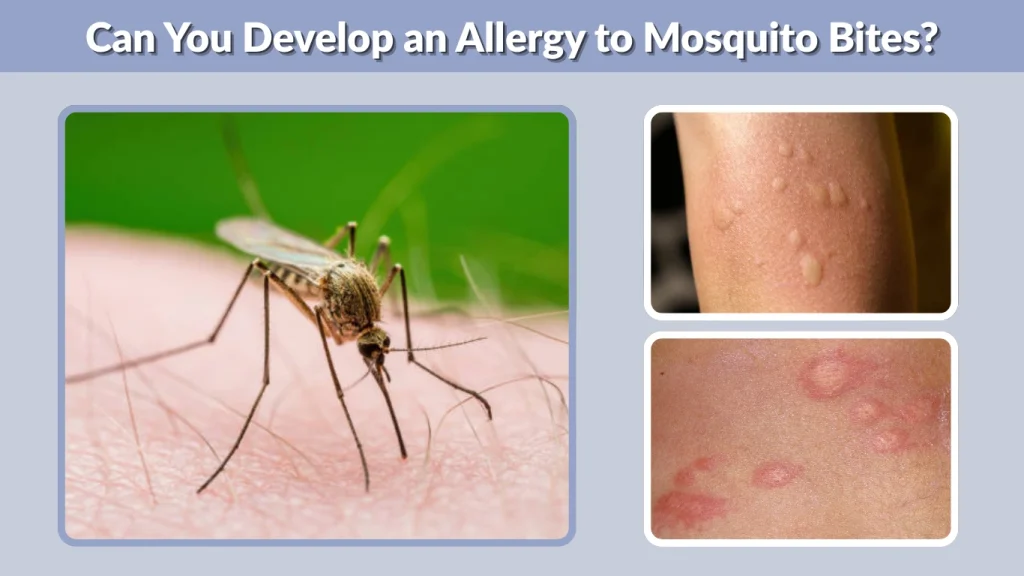
Yes, it is possible to develop an allergy to mosquito bites over time. Some people may notice that their reactions become stronger with repeated exposure, even if they previously had only mild symptoms.
The immune system can change, making it more sensitive to mosquito saliva. In some cases, children who react strongly may outgrow the allergy as their immune system develops. On the other hand, adults can also develop sudden sensitivity due to environmental or health changes.
Mosquito Bite Allergy in Children and Infants
Why Children React More
- Their immune systems are still developing
- Skin is thinner and more sensitive
- First-time exposure can trigger stronger reactions
Care Tips for Kids
- Use gentle, child-safe creams
- Keep nails short to prevent scratching
- Monitor swelling and unusual symptoms
Children often experience more visible swelling, but with proper care, symptoms can be managed effectively.
FAQs
Can mosquito bites trigger an allergic reaction later?
Yes, some people may not react immediately but develop swelling or itching hours later. Delayed reactions are common in sensitive individuals and can last longer than typical bites.
What is Skeeter syndrome and is it dangerous?
Skeeter syndrome is a severe allergic reaction to mosquito bites that causes large swelling and redness. It is usually not dangerous but can be uncomfortable and may require medical treatment.
Do mosquito bite allergies get worse over time?
In some cases, repeated exposure can make reactions stronger. However, others may develop tolerance and experience milder reactions over time.
Can mosquito bite allergies cause blisters?
Yes, in more severe allergic reactions, mosquito bites can form blisters or fluid-filled bumps due to inflammation and immune response.
What is the fastest way to reduce swelling from a mosquito bite allergy?
Applying ice, using antihistamine creams, and avoiding scratching are the fastest ways to reduce swelling and discomfort from an allergic reaction.
