
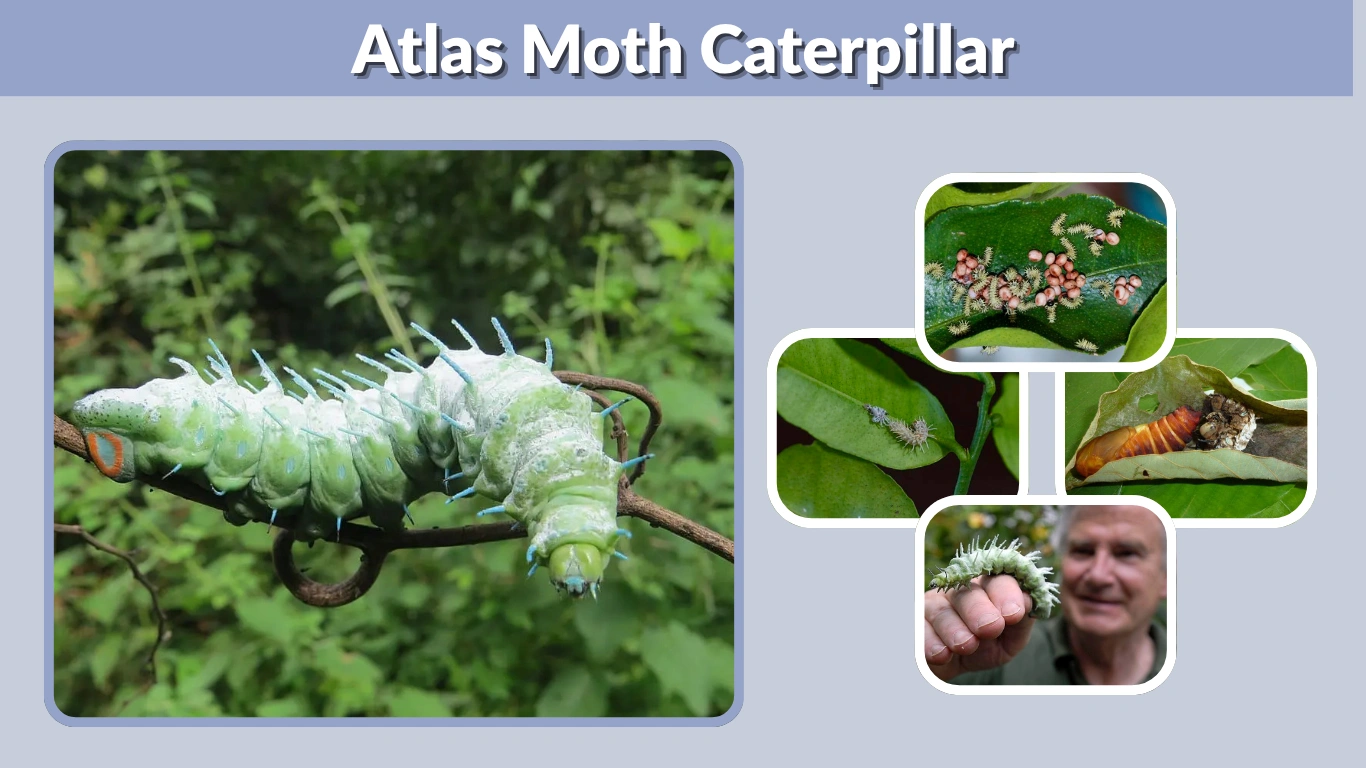
The atlas moth caterpillar, part of the species Attacus atlas, is one of the largest and most fascinating caterpillars in the world. Known for its impressive size and unique appearance, it attracts attention from insect enthusiasts and researchers alike. This stage of the atlas moth’s life is crucial, as it focuses entirely on feeding and growth. Understanding its size, diet, and development helps explain how it transforms into one of the biggest moths on Earth.
What Is an Atlas Moth Caterpillar?
The atlas moth caterpillar is the larval stage of Attacus atlas, a giant moth species found in tropical regions. It belongs to the Saturniidae family, which includes many large and colorful moths. This caterpillar is known for its thick body and unusual texture, often covered with a powdery coating.
During this stage, the caterpillar’s main purpose is to eat and store energy. This energy will later support the adult moth, which does not feed. Its rapid growth and transformation make it one of the most interesting insects to observe.
Atlas Moth Caterpillar Size
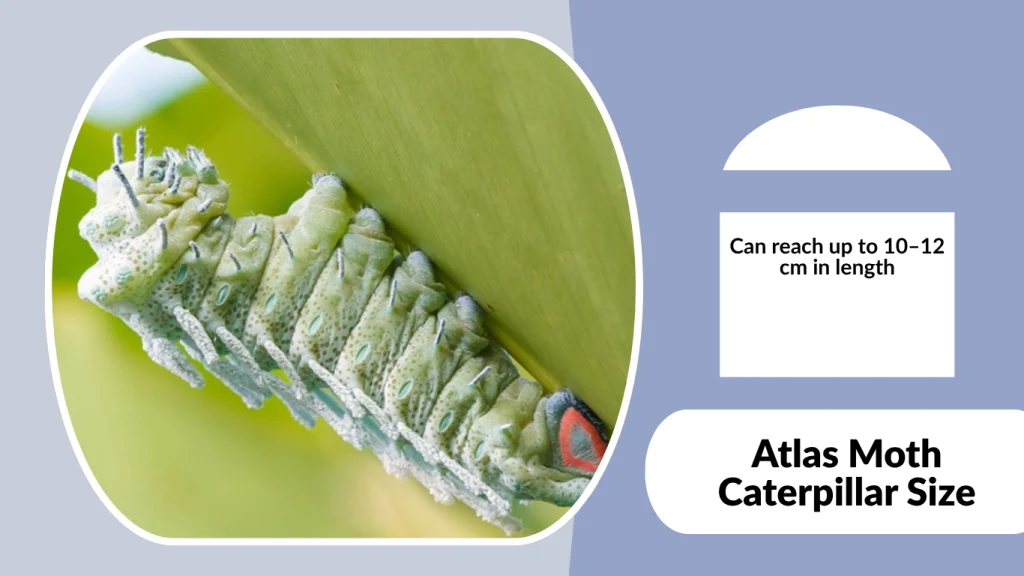
The size of the atlas moth caterpillar is one of its most striking features. It can grow significantly larger than most common caterpillars, making it easy to identify in the wild or controlled environments.
How Big Do They Get?
- Can reach up to 10–12 cm in length
- Thick, heavy body compared to other caterpillars
- Considered one of the largest caterpillars in the world
Physical Appearance
- Pale green body color
- Covered with a white, waxy coating
- Small protrusions that give it a textured look
Atlas Moth Caterpillar Diet
The diet of the atlas moth caterpillar plays a critical role in its growth and survival. Since the adult moth does not eat, all the energy it will ever use must be stored during this stage.
What Do They Eat?
- Leaves from citrus plants
- Guava leaves
- Cinnamon tree leaves
Feeding Behavior
- Eats almost constantly throughout the day
- Consumes large quantities of leaves
- Growth speed depends on food availability
Atlas Moth Caterpillar Life Cycle
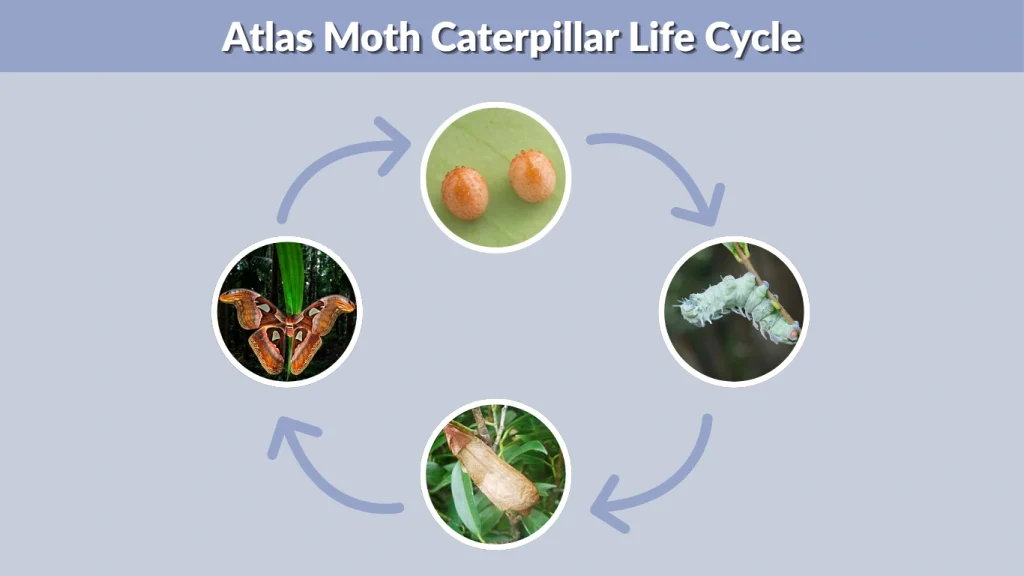
The life cycle of the atlas moth includes several stages, with the caterpillar phase being the most active. This transformation process is known as complete metamorphosis and involves dramatic physical changes.
Stages of Development
- Egg
- Caterpillar (larva)
- Cocoon (pupa)
- Adult moth
Caterpillar Growth and Transformation
The caterpillar stage is focused entirely on growth and preparation for the next phase. As it feeds, it sheds its skin multiple times in a process called molting. Each stage of growth allows it to become larger and stronger.
Once it reaches full size, the caterpillar stops eating and begins preparing for pupation. It searches for a suitable place and starts spinning a silk cocoon. Inside this cocoon, its body undergoes a complete transformation into an adult moth.
Atlas Moth Caterpillar Lifespan
The lifespan of an atlas moth caterpillar is relatively short but very active. This stage typically lasts a few weeks, depending on environmental conditions such as temperature and food supply.
During this time, the caterpillar must grow quickly and store enough energy for the rest of its life. After forming a cocoon, it transitions into the pupal stage, where it remains inactive while developing into a moth.
Atlas Moth Caterpillar Cocoon
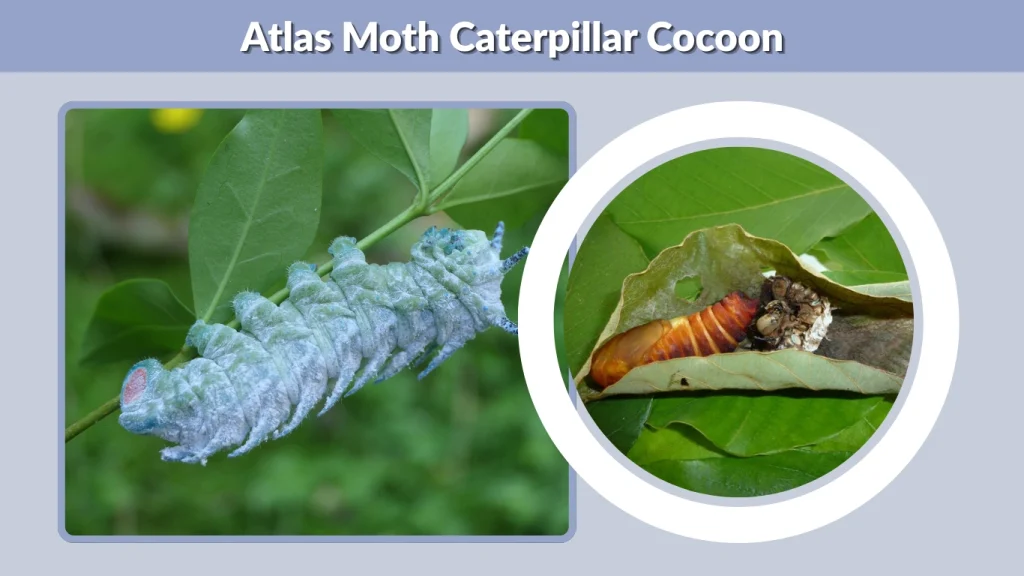
The cocoon stage is a critical transition in the atlas moth’s life cycle. After reaching full size, the caterpillar spins a strong silk cocoon where it will undergo metamorphosis. This structure protects it from environmental threats while it transforms into an adult moth.
Cocoon Formation
- Made from strong silk threads
- Usually attached to leaves or branches
- Provides protection during transformation
Pupal Development
- Caterpillar becomes inactive inside
- Internal transformation into a moth
- Duration depends on temperature and humidity
Are Atlas Moth Caterpillars Poisonous?
Despite their large size and unusual appearance, atlas moth caterpillars are not dangerous. They do not produce venom or toxins and are completely safe for humans to observe.
Their waxy coating and body structure may make them look intimidating, but these features are mainly for protection against predators. They rely on appearance rather than harmful defenses, making them harmless insects in both wild and controlled environments.
Atlas Moth Caterpillar Care Guide
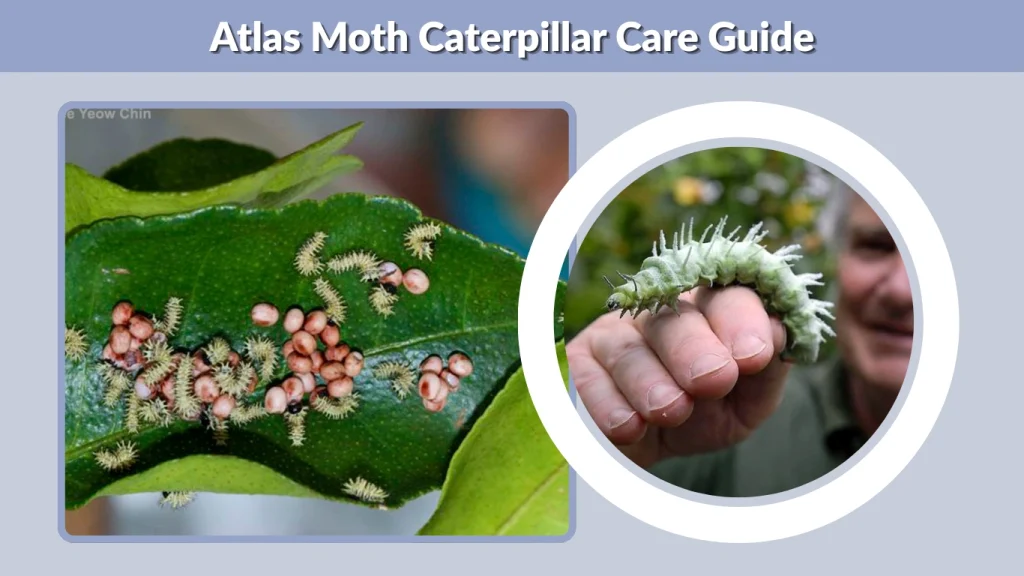
Keeping atlas moth caterpillars can be a rewarding experience for those interested in insect life cycles. However, proper care is essential to ensure healthy growth and successful development into adult moths.
Can You Keep Them as Pets?
Yes, they are often kept by hobbyists and educators for observation. Since their life cycle is short, they are considered temporary pets rather than long-term companions.
Basic Care Requirements
- Provide fresh host plant leaves daily
- Maintain a warm, humid environment
- Ensure proper ventilation in the enclosure
Atlas Moth Caterpillar for Sale
Atlas moth caterpillars are sometimes available through insect breeders and specialty shops. Their availability often depends on the season and location, especially in tropical regions where they naturally occur.
When purchasing, it is important to choose reliable sources to ensure the caterpillars are healthy and ethically raised. Prices can vary depending on size, stage of development, and rarity. Buyers should also check local regulations before making a purchase.
Atlas Moth Caterpillar Habitat
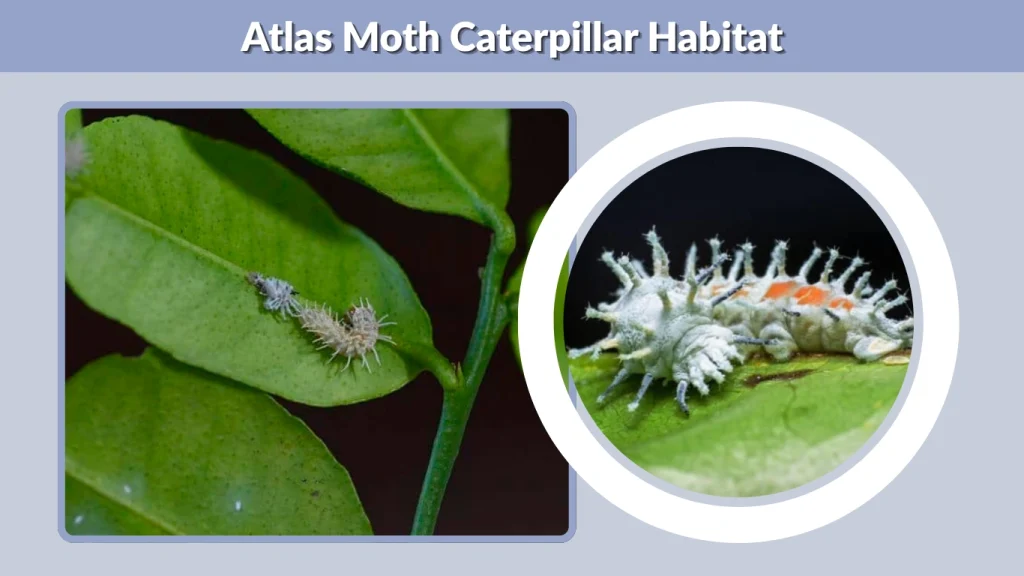
The atlas moth caterpillar is commonly found in tropical and subtropical regions. It thrives in environments where food plants are abundant and the climate supports rapid growth.
Where They Are Found
- Southeast Asia
- India
- Indonesia
Local Sightings
- Frequently seen in Singapore
- Reported in urban green areas like Yishun
- Found in gardens and forest edges
Interesting Facts About Atlas Moth Caterpillars
Atlas moth caterpillars are full of fascinating features that make them stand out among other insects. Their size, growth rate, and transformation process all contribute to their uniqueness.
- One of the largest caterpillars in the world
- Grows rapidly within a few weeks
- Covered with a protective waxy layer
- Transforms into one of the largest moths
Common Misconceptions
There are several myths about atlas moth caterpillars, mostly related to their size and appearance. Many people assume they are dangerous because they look unusual, but this is not true.
Another common misconception is that they live for a long time. In reality, their caterpillar stage is short, and even the adult moth has a very limited lifespan. Understanding these facts helps clear up confusion and highlights how unique their life cycle truly is.
FAQs
How big is an atlas moth caterpillar?
Atlas moth caterpillars can grow up to 10–12 cm long, making them one of the largest caterpillars in the world. Their thick body and size make them easy to identify compared to smaller species.
Are atlas moth caterpillars poisonous?
No, they are not poisonous or harmful. They do not sting, bite, or release toxins, making them safe to observe and handle carefully.
What do atlas moth caterpillars eat?
They feed on leaves from plants such as citrus, guava, and cinnamon. A steady supply of fresh leaves is essential for their growth and development.
How long does an atlas moth caterpillar live?
The caterpillar stage typically lasts around 2 to 4 weeks. After this, it forms a cocoon and enters the pupal stage before emerging as a moth.
Can you keep atlas moth caterpillars as pets?
Yes, they can be kept for observation purposes. However, they require proper care, fresh food, and a suitable environment to develop successfully.
