
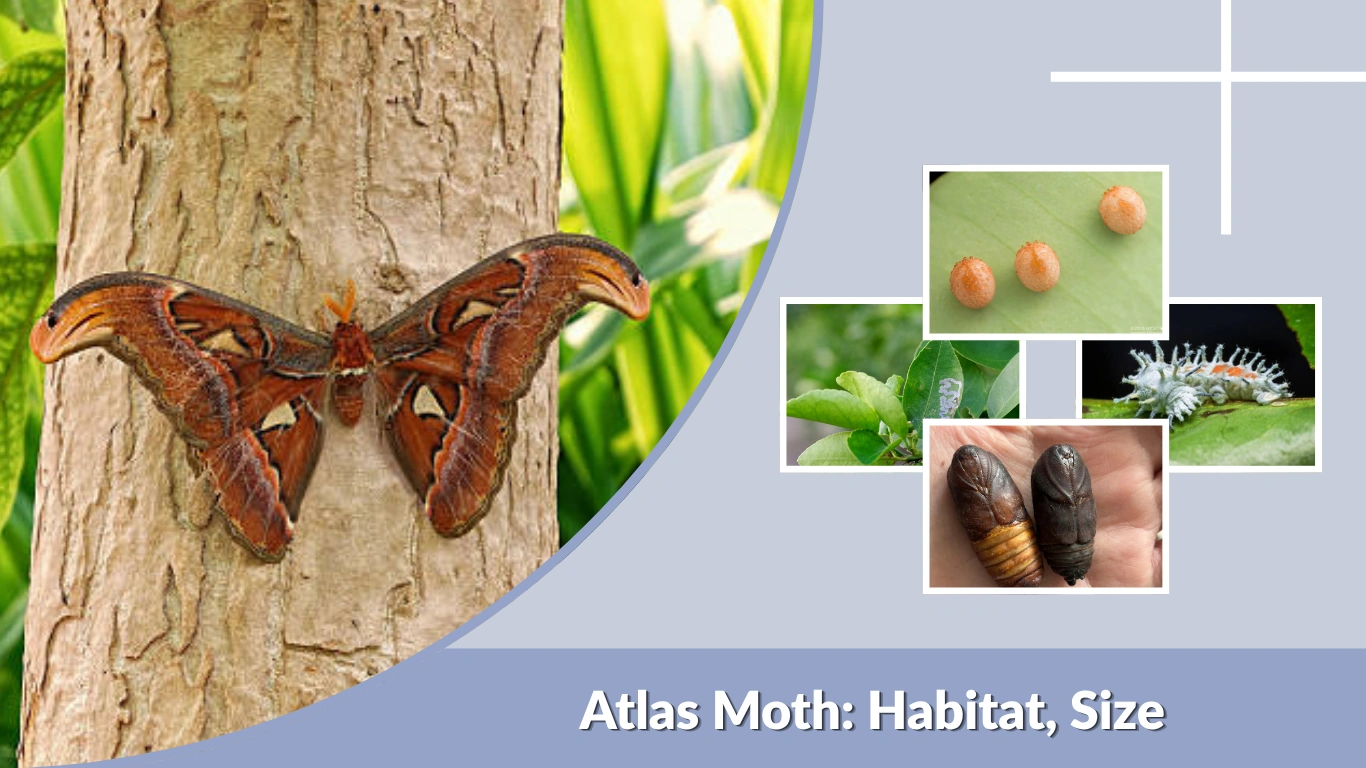
The atlas moth (Attacus atlas) is one of the largest and most fascinating insects in the world. Known for its massive wingspan and unique wing patterns, it is often considered a natural wonder. Found mainly in tropical regions of Asia, this moth attracts attention from scientists, hobbyists, and nature lovers alike. In this guide, you’ll learn about its size, life cycle, habitat, and other key facts that make the atlas moth so remarkable.
What Is the Atlas Moth?
The atlas moth is a giant species belonging to the Saturniidae family, which includes many large and colorful moths. It is widely recognized for its impressive size and distinctive wing shapes that resemble snake heads, helping it deter predators.
This moth is native to tropical and subtropical regions and thrives in warm, humid environments. Its unique appearance and short adult lifespan make it one of the most interesting insects to study and observe in nature.
Atlas Moth Size and Wingspan
The atlas moth is famous for its enormous size, often ranking among the largest moths in the world. Its wings are not only wide but also beautifully patterned, giving it both scale and visual impact.
How Big Is the Atlas Moth?
- Wingspan can reach 25–30 cm
- Larger than an average human hand
- One of the widest wings in the insect world
Wing Features
- Snake-like shapes on wing tips
- Brown and reddish patterns
- Broad, triangular wings
Atlas Moth Life Cycle
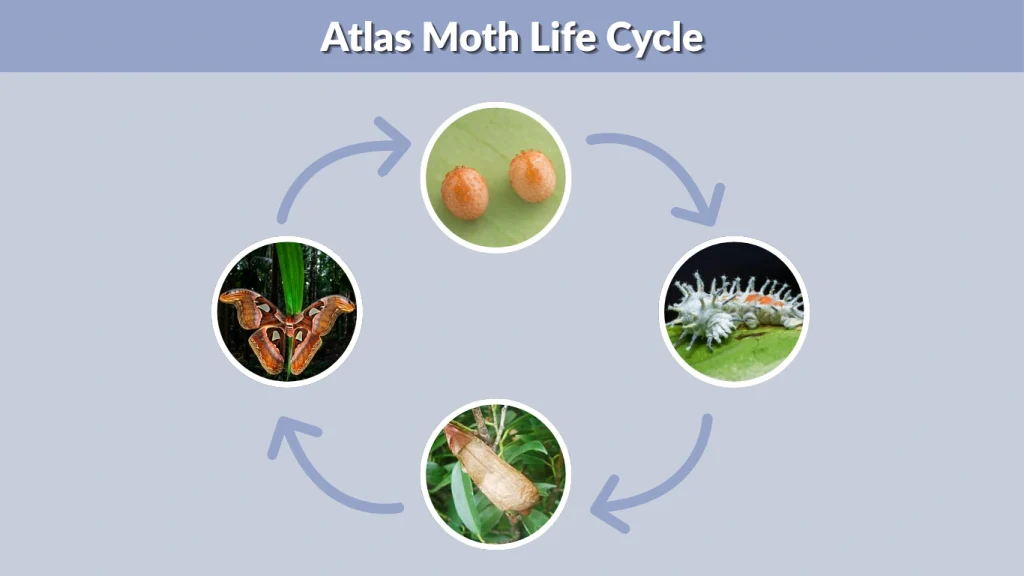
The atlas moth undergoes complete metamorphosis, meaning it transforms through several distinct stages before reaching adulthood. Each stage plays an important role in its development and survival.
Stages of Development
- Egg
- Caterpillar (larva)
- Cocoon (pupa)
- Adult moth
Atlas Moth Caterpillar
The caterpillar stage is the most active phase in the atlas moth’s life. During this period, it feeds constantly and grows rapidly, storing energy that will later support the adult moth.
The caterpillar is thick-bodied and usually pale green with a waxy coating. As it grows, it sheds its skin multiple times in a process known as molting. This stage is essential because the energy stored here determines how long the adult moth can survive without feeding.
Atlas Moth Cocoon and Pupae
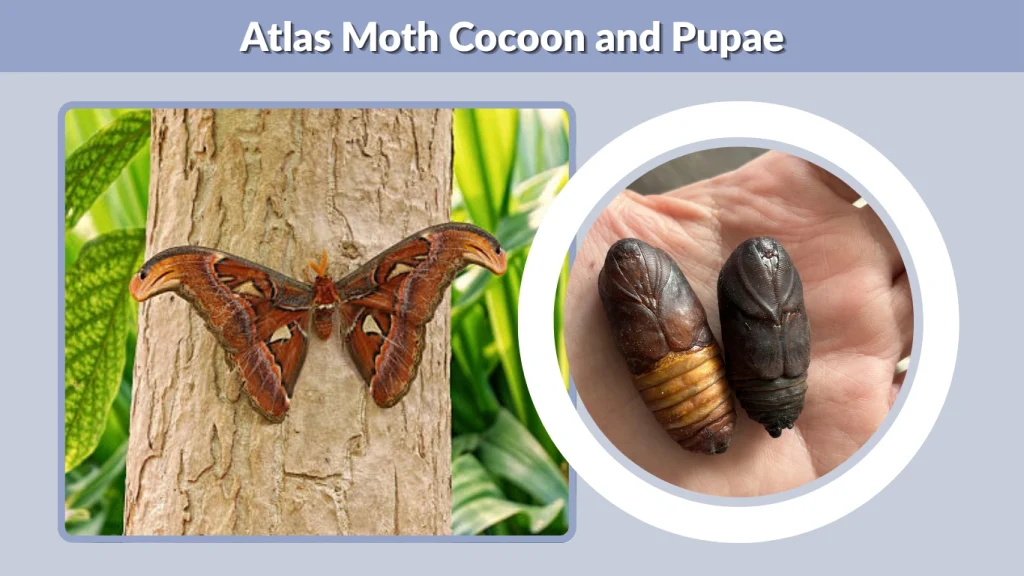
After reaching full size, the caterpillar begins the process of forming a cocoon. This stage marks the transition from larva to adult and is critical for the moth’s transformation.
Cocoon Structure
- Made of strong silk threads
- Attached to leaves or branches
- Provides protection from predators
Pupal Development
- Caterpillar becomes inactive
- Internal transformation begins
- Duration varies with environment
Atlas Moth Lifespan
The lifespan of the atlas moth is relatively short, especially in its adult stage. While the earlier stages can last several weeks, the adult moth typically survives for only a few days.
This short lifespan is due to the absence of functional mouthparts in adults. Instead of feeding, they rely entirely on energy stored during the caterpillar stage. Their main purpose during adulthood is reproduction, which they complete within a limited time.
What Do Atlas Moths Eat?
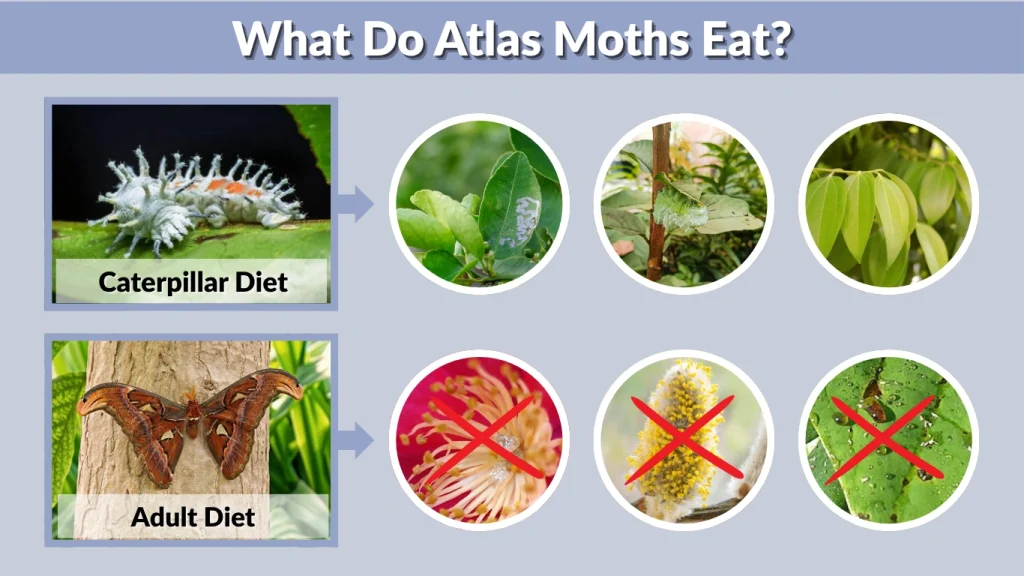
The feeding habits of the atlas moth depend on its life stage. While the caterpillar consumes large amounts of food, the adult moth does not eat at all.
Caterpillar Diet
- Citrus leaves
- Guava leaves
- Cinnamon leaves
Adult Stage
- Does not eat
- Uses stored energy
- Focuses on reproduction
Atlas Moth Habitat and Range
The atlas moth is found in tropical and subtropical regions where environmental conditions support its growth and development. These areas provide the warmth and vegetation needed for its life cycle.
Where Do Atlas Moths Live?
- Southeast Asia
- India
- Indonesia
Habitat Type
- Tropical forests
- Humid environments
- Areas with abundant host plants
Atlas Moth Appearance and Anatomy
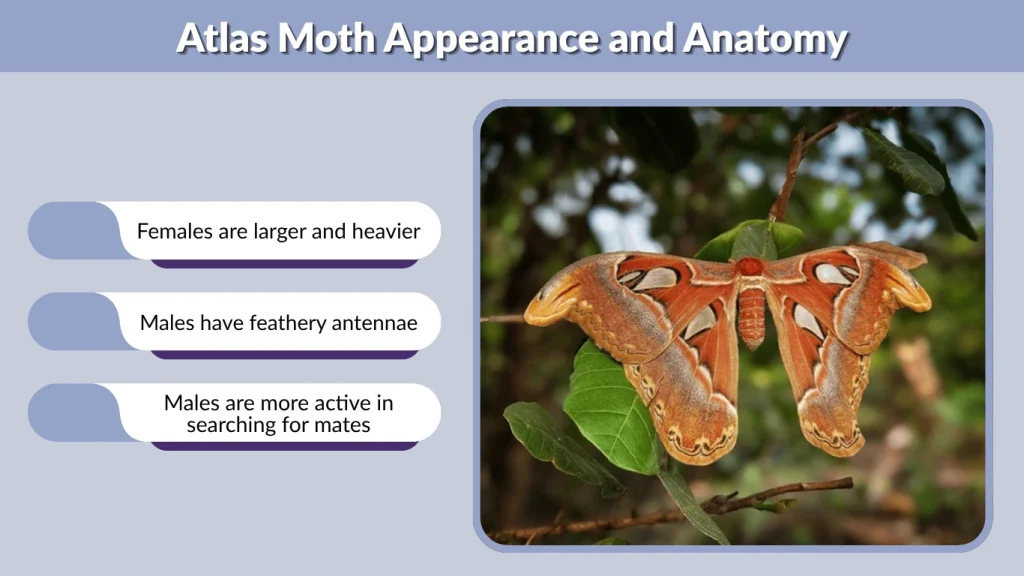
The atlas moth has a unique structure that sets it apart from other insects. Its large wings, thick body, and patterned surfaces all contribute to its distinctive look.
Male vs Female Atlas Moth
- Females are larger and heavier
- Males have feathery antennae
- Males are more active in searching for mates
Are Atlas Moths Dangerous or Poisonous?
Despite their size and unusual appearance, atlas moths are completely harmless to humans. They do not bite, sting, or produce venom. Their defensive strategy relies on visual deception, particularly the snake-like patterns on their wings.
These features help scare away predators but pose no real threat. Both the adult moth and caterpillar are safe to observe, making them popular among insect enthusiasts and educators.
Atlas Moth vs Other Moths
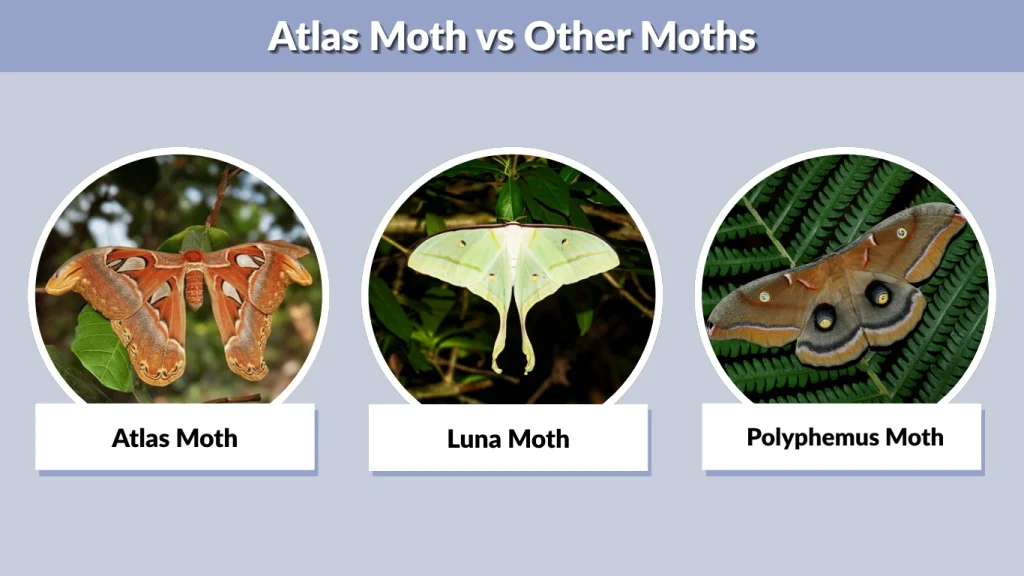
The atlas moth is often compared with other large moth species due to its size and appearance. These comparisons help highlight its unique traits and clear up confusion among similar-looking insects.
Atlas Moth vs Luna Moth
- Atlas moth is brown and much larger
- Luna moth is green with long tails
- Found in Asia vs North America
Atlas Moth vs Polyphemus Moth
- Atlas moth has larger wingspan
- Polyphemus has prominent eye spots
- Different habitats and coloration
Atlas Moth in Animal Crossing (ACNH)
The atlas moth is also popular in the game Animal Crossing: New Horizons, where players can catch it as a rare insect. Its large size and high value make it a desirable catch.
Where to Find It
- Appears on tree trunks
- Active at night
- Found on islands with trees
How to Catch It
- Approach slowly to avoid scaring it
- Use a net carefully
- Look in quiet areas with less movement
Atlas Moth for Sale
Atlas moths are sometimes available for purchase through breeders and specialty insect sellers. They may be sold at different life stages, depending on availability and season.
What You Can Buy
- Eggs
- Caterpillars
- Cocoons
- Framed specimens
Things to Consider
- Check local laws and regulations
- Ensure ethical sourcing
- Be cautious with shipping conditions
Atlas Moth Meaning and Symbolism
The atlas moth carries symbolic meaning in many cultures due to its transformation and striking appearance. Its life cycle represents change, growth, and renewal.
It is often associated with strength and presence because of its large size. At the same time, its short lifespan reflects the temporary nature of life, encouraging appreciation of each stage. These meanings make it a popular subject in art, tattoos, and cultural interpretations.
Interesting Atlas Moth Facts
The atlas moth is full of fascinating characteristics that make it stand out among insects. Its size, behavior, and appearance all contribute to its reputation as one of the most remarkable moths.
- One of the largest moths in the world
- Wing tips resemble snake heads
- Adults do not eat at all
- Active mainly at night
Are Atlas Moths Rare or Endangered?
Atlas moths are not considered globally endangered, but their populations can vary depending on location. In some areas, they are more common, while in others they may be rarely seen.
Habitat loss due to deforestation is one of the main threats affecting their population. As natural environments shrink, the availability of host plants decreases, which can impact their life cycle. Conservation of forest habitats plays an important role in maintaining their numbers.
Atlas Moth Predators
Like many insects, the atlas moth faces threats from natural predators. Despite its large size, it is still vulnerable in different stages of its life cycle.
Common Predators
- Birds
- Reptiles
- Small mammals
Defense Mechanisms
- Camouflage with wing patterns
- Snake-like wing tips to scare predators
- Staying inactive during the day
Common Misconceptions
There are several myths surrounding the atlas moth, mostly due to its unusual size and appearance. One common misconception is that it is a butterfly, but it is actually a moth with very different characteristics.
Another myth is that it is dangerous or poisonous, which is not true. Some people also believe it lives for a long time, when in reality the adult stage lasts only a few days. Understanding these facts helps clear up confusion.
FAQs
What is the scientific name of the atlas moth?
The scientific name of the atlas moth is Attacus atlas. It belongs to the Saturniidae family, which includes some of the largest and most visually striking moths in the world.
Are atlas moth caterpillars poisonous?
No, atlas moth caterpillars are not poisonous or harmful to humans. They do not sting or produce toxins, although their large size and unusual appearance may seem intimidating.
What is special about atlas moth wings?
Atlas moth wings are unique because their tips resemble snake heads. This feature helps scare away predators. Their large size and detailed patterns also make them one of the most recognizable moths in the world.
Can you keep an atlas moth as a pet?
Yes, atlas moths can be kept for observation, especially during the caterpillar stage. However, they require proper care, including fresh food for larvae and a suitable environment for cocoon formation.
Where are atlas moths found in India?
Atlas moths are commonly found in tropical and forested regions of India. They thrive in warm, humid climates where host plants are available for their caterpillars.
