
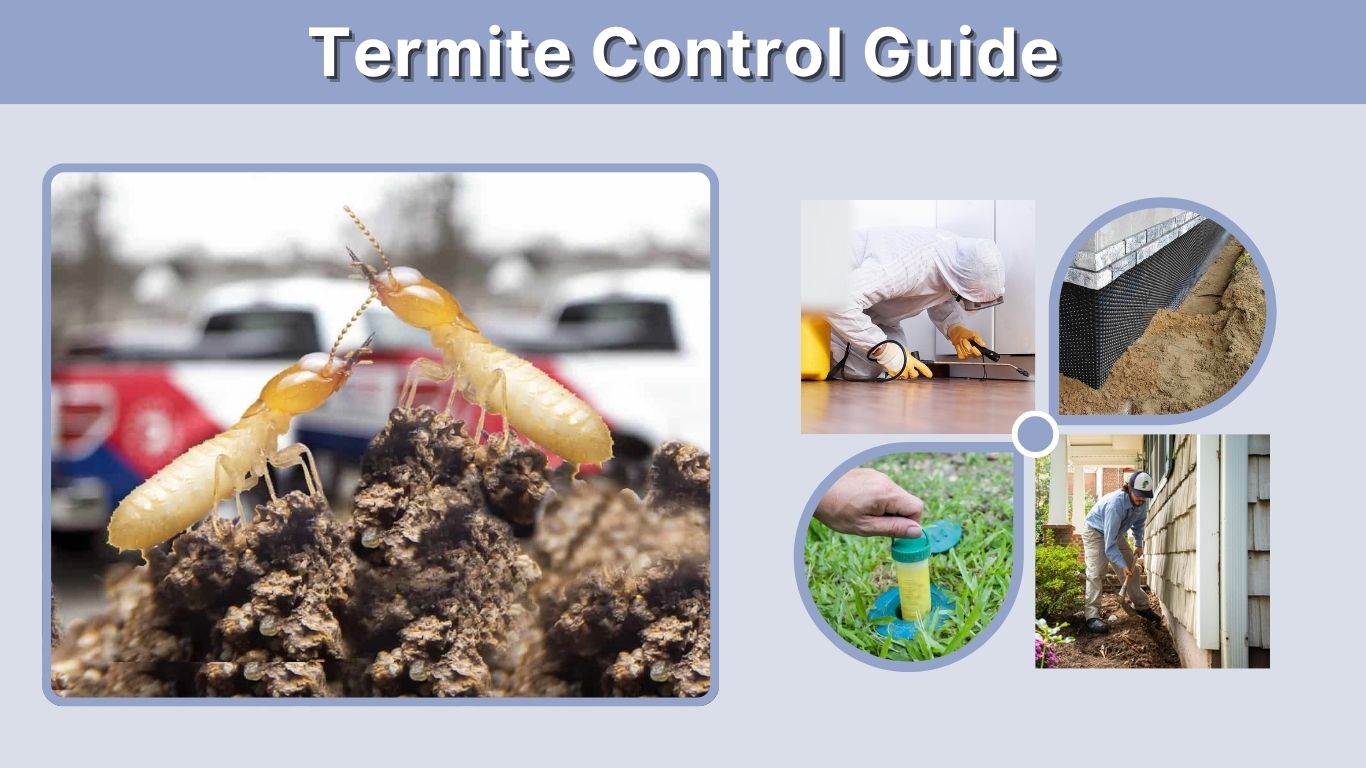
Termite control is one of the most important services a homeowner can invest in when protecting a property from structural damage. Whether you are searching for termite control near me, comparing termite control cost, or deciding between DIY termite control and professional treatment, knowing your options helps you act before the damage spreads. This guide explains termite pest control methods, pricing factors, and how to choose the right termite control company.
What Is Termite Control?
Termite control is the process of identifying, treating, preventing, and monitoring termite activity around a home or building. A proper termite control service does more than kill visible termites. It targets the colony, protects vulnerable areas, and helps reduce the chance of future infestation.
Termites often stay hidden behind walls, under floors, inside wooden structures, or in soil around the foundation. Because of this, many homeowners do not notice a termite problem until damage has already occurred.
Why Termite Pest Control Matters
Termites feed on cellulose, which is found in wood, paper, drywall, and other building materials. Left untreated, they can weaken floors, walls, beams, and foundations. Professional termite control is important because termites usually live in colonies, and killing a few insects does not solve the larger problem.
A termite pest control plan may include:
- A detailed inspection of the home and surrounding property
- Identification of termite species and activity level
- Soil treatment, bait systems, fumigation, or localized treatment
- Moisture and wood-to-soil contact recommendations
- Follow-up monitoring and prevention services
Common Signs You Need Termite Control
Homeowners often search for termite control services after noticing warning signs. These signs should not be ignored, especially if they appear near baseboards, windows, floors, crawl spaces, or foundations.
Common termite warning signs include:
- Mud tubes along walls, foundations, or crawl spaces
- Hollow-sounding wood
- Discarded wings near windows or doors
- Bubbling paint or damaged drywall
- Small piles of termite droppings
- Tight-fitting doors or windows
- Visible wood damage or soft flooring
If you notice any of these signs, it is best to schedule an inspection with a termite control company rather than waiting for the problem to grow.
Types of Termites and Treatment Needs
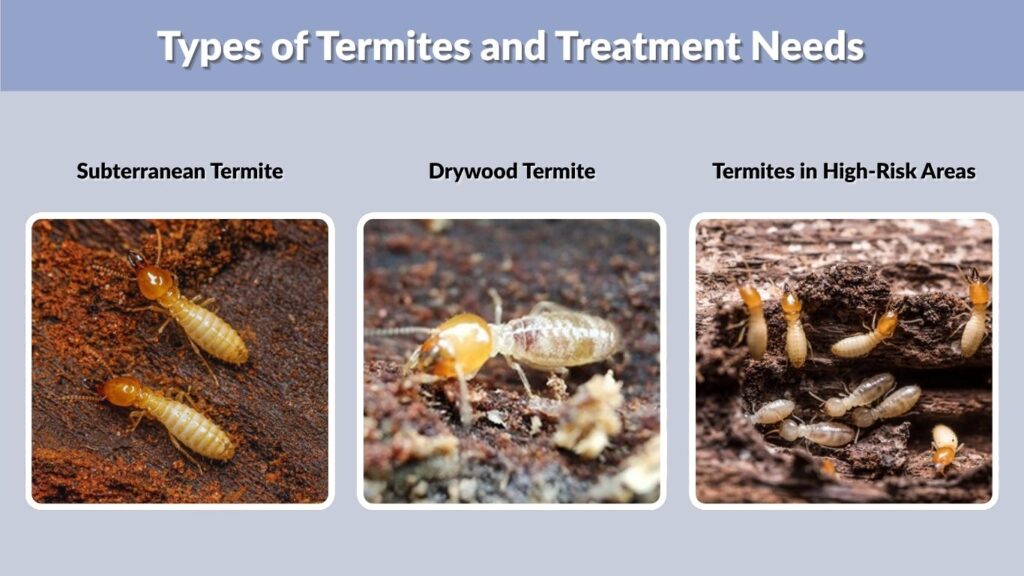
Different termites require different control methods. This is why professional termite control services usually begin with an inspection before recommending a treatment plan.
Subterranean Termite Control
Subterranean termites are among the most common and destructive termite species. They live in soil and build mud tubes to reach wood and other food sources. Pest control for subterranean termites often involves soil treatments, liquid termiticides, bait stations, or a combination of both.
Subterranean termite control is usually focused on creating a protective barrier around the home and eliminating the colony over time. Because these termites may enter through tiny foundation cracks, professional inspection is especially important.
Drywood Termite Control
Drywood termites live inside dry wood and do not need direct soil contact. They are common in warmer regions, including parts of Florida, Texas, California, and Arizona. Drywood termite control may involve localized wood treatment, heat treatment, or fumigation depending on how widespread the infestation is.
Homeowners often search for termite control without tenting when dealing with drywood termites. In some cases, localized treatments may work, but severe infestations may still require tent fumigation.
Termites in High-Risk Areas
Searches like termite control Tucson, termite control Miami, termite control Phoenix, termite control Florida, termite control Texas, and termite control San Diego show strong local demand. Warm climates, moisture, and long termite seasons can increase the need for regular termite inspections and prevention.
| Termite Control Need | Best Treatment Option | Best For |
| Subterranean termites | Soil treatment or bait system | Homes with soil-based termite activity |
| Drywood termites | Localized treatment or fumigation | Termites inside dry wood |
| Early signs of termites | Inspection and targeted treatment | Small or uncertain infestations |
| Severe infestation | Full professional treatment plan | Widespread structural activity |
| Prevention | Annual inspections and monitoring | High-risk termite areas |
Professional Termite Control vs DIY Termite Control
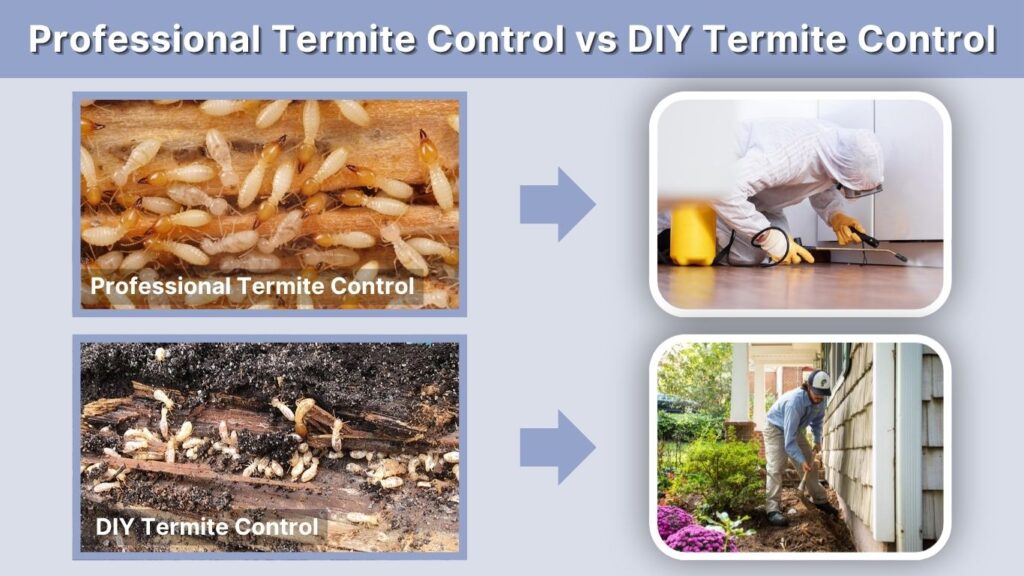
Many homeowners consider do it yourself termite control because it may seem cheaper at first. DIY termite control products can help with small, visible problems, but they often fail to reach the colony or hidden infestation.
Professional termite control services are usually more reliable because trained technicians understand termite behavior, treatment placement, and long-term monitoring.
Benefits of Professional Termite Control
A professional termite control company can provide a more complete solution than basic store-bought products. This is especially important when termites are already active inside the structure.
Professional services may offer:
- Accurate termite species identification
- Specialized treatment equipment
- Stronger professional-grade products
- Safer application around the home
- Long-term warranties or retreatment plans
- Follow-up inspections and monitoring
Companies such as Orkin pest and termite control, Truly Nolen pest and termite control, Viking termite and pest control, and other local providers often offer inspection-based treatment plans. However, homeowners should compare services, pricing, guarantees, and reviews before choosing a provider.
When DIY Termite Control May Help
DIY termite control may be useful for prevention or very small problems, but it should not replace professional treatment when active termites are present. Store-bought termite control products may include bait stakes, sprays, foams, or wood treatments.
DIY may help with:
- Reducing moisture around the foundation
- Removing wood debris near the home
- Sealing small cracks and entry points
- Treating exposed wood in sheds or fences
- Monitoring for early termite activity
However, if termites are inside walls, floors, or structural wood, professional termite pest control is usually the safer option.
Termite Control Cost and Pricing Factors
Termite control cost can vary widely depending on the type of termite, size of the property, treatment method, and severity of the infestation. Homeowners searching for termite control price should remember that the cheapest option is not always the best. A weak treatment may allow termites to return, leading to higher repair costs later.
What Affects Termite Control Cost?
Several factors influence the final price of termite control services. A professional inspection is usually needed before an accurate estimate can be provided.
Main pricing factors include:
- Size of the home or treatment area
- Type of termite infestation
- Treatment method used
- Level of damage or colony activity
- Accessibility of crawl spaces, attics, or foundations
- Local market pricing
- Warranty or annual protection plan
Subterranean termite control may cost less than full drywood termite fumigation, but pricing depends on the property. Termite control in cities like Miami, Phoenix, Tucson, San Diego, or Riverside may also vary based on regional termite pressure and local service rates.
How Much Should Termite Control Cost?
There is no single price that applies to every home. A small localized treatment may cost much less than whole-home fumigation or a complete soil barrier treatment. For the most accurate termite control cost, homeowners should request an inspection from at least two or three termite control companies.
When comparing quotes, do not only look at the price. Ask what the treatment includes, how long the warranty lasts, whether follow-up inspections are included, and what happens if termites return.
Best Termite Control Methods
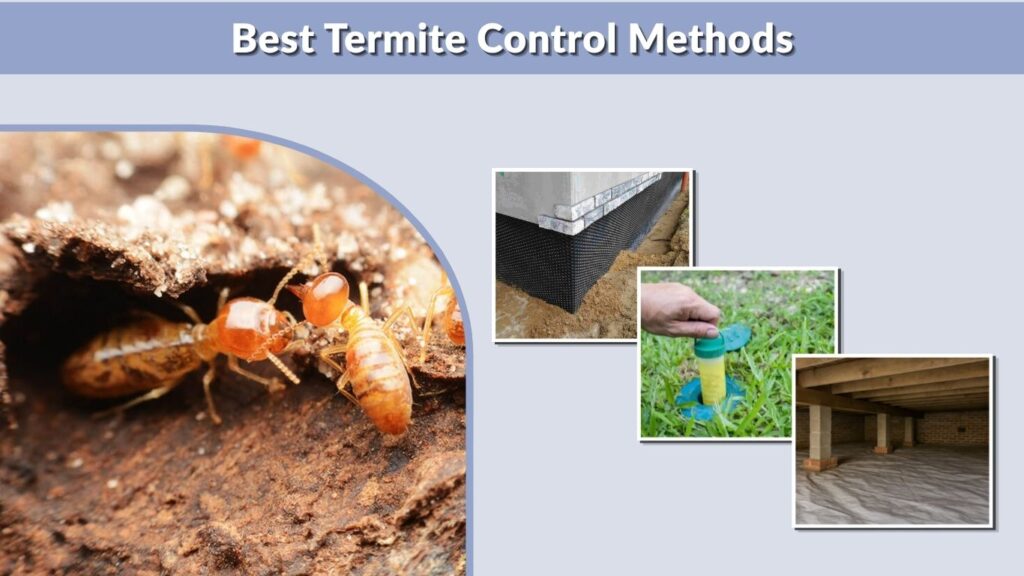
The best termite control method depends on the termite species and where the infestation is located. A qualified termite control expert will inspect the home before recommending a plan.
Liquid Termite Treatment
Liquid treatment is commonly used for subterranean termites. A technician applies termiticide to the soil around the home’s foundation, creating a treated zone that helps stop termites from entering the structure.
This method is often chosen for:
- Active subterranean termite infestations
- Foundation protection
- Long-term termite prevention
- Homes with crawl spaces or slab foundations
Termite Bait Systems
Bait systems are placed around the property to attract termites. The termites feed on the bait and carry it back to the colony. Over time, this can help eliminate or reduce the colony.
Bait systems are often used when homeowners want ongoing monitoring and a less invasive termite control service.
Fumigation
Fumigation is commonly used for severe drywood termite infestations. The home is covered with a tent, and gas is used to treat termites throughout the structure. While effective for widespread drywood termite activity, fumigation usually requires homeowners to leave the property during treatment.
Termite Control Without Tenting
Many homeowners prefer termite control without tenting because it is less disruptive. No-tent treatments may include localized foam, dust, liquid, heat, or wood treatments. These methods can work well when the infestation is limited to specific areas.
However, no-tent termite control may not be enough for widespread drywood termite infestations. A professional inspection can determine whether tenting is necessary.
Natural Termite Control
Natural termite control methods may include moisture reduction, wood removal, borate wood treatments, nematodes, or physical barriers. These options may support prevention, but they are not always enough to eliminate an active infestation.
Natural termite control is best viewed as part of a broader prevention plan rather than a guaranteed solution for severe termite activity.
How to Choose the Best Termite Control Company
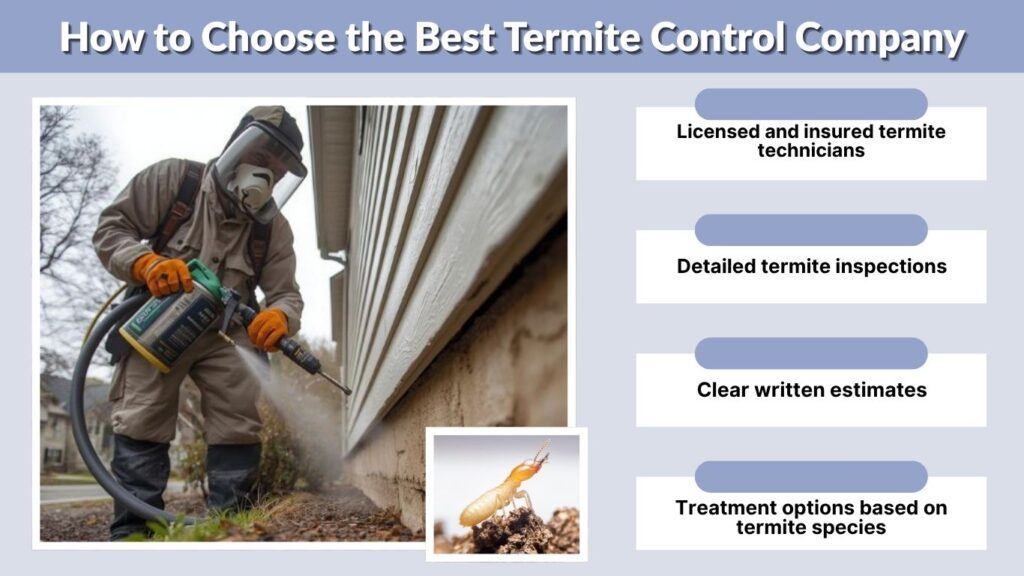
Choosing the best termite control company requires more than searching for termite control companies near me and selecting the first result. A good provider should be licensed, experienced, transparent, and willing to explain the treatment plan clearly.
What to Look For in a Termite Control Company
Before hiring a pest control company for termites, compare multiple providers. National brands and local companies may both offer strong service, but the right choice depends on experience, pricing, and treatment quality.
Look for a company that offers:
- Licensed and insured termite technicians
- Detailed termite inspections
- Clear written estimates
- Treatment options based on termite species
- Warranty or retreatment coverage
- Positive local reviews
- Transparent pricing and service terms
Local providers such as Neuse termite and pest control, Aloha termite and pest control, Strand termite and pest control, Dewey pest and termite control, Lloyd termite control, and other regional companies may be strong options in specific service areas. Larger companies like Orkin termite control or Truly Nolen pest and termite control may offer broader coverage and standardized plans.
Questions to Ask Before Hiring
Before signing a termite control service agreement, ask direct questions so you understand what you are paying for.
Important questions include:
- What type of termites do I have?
- Is the infestation active or old damage?
- What treatment method do you recommend and why?
- Is tenting required?
- How long will the treatment last?
- What is included in the termite control cost?
- Do you offer a warranty?
- Will follow-up inspections be included?
- What should I do before and after treatment?
A trustworthy termite control expert should answer these questions clearly and provide documentation.
Termite Prevention Tips for Homeowners
Termite control does not end after treatment. Prevention is essential, especially in areas with high termite activity. Regular inspections and simple property maintenance can reduce the risk of future infestations.
Ways to Help Prevent Termites
Homeowners can take several steps to make their property less attractive to termites.
Helpful prevention tips include:
- Keep firewood away from the house
- Remove dead tree stumps and wood debris
- Fix leaking pipes and outdoor faucets
- Improve drainage around the foundation
- Keep gutters clean
- Avoid direct wood-to-soil contact
- Seal cracks around the foundation
- Schedule regular termite inspections
Moisture control is especially important. Termites are often attracted to damp wood, crawl spaces, and areas with poor ventilation.
New Construction Termite Control
Some homeowners ask, “Do Ohio new construction homes need termite control?” The answer depends on local building codes, lender requirements, and regional termite risk. In many areas, new homes may require pre-construction termite treatment or termite protection documentation.
Even if treatment is not required, termite prevention during construction can be a smart investment. Pre-treatment may include soil treatment, physical barriers, treated wood, or other preventive measures.
Local Termite Control Services
Searches for termite control near me, termite pest control near me, pest control for termites near me, and termite and pest control near me show that homeowners want fast local help. Local termite activity can vary by climate, soil conditions, home construction type, and moisture levels.
Why Local Experience Matters
A termite control company with local experience understands which termite species are common in your area and which treatments work best. For example, termite control in Florida may involve different concerns than termite control in Arizona, Texas, or California.
Local knowledge helps with:
- Identifying regional termite species
- Choosing effective treatment methods
- Understanding seasonal termite swarms
- Meeting local inspection requirements
- Providing realistic pricing and prevention advice
When searching for affordable termite control, balance price with quality. A low-cost service is only valuable if it properly treats the infestation and helps prevent future damage.
FAQs
How much does termite control cost?
Termite control cost depends on the termite type, property size, treatment method, and infestation level. A small localized treatment may cost less than whole-home fumigation or a full soil treatment. The best way to estimate termite control price is to schedule inspections with two or three licensed companies.
Is professional termite control better than DIY termite control?
Professional termite control is usually better for active infestations because termites often hide inside walls, floors, soil, or structural wood. DIY termite control products may help with prevention or minor visible activity, but they often fail to eliminate the full colony or hidden termite problem.
What is the best treatment for subterranean termites?
Subterranean termite control often uses liquid soil treatments, bait systems, or both. Liquid treatments help create a protective zone around the foundation, while bait systems target the colony over time. A termite control expert can recommend the right method after inspecting the home.
Can termite control be done without tenting?
Yes, termite control without tenting is possible in some cases. Localized treatments, foam, dust, heat, or wood treatments may work when drywood termite activity is limited. However, severe or widespread drywood termite infestations may still require tent fumigation for complete treatment.
How often should I schedule termite inspections?
Most homeowners should schedule a termite inspection at least once a year, especially in high-risk areas like Florida, Texas, Arizona, and California. Homes with past termite activity, moisture problems, crawl spaces, or nearby wood debris may need more frequent monitoring from a termite control company.
