
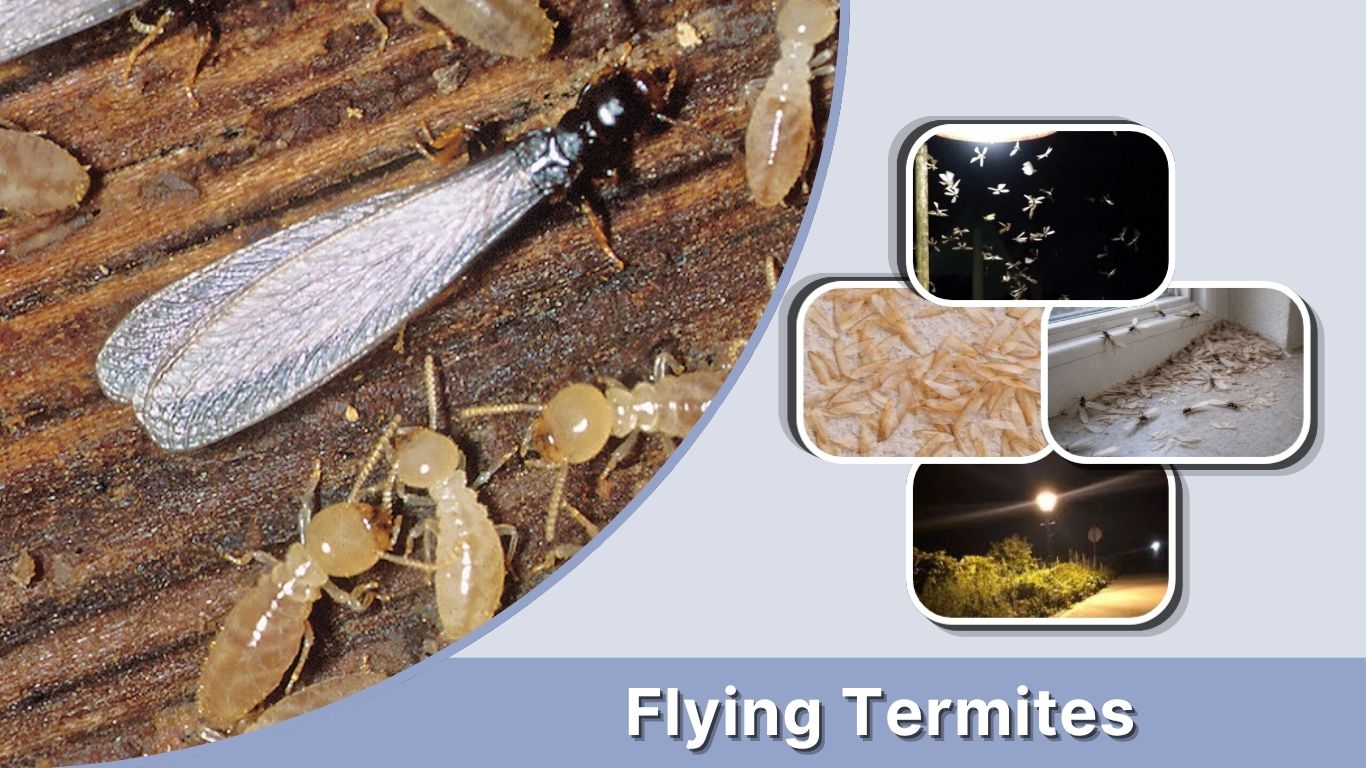
Flying termites can be alarming, especially when they suddenly appear inside your home or around windows after rain. Many homeowners confuse them with flying ants, but the difference matters because termites may indicate a hidden colony nearby. This guide explains what flying termites look like, why they appear, how to tell them apart from ants, and what to do if you find them indoors.
What Are Flying Termites?
Flying termites are reproductive termites, also called swarmers or alates. Their job is to leave an existing colony, fly out in groups, mate, and start new colonies. They do not usually cause wood damage themselves, but their presence can be a warning sign that a mature termite colony is active nearby.
Flying termites are most often seen during swarm season. Depending on the termite species and local climate, swarms may happen in spring, summer, or after warm rain. In humid areas such as Florida and other southern states, termite flying activity can be especially common.
Do Termites Fly?
Yes, some termites fly, but not all termites have wings. Worker termites and soldier termites do not fly. Only reproductive termites develop wings and leave the colony during a swarm.
After flying and mating, swarmers usually shed their wings. That is why many homeowners find piles of small, equal-sized wings near windows, doors, vents, or light fixtures.
Why Do Flying Termites Suddenly Appear?
Flying termites suddenly appear when conditions are right for swarming. Warm temperatures, moisture, and recent rain can trigger termite colonies to release swarmers. They are often attracted to light, which is why they may gather near windows, lamps, porch lights, or glass doors.
A swarm indoors may suggest termites are already inside the structure. A swarm outdoors does not always mean your home is infested, but it does mean termites are active in the area.
What Do Flying Termites Look Like?
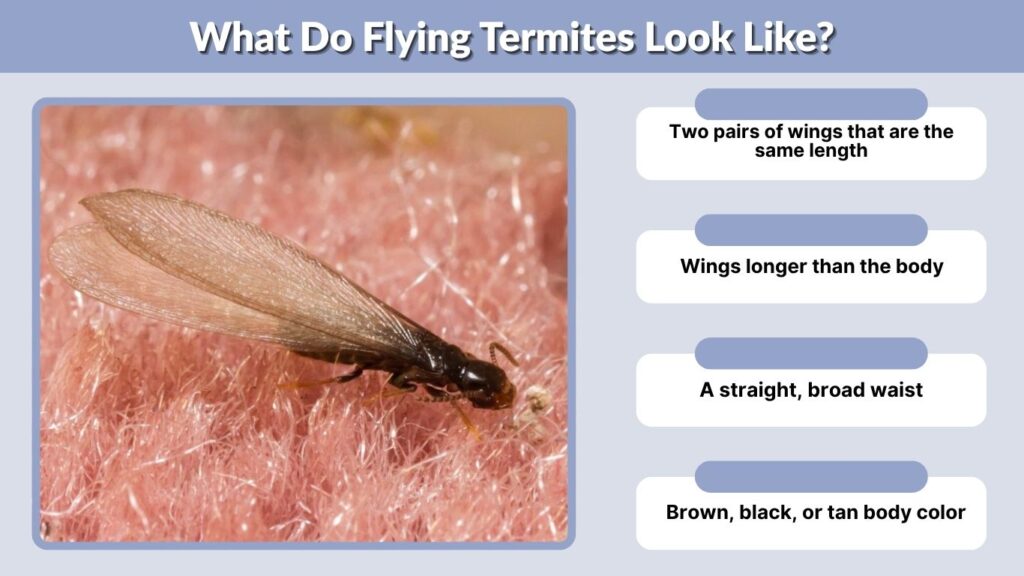
Flying termites are small insects with straight bodies, long equal-length wings, and straight antennae. Their color may range from pale brown to dark brown or black, depending on the species.
Many people search for flying termites images or flying termites pictures because they are hard to identify at first glance. The most important features are the wings, body shape, and antennae.
Common Features of Flying Termites
Flying termites usually have:
- Two pairs of wings that are the same length
- Wings longer than the body
- A straight, broad waist
- Straight or slightly beaded antennae
- Brown, black, or tan body color
- A soft-looking body compared with many ants
Black flying termites are common in some species, while brown flying termites may also appear. Color alone is not enough for identification, so compare several features before deciding whether the insect is a termite or flying ant.
Flying Ants vs Termites
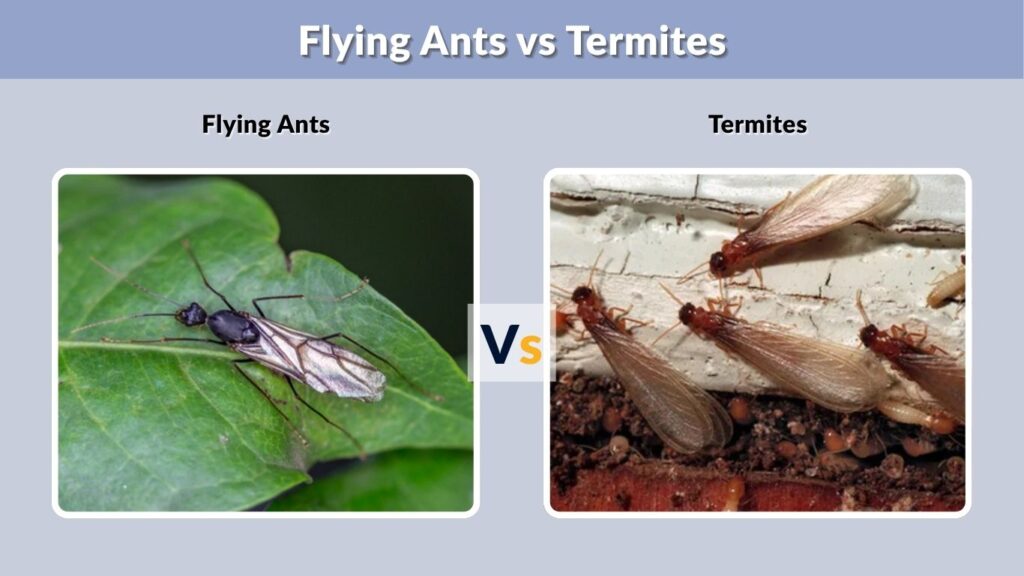
Flying ants and flying termites are often confused because both can swarm and both may appear near windows or lights. However, they have different body shapes and wing structures.
| Feature | Flying Termites | Flying Ants |
| Waist | Straight, broad waist | Narrow, pinched waist |
| Wings | Four wings, equal length | Front wings longer than back wings |
| Antennae | Straight antennae | Bent or elbowed antennae |
| Body shape | More uniform body | Segmented body |
| Risk | May indicate termite colony | May indicate ant nest |
Difference Between Flying Ants and Termites
The easiest difference between flying ants and termites is the waist. Termites have a thick, straight body without a narrow middle section. Flying ants have a pinched waist, similar to regular ants.
The second difference is the wings. Flying termite wings are usually equal in size and longer than the body. Flying ant wings are uneven, with larger front wings and smaller back wings.
Are Flying Ants Termites?
No, flying ants are not termites. They are different insects with different nesting habits and risks. However, both can appear in large numbers during warm weather, and both may be attracted to lights.
If you are unsure whether you have a flying ant or termite, collect a sample in a sealed bag or take a clear photo and contact a pest control professional.
Flying Termites in the House
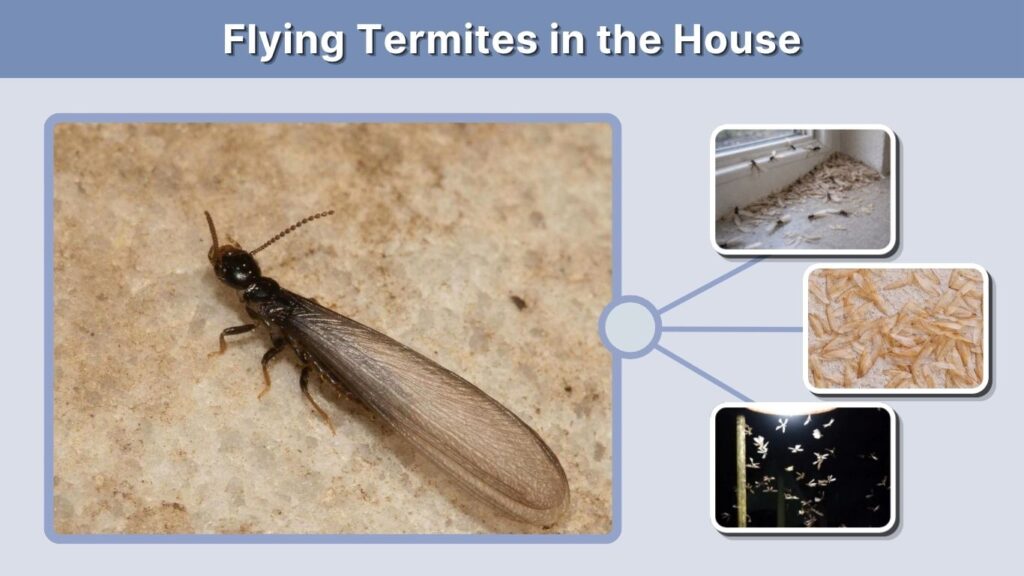
Finding flying termites in the house should be taken seriously. One or two insects may enter from outside, especially during a large outdoor swarm. However, multiple flying termites indoors, especially near windows or doors, can point to an active colony inside walls, floors, crawl spaces, or nearby structural wood.
Common Indoor Warning Signs
You may notice:
- Flying termites around windows
- Piles of discarded wings
- Swarmers near lights
- Mud tubes on walls or foundations
- Soft or hollow-sounding wood
- Bubbling paint or damaged trim
- Termite flies in the bathroom, basement, or garage
If flying termites keep appearing inside, avoid simply spraying the visible insects and ignoring the source. The swarmers are only a symptom. The main colony may still be hidden.
Are Flying Termites Dangerous?
Flying termites are not usually dangerous to people. They do not commonly bite humans, and they are not known for spreading disease. The real danger is what they may reveal: a termite colony capable of damaging wood and structural materials.
So, are flying termites dangerous? Not because they fly around your room, but because their presence may signal a larger termite problem.
Do Flying Termites Bite or Eat Wood?
Many homeowners ask, “Do flying termites bite?” In most cases, flying termites are not a biting threat to humans. They are focused on mating and starting new colonies.
Another common question is, “Do flying termites eat wood?” Reproductive swarmers are not the main wood-damaging members of the colony. Worker termites do most of the feeding. Still, flying termites come from colonies that rely on workers, so seeing swarmers may mean wood-damaging termites are nearby.
Bugs That Look Like Flying Termites
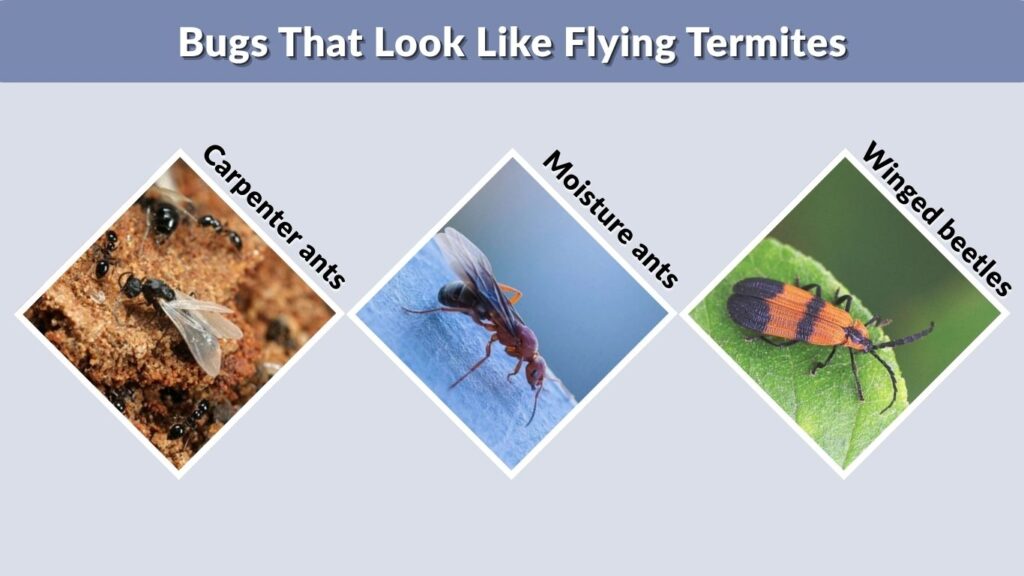
Several insects can look like flying termites, especially during swarm season. Correct identification is important before choosing treatment.
Common Lookalikes
Bugs that look like flying termites include:
- Flying ants
- Carpenter ants
- Moisture ants
- Winged beetles
- Small moth-like insects
- Certain gnats or flies near lights
Carpenter ants are one of the most common insects mistaken for termites. They can damage wood by excavating galleries, but they do not eat wood the same way termites do. Treatment methods may differ, so proper identification matters.
Drywood and Subterranean Termite Swarmers
Both drywood termites and subterranean termites can produce flying swarmers. Subterranean termites usually nest in soil and often build mud tubes. Drywood termites live inside dry wood and may leave tiny droppings, also called frass.
If the flying insects are coming from furniture, attic wood, window frames, or wall voids, a drywood termite problem may be possible. If they are near foundation areas or crawl spaces, subterranean termites may be more likely.
Flying Termites After Rain
Flying termites after rain are common because moisture helps create ideal swarming conditions. Warm, humid weather encourages reproductive termites to leave the colony. This is why swarms often happen after spring or summer rainfall.
Outdoor swarms after rain may come from colonies in soil, trees, stumps, fences, or neighboring properties. Indoor swarms after rain may suggest termites are already entering or living inside the structure.
Flying Termites in Florida
Flying termites in Florida are especially common because the climate is warm and humid. Florida has several termite species, including subterranean and drywood termites. Because swarm seasons can vary by species, homeowners may see termite activity at different times of the year.
Homes in high-risk areas should have routine termite inspections, moisture control, and preventive treatment when recommended.
How to Get Rid of Flying Termites
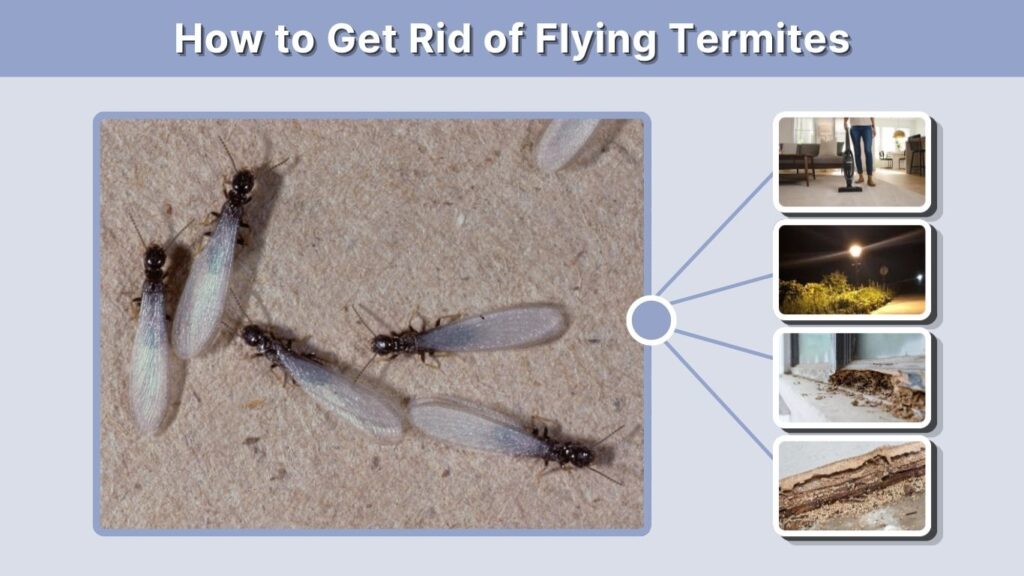
Getting rid of flying termites starts with identifying the source. Killing visible swarmers may reduce the immediate nuisance, but it will not eliminate the colony.
What to Do Right Away
If you see flying termites:
- Save a few insects or wings for identification
- Take photos near the swarm location
- Vacuum visible swarmers
- Turn off unnecessary lights at night
- Check windows, doors, and baseboards
- Look for mud tubes or damaged wood
- Schedule a termite inspection
Do not rely only on store-bought spray. Spraying swarmers may kill the insects you see, but hidden worker termites and the colony may continue damaging wood.
Professional Treatment Options
A pest control professional may recommend different treatment methods depending on the termite species and infestation location.
Common options include:
- Liquid soil treatment for subterranean termites
- Bait station systems around the property
- Localized wood treatment
- Foam treatment in wall voids
- Fumigation for severe drywood termite infestations
- Moisture correction and structural repairs
The best solution depends on whether the termites are drywood, subterranean, or another species.
Can You Prevent Flying Termites?
You cannot stop every outdoor termite swarm in your neighborhood, but you can make your home less attractive and reduce the risk of infestation.
Prevention Tips for Homeowners
To lower termite risk:
- Repair plumbing and roof leaks quickly
- Keep gutters clean and draining properly
- Move firewood away from the foundation
- Avoid wood-to-soil contact
- Keep mulch below siding level
- Remove old stumps and dead wood
- Seal cracks around the foundation
- Schedule regular termite inspections
Moisture control is especially important because termites are attracted to damp conditions. Crawl spaces, basements, bathrooms, and exterior walls should be checked regularly.
When to Call a Termite Professional
Call a termite professional if you see flying termites inside the house, repeated swarms, discarded wings, mud tubes, damaged wood, or insects you cannot identify. You should also schedule an inspection if neighbors have termite problems or if you are buying or selling a home.
A professional can confirm the species, locate activity, explain treatment options, and provide a written report. Early inspection can prevent a small termite issue from becoming a major repair problem.
FAQs
Can termites fly?
Yes, reproductive termites can fly during swarm season. These winged termites leave mature colonies to mate and start new colonies. Worker and soldier termites do not fly.
What does a flying termite look like?
A flying termite usually has a straight waist, straight antennae, and four wings of equal length. The wings are often longer than the body and may fall off after swarming.
What is the difference between flying ants and termites?
Flying termites have straight waists, straight antennae, and equal-length wings. Flying ants have pinched waists, bent antennae, and front wings that are longer than their back wings.
Why are flying termites in my house?
Flying termites in your house may mean a colony is active inside or near the structure. They may also enter from outside during a swarm, but repeated indoor sightings should be inspected professionally.
How do you kill flying termites?
You can vacuum visible flying termites, but killing swarmers does not remove the colony. The best solution is to identify the termite species and treat the source with professional termite control.
