
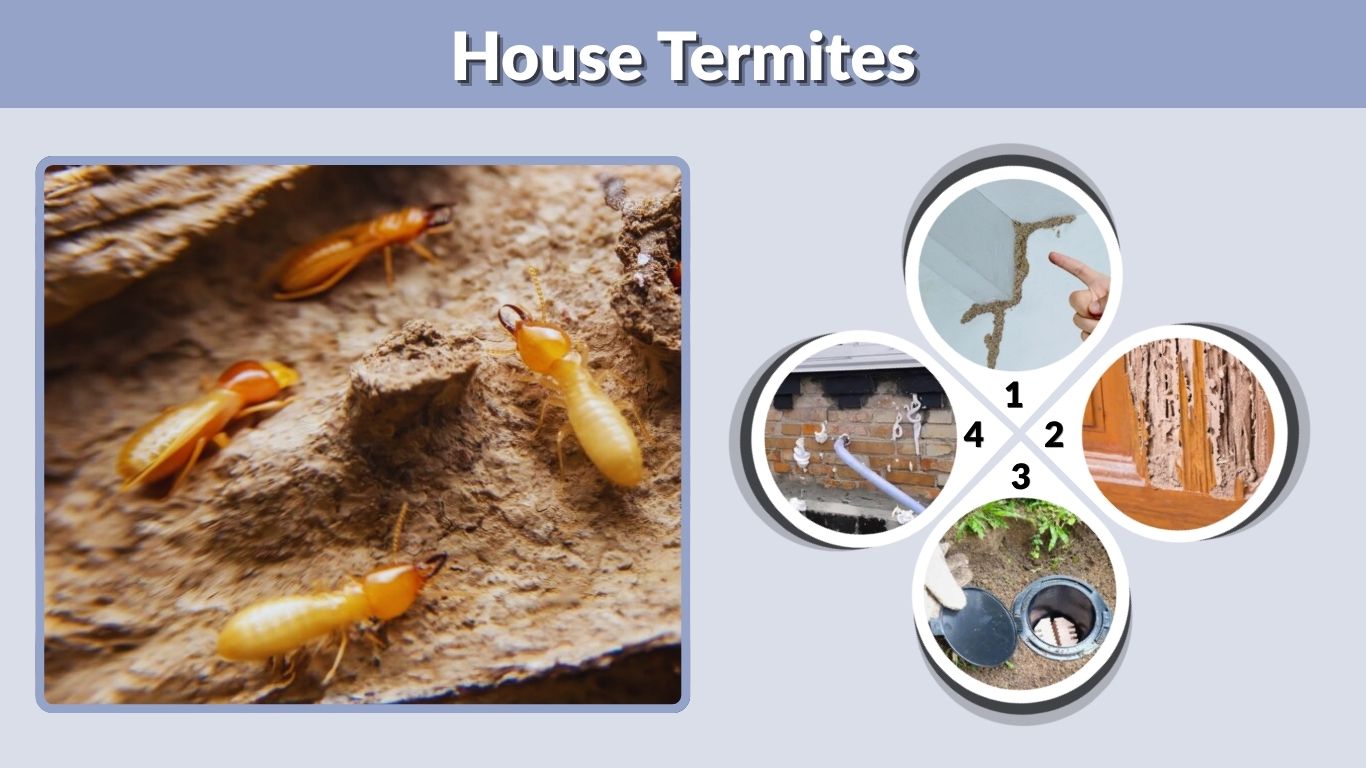
Termites in a house can quietly damage wood, flooring, walls, and structural supports before homeowners notice a serious problem. Because they often stay hidden behind walls, under floors, or inside wooden areas, early detection is important. This guide explains how house termites get inside, the warning signs to look for, treatment options, inspection tips, and practical ways to protect your home from future infestations.
What Are House Termites?
House termites are wood-destroying insects that feed on cellulose, a natural material found in wood, paper, cardboard, and some building materials. They are small, social insects that live in colonies and work together to find food, build tunnels, reproduce, and expand their nest.
The main concern with termites is not just their presence but the damage they can cause over time. A colony may stay active for months or even years if it is not discovered. By the time visible damage appears, the infestation may already be advanced.
Common Types of Termites Found in Houses
Different termite species behave in different ways, but most home infestations involve a few common types.
Subterranean termites are among the most common and destructive. They usually live in soil and enter homes through cracks, foundation gaps, crawl spaces, or wood touching the ground. They often build mud tubes to travel safely between the soil and the house.
Drywood termites live inside dry wood and do not need direct soil contact. They may infest furniture, attic beams, wooden trim, doors, or wall framing. Because they stay inside wood, they can be difficult to find early.
Dampwood termites prefer moist or decaying wood. They are more common in areas with water damage, leaks, poor ventilation, or wood that stays wet for long periods.
How Do Termites Get in Your House?
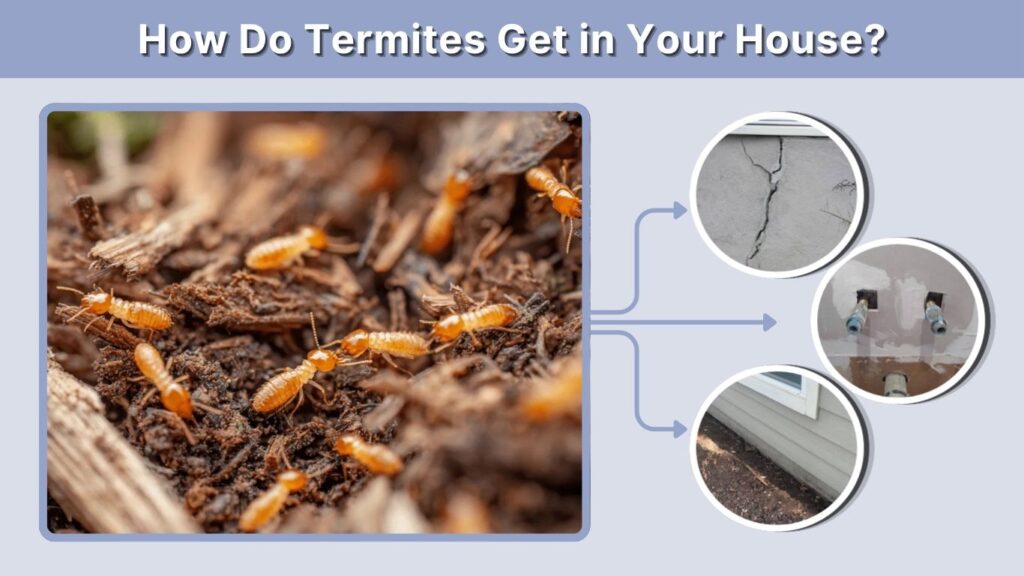
Termites enter homes when they find moisture, food, and access points. A small opening can be enough for them to start moving into the structure. Many homeowners do not realize how easy it is for termites to get inside.
Common entry points include:
- Cracks in the foundation or concrete slab
- Gaps around pipes, utility lines, doors, and windows
- Wood siding or framing touching soil
- Crawl spaces with excess moisture
- Firewood, lumber, or cardboard stored near the home
- Leaky gutters, downspouts, or plumbing
- Tree stumps, mulch, or dead roots close to the foundation
Once termites find a reliable food source, they may continue feeding and expanding their colony. Moisture problems make the risk higher because many termites are attracted to damp wood and humid spaces.
Why Moisture Attracts Termites
Moisture helps termites survive and move around more easily. Leaky pipes, roof leaks, clogged gutters, and poor drainage can create damp areas that attract termites. Bathrooms, kitchens, basements, crawl spaces, and laundry rooms are especially vulnerable if water problems are ignored.
Reducing moisture does not always eliminate termites, but it makes your home less attractive to them and supports long-term prevention.
Signs of Termites in House Areas
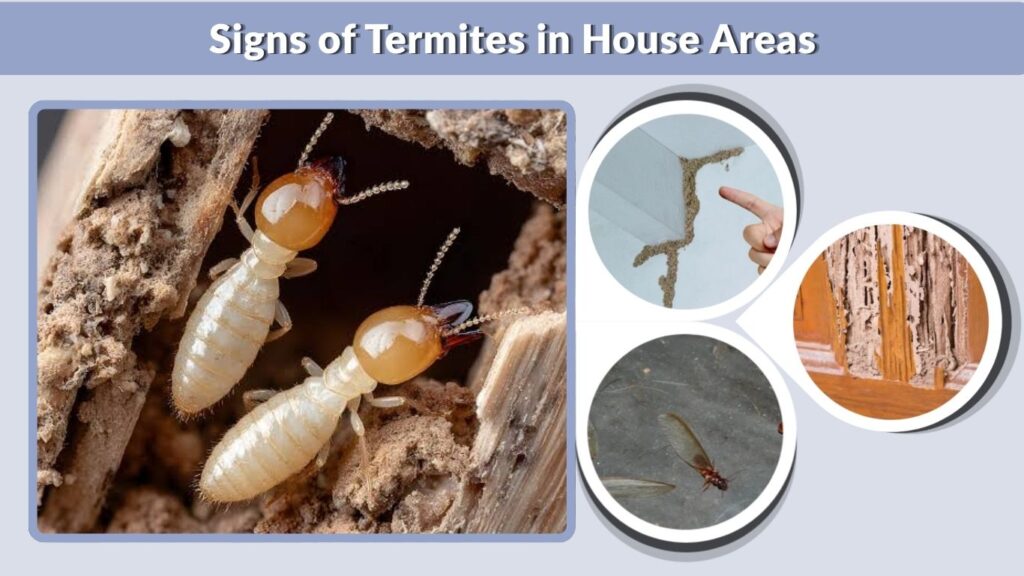
Termites are often called silent destroyers because they can damage a home without obvious warning signs. However, there are several clues that may point to an infestation. Spotting these signs early can help reduce repair costs.
Mud Tubes on Walls or Foundation
Mud tubes are one of the most common signs of subterranean termites. These narrow tunnels are usually made from soil, saliva, and termite waste. They protect termites from dry air and predators while they travel.
You may find mud tubes:
- Along foundation walls
- Inside crawl spaces
- Around basement walls
- Near plumbing openings
- Behind porch steps or exterior siding
If you break open a mud tube and see live termites, the infestation may still be active. Even empty tubes should be checked by a professional because termites may have moved to another area.
Hollow or Damaged Wood
Termites often eat wood from the inside out. A wooden beam, floorboard, or trim piece may look normal on the outside but be damaged inside. When tapped, infested wood may sound hollow or papery.
You may also notice blistering, soft spots, sagging floors, or wood that breaks easily. In advanced cases, doors and windows may become difficult to open because damaged wood has shifted or warped.
Flying Termites in House Spaces
Flying termites, also called swarmers, are reproductive termites that leave a colony to start new colonies. Seeing winged termites indoors is a strong warning sign, especially if they appear near windows, doors, lights, or vents.
Many people confuse flying termites with flying ants. Termites usually have straight antennae, a thick waist, and wings of equal length. Flying ants usually have bent antennae, a narrow waist, and front wings that are longer than the back wings.
Discarded Wings
After swarming, termites shed their wings. Small piles of wings near windowsills, baseboards, doors, bathtubs, or light fixtures can indicate termites nearby. Even if you do not see live insects, discarded wings should not be ignored.
Termite Droppings
Drywood termites may leave behind tiny droppings called frass. These pellets often look like small grains of sand, sawdust, or pepper. They may appear near wooden furniture, baseboards, window frames, or attic beams.
Termite Damage Inside a House
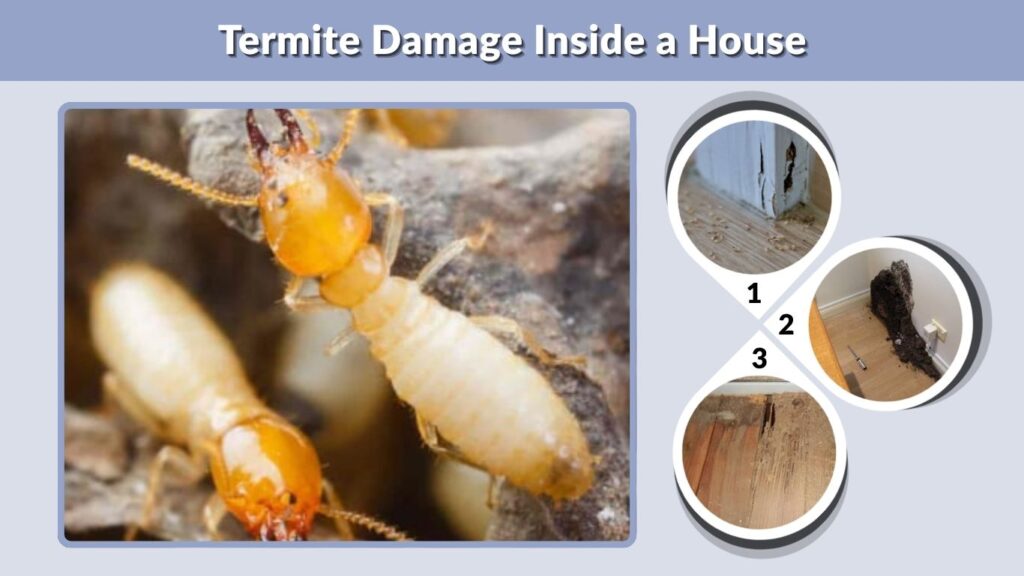
Termite damage can range from minor surface issues to serious structural problems. The amount of damage depends on the termite species, colony size, moisture conditions, and how long the infestation has been active.
| Area of the House | Possible Termite Damage | Warning Signs |
| Floors | Weak boards, sagging, soft spots | Spongy feel, creaking, uneven areas |
| Walls | Damaged studs, hollow drywall, bubbling paint | Cracks, peeling paint, faint tapping sounds |
| Doors and windows | Warped frames, tight movement | Sticking doors, hard-to-open windows |
| Attic | Damaged rafters, beams, or stored items | Frass, wings, damaged wood |
| Foundation areas | Mud tubes and hidden wood damage | Tubes, moisture, soil-to-wood contact |
Termites do not usually destroy a home overnight. The danger is slow, hidden damage. That is why homeowners should act quickly when they see signs, even if the problem seems small.
Can a House With Termites Be Saved?
Yes, most houses with termites can be saved if the infestation is treated properly and damaged areas are repaired. The key is to identify the species, locate the colony, stop the activity, and correct conditions that allowed termites to thrive.
A professional inspection is often the best starting point because termite damage can be hidden behind walls, under flooring, or inside support beams.
How to Know If Your House Has Termites
If you suspect termites, avoid relying on one sign alone. Look for a combination of clues and inspect both indoor and outdoor areas.
Check these areas carefully:
- Foundation walls and crawl spaces
- Basement corners and support posts
- Window sills and door frames
- Attic beams and roof framing
- Wooden decks, porches, and steps
- Garage walls and stored wood
- Areas near plumbing leaks or water stains
Use a flashlight and screwdriver to inspect exposed wood. Soft, hollow, or easily punctured wood may indicate damage. However, do not tear apart walls or floors without proper guidance. Disturbing termite activity can sometimes make the colony move deeper into the structure.
When to Call a Termite Inspector
Call a termite inspector if you see mud tubes, live termites, flying termites, discarded wings, unexplained wood damage, or droppings. You should also schedule an inspection before buying a house, especially in areas where termites are common.
A termite inspection when buying a house can help reveal hidden damage and prevent expensive surprises after closing. It can also help buyers negotiate repairs or treatment before finalizing the purchase.
How to Get Rid of Termites in House Areas
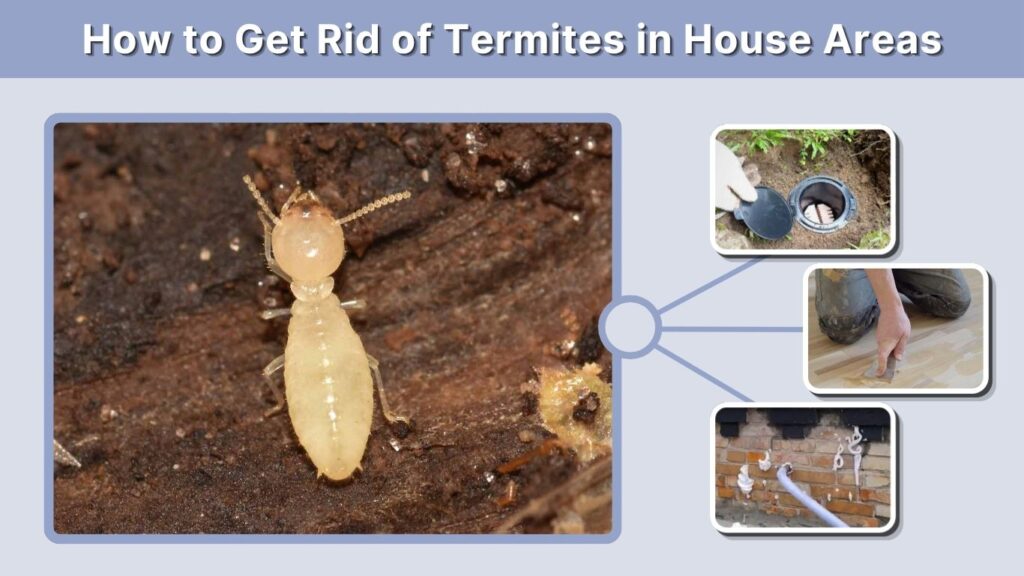
Getting rid of termites depends on the type of termite and the size of the infestation. Home remedies may reduce visible activity, but they rarely eliminate the entire colony. A full treatment plan is usually needed.
Professional Termite Treatment Options
Professional treatment may include soil treatments, bait systems, wood treatments, or fumigation. The best method depends on where termites are located and how widespread the problem is.
Common options include:
- Liquid termiticide treatment around the foundation
- Termite bait stations placed around the home
- Direct wood treatment for localized infestations
- Foam treatment inside wall voids or hidden spaces
- Whole-house fumigation for severe drywood termite infestations
Subterranean termites often require soil treatment or bait systems. Drywood termites may need localized wood treatment or tenting if the infestation is widespread.
House Tenting for Termites
House tenting is usually used for severe drywood termite infestations. During tenting, the home is covered with a large tent and treated with fumigant gas. This gas reaches termites hidden deep inside wood.
Tenting can be effective, but it is not always necessary. It also requires homeowners, pets, plants, and certain items to be removed from the home during treatment. A licensed termite professional can determine whether tenting is the right option.
Can You Use Home Remedies for Termites?
Some homeowners search for home remedies for termites inside the house. While options like vinegar, orange oil, boric acid, or essential oils may affect termites in a small area, they are usually not reliable for eliminating a colony.
Home remedies may be useful for temporary control or prevention support, but they should not replace a professional inspection when there are signs of an active infestation.
Termite Prevention Tips for Homeowners
Preventing termites is easier and often cheaper than repairing termite damage. The goal is to reduce moisture, remove food sources, and block access to the home.
Useful prevention steps include:
- Keep firewood and lumber away from the house
- Repair leaking pipes, faucets, roofs, and gutters
- Direct downspouts away from the foundation
- Avoid wood-to-soil contact around decks and siding
- Keep mulch several inches away from the foundation
- Seal foundation cracks and gaps around utility lines
- Improve crawl space ventilation
- Schedule regular termite inspections
Small maintenance habits can make a major difference. Termites are less likely to settle in a dry, well-maintained home with fewer entry points.
Landscaping and Outdoor Prevention
Outdoor conditions often create termite problems before termites enter the house. Dead trees, stumps, wooden borders, thick mulch, and poor drainage can attract termites near the foundation.
Keep plants trimmed away from exterior walls and avoid piling soil or mulch against siding. If you use mulch, keep it shallow and leave a gap between the mulch and the foundation.
What to Do If You Find Termites
Finding termites can feel stressful, but quick action helps limit damage. Do not panic, and do not start spraying random products without knowing the termite type.
Follow these steps:
- Take photos of the termites, wings, mud tubes, or damage
- Avoid disturbing the area too much
- Check nearby rooms, walls, and exterior foundation areas
- Contact a termite inspector or pest control professional
- Ask for a written report and treatment plan
- Repair moisture problems before or after treatment
- Keep records of inspection, treatment, and repairs
A clear inspection report should explain the type of termite, evidence found, affected areas, and recommended treatment. If damage is serious, you may also need a contractor or structural specialist.
FAQs
What are the first signs of termites in a house?
The first signs may include mud tubes, discarded wings, flying termites, hollow-sounding wood, small droppings, bubbling paint, or doors and windows that suddenly stick. Because termites often stay hidden, even one warning sign should be checked carefully.
Are flying termites in house areas dangerous?
Flying termites do not usually bite or harm people, but they are a warning sign. They may indicate an active colony nearby or a new colony forming. If you see swarmers indoors, schedule a termite inspection as soon as possible.
How do termites get inside your house?
Termites can enter through foundation cracks, gaps around pipes, crawl spaces, wood touching soil, or damp areas near the home. Firewood, mulch, dead roots, and water leaks can also attract termites close to the structure.
Can I treat termites in my house myself?
Small surface treatments may kill visible termites, but they often do not reach the colony. For active infestations, professional treatment is usually more reliable. Termites can hide deep inside walls, floors, soil, or wooden structures.
How often should a house be inspected for termites?
Many homes should be inspected once a year, especially in areas where termites are common. You should also get an inspection before buying a house, after water damage, or whenever you notice signs like mud tubes, wings, or damaged wood.
