
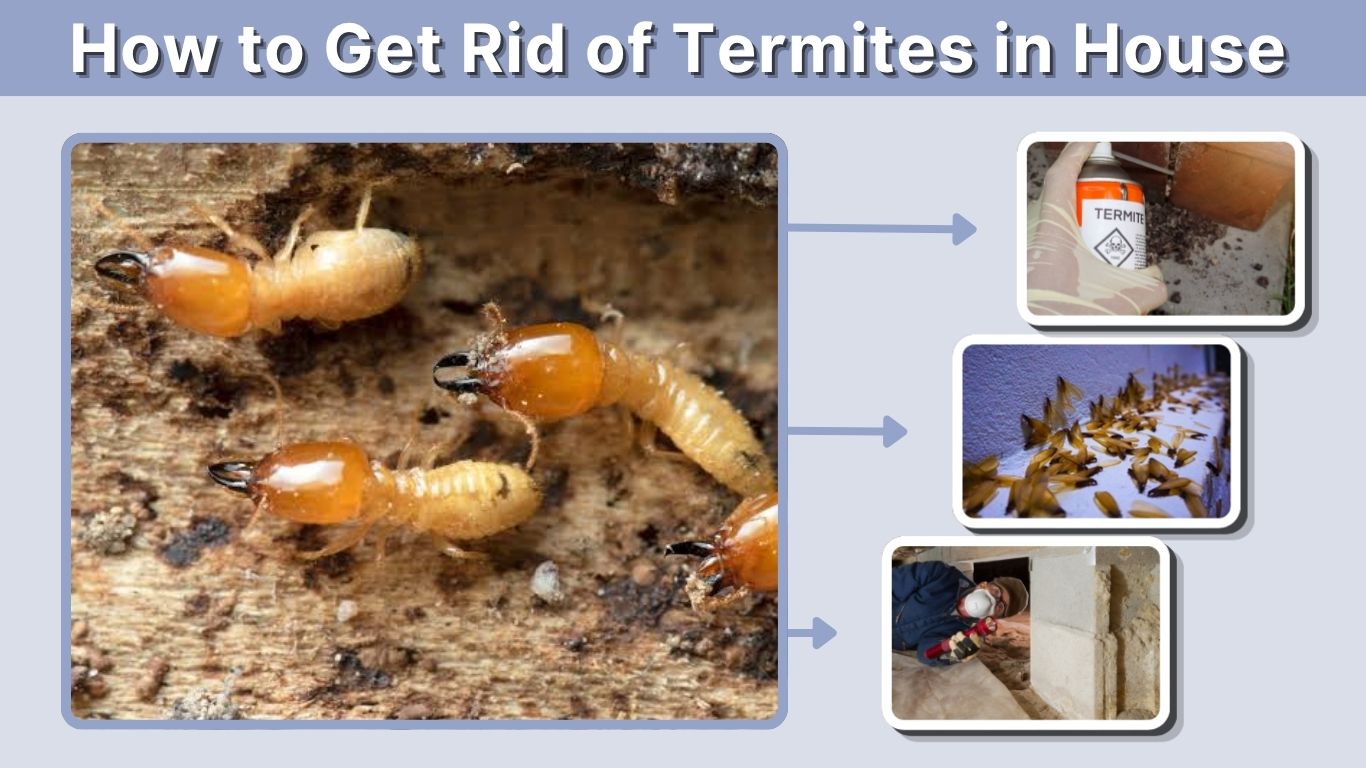
Termites in your house can damage wood, flooring, walls, furniture, and even structural supports if they are ignored. The problem is that termites often work quietly behind walls, under floors, or inside wooden areas before obvious damage appears. If you want to know how to get rid of termites in house areas, the first step is identifying the signs, finding where they are active, and choosing the right treatment method.
Understanding the Termite Problem
Getting rid of termites is not the same as killing a few insects you see on the floor. Termites live in colonies, and the visible termites may only be a small part of the problem. A proper treatment plan should target the colony, the entry points, and the conditions that attracted them.
Most homeowners discover termites after seeing flying termites, mud tubes, soft wood, discarded wings, or damage around doors, windows, floors, or walls. In some cases, termites may already be inside wall voids or wooden framing before they are noticed.
Common Types of Termites in Houses
The treatment method depends on the termite type. The most common types include subterranean termites, drywood termites, and dampwood termites.
Subterranean termites usually live in soil and enter the house through foundation cracks, crawl spaces, plumbing gaps, or wood touching the ground. They often build mud tubes to travel safely.
Drywood termites live inside dry wood and do not need soil contact. They can infest furniture, attic wood, door frames, trim, and wall framing.
Dampwood termites prefer wet or decaying wood. They are more likely to appear where there are leaks, moisture problems, or rotting wooden areas.
Signs You Have Termites in Your House
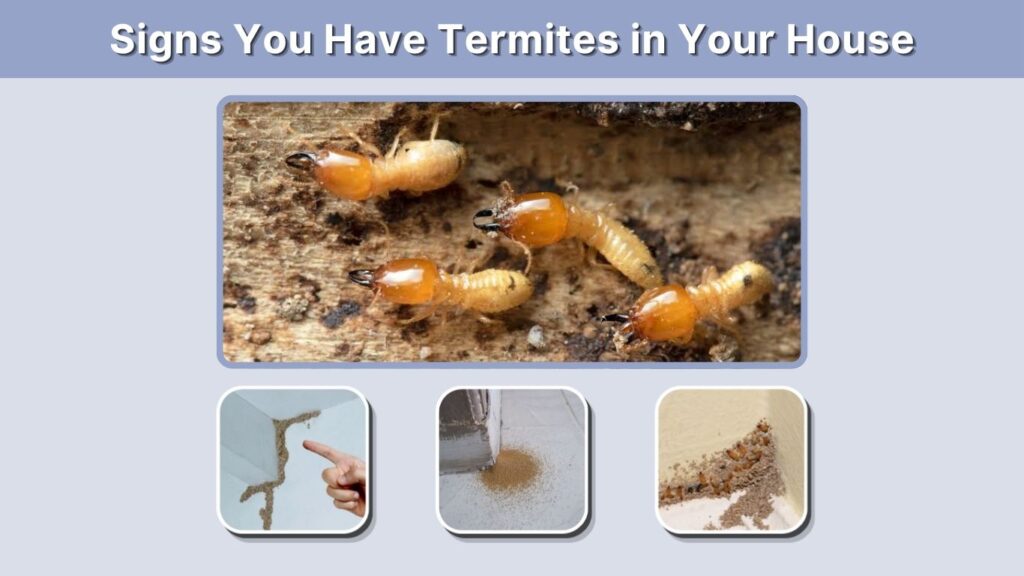
Before choosing treatment, confirm whether termites are actually active. Many people confuse termites with ants, especially when they see winged insects indoors.
Warning Signs to Look For
Common termite signs include:
- Mud tubes on foundation walls, basement walls, or crawl spaces
- Flying termites inside the house
- Piles of discarded wings near windows or doors
- Hollow-sounding wood
- Bubbling paint or damaged drywall
- Small droppings that look like sawdust or sand
- Soft, sagging, or damaged flooring
- Doors and windows that suddenly stick
- Tiny holes in wood surfaces
If you see several of these signs, the infestation may already be active. Avoid disturbing the area too much before inspection because termites may move deeper into hidden spaces.
Flying Termites vs Flying Ants
Flying termites have straight antennae, thick waists, and wings that are about the same length. Flying ants usually have bent antennae, narrow waists, and front wings that are longer than their back wings.
If you are trying to get rid of flying termites in house areas, remember that swarmers are usually a symptom of a larger colony. Killing the flying termites you see does not remove the source.
How to Get Rid of Termites in House Areas
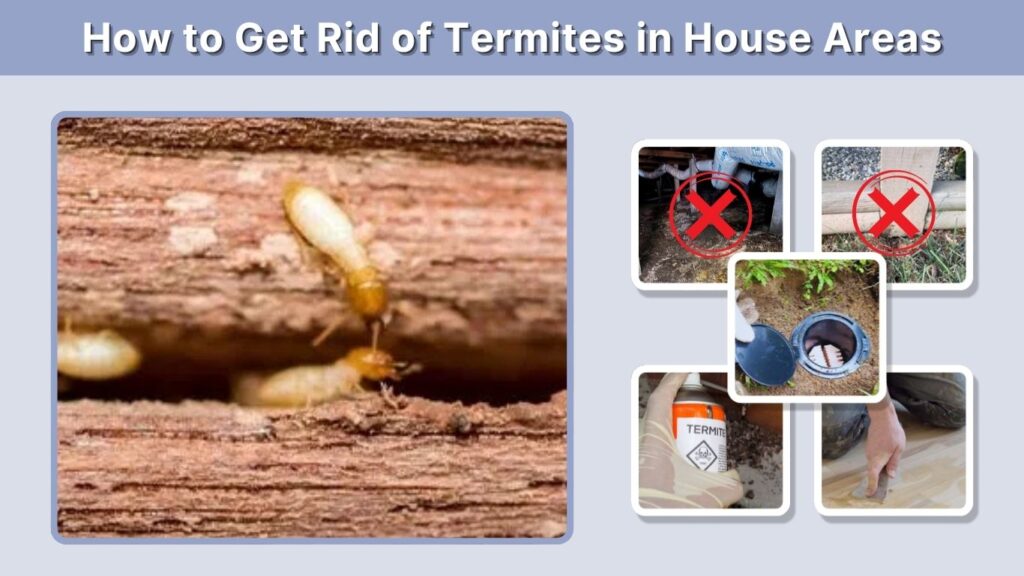
The best way to get rid of termites depends on where they are, how large the colony is, and whether they are subterranean or drywood termites. For a serious infestation, professional treatment is usually the safest and most reliable option.
Step 1: Inspect the House Carefully
Start with a careful inspection. Look around the foundation, crawl space, basement, attic, wooden trim, window frames, door frames, floors, and areas near plumbing.
Check for moisture, mud tubes, damaged wood, and termite droppings. Use a flashlight in dark spaces. Tap wooden areas gently to listen for hollow sounds. Do not break open walls unless you know what you are doing.
Step 2: Remove Moisture Sources
Termites are attracted to moisture. Fixing water problems will not always kill termites, but it helps stop the conditions that support them.
Focus on these areas:
- Repair leaking pipes and faucets
- Clean clogged gutters
- Direct downspouts away from the foundation
- Improve crawl space ventilation
- Fix roof leaks
- Remove wet cardboard, wood scraps, and debris
- Keep bathrooms, kitchens, and laundry rooms dry
Moisture control is especially important if you want to get rid of termites permanently in house areas.
Step 3: Remove Wood-to-Soil Contact
Subterranean termites often enter a house where wood touches soil. Check decks, porch posts, siding, fence connections, crawl spaces, and wooden steps.
Try to keep wooden parts of the home above the soil line. Store firewood away from the house and keep lumber, cardboard, and dead branches away from the foundation.
Step 4: Use Termite Bait Stations
Termite bait stations are commonly used for subterranean termites. These stations are placed around the home. Termites feed on the bait and carry it back to the colony, helping reduce or eliminate the colony over time.
Bait systems can be effective, but they require correct placement and monitoring. Many professional pest control companies use bait systems as part of a long-term termite management plan.
Step 5: Apply Liquid Termite Treatment
Liquid termiticides are often used around the foundation to create a treated zone in the soil. When termites pass through the treated area, they are exposed to the product.
This method can be useful for subterranean termites, but proper application requires training and equipment. It may involve trenching, drilling, or treating soil around the foundation. Incorrect use can be unsafe or ineffective.
Step 6: Treat Infested Wood
If termites are inside wood, direct wood treatment may help. Professionals may use foam, dust, liquid products, or borate treatments depending on the situation.
This method is often used for localized termite activity in wall voids, beams, trim, or furniture. However, treating one piece of wood does not always solve the colony problem, especially with subterranean termites.
How to Get Rid of Termites in House Walls
Termites in walls are difficult because the damage may be hidden. Signs may include bubbling paint, faint clicking sounds, soft drywall, tiny holes, or mud tubes near the baseboard.
If you suspect termites in house walls, avoid simply spraying the surface. Surface sprays may kill a few visible insects but usually will not reach the colony. A pest control professional may inspect wall voids and use foam treatment, baiting, drilling, or other targeted methods.
For wall infestations, the treatment should focus on three things: locating the activity, treating the hidden area, and stopping the entry point.
How to Get Rid of Flying Termites in House
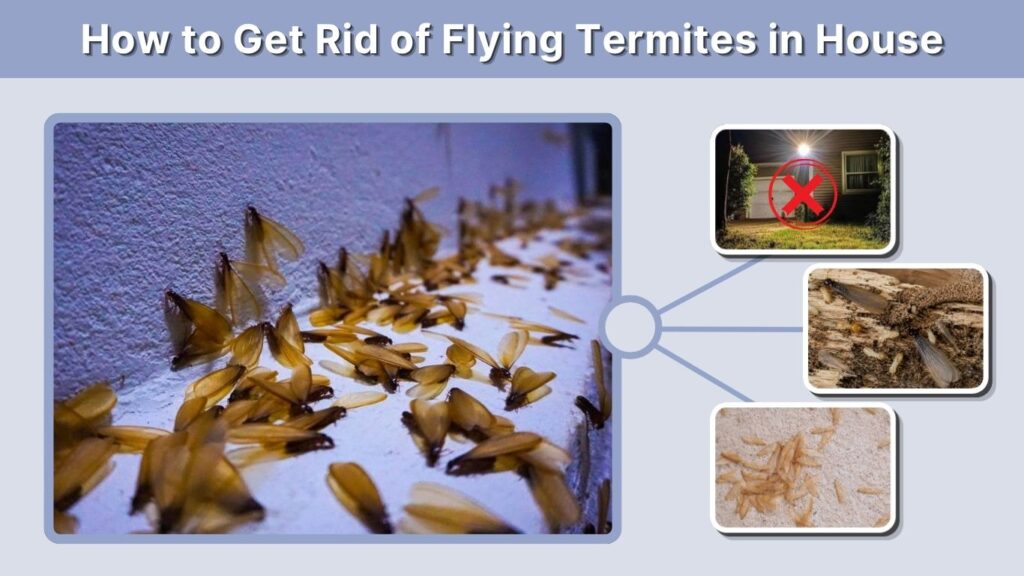
Flying termites inside the house usually mean a termite colony is nearby. They may appear around windows, lights, doors, bathrooms, or vents. You can vacuum them up or collect a few for identification, but that is only a temporary step.
To handle flying termites:
- Turn off unnecessary lights at night
- Vacuum visible swarmers
- Save a sample for inspection
- Look for discarded wings
- Check windows, doors, and baseboards
- Schedule a termite inspection
If you want to get rid of flying termites in house naturally, vacuuming and reducing light attraction may remove the visible insects. But natural methods will not usually remove the hidden colony.
Natural Ways to Reduce Termite Activity
Many homeowners search for how to get rid of termites in the house naturally. Natural methods may help with prevention or small localized issues, but they are not always enough for an active infestation.
Helpful Natural Prevention Methods
You can reduce termite risk by:
- Removing damp wood
- Fixing leaks quickly
- Keeping mulch away from the foundation
- Storing firewood far from the house
- Improving ventilation
- Removing tree stumps and dead roots
- Using termite-resistant materials when repairing wood
These steps make your house less attractive to termites.
Natural Products People Use
Some people use orange oil, boric acid, vinegar solutions, or heat exposure for small termite problems. These may affect termites in direct contact, but they often fail to reach the colony.
Natural methods should not be your only plan if you see mud tubes, swarmers, wall damage, or structural wood damage. In those cases, inspection and professional treatment are safer choices.
Can You Get Rid of Termites Yourself?
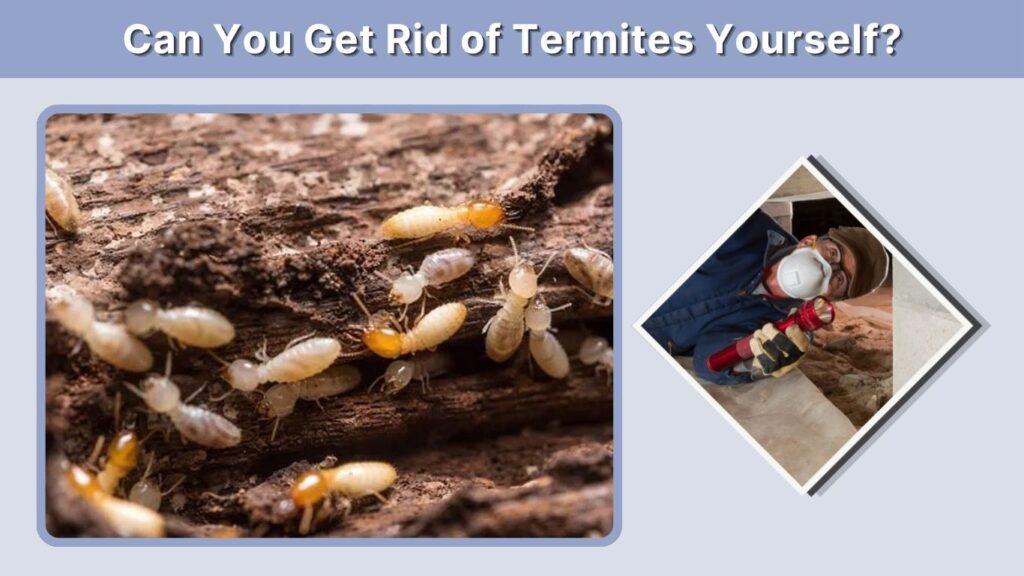
You may be able to handle very small, localized termite activity in furniture or a single piece of wood. However, termite infestations inside a house are often larger than they appear.
DIY termite treatment has limits because termites may be hidden:
- Behind walls
- Under floors
- In crawl spaces
- Inside structural beams
- Around the foundation
- In soil near the home
- In attic wood or roof framing
If you only kill visible termites, the colony may continue damaging the house. DIY products can also be misused, which may create safety risks or poor results.
How Much Does It Cost to Get Rid of Termites in the House?
The cost to get rid of termites in a house depends on the termite type, home size, treatment method, location, and damage level. A small localized treatment may cost less, while whole-house treatment or fumigation can cost much more.
Costs may be affected by:
- Size of the infestation
- Type of termite
- Treatment method
- Foundation style
- Number of treatment areas
- Whether drilling or trenching is needed
- Whether repairs are required
- Local pest control pricing
It is usually smart to get more than one inspection or quote before choosing a treatment plan.
When Is House Tenting Needed?
House tenting is most often used for widespread drywood termite infestations. During tenting, the entire structure is covered and treated with fumigant gas. This can reach termites hidden deep inside wooden areas.
Tenting is not always needed for every termite problem. Subterranean termites are often treated with soil treatments, bait systems, or other targeted methods. A professional inspection can confirm whether tenting is necessary.
How to Prevent Termites After Treatment
After treatment, prevention is essential. Termites may return if the same moisture, wood, and access problems remain.
Long-Term Prevention Checklist
Use this checklist to protect your home:
- Schedule regular termite inspections
- Keep soil away from wood siding
- Repair leaks quickly
- Keep gutters clean
- Remove wood piles near the home
- Avoid thick mulch near the foundation
- Seal foundation cracks
- Keep crawl spaces dry
- Remove dead trees and stumps
- Watch for wings, mud tubes, and damaged wood
Prevention is not a one-time task. It should be part of regular home maintenance.
What to Do If You Find a Termite Nest
A termite nest in the house or near the home should be handled carefully. Do not break it open and spray randomly. Disturbing the nest may cause termites to scatter and move into other hidden areas.
Instead, take photos, mark the area, avoid disturbing it, and contact a pest control professional. If the nest is in a tree, stump, wall, crawl space, or wooden structure, the treatment method will depend on the termite species and location.
Best Treatment by Termite Situation
| Termite Problem | Best Action | Notes |
| Flying termites indoors | Inspect and identify source | Swarmers may indicate a colony nearby |
| Mud tubes on foundation | Professional inspection | Often linked to subterranean termites |
| Termites in walls | Targeted wall treatment | Foam, drilling, or baiting may be needed |
| Drywood termites in furniture | Localized wood treatment | Severe cases may need fumigation |
| Large drywood infestation | Possible tenting | Professional evaluation required |
| Moisture-related termites | Fix leaks and treat wood | Prevention must include moisture control |
| Termite damage | Treat first, then repair | Repairs alone will not stop active termites |
FAQs
What is the fastest way to get rid of termites in a house?
The fastest reliable option is usually professional treatment after inspection. Depending on the termite type, this may include liquid termiticide, bait stations, wood treatment, foam treatment, or fumigation. DIY sprays may kill visible termites but often do not reach the colony.
Can I get rid of termites in my house naturally?
Natural methods can reduce risk and may help with very small localized problems, but they usually do not eliminate a full colony. Fixing moisture, removing wood debris, and improving ventilation are useful, but active infestations usually need professional treatment.
How do I get rid of flying termites in my house?
Vacuum the flying termites, save a sample for identification, check for discarded wings, and schedule an inspection. Flying termites are often a sign of a nearby colony. Killing the swarmers does not remove the main infestation.
How do I get rid of termites in house walls?
Termites in walls usually require targeted treatment. A professional may use inspection tools, foam, baiting, drilling, or wall-void treatment. Surface sprays are usually not enough because the colony may be hidden deep inside the wall or connected to soil outside.
Can termites come back after treatment?
Yes, termites can return if moisture problems, wood-to-soil contact, foundation cracks, or nearby wood sources remain. Regular inspections, proper drainage, sealed entry points, and ongoing prevention help reduce the chance of future infestations.
