
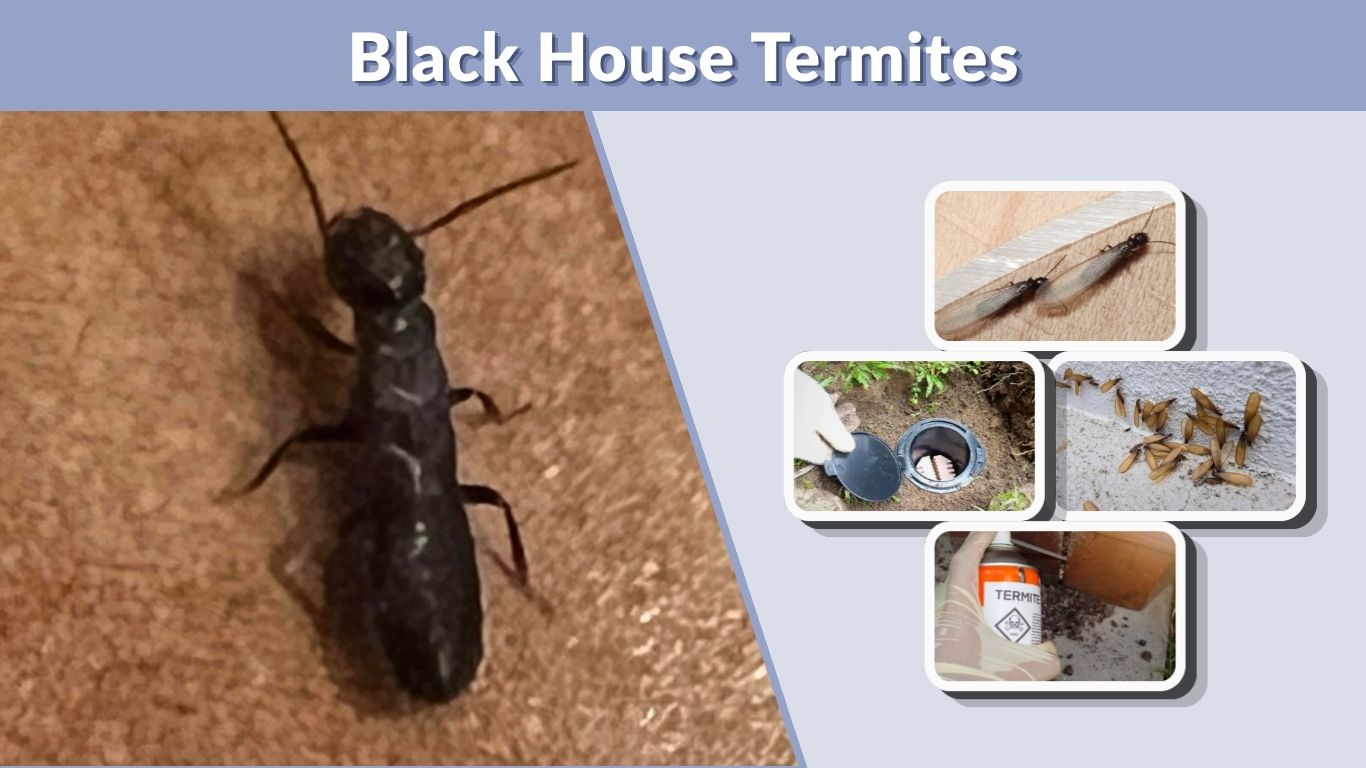
Seeing small black bugs in your house can be worrying, especially if they have wings or appear near windows, floors, or wooden areas. Many homeowners immediately think they have black house termites, but the insects may also be flying ants or carpenter ants. Correct identification matters because termites can damage wood, while ants need a different treatment plan.
What Are Black House Termites?
Black house termites usually refers to dark-colored termite swarmers found indoors. These are reproductive termites that leave a mature colony to mate and start new colonies. They are often seen near windows, doors, lights, vents, and other bright areas.
However, not every black insect in your home is a termite. Worker termites are usually pale, cream, or light-colored. The black or dark insects people notice are often winged termite swarmers or lookalike insects such as carpenter ants.
Why People Search for Black Termites
Most people search for black termites after seeing small black insects crawling or flying inside the house. The concern is understandable because termites are linked with wood damage and expensive repairs.
Common situations include seeing black bugs on a windowsill, finding black insects with wings, noticing small wingless insects near wood, or seeing bugs after rain. These signs may suggest termites, but they can also point to ants or other household pests.
Are Black Bugs in the House Always Termites?
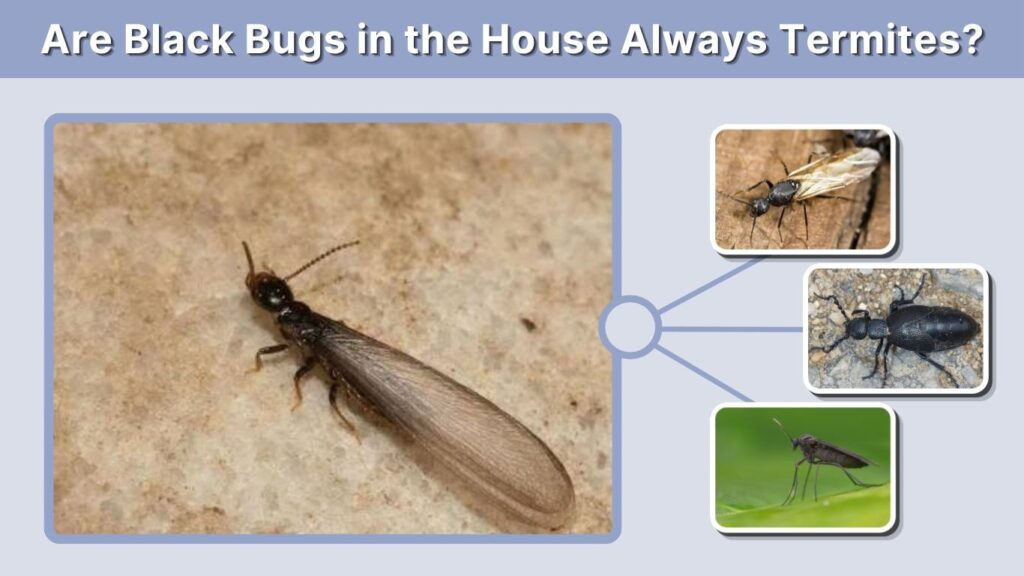
No, black bugs in the house are not always termites. In fact, many small black insects found indoors are ants, beetles, gnats, or other pests. The key is to look closely at body shape, wings, antennae, and where the insects appear.
If the insects are near damaged wood, mud tubes, discarded wings, or hollow-sounding areas, termites become more likely. If they are trailing toward food, sugar, or moisture, ants may be more likely.
Common Black Insects Mistaken for Termites
Several pests are commonly confused with black house termites:
- Flying ants
- Carpenter ants
- Small black ants
- Carpet beetles
- Drain flies
- Fungus gnats
- Powderpost beetles
- Termite swarmers
Carpenter ants are especially confusing because they are often black and can damage wood by excavating it for nests. Unlike termites, carpenter ants do not eat wood, but they can still indicate moisture-damaged areas in the home.
Actual Size of Black House Termites
People often search for actual size house black termites because these insects are small and hard to identify. Termite swarmers are usually small, often around a fraction of an inch long, with long wings that may extend past the body.
The body may look dark brown or black, especially when the insect is winged. Their wings are usually delicate, light-colored, and similar in length. After swarming, they may shed these wings near windowsills, doors, baseboards, or light fixtures.
What Black Termites Look Like
Black termite swarmers usually have:
- A straight, thick-looking body
- Straight antennae
- Two pairs of wings
- Wings that are roughly equal in size
- A dark brown or black appearance
- A soft-looking body compared with ants
If the insect has a pinched waist, bent antennae, and uneven wings, it is more likely to be a flying ant than a termite.
Black Termites vs Carpenter Ants
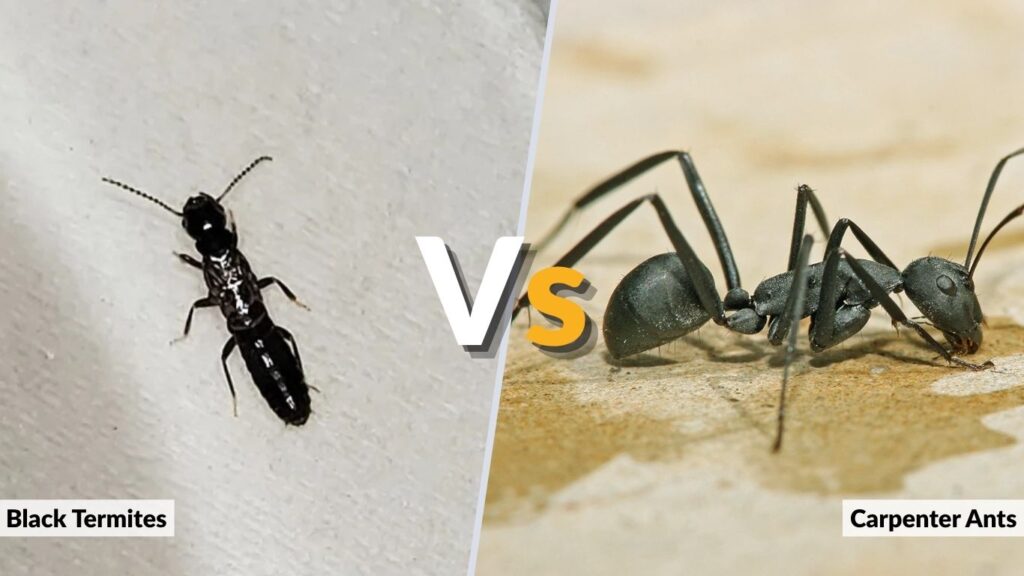
Black termites and carpenter ants are often confused because both may appear near wood and both can have wings during swarming periods. The difference is important because the treatment approach is not the same.
| Feature | Black Termite Swarmers | Carpenter Ants |
| Body shape | Thick, straight body | Narrow, pinched waist |
| Antennae | Straight antennae | Bent or elbowed antennae |
| Wings | Equal-length wings | Front wings longer than back wings |
| Wood behavior | Eat cellulose in wood | Excavate wood for nesting |
| Common sign | Shed wings, mud tubes, wood damage | Sawdust-like debris, ant trails |
| Treatment need | Often requires termite control | Requires ant nest control and moisture repair |
If you cannot tell the difference, collect a few insects in a small container or take clear photos. A pest control professional or local extension service may be able to help identify them.
Are Small Black Ants a Sign of Termites?
Small black ants are not usually a direct sign of termites. Ants and termites are different insects. However, both can appear in homes with moisture problems, wood damage, cracks, or easy entry points.
If you see small black ants along with mud tubes, hollow wood, discarded wings, or damaged wooden areas, it is worth checking for termites too. Do not assume the ants are protecting your house from termites or that termites are absent just because ants are present.
Black Flying Termites in House
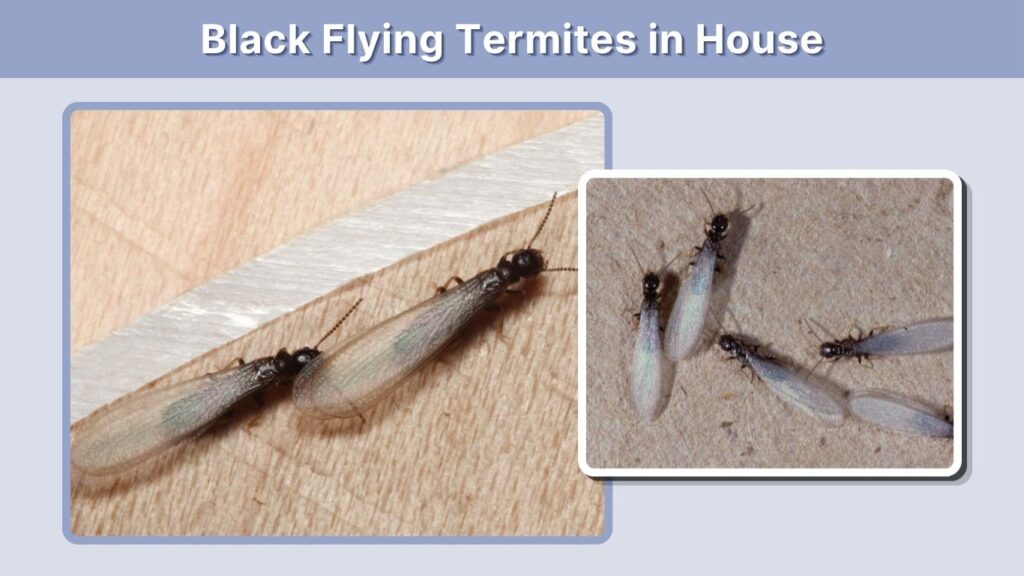
Black flying termites in house areas are usually termite swarmers. These insects are reproductive termites that leave a colony during swarming season. They may fly toward windows, doors, porch lights, lamps, or other bright areas.
Seeing one or two flying insects may not confirm a major infestation, but seeing many of them indoors should be taken seriously. Indoor swarmers may suggest a colony inside or very close to the house.
Where Black Flying Termites Appear
You may see black flying termites in places such as:
- Window sills
- Sliding doors
- Bathroom windows
- Basement lights
- Attic vents
- Around lamps
- Near baseboards
- Close to wooden trim
After swarming, you may also notice piles of shed wings. These wings are an important clue because termite swarmers often drop their wings after landing.
House Black Wingless Termites
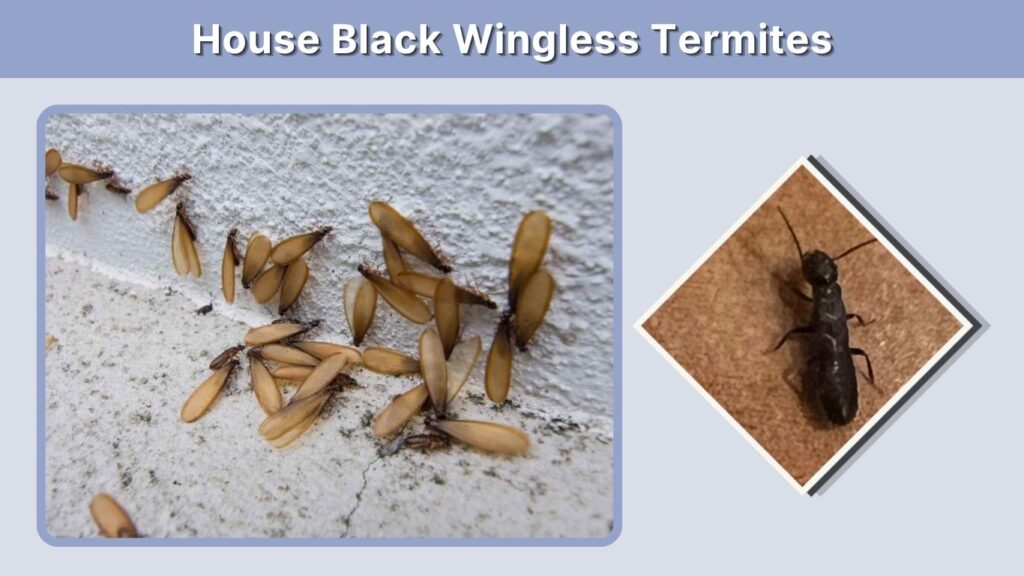
House black wingless termites can be confusing. If you see black insects without wings, they may be termites that have shed their wings, but they may also be ants or other pests. Wingless worker termites are usually not black; they are often pale or creamy.
Dark, wingless insects near windows may be termite swarmers after they dropped their wings. Look for loose wings nearby. If there are many equal-sized wings around the window sill, door frame, or bathtub, termites are more likely.
What to Check Around Wingless Black Bugs
If you find black wingless insects, inspect nearby areas for:
- Shed wings
- Mud tubes
- Soft or hollow wood
- Small holes in wooden trim
- Bubbling paint
- Frass or pellet-like droppings
- Moisture or water stains
- Cracks around doors or windows
These clues help separate termites from ants or harmless bugs.
Black Subterranean Termites in House
Subterranean termite swarmers can look dark or black. These termites usually live in the soil and travel into a house through foundation cracks, crawl spaces, plumbing gaps, or wood touching the ground. They need moisture and often build mud tubes to protect themselves while moving.
If you suspect black subterranean termites in house areas, inspect the foundation, basement, garage, crawl space, and exterior walls. Mud tubes are one of the strongest signs of subterranean termite activity.
Signs of Subterranean Termites
Look for these signs:
- Mud tubes on foundation walls
- Termite swarmers indoors
- Shed wings near windows
- Hollow-sounding wood
- Damaged baseboards
- Moisture near crawl spaces
- Wood touching soil
- Cracks around utility lines
Subterranean termites can cause serious hidden damage because they may feed inside walls, floors, and wooden framing.
House Black Window Sill Termites
Many homeowners first notice possible termites on a window sill. This happens because winged termites are attracted to light and often gather near windows. They may also shed wings there after swarming.
If you see black insects or wings on a windowsill, do not just wipe them away and ignore the issue. Clean the area after taking photos, but also inspect nearby trim, walls, and flooring.
What to Do If You Find Bugs on a Window Sill
Follow these steps:
- Take clear photos of the insects
- Save a few samples if possible
- Look for equal-sized shed wings
- Check the nearby wood for soft spots
- Inspect the exterior wall outside the window
- Look for moisture or leaks
- Schedule an inspection if signs continue
Window sill activity does not always mean termites are inside the wall, but it is a warning sign worth checking.
Early Stage Black House Termites
Early stage house black termites may not cause obvious damage yet. You may only notice a few swarmers, discarded wings, or small signs around wood. This is the best time to act because early treatment can prevent larger problems.
Do not wait until floors sag, walls crack, or wood breaks apart. Termites are easier to manage when the problem is found early.
Early Warning Signs
Early termite signs may include:
- A few flying termites indoors
- Small piles of wings
- Faint mud tubes
- Slight wood blistering
- Paint that looks bubbled
- Clicking or tapping sounds in walls
- Small cracks in wooden trim
- Soft spots near moisture-prone areas
These signs can be easy to miss, so regular inspection is helpful.
How to Get Rid of Black House Termites
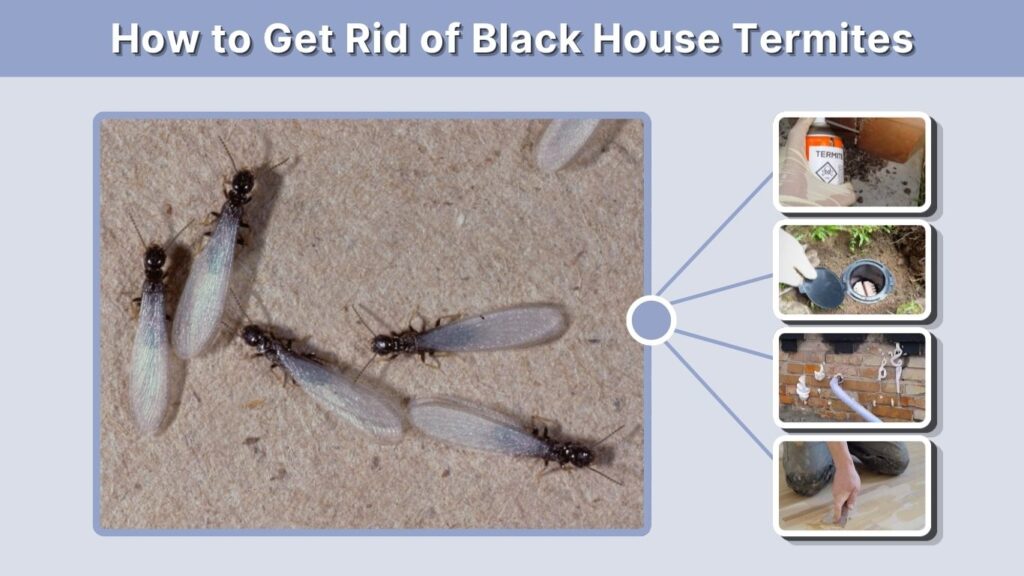
The best way to get rid of black house termites depends on the species and where the colony is located. Killing the visible black insects is not enough if the colony remains active.
For termite swarmers, vacuuming can remove the insects you see, but it does not solve the infestation. A complete plan should identify the termite type, locate the colony, treat the active area, and correct moisture or entry problems.
Treatment Options
Common termite treatment options include:
- Termite inspection
- Bait station systems
- Liquid soil treatment
- Wood treatment
- Foam treatment inside wall voids
- Fumigation for severe drywood termite infestations
- Moisture repair and prevention
Subterranean termites often require soil treatment or bait systems. Drywood termites may require direct wood treatment or fumigation if the infestation is widespread.
How to Prevent Black Termites in the House
Prevention is important after treatment and even before termites appear. The goal is to remove the conditions that attract termites and make entry harder.
Prevention Checklist
Use these prevention tips:
- Fix plumbing and roof leaks quickly
- Keep gutters clean
- Move firewood away from the house
- Avoid wood-to-soil contact
- Keep mulch away from the foundation
- Seal foundation cracks
- Improve crawl space ventilation
- Remove dead stumps and roots
- Keep basements and crawl spaces dry
- Schedule regular termite inspections
These steps reduce risk but do not guarantee termites will never appear. Regular monitoring is still important.
When to Call a Professional
Call a professional if you see black flying termites indoors, piles of shed wings, mud tubes, wood damage, or recurring black bugs near wooden areas. You should also get help if you are unsure whether the insects are termites or ants.
A termite professional can identify the pest, inspect hidden areas, check moisture conditions, and recommend the right treatment. This is especially important if the insects are found near structural wood, walls, floors, or the foundation.
FAQs
Are black termites real?
Yes, some termite swarmers can look black or dark brown, especially during the winged reproductive stage. However, many black insects found indoors are actually ants or other bugs. Correct identification depends on antennae, wings, waist shape, and nearby signs such as mud tubes or discarded wings.
Are black bugs on my window sill termites?
They could be termites, but they could also be flying ants or other insects. If you see equal-sized shed wings, straight-bodied insects, or wood damage near the window, termites are more likely. Take photos, save samples, and inspect the nearby wood and exterior wall.
What is the actual size of black house termites?
Black termite swarmers are small insects, often only a fraction of an inch long, but their wings can make them look larger. They usually have delicate wings that are similar in size. Because they are small, using a close-up photo can help with identification.
Are black flying termites dangerous?
Black flying termites do not usually harm people, but they can be a warning sign of a termite colony nearby. The real danger is not the flying insect itself but the colony that may be damaging wood inside or around the house.
How do I get rid of black termites in my house?
Start by identifying whether the insects are termites or ants. Vacuum visible swarmers, save samples, and look for wings, mud tubes, or wood damage. If termites are likely, schedule a professional inspection. Treatment may include bait systems, liquid treatment, wood treatment, or fumigation depending on the infestation.
