
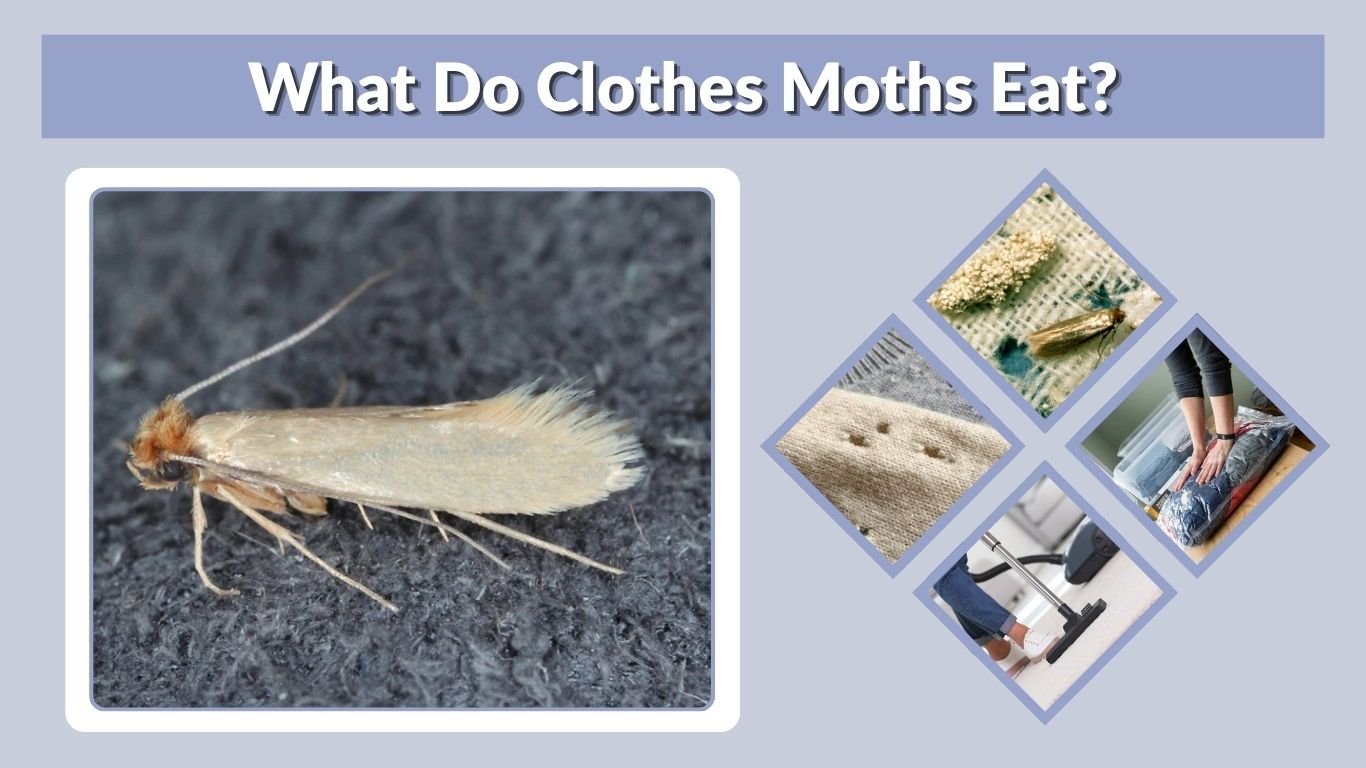
Clothes moths are famous for ruining sweaters, coats, carpets, and stored fabrics, but the real story is more specific than “moths eat clothes.” Adult clothes moths do not chew holes in fabric. The damage comes from their larvae, which feed on natural fibers that contain keratin, sweat, oils, food stains, hair, or skin particles. Knowing what clothes moths eat helps you protect your wardrobe, identify early damage, and stop an infestation before it spreads.
What Do Clothes Moths Eat?
Clothes moths mainly eat animal-based materials. Their larvae need protein-rich fibers, especially keratin, which is found in wool, fur, feathers, hair, and similar natural materials.
Adult clothes moths are mostly focused on mating and laying eggs. They usually do not feed on clothes. The larvae hatch from eggs and begin feeding quietly in dark, undisturbed areas such as closets, drawers, storage boxes, carpets, and under furniture.
Common foods for clothes moth larvae include:
- Wool sweaters, coats, suits, blankets, and rugs
- Cashmere scarves, sweaters, and shawls
- Silk clothing, scarves, and linings
- Fur coats, trims, and stored pelts
- Feathers in pillows, decorations, or costumes
- Felt, taxidermy, and natural-bristle items
- Pet hair, human hair, lint, and skin flakes
- Soiled cotton or synthetic fabrics with sweat or food stains
Clothes moths prefer dirty or stored items because sweat, body oils, food spills, and skin particles make fabric more attractive to larvae.
What Fabrics Do Clothes Moths Eat?
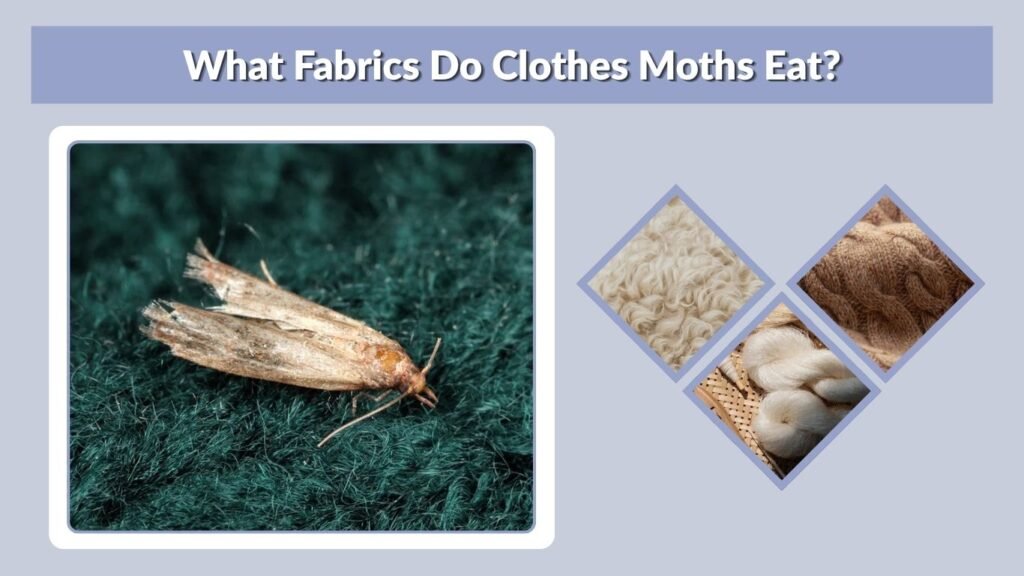
Clothes moth larvae are selective feeders. They prefer natural fibers from animals, but they may also damage other fabrics when stains or blended fibers are present.
| Fabric or Material | Do Clothes Moths Eat It? | Why It Attracts Them |
| Wool | Yes | Rich in keratin |
| Cashmere | Yes | Soft animal fiber |
| Silk | Yes | Natural protein fiber |
| Fur | Yes | Hair and keratin |
| Feathers | Yes | Animal protein source |
| Leather | Sometimes | May contain oils or organic residue |
| Cotton | Rarely | Usually only if stained |
| Linen | Rarely | Usually only if soiled |
| Polyester | No | Synthetic fiber with no keratin |
| Nylon | No | Synthetic fiber |
| Blended fabrics | Sometimes | Depends on wool, silk, or stains |
Clothes moths are more likely to attack fabric that has not been cleaned before storage. Even a small amount of sweat around collars, cuffs, underarms, or waistbands can make a garment more appealing.
What Clothes Do Moths Eat Most Often?
Clothes moths usually target items that stay untouched for weeks or months. They do not like light or regular disturbance, so everyday clothing is usually safer than stored seasonal clothing.
Wool Clothing
Wool is one of the most common targets. Moth larvae may chew small holes in wool sweaters, coats, suits, scarves, blankets, and rugs. Stored wool items are especially vulnerable if they are kept in dark closets or cardboard boxes.
Cashmere and Fine Knits
Cashmere is soft, valuable, and highly attractive to clothes moths. Because cashmere fibers are delicate, even light feeding can create visible holes or thin patches. Folded sweaters in drawers are common problem spots.
Silk Clothing
Clothes moth larvae can also feed on silk because it is a natural protein fiber. Silk blouses, scarves, linings, ties, and vintage clothing may be damaged if stored without cleaning.
Fur, Feathers, and Felt
Fur coats, feather decorations, down-filled items, felt hats, and natural craft materials can attract clothes moths. These items may also hold dust, oils, or skin particles, which makes them even more appealing.
What Do Moths Eat Besides Clothes?
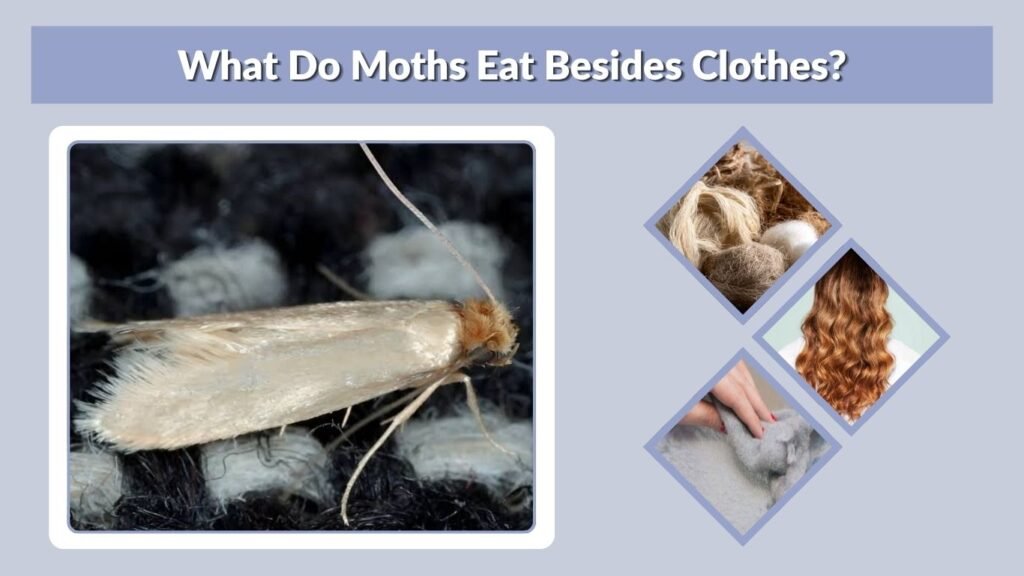
Clothes moths do not only live in wardrobes. They can survive anywhere they find animal fibers, hair, lint, or organic debris.
In homes, clothes moth larvae may feed on:
- Wool carpets and rugs
- Pet beds and pet hair buildup
- Lint behind furniture or baseboards
- Upholstery with animal fibers
- Wool blankets in storage
- Feather pillows or down comforters
- Taxidermy, dried animal materials, or old nests
- Natural-bristle brushes
In the wild, clothes moth larvae may feed on animal nests, feathers, fur, dead insects, and other organic materials. This is why they are well adapted to dark, hidden spaces where hair, dust, and natural fibers collect.
What Do Moths That Eat Clothes Look Like?
Clothes-eating moths are usually small, dull-colored, and easy to miss. They are not the large moths that fly around outdoor lights. Common clothes moths are weak flyers and often stay close to closets, carpets, and storage areas.
Adult Clothes Moths
Adult clothes moths are usually beige, tan, golden, or light brown. They are small, often around ¼ to ½ inch long. Their wings may look narrow and slightly fringed. They often run or flutter weakly rather than flying strongly across a room.
Two common types are the webbing clothes moth and the casemaking clothes moth. Both can damage fabrics, but their larvae leave different signs.
Clothes Moth Larvae
The larvae look like tiny cream-colored caterpillars with darker heads. They are the stage that eats clothes. Larvae avoid light and hide inside folds, seams, under collars, along carpet edges, and in quiet storage areas.
Eggs and Casings
Clothes moth eggs are very small and difficult to see without close inspection. Casemaking clothes moth larvae create tiny protective cases from fibers they eat. Webbing clothes moth larvae may leave silky webbing on damaged fabric.
What Do Moth-Eaten Clothes Look Like?
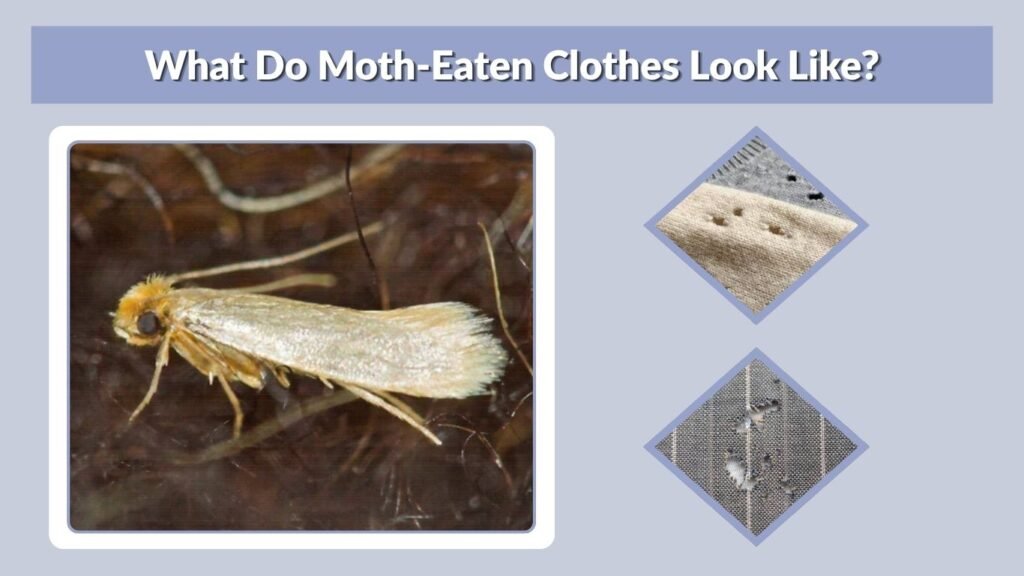
Moth damage can be subtle at first. Many people only notice the problem when they take out a stored sweater or coat and find small holes.
Common signs of moth-eaten clothes include:
- Small round or irregular holes
- Thin patches where fibers look shaved
- Loose fibers or surface damage
- Silky webbing on fabric
- Tiny larvae or cream-colored worms
- Grain-like droppings called frass
- Shed skins or small fiber cases
- Damage in folds, cuffs, collars, and hidden seams
Moth holes are often scattered rather than perfectly straight. Damage may appear worse on stained areas because larvae are attracted to sweat, food residue, and body oils.
Clothes Moths vs Other Fabric Pests
Not every hole in clothing comes from moths. Carpet beetles, silverfish, poor washing, rough wear, or storage damage can also create holes. The signs around the damaged item can help you tell the difference.
| Pest or Cause | Damage Look | Key Sign |
| Clothes moths | Holes in wool, silk, cashmere, fur | Webbing, larvae, casings |
| Carpet beetles | Irregular holes in natural fibers | Shed bristly skins |
| Silverfish | Surface scraping or holes in paper/cotton | Found in damp areas |
| Wear and tear | Holes at elbows, cuffs, seams | No larvae or webbing |
| Washing damage | Weak fibers, stretched holes | Happens after laundering |
If you see small tan moths near closets and damage on wool or cashmere, clothes moths are likely. If you see fuzzy shed skins near carpets or storage boxes, carpet beetles may be the problem instead.
What Time of Year Do Moths Eat Clothes?
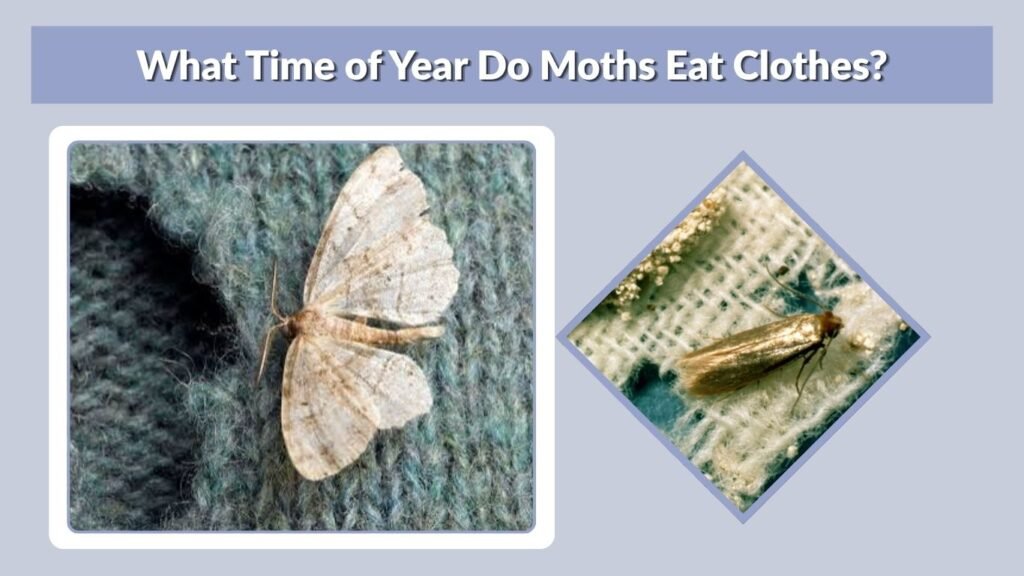
Clothes moth activity is often higher in warm months, but indoor infestations can continue year-round. Heated homes, dark closets, and stored clothing provide stable conditions for larvae even outside peak season.
Spring and summer are common times to notice adult moths. However, the larvae may have been feeding for weeks before adults appear. This is why damage often seems sudden, even though the infestation started earlier.
Clothes moths are most active when conditions are:
- Warm
- Dark
- Undisturbed
- Humid enough for larvae to survive
- Rich in natural fibers or lint
- Full of stored, unwashed clothing
Seasonal clothing is at higher risk because it may sit untouched for months. Winter coats, wool blankets, and cashmere sweaters should always be cleaned before storage.
What to Do If Moths Are Eating Your Clothes
If you find moth damage, act quickly. Removing larvae, eggs, and food sources is more important than only killing the adult moths you see flying around.
Inspect the Closet and Storage Areas
Start by checking all nearby natural-fiber items. Look inside folds, seams, cuffs, pockets, collars, drawers, boxes, and carpet edges. One damaged sweater may mean other items nearby are also at risk.
Wash or Dry Clean Affected Clothes
Clean all washable items according to their care labels. Hot washing and high heat drying can help kill larvae and eggs on suitable fabrics. For delicate wool, cashmere, silk, fur, or suits, use professional dry cleaning.
Freeze Delicate Items
For items that cannot be washed or heated, freezing may help. Seal garments in plastic bags and place them in a freezer for several days. Let them return to room temperature before opening the bag to avoid condensation on delicate fabrics.
Vacuum Thoroughly
Vacuum closets, drawers, shelves, carpet edges, under furniture, and baseboards. Pay attention to lint, pet hair, and dust buildup. Empty the vacuum contents outside or seal and discard the bag quickly.
Use Moth Traps for Monitoring
Pheromone traps can help catch adult male clothes moths and show whether activity is still present. Traps are useful for monitoring, but they should not be the only control method because they do not remove larvae already feeding on fabrics.
How to Stop Moths Eating Clothes
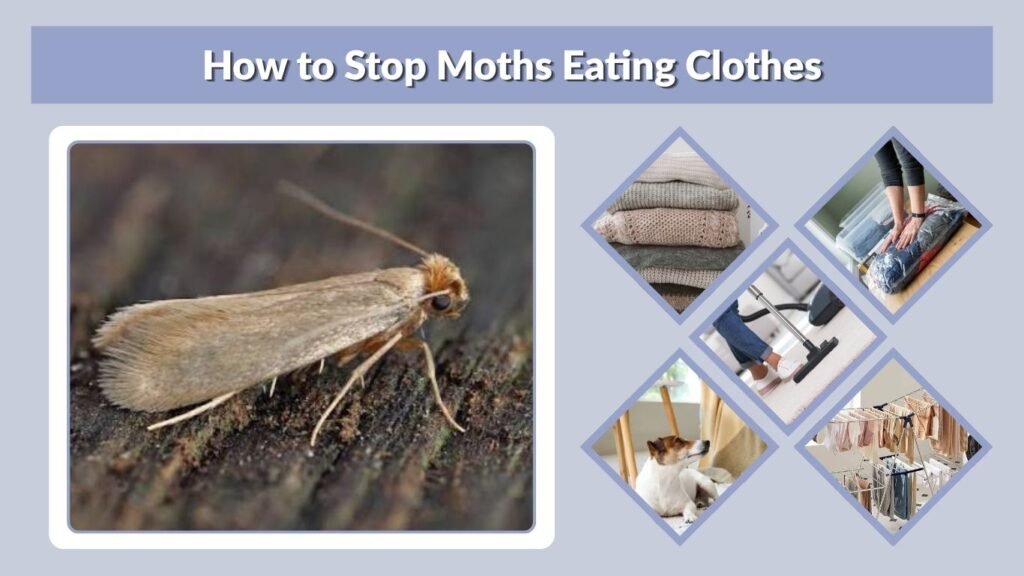
Prevention works best when you remove both food sources and hiding places. Clothes moths thrive where natural fibers are stored dirty, dark, and undisturbed.
Use these prevention steps:
- Clean wool, silk, cashmere, and fur before storage
- Store seasonal clothing in airtight containers or garment bags
- Avoid cardboard boxes for long-term storage
- Vacuum closets and carpet edges regularly
- Remove pet hair, lint, and dust buildup
- Air out stored clothing every few months
- Keep closets dry and well ventilated
- Use cedar or lavender as mild repellents, not as the only solution
- Check thrifted, vintage, or secondhand clothing before bringing it inside
Cedar blocks and lavender sachets may help repel adult moths slightly, but they do not reliably kill eggs or larvae. Good cleaning and sealed storage are much more effective.
Can Clothes Moths Eat Synthetic Clothes?
Clothes moths do not truly feed on pure synthetic fabrics like polyester, acrylic, nylon, or spandex. These materials do not contain keratin, so they are not good food for larvae.
However, synthetic clothes can still be damaged if they are blended with wool, silk, cashmere, or other animal fibers. Larvae may also chew through synthetic fabric while feeding on sweat, food stains, body oils, or natural-fiber parts of a blended garment.
This is why a polyester shirt with heavy food stains or a wool-blend coat can still show damage. The moth larvae are not choosing plastic fibers as food; they are feeding on the organic material mixed into or sitting on the fabric.
FAQs
Do adult clothes moths eat clothes?
Adult clothes moths do not usually eat clothes. The larvae are responsible for fabric damage. Adult moths mainly mate and lay eggs near suitable food sources, such as wool, silk, fur, cashmere, feathers, lint, or dirty stored clothing.
What fabric do clothes moths eat the most?
Clothes moths most often eat wool because it contains keratin, a protein their larvae can digest. They also feed on cashmere, silk, fur, feathers, felt, and animal hair. Cotton and synthetic fabrics are usually safe unless stained or blended with animal fibers.
What clothes do moth larvae eat?
Clothes moth larvae eat natural animal-based materials, including wool, cashmere, silk, fur, feathers, hair, and lint. They may also feed on sweat, food stains, skin flakes, and pet hair. Larvae hide in dark places and cause most visible clothing damage.
What do clothes moth eggs look like?
Clothes moth eggs are tiny, pale, and difficult to see with the naked eye. They are often laid in hidden areas of fabric, such as folds, seams, collars, cuffs, or storage corners. Many people notice larvae or holes before they ever see eggs.
What should I do with moth-eaten clothes?
First, inspect the item and nearby clothing for larvae, webbing, or casings. Wash, dry clean, heat treat, or freeze affected garments depending on the care label. Small holes may be repaired, but badly damaged items should be discarded to reduce infestation risk.
