
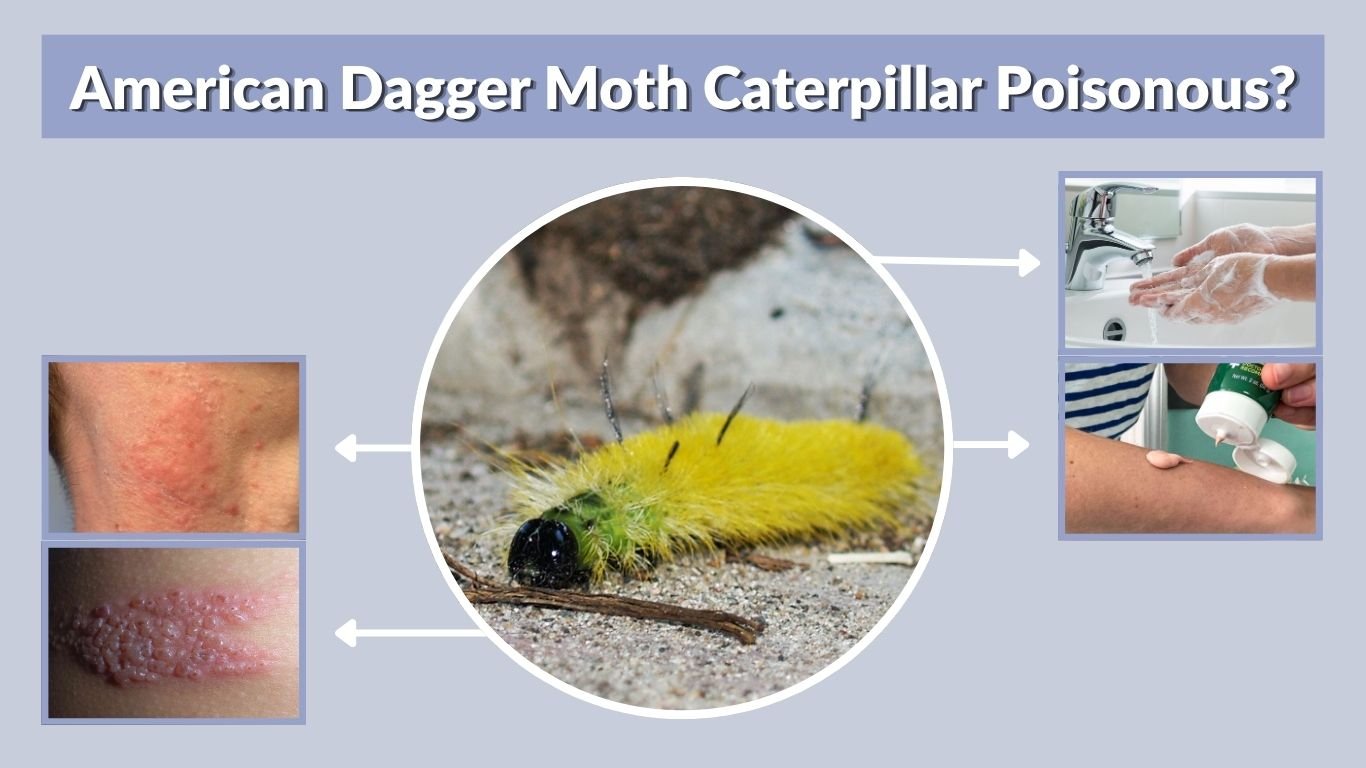
The American dagger moth caterpillar is a fuzzy yellow, white, or pale caterpillar with long black hair tufts. Many people ask, “Is the American dagger moth caterpillar poisonous?” The best answer is: it is not usually deadly, but its hairs can irritate skin and may cause burning, itching, hives, swelling, or a rash. Because reactions can be painful, you should not touch this caterpillar with bare hands. It can also irritate dogs and cats if they lick, chew, or swallow it.
Is the American Dagger Moth Caterpillar Poisonous?
The American dagger moth caterpillar, Acronicta americana, is often called poisonous because its hairs can cause skin irritation. NC State Extension says dagger moth caterpillars have fuzzy yellow, yellow-green, or white setae, along with long black “pencils” of setae, and these hairs are reputed to cause a stinging sensation that may develop into a rash.
| Question | Simple Answer |
| Is it poisonous? | Its hairs can cause irritation and rash |
| Is it deadly to humans? | Usually no |
| Does it sting like a bee? | No, the hairs cause the reaction |
| Should you touch it? | No |
| Is it dangerous to pets? | It can irritate dogs and cats if touched or eaten |
Poison Control explains that many caterpillars have hairs or spines that can cause pain, itching, burning, swelling, or blistering when they contact human skin. So, while “poisonous” may not mean deadly here, the caterpillar can still cause an uncomfortable reaction.
What Does an American Dagger Moth Caterpillar Look Like?
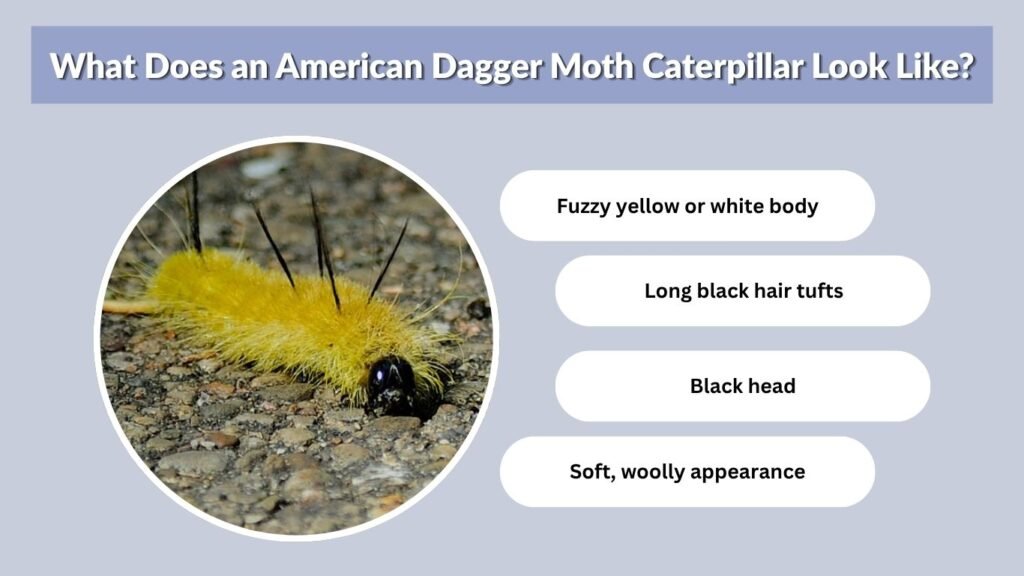
The American dagger moth caterpillar is usually easy to recognize. It has a fuzzy body that may look pale yellow, lemon yellow, yellow-white, or white. The most noticeable feature is the group of long black bristles or hair pencils sticking out from the body.
Identification Features
Look for these signs:
- Fuzzy yellow or white body
- Long black hair tufts
- Black head
- Soft, woolly appearance
- Several black “pencils” of bristles
- Often found on hardwood trees
- Sometimes seen crawling on sidewalks, decks, patios, or lawns
BugGuide notes that American dagger moth caterpillars feed on deciduous trees such as alder, ash, birch, elm, hickory, maple, oak, poplar, walnut, and willow. It also states that the caterpillar’s hairs can cause skin irritation.
American Dagger Moth Caterpillar Poisonous to Humans
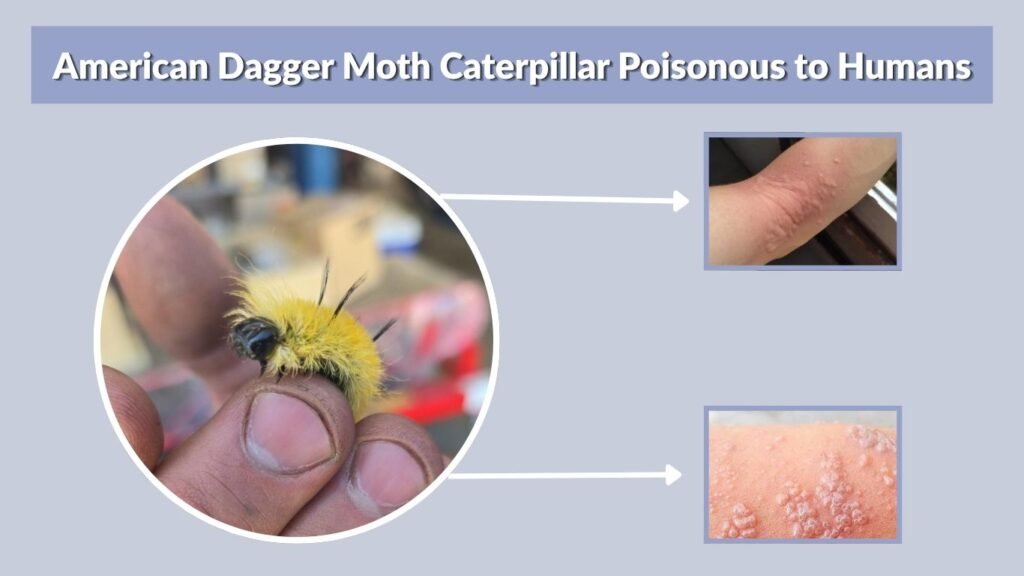
The American dagger moth caterpillar is not a caterpillar you should handle. Its hairs may break off into the skin and cause a painful or itchy reaction. Some people may only get mild redness, while others may develop a stronger rash.
Possible Human Symptoms
After touching the caterpillar, symptoms may include:
- Burning feeling
- Itching
- Red rash
- Hives
- Small bumps
- Swelling
- Skin tenderness
- Prickling or stinging feeling
- Blisters in stronger reactions
Cleveland Clinic explains that reactions to caterpillar stings are usually mild but can include redness, itching, swelling, welts, and blisters, lasting from a few hours to a few days.
American Dagger Moth Caterpillar Sting
Many people call it an American dagger moth caterpillar sting, but the reaction does not come from a bee-like stinger. The problem comes from the hairs. These tiny hairs can stick into the skin and create irritation.
The University of Kentucky explains that stinging caterpillars may have urticating hairs that pierce the skin and release irritating substances, causing reactions from mild itching to pain, swelling, blistering, or dermatitis.
If you see a fuzzy yellow caterpillar with black tufts, do not test it by touching it. Even if one person has no reaction, another person may react strongly.
American Dagger Moth Caterpillar Rash on Skin
A rash from an American dagger moth caterpillar may appear soon after contact or later the same day. It often appears exactly where the hairs touched the skin. Hands, arms, neck, legs, and children’s fingers are common contact areas.
What the Rash May Look Like
The rash may look like:
- Red patches
- Tiny bumps
- Raised welts
- Itchy spots
- Swollen skin
- Irritated streaks
- Tender or burning areas
Medical News Today describes caterpillar rash, also called lepidopterism, as skin irritation caused by contact with caterpillars, with treatment often including ice packs, corticosteroid creams, and antihistamines.
What to Do If You Touch an American Dagger Moth Caterpillar
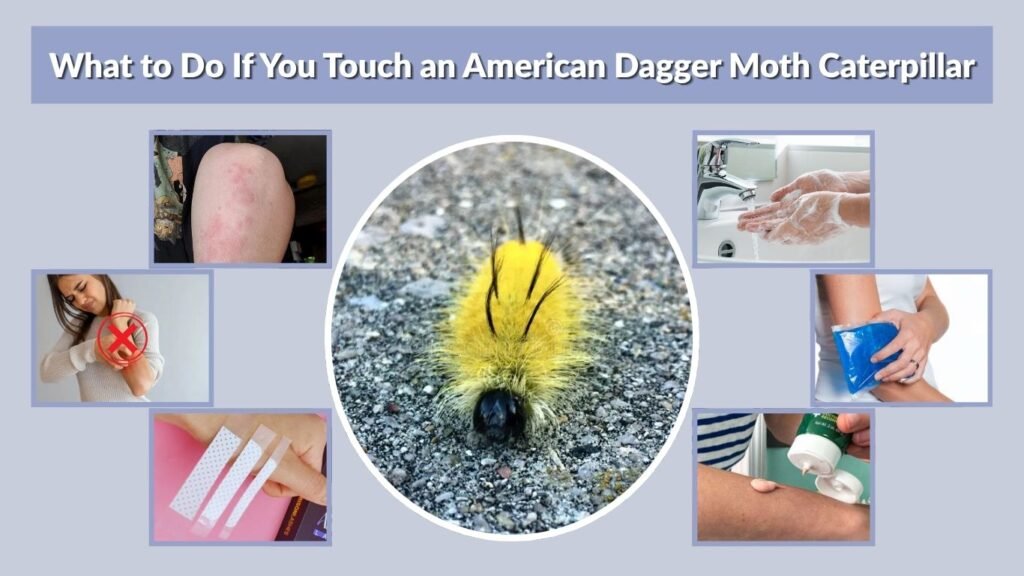
If you touch one, do not rub the area. Rubbing can push hairs deeper into the skin and make the reaction worse.
First Aid Steps
- Move away from the caterpillar.
- Do not scratch or rub the skin.
- Place tape over the affected area and gently pull it off to remove hairs.
- Wash the skin with soap and water.
- Apply a cold pack to reduce pain or swelling.
- Use anti-itch cream or an oral antihistamine if needed.
- Get medical help if symptoms are severe or spreading.
The Tampa Poison Center recommends using Scotch tape to remove spines, applying ice packs, and using a baking soda and water paste after exposure to stinging caterpillars. It also advises contacting a physician if allergic reactions develop or if the person has a history of asthma, hay fever, or allergy.
When to Seek Medical Help
Most American dagger moth caterpillar reactions can be managed at home, but some cases need medical attention. Children, people with allergies, and people with sensitive skin may react more strongly.
Get medical help if you notice:
- Trouble breathing
- Swelling of the face, lips, tongue, or throat
- Eye exposure
- Severe pain
- Large blisters
- Rash spreading quickly
- Dizziness or fainting
- Signs of infection
- Symptoms that do not improve
For serious reactions, contact local poison control or emergency medical services.
American Dagger Moth Caterpillar Poisonous to Dogs
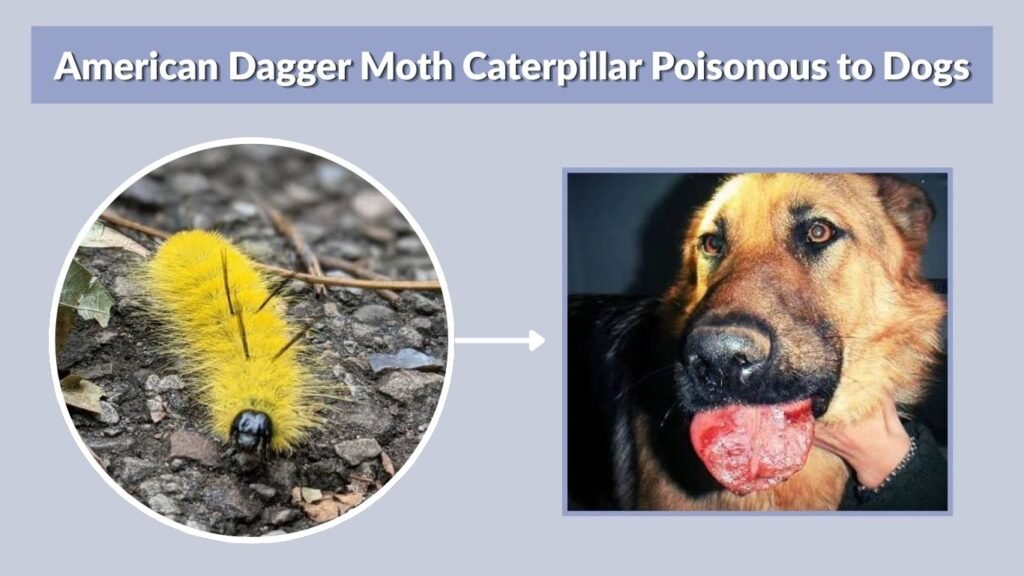
The American dagger moth caterpillar can irritate dogs if they sniff, lick, chew, or swallow it. Dogs are curious, and a fuzzy moving caterpillar may attract them. The main danger is irritation from the hairs, especially in the mouth, lips, tongue, and throat.
ASPCA says caterpillar hairs can be harmful to pets when touched or ingested and may cause head shaking, pawing at the mouth, vomiting, diarrhea, and irritation of the lips, mouth, and throat.
Dog Symptoms to Watch For
If your dog touched or ate one, watch for:
- Drooling
- Pawing at the mouth
- Head shaking
- Vomiting
- Diarrhea
- Swollen lips
- Trouble swallowing
- Mouth irritation
- Breathing trouble
If symptoms appear, call a veterinarian. Do not try to make your dog vomit unless a vet tells you to.
American Dagger Moth Caterpillar Poisonous to Cats
Cats can also be affected if they bite, lick, or bat at the caterpillar. Their fur may protect much of the body, but the mouth, nose, paws, and eyes can still be exposed.
ASPCA Pro notes that pet exposure to caterpillars is usually treated with supportive care, such as rinsing the mouth, cold compresses, antihistamines, corticosteroids, or pain control depending on severity. It also says hairs in the skin may be removed with tape.
Cat Symptoms to Watch For
Possible signs include:
- Drooling
- Pawing at the mouth
- Lip swelling
- Vomiting
- Mouth discomfort
- Eye irritation
- Refusing food
- Unusual hiding or distress
Call your vet if your cat shows symptoms after contact with a fuzzy caterpillar.
Is the Yellow American Dagger Moth Caterpillar More Poisonous?
A bright yellow American dagger moth caterpillar is not necessarily more poisonous than a pale or white one. Color can vary by age, lighting, and individual caterpillar. The important safety clue is not just the yellow color, but the fuzzy body and long black hair tufts.
Do not handle any American dagger moth caterpillar, whether it looks yellow, white, pale, or black-tufted.
Should You Kill an American Dagger Moth Caterpillar?
You do not usually need to kill it. American dagger moth caterpillars are part of the natural ecosystem and feed on tree leaves. A few caterpillars rarely cause serious tree damage.
However, if one is in a place where children or pets may touch it, move it safely using a stick, leaf, broom, dustpan, or gloved hand. Do not pick it up barehanded.
Safe Removal Tips
- Keep kids and pets away
- Wear gloves if moving it
- Use a stick or leaf instead of your fingers
- Do not crush it with bare skin contact
- Wash outdoor toys or furniture if hairs may be present
- Call pest control only for large problem areas
How to Prevent Contact
The best prevention is awareness. Teach children not to touch fuzzy caterpillars, even if they look cute or soft. Wear gloves when gardening, moving leaves, or handling branches under hardwood trees.
American dagger moth caterpillars are often noticed in summer and fall when they leave trees and crawl across yards, sidewalks, and decks. BugGuide reports that caterpillars are seen from June to October, depending on location.
FAQs
Is the American dagger moth caterpillar poisonous?
Yes, it can be considered poisonous or irritating because its hairs may cause burning, itching, hives, swelling, or rash. It is usually not deadly, but it should not be touched.
Is the American dagger moth caterpillar poisonous to humans?
It can cause skin irritation in humans. Symptoms may include redness, itching, burning, swelling, hives, or rash where the hairs touched the skin.
Is the American dagger moth caterpillar poisonous to dogs?
It can irritate dogs if touched or eaten. Dogs may drool, paw at the mouth, vomit, shake their head, or have mouth and throat irritation. Contact a veterinarian if symptoms appear.
Is the American dagger moth caterpillar poisonous to cats?
Cats may also react if they bite, lick, or touch the caterpillar. Watch for drooling, pawing, vomiting, lip swelling, or mouth irritation, and call a vet if symptoms occur.
What should I do if I touch an American dagger moth caterpillar?
Remove hairs with tape, wash the area with soap and water, apply a cold pack, and avoid scratching. Seek medical help for severe swelling, eye exposure, breathing trouble, or a spreading rash.
