
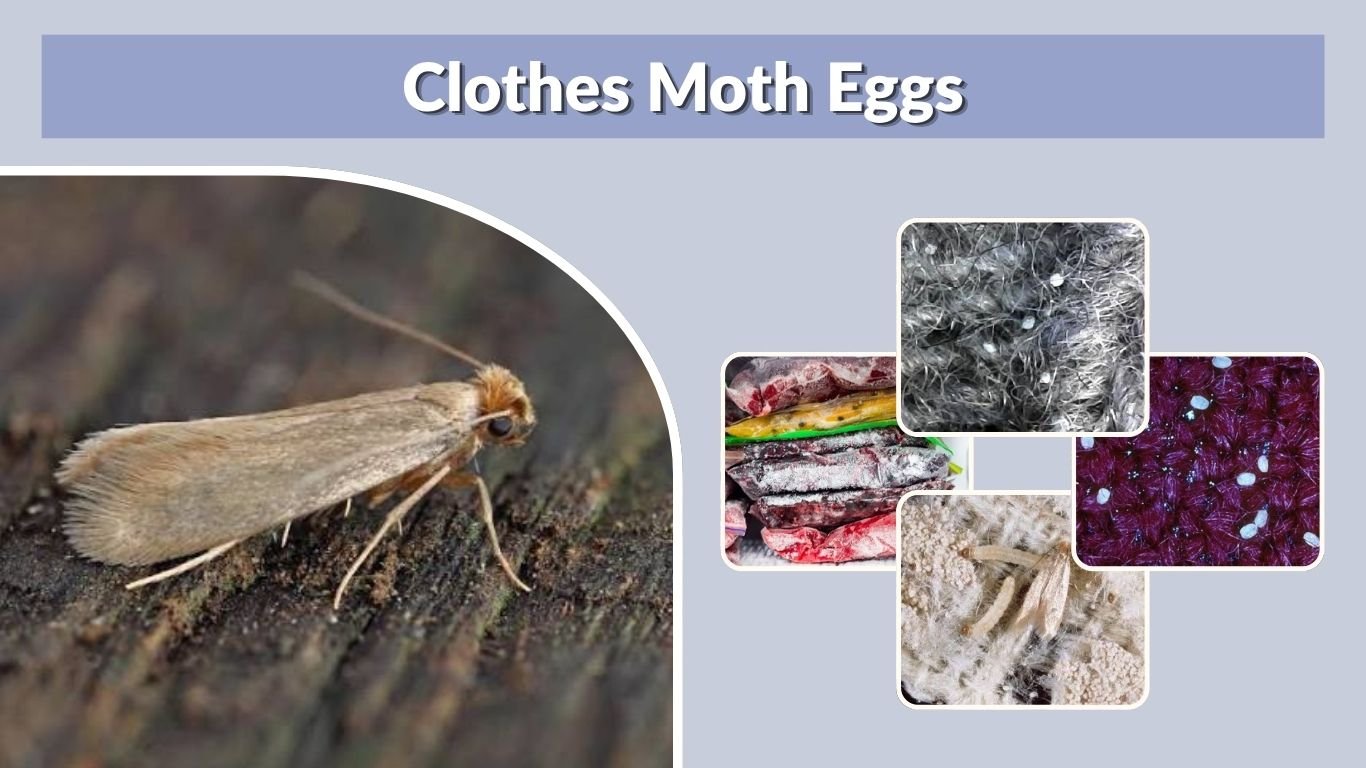
Clothes moth eggs are tiny, hidden, and easy to miss, but they are the starting point of fabric damage. Adult clothes moths lay eggs on or near natural fibers such as wool, cashmere, silk, fur, feathers, and carpets. Once the eggs hatch, the larvae begin feeding and may create holes in clothing. Understanding what clothes moth eggs look like, where they are laid, and how to remove them can help stop an infestation early.
What Are Clothes Moth Eggs?
Clothes moth eggs are the first stage in the clothes moth life cycle. Adult female moths lay eggs near materials that the larvae can eat after hatching.
The eggs themselves do not eat clothing. The problem starts when they hatch into larvae. Clothes moth larvae feed on animal-based fibers and cause the visible damage people often find in closets, drawers, and carpets.
| Life Stage | What It Does | Why It Matters |
| Egg | Hidden on or near fabric | Hatches into larvae |
| Larva | Feeds on natural fibers | Causes holes and fabric damage |
| Pupa | Develops inside silk or case | Turns into adult moth |
| Adult moth | Mates and lays eggs | Starts new infestation |
Clothes moth eggs are usually laid in dark, quiet places where clothing or natural fibers are left undisturbed.
What Do Clothes Moth Eggs Look Like?
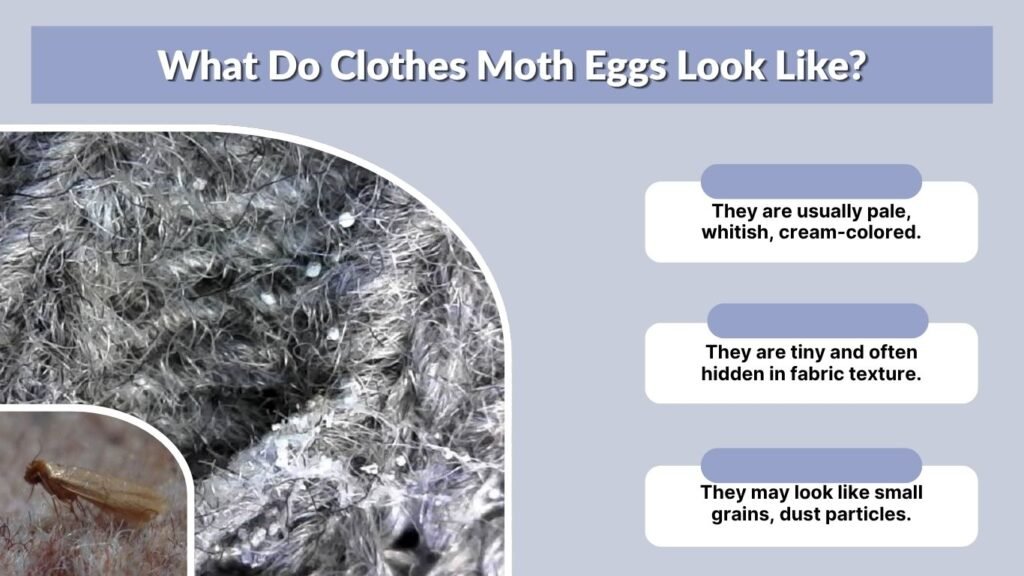
Clothes moth eggs are very small and difficult to see with the naked eye. They are usually pale, whitish, cream-colored, or slightly translucent. Because they are tiny and often hidden in fabric texture, many people never notice them.
They may look like small grains, dust particles, or tiny specks stuck to fabric. However, lint, dandruff, dust, and debris can look similar, so eggs are not always easy to identify without magnification.
Signs Eggs May Be Present
You may not see the eggs clearly, but these signs can suggest they are nearby:
- Small tan moths flying near closets
- Tiny larvae on clothes or carpets
- Silky webbing on fabric
- Small fiber cases or cocoons
- Holes in wool, silk, or cashmere
- Grain-like droppings near damaged clothes
- Damage in stored or rarely worn items
If you find larvae or fresh fabric damage, there may also be eggs hidden nearby.
Where Do Clothes Moths Lay Eggs?
Clothes moths lay eggs close to food sources for their larvae. They prefer dark, undisturbed areas with natural fibers, dust, sweat, body oils, lint, or pet hair.
Common egg-laying spots include:
- Wool sweaters and coats
- Cashmere clothing
- Silk scarves, ties, and linings
- Fur or feather items
- Wool carpets and rugs
- Closet corners and shelves
- Drawer seams and storage boxes
- Under furniture
- Pet beds or areas with pet hair
- Old blankets and seasonal clothing
Clothes moths are especially attracted to dirty or stored fabrics. Sweat, food stains, skin flakes, and oils make clothing more suitable for larvae after the eggs hatch.
Moth Eggs on Clothes
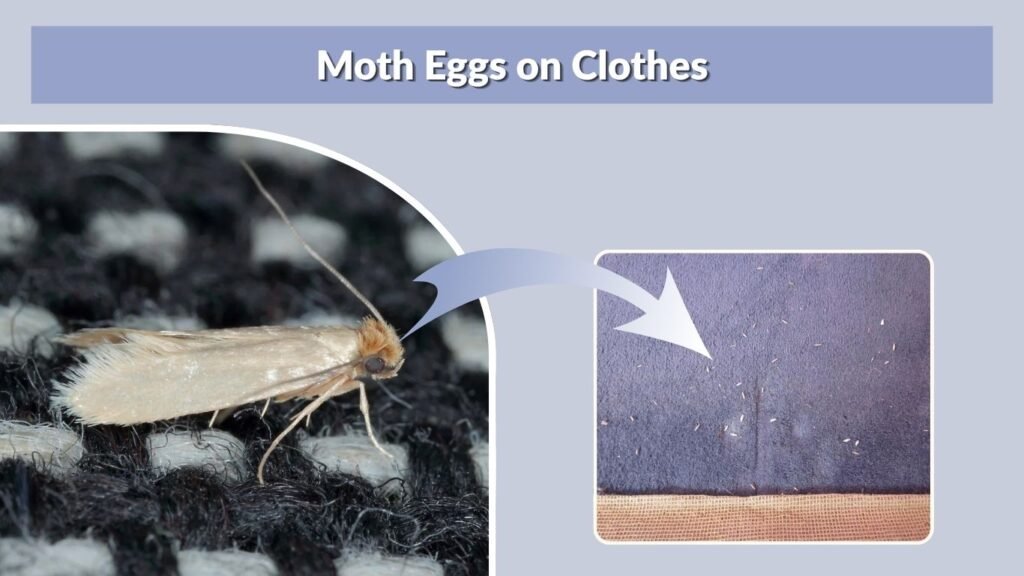
Moth eggs on clothes are usually found in hidden parts of garments. They are more likely to be placed where fabric is folded, stained, or rarely disturbed.
Check these areas carefully:
- Collars
- Cuffs
- Underarms
- Waistbands
- Pockets
- Seams
- Folded sweater layers
- Inside storage bags
- Around stains or food spots
Stored wool and cashmere are common targets. If clothing has been left unwashed for months, it becomes more attractive to clothes moths.
Clothes Moth Eggs in Carpet
Clothes moth eggs can also be laid in carpets, especially wool carpets or rugs. Even synthetic carpets may attract moths if pet hair, lint, skin flakes, and dust build up in hidden areas.
Look for eggs, larvae, or webbing in:
- Carpet edges
- Under rugs
- Along baseboards
- Beneath furniture
- Closet floors
- Around pet sleeping spots
- Under storage boxes
If moths keep appearing even after treating clothes, the real source may be carpet, rug edges, or hidden lint buildup.
Webbing vs Casemaking Clothes Moth Eggs
Webbing clothes moths and casemaking clothes moths both lay eggs near fabric food sources. The eggs are very similar and hard to tell apart. The easier difference appears after the eggs hatch.
| Type | Egg Location | Larvae Sign |
| Webbing clothes moth | On or near wool, silk, fur, carpets | Silky webbing on fabric |
| Casemaking clothes moth | In fabric folds, carpet edges, storage areas | Small portable fiber case |
| Case-bearing clothes moth | Same as casemaking type | Tube-like case or shell |
If you see silk patches on fabric, webbing clothes moth larvae may be present. If you see small moving cases or shells, casemaking clothes moth larvae may be the cause.
How Long Do Clothes Moth Eggs Take to Hatch?
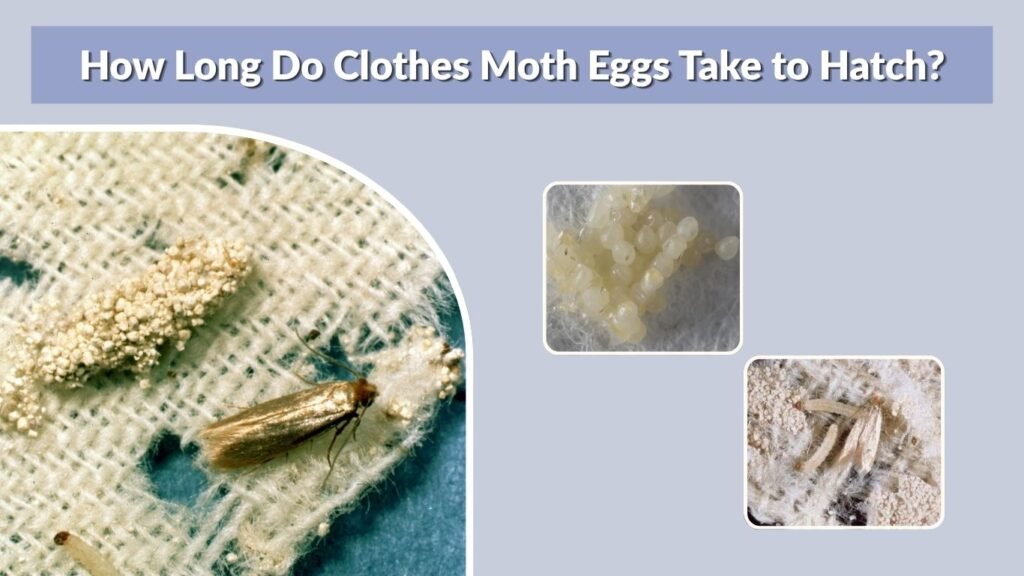
Clothes moth eggs can hatch in a few days to a few weeks, depending on temperature, humidity, and conditions. Warm, dark, and undisturbed areas help eggs develop faster.
After hatching, the larvae begin feeding. This larval stage is the most damaging stage and may last for weeks or months if food is available.
Clothes moths can be active at different times of year indoors. Heated homes may allow them to continue breeding even outside warmer seasons.
Can You See Clothes Moth Eggs?
You can sometimes see clothes moth eggs, but they are very hard to spot. They are tiny, pale, and often hidden deep in fabric fibers. Most people notice larvae, webbing, or holes before they notice eggs.
A flashlight and magnifying glass can help. Still, if you find signs of clothes moth activity, it is safer to treat the clothing and storage area as if eggs are present.
How to Get Rid of Clothes Moth Eggs
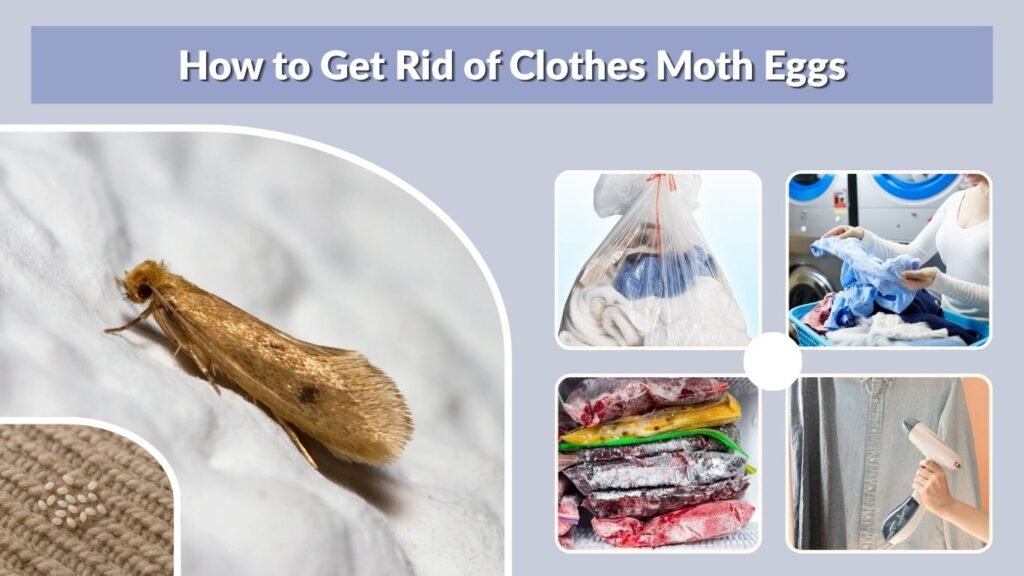
Getting rid of clothes moth eggs requires treating both the fabric and the surrounding area. Killing adult moths alone is not enough because hidden eggs can hatch later.
Step 1: Bag Affected Items
Place suspicious clothes, blankets, or fabrics in sealed plastic bags. This prevents eggs or larvae from spreading to other areas while you prepare treatment.
Step 2: Wash Safe Fabrics
Wash clothing according to the care label. Use the hottest water that is safe for the fabric. Washing helps remove eggs, larvae, sweat, food stains, and body oils.
Step 3: Use Heat Drying When Possible
A clothes dryer can help kill moth eggs if the fabric can safely handle heat. Avoid heat on delicate wool, silk, cashmere, or vintage items unless the care label allows it.
Step 4: Dry Clean Delicate Items
Dry cleaning is a strong option for wool coats, suits, cashmere, silk, formalwear, and other delicate fabrics. Tell the cleaner the item may have clothes moth eggs or larvae.
Step 5: Freeze Non-Washable Items
Freezing can help treat items that cannot be washed. Seal the item in a plastic bag and freeze it for several days. Keep the bag sealed while the item returns to room temperature.
Step 6: Vacuum Storage Areas
Vacuum closets, drawers, carpet edges, shelves, baseboards, and under furniture. Empty the vacuum outside or seal the contents before disposal.
What Kills Clothes Moth Eggs?
Several methods can kill or remove clothes moth eggs, but the right choice depends on the fabric.
Effective options include:
- Hot washing, if fabric-safe
- Heat drying, if fabric-safe
- Professional dry cleaning
- Freezing sealed items
- Steam treatment for some fabrics and carpets
- Thorough vacuuming of closets and carpet edges
- Removing lint, dust, pet hair, and food residue
Sunlight may help disturb moths, but sunlight alone may not kill every egg hidden inside fabric folds.
How to Prevent Clothes Moth Eggs
Preventing eggs is easier than dealing with larvae after they hatch. The goal is to make closets and storage areas less attractive to adult moths.
Use these prevention steps:
- Clean clothes before storing them
- Store wool and cashmere in airtight containers
- Avoid cardboard boxes for long-term storage
- Vacuum closet floors and carpet edges often
- Remove pet hair and lint buildup
- Keep closets dry and uncluttered
- Inspect secondhand clothes before storing
- Use moth traps to monitor adult activity
- Air out seasonal clothing regularly
Cedar and lavender may help repel some moths, but they should not replace cleaning and sealed storage.
FAQs
What do clothes moth eggs look like?
Clothes moth eggs are tiny, pale, cream-colored, or whitish specks. They are very difficult to see because they are often hidden in fabric fibers, seams, folds, or carpet edges. Many people notice larvae or holes before seeing the eggs.
Do moths lay eggs on clothes?
Yes, clothes moths can lay eggs on clothes, especially natural-fiber items like wool, cashmere, silk, fur, and feathers. They often choose dirty, stained, or stored clothing because larvae can feed more easily after hatching.
Does washing clothes kill moth eggs?
Washing can help kill or remove moth eggs if the temperature is high enough and safe for the fabric. Always follow the care label. Delicate wool, cashmere, silk, and suits may need dry cleaning instead of hot washing.
Does freezing kill clothes moth eggs?
Freezing can help kill clothes moth eggs when done properly. Seal the item in a plastic bag and freeze it for several days. Let the sealed bag return to room temperature before opening to reduce moisture risk.
How do I know if moth eggs are gone?
It is hard to confirm every egg is gone by sight. Watch for no new holes, no larvae, no webbing, and fewer adult moths in traps. Continue checking closets and natural-fiber clothing for several weeks after treatment.
