
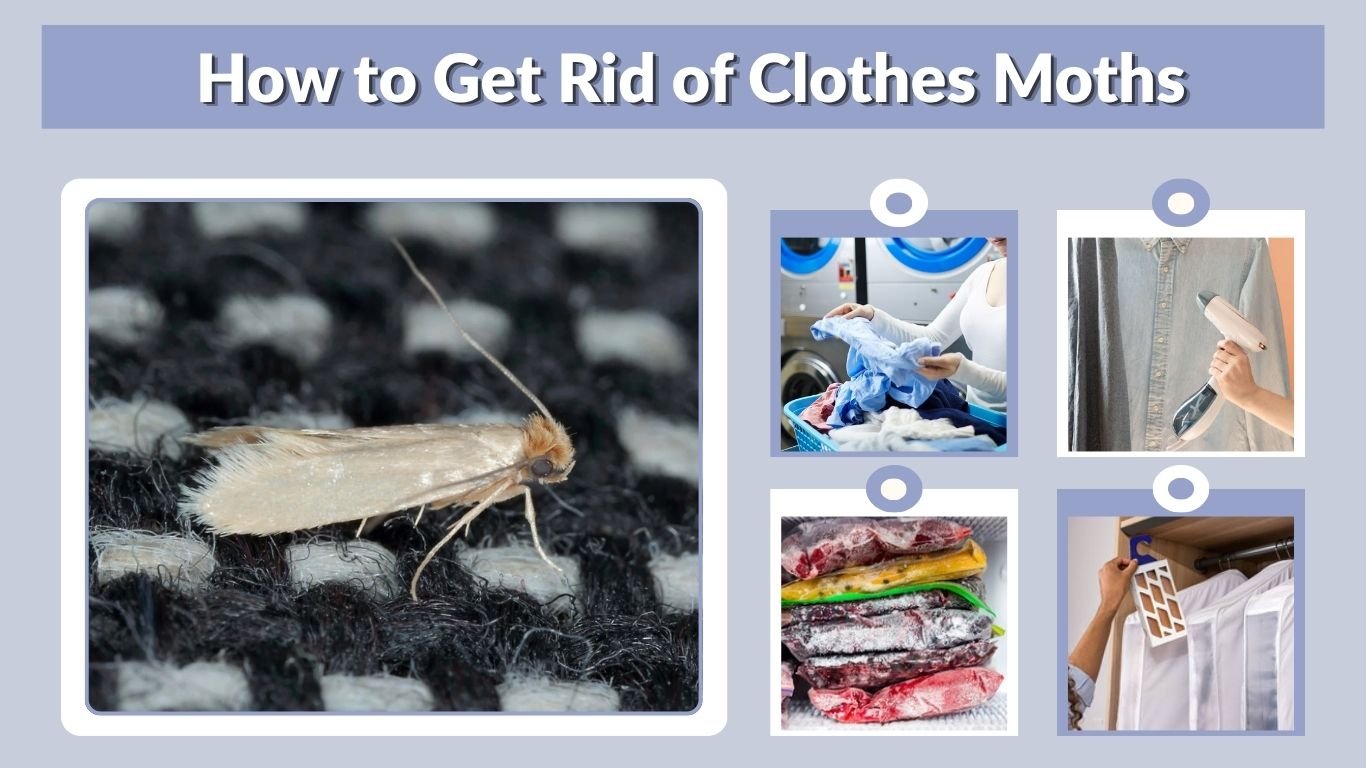
Clothes moths can quietly damage wool, cashmere, silk, fur, rugs, and stored fabrics before you even notice them. The adult moths are not the main problem—the larvae are the ones that eat natural fibers and leave holes behind. To get rid of clothes moths, you need to remove eggs, larvae, food sources, and hiding places. This step-by-step guide explains how to clean, treat, monitor, and prevent clothes moths from coming back.
What Are Clothes Moths?
Clothes moths are small fabric pests that prefer dark, quiet areas such as closets, drawers, storage boxes, carpets, and under furniture.
The two most common types are webbing clothes moths and casemaking clothes moths. Both can damage clothing, but their larvae leave slightly different signs.
| Clothes Moth Stage | What It Looks Like | Why It Matters |
| Egg | Tiny, pale, hard to see | Hatches into fabric-eating larvae |
| Larva | Cream-colored worm-like body | Causes most clothing damage |
| Adult moth | Small tan or golden moth | Lays eggs near fabric |
| Case/webbing | Silky threads or small fiber case | Sign of active infestation |
Adult moths may be the first thing you notice, but killing flying moths alone will not solve the problem. You must target the larvae and eggs hidden in fabric and storage areas.
Signs You Have Clothes Moths
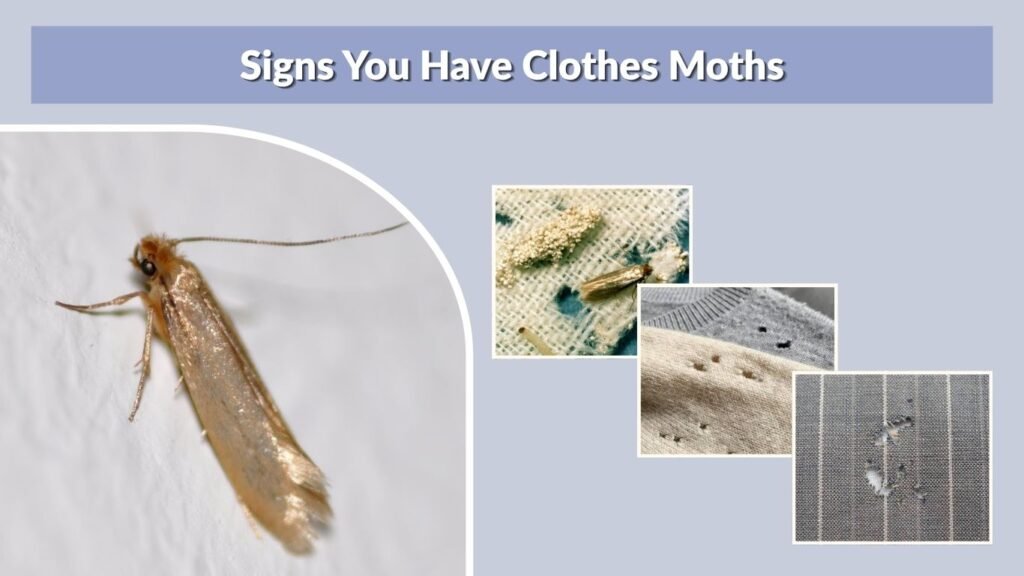
Clothes moth damage is often mistaken for normal wear, washing damage, or carpet beetle damage. Look for several signs together before deciding it is a moth problem.
Common signs include:
- Small holes in wool, cashmere, silk, or fur
- Thin or shaved-looking fabric patches
- Silky webbing on clothes or carpets
- Tiny cream-colored larvae
- Small fiber cases on fabric
- Grain-like droppings near damaged items
- Adult tan moths flying near closets
- Damage on stored or rarely worn clothes
Moths often attack folded areas, collars, cuffs, underarms, seams, and clothes stored in dark spaces.
Step 1: Find the Source of the Infestation
Start by finding where clothes moths are breeding. One damaged sweater may not be the only problem.
Check all natural-fiber items in the same area, especially:
- Wool sweaters and coats
- Cashmere clothing
- Silk scarves, ties, and linings
- Fur, feathers, and felt items
- Wool blankets and rugs
- Stored seasonal clothing
- Pet beds and pet hair buildup
- Closet corners and carpet edges
Remove everything from the closet or drawer. Inspect seams, folds, pockets, collars, and storage containers carefully. Clothes moth larvae avoid light, so they usually hide deep inside fabric or in quiet corners.
Step 2: Separate Damaged and At-Risk Clothes
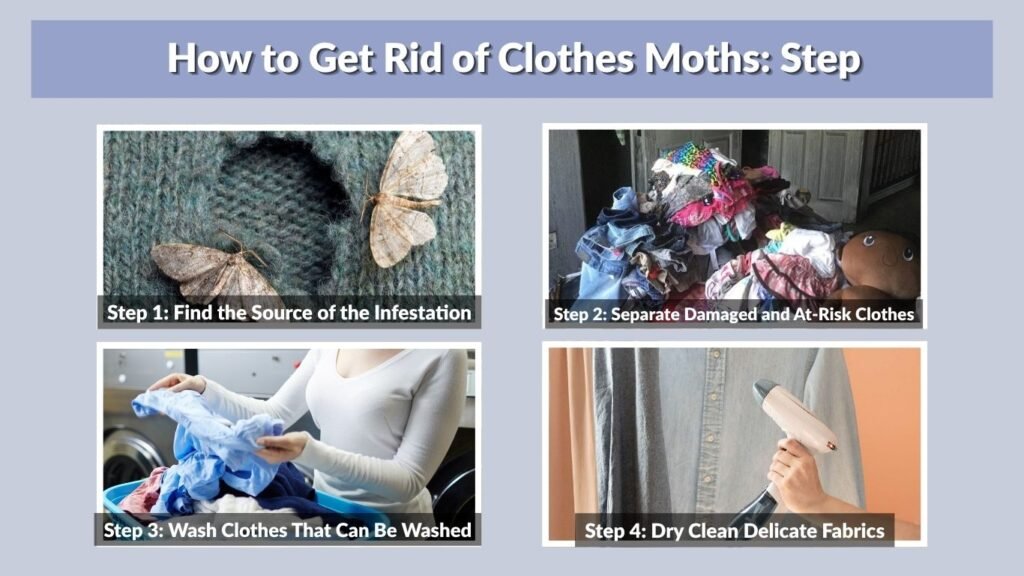
After inspection, divide your clothing into groups. This makes treatment easier and helps stop the infestation from spreading.
| Clothing Group | What to Do |
| Badly damaged items | Bag and discard if not worth saving |
| Washable clothing | Wash and dry using safe heat |
| Delicate items | Dry clean or freeze |
| Unaffected natural fibers | Clean before storing again |
| Synthetic clothes | Inspect if stained or stored nearby |
Do not move infested items around the house uncovered. Place them in sealed bags until they are washed, dry cleaned, frozen, or discarded.
Step 3: Wash Clothes That Can Be Washed
Washing is one of the easiest ways to remove clothes, moth eggs, larvae, and food stains.
Use the hottest water safe for the fabric, based on the care label. After washing, dry items on a heat setting if the fabric allows it. Heat helps kill hidden larvae and eggs.
This method works best for:
- Cotton blends
- Some washable wool items
- Everyday clothing
- Linens near the infestation
- Washable blankets
Avoid hot washing delicate wool, cashmere, silk, or vintage clothing unless the care label says it is safe.
Step 4: Dry Clean Delicate Fabrics
Dry cleaning is a good option for clothes that cannot handle water or heat. It is especially useful for valuable or delicate natural fibers.
Dry clean items such as:
- Wool coats
- Cashmere sweaters
- Silk clothing
- Suits
- Fur-trimmed garments
- Vintage clothes
- Formalwear
Tell the cleaner that you are treating a clothes moth problem. Once items are cleaned, do not place them back into an untreated closet.
Step 5: Freeze Items That Cannot Be Washed
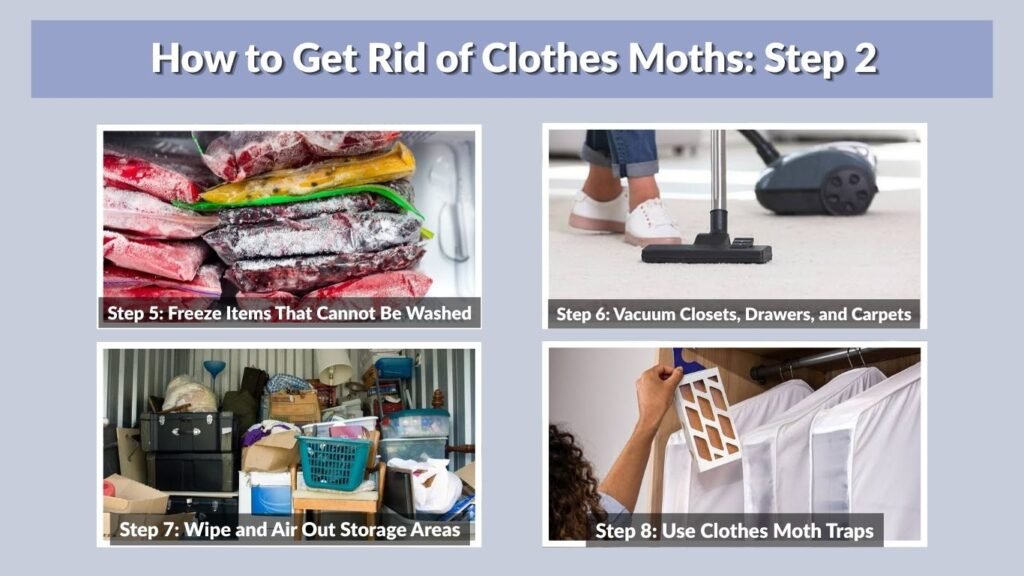
Freezing can help treat delicate items if washing or dry cleaning is not possible.
Place the item in a sealed plastic bag and put it in the freezer for several days. Keep it sealed while it returns to room temperature to prevent moisture from forming on the fabric.
Freezing may be useful for:
- Delicate wool accessories
- Small cashmere items
- Felt decorations
- Some vintage pieces
- Fabric crafts
- Items that cannot be washed easily
For heavy infestations, professional cleaning may still be better than freezing alone.
Step 6: Vacuum Closets, Drawers, and Carpets
Cleaning the storage area is just as important as cleaning the clothes. If eggs or larvae remain in the closet, moths may return.
Vacuum these areas carefully:
- Closet floors
- Shelves and corners
- Baseboards
- Drawer cracks
- Carpet edges
- Under furniture
- Around storage boxes
- Pet hair and lint buildup
Use a crevice tool for tight spaces. After vacuuming, empty the vacuum outside or seal the contents in a bag before throwing it away.
Step 7: Wipe and Air Out Storage Areas
After vacuuming, wipe shelves, drawers, and closet surfaces with a suitable cleaner. Let everything dry completely before putting clothes back.
Clothes moths prefer dark, humid, undisturbed places. Airing out closets and improving ventilation makes the space less attractive.
You can also:
- Open closet doors regularly
- Move stored items every few weeks
- Reduce clutter
- Avoid overpacking drawers
- Keep storage areas dry
Clean, dry, and disturbed spaces are much less friendly to clothes moths.
Step 8: Use Clothes Moth Traps
Pheromone traps are useful for monitoring adult male clothes moths. They can show whether moth activity is still present after cleaning.
Place traps in:
- Closets
- Wardrobe corners
- Near wool rugs
- Storage rooms
- Areas where moths were seen
Traps should not replace cleaning. They do not kill larvae inside clothing. Use them as a warning system while you continue treatment and prevention.
Step 9: Store Clothes Properly
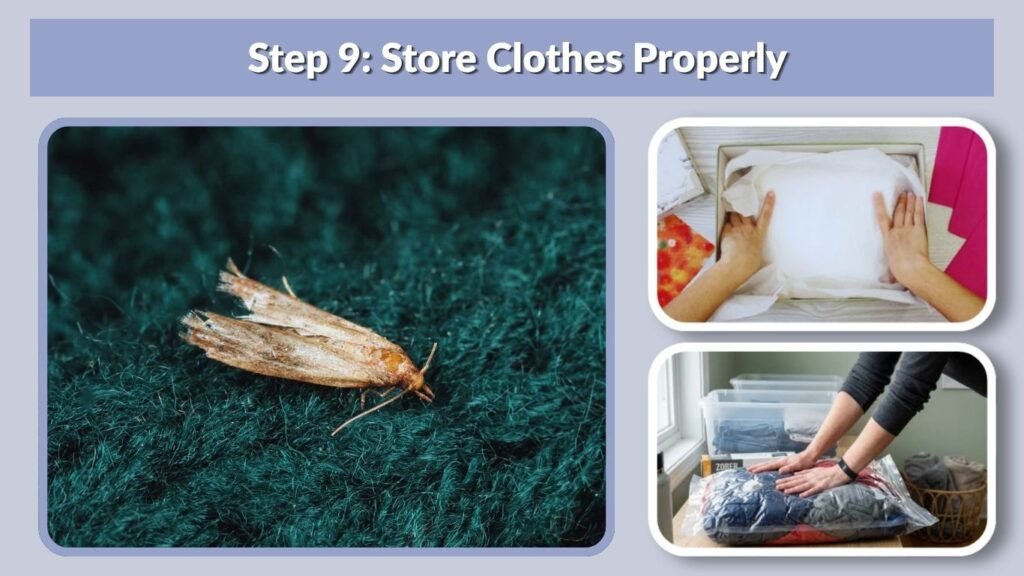
Once items are clean, store them in moth-resistant ways. Never store dirty clothing for months, especially wool, cashmere, silk, or fur.
Good storage habits include:
- Wash or dry clean clothes before storage
- Use airtight plastic bins or sealed garment bags
- Avoid cardboard boxes for long-term fabric storage
- Keep wool and cashmere folded in sealed containers
- Store valuable items separately
- Add labels so you can inspect items easily
Cedar blocks and lavender sachets may help repel moths slightly, but they should not be your main defense. Clean clothing and sealed storage work better.
Step 10: Prevent Clothes Moths From Coming Back
Long-term prevention depends on regular cleaning and inspection. Clothes moths are more likely to return if closets stay dusty, dark, and full of untouched natural fibers.
To prevent clothes moths:
- Vacuum closet floors often
- Remove lint and pet hair
- Check wool clothing monthly
- Shake out stored garments
- Keep seasonal clothes sealed
- Clean spills and sweat stains quickly
- Inspect secondhand clothing before storing
- Replace moth traps as directed
If moths continue appearing after repeated cleaning, the source may be a wool rug, pet bed, attic storage, old furniture, or hidden lint buildup.
Common Mistakes to Avoid
Many people treat clothes moths the wrong way at first. Avoiding these mistakes can save time and protect more clothing.
Do not:
- Only kill adult moths and ignore larvae
- Put cleaned clothes back into a dirty closet
- Store wool or cashmere without cleaning first
- Rely only on cedar or lavender
- Leave damaged items unsealed
- Ignore carpets, rugs, and pet hair
- Forget to inspect nearby drawers and shelves
The best method is a full approach: inspect, clean, treat, vacuum, trap, and store properly.
FAQs
What is the fastest way to get rid of clothes moths?
The fastest method is to remove all clothing from the affected area, wash or dry clean natural-fiber items, vacuum the closet thoroughly, and use moth traps for monitoring. Focus on larvae and eggs, not just the adult moths flying around.
Do clothes moths go away on their own?
Clothes moths usually do not go away on their own if they have food and hiding places. Wool, cashmere, silk, fur, lint, and pet hair can keep them active. Cleaning and proper storage are needed to break the life cycle.
Can I use mothballs for clothes moths?
Mothballs can kill moths when used correctly in sealed spaces, but they contain strong chemicals and must be handled carefully. Many people prefer washing, dry cleaning, freezing, vacuuming, and sealed storage before using chemical treatments.
How do I know if clothes moth larvae are gone?
You may notice fewer adult moths in traps, no new holes, and no fresh webbing, larvae, or casings. Keep checking for several weeks because hidden eggs may hatch later. Regular inspection is important after treatment.
Why do clothes moths keep coming back?
Clothes moths come back when eggs, larvae, or food sources remain. Common causes include dirty stored clothes, wool rugs, pet hair, lint buildup, untreated closets, or infested secondhand items. Re-clean the area and inspect nearby fabric sources.
