
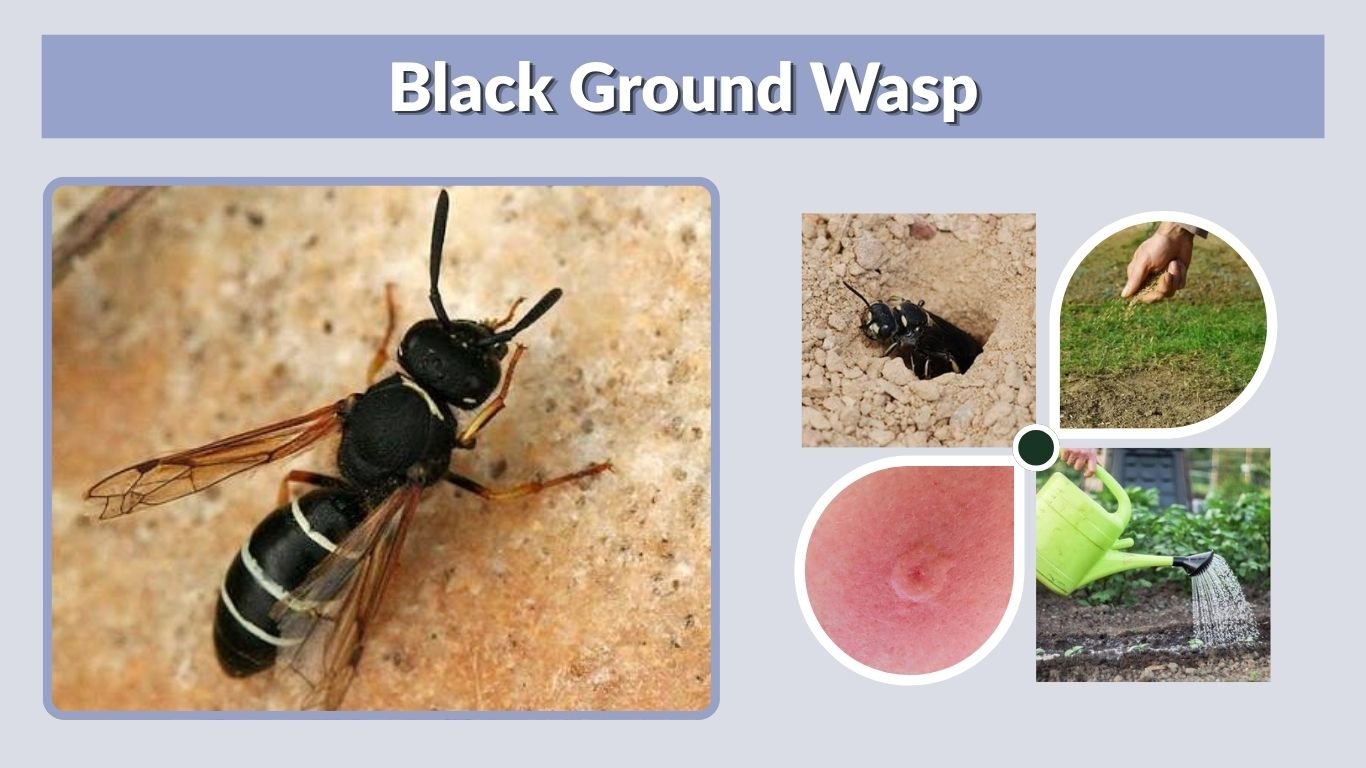
A black wasp flying close to the lawn or disappearing into a small hole can be alarming. However, “black ground wasp” is a general description rather than the name of one specific species. Several solitary and social wasps have dark bodies and may dig burrows, occupy abandoned rodent tunnels, or hunt near the soil. Identifying the insect correctly is important because many ground-nesting black wasps are beneficial and relatively nonaggressive, while others may defend their nests aggressively.
What Is a Black Ground Wasp?
The term black ground wasp can describe several types of wasps that are mostly black and spend time near or below the soil. Some species build individual underground burrows, while others live together in large colonies.
Common possibilities include:
- Great black wasps
- Cicada killers
- Digger wasps
- Spider wasps
- Ground-nesting yellowjackets
- Scoliid wasps
- Sand wasps
Most large black digger wasps are solitary. Each female creates and maintains her own nest instead of serving a queen in a large colony. Ground-nesting yellowjackets, however, are social insects that may have hundreds or thousands of workers in one underground nest.
How to Identify Black Wasps in the Ground
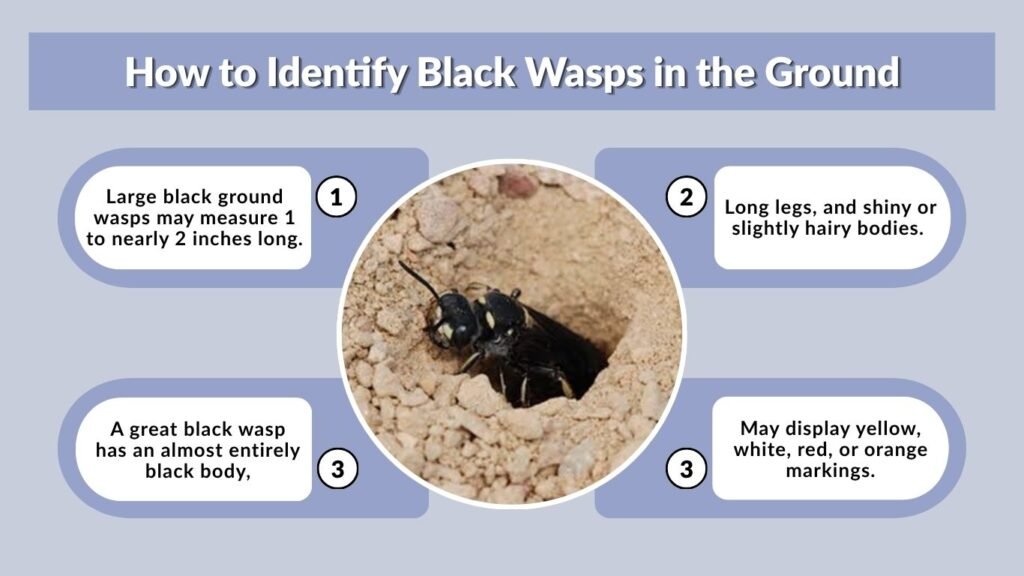
Identification depends on the wasp’s size, markings, wing color, flight behavior, and nest structure. Observing from a safe distance is better than approaching the entrance.
Body Size and Shape
Large black ground wasps may measure 1 to nearly 2 inches long. Many have narrow waists, long legs, and shiny or slightly hairy bodies. Smaller social wasps are often more compact and may display yellow, white, red, or orange markings.
A great black wasp has an almost entirely black body, long legs, and smoky blue-black wings. A cicada killer is similarly large but usually has yellow markings across its abdomen.
Flight Near the Ground
Black wasps flying low to the ground are often searching for prey, mates, or nesting sites. Females may inspect cracks, bare soil, garden beds, or existing holes.
A wasp repeatedly entering the same opening is probably using a nest. Several wasps flying around one area may indicate either a social colony or a group of solitary wasps nesting close together.
Nest Entrance
A solitary black ground wasp nest often appears as a round hole surrounded by freshly excavated soil. The opening may be approximately the width of a pencil or finger, depending on the species.
Social yellowjacket nests usually have a larger entrance with constant two-way traffic. Their nests may be hidden inside:
- Abandoned rodent burrows
- Tree-root cavities
- Landscape edges
- Compost piles
- Spaces beneath sheds
- Voids under patios
Common Black Ground-Nesting Wasps
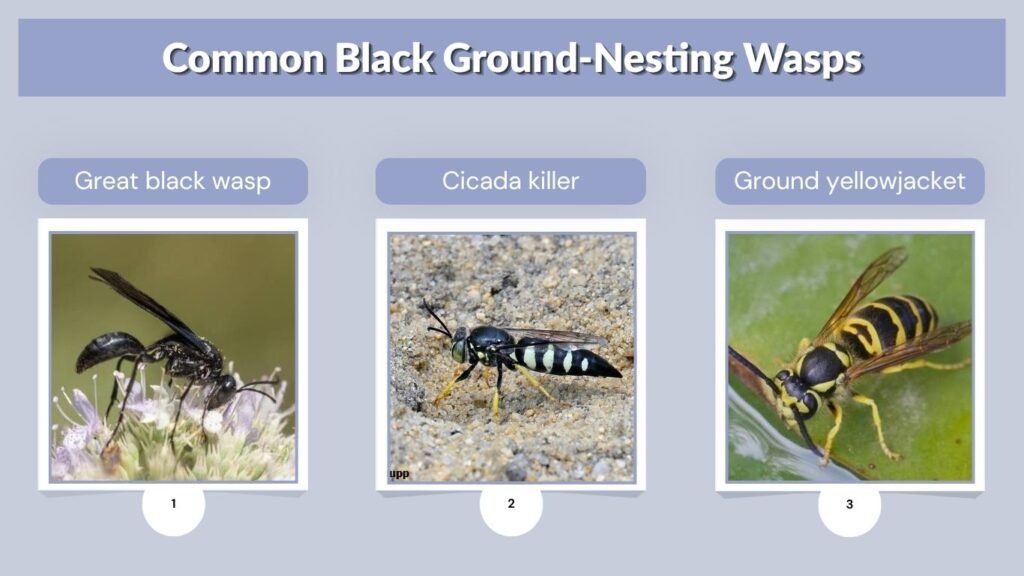
“Black ground wasp” searches often refer to insects with very different appearances and temperaments.
| Possible wasp | Typical appearance | Nesting behavior | Aggression level |
|---|---|---|---|
| Great black wasp | Large, entirely black, dark wings | Solitary underground burrow | Low |
| Cicada killer | Large, black with yellow abdominal markings | Solitary or communal burrows | Low to moderate |
| Ground yellowjacket | Black and yellow, compact body | Large underground colony | High near nest |
| Scoliid wasp | Black, sometimes with orange or yellow spots | Solitary ground nest | Low |
| Spider wasp | Black, dark blue, or orange-black | Burrows or natural cavities | Usually low |
| Sand wasp | Black with pale markings | Burrows in loose or sandy soil | Low |
Great Black Wasp Nests in the Ground
The great black wasp is one of the most common insects associated with this keyword. It is a large solitary species with an entirely dark body and iridescent blue-black wings.
Female great black wasps dig underground chambers in loose soil. They hunt grasshoppers, katydids, and crickets, paralyze them, and carry them into the nest as food for their developing larvae.
Several females may nest in the same favorable patch of soil, but they do not form a cooperative colony. Their presence can look intimidating because multiple large wasps may fly around the area. Nevertheless, they are generally focused on hunting and nest construction rather than attacking people.
Black, Red, Orange, White, and Yellow Ground Wasps
Color patterns can provide useful identification clues, although they should not be used alone.
Black and Red Ground Wasp
A red and black ground wasp may be a spider wasp, great golden digger wasp, or velvet ant. Despite its common name, a velvet ant is actually a wingless female wasp. Velvet ants crawl across the ground and can deliver an extremely painful sting when handled.
Orange and Black Ground Wasp
Orange and black wasps may be great golden digger wasps or certain spider wasps. Great golden digger wasps have orange legs and orange sections on the abdomen. They build underground burrows and hunt insects for their larvae.
These wasps are solitary and generally not aggressive unless trapped, stepped on, or grabbed.
Black and White Ground Wasp
Black and white wasps near the ground may be sand wasps or other solitary species. Bald-faced hornets also have bold black-and-white markings, but they usually construct exposed paper nests in trees, shrubs, or structures rather than underground.
Black and Yellow Ground Wasp
Black and yellow wasps entering a ground opening are often yellowjackets. Unlike solitary digger wasps, yellowjackets defend their colony aggressively. Their steady flight traffic and smaller body size help distinguish them from large solitary wasps.
Do Black Wasps Live in the Ground?
Many black wasps do live or nest underground. Some excavate their own tunnels, while others use existing cavities.
Solitary females may create several nest chambers connected to one main tunnel. Each chamber receives an egg and a supply of paralyzed prey. Once the nest is prepared, the female seals the chamber and continues building additional cells.
Other black wasps may only appear to live underground because they hunt beetle grubs, spiders, or other prey near the soil. Careful observation is needed before assuming that every wasp near the lawn has a nest there.
Are Black Ground Wasps Dangerous?
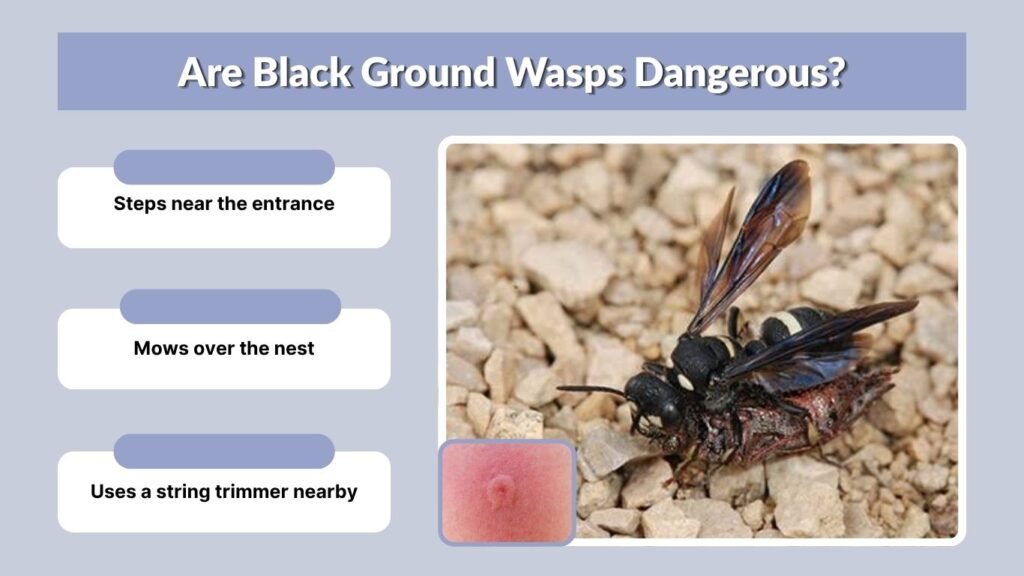
Most large black ground-nesting wasps are not naturally aggressive toward humans. They may fly close while inspecting their territory, but they usually sting only when physically threatened.
The greatest risk comes from social ground-nesting wasps such as yellowjackets. Workers can emerge together and sting repeatedly when someone:
- Steps near the entrance
- Mows over the nest
- Uses a string trimmer nearby
- Disturbs landscaping materials
- Attempts to dig out the colony
- Blocks the nest opening
People with known insect-sting allergies should avoid approaching any active nest.
Black Ground Wasp Sting Symptoms
A sting may cause immediate pain, redness, warmth, itching, and localized swelling. Mild symptoms often improve with basic first aid.
Wash the area with soap and water, apply a cold pack wrapped in cloth, and avoid scratching. An over-the-counter antihistamine or pain reliever may help when used according to its label and personal medical guidance.
Seek emergency medical help for symptoms such as:
- Trouble breathing
- Swelling of the mouth or throat
- Widespread hives
- Dizziness or fainting
- Rapidly worsening reactions
- Multiple stings, especially in a child
Why Are Black Wasps Flying Low Over the Lawn?
Low-flying wasps may be searching for nest entrances, insect prey, or mates. Activity is often especially noticeable during warm, sunny weather.
Possible reasons include:
- Females are inspecting soil for nesting sites.
- Males are patrolling areas where females emerge.
- Wasps are hunting beetle larvae, spiders, or grasshoppers.
- A nest is located beneath the lawn.
- Flowers or spilled food are attracting feeding adults.
Low flight alone does not necessarily indicate aggression. Repeated movement into one hole is a stronger sign of an active nest.
How to Get Rid of Black Ground Wasps
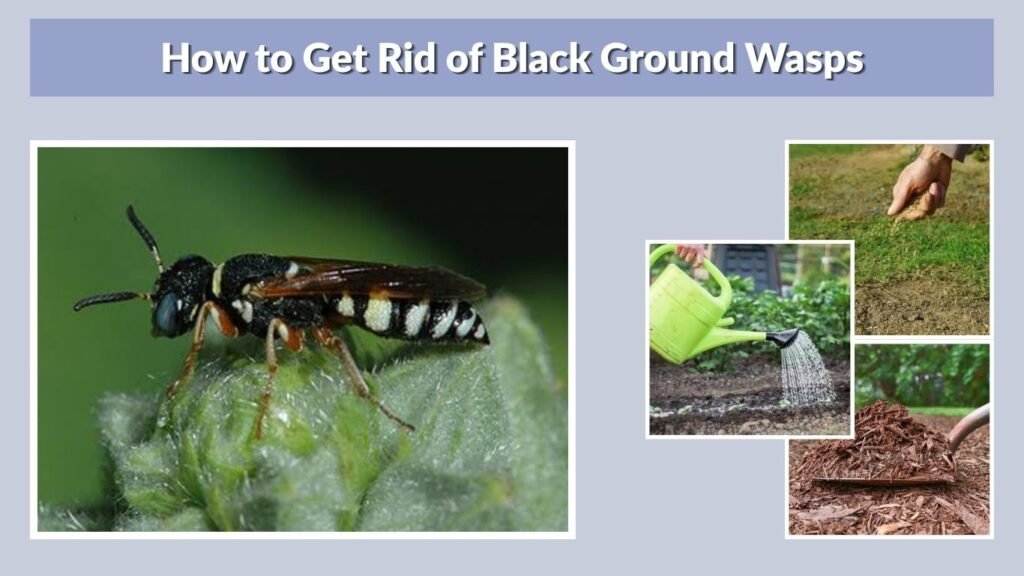
Removal is not always necessary. Solitary digger wasps provide natural pest control and usually remain active for only part of the season. Their nests can often be tolerated when they are away from doorways, playgrounds, walkways, and pets.
Reduce Attractive Nesting Conditions
Bare, dry soil attracts many burrowing wasps. Improving lawn density and covering exposed soil may discourage future nesting.
Helpful steps include:
- Watering extremely dry soil
- Reseeding thin lawn areas
- Applying mulch to exposed garden beds
- Repairing gaps beside patios and foundations
- Filling abandoned animal burrows after activity ends
- Removing fallen fruit and outdoor food waste
Do not plug an active social-wasp entrance. Trapped workers may become defensive or find another route into a building.
Avoid Dangerous DIY Methods
Do not pour gasoline, kerosene, bleach, or other flammable or toxic substances into a nest. These methods can contaminate soil, harm plants and wildlife, create fire hazards, and expose people to dangerous fumes.
Flooding or digging into a nest can also provoke an attack without eliminating the colony.
Contact a Pest-Control Professional
Professional removal is the safest choice when the nest is close to a home, heavily traveled area, school, pet enclosure, or someone with a sting allergy.
A professional can determine whether the insects are harmless solitary diggers or defensive social wasps. Correct identification prevents unnecessary pesticide use and reduces the chance of multiple stings.
Preventing Black Wasps From Nesting in the Ground
Long-term prevention focuses on changing the habitat rather than repeatedly killing individual wasps.
Maintain thick grass, repair bare lawn patches, seal exterior openings, and remove abandoned underground cavities when they are no longer active. Keep trash containers closed and clean up sweet drinks, meat scraps, and pet food that could attract yellowjackets.
Inspect the yard during spring and early summer when colonies are still small. Early professional treatment of a dangerous social nest is usually easier than waiting until late summer, when the colony may contain many more workers.
FAQs
Are great black wasps aggressive?
Great black wasps are generally nonaggressive solitary insects. Females can sting, but they usually do so only when trapped, stepped on, or handled. Their large size and dark wings make them appear more dangerous than they normally are.
Do black ground wasps damage lawns?
Solitary wasps may create small piles of loose soil around their entrances, but serious lawn damage is uncommon. Large numbers can make a thin lawn look uneven. Improving grass density usually reduces suitable nesting areas over time.
What is a giant black wasp digging in the ground?
A giant black digging wasp may be a great black wasp, cicada killer, or another solitary digger species. Look for body markings, wing color, and prey-carrying behavior. Cicada killers normally have noticeable yellow markings, while great black wasps are almost completely black.
Can black ground wasps sting more than once?
Wasps do not leave barbed stingers like honeybees, so they are physically capable of stinging repeatedly. Solitary black wasps rarely do this unless restrained. Social ground-nesting species may sting multiple times while defending their colony.
Should I remove a black wasp nest in the ground?
Removal depends on location and species. A solitary nest in a quiet garden area can usually remain. A busy underground colony near a doorway, lawn, play area, or allergic person should be assessed and treated by a qualified pest-control professional.
