
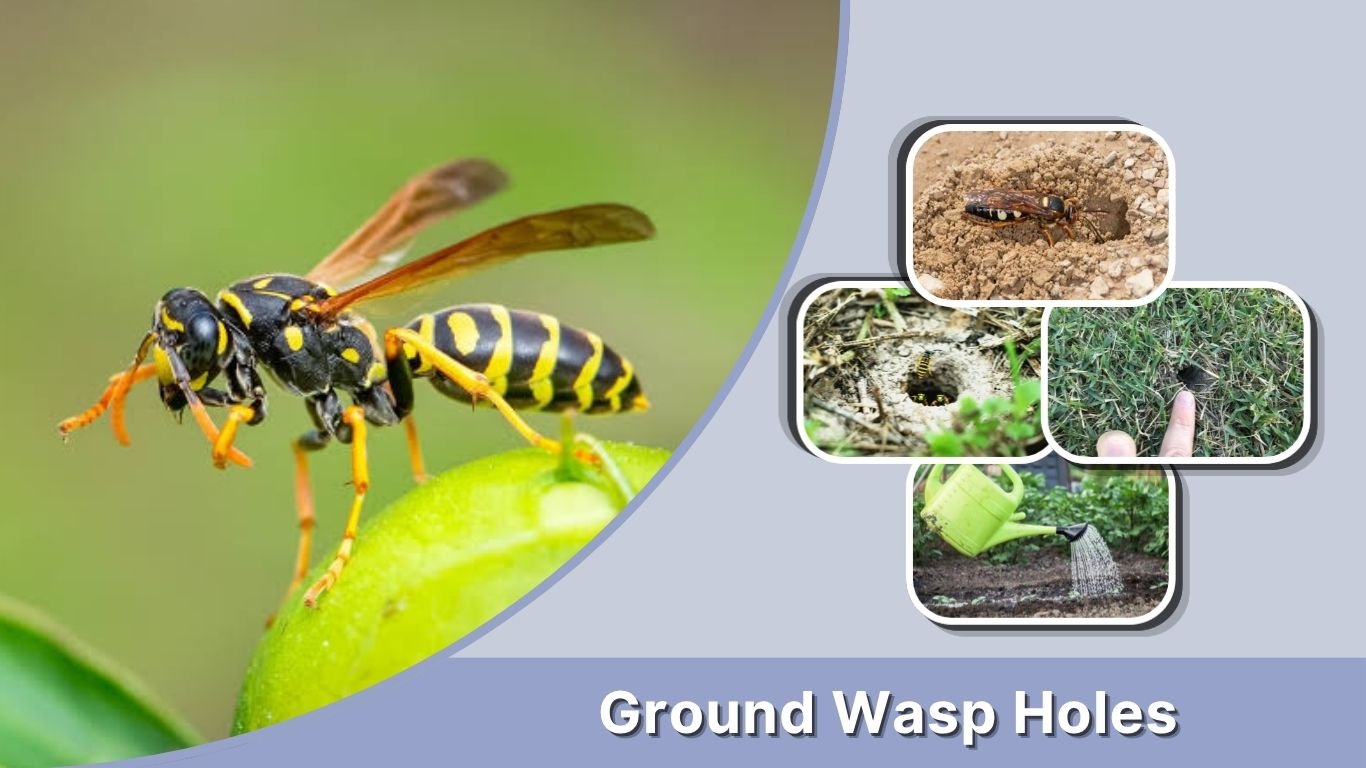
Ground wasp holes can appear in lawns, gardens, flower beds, sandy soil, and along sidewalks or foundations. Some belong to solitary digger wasps that rarely bother people, while others lead to large underground yellowjacket colonies capable of defending their nest aggressively. Identifying the hole, watching the insects’ behavior, and understanding the species involved can help you decide whether the nest should be left alone or professionally removed. Never approach an active hole closely without first evaluating the sting risk.
What Do Ground Wasp Holes Look Like?
Ground wasp holes usually appear as round openings in exposed soil. Their size and surrounding features vary according to the species.
A solitary digger wasp may create a hole approximately ¼ to ¾ inch wide. Fresh soil is often scattered around the entrance in a small mound or fan-shaped pile. Some large cicada killer holes may be nearly an inch wide and surrounded by a noticeable amount of excavated dirt.
A social ground-wasp nest may use an existing cavity rather than a freshly dug tunnel. Its entrance can look like a simple hole beneath grass, roots, rocks, landscape timbers, or a shed. The most obvious sign is frequent traffic, with numerous wasps entering and leaving the same opening.
Common signs of an active wasp hole include:
- A clean, round entrance
- Loose or freshly moved soil
- Wasps repeatedly entering the hole
- Low-flying insects circling the area
- Multiple small holes in dry or sandy ground
- Increased activity during warm daylight hours
Not every hole in a lawn is made by a wasp. Ants, ground bees, beetles, mole crickets, rodents, and other animals can create similar openings.
Do Wasps Dig Holes in the Ground?
Yes, many wasp species dig holes in the ground. These insects are commonly called digger wasps, sand wasps, or ground-nesting wasps.
Most wasps that actively excavate their own holes are solitary. Each female digs a tunnel containing one or more small chambers. She then captures prey, paralyzes it with her sting, and carries it into the nest as food for her larvae.
Other wasps do not dig the entire nest themselves. Ground-nesting yellowjackets commonly occupy old rodent burrows, spaces beneath roots, or natural underground cavities. As the colony grows, workers may enlarge the space and create a paper nest inside it.
What Wasps Dig Holes in the Ground?
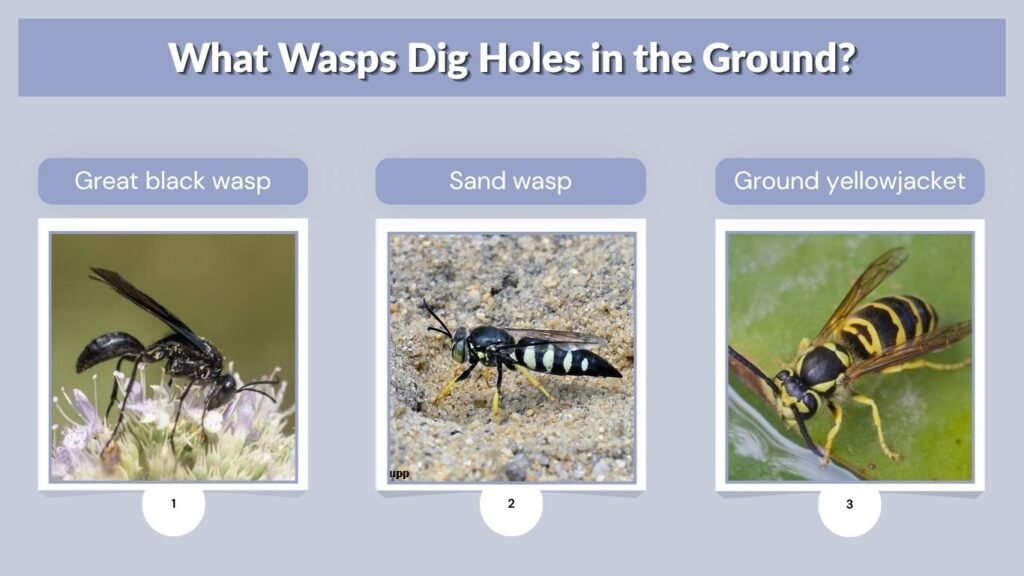
Several types of wasps may be responsible for holes in a yard.
| Wasp type | Hole or nest appearance | Typical behavior | Sting risk |
|---|---|---|---|
| Cicada killer | Large hole with loose soil nearby | Solitary or loosely communal | Usually low |
| Great black wasp | Small-to-medium burrow in open soil | Solitary hunter | Low |
| Great golden digger wasp | Round burrow, often in dry soil | Hunts grasshoppers and katydids | Low |
| Sand wasp | Multiple small holes in sandy areas | Solitary but may nest in groups | Low |
| Scoliid wasp | Burrows while searching for beetle grubs | Solitary | Low |
| Ground yellowjacket | One main entrance with heavy traffic | Large social colony | High near nest |
Cicada Killer Wasps
Cicada killers are among the largest wasps that dig holes in the ground. Females can reach approximately 1½ inches long and have black or reddish-brown bodies with yellow abdominal markings.
Their holes are often found in sunny, dry soil near sidewalks, patios, retaining walls, or lawn edges. A female captures a cicada, carries it into the burrow, and places it in a chamber for her developing offspring.
Despite their intimidating size, female cicada killers are not usually aggressive toward people. Males may fly toward intruders while defending territory, but they cannot sting.
Digger Wasps
Digger wasps include many black, orange, yellow, and reddish species. They dig individual burrows and hunt insects such as grasshoppers, crickets, katydids, or caterpillars.
A wasp carrying a grasshopper into a hole is probably a great black wasp or great golden digger wasp. This behavior may look alarming, but it indicates a solitary nest rather than a large aggressive colony.
Ground-Nesting Yellowjackets
Yellowjackets are the most concerning wasps found in ground holes. They are smaller than cicada killers and usually have bold black-and-yellow markings.
A yellowjacket nest may contain hundreds or thousands of workers by late summer. Workers travel continuously through one main opening and can become highly defensive if the ground is disturbed.
Why Are Wasps Making Holes in the Ground?
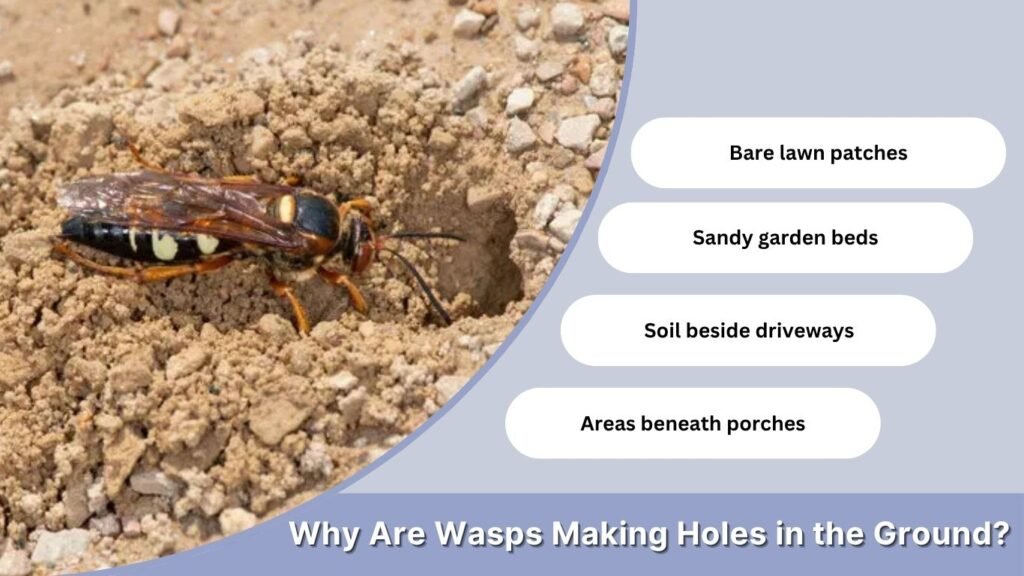
Wasps dig holes primarily to create protected places for their young. Underground tunnels shelter eggs and larvae from weather, predators, and sudden temperature changes.
Dry, lightly vegetated soil is especially attractive because it is easy to excavate. Common nesting locations include:
- Bare lawn patches
- Sandy garden beds
- Soil beside driveways
- Areas beneath porches
- Spaces around tree roots
- Playground sand
- Edges of patios and sidewalks
- Abandoned rodent burrows
Ground wasps may return to the same general location each year when soil conditions remain favorable. However, most solitary females construct new tunnels rather than reusing an old nest.
Small Holes Versus Large Wasp Holes
The size of a hole can offer clues, although it does not provide a definite identification.
Small Ground Wasp Holes
Small holes may belong to sand wasps, small digger wasps, or ground-nesting bees. Several holes close together often indicate a nesting aggregation of solitary insects.
Although many individuals may occupy the same patch of soil, each female usually maintains a separate burrow. This is different from a yellowjacket colony in which all workers share one nest.
Large Wasp Holes
A large hole with a pile of dirt often belongs to a cicada killer or another powerful digger wasp. These females use their legs and jaws to remove soil and may push pebbles, sticks, and debris away from the entrance.
A large opening can also be an existing animal burrow occupied by yellowjackets. Look at the number and size of the insects before deciding what type of nest is present.
Ground Wasp Hole or Mole Cricket Hole?
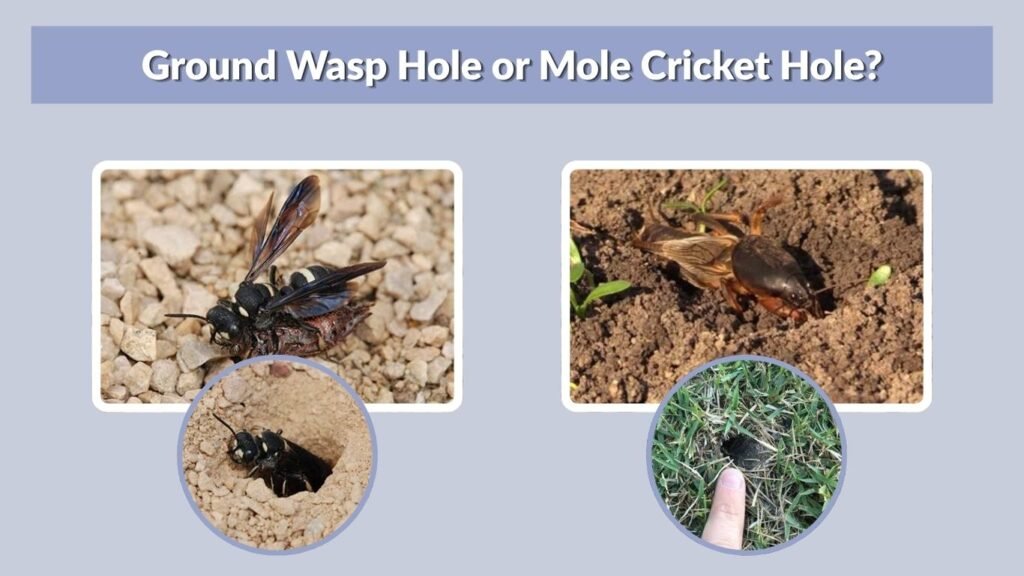
Mole cricket holes can sometimes be confused with wasp burrows. Mole crickets tunnel just beneath the soil and may leave raised ridges, loosened turf, or small openings.
A wasp hole usually shows insect flight activity during daylight. You may see one female entering with prey or many yellowjackets moving through the entrance. A mole cricket hole normally has no flying insects around it and may be accompanied by damaged grass.
Other possible causes of lawn holes include:
- Ant colonies
- Earthworms
- Ground beetles
- Mining bees
- Rodents
- Crayfish
- Spiders
Observe the area from several feet away before attempting treatment.
Are Ground Wasp Holes Dangerous?
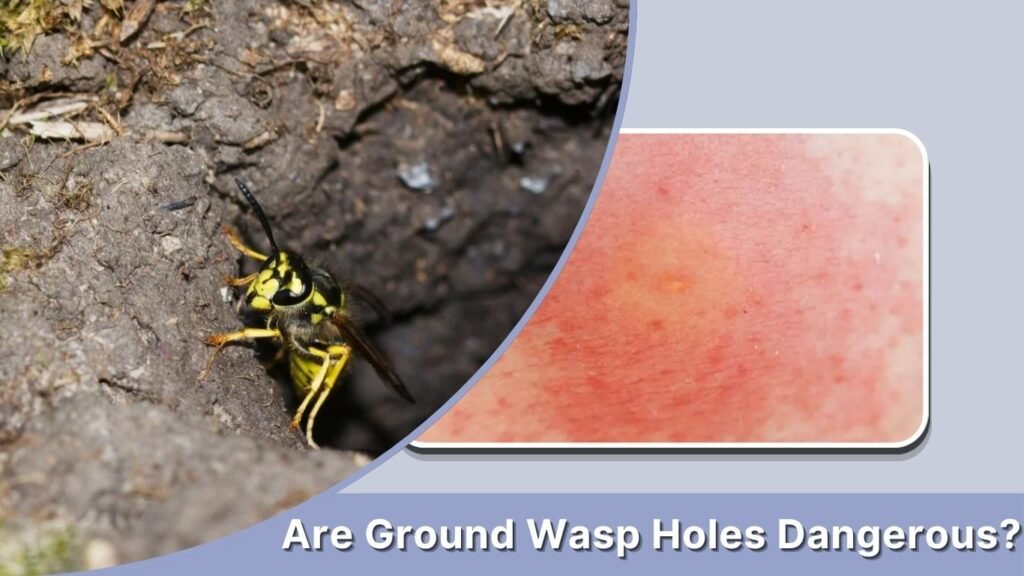
The hole itself is not dangerous, but the occupants may defend it. The risk depends heavily on whether the nest belongs to a solitary or social species.
Solitary digger wasps generally avoid conflict. A female may sting when grabbed, stepped on, or trapped inside clothing, but she normally ignores people walking nearby.
Ground yellowjackets are different. Vibrations from mowing, digging, running, or operating power equipment can trigger a defensive response. Multiple workers may emerge and sting repeatedly.
Use extra caution when a ground nest is located near:
- A front entrance
- A children’s play area
- A frequently mowed lawn
- A pet enclosure
- A garden path
- An outdoor dining space
- Someone with a severe sting allergy
Should You Cover or Fill a Ground Wasp Hole?
Do not immediately cover an active wasp hole. Blocking the entrance may trap some insects, but it rarely eliminates an established social colony. Workers may dig around the obstruction or create another exit, sometimes emerging inside a nearby structure.
Plugging a yellowjacket hole can also make the colony more defensive. Similarly, pouring soil into a solitary burrow while the female is outside may cause her to dig a new opening nearby.
Wait until the nest is inactive or has been professionally treated before filling the entrance. Once activity has completely stopped, fill the tunnel with soil and repair the lawn or mulch the area.
How to Get Rid of Ground Wasp Holes Safely
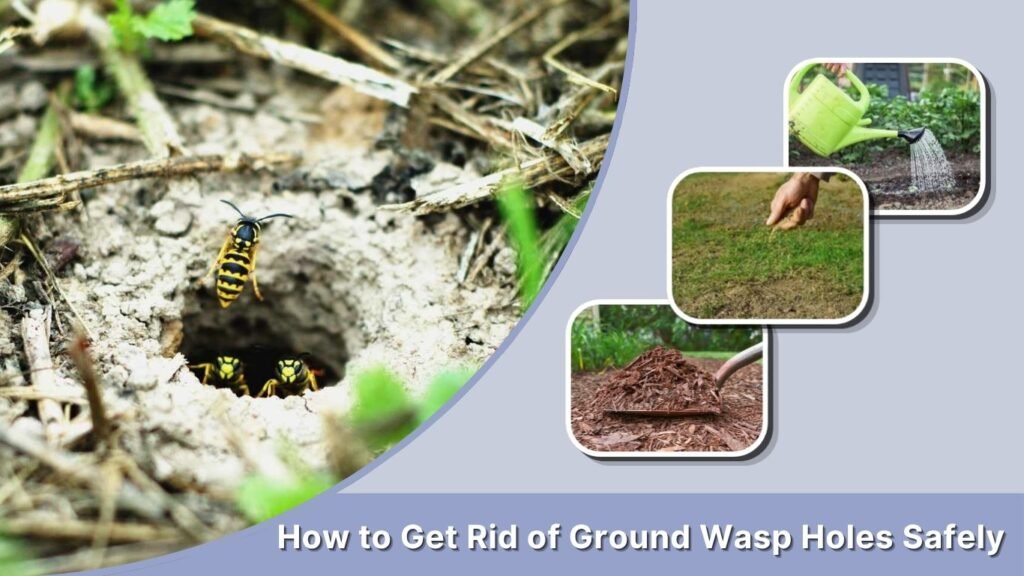
Treatment should be based on the species, nest location, and danger level. A quiet solitary nest in an unused part of the yard may not require removal.
Leave Beneficial Solitary Wasps Alone
Solitary digger wasps provide natural pest control by hunting cicadas, grasshoppers, beetle larvae, and other insects. Their nesting period is usually temporary, and the adults disappear as the season changes.
Consider leaving the hole alone when:
- Only one or two wasps use it
- The insects show no defensive behavior
- The nest is far from people and pets
- The opening is in a garden or unused lawn area
Marking the location can help family members avoid accidentally stepping on it.
Change the Nesting Conditions
Ground-digging wasps prefer bare, dry, easy-to-work soil. Making the area less attractive can reduce future nesting.
Helpful prevention methods include:
- Reseed thin lawn areas.
- Maintain healthy, dense grass.
- Water excessively dry patches when appropriate.
- Cover exposed garden soil with mulch.
- Fill abandoned rodent tunnels after confirming they are empty.
- Repair gaps beneath patios, steps, and landscape borders.
- Remove food waste that may attract yellowjackets.
These measures are more effective for long-term prevention than repeatedly killing individual wasps.
Use Professional Wasp Removal
Contact a pest-control professional when numerous wasps enter one hole, the nest is close to people, or the species cannot be safely identified.
Professional help is especially important when someone nearby is allergic to stings. A trained technician can locate the nest, select an appropriate treatment, and determine when the opening can safely be sealed.
Avoid pouring gasoline, bleach, boiling water, or flammable chemicals into the ground. These methods can harm soil, plants, pets, and wildlife while creating fire or exposure hazards.
How to Prevent Wasp Holes in the Yard
Complete prevention is difficult because wasps are naturally present outdoors. However, reducing suitable nesting areas can make a property less attractive.
Keep the lawn thick and repair bare spots during the appropriate planting season. Add mulch to exposed flower beds, seal structural gaps, and remove unused wood piles or landscape debris.
Keep outdoor trash covered and clean up sugary drinks, pet food, fallen fruit, and meat scraps. These materials may not attract solitary diggers, but they can draw scavenging yellowjackets to the property.
Inspect the yard during spring and early summer. Finding a social colony early may allow it to be addressed before the population becomes much larger later in the season.
FAQs
How can I tell whether a ground wasp hole is active?
Watch the opening from a safe distance during warm daylight hours. An active hole will usually have wasps entering or leaving. Freshly moved soil may also indicate recent digging. Do not place your hand, foot, or face near the entrance to inspect it.
Do ground wasps use the same hole every year?
Most solitary ground wasps build new burrows each season, although they may return to the same favorable area. Social colonies usually die out during cold weather, and old nests are rarely reused, but new queens may establish nests nearby.
Why are there multiple wasp holes in my yard?
Multiple holes often belong to solitary digger or sand wasps nesting in an aggregation. Each female has her own burrow even though the entrances are close together. Numerous wasps sharing one entrance are more likely to be part of a social colony.
Can I mow over ground wasp holes?
Mowing over an active yellowjacket nest can be dangerous because vibrations may trigger an attack. Avoid the area until the insects are identified. Mowing near solitary digger wasps is less risky, but marking and temporarily avoiding their holes is still sensible.
When should I fill an old ground wasp hole?
Fill the hole only after you are certain all activity has ended or the nest has been successfully removed. Add soil, compact it gently, and restore grass or mulch. Never seal an active social nest without using a safe control plan.
