
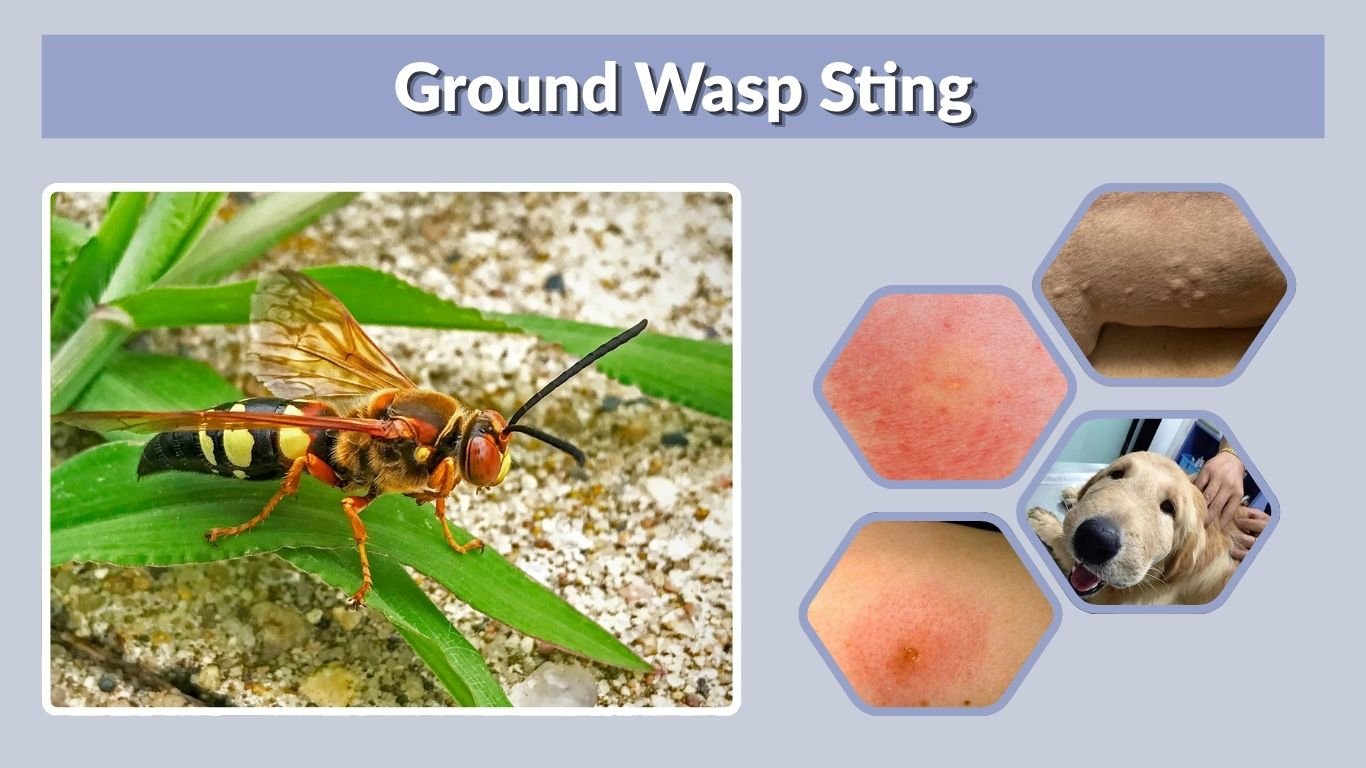
A ground wasp sting can cause sudden burning pain, redness, itching, and swelling. Most reactions are mild and improve with basic first aid, but ground-nesting yellowjackets may attack repeatedly when their colony is disturbed. Severe allergic reactions and numerous stings require immediate medical attention. Understanding the symptoms, proper treatment, and warning signs can help you respond safely and avoid complications.
Do Ground Wasps Sting?
Yes, ground wasps can sting. However, “ground wasp” is a general term covering several wasps that nest underground, and their behavior differs considerably.
Which Ground Wasps Are Most Likely to Sting?
Ground-nesting yellowjackets are social wasps that aggressively protect their colony. Walking over a nest, mowing nearby, digging, or creating strong vibrations may trigger multiple workers to emerge and defend it.
Solitary species such as cicada killers, great black wasps, and other ground digger wasps can also sting, but females generally do so only when trapped, stepped on, or handled. Male cicada killers may fly toward people but cannot sting.
Do Ground Wasps Sting or Bite?
Ground wasps defend themselves primarily by stinging, not biting. The stinger is found on female wasps. Their mouthparts may be used for catching prey or constructing nests, but bites are not the usual cause of human injuries.
Can Ground Wasps Sting More Than Once?
Unlike honeybees, yellowjackets and most other wasps do not normally leave their stingers behind. They can withdraw the stinger and sting repeatedly, especially while defending a nest.
Ground Wasp Sting Symptoms
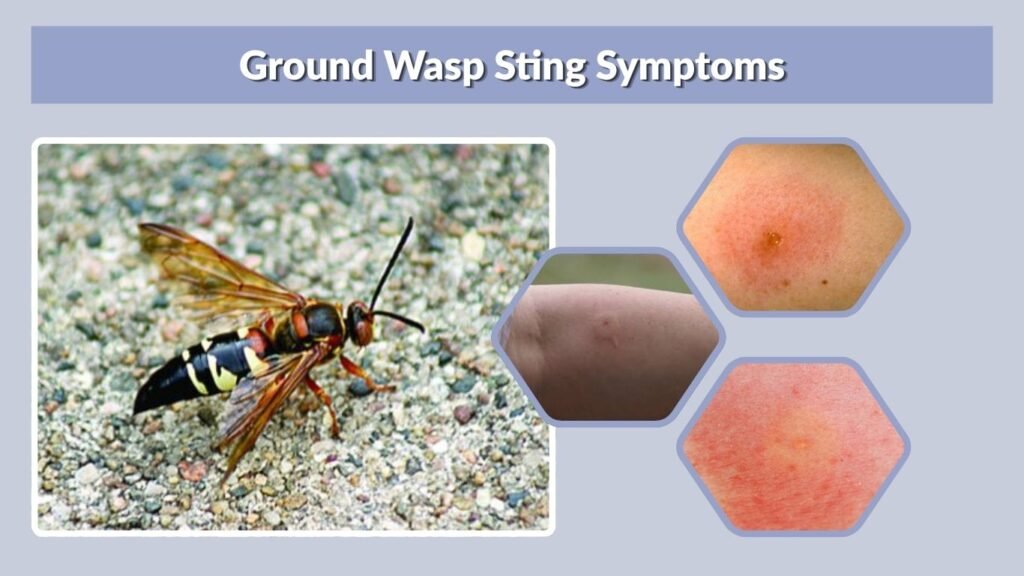
The appearance and severity of a ground wasp sting depend on the sting location, number of stings, amount of venom, and the person’s sensitivity.
| Type of reaction | Common symptoms | Recommended response |
| Mild local reaction | Sharp pain, redness, welt, mild swelling | Home treatment and observation |
| Large local reaction | Swelling extending beyond the sting area | Contact a healthcare professional if severe |
| Allergic reaction | Widespread hives, facial swelling, nausea or dizziness | Seek urgent medical advice |
| Anaphylaxis | Breathing trouble, throat swelling, fainting | Use prescribed epinephrine and call emergency services |
| Multiple stings | Widespread pain, nausea, weakness or vomiting | Prompt medical evaluation |
What Does a Ground Wasp Sting Look Like?
A typical sting may produce a small raised welt surrounded by redness and swelling. A tiny puncture mark may be visible in the center. The skin can feel warm, tender, or itchy.
Swelling limited to the sting area is generally a normal local reaction. A large local reaction may cause swelling that spreads across much of a hand, foot, arm, or leg.
How Painful Is a Ground Wasp Sting?
People commonly describe the initial sensation as sharp, hot, or burning. The strongest pain usually occurs immediately after the sting and then changes to soreness, throbbing, or itching.
Pain level cannot reliably identify the species. A large digger wasp may appear frightening but rarely sting, while a smaller yellowjacket defending an underground colony can deliver several painful stings.
Why Does a Ground Wasp Sting Itch?
Wasp venom triggers inflammation and the release of chemicals such as histamine. This immune response causes redness, itching, warmth, and swelling.
Scratching may damage the skin and increase the possibility of infection. Increasing pain, spreading redness, drainage, fever, or worsening warmth should be evaluated by a healthcare professional.
How Long Does a Ground Wasp Sting Last?
With a mild reaction, the strongest pain and swelling often improve within several hours. Itching or tenderness may remain for one or two days.
A stronger local reaction can worsen during the following day or two and occasionally last up to a week. Seek medical advice when symptoms continue worsening, appear infected, or do not begin improving after several days.
Ground Wasp Sting Treatment
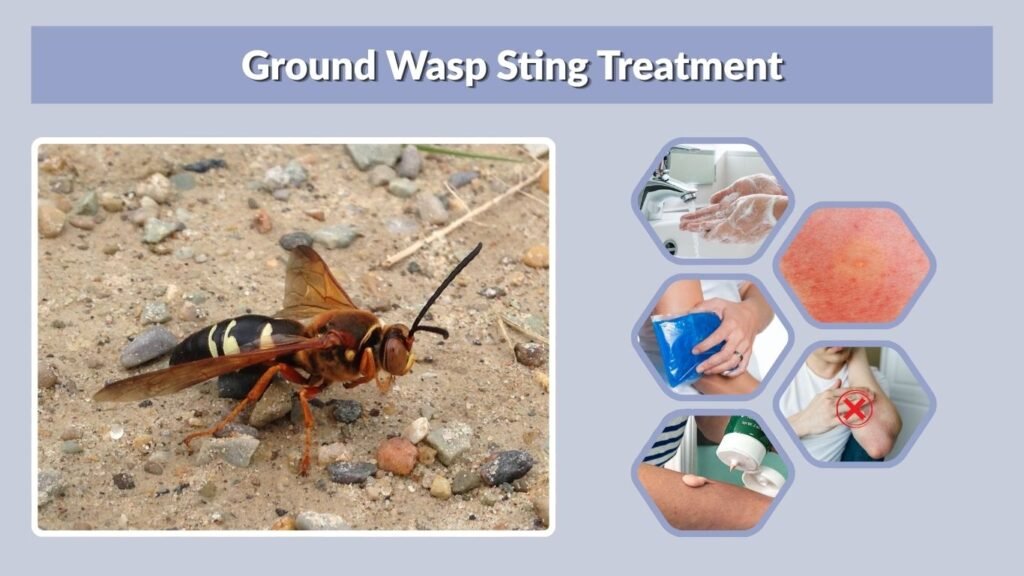
Treatment begins by leaving the nest area. Remaining nearby could expose you to repeated attacks, particularly when yellowjackets are defending an underground colony.
How to Treat a Ground Wasp Sting
Follow these first-aid steps:
- Move to safety. Enter a building or closed vehicle when several wasps are attacking.
- Check the skin. Wasps usually do not leave a stinger, but remove one if it is visible.
- Wash the area gently with soap and water.
- Apply a cold compress for 10–20 minutes to reduce swelling and pain.
- Elevate the limb when the sting is on an arm or leg.
- Avoid scratching the affected skin.
These measures are recommended for mild insect-sting reactions.
Medicine for Pain, Swelling, and Itching
An over-the-counter pain reliever may help with discomfort when it is safe for you to take one. Calamine lotion or 0.5%–1% hydrocortisone cream may reduce itching. A nonprescription oral antihistamine may also help, but follow its label and check with a pharmacist or healthcare professional when you have medical conditions, take other medicines, are pregnant, or are treating a child.
Are Home Remedies Effective?
A cold compress is one of the most useful remedies. Mayo Clinic also lists baking-soda paste as an option for mild itching, although evidence for many popular remedies—including apple cider vinegar—is limited.
Never apply bleach, gasoline, pesticides, concentrated essential oils, or other irritating chemicals to the skin.
Allergic Reaction to a Ground Wasp Sting
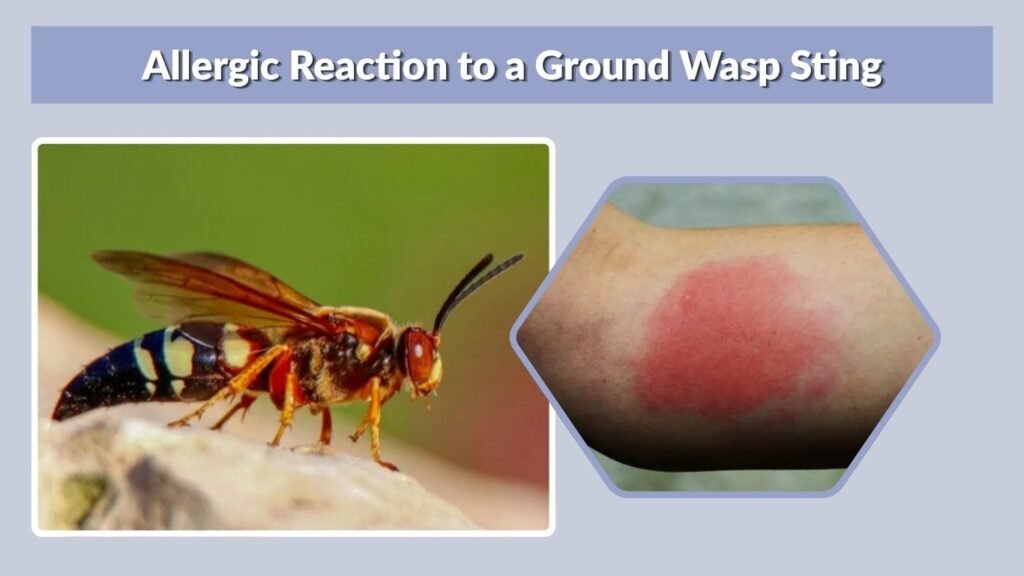
A severe insect-sting allergy can progress rapidly. It may occur even in someone whose previous stings caused only mild symptoms.
Call emergency services immediately for:
- Difficulty breathing, wheezing, or chest tightness
- Swelling of the tongue, lips, face, eyelids, or throat
- Trouble swallowing or a hoarse voice
- Widespread hives or itching away from the sting
- Dizziness, weakness, confusion, or fainting
- Rapid pulse
- Severe nausea, vomiting, diarrhea, or abdominal cramps
Use a prescribed epinephrine auto-injector immediately when directed by the person’s emergency plan. Antihistamines are not a substitute for epinephrine during anaphylaxis because they act too slowly to control a life-threatening reaction. Emergency evaluation is still necessary after epinephrine is used.
Multiple Ground Wasp Stings
Multiple stings inject a greater quantity of venom and may cause illness even without a venom allergy. Possible symptoms include nausea, vomiting, diarrhea, fever, headache, lightheadedness, weakness, and extensive swelling.
Obtain prompt medical care after numerous stings, particularly when the affected person is a child, an older adult, has heart or breathing problems, or develops symptoms beyond ordinary localized pain and redness.
Ground Wasp Sting on a Dog
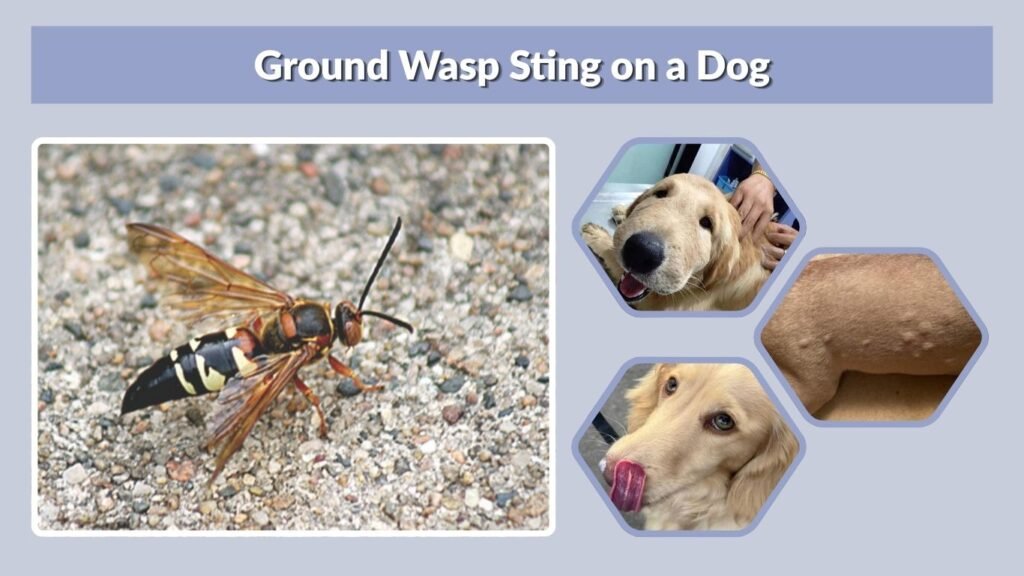
Dogs may be stung after sniffing or digging near an underground nest. A mild sting can cause sudden yelping, pawing at the face, licking a foot, redness, or localized swelling.
Apply a wrapped cold pack for approximately 10 minutes and prevent persistent licking or scratching. Do not give human medication without first obtaining the correct product and dose from a veterinarian.
Seek emergency veterinary care for facial or neck swelling, hives, breathing difficulty, excessive drooling, vomiting, diarrhea, weakness, disorientation, or seizures. Allergic reactions may appear quickly but can also be delayed for several hours.
FAQs
Do ground digger wasps sting?
Female ground digger wasps possess stingers and can sting when handled, trapped, or stepped on. However, many are solitary and do not aggressively defend their burrows. Ground-nesting yellowjackets present a greater risk because numerous workers may attack when their shared colony is disturbed.
Does a ground wasp leave a stinger?
A ground wasp usually does not leave its stinger in the skin. Wasps generally have relatively smooth stingers that can be withdrawn and used repeatedly. Nevertheless, examine the sting site and remove any visible foreign material carefully before washing the area.
When should I worry about ground wasp sting swelling?
Seek emergency assistance when swelling affects the lips, tongue, face, neck, or throat, or occurs with breathing difficulty, dizziness, vomiting, or widespread hives. Contact a healthcare professional when local swelling continues expanding, becomes unusually painful, shows infection signs, or fails to improve.
Can a black ground wasp sting?
Yes. Female great black wasps and similar solitary species can sting, but they are usually nonaggressive and rarely sting people unless disturbed or handled. A black-and-yellow insect repeatedly entering one underground opening may instead be a social yellowjacket defending a colony.
How can I avoid another ground wasp sting?
Watch for repeated wasp traffic entering a hole, avoid walking or mowing near the entrance, wear closed shoes outdoors, and keep children and pets away. Do not pour fuel into a nest, burn it, flood it, or strike it. Use a qualified pest professional when removal is necessary.
